The entire plot of the 1977 film “Smokey and the Bandit” boils down to a fact about water and one particular beer.
The Coors family, brewing at the base of the Rockies in Golden, Colorado, refused to pasteurize their beer. They believed heating it degraded the flavor — cooked out the subtle crispness they attributed to alpine spring water.
Instead, they used sterile filtration and demanded an unbroken refrigerated supply chain from brewery to shelf — what the industry calls a “cold chain.”
So Coors stayed west, and the scarcity turned a watery Colorado lager into an exotic beverage. Easterners who traveled out west hauled cases home like contraband.
In “Smokey and the Bandit,” Burt Reynolds and Jerry Reed hauled 400 cases with a Trans Am and semi, “eastbound and down, 18-wheels a rollin’…” as the theme song went.
Whether the Rocky Mountain water story was genuine flavor science or savvy branding remains an edgy prompt for happy hour banter. But the deeper truth embedded in Reynolds' mustache and washed down by anyone savoring a cold one is as simple as water running downhill.
Even though it constitutes more than 90% of beer, the fundamental importance of water to brewing is sometimes overlooked by beer lovers and amateur brewers.
But in Wyoming, where the geology offers everything from glacier melt to sandstone-filtered aquifer water, the state’s brewers thoughtfully build beers around different sorts of clear, liquid foundations.
Journey To Glass
“Water is obviously the backbone of beer — without good water, you can’t make good beer,” said Ben Gruner, one half of Gruner Brothers Brewing in Casper and vice president of the Wyoming Craft Brewers Guild.
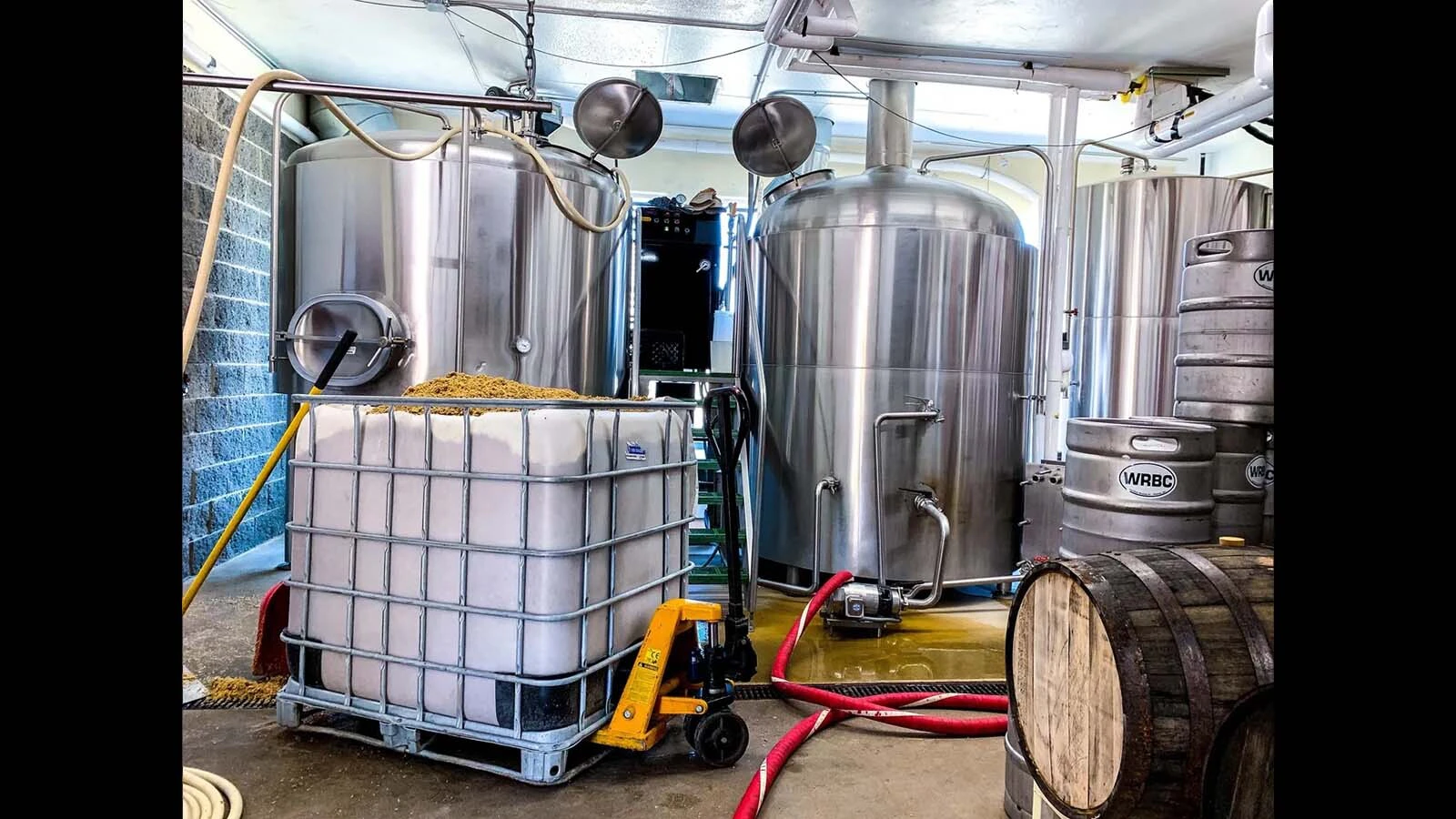
His brewery’s water begins its journey in the North Platte River, gets pulled through natural sandbeds by city wells located a couple hundred yards from the bank, then runs through municipal treatment before Gruner puts it through an additional gauntlet: reverse osmosis, carbon filtration, a blend-back with filtered hard tap water, and finally ultraviolet light sterilization.
All those steps exist because Wyoming water doesn’t sit still.
“The hardness of your water can get a little bit harder in the summertime, because there’s more water running through,” Gruner said, describing how “hardness” is a measure of mineral content dissolved in the water, and summer runoff brings down more minerals.
“It doesn’t filter through as slowly because the water flows are higher,” he said.
For a brewer making pilsners or light beers — styles where clarity demands near-perfect water chemistry — seasonal swings in mineral concentration is a problem that reverse osmosis helps solve.
The relationship between Casper’s brewers and Casper’s river shows up right on the tap handles. Gruner Brothers offers brews named after the North Platte, Salt Creek and Garden Creek.
Garden Creek runs off Casper Mountain and spills into the North Platte drainage. Salt Creek flows out near Midwest and Edgerton.
“Rivers and mountains are probably the most named after things in craft beer,” Gruner said.
One detail most drinkers never consider: Producing a single gallon of beer requires between five and seven gallons of water.
“We use more water cleaning than we do making beer,” Gruner said. Every tank has to be rinsed, scrubbed, sanitized and rinsed again.
As if holding court with brewery regulars while pouring pints, Gruner offered up another nugget of entertaining trivia: Beer may have saved civilization.
Before water treatment plants and fancy filters, drinking straight from a river once spread deadly waterborne diseases.
But brewers were boiling their water and killing microorganisms centuries before anyone understood viruses and bacteria.
“We knew more about the stars before we knew about microorganisms living in our water that would make you sick,” Gruner said.
The hops preserved it, the boil purified it and the result was a beverage safer than water itself.
Munich Match
Paul Dey has been brewing beer for more than 30 years, and he’s watched the same progression play out in brewer after brewer: First you obsess over malt and hops, then you learn to respect yeast, and only after years of chasing perfection do you finally sit down and reckon with the water.
“Water’s kind of complicated, and most folks sort of just use the water and maybe add a couple of constituents,” said Dey, a home brewer and long-time member of the High Plains Drafters home brew club in Cheyenne.
He once taught a water-for-brewing course at Laramie County Community College. “Unique waters make unique beers. And in order to recreate those different beers, I felt like I had to give them the water chemistry,” he said.
Here’s where Wyoming geology starts to matter. The water in Cheyenne, Dey said, is “pretty similar to Munich, Germany.”
It has moderate hardness that lends itself to darker beers — the same profile that made Munich a historic center for dark ales and lagers. In Czech Pilsen, by contrast, the water was “super, super soft, very much lacking in any sort of constituents.” That softness made malt flavors gentle and hop flavors pronounced, which is how the pilsner was born.
The principle holds everywhere: Historically, breweries crafted beer that their local water made best.
England and Ireland had hard water, so they made stouts and porters. The soft waters of Bohemia created pale lagers. And if you want to replicate those styles at home in Wyoming, you have to work backward from the chemistry.
Dey creates reverse osmosis water and then adds back specific ions — calcium chloride, salt, Epsom salt — to emulate the profiles of brewing capitals around the world.
For anyone worried about Yellowstone’s sulfurous geology contaminating the beer supply, Dey offered high praise and reassurance about Cody Craft Brewing: “You go through there and you can smell all the sulfur in the air. But thank God none of that shows up in the beer.”
“Even in Laramie, the water varies through town. So on one end of town you might have more surface water, and seasonally it can vary as well,” added Dey.
When it comes to mountain runoff water profiles: “If it’s running off a limestone area, you’d expect more dissolved calcium carbonates and more dissolved constituents, like maybe you would get from the Bighorns. But if you’re coming off of granitic mountains, it should be pretty low in most things. And that’s maybe what I’d expect from the Wind Rivers or the Snowies.”
Dey thinks mastering water chemistry is what separates competent brewers from exceptional ones.
“There’s a lot of good beer out there,” he said. “And it really takes attention to those details.”
His club’s annual Eight Seconds of Froth home brew competition draws up to 450 entries from around the country.
“Ultimately, does water win it?” he was asked.
“That’s pretty insightful,” he said. “If you can understand the basics of water chemistry, you can take it to that world-class level.”
Well Water
Brent Wickham, a fellow High Plains Drafter and IT manager for the state of Wyoming, approaches the question from the opposite end.
Where Dey has spent decades reverse-engineering water profiles from Munich to Pilsen, Wickham brews with whatever comes out of his well north of Cheyenne and has made peace with what that gives him.
“I pump it out of the ground, run it through a whole house filter, and just use it straight out of the ground,” Wickham said. His setup is a two-stage system — a coarser filter to catch the big sediment, then a finer one down to 0.2 microns. No reverse osmosis. No mineral additions.
The result? Hard water from the Cheyenne aquifer, which means dark beers are his lane. At the time of the interview, the flavors of a Munich Dunkel were getting acquainted in his fermenter.
“The darker the beer, the harder the water, more alkaline it can be,” Wickham said. “And the lighter the beer and the more you want to enhance the hop flavor, you need softer water.”
Fremont’s Secret
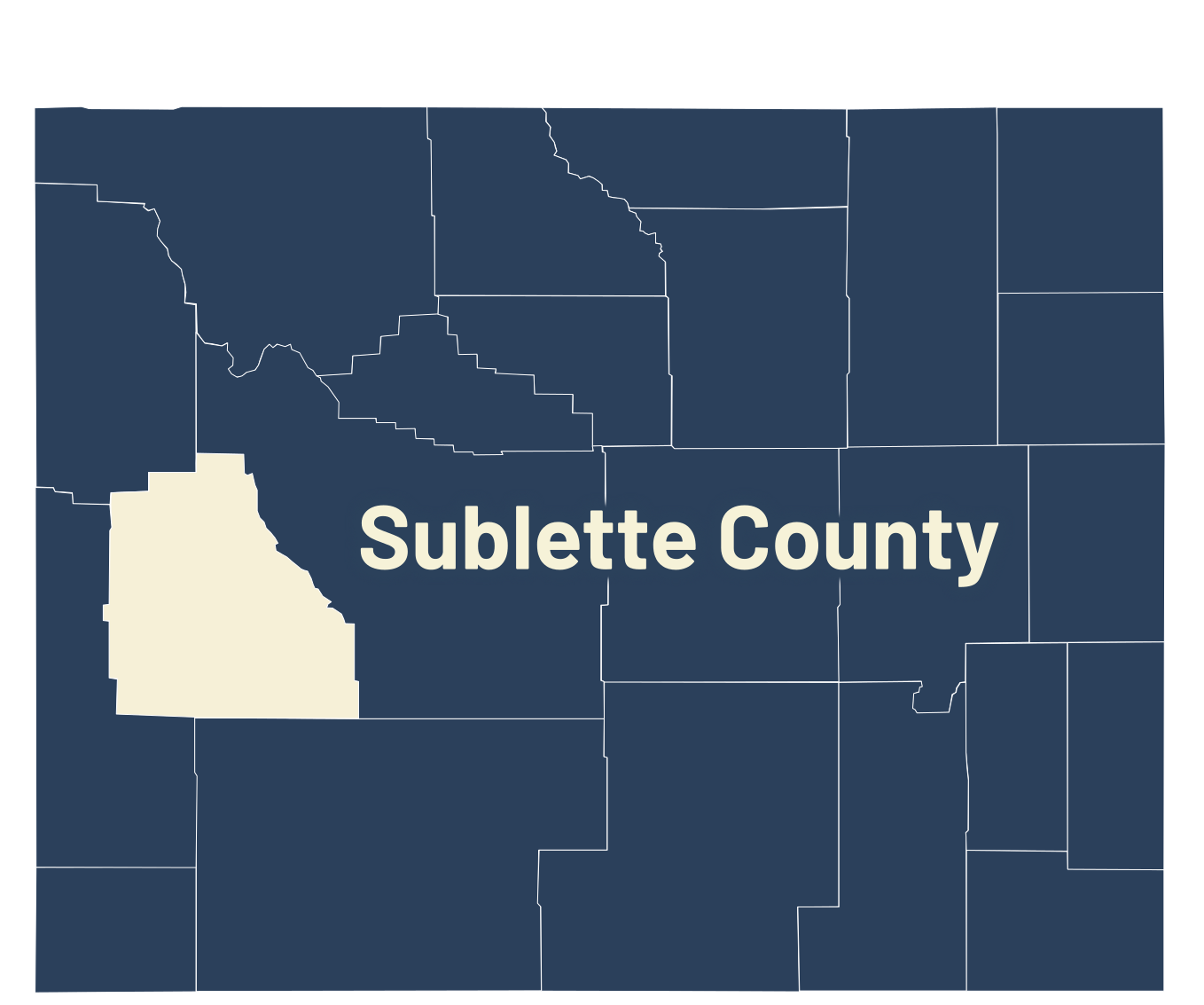
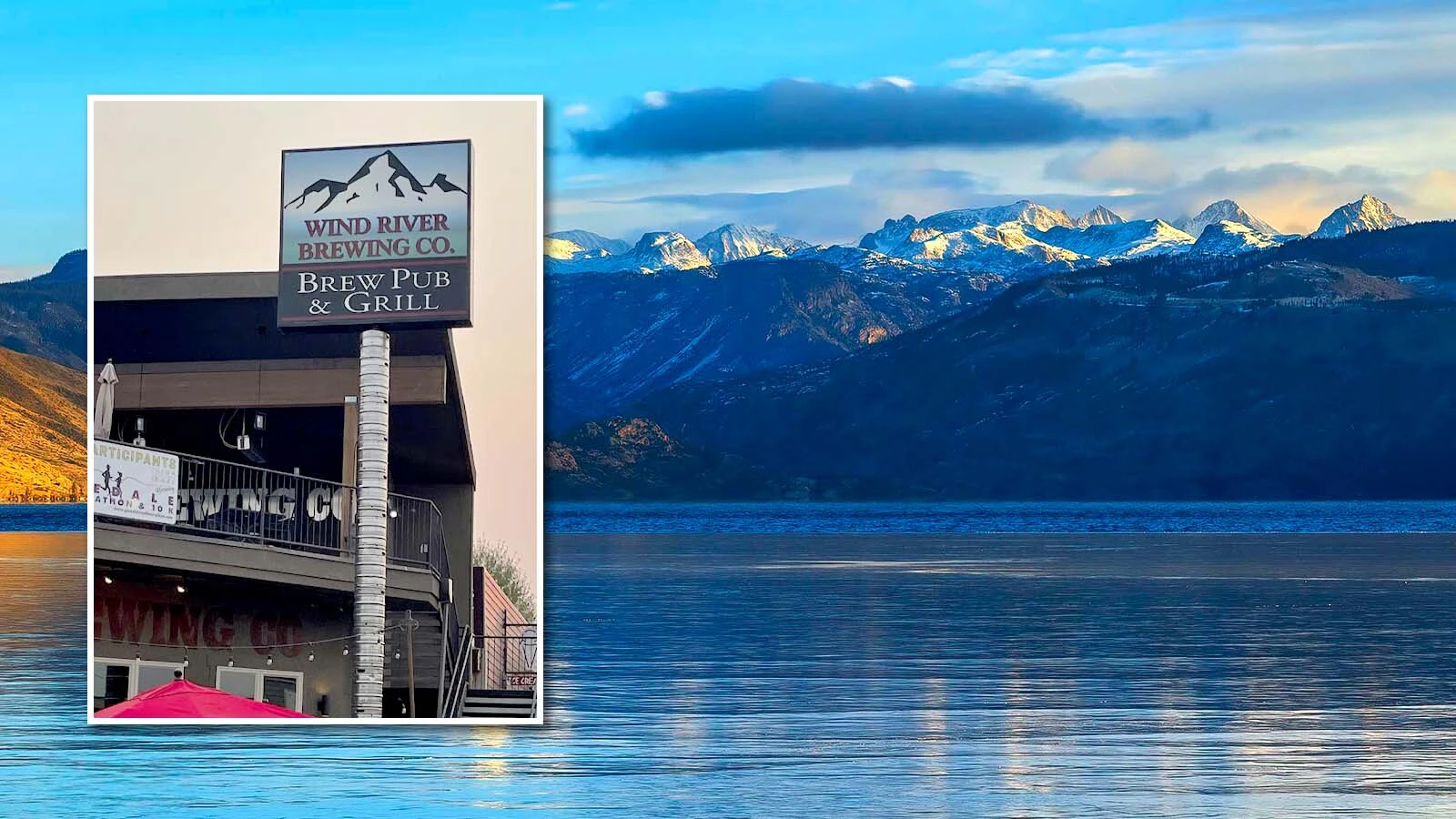
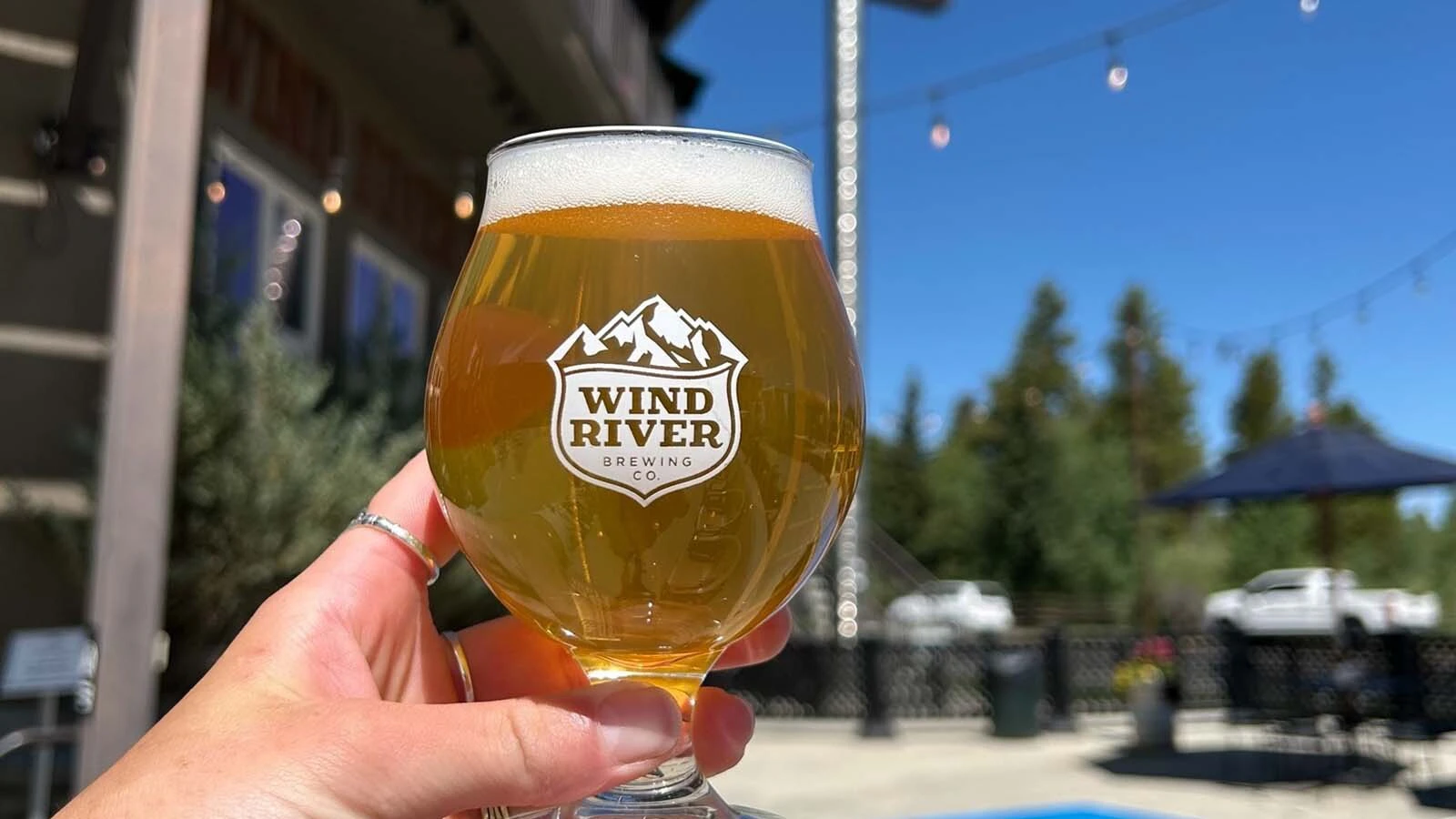
Wind River Brewing Company in Pinedale depends on pure water from Fremont Lake to maintain its quality and the beers’ identity.
Kari DeWitt and head brewer Thomas Simms appeared recently on, “The Cowboy State Morning Show With Jake,” and confessed what Olympia beer long ago declared its slogan: “It’s the water.”
“That’s the secret of why our beer’s so good,” DeWitt told host Jake Nichols. “Pinedale’s drinking water is Fremont Lake. So we have glacier-fed water that serves as the base for the beer, and it’s delicious.”
Simms, who has been expanding the brewery’s reach across Wyoming and into Idaho, explained what makes Fremont Lake water so attractive for brewing.
“This water comes from 200 feet down in Fremont,” Simms said. “They basically add nothing to the water besides UV treatment and the smallest amount of chlorine. So that coming into the brewery is just a great start for any beer.”
Grand Teton Brewing in Victor, Idaho, promotes this magic: “Our water is glacial run-off, filtered over 300-500 years by Teton Mountain granite and limestone before it surfaces at a spring a half mile from the brewery.”
Lander Brewing gives a shout out to, “exceptional water sourced from the Wind River Mountains.”
On its website, the craft beer spot in Saratoga assures its customers, “The Snowy Mountain Brewery gets its water from; you guessed it, the Snowy Range and the Sierra Madre Range of southern Wyoming’s Rocky Mountains, hundreds of miles of un-spoiled natural wilderness.”
It’s all thanks to an “abundant supply of cool, clear, crisp water filtered naturally.”
The brewery insists that just as there is a natural correlation between “happiness to good friends and family, beer comes from great water…”
Or as Jerry Reed’s truck-driving character “Snowman” in “Smokey and the Bandit” utters when he gazes upon a warehouse filled with Coors: “Liquid gold.”
David Madison can be reached at david@cowboystatedaily.com.