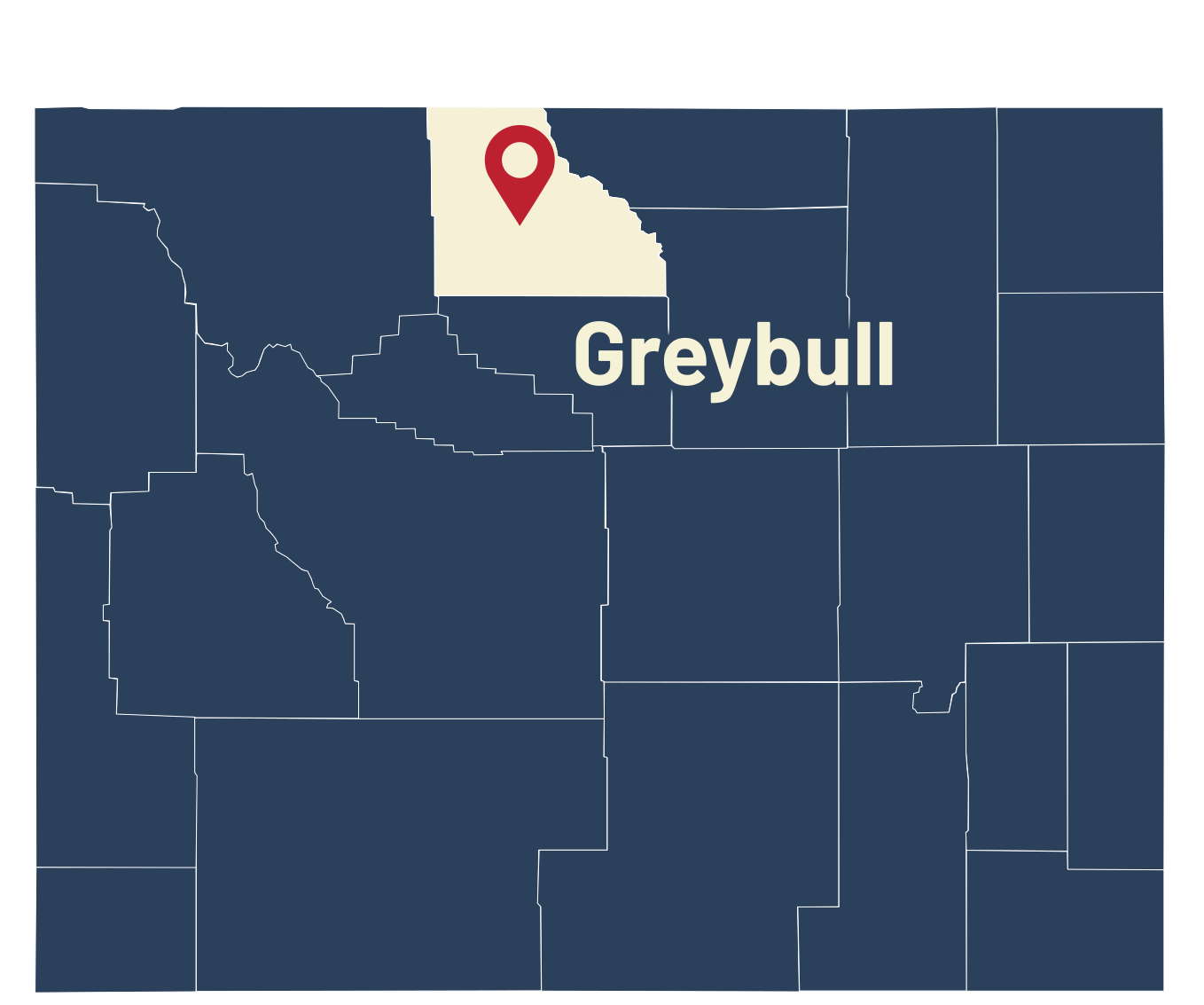
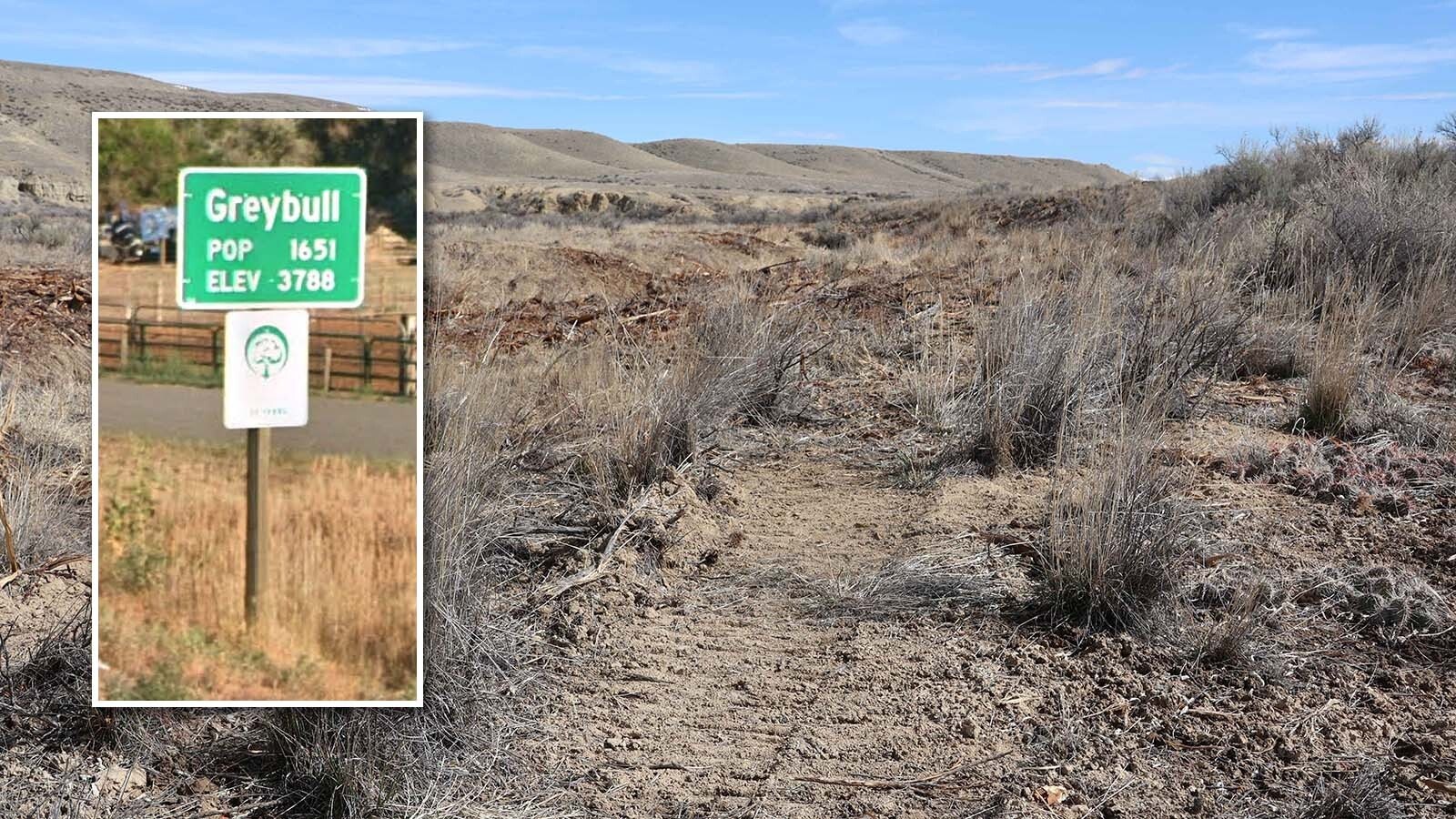
Russian olive trees are widely regarded as an invasive species and the general rule among land management agencies is to get rid of them.
But when that was done on Bureau of Land Management (BLM) land along Dry Creek near Greybull, it ruined some of the best pheasant hunting in the entire region, some sportsmen said.
To make matters worse, the public apparently wasn’t informed or given a chance to comment on the Russian olive removal plan before it happened, Colin Simpson of Cody told Cowboy State Daily.
“It’s hard to understand why that action would be taken on public land without notification of the public beforehand,” said Simpson, a former Wyoming legislator and son of the late U.S. Senator Alan Simpson.
He understands the need to control Russian olive as an invasive plant species, but thinks officials went overboard in Dry Creek.
“To mow it down to nothing, without a plan for rehabilitation makes no ecological sense,” he said.
Simpson, along with other Cody sportsmen who spoke with Cowboy State Daily, said that the thick Russian olive made the Dry Creek area a haven for pheasants, wild turkeys, mule deer, white-tailed deer and other species.
Scott Aune said he hunted there for more than 40 years.
“It was kind of an oasis in the desert,” he said.
Russian olive tends to grow back quickly, so there’s a chance that the hunting could be good there again. But he doesn’t expect to hunt there anymore.
“It won’t do it (grow back) in my lifetime. It might take 10 to 20 years,” he said.
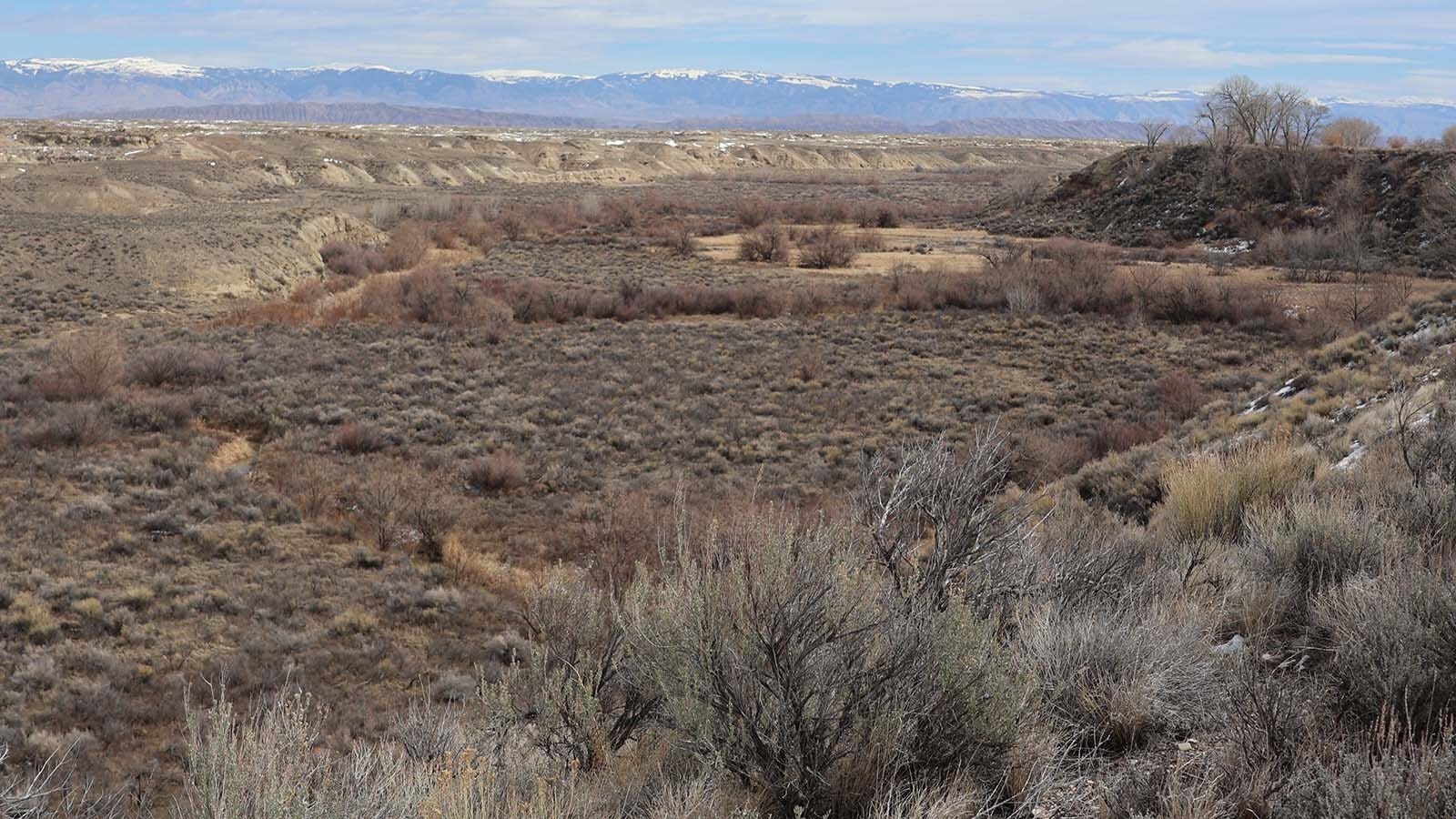
The Dry Creek area near Greybull used to have thick stands of Russian olive, which hunters say provided vital food and cover for pheasants, wild turkeys, deer and other species. (Courtesy Bob Ferri) 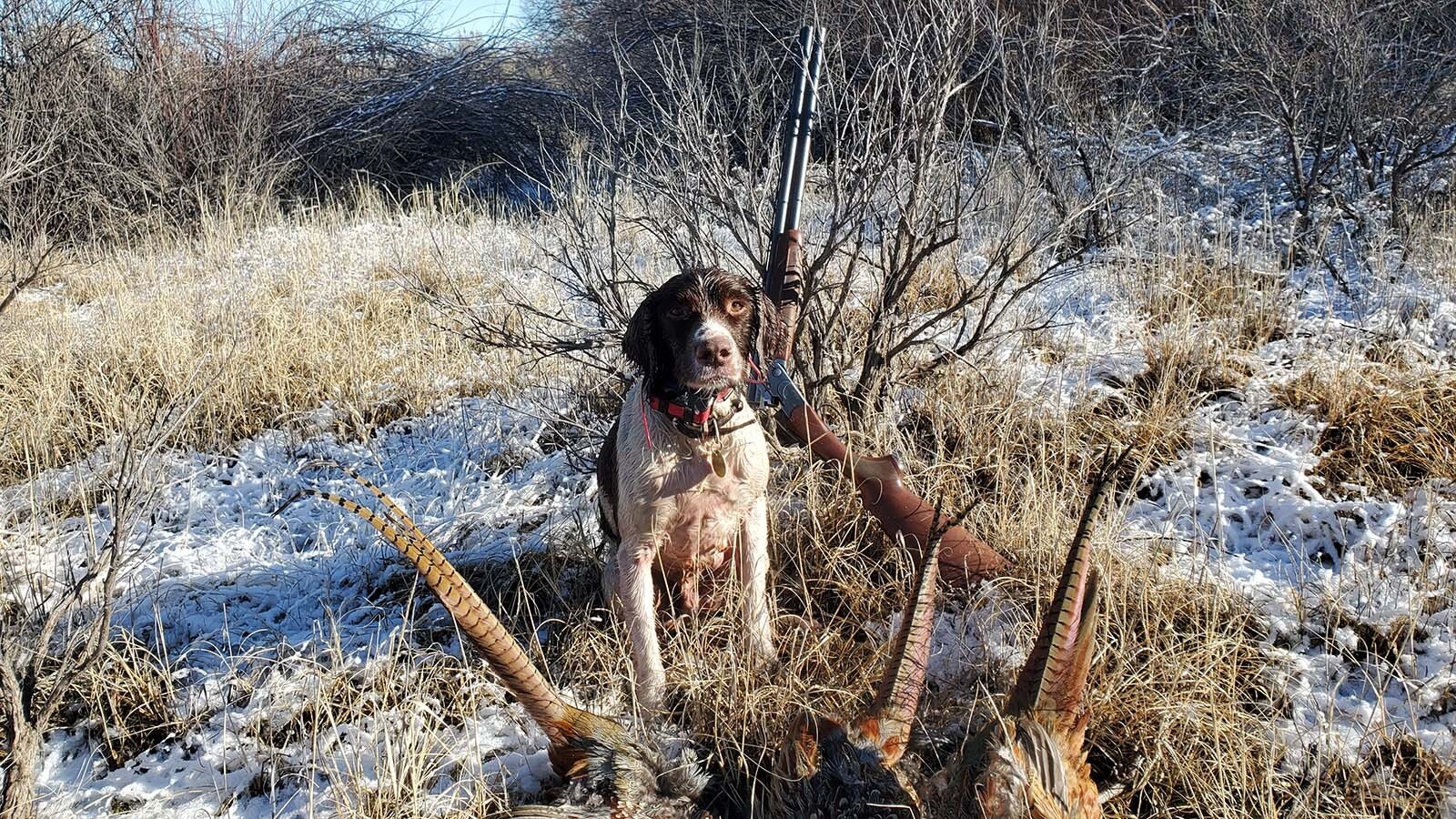
Rex, and English springer spaniel hunting dog owned by Bob Ferri of Cody poses with a day’s limit of pheasant roosters in the Dry Creek area near Greybull, in December 2025. The thick cover of Russian olive in the background has since been cut down. (Courtesy Bob Ferri)
Invasive Species
The BLM and the Big Horn County Weed and Pest Control District have been cutting Russian olive out of the Dry Creek area for years, hunter Bob Ferri said.
However, in just the past few months, the agencies went in and all but wiped the Russian olive trees out — effectively eliminating food and cover for game species and other wildlife, he said.
A message left for Weed and Pest wasn’t returned by publication time.
BLM spokeswoman Allegra Keenoo sent a brief statement in an email to Cowboy State Daily.
“Since 2011, BLM has coordinated with local Weed and Pest Districts, the State of Wyoming, the Wyoming Game and Fish Department, and the private landowner to remove Russian olive, an invasive species,” she stated.
According to information from Game and Fish regarding Russian olive, the species can provide benefits for wildlife in some places, but cottonwood is a more desirable alternative.
“Russian olive may provide pheasants with winter cover and food, but even one Russian olive tree can compromise the value of an otherwise open field or meadow as nesting cover because it provides perches for aerial predators,” according to Game and Fish.
“Cottonwood galleries support at least three times as many plant and animal species than a thicket of Russian olive. Left uncontrolled, Russian olive thickets shade new cottonwood seedlings and other riparian shrubs, preventing them from establishing,” according to the agency.
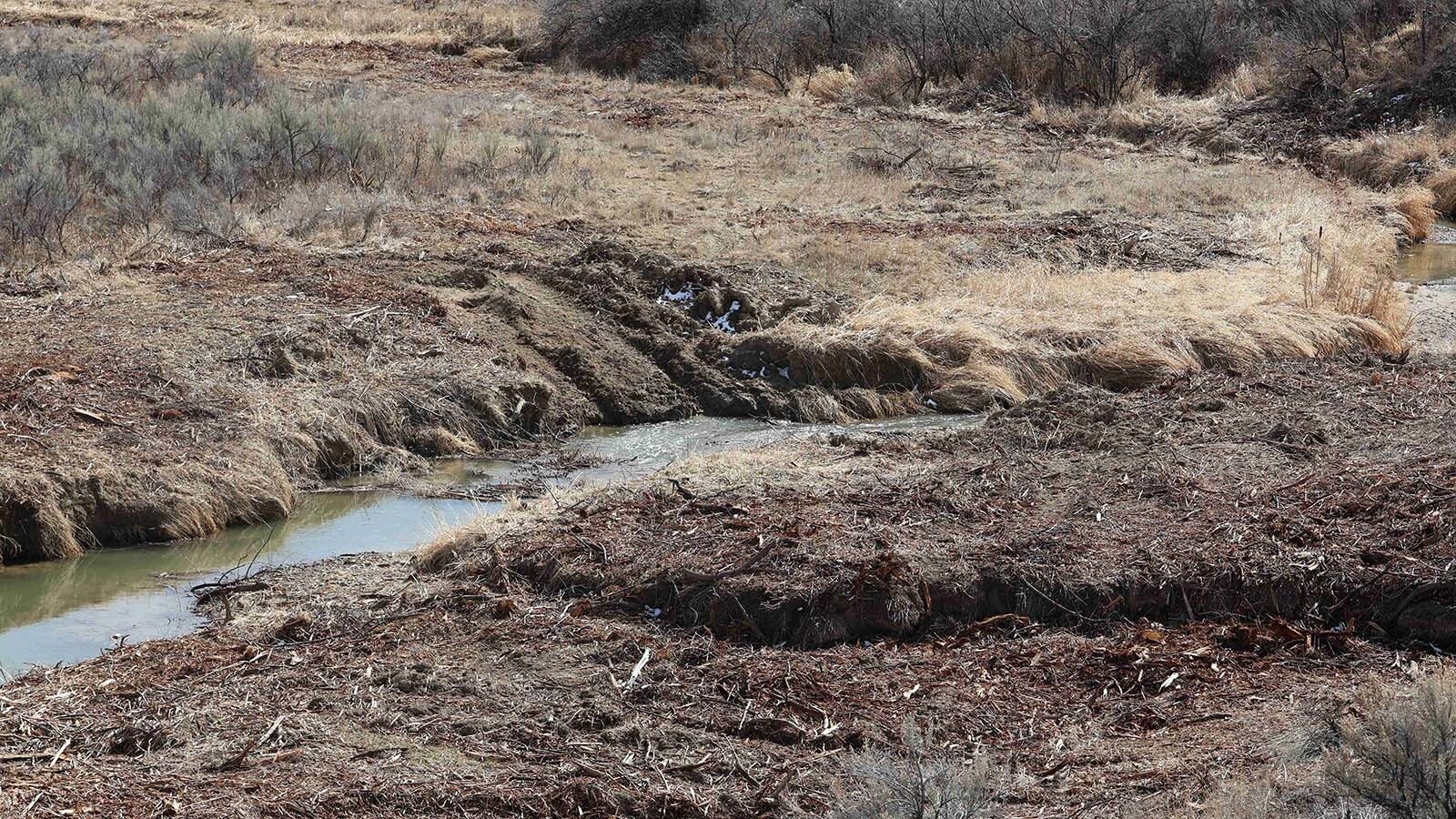
The Dry Creek area near Greybull is bare, after stands of Russian olive were cut down recently. (Courtesy Bob Ferri) 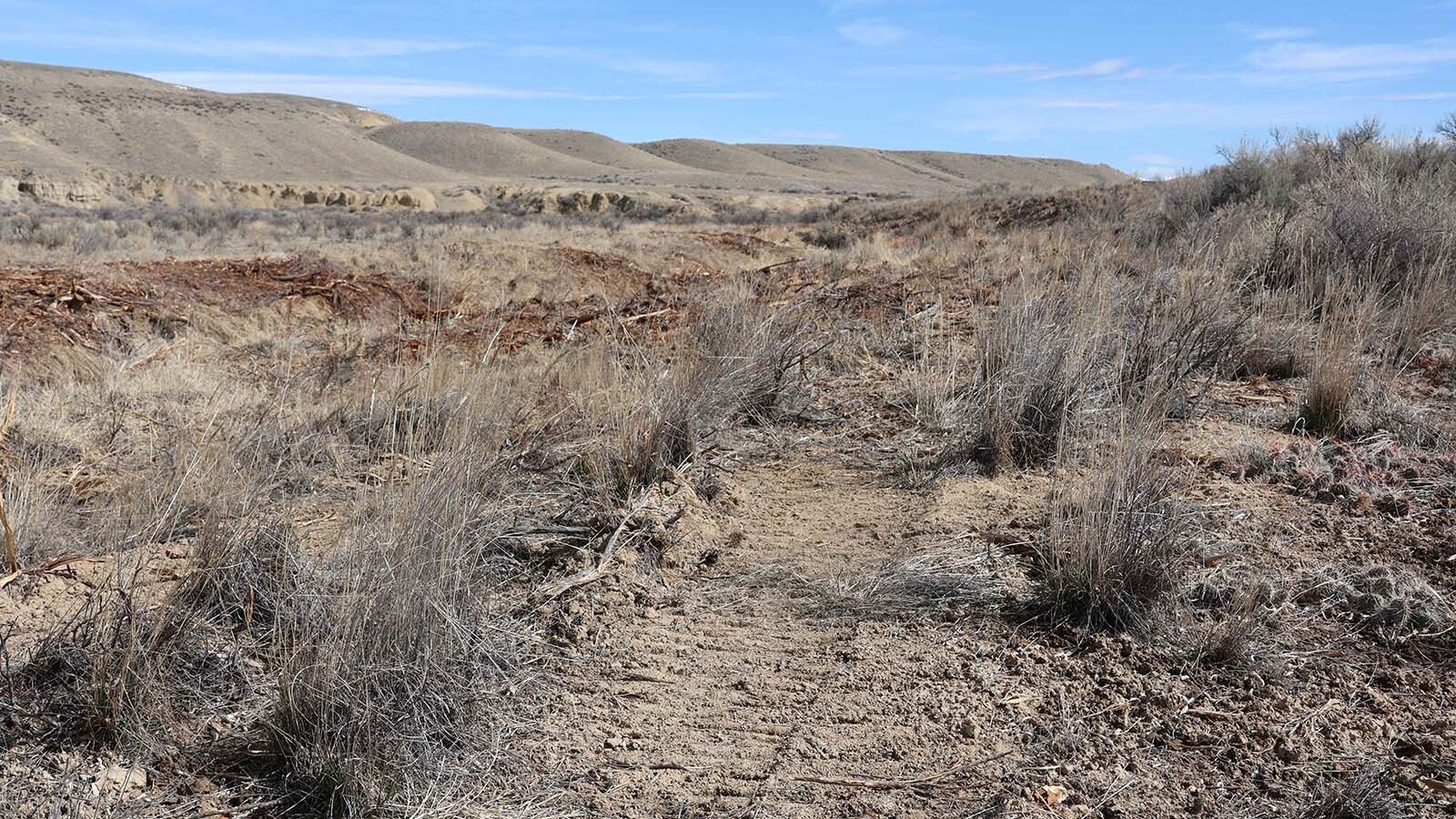
The Dry Creek area near Greybull is bare, after stands of Russian olive were cut down recently. (Courtesy Bob Ferri)
Wildlife Galore
Simpson, Aune, Ferri and fellow hunter Jeff Andre said before the Russian olive stands were wiped out, Dry Creek was one of their favorite places to go hunting or just watch wildlife.
“I remember wandering around the creek, back and forth across it, and I see all kinds of wildlife,” Simpson said.
He said he last hunted pheasants there in November 2025.
“Bob (Ferri) sent me photos just the other day, and it looks terrible now,” Simpson said. “It’s shocking.”
“It doesn’t even look like the same place. They cleaned it out,” Andre said.
“Once those Russian olives are gone, the pheasants, and everything else that lives on the berries and uses it for cover, they disappear,” he said.
Aune said that years ago, there were a couple of young bull moose hanging out in the Russian olive stands along Dry Creek.
“You’d be down there, and you would start to hear some crashing, and there they were,” he said. “I had no idea where they had come from.”
Sadly, both moose were hit and killed by vehicles on the highway bridge crossing Dry Creek, he said.
With all the cover gone, deer will probably feel too vulnerable to hang out there during hunting season, Ferri said.
“There’s not a deer that can be in that creek bottom and avoid being seen by hunters; there’s nowhere for them to hide,” he said.
“You’ve got a piece of BLM property that used to be good for hunting, but now it’s been wiped out, it’s really disheartening,” he added.
‘They’ve Become A No-No’
Russian olive was probably first introduced to Wyoming during the 1800s, because it grows quickly, and people used it to create shelter belts and windbreaks, horticulturist and former Cheyenne Botanic Gardens director Shane Smith told Cowboy State Daily.
“Much like Cottonwood, they’re a fast-growing tree. But fast-growing trees tend to be messier and they also die faster,” he said.
Russian olive never really took off in the Cheyenne area, he said. That’s because high winds that blow off snow prevent the trees from having a steady supply of water over the winter.
But in “lower, wetter streambeds” like in the Greybull area, Russian olive can thrive, he said.
While Russian olive trees were initially prized by settlers, they fell out of favor when it was discovered that they can aggressively take over an entire area, he said.
They can also grow so thick that they impede the natural flow of waterways. So, it’s become standard practice among state and county agencies to get rid of Russian olives, he said.
“They crowd out native species, so they’ve become a no-no. In fact, it’s kind of hard finding a nursery that will even sell you a Russian olive,” Smith said.
Mark Heinz can be reached at mark@cowboystatedaily.com.