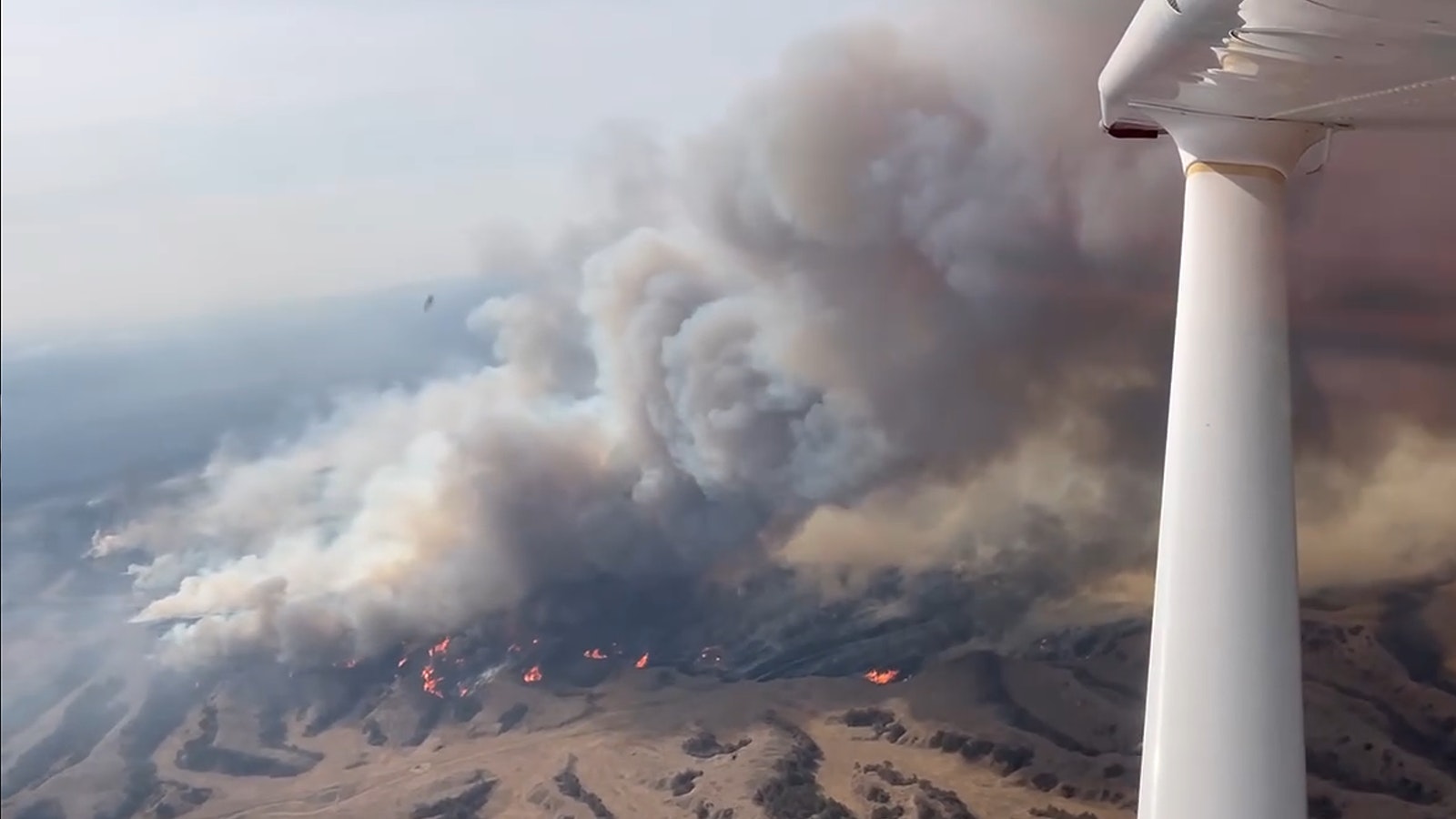
Four wildfires have scorched more than 756,000 acres across central and western Nebraska — the largest fire event in that state's history — killing one person, forcing evacuations and prompting Gov. Jim Pillen to declare a state of emergency and issue a statewide burn ban.
In South Dakota, a fire near Custer is burning through timber with extreme behavior and evacuations in effect, while another near Green Grass has destroyed two structures.
Wyoming has responded by sending 65 firefighters and 31 pieces of equipment to as many as four states, but one of the state's top fire management officers says conditions at home have been "above normal" all winter.
And the same dangerous mix of drought, wind and low humidity that turned Nebraska's and South Dakota’s grasslands into an inferno is present across Wyoming's lower elevations.
On March 12, powerful winds raked the central plains and sent fires racing across Nebraska, South Dakota, Kansas and Texas. Within a day, neighboring states were picking up the phone.
“Friday the 13th, Nebraska forestry, the state forestry over there, reached out to us for our Great Plains Interstate Compact, just looking for resources," Jerod DeLay, Wyoming's assistant state forester and fire management officer, told Cowboy State Daily.
Through the compact, four Type 6 engines deployed. Offering resources were Crook, Campbell, Teton and Sublette counties.
Additional resources moved through the regular interagency dispatch system. Goshen County sent a couple of bulldozers to the Black Hills, along with an engine. Laramie County and Natrona County each sent resources as well.
By Tuesday, the numbers were significant: 31 pieces of equipment and 65 Wyoming personnel were deployed across the region, according to a report DeLay reviewed during his interview.
"That's just that are out. I don't know where all they are, but there's probably some in Texas, Kansas, Nebraska, South Dakota," DeLay said. "They'd be all over right now."
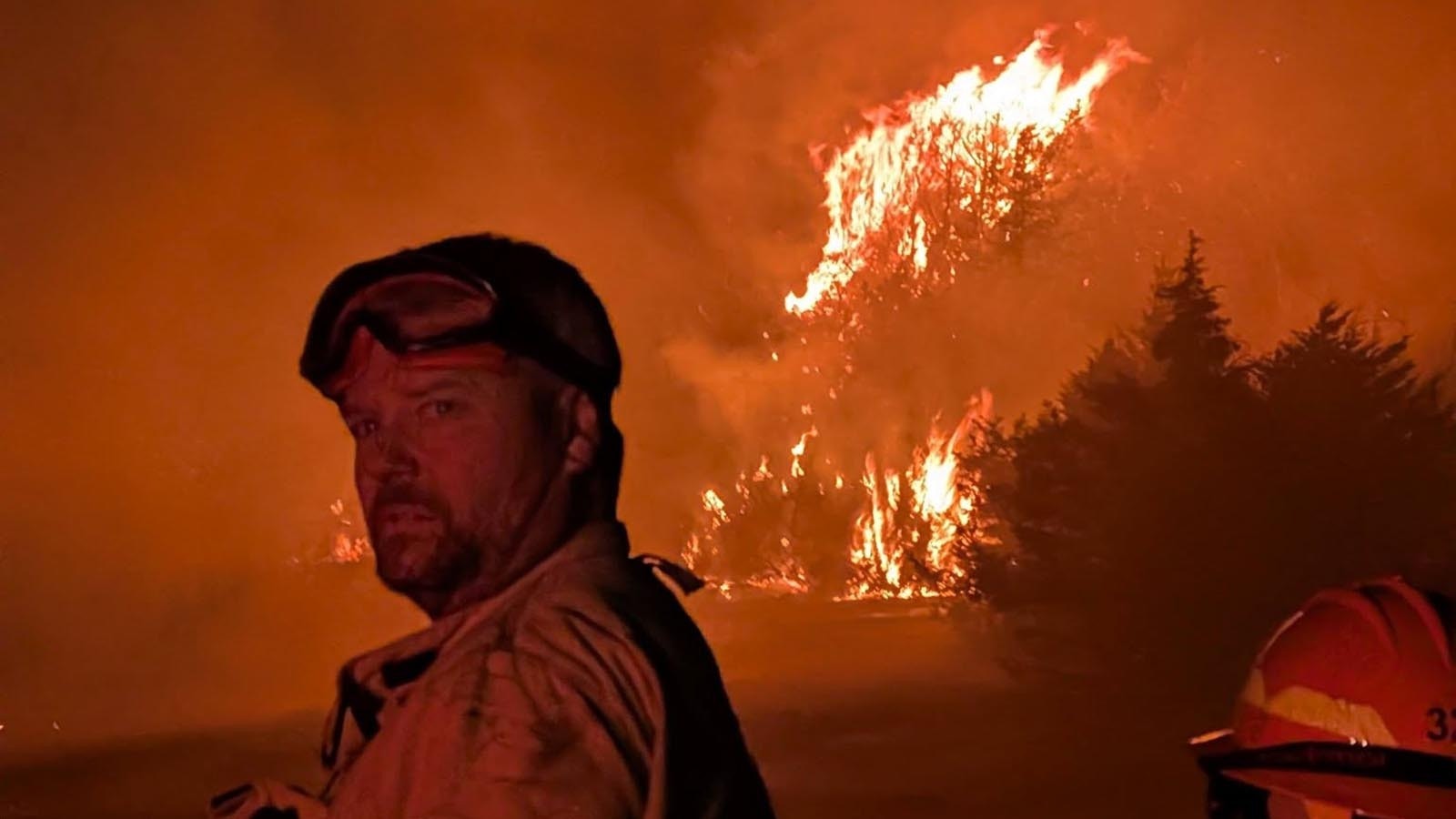
Firefighters battle the Morrill Fire in Nebraska. (Rocky Mountain Complex Incident Management Team 1) 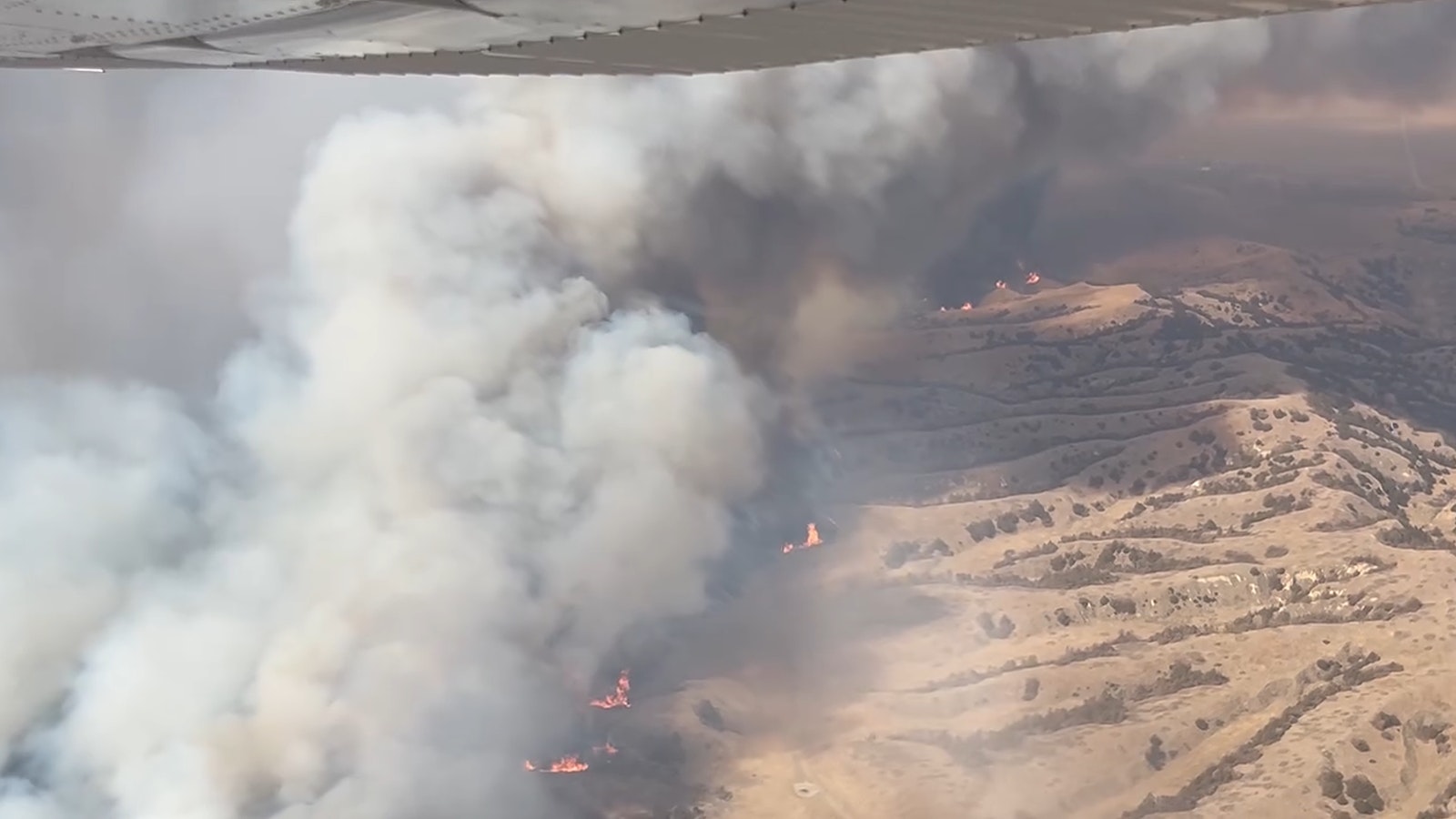
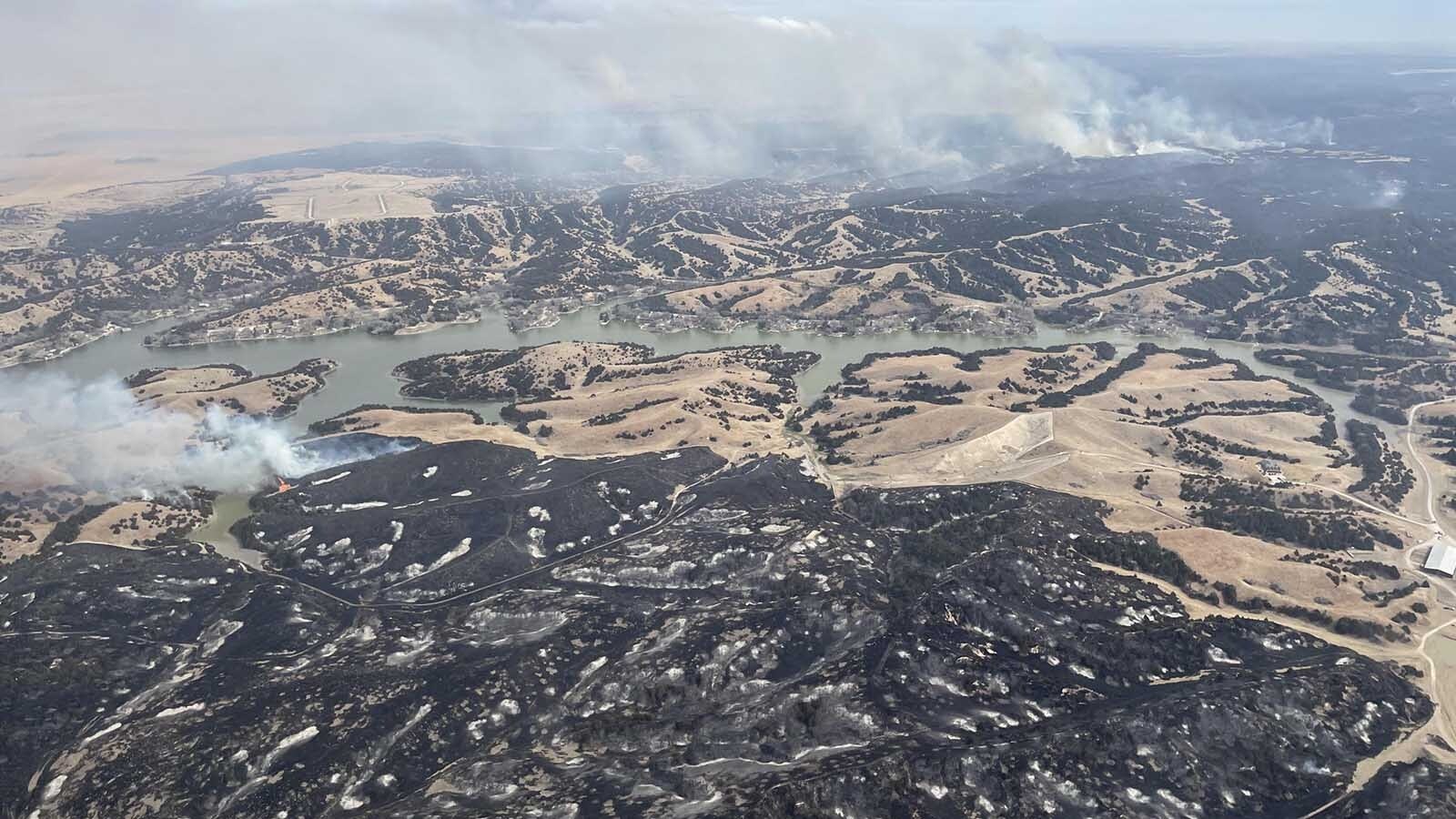
An areia view of some of the area of the 572,000-acre Morrill Fire in Nebraska. (Nebraska Highway Patrol) 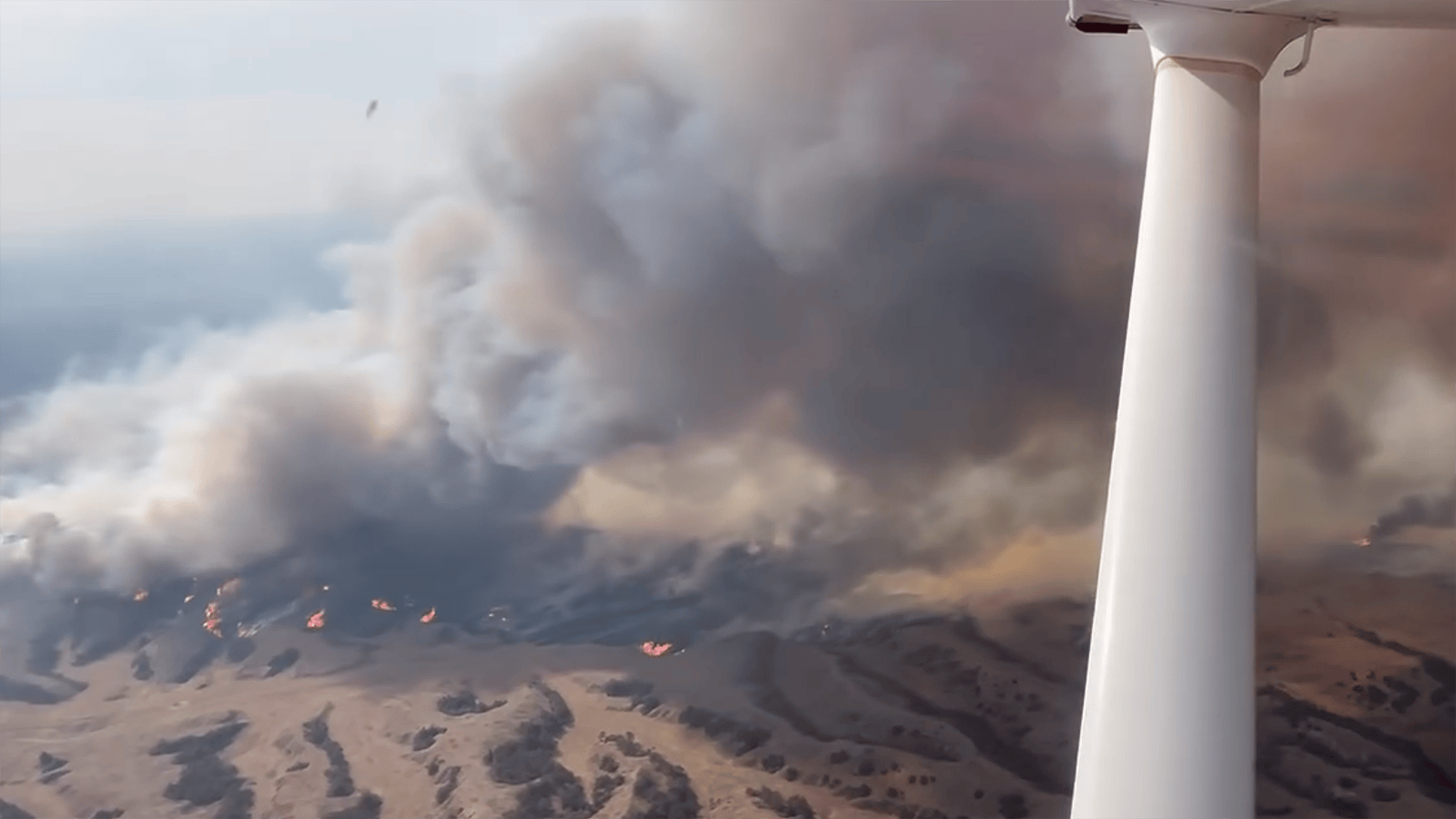
An areia view of some of the area of the 572,000-acre Morrill Fire in Nebraska. (Nebraska Highway Patrol)
Happen Here?
The question on many Wyoming minds is could what's happening in Nebraska and South Dakota happen here?
Cowboy State Daily meteorologist Don Day said the fires ravaging Nebraska were born from the same conditions that have gripped Wyoming all winter — but with one critical difference.
"Central and western Nebraska has experienced the same mild and dry winter that Wyoming has," Day said. "The sandhills area of Nebraska there was a fire waiting to happen because it was so dry, and because of these high winds that this region has experienced."
The difference, Day said, is that Wyoming has caught at least some moisture in recent weeks, while the fire zone in Nebraska has been almost completely shut out.
He estimated that part of Nebraska may have received a quarter of an inch of precipitation at most over the past eight weeks, making it one of the driest areas in the westcentral United States for two consecutive years.
The grasses, dead from winter and never given a chance to green up, were essentially freeze-dried fuel waiting for a spark.
"The lack of precipitation here, during the time of year when things green up a little bit, certainly has made the situation worse from already the dried-out foliage that you normally get as you go into the winter season as the grasses die and brown out," Day said. "That part of Nebraska just has been parched."
Day said he sees no meaningful relief ahead for at least several days, probably through Saturday, adding that eastern Wyoming could be included in that dry outlook — though it has a better chance for showers early next week than Nebraska does. Until the pattern breaks, he said, the danger isn't going away.
"Until we can get out of this vicious cycle that we have had this winter, it's going be hard for them to get much relief for the next week," Day said.
So in Wyoming, at lower elevations where grasses freeze-dried by winter and not yet greened up remain combustible.
Fire management officer DeLay confirmed Wyoming has been busier than usual with wildfires all winter long.
"It's been probably classified as above normal," DeLay said of fire activity at lower elevations statewide.
As for the neighboring states, "It's just like Wyoming. They've probably been busy all winter long just because of the dry conditions,” he said.
Recent Wyoming fires have underscored the point.
Last week's Porcupine Creek Fire near Wright in northeast Wyoming at about 2,500 acres was the largest so far this year. Another fire, the Little Crazy Woman Canyon blaze, burned about 175 acres west of Buffalo on the face of the Bighorns.
"The conditions are there when we get these warm, windy days," DeLay said. "We got a little wind today and I — we've already seen them. I think there's been one report of a fire already up in Natrona County. Don't know any particulars on it, but I know there's been a report of one."
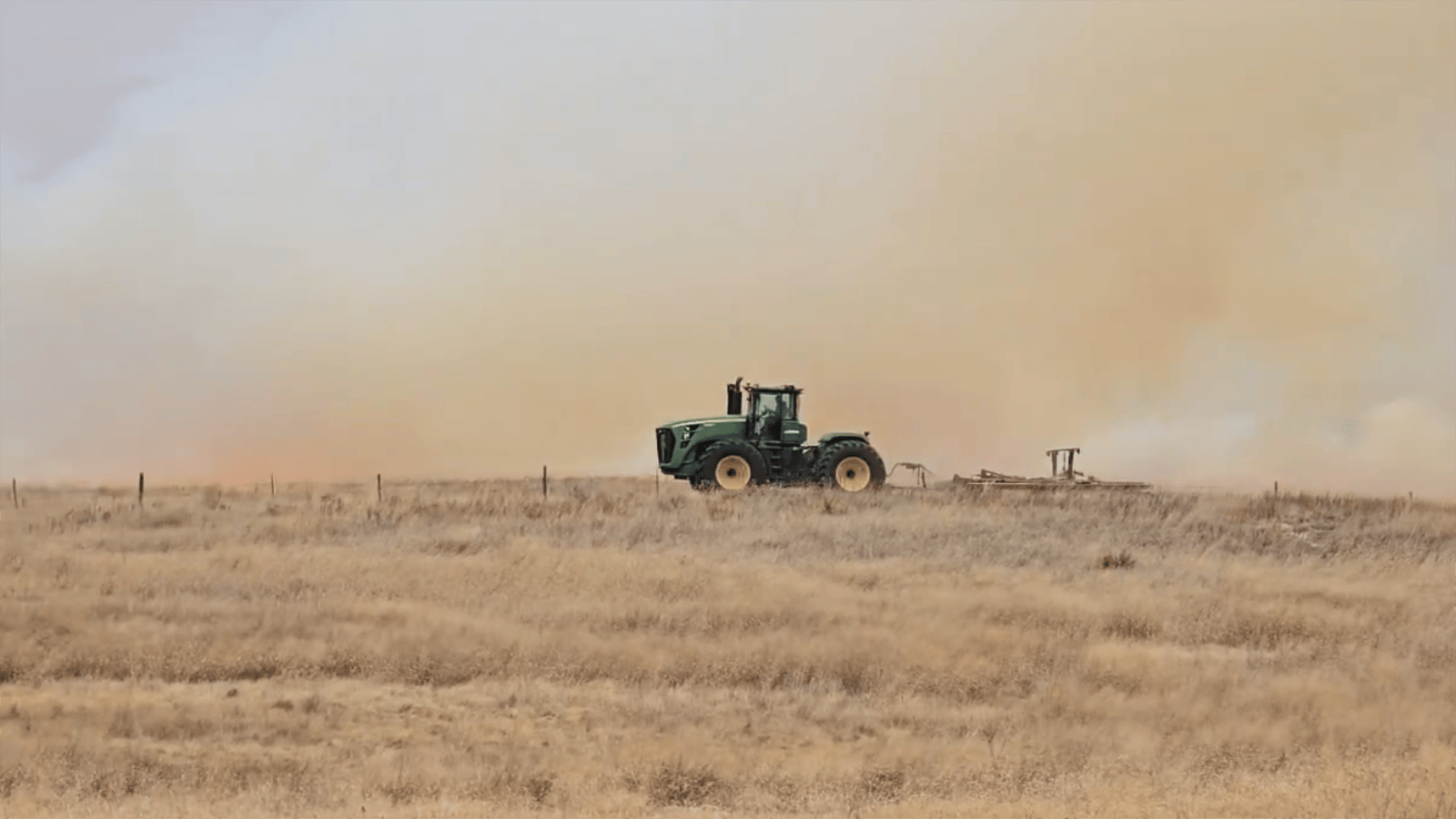
A tractor drives along a fence line as the glow of flames and thick, choking smoke billow from the Morrill Fire in Nebraska. (Dan (The Iceman) Fitts) 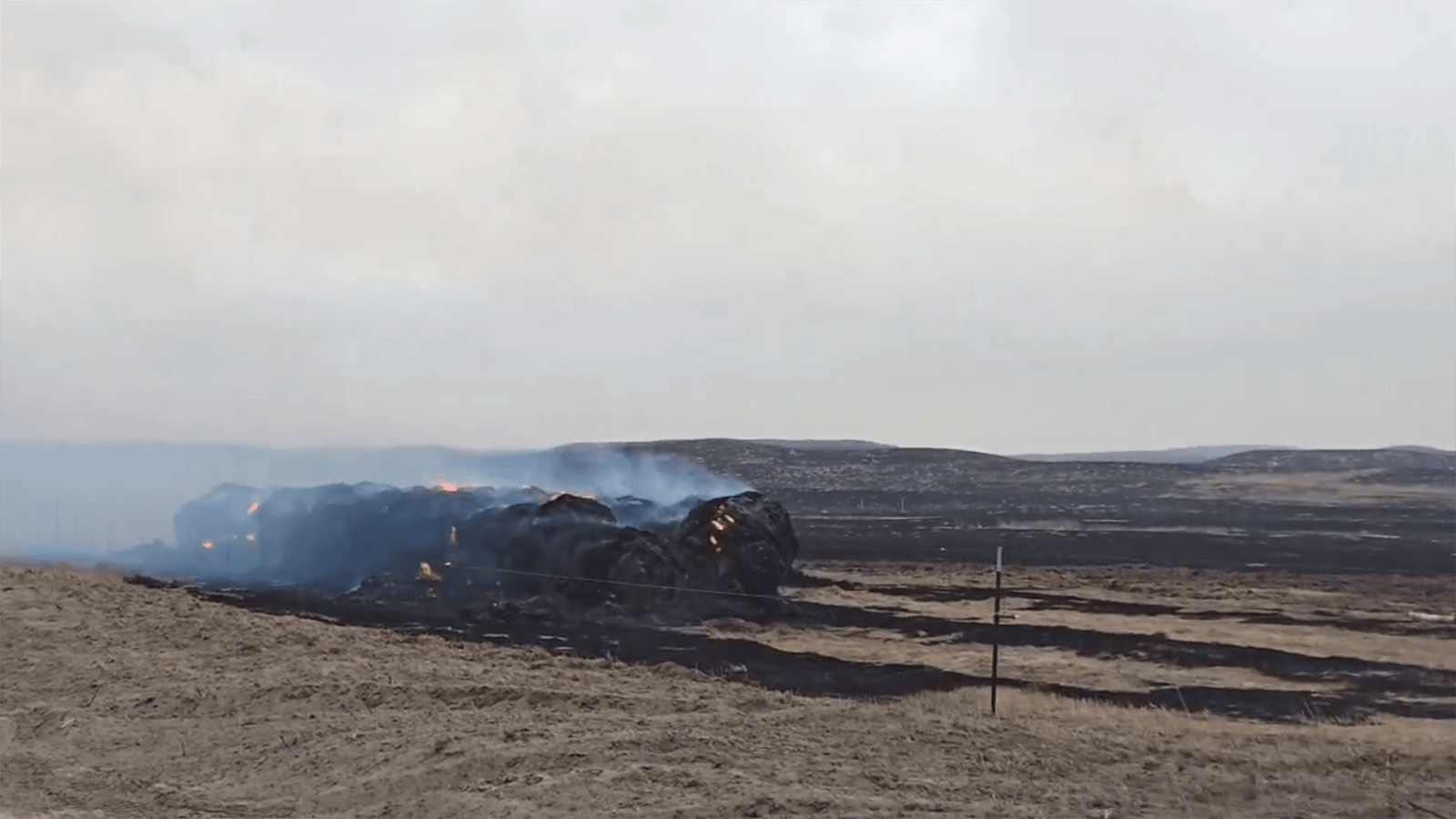
A stack of hay bales burns in the path of the Morrill Fire in Nebraska. (Dan (The Iceman) Fitts) 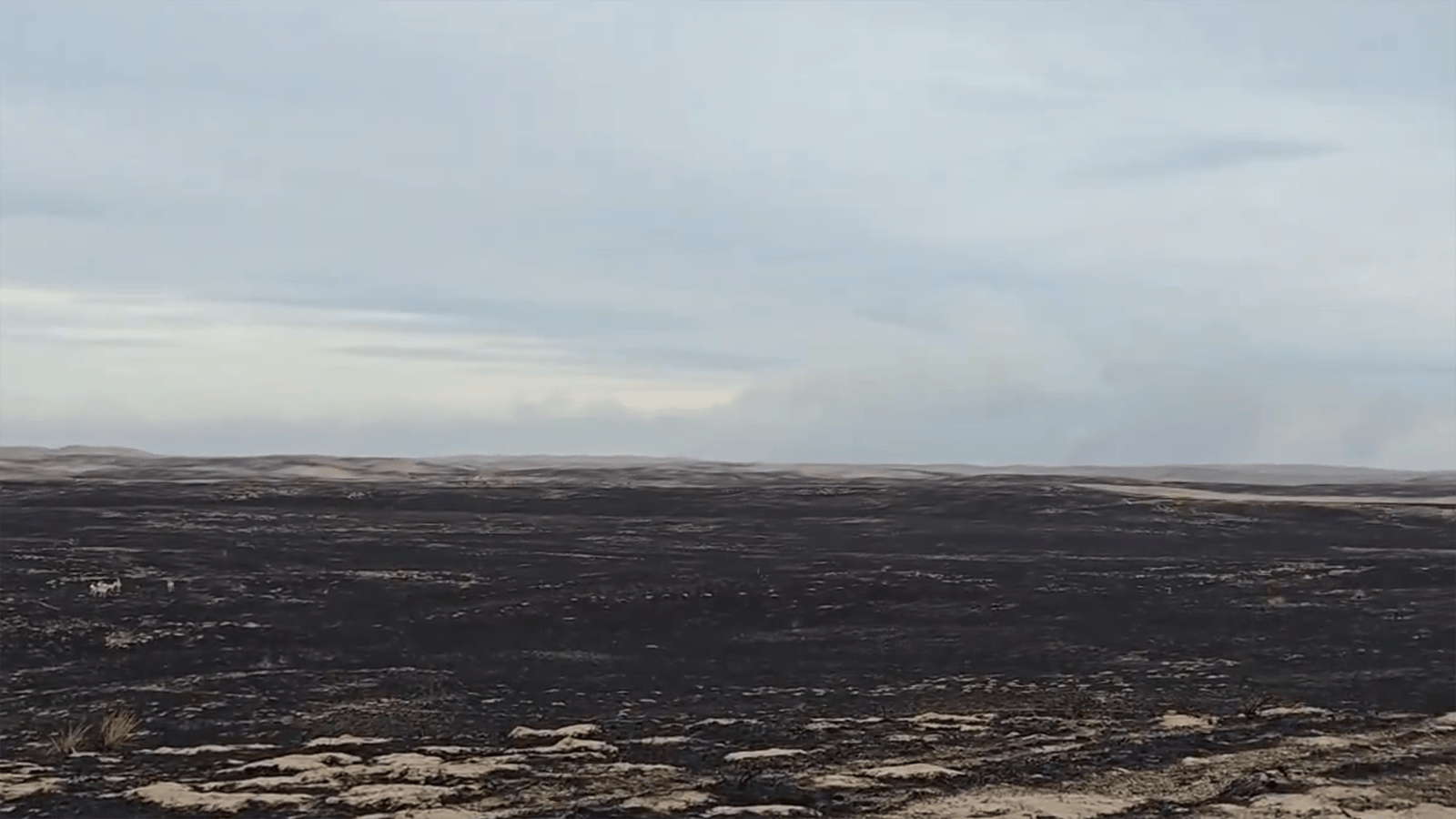
A sea of black prairie left by the Morrill Fire in Nebraska. (Dan (The Iceman) Fitts)
Nebraska Inferno
The Rocky Mountain Area Coordination Center reported four are major wildfires burning across Nebraska.
The largest, the Morrill Fire, had consumed 572,084 acres across Morrill, Garden, Grant, Arthur and Keith counties with just 18% containment, making it the largest fire in Nebraska history.
It was discovered Friday after a power pole was knocked down by wind, according to local reporting. One person has died.
The Cottonwood Fire, south of Interstate 80 near Brady and Gothenburg, has burned 131,259 acres in Dawson, Lincoln and Frontier counties and was 40% contained. An evacuation notice at Jeffrey Reservoir remains in effect.
The Road 203 Fire, which started when the Chokecherry prescribed burn at Halsey National Forest escaped its burn area on Thursday, had burned 35,814 acres and is 36% contained. Its cause is listed as human in the RMCC incident data. Drones are being used to identify remaining hot spots across that fire area.
The Anderson Bridge Fire, west of Valentine in Cherry County, had burned 17,400 acres and is the most contained of the four at 60%.
The combined burn acreage across all four fires exceeded 756,000 acres.
Nebraska Governor Pillen declared a state of emergency for seven counties — Morrill, Garden, Arthur, Keith, Lincoln, Dawson and Frontier — and issued a statewide burn ban through March 27.
At least 47 Nebraska National Guard soldiers and airmen were deployed, with Iowa sending two additional Blackhawk helicopters and crews.
To the north, South Dakota is dealing with the Qury Fire near Custer, which has burned 8,434 acres of timber with 27% containment, according to the National Interagency Fire Center.
That fire has about 350 personnel assigned to fight it.
Preparing Early
With no relief in sight, Wyoming's fire managers are considering an unusual step of bringing single-engine air tankers online weeks ahead of their normal schedule.
"We're looking at maybe we bring our single-engine air tankers on a couple weeks earlier this year," DeLay said. "That just requires some coordination with some of our partners."
The tanker base in Casper is a federal facility, and opening it early requires coordinating with federal partners. Another option is the base in Gillette, which was used last season.
"We could possibly maybe open up some other ones like the one we utilized last year in Gillette," DeLay said. "It's just things we're talking through, trying to talk with our partners to see what we can do and be able to staff."
The timing is challenging. Most partner agencies don't bring on their increased seasonal staffing until later in spring.
"It's March. It's before a lot of people — a lot of our partners and everybody — bring a lot of increased staffing on," DeLay said.
Meanwhile, the two new ground-based wildfire “modules,” or teams authorized by the Wyoming Legislature during the recent session, aren't ready yet. The state still needs to hire staff, acquire vehicles and buy tools and equipment.
"Once the governor signed it, we don't have that — we have to build that, we have to hire those folks," DeLay said. "Hopefully we can get them going here by the first part of the summer."
Counties are also tightening up. Some are going into fire restrictions earlier than normal and keeping more resources at home rather than sending them out of state.
"It's dry here, so they're keeping a few more closer to home," DeLay said.
Red Flags
The fire weather conditions on Tuesday told a bleak story across the region.
The National Weather Service issued Red Flag Warnings for portions of every state Wyoming is sending resources to — and for Wyoming itself.
The warners are for the Laramie Foothills, Laramie East High Plains, Bordeaux/Chugwater/Wheatland and Goshen areas, with sustained winds of 25 to 30 mph gusting to 40 and humidity dropping to 18%–22%.
An extended Fire Weather Watch from Wednesday morning through Saturday evening warned of worse conditions ahead, with humidity plunging to 10%–15% and poor overnight recoveries.
With 65 Wyoming personnel scattered across the burning Plains, air tanker discussions underway and Red Flag Warnings flying on both sides of the state line, DeLay had a straightforward message for Wyoming residents heading into a dangerous week.
"Everybody has just got to maintain their vigilance," DeLay said. "Especially this week when we're going to hit some high temperatures, it's going to be windy, there's not a lot of moisture out there. You just have to be aware of your surroundings and what you're doing outside."
David Madison can be reached at david@cowboystatedaily.com.