
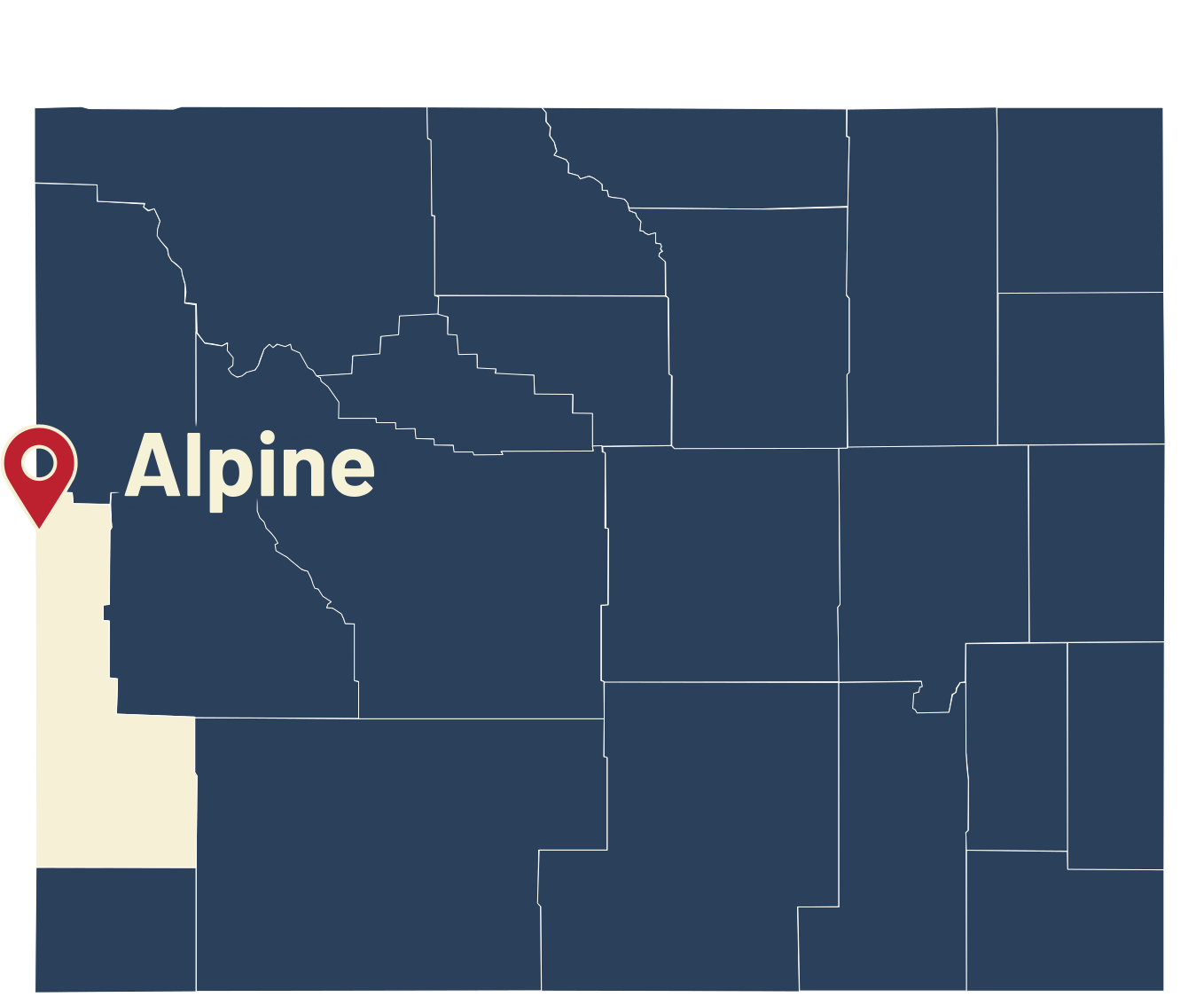
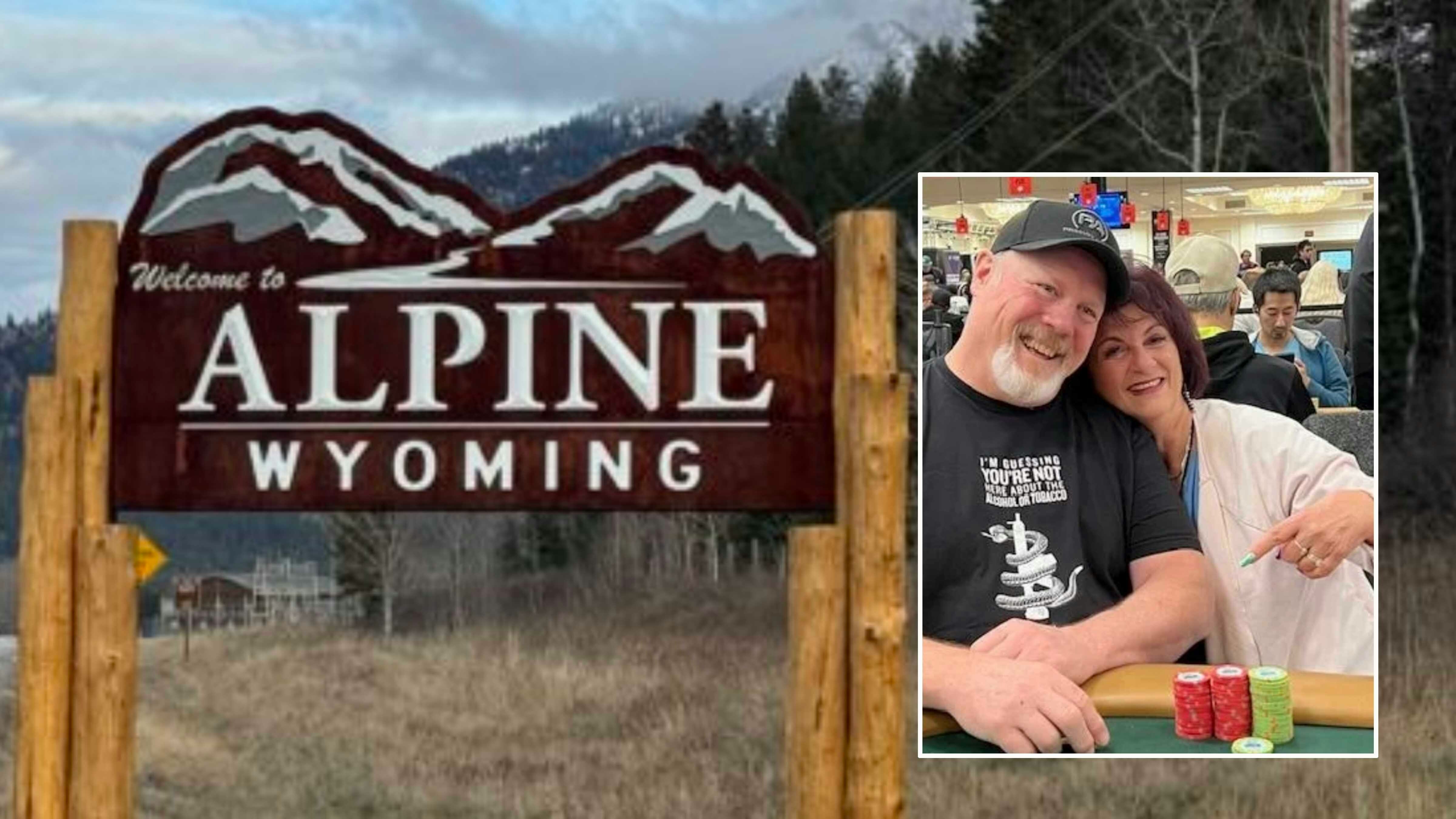
Downstairs at the Bull Moose Saloon there is a bar, a kitchen and the usual clatter. Upstairs, there is a room that is vacant most of the day. But four nights a week it becomes Yo’s Poker Palace.
On Wednesdays, Fridays, Saturdays and Sundays, the place fills with somewhere between six and 11 players, and a retired municipal worker named Yolanda Navarrete deals the cards.
Navarrete has run the game for roughly 13 years. She retired from planning, zoning and water department work for the town of Star Valley Ranch, which sits south of Alpine, and followed her passion for poker into what she calls Yo’s Poker Palace.
The name began as a joke. Friends and family who endured her home games years ago teased her about it, and eventually a friend talked her into launching a blog under the moniker. On it she infrequently posts advice for poker rookies — do’s and don’ts, breakdowns of crazy hands, tips for beginners who want to learn the game. She hasn’t updated it in months.
“I’ve been too busy,” she said.
The cast at Yo’s Poker Palace includes Mikey, Yo’s legally blind husband, and other regulars with nicknames like Smiley, Spud and Jersey.
Cowboys drift in from nearby ranches. Snowmobilers from as far away as Maine roll in every winter and stay long enough to feel like regulars. The oldest player at the table is 90-something, who was born on the old elk feed ground in Jackson, back in the 1930s.
Once, when the game was still downstairs in the back dining room, the late Mike Sexton — the World Poker Tour broadcaster and professional player — dropped in through a mutual friend, sat with Navarrete, and watched the action. He didn’t have time to play, which she still laments.
A traveling pro they call Yukon Brad passes through every once in a while and sits down for a session.
“He’s a lot of fun,” Navarrete said.
The biggest pot anyone can remember at the Bull Moose was around $400.
On a good night, a dealer might collect a dollar tip per hand — and sometimes nothing at all.
“Poker players for the most part are pretty chinchy,” Navarrete said.
The Bull Moose’s owner doesn’t charge the game a cent in rent. Players who want food or a drink walk downstairs and order from the bar, then carry it back up. If the restaurant isn’t busy, a waitress might bring a plate upstairs. There is no cocktail service orbiting the table. The bar is just selling its regular food and drink to people who happen to be playing cards, said Navarrete.
It is, in other words, the kind of game that has existed in small Western towns for as long as there have been saloons and long winter nights — a social institution alive with inside jokes and table banter, where everybody knows your name and, if they don’t, they’ll give you one.
Wyoming lawmakers recently rewrote the rules governing poker games, and Navarrete now has something new to think about between hands.
Tighter Rules
For years, Wyoming law has allowed poker games among friends — the kind of Saturday night kitchen-table affair where somebody loses 20 bucks and nobody walks away from the table flush with cash.
Some professional operators found a way to turn the friendly game exception into a business model.
Certain bars began hosting regular games with serious buy-ins, with a cut of the pot going to the bar owners, according to gaming authorities and lawmakers tracking the issue.
When investigators showed up, everyone at the table claimed to be buddies. In Southwest Wyoming, authorities found a $140,000 pot inside one bar.
“We were dealing with people who were running poker halls,” said Sen. John Kolb, R-Rock Springs, who pushed the recent changes through the Legislature. The bars had a tidy defense: “We don’t know what’s going on. We’re just selling drinks.”
The social-game exception had been “exploited in many areas,” said Nicholas Larramendy, executive director of the Wyoming Gaming Commission. Illegal gambling activities were being “used for commercial gain, which is not what that was intended to do.”
Recently enacted Senate File 44 seeks to close the “friendly game” loophole. A legal private poker game must now be “incidental” to a genuine social relationship — one built on “established knowledge of the other” that did not arise for the purpose of gambling.
Games cannot be advertised, must be conducted in private and no one — not the host, not the bar, not a middleman — can pocket anything beyond direct winnings.
The law makes it “abundantly clear,” Larramendy said, that bars and venues where these games take place “can absolutely make no money from that.”
Hearts Problem
In addition to friendly games of poker, another popular pastime in Wyoming is Queen of Hearts.
The game is a progressive raffle-style contest run in bars, clubs and fraternal lodges across Wyoming. Fifty-four cards go face down on a board, players buy tickets and choose a number, and a winning ticket is drawn at regular intervals. If the card matching that ticket is the Queen of Hearts, the holder takes a jackpot. If not, the pot rolls over, growing week after week.
Under Wyoming law, charities and nonprofits may run exactly three types of games: bingo, pull tabs and Calcutta auctions. Queen of Hearts isn’t on that list.
“You can’t put a potentially legal activity, i.e. the raffle, on the front end of an illegal activity on the back end, i.e. Queen of Hearts, and make the Queen of Hearts then legal,” Larramendy testified before the House Revenue Committee in February.
Kolb said the Gaming Commission has found “all sorts of shenanigans” tied to illegal card games. “It’s kind of blown up to be a big problem and they subsidize their business with skimming their profits,” he said. “It’s a bigger problem than anyone realizes.”
So far, the Gaming Commission has identified Queen of Hearts operations across the state and worked with local prosecutors to educate the nonprofits running them, Larramendy said. No one has been formally charged, and the approach has been cease-and-desist letters and conversation.
Yo’s Hand
Back in Alpine, Navarrete doesn’t think the new law is aimed at her game.
“We don’t take a rake,” she said. “It’s all just basically pretty social.”
Her understanding has always been that the dealer could accept tips and that was it — no rake, no rent to the venue.
But a close reading of Senate File 44 reveals at least three points where Navarrete’s game could brush against the new language.
First, tips. Under the rewritten statute, no person may receive “any remuneration from facilitating, participating in, hosting or organizing the game, wager or transaction other than the direct realization of winnings.”
A tip to the dealer is not a direct realization of winnings. It is remuneration for facilitating the game. The law does not carve out an exception for gratuities, however modest. A dollar per hand from a chinchy cowboy is still a dollar that isn’t winnings.
Second, advertising. The statute requires that a legal social game be “not advertised or otherwise open to public participation.”
Navarrete’s blog is an open invitation for visitors to come play at the Bull Moose — but not much of a marketing tool.
“I don’t think I’ve ever even had anybody show up saying, ‘Oh, I saw you advertise,’” she said.
But the statute doesn’t hinge on whether advertising is effective. It asks whether the game is advertised at all.
Third, who’s at the table. Senate File 44 defines a “bona fide social relationship” as a “genuine social relationship between two or more persons wherein each person has an established knowledge of the other,” and specifies the relationship “shall not include a social relationship which has arisen for the purpose of gambling.”
Navarrete’s longtime regulars — the ones with nicknames, the ones who’ve played for years — likely satisfy that test. Tourists passing through Alpine and snowmobilers in town for a few months present a different fact pattern. Their connection to the table may have arisen for exactly the purpose the statute now forbids.
In the past, law enforcement has walked through the game and never raised a concern — in fact, Navarrete said a sheriff’s deputy and a police officer would come and play every once in a while.
At one point, a Wyoming Gaming Commission inspector visited the bar for an unrelated matter involving gaming machines elsewhere in the building. The inspector asked the manager about the poker and moved on without issue.
Rules are enforced at Yo’s Poker Palace. On her webpage, Navarrete makes it clear that “poker manners matter… Poker’s a people game. It’s not just what you bet — it’s how you behave.”
The dos and don’ts include, “No slow rolling (if you’ve got the nuts, turn ‘em up)” and “Don’t criticize how others play – especially newer folks.”
Navarrete then gives a shout out to her favorite regular.
“Now let me brag on my husband for a second. Mikey plays in all our games, and most folks around here know he’s legally blind,” writes Navarrete.
“I read the board to him — but the man still plays like a pro. His poker instincts are unreal. If Mikey calls your raise, you’d better have it.”
She then adds, “One of our tourists this week asked, ‘How can a blind guy play No Limit Hold’em?’
I just smiled and said, ‘Stick around a few hands – you’ll see.’”
David Madison can be reached at david@cowboystatedaily.com.


