As a self-described “common-sense Republican,” Frank from Gillette wants to know why in a 100-member U.S. Senate, at least 10 or 12 can’t be swayed to vote for legislation that just makes sense.
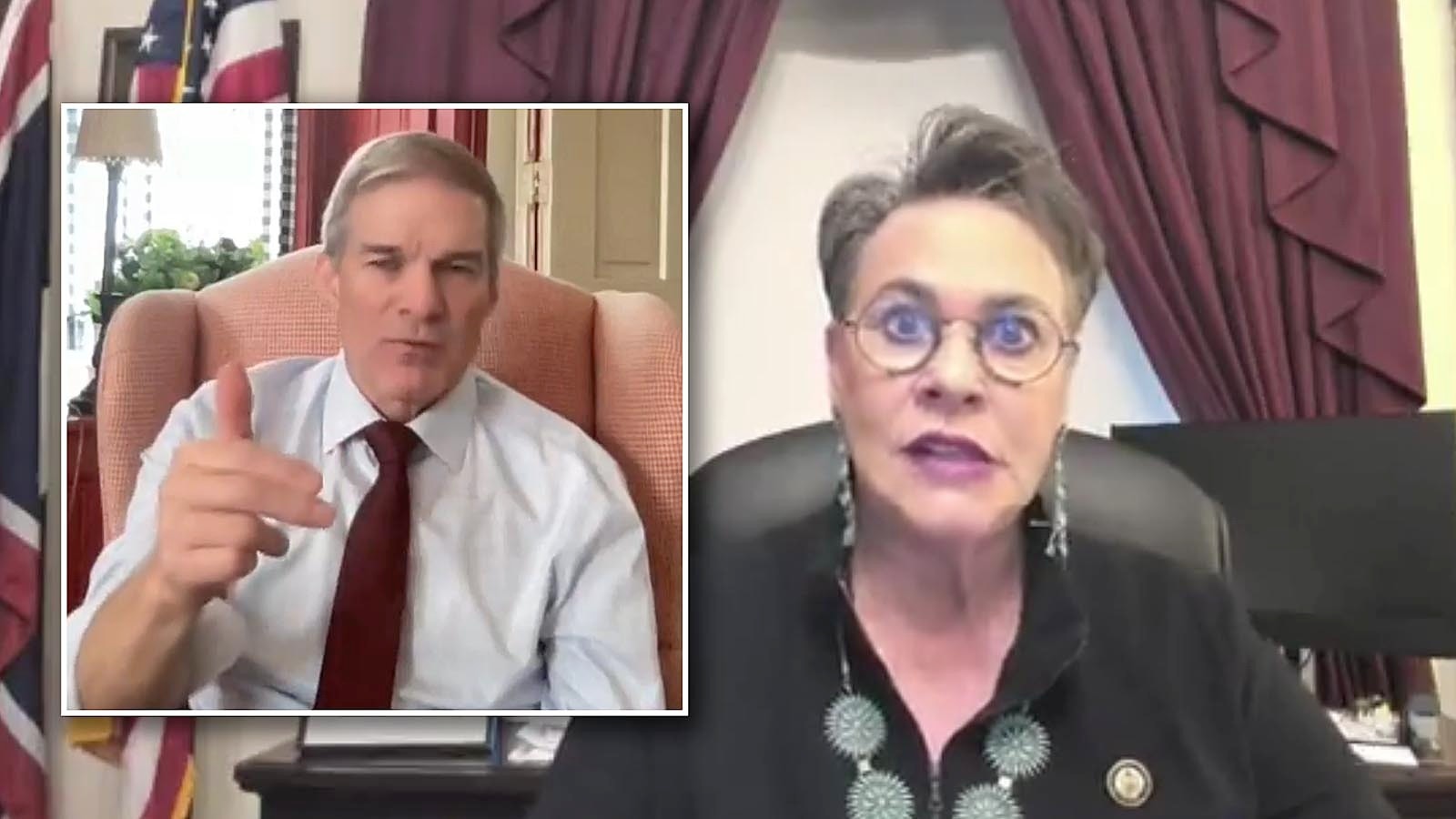
Frank was among the virtual attendees of a Monday online town hall meeting hosted by Wyoming Republican U.S. Rep. Harriet Hageman and joined by House Judiciary Committee Chairman Rep. Jim Jordan, R-Ohio.
Frank didn’t give his last name during his call-in question for the Congressional members. When asked to repeat his question, he admitted that, “I’m older than dirt, so I’m trying to remember what I said.”
He then inquired about the partisanship in Congress that results in mostly party-line votes.
“I’ve asked this same question” about common sense, Hageman said.
Same for Jordan, who said that, at least to him, many of the issues Democrats balk at voting for seem to be no-brainers.
“It’s just common sense to say you should have ID and be a citizen to vote in America,” he said. “You can go down every position the left takes, and it’s just crazy.”
Jordan pointed out efforts to defund law enforcement and federal Immigration and Customs Enforcement.
“I do not know,” he answered Frank. “It makes no sense, but hopefully the American people will hold them accountable in November.”
As a virtual event, Monday’s town hall was streamed live on Hageman’s Facebook page, with people given an option to call in and ask questions.
Only four people did that, but many more had lively — and at times not very civil — political debates in the comments section of the livestream.
NIL Payouts
Leading off the midday town hall session, Hageman and Jordan outlined how a Republican-led Congress is working to regulate name, image, and likeness (NIL) payouts to college athletes and end sanctuary cities in the United States.
Jordan is chairman of the House Judiciary Committee, on which Hageman also sits.
One issue both agree on is that NIL deals for college athletes need more regulation, and if the NCAA isn’t going to do it, Congress will.
One concern is colleges and universities using NIL as a shield to set up pay-for-play contracts with student-athletes, Jordan said.
“Our concern is all the other things that are now happening that aren’t really name, image and likeness-associated,” he said. “They’re simply just university boosters coming together, forming this thing called a ‘collective,’ and paying athletes to come play in all sports.
“It’s truly a lot of money, even in those kind of sports, the Olympic sports, versus just the football and basketball.”
In states like Wyoming without professional sports, their universities are the biggest draw for fans, Hageman said. But people who claim to be agents representing student-athletes sometimes take up to 30% of the money they generate from NIL and are predatory — and aren’t really professional agents.
Hageman and Jordan aren’t anti-NIL, Jordan said.
“Legitimate name, image and likeness is fine, and you can be compensated for that,” he said. “Then there’s a few other things we do think makes sense, like agents have to be real agents.
“There’s a limit on how much money they can make from the student athlete. … We spell all that out.”
Sanctuary Cities
Another issue both said they hear about often from constituents is immigration and sanctuary cities, or cities that don’t enforce federal immigration laws.
Jordan said the Shut Down Sanctuary Policies Act of 2026 the Judiciary Committee just passed is “a critical piece of legislation that we’re going to get through the House floor.”
He also anticipates it passing “on a totally partisan vote,” like it did in the committee.
“Every Republican was for it,” he said. “Unfortunately, every Democrat was against it.”
He said there are 18 cities, 11 states, three counties and the District of Columbia that have been identified as “sanctuary jurisdictions.”
Jordan continued, saying they represent some of the largest populations in the United States, which means “31.5% of the people in the United States live in a jurisdiction where left-wing political leaders tell local law enforcement, ‘Don’t work with federal law enforcement when it comes to enforcing federal laws.’
“It’s truly one of the dumbest things I ever heard.”
Jordan said that in 2025, local law enforcement in sanctuary areas denied federal immigration requests to hold people in local custody 17,864 times.
“And many of those people were released, and then did some other crime, some harm, hurt some other American,” he said.
Hageman said legislation the committee is pushing calls for consequences for sanctuary cities, like being denied federal grants.
Lou in Riverton, who also didn’t give a last name, wanted to know what Congress is doing to keep people in the country illegally and Mexican drug cartels from infiltrating American Indian reservations.
Hageman said that’s a problem she’s been working on, recalling emotional testimony a reservation resident from Montana gave during a congressional hearing.
The man outlined how “he was afraid he was going to lose every single member of his tribe to drug addiction and the Mexican cartels,” she said.
Greg Johnson can be reached at greg@cowboystatedaily.com.