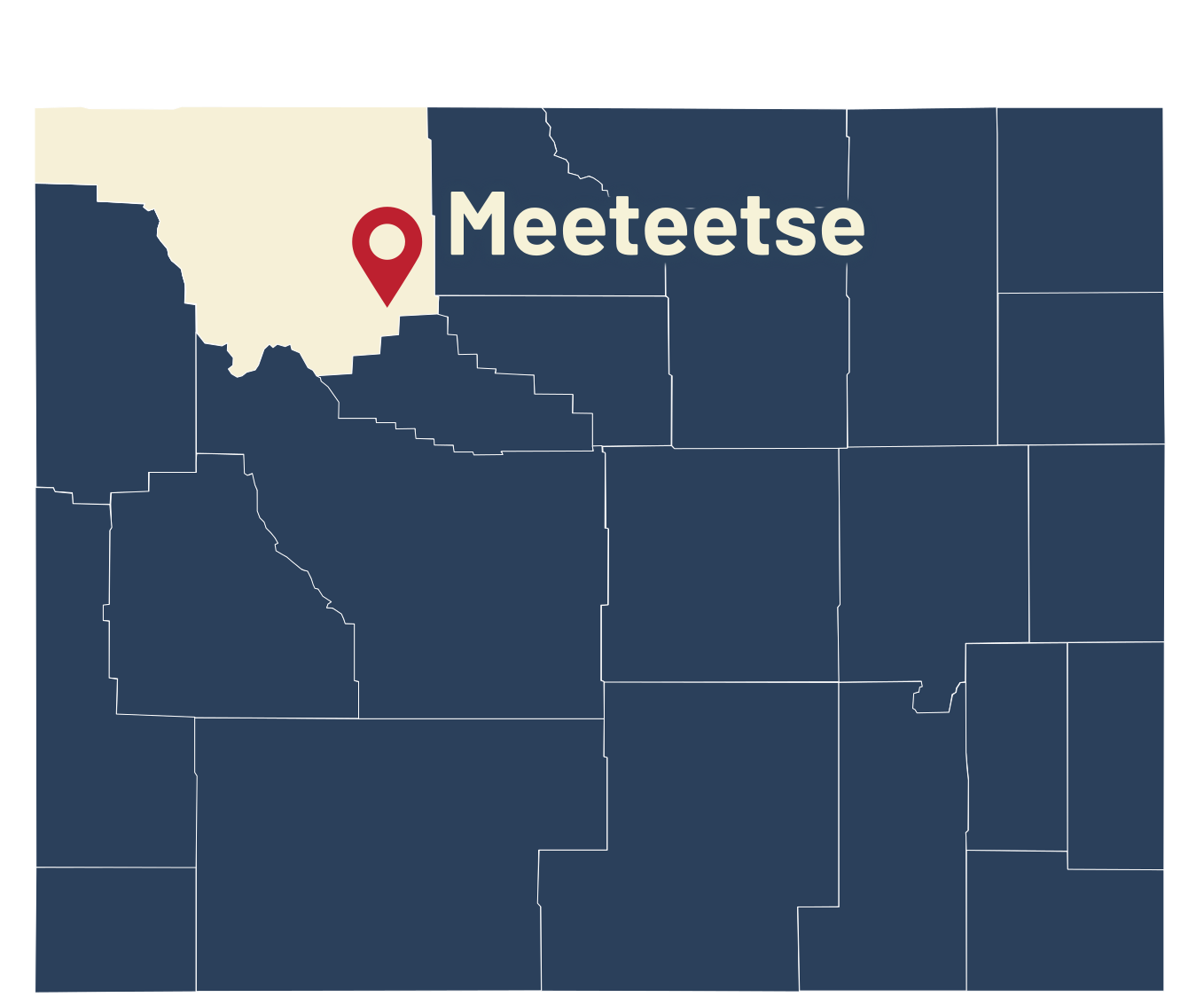
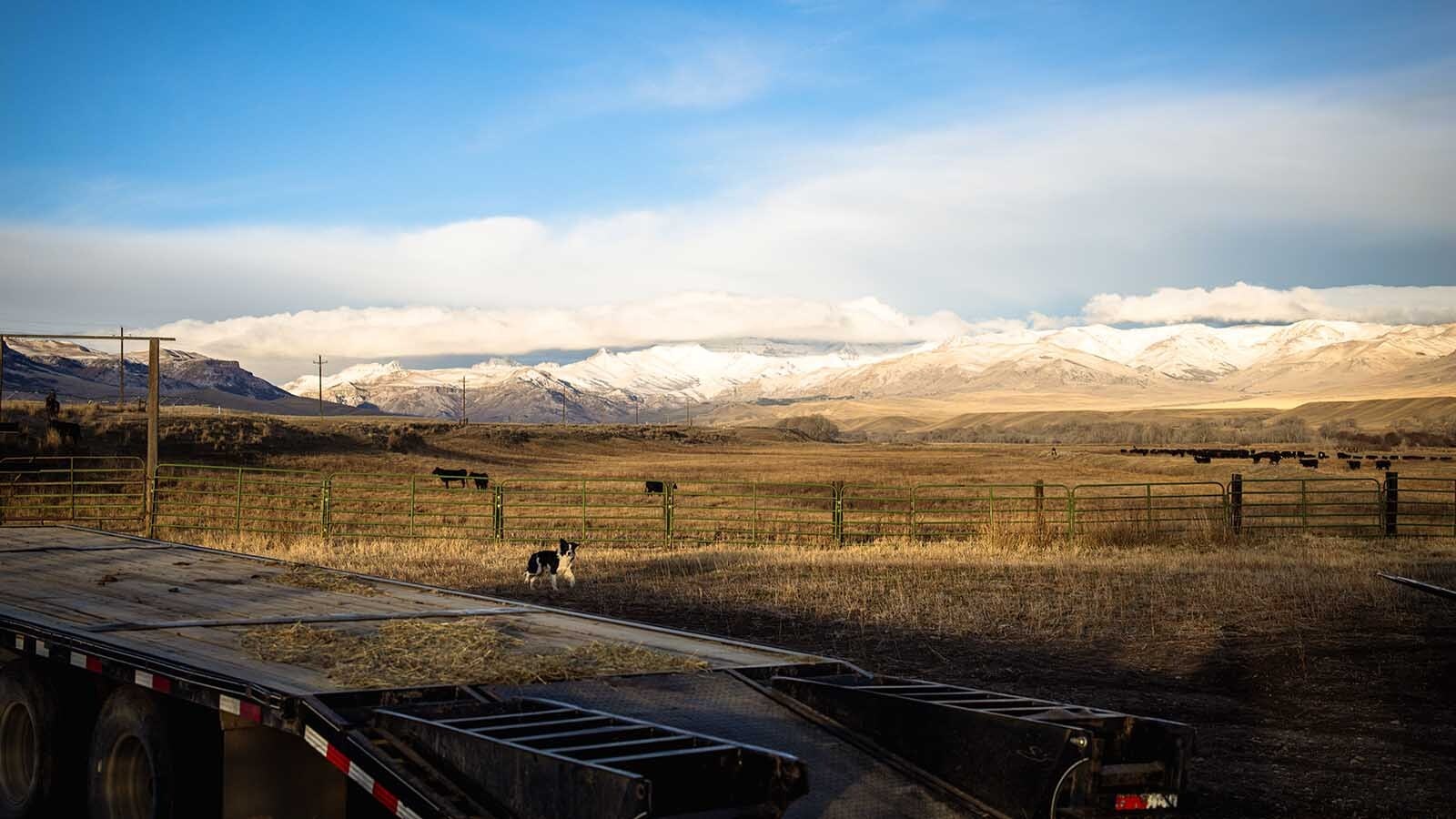
The fences at the historic Pitchfork Ranch near Meeteetse look the same as they have for generations now — mile after mile of weathered posts and wind-shredded, brittle wire.
Fixing decrepit spots is an every-year task, and it's backbreaking work.
It consumes a lot of valuable “cowboying” time for ranch manager Ben Anson and his hands.
Not to mention a lot of cold hard cash.
“I’d say right now in this area, it’s averaging close to $25,000 a mile for hardware,” Anson told Cowboy State Daily. “And we’ll spend at least a day or two out in each pasture going over the fence, fixing it up as good as we can on a 100-year-old fence.”
Now, though, Anson has a better way to make fence lines in pastures.
A way that doesn’t involve much work at all.
“I can get on my phone and just make a fence with my finger on my phone,” he said. “And then I just try to calculate whatever my stocking rate is for the pasture that I draw.”
No more bending over decrepit posts or patching broken wire in a rocky, windy field on what inevitably seems to be the windiest or coldest or rainiest day of the year.
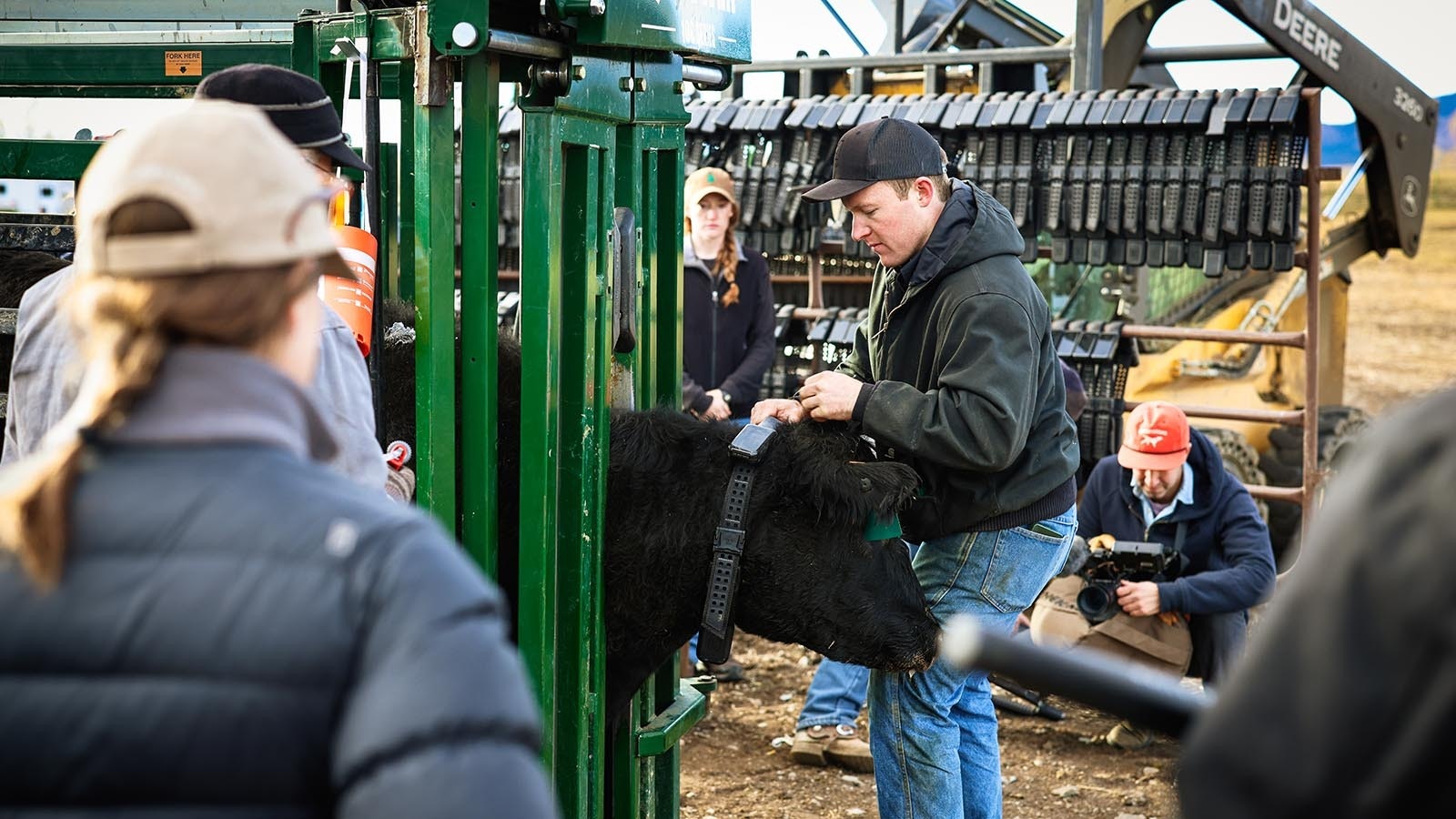
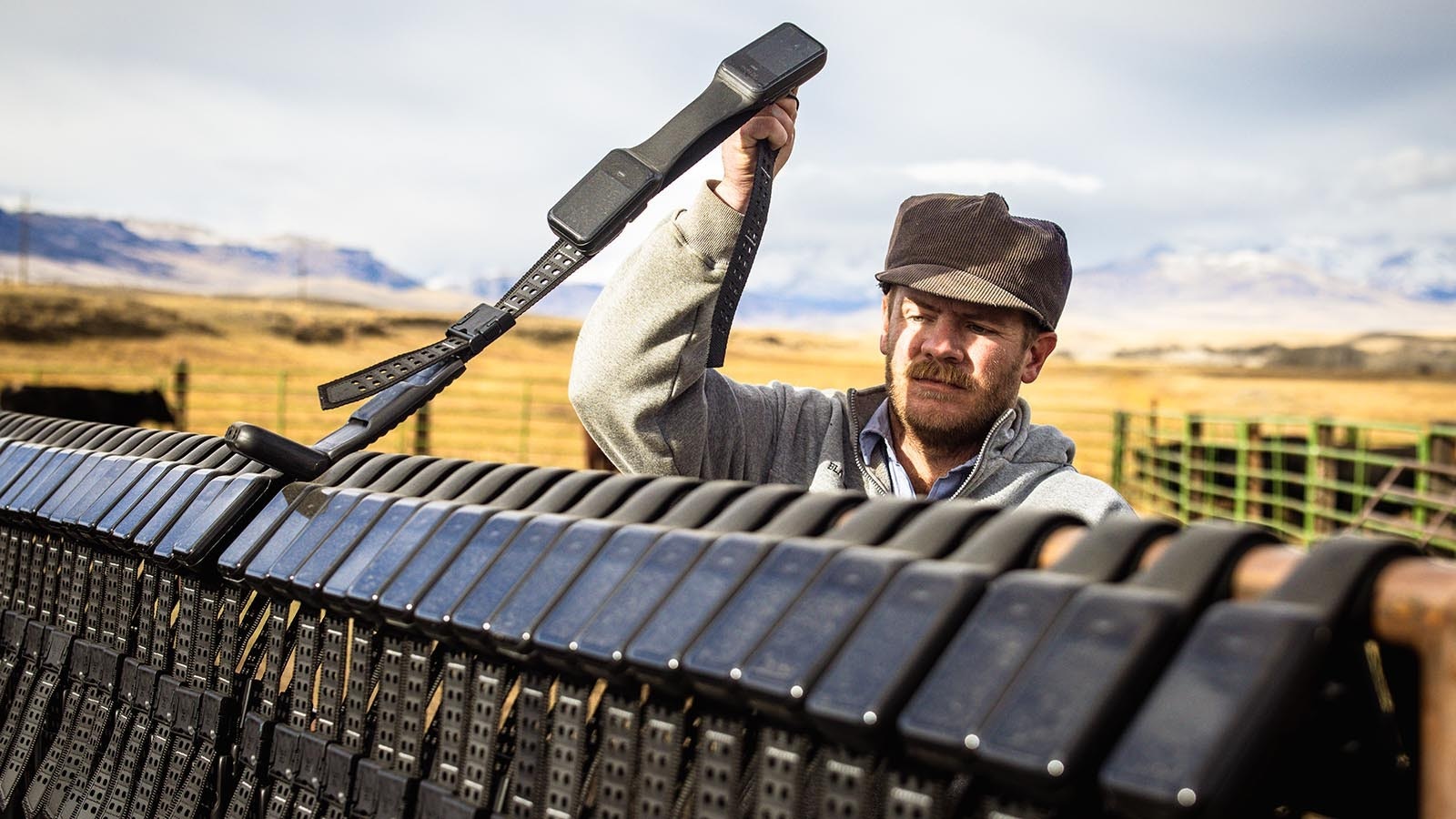
Instead, Anson sends instructions for a brand-new fence out by satellite to tiny little towers in the field, which serve as transmitters, drawing an invisible fence in the air. That is read by the electronic collars his cattle now wear.
Any cattle that get too near the new fence line hear a series of beeps, as well as feel a vibration, warning them not to press forward. If they do keep going, the warning is followed up with a little shock. It’s less than a standard electric fence, but it’s enough to help teach the cow where the new boundary lies.
“The cows get pretty wise to it very fast,” Anson said. “And if a cow decides to leave the country and runs through the boundary, the collar won’t continually communicate with her. If she’s being chased by something, the collar isn’t going to keep shocking her a half mile after the virtual boundary is crossed.”
Half A Million In Projects
Anson is part of a virtual fence pilot program supported by a group of Wyoming wildlife and conservation groups who are working with the Property and Environment Research Center (PERC) out of Bozeman, Montana, to figure out whether virtual fences can help ranchers do away with old-fashioned fencing.
Right now, more than 620,000 miles of fenceline have turned the American West into a gauntlet as far as wildlife are concerned. Deer, elk and other animals can get hopelessly tangled up in the barbwire, dying a slow death of starvation if they’re unable to break free.
Virtual boundaries mean wildlife migration corridors are clear of such obstacles, and that cattle are elsewhere during that season.
PERC Director of Conservation Travis Brammer said his group has invested almost half a million dollars in projects that stretch from Wisconsin to California, with Wyoming in between. Wyoming and Idaho, in fact, have the heaviest concentration of these virtual fence projects.
Brammer is blunt about the order of business. If virtual fences won’t work for producers first, then they won’t work period. He knows that it’s only after the economics and day-to-day operations check all the boxes for ranchers that they will have any interest in the wildlife benefits.
That said, Brammer is not shy about letting ranchers know that he’s working with a lot of wildlife groups and conservation partners who are very willing to help ranchers who want to give virtual fences a try.
He’s also working with all four virtual fence companies right now, including Halter, which supplied the Pitchfork Ranch’s electronic collars.
“Rocky Mountain Elk Foundation supported PERC’s work on the Pitchfork by giving us a grant we were able to pass on to the Pitchfork,” he said. “And we are really strategic in how we structure our contracts, to make sure there is plenty of grace period for producers to get comfortable with the technology and prove it works for the ranch.”
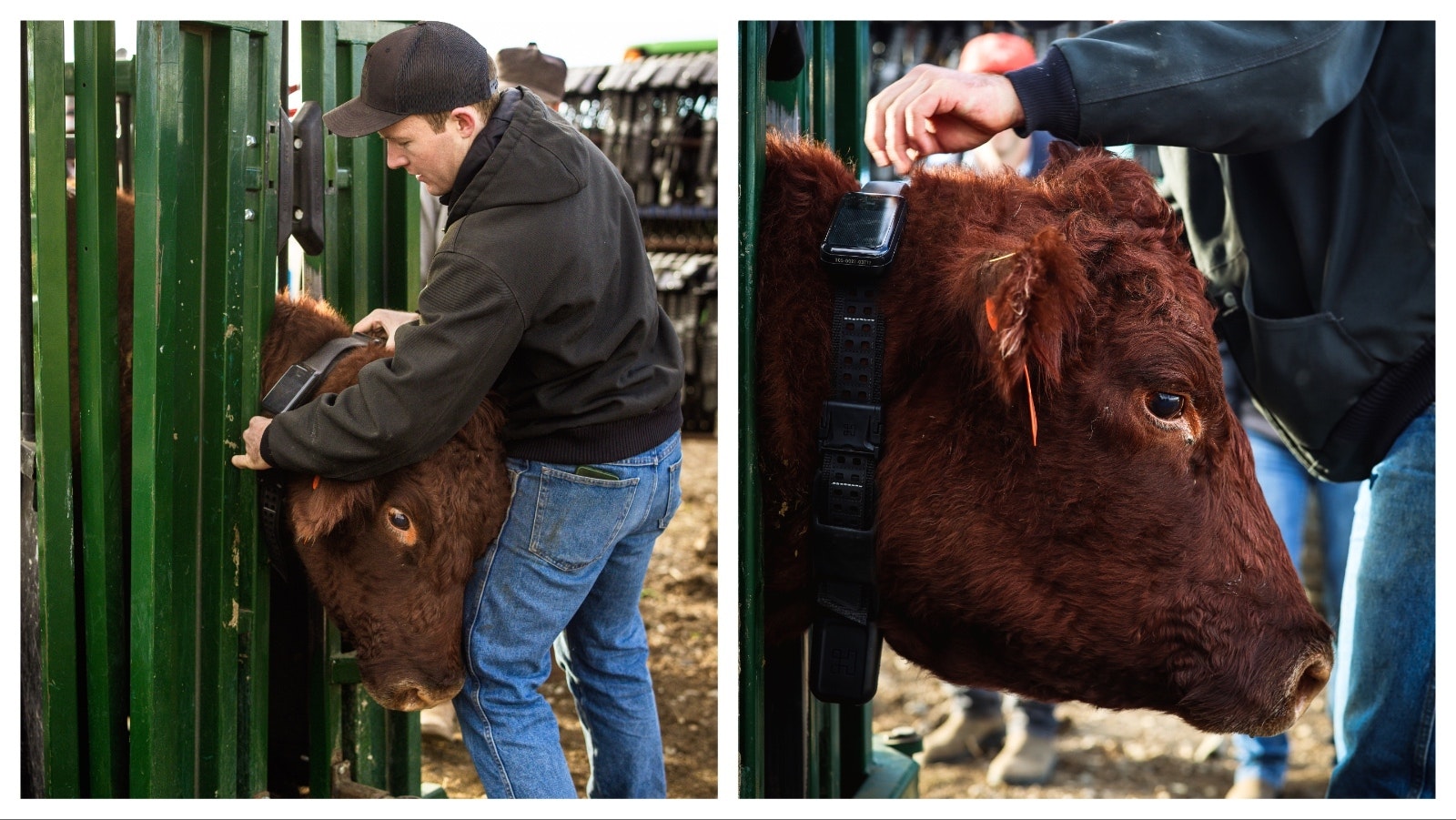
The Pitchfork Ranch is piloting technology that lets ranchers draw fence on a smartphone with a fingertip. The virtual fence reacts with collars the cattle wear. It’s working so well, fencing might disappear, bringing back Wyoming’s Wild West open range. (Courtesy Pitchfork Ranch) 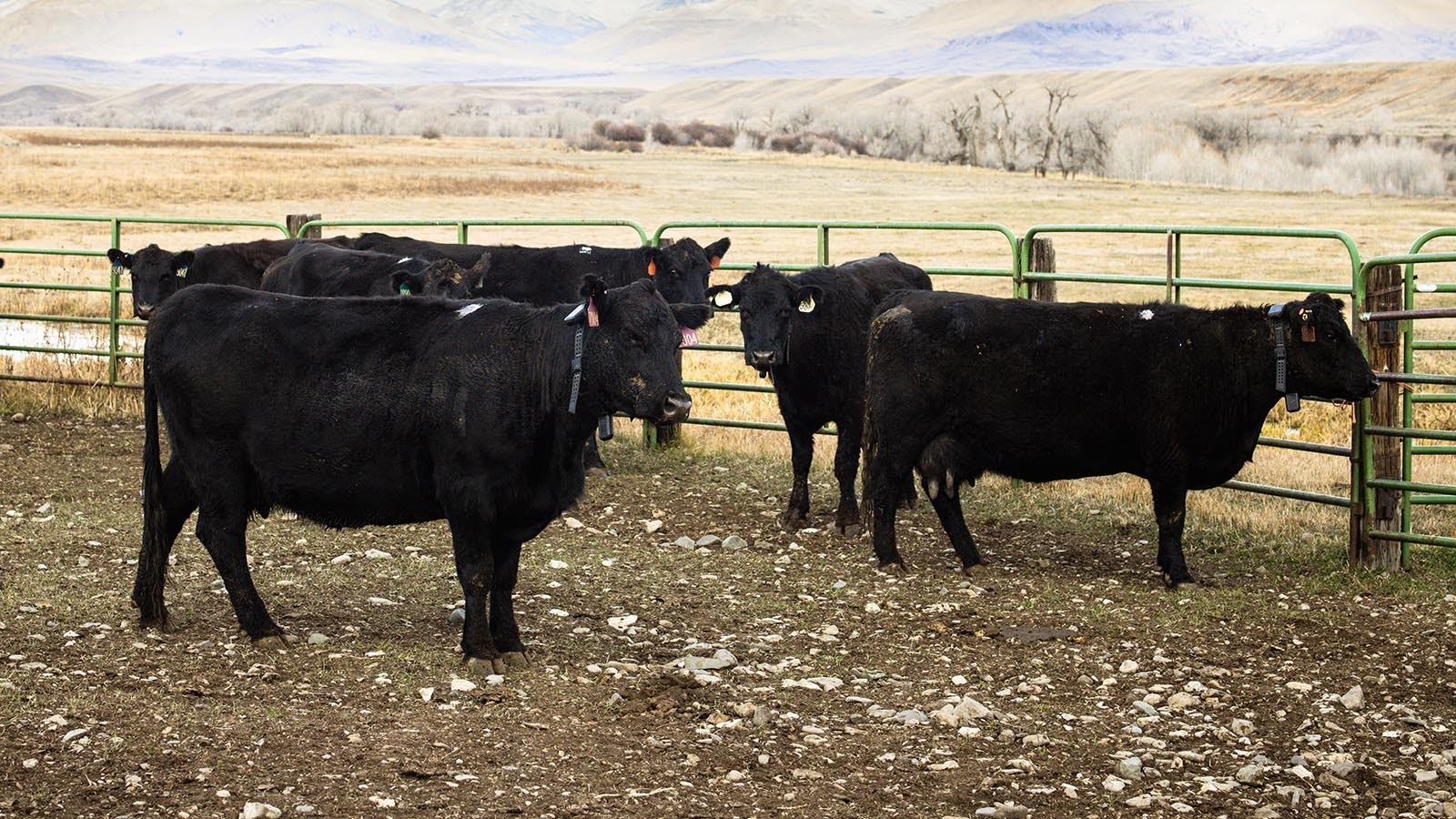
The Pitchfork Ranch is piloting technology that lets ranchers draw fence on a smartphone with a fingertip. The virtual fence reacts with collars the cattle wear. It’s working so well, fencing might disappear, bringing back Wyoming’s Wild West open range. (Courtesy Pitchfork Ranch) 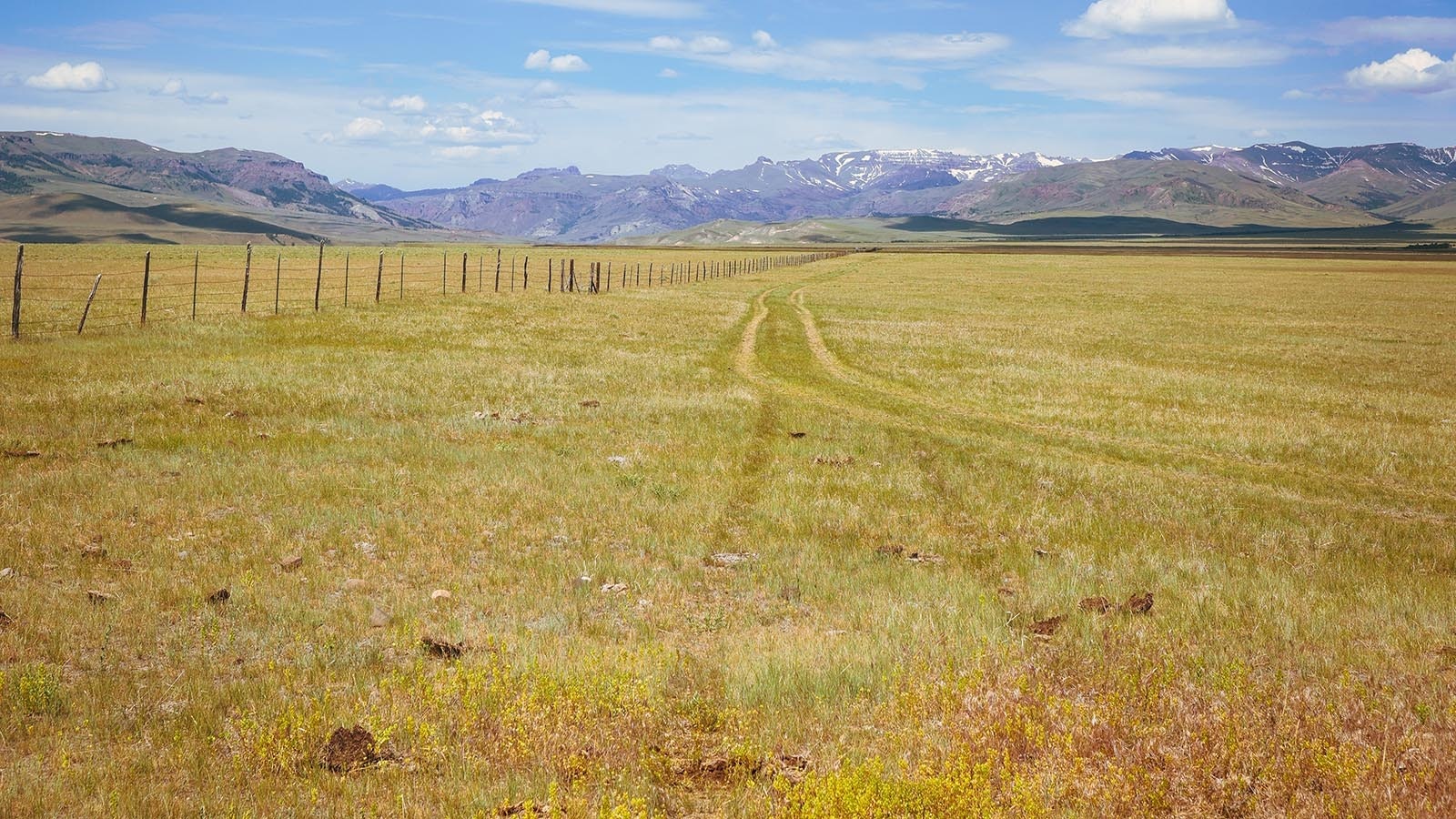
The Pitchfork Ranch is piloting technology that lets ranchers draw fence on a smartphone with a fingertip. The virtual fence reacts with collars the cattle wear. It’s working so well, fencing might disappear, bringing back Wyoming’s Wild West open range. (Courtesy Pitchfork Ranch)
Eyes In The Sky, Too
Pitchfork Ranch added its electronic collars in October, and it didn’t take long at all for the cows to figure things out.
In fact, the new approach is working so well, Anson is contemplating whether he can just remove the Pitchfork Ranch’s old rusty fences instead of repairing them.
Less costly fences aren’t the only benefits Anson is seeing, though.
“The real question is, ‘What are we going to get from this collar when it comes to weaning weight of our calves in the fall?’” Anson said. “That’s our big income for the year. So, I want those calves to be as heavy as possible when I put them on a truck in November. So ultimately, at the end of the day, our No. 1 metric is pounds of beef produced per acre.”
In Anson’s book, that doesn’t mean overstocking the land, which would just lead to reduced productivity in later years.
“It’s more about using the virtual fencing to better manage grazing,” he explained.
With his finger-drawn virtual fences, Anson can keep cattle out of riparian zones, which helps maintain water quality. He can also send them to areas with invasive species that need more grazing to help prevent them from spreading.
“There are some spots that get used a lot more than others,” he said. “So, with the new technology, we’ve been able to focus grazing more in spots where there’s maybe some steeper terrain, some rougher terrain, that’s been underutilized in the past.”
With better dispersal, Anson hopes to see improved rangeland over time, which will ultimately produce more forage.
“More forage is going to lead to larger weaning weights, and it’s also going to lead to an increase in animal units,” he said. “That’s something that comes about slowly but the way I looked at it this thing’s going to pay for itself five to 10 years down the road.”
Payoff could happen even faster than that, Anson added, because the collars also dovetail with GPS. That means Anson can tell where all of his cattle are all of the time.
“With this, we can see that we have a bull that isn’t working, and you’ve got 25 cows who aren’t bred because of it,” he said. “I am able to see that bull off by himself, and all those cows with no bull. So, stuff like that can improve weaned calf percentages.”
He can also use it, as he was doing Tuesday morning, to find the cow who just had a stillborn calf, so he can take care of that more swiftly.
The Pitchfork Ranch is piloting technology that lets ranchers draw fence on a smartphone with a fingertip. The virtual fence reacts with collars the cattle wear. It’s working so well, fencing might disappear, bringing back Wyoming’s Wild West open range. (Courtesy Pitchfork Ranch) 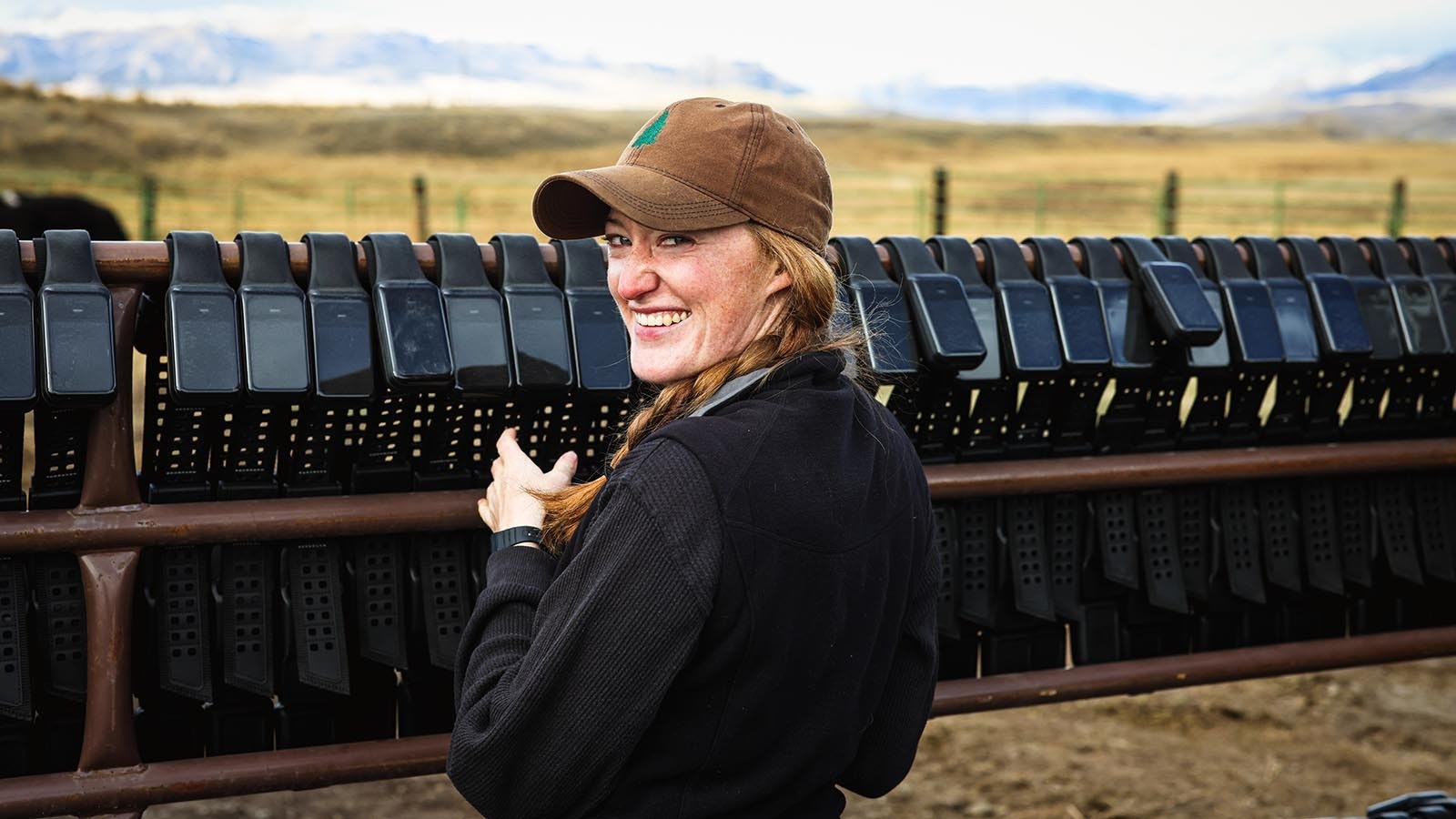
The Pitchfork Ranch is piloting technology that lets ranchers draw fence on a smartphone with a fingertip. The virtual fence reacts with collars the cattle wear. It’s working so well, fencing might disappear, bringing back Wyoming’s Wild West open range. (Courtesy Pitchfork Ranch)
That Lightbulb Moment
As much as Anson likes virtual fences now, he wasn’t sold on them at first. Not at all.
He was among several ranchers invited to attend a meeting about them last year, organized by the East Yellowstone Collaborative for landowners near Cody.
He almost didn’t go.
“My wife has virtual fence collars for dogs that run off a satellite,” he said. “They cost $1,000 a piece. So, I went in there thinking this is never going to make sense economically.”
But he knew a lot of the people who’d helped put the virtual fence meeting together, so he decided to at least put in an appearance.
When he arrived, there were a lot more people than he’d expected. His first clue that this meeting wasn’t going to be quite as unproductive as he’d initially thought.
Still, for the first few hours, he couldn’t stop thinking to himself, “No way this actually pencils out.”
Then he found out that the cow collars cost substantially less than his wife’s dog collars. When the organizers started laying out the potential cost-savings, a light bulb turned on for Anson and the other ranchers.
“I was sitting with some other guys who run big ranches,” he recalled. “And we all kind of looked at each other and had a discussion at our table, like, ‘Hey, I think this can actually work.’”
More Cowboy Time Than Ever
When Anson first went to virtual fences on the Pitchfork Ranch, a rumor started that the ranch would be getting rid of its cowboys.
That’s not how Anson sees things.
“The thing that I’ve found so far is, we’re actually out with the cows a lot more,” he said.
And, in his opinion, the more human eyes on the cattle, the better.
“The last thing we want to do is get rid of moving cows and doing things by horseback, like we’ve traditionally done,” he said. “This seems to just give us a lot more time and a lot more opportunities to go out and see the cattle.”
There’s also a certain undeniable romance in the ideal of an open Wyoming range once again. That’s not about turning the clocks back to a fenceless free-for-all.
If cattle can be where the grass needs them instead of where the fence happens to stand, and wildlife can roam free where nature sends them, everyone is getting more out of the land — including the tourists.
Driving by the ranch on their way to Yellowstone, they can enjoy an unobstructed view straight out of the 1800s, all thanks to modern technology.
Renée Jean can be reached at renee@cowboystatedaily.com.