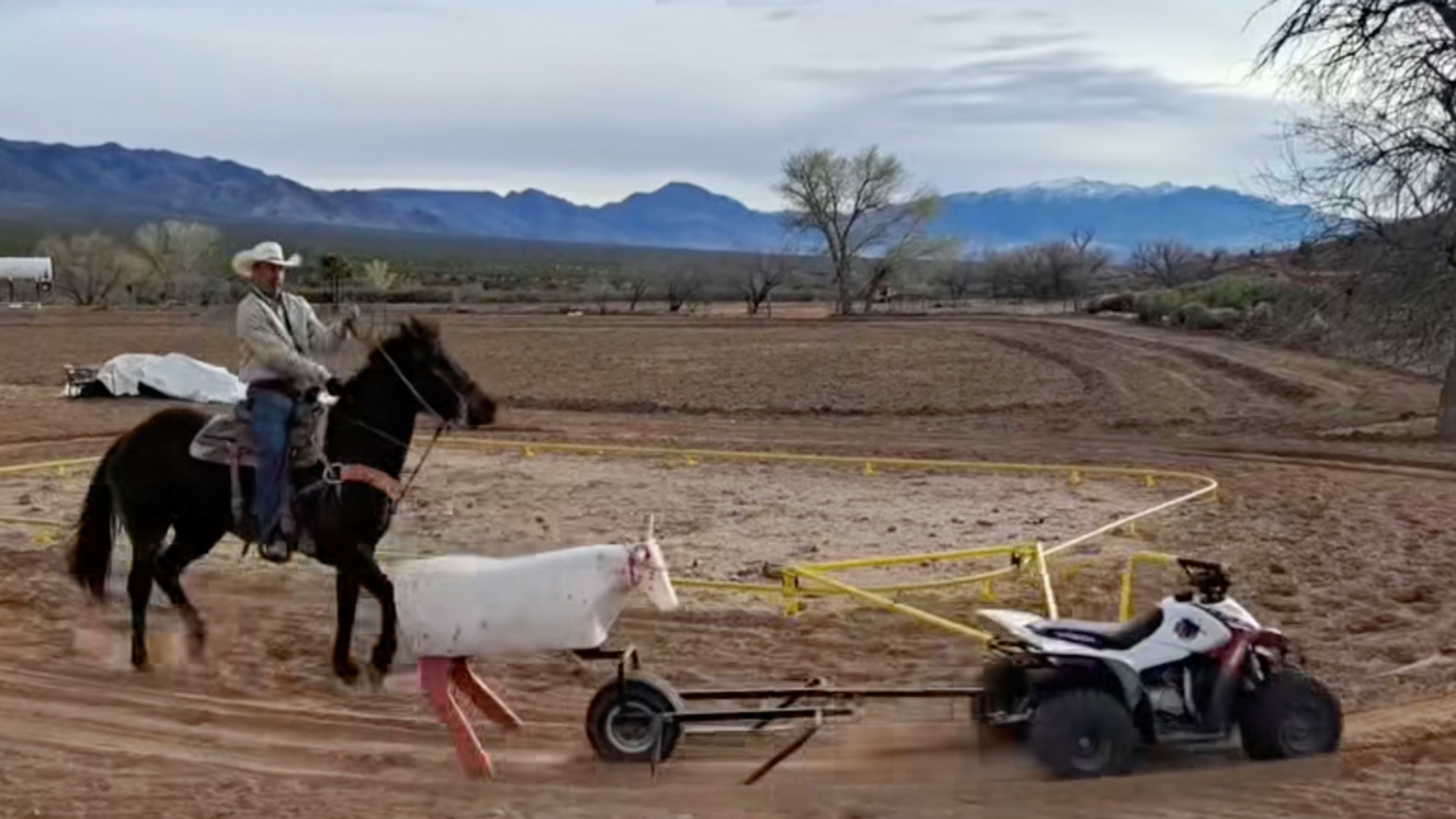
Roping cattle requires lots of practice for ropers and their horses — and that usually requires lots of space, time and live cows.
To streamline the process, people started pulling dummy cows with ATVs, as riders tried to chase down and rope the fake cattle.
Then a pair of cowboy engineers decided to take it a step further: what if the ATV could drive itself, allowing ropers to practice solo?
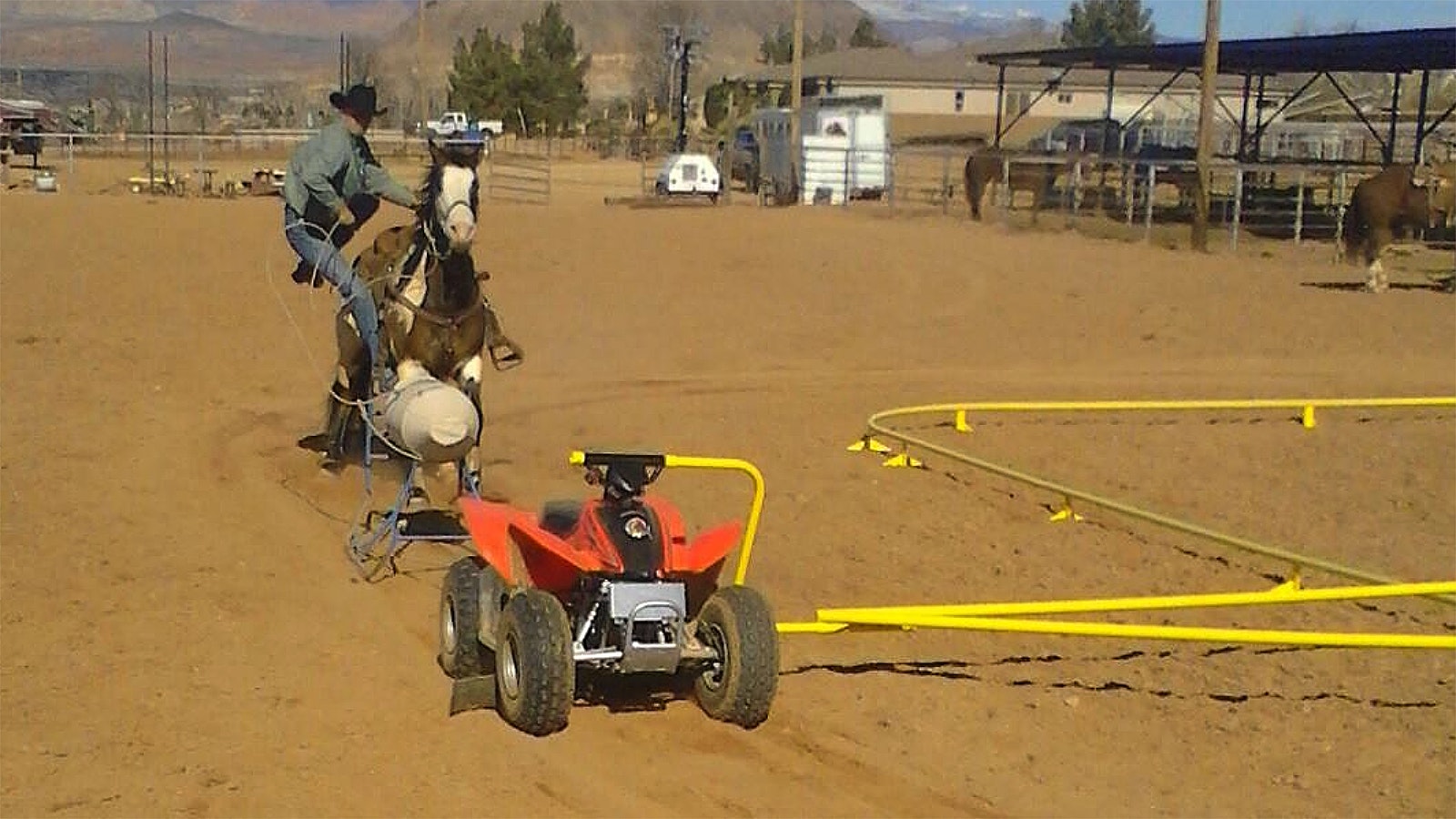
The answer came in the form of the Rope Hog, a system that features a dummy cow pulled along a square rail system by an ATV that can be controlled with an ordinary vehicle key fob.
It’s primarily the brainchild of Dorian Bundy, an Arizona cowboy, heavy equipment operator and competitive rodeo roper.
“There’s nothing that will replace roping a live steer, but this is the closest thing,” he told Cowboy State Daily.
He and his partner, Travis Kunz, have been making Rope Hog systems on mostly an order-by-order basis for roughly a decade.
“We’ve done this out of pocket, me and Travis,” Bundy said.
“Our best marketing tool is just exposure — word-of-mouth or letting people practice on it at roping events,” he said.
They’re hoping to crack the Wyoming market.
“I’d like to take it to Cheyenne (during Frontier Days),” he said.
Nobody Wants To Drive The ATV
Bundy grew up on a ranch, and his father also ran a heavy equipment business. He started roping cattle early as part of his regular ranch duties and developed a passion for it.
“I just recall having a rope in my hands as far back as I can remember,” Bundy said.
It wasn’t long before he was competing on the rodeo circuit, eventually making it to the professional level. At age 56, he doesn’t participate in the pro circuit anymore, but he still ropes competitively whenever he can.
The idea for the Rope Hog hatched in the early 2000s.
At the time, he was living on a half-acre lot, so his space was limited. To practice roping, he had to load up his horse and go to a nearby arena.
He was also working a full-time job at the time, so carving time out of a busy day to go all the way to the arena was becoming exhausting.
By then, pulling dummy cows with ATVs for roping practice was already a thing.
“The biggest complaint to the (cattle dummy) manufacturers was, nobody wanted to ride the four-wheeler,” Bundy said. "They all wanted to rope, but none of them wanted to be the one riding the four-wheeler."
The Mother Of Invention
As his father would say, “necessity is the mother of invention,” so Bundy started thinking about a way he could use his limited space at home to practice roping and address the popular gripe of not being the one stuck driving the ATV.
Kunz was his neighbor at the time, and a skilled welder. Bundy enlisted his help to help his idea take shape in steel.
After several episodes of “trial and error,” they landed on a practical design.
The ATV could be attached by a handle to the track, which runs in a square. The throttle is controlled by a vehicle key fob.
Every time the “lock” button on the fob is pressed, the ATV accelerates. Pressing the “unlock” button sets the motor back to idling speed and stops the ATV.
A square is the right shape for training both horse and rider, because it incorporates “realistic turns” into the drill.
“The way to train a horse is consistent repetition. And you have to give them the most realistic look you can, over and over and over again, to sink it into their mind,” Bundy said.
He called the contraption the Rope Hog.
“My original dummy looks like a pig. It’s a marketing ploy,” Bundy said of the moniker.
Bundy’s life hit a rough patch, including losing his daughter and going through a divorce, and the Rope Hog project sat idle for about a decade.
By about 2016, circumstances had turned around for him, and he and Kunz started taking orders and showing the Rope Hog off at roping events.
The units sell for roughly $12,000. The ATV is included, although the dummy is not.
That might sound like a lot of money, but as Bundy sees it, a Rope Hog can quickly pay for itself, allowing owners to practice roping whenever and as long as they want to, without needing live cattle.
“Roping steers cost about $1,500 a head,” he said.
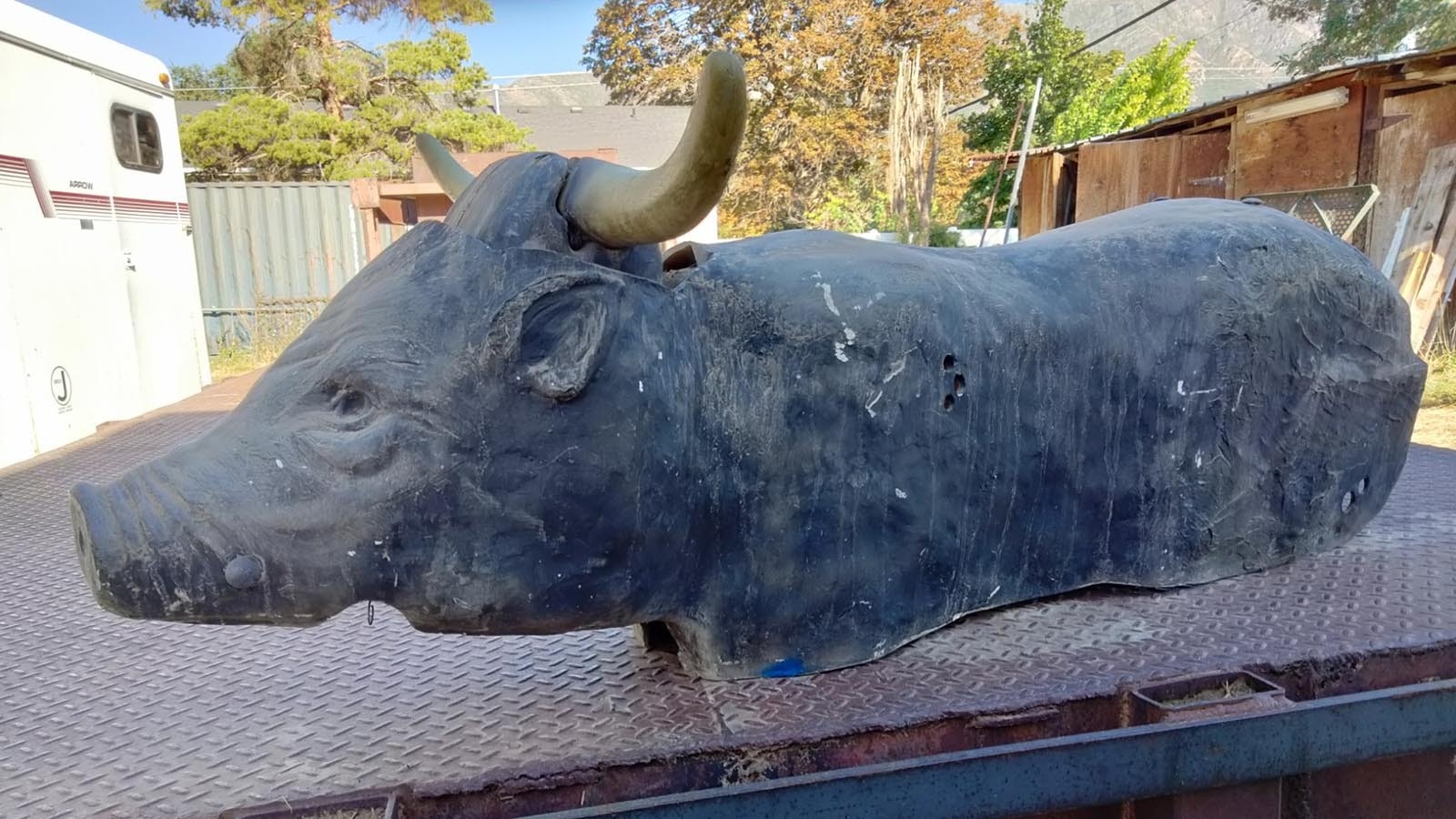
The Rope Hog steer roping training system was so named because the original roping dummy looks more like a pig than a cow. (Courtesy Rope Hog Track System) 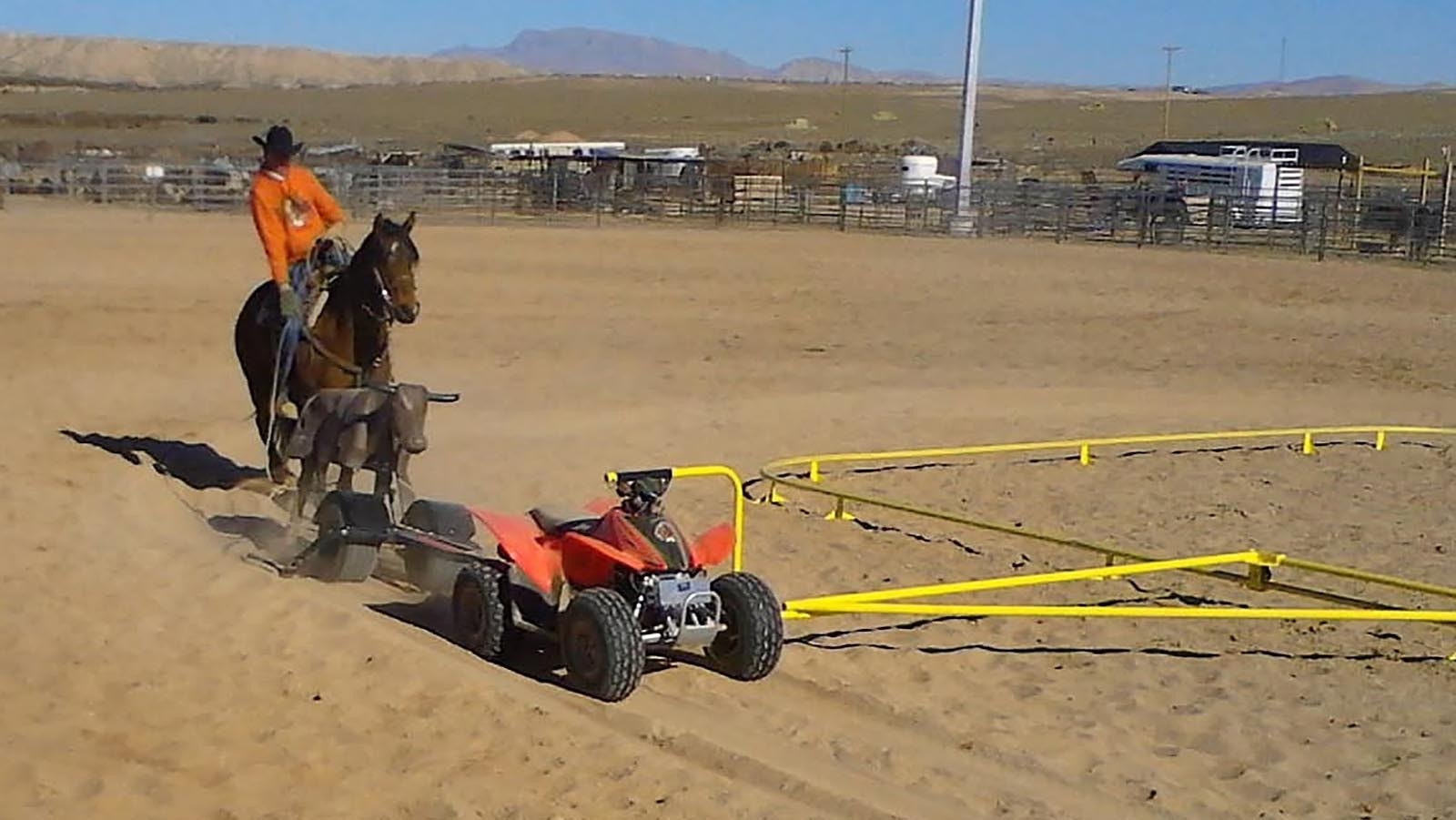
To streamline steer roping practice, people started pulling dummy cows with ATVs. A pair of cowboy engineers took it a step further, inventing a rodeo practrice system where the ATV drives itself. (Courtesy Rope Hog Track System) 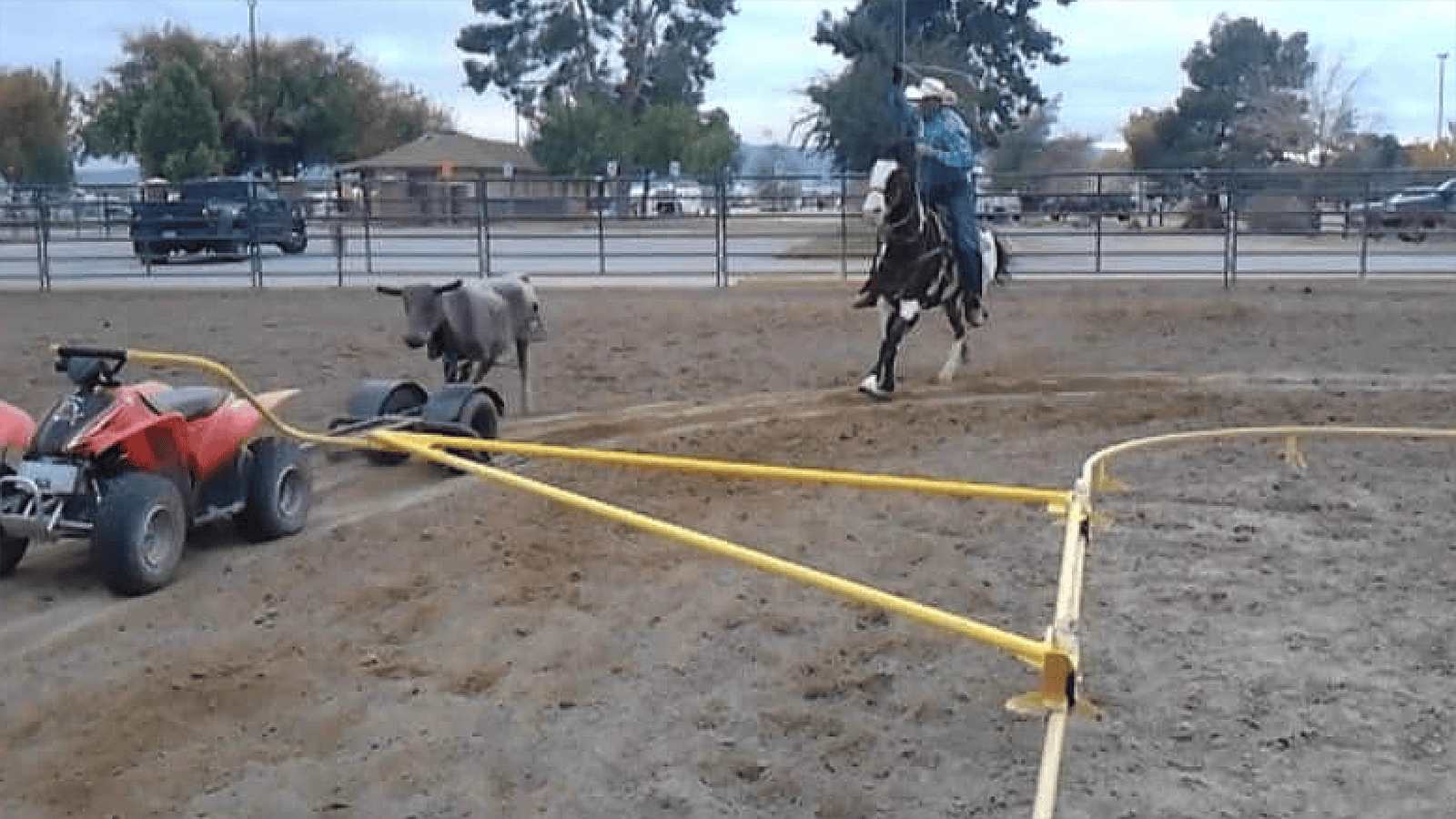
To streamline steer roping practice, people started pulling dummy cows with ATVs. A pair of cowboy engineers took it a step further, inventing a rodeo practrice system where the ATV drives itself. (Courtesy Rope Hog Track System)
Wyomingites Like It
After viewing a video of the Rope Hog in action, some Wyoming ropers said they like the idea.
Wyatt Agar, who ranches near Thermopolis, told Cowboy State Daily that he uses a similar device that he calls “Sparky,” which “goes up and down the arena in a straight line.”
So there could be value in adding corners into the routine. Because routines are important when training for roping, he said.
“One of the most difficult things for young ropers and young horses is establishing consistent runs,” he said.
His son, an 8th grader, is a competitive roper.
Dummies can be better than live cattle for practice because “when you run steer after steer, the horse gets worked up,” he said.
Dummies can be run at lower speeds, which allows horses to relax and learn the routine, Agar said.
Dawn Peil, also from the Thermopolis area, has sons in junior high and high school who like to rope. She also teaches roping through the Hot Springs County 4-H program.
“We also have a dummy that we pull with a four-wheeler,” she said.
“We use it primarily for young horses that are too unpredictable and maybe too fast. With the four-wheeler, you can slow everything down, so the horse can figure out what’s going on and what he needs to do,” she said.
She agreed that Bundy’s idea of relieving people from ATV-driving duty is a good one.
“The person who draws the short straw, or the mom of the outfit is usually the one who ends up driving the four-wheeler,” she said.
Mark Heinz can be reached at mark@cowboystatedaily.com.