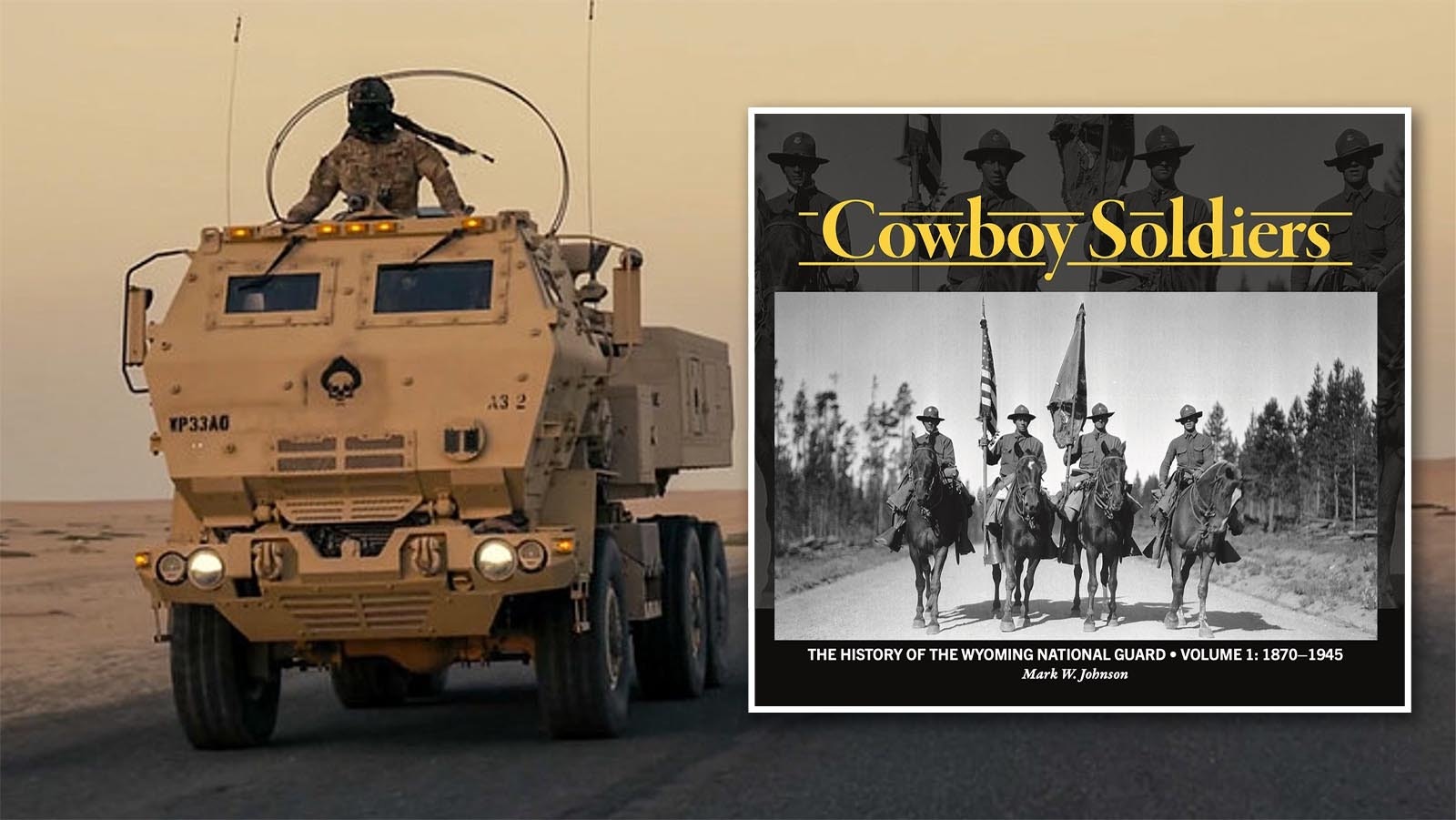
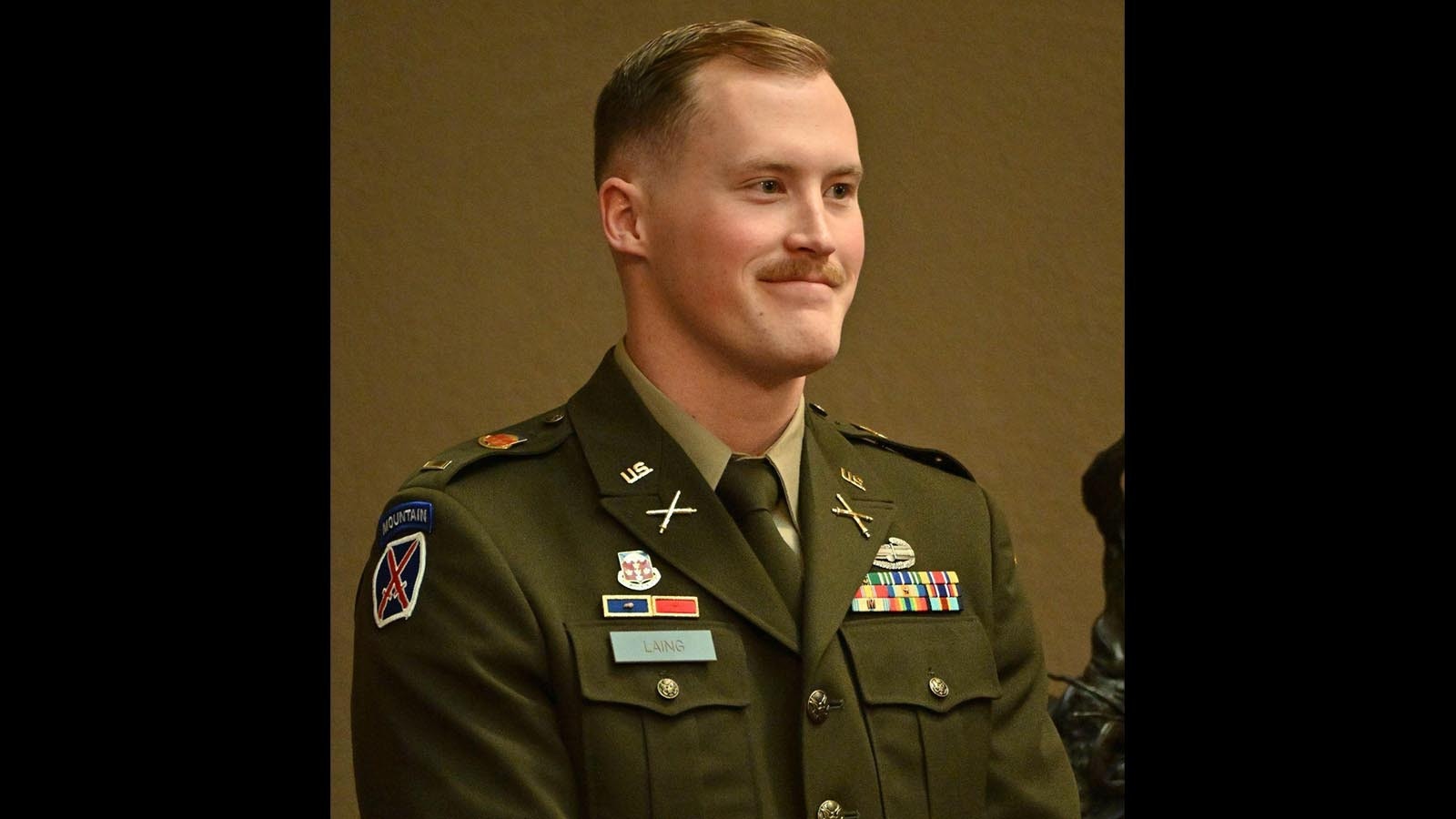
Serving in Syria for nine months with 17 other soldiers from the Wyoming National Guard, 1st Lt. Elam Laing’s first deployment became something noteworthy.
The 25-year-old along with other guard members was on hand at the Feb. 12 Wyoming State Legislature’s Budget Session to be honored by the state guard commander for his leadership and selection as the Wyoming Army National Guard’s Company Grade Officer of the Year.
Wyoming Adjutant Major General Greg Porter pointed out to legislators that the guard’s beginnings that stretch back before statehood have morphed from a state militia into an organization that has been called on in its history to serve national needs.
Most recently one of those needs involved sending Laing and his platoon into Syria where they operated a HIMARS (High Mobility Artillery Rocket System) during Operation Inherent Resolve and Operation Spartan Shield for nine months in 2024-25 in the Middle East.
“Together the 115th Field Artillery Brigade stationed here in Cheyenne and the 2-300th which is headquartered in Casper made history,” Porter said. “During this deployment they executed the first ever all-Wyoming brigade fire mission from the brigade headquarters of the 115th through the chain of command of the 2-300th down to the launcher, every link of the chain was a Wyoming Guard soldier. Not even in Korea was this possible.”
Porter characterized Laing and his platoon’s assignment in Syria as being stationed in one of the most “austere and demanding environments” in the Middle East where they faced consistent indirect fire and drone attacks yet were able to accomplish “multiple fire missions.”
Laing, a native of eastern Colorado and graduate of the University of Wyoming, told Cowboy State Daily he and his platoon had a “handful of kind of scary moments” from indirect fire and drones. He was cautious about sharing any details.
“Drones on the battlefield are a new aspect that I think was kind of nuance to previous deployments,” he said. “We had a handful of those occurrences sprinkled throughout the deployment.”
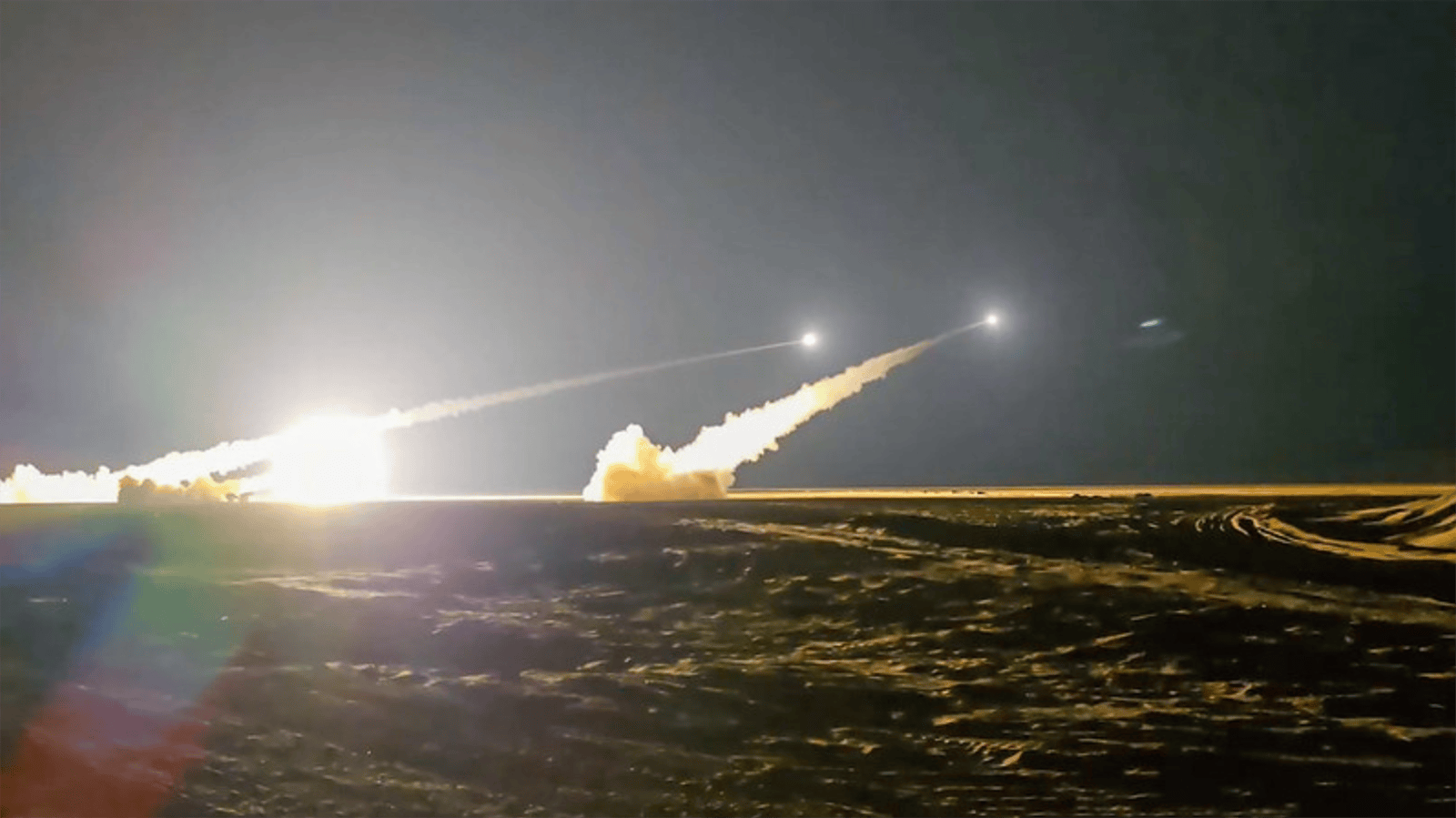
Rockets are fired during the deployment of the 2-300 Field Artillery Battalion of the Wyoming National Guard. (Courtesy Wyoming National Guard) 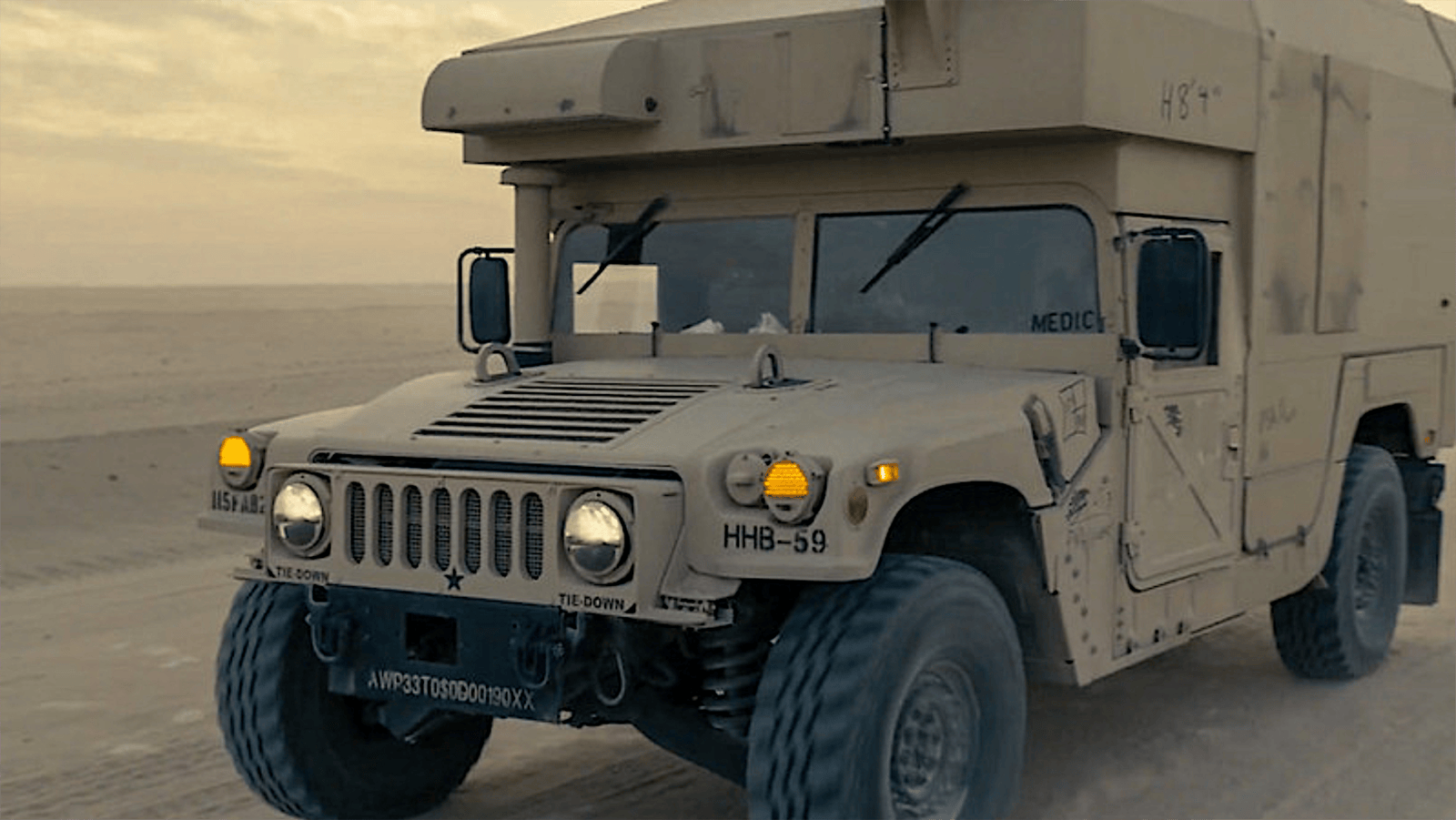
A medic truck on deployment with the 2-300 Field Artillery Battalion of the Wyoming National Guard. (Courtesy Wyoming National Guard) 
A rocket produces light in the night during the 2-300 Field Artillery Battalion’s deployment to the Middle East. (Courtesy Wyoming National Guard) 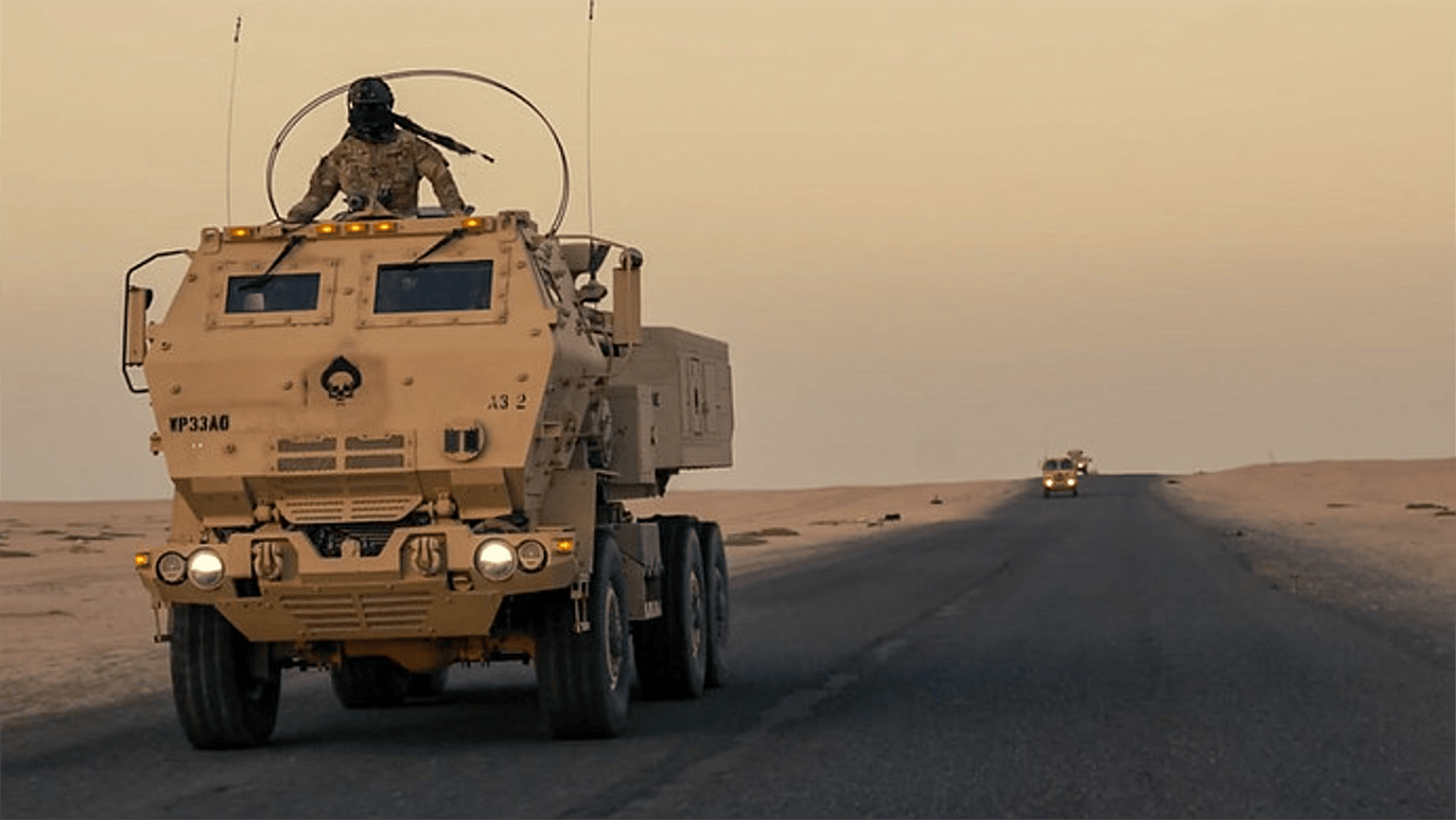
Members of the 2-300 Field Artillery Battalion of the Wyoming National Guard on deployment in the Middle East. (Courtesy Wyoming National Guard) 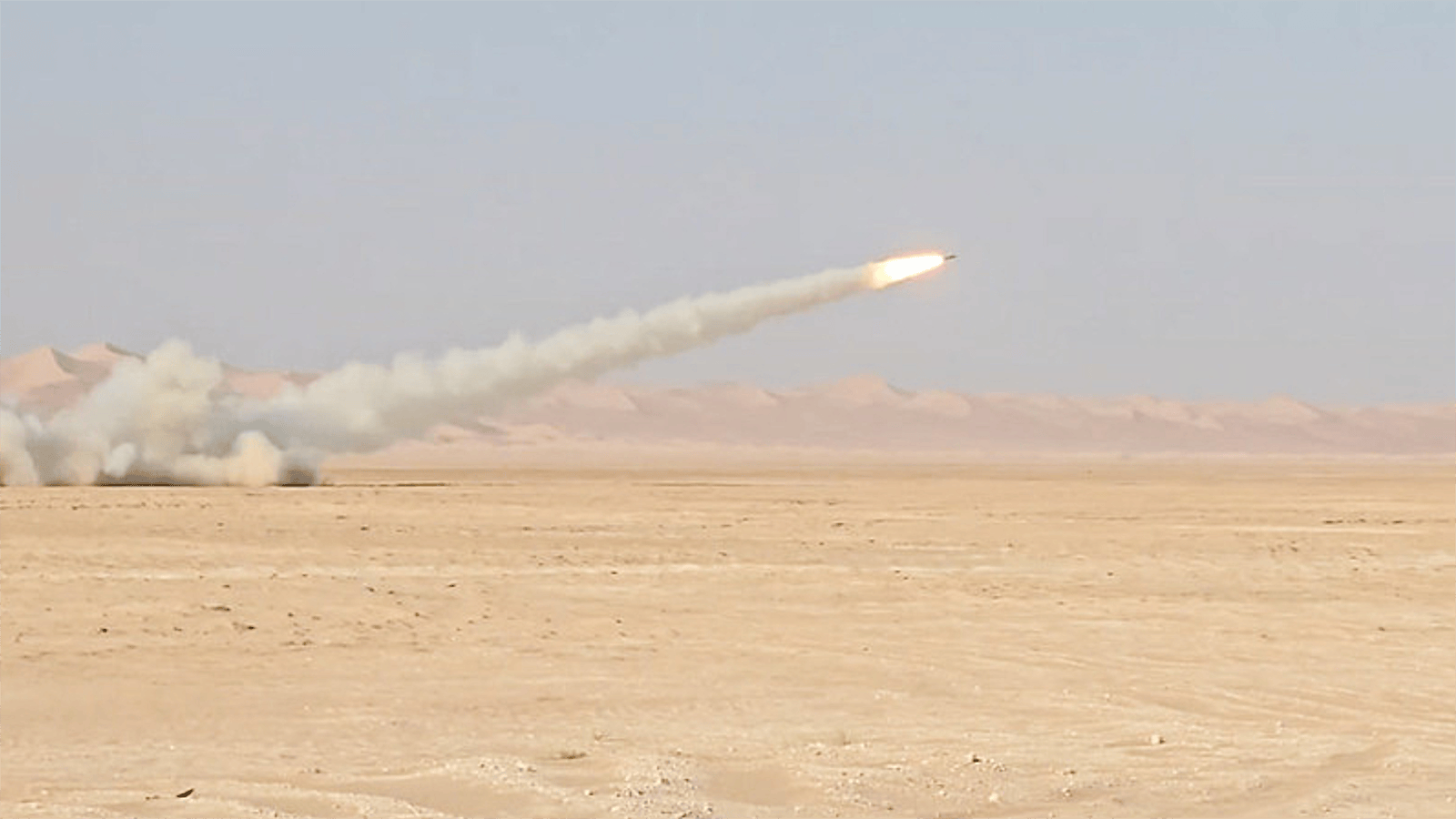
A rocket is launched during the daytime during the 2-300 Field Artillery Battalion’s deployment to the Middle East. (Courtesy Wyoming National Guard)
‘Cowboy Soldiers’
Porter’s report to the legislature came as the Wyoming Military Department, Wyoming National Guard Association, and Wyoming National Guard Historical Society released the 470-page “Cowboy Soldiers,” a complete history of the Guard from 1870-1945.
It is the first of a two-volume effort that details the state’s citizen-soldier history.
Retired Col. Larry Barttelbort, whose Wyoming Army Guard career concluded in 2004 as chief of staff, and who served as the director of the Wyoming Veterans Commission from 2007-2017, led the project.
Other members of the team included research and writing by retired U.S. Army officer and historian Mark Johnson, of Casper, editing from Rosalind Routt Schliske of Cheyenne, who served as managing editor, and design by J. L. O’Brien of Cheyenne.
Barttelbort said while the latest effort to write the history took six years to pull together, the beginning of the project goes back many more years to 1995 and involves support and contributions from many more people.
He said Johnson, Schliske and O’Brien’s efforts have produced a well-written, visually appealing book and something that guard members can be proud of and historians in the future will continue to reference.
From his own life, Barttelbort recalls being an active-duty U.S. Army captain assigned to the Wyoming Army National Guard in Sheridan in 1985.
There he learned about the unit’s “storied” history raising a flag over the city of Manila in the Spanish-American War. The legacy repeated over the years was that the unit was the first to raise a U.S. flag over Manila.
“Soldiers are notorious for telling stories but now let’s not let the truth get in the way of a good story,” he said. “But this has given us an opportunity to get it right … it turns out there were four flags raised over the walled city of Manila that day and none of them could see each other. So, we probably weren’t the first, but by golly, we did raise the U.S. colors over that city and that’s an important feat.”
Barttelbort said Johnson’s research and writing made the Manila story accurate. And that is true of other Wyoming Guard “history” that has come down through the years.
“What Mark has done is that he has been able to dig up the factual evidence of these things,” he said. “We shined a bright light on those legends and turned them into facts.”
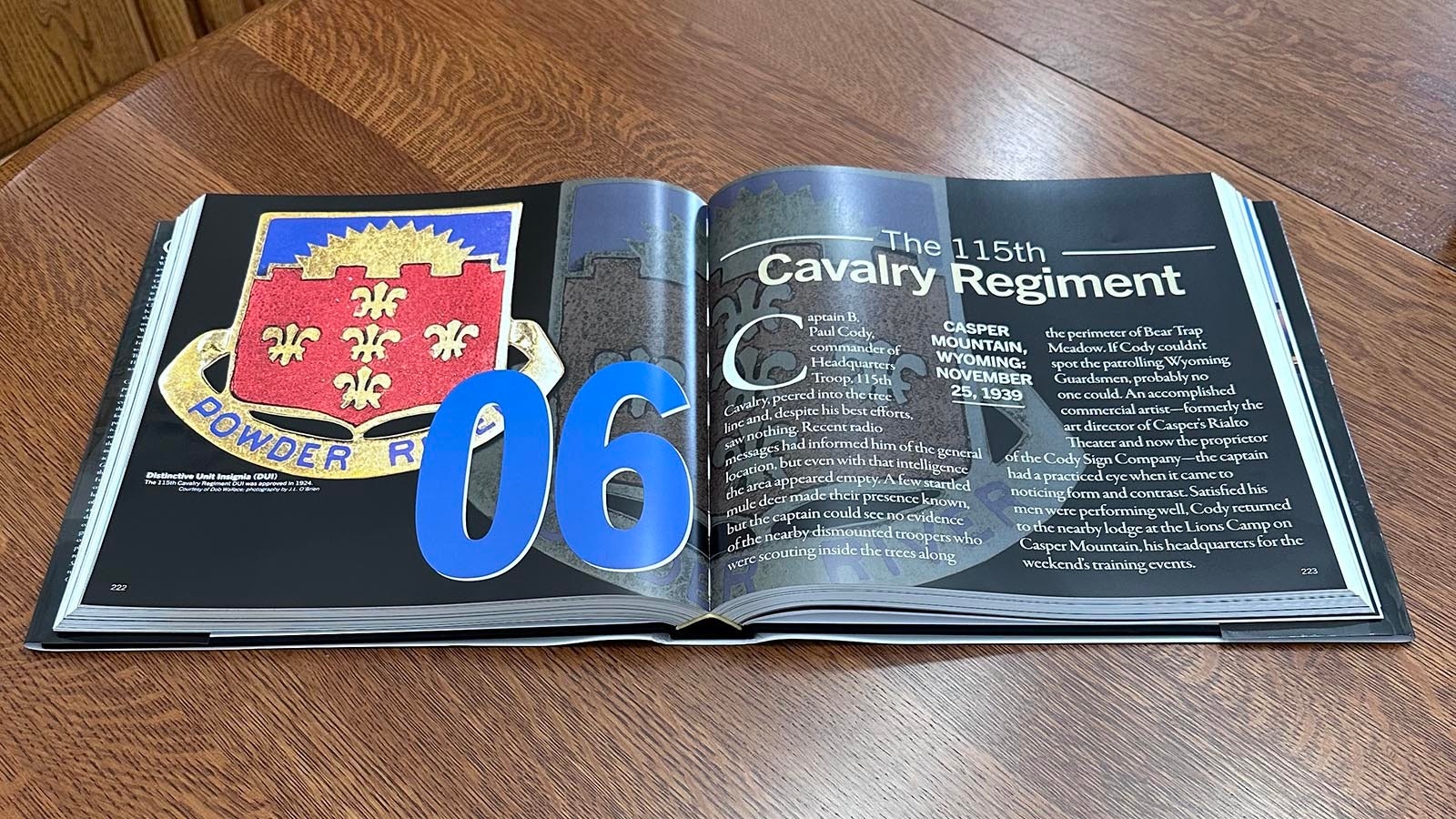
Each chapter of “Cowboy Soldiers” tries to tell a story about the people who were key to Wyoming National Guard efforts. (Courtesy Wyoming National Guard) 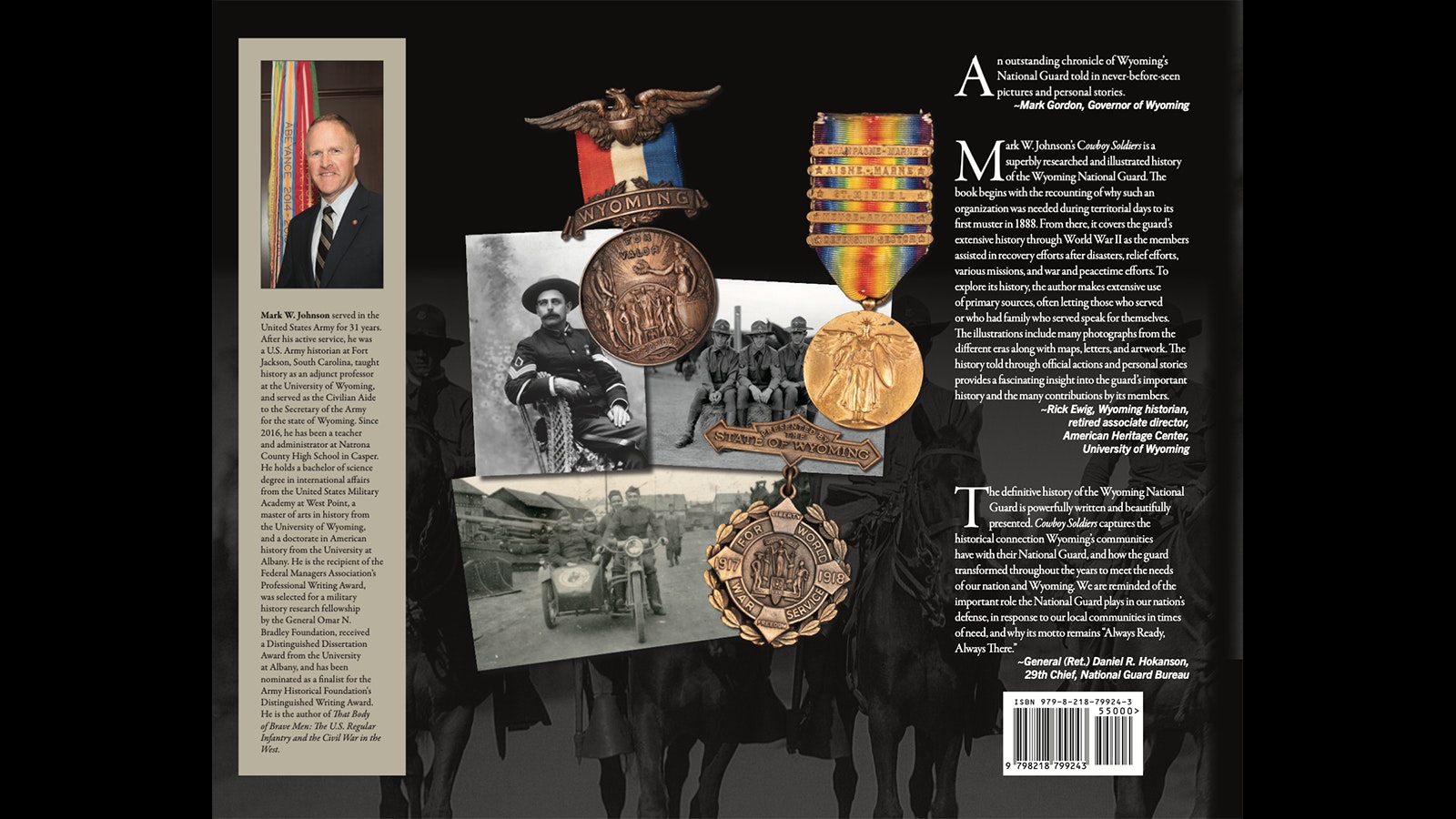
The back cover of the new history of the Wyoming National Guard. It was written by Casper-based historian Mark Johnson. (Courtesy Larry Barttelbort) 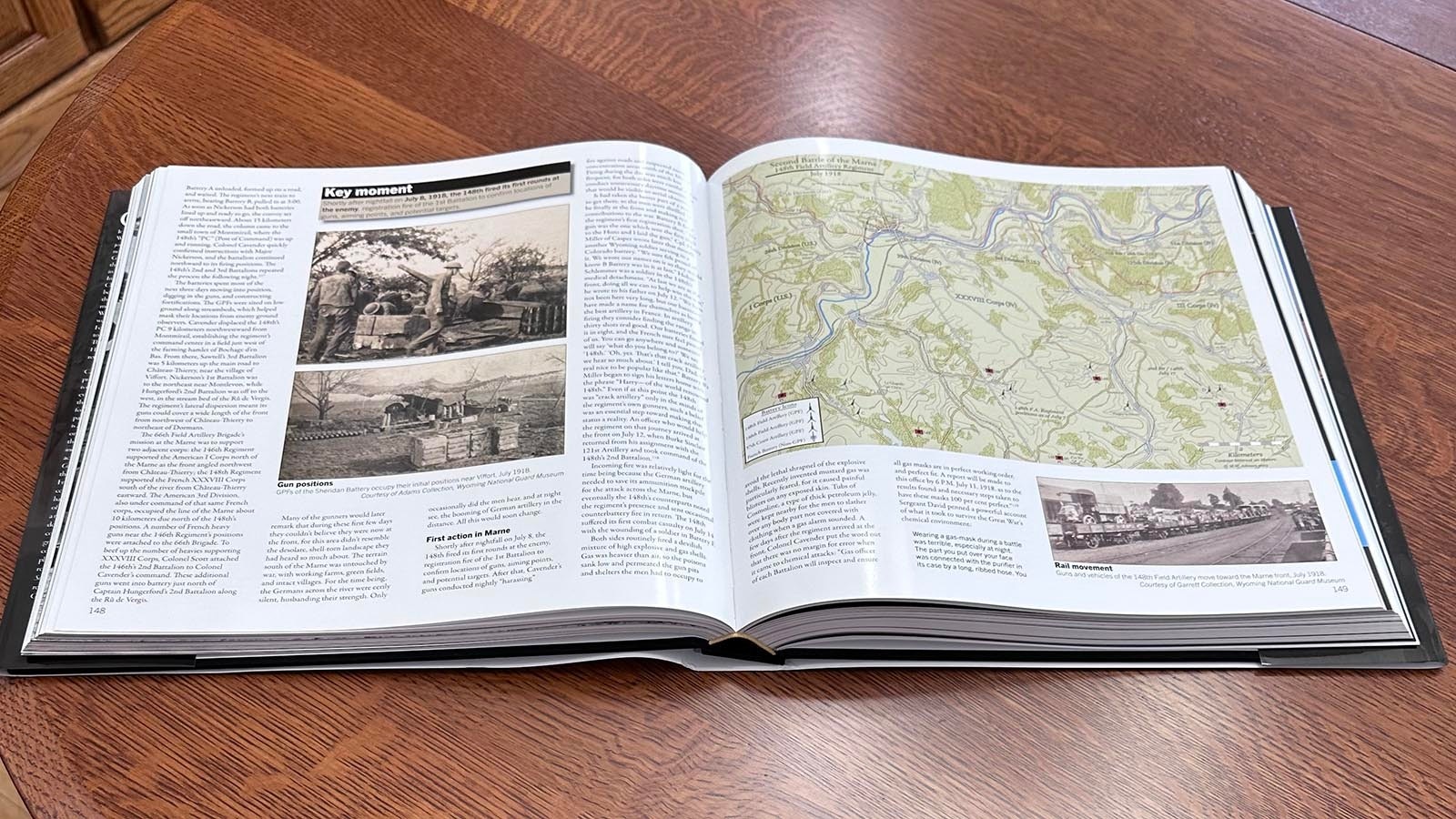
The design of “Cowboy Soldiers” includes a lot of maps, photos, and graphics. (Courtesy Larry Barttelbort) The design of “Cowboy Soldiers” includes a lot of maps, photos, and graphics. (Courtesy Larry Barttelbort)
A Big Project
Johnson, who during his Army career spent time as an ROTC instructor at the University of Wyoming in the 1990s where he earned a master’s degree in history, started on the project in 2019.
“I don’t think any of us realized the scope and depth of the whole thing,” he said. Work by others trying to compile history of parts of the Guard going back to the 1990s “really only scratched the surface of the story.”
Johnson said digging into the project, it became more ambitious than he initially imagined. His research took him to the Wyoming National Guard Museum archives, Wyoming State Archives, as well as digital newspapers that captured letters sent back by soldiers during the Spanish American War and during World War I.
“A lot of these soldiers overseas wrote letters home,” he said. “Their family members would take those letters over to the editor of the local paper … and so a lot of the primary documentation from soldiers overseas was printed in the local newspapers.”
Johnson said the project benefited from letters provided by families as well as a couple of “really great diaries” that surfaced from World War I.
The national archives also had Wyoming National Guard information because anytime a guard unit is federalized, their records while on active duty become the property of the federal government.
In addition to finding the “truth” behind the Manila flag raising, another highlight for Johnson was uncovering participation by the Wyoming Guard as a unit in World War II. The prevailing opinion historically has been that state units were broken up and scattered for the war.
Johnson said he found that one of the Wyoming Guard’s units went over to France and another fought in the Pacific Theater.
“What we thought would be the shortest chapter in the book on World War II, actually turned out to be the longest chapter,” he said.
He also enjoyed writing about the Wyoming soldiers that served in World War I artillery units and participated in nearly every major battle the Americans were involved in.
Johnson said the book was designed in a way to be visually appealing and informative for hard-core history lovers, as well as for those who want to just pick up knowledge reading photo cutlines and graphics.
Labor Of Love
Schliske, who in addition to serving as editor at the Wyoming Eagle earlier in her career and as a journalism instructor for 40 years at Laramie County Community College, also served as a major in the Wyoming Army National Guard and commander of the public affairs unit.
She said she edited Johnson’s manuscript and worked helping select photos, and collaborated with O’Brien on layout, and edited, proofed and reviewed all the maps. One of the things she is most proud of is the index, a labor of love that she had to put together by hand.
“It’s one of those things that a computer program just can’t do it. I spent weeks on that,” she said. “There will be a special place in heaven for me.”
The index includes four pages of names in the 12-inch-by-12-inch book, four pages of places and three pages of other material.
Schliske said the book includes primary sources like official unit reports, but what readers will take away will be the stories about ordinary people who stepped up to serve. She enjoyed learning more about the Wyoming Guard’s role during its deployment to the Mexican border in 1916.
There was also a Guard leader she came to respect through the research — Burke Sinclair.
“He was just one of those early Guard leaders who transformed it into something more professional,” she said.
Schliske calls the book, which comes in a cover designed to look like an old wooden ammo box, “a true keepsake and treasure.”
“Of all the things that I’ve done in my life, this I think is the thing that will live on long after me,” she said. “I know from having looked through archive stuff over the past several years that it’s the things that are put in print that have that staying power.”
Second Volume Next
There is no deadline for the second volume of the book, which Johnson said will probably take the Guard’s history from 1945 to 2020. He said the team has learned a lot putting the first volume together and the timeline to accomplish pulling it together should be much shorter than the first volume.
For Laing, whose Guard activities may be part of a third history volume at some future date, he sees an organization of accomplished people continuing to serve their state and country in whatever capacity required.
“I think my experience and my kind of success in the Guard has been through just some phenomenal NCOs (non-commissioned officers) and it’s really neat to watch,” he said. “Our main mission was to have rockets ready to fire 24/7-365 (days) but we had construction workers who could move dirt for people, electricians who somehow figured out Middle East wiring … and we had my platoon sergeant, who was a tire salesman, who could figure out how to get anything, anywhere.”
Laing currently has an eight-year contract with the Wyoming Guard and has no plans to leave when that is complete.
“I’m positive I will stay in,” he said.
For more information on “Cowboy Soldiers” go to wynghistory.org.
Dale Killingbeck can be reached at dale@cowboystatedaily.com.