For Wyoming’s big game herds, the winter of 2025-2026 was the polar opposite of the 2022-2023 winter, with its brutal weather that killed deer, elk and antelope by the tens of thousands.
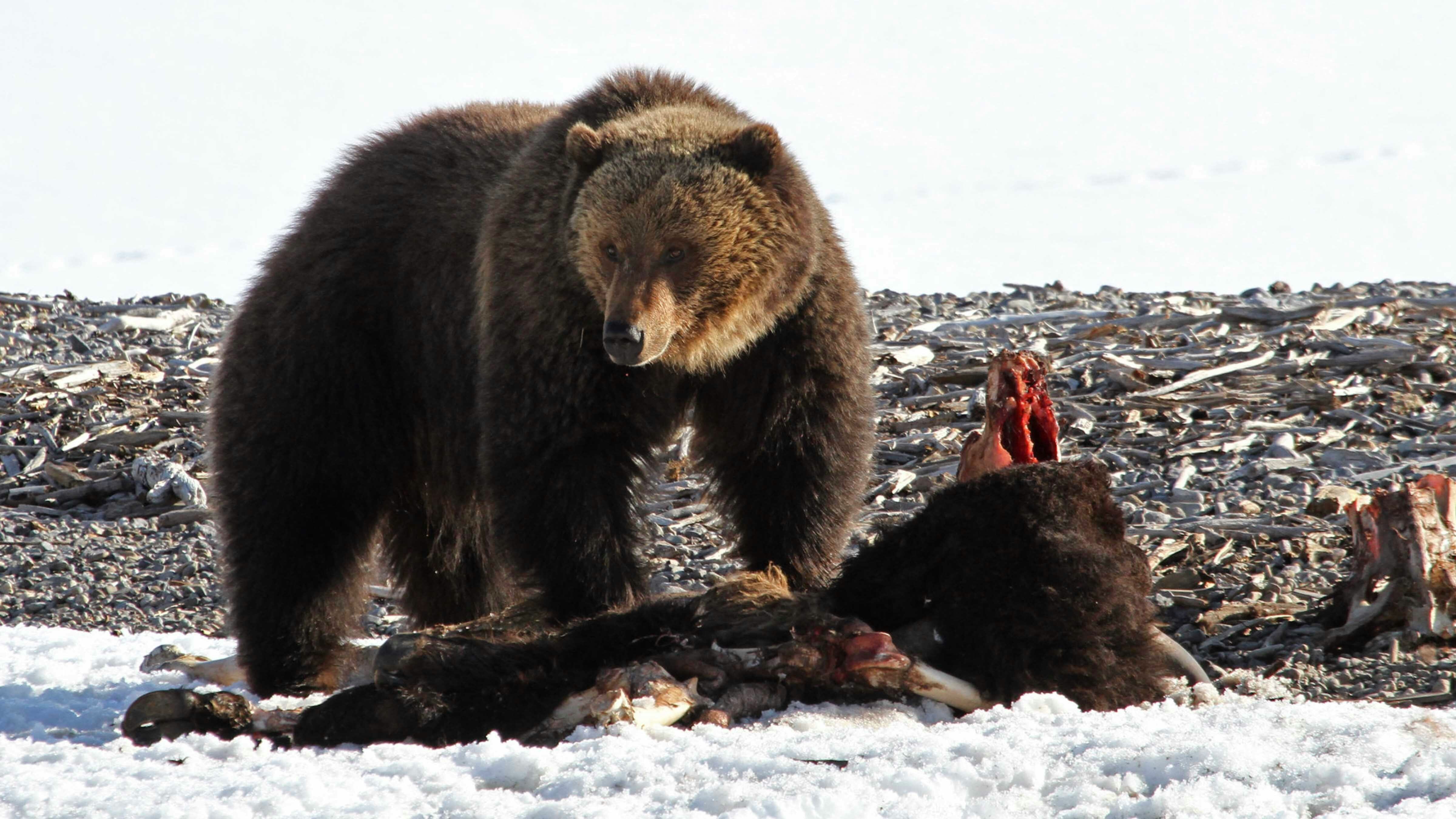
When the deep snows finally melted in the spring of 2023, landscapes were littered with big game carcasses; an all-you-can eat buffet for carnivores.
And even many of the game animals that had survived the winter were severely weakened, making them easy targets for predators.
This year, it’s a different story for wolves and coyotes, and the bears that have started emerging from their dens.
There’s been less winterkill, and many of the deer and other prey animals are in great shape, making them more difficult to catch and kill.
There’s still good news, however, biologists told Cowboy State Daily.
Grizzlies might not be as dependent upon carcasses as some might think. And when times get tough, wolves and coyotes churn out bigger litters.
The latter is a numbers game, which might on the surface seem cruel, because many of the pups will probably die.
But from the perspective of the species as a whole, it’s a way to win the long game, said Robert Crabtree, the founder, chief scientist and president of the Yellowstone Ecological Research Center.
“It’s them (wild canines) hedging their bets. It’s a bet-hedging strategy,” to have surplus young, even in bad years, he said.
Bears Eat More Grass Than Meat
Large adult male grizzlies are usually the first to emerge from winter dens, said Cecily Costello the statewide grizzly research biologist with Montana Fish, Wildlife and Parks.
So, they’re usually the ones drawn to winterkill carcasses, she said.
If there are fewer carcasses on the ground after a mild winter, “It might be an impact that’s going to be felt by the mature males, the larger bears that are going to go out and compete for those types of food resources,” Costello said.
Even so, it might not be a crisis, she said.
“If the large males are coming out of the den with a lot of fat, it might not be a make-or-break situation” for them to have fewer carcasses to choose from, she said.
The most important grizzly food in springtime is fresh, thick, green grass, Costello said.
“There’s a lot of protein in green vegetation. And when it’s newly sprouted, that’s when it’s most digestible for bears. As the grass matures, the protein structures become less digestible for bears and they get less out of it,” she said.
Female grizzlies with cubs are usually the last to come out of the dens, usually emerging when vegetation is at its peak.
Trying to fight big males over winterkill carcasses wouldn’t be worth it for them anyway, she said.
Having just gone through pregnancy, birth and lactation to feed their newborn cubs, mother grizzlies are going to be low on fat reserves, Costello said.
“The bears that are usually coming out of the dens with the lowest fat reserves are also the bears that don’t compete for carcasses very well,” she said.
Moreover, female grizzlies with new cubs, or “cubs of the year” will avoid carcass sites. Because carcasses draw in large male grizzlies that might try to kill the cubs, she added.
Instead, they’ll take their cubs and head for the meadows.
“Moms with babies are big grazers,” Costello said.
As spring progresses, female elk, deer and antelope start giving birth to their young. Those calves and fawns can be targets of opportunity for grizzlies.
“When the calving and fawning season begins, the meat resource for bears becomes a live resource,” she said.
Hoping For Precipitation
The fortunes of grizzlies could hinge upon spring snow, sleet and rain, said retired federal ecologist Chuck Neal of Cody.
“Bear in mind that December, January and February are typically the driest months in Wyoming” and were exceptionally dry this year, he said.
Neal noted, that so far in March, the Cody area has seen some wet snow, which bodes well.
“Plant availability for grizzlies will depend upon precipitation during the rest of March, then April, May and June,” he said.
With less winterkill, bears should be able to find other food, provided there’s precipitation, he said.
Moisture is also vital for producing alpine flowers at high altitudes. That’s important for grizzlies, because once the flowers bloom and start producing nectar, that will attract migrating moths. And the grizzlies in turn can gorge themselves on the protein-rich moths, Neal said.
The coming months will tell the tale for grizzlies, he said.
“At this time, I would not panic as to how bad it’s going to be. But if the next four months are as dry as the last four months, then the bears, and the people, will be in trouble,” he said.
If the pickings for bears stay lean throughout the summer, they’ll be that much more apt to go after hunters’ big game gut piles in the fall, which will lead to more human-bear conflict, he said.
Churning Out Pups
A lack of snow has likely made hunting harder for wolves, Crabtree said.
Deep, crusty snow in the late winter and spring causes big game animals to “post hole,” or sink down into the snow, while wolves can run across the top, he said.
“They will kill multiple animals in one night,” he said.
With snow conditions being what they are this year, “that bonanza for wolves that occurs in late winter just isn’t going to happen this year,” he said.
Coyotes are adaptable at scavenging from multiple sources, and hunting small animals, so they can adjust if winterkill big game carcasses are lacking, he said.
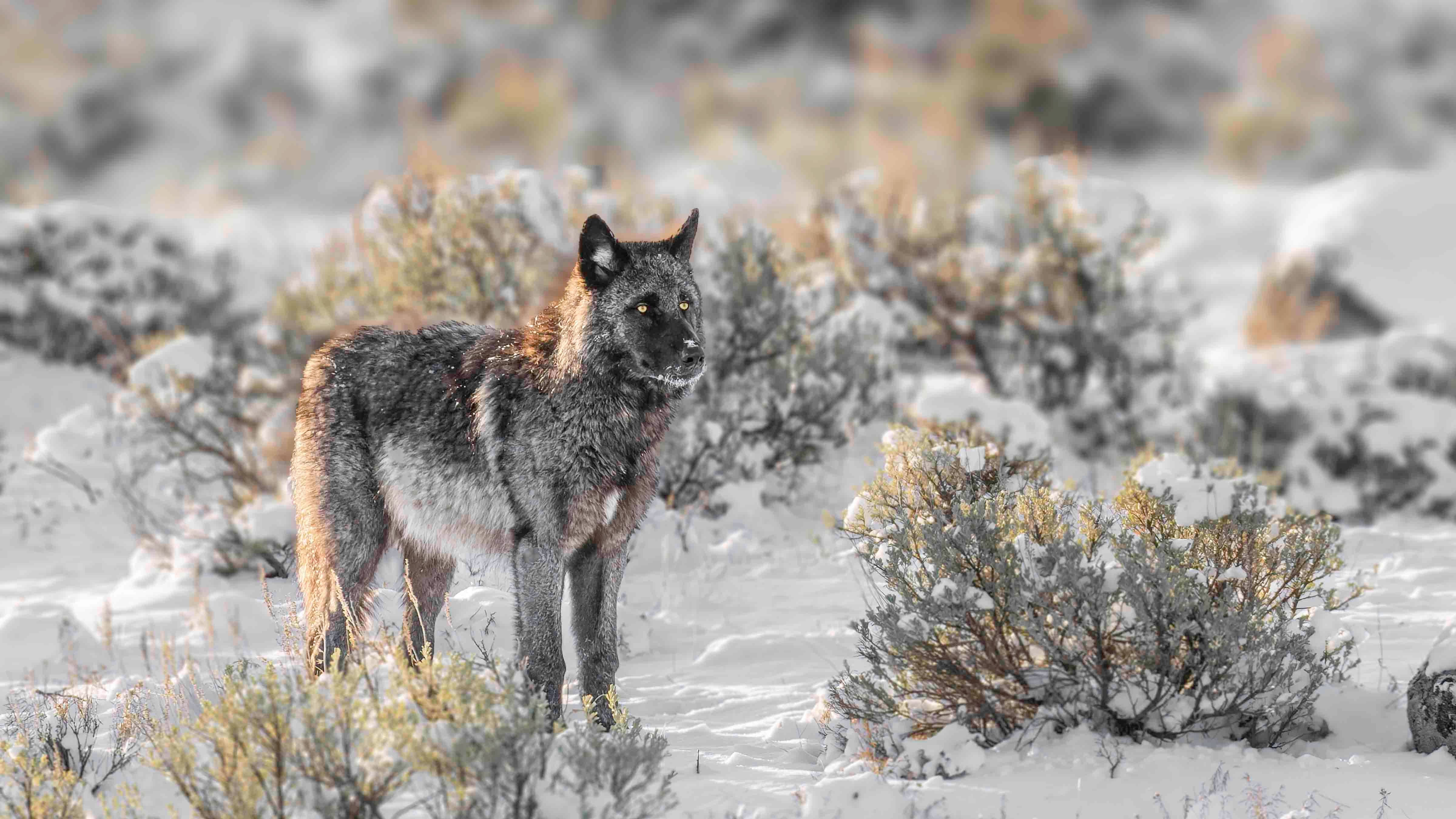
Wolves and coyotes also push through lean times by having large litters. Wild canines are among the most prolific species.
“They have an average of six pups per female per year,” Crabtree said.
What’s more, birthing and nursing pups isn’t as rough on female wolves and coyotes as it is on other species.
But in wolf packs, once the pups are weaned, “their nutritional demands go way up,” as they depend on adults to go hunting and bring them back meat.
And if the adults can’t meet the demand, pups start to starve.
The major mortality factor in wolves, and the coyote population, is summer starvation,” he said.
That’s why litters might get even bigger during lean years, like this one.
“In a normal year, most of the pups die. But if it turns out to be a good year, then boom, they’ve got a surplus population, and they can pass on their genetics,” Crabtree said.
Mark Heinz can be reached at mark@cowboystatedaily.com.