
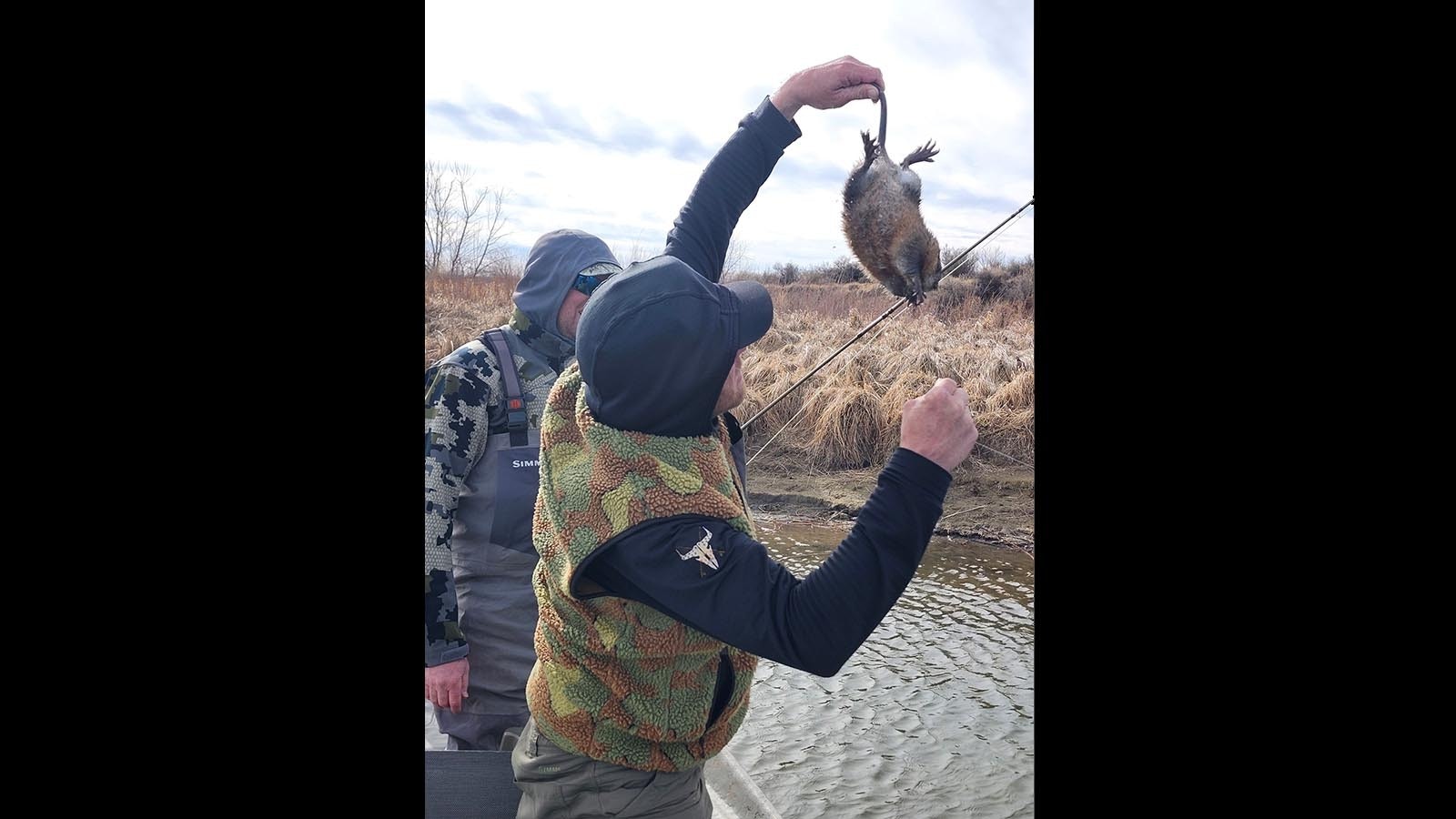
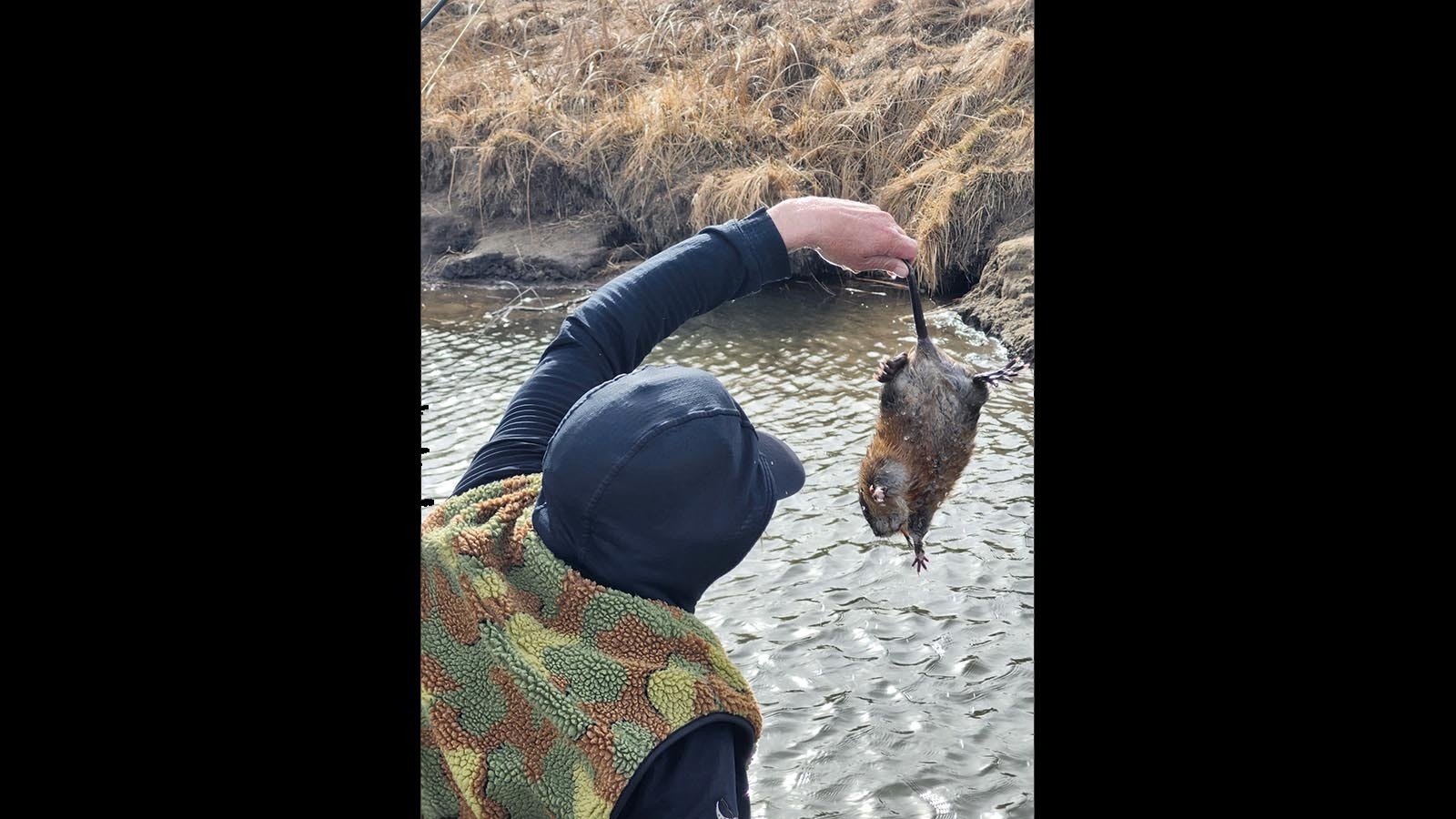
When a fly-fishing guide and his clients set out on the legendary Grey Reef section of Wyoming’s North Platte River early this month, they were eager to catch trout, but ended up catching a muskrat on their line instead.
The determined little rodent chased down and bit a string leech on a client’s fishing fly, just like a trout would, said Craig Kwiatkowski, a fishing guide with the Wyoming Fly Fishing Guide Service.
He’s seen a few muskrats get accidentally snagged by angler’s hooks. But a muskrat aggressively hitting a fishing fly was a first.
“Eleven years on the river, and I’ve never had that happen to me,” Kwiatkowski told Cowboy State Daily.
“I don’t know if anybody else is ever going to be able to top this, I’ve never seen this before,” he added.
Luckily for the muskrat, he quickly removed the hook from its lip. And, after a few photos to document the bizarre catch, the muskrat was set free.
A wildlife biologist told Cowboy State Daily that it’s rare, but not unheard of for muskrats and other rodents to eat insects.
That could explain why the muskrat went after the angler’s fishing fly.
‘He Actually Cast Over That Muskrat’
The North Platte River has a healthy population of muskrats, and they’ve been numerous along the Grey Reef section this spring, Kwiatkowski said.
Usually, they’re of no concern to anglers and fishing guides.
“I’ve caught a handful of muskrats in my life; 99% of the time, it’s when a client is throwing a stringer and they snag it. They snag it completely by accident, whether it's on their back or the tail,” he said.
This time around, the angling party spotted the muskrat on the surface of the river, but then it submerged and they figured it was gone.
Then the client made the cast that ended up catching the muskrat.
“He actually cast over that muskrat. That muskrat was still under the water there,” he said.
“The next thing I know, he (the client) is hooked up. And I was like, ‘’Oh man, did you snag the rat?’” Kwiatkowski said.
“And he’s like, ‘Something hit (bit) the stringer,’” he added.
The muskrat was reeled in, just like a fish.
“Sure as shit, the fly was in his mouth,” hooked into the bottom lip, he said.
Muskrat Fights Back
Kwiatkowski’s next concern was to free the muskrat from the hook, without getting bitten himself.
“They can bite you when you grab them by the tail,” he said.
“He was trying to do sit-ups and bite me, and making noise,” he said.
Kwiatkowski has a set of forceps he uses to remove hooks from fish, and went about doing the same for the muskrat, or at least trying to.
“They have these finger-like front paws, and he kept trying to grab my forceps,” he said.
He finally pulled the hook and put the annoyed, but likely wiser, muskrat back into the water.
“He swam back to rejoin his buddies,” Kwiatkowski said.
Rodents Will Eat Insects
Gary Beauvais, director of the Wyoming Natural Diversity Database at the University of Wyoming, said the tale of the muskrat biting a fishing fly was surprising.
Rodents can be “insectivorous” (eating insects), he said, but he’s never heard of one biting a fishing fly.
“I have heard of muskrats, and even beaver, getting snagged, but not hooked in the mouth after a deliberate bite,” he said.
“Birds, like gulls, are somewhat famous for deliberately taking flies, but then again, they are understood to be far more insectivorous than rodents, so it is not as surprising,” he added.
Rodents might eat more insects, and even meat, than most people might think, Beauvais said.
That could happen in the spring, “when they are preparing for reproduction (and thus relatively protein-hungry) but plant productivity is still pretty low, and most of the seeds produced last summer/ fall have fallen and become buried or already eaten,” he said.
“That could be a bit of a nutritional crisis that emerging insects help to fill. It’s hard to see why a rodent would pass up an easy insect meal in that situation,” Beauvais said.
Dryland rodents might target “large and fatty insects” like grasshoppers and beetles in the fall,” he added.
“Annual summaries of rodent diets usually show plant material dominating, but I think that could mask certain short periods of the year when insects and other animal prey become critical nutritional bridges,” he said.
Mark Heinz can be reached at mark@cowboystatedaily.com.