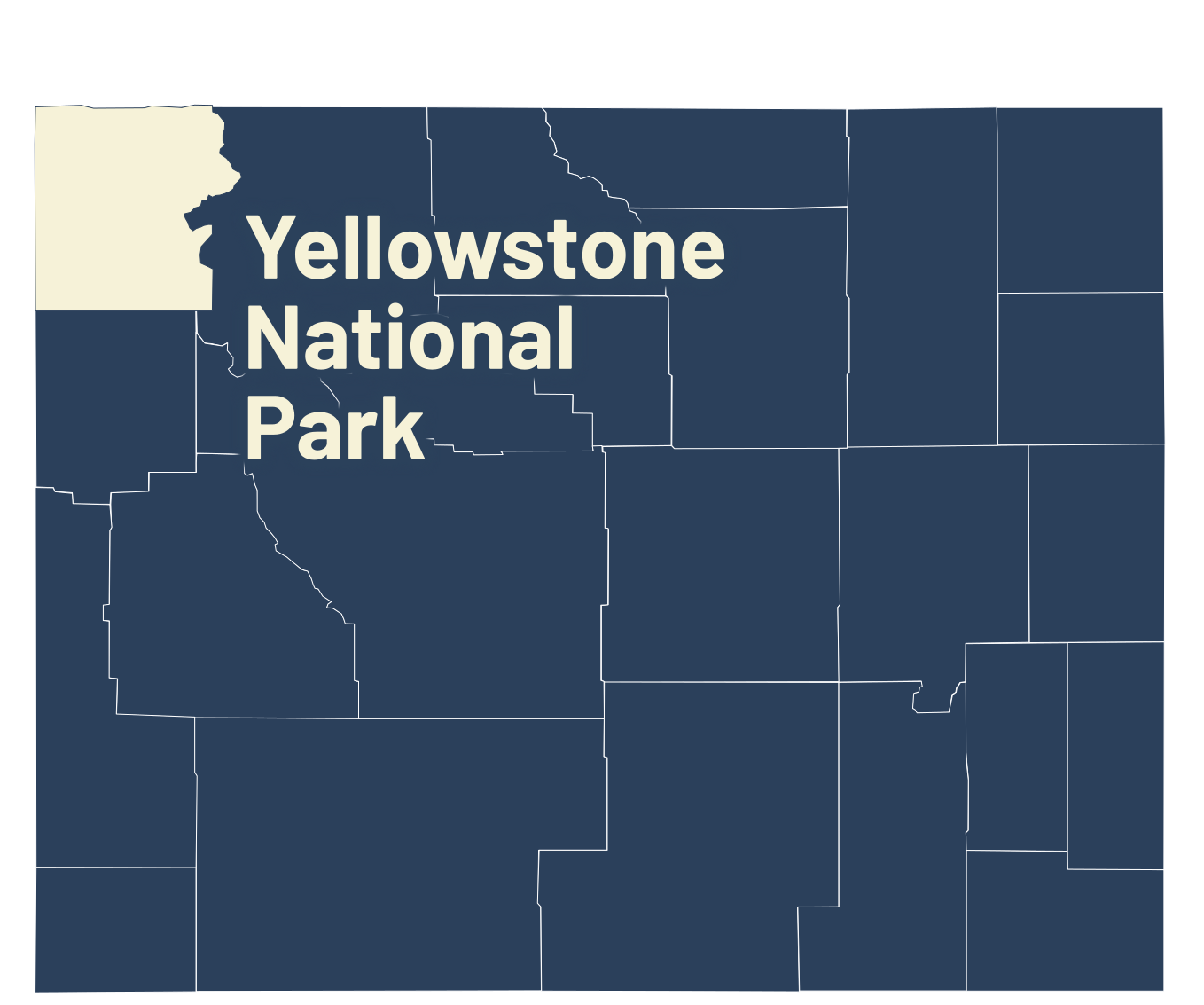
The first official sighting of a grizzly this year in Yellowstone National Park has been announced.
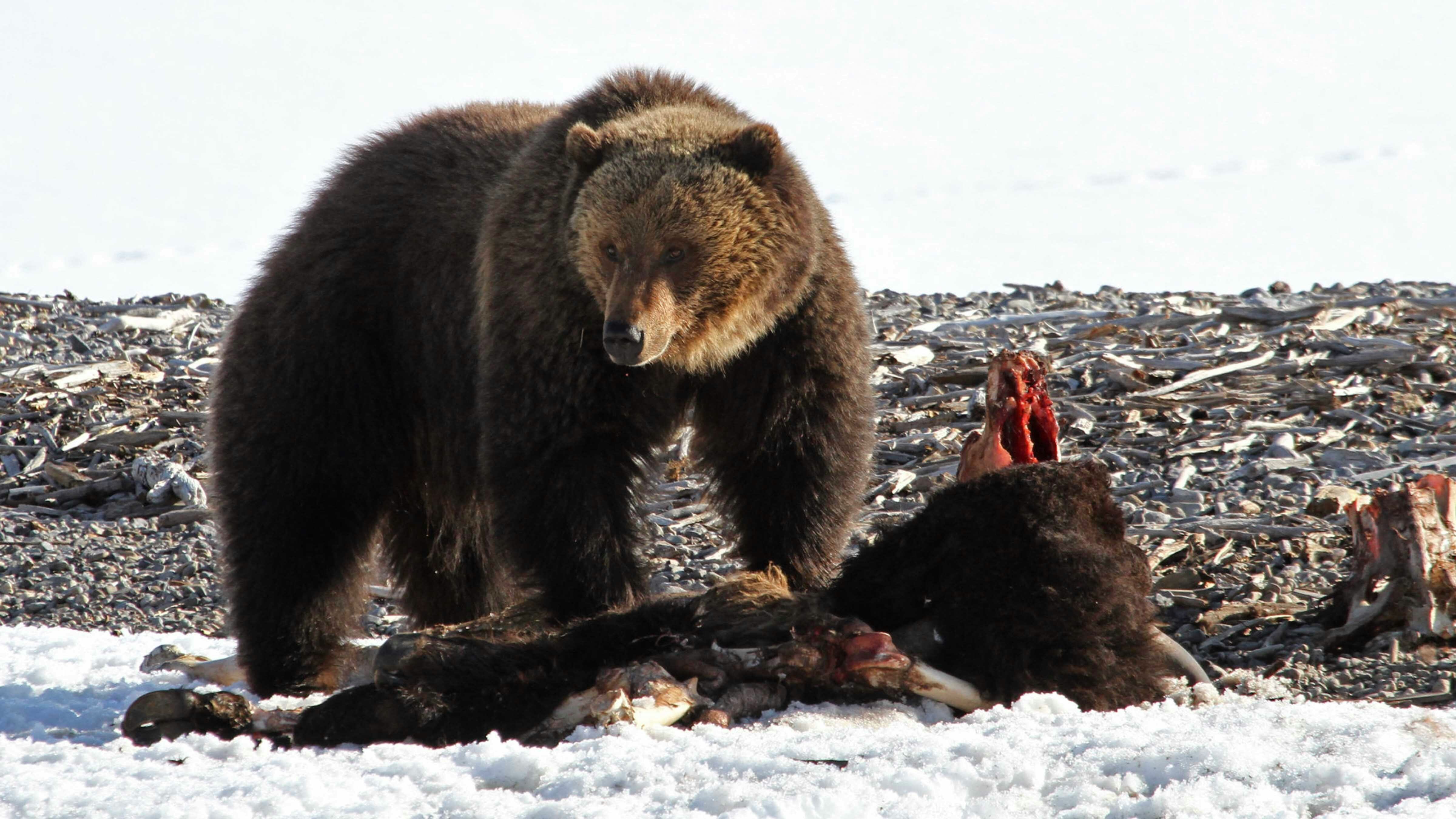
Yellowstone biologists spotted a grizzly feeding on a bison carcass somewhere in the backcountry in the northern half of the park on Monday.
Even though a grizzly was seen wandering through Yellowstone in late January, the March 9 sighting has been declared the first official grizzly sighting of 2026.
Despite an abnormally warm winter across Wyoming, Yellowstone’s first official grizzly sighting isn’t abnormally early. It falls right within the window of when biologists expect and typically do see big bruins emerging from hibernation to voraciously find and feast on whatever food they can find.
Yellowstone’s Groundhog Day
Punxsutawney Phil (and Lander Lil) both herald the arrival of spring on Feb. 2. There isn’t a fixed date for Yellowstone’s first grizzly, but it tends to happen within the first two weeks of March.
The first grizzly of 2025 was spotted on March 14. The first grizzly of 2024 was spotted on March 3, while the first grizzlies of 2023 and 2022 were spotted on March 7.
“The first boars will show up in early March in Yellowstone’s northern range, (usually) at the ponds where bison fall through the ice,” Wyoming wildlife photographer Jorn Vangoidtsenhoven told Cowboy State Daily in February 2025.
Males emerge from hibernation earlier than females, who will remain in their dens with their cubs until April or May. After several months of low activity and no food, they emerge with an incredible appetite, making them extremely dangerous.
“When bears emerge from hibernation, they look for food and often feed on elk and bison that died over the winter,” said Linda Veress with Yellowstone’s public affairs office in a press release. “Bears may react aggressively to encounters with people when feeding on carcasses.”
Most of Yellowstone is still closed to visitors. The park is only accessible via snowmobiles and snow coaches during the winter season, so the likelihood of a human-grizzly encounter in spring is much lower than in summer or autumn.
Still, Veress and the National Park Service (NPS) take every opportunity to remind Yellowstone visitors that all of Yellowstone is bear country, “from the deepest backcountry to the boardwalks and parking lots around Old Faithful.”
Light Sleepers
Biologists usually get the distinction of Yellowstone’s first official grizzly sighting, but that doesn’t always mean they’re the first to see a grizzly in the park. Earlier this year, there was a lot of buzz over “the January grizzly.”
Wildlife photographer Rob Harwood got a video of a grizzly he spotted Jan. 26. It was an adult wandering on the slopes of Specimen Ridge in the Lamar Valley.
“He, or she, seemed to just be wandering,” Harwood told Cowboy State Daily. He said the adult grizzly “did not look especially large,” which he believed ruled it out as one of the “big old boars” that usually emerge earlier in the season.
When bear biologist Frank van Manen saw the video, he said it “would be one of the earliest sightings on record.” Why the bear was awake is anyone’s guess.
“Without knowing details about the (January) bear, its condition, etc., it is difficult to say what the drivers are for it being out now, and it is likely a combination of factors,” he said.
However, grizzlies are known to be “light sleepers,” according to Lori Roberts with Montana Fish, Wildlife, and Parks.
“They can be awake in the den,” she said. "They aren’t like toads, or other species that go into a complete torpor for the winter.”
Veress told Cowboy State Daily that park biologists were aware of the January grizzly sighting but didn’t have any information on the bear in question. That probably robbed it of the distinction of being “the first grizzly” of Yellowstone for 2026.
“Occasionally, bears do awaken and leave their dens during the winter, and it’s possible to see a bear any month of the year,” she said.
High Season
Now that the first grizzly has been seen on a carcass, more of the over 1,000 grizzlies will start waking up in the coming days and weeks. Carcasses can often be sources of contention between grizzlies, especially when they emerge from hibernation.
Many bison and elk die during the winter, succumbing to cold temperatures, disease, or a lack of food. As temperatures gradually rise, the snow melts, and their carcasses begin to thaw.
The smell of rotting flesh is a magnet for grizzlies emerging from hibernation. It’s an easy source of calorie-rich food to replenish what they lost while burning through fat reserves during hibernation.
“Bears are very food-driven, and if they find something, they might make that trip out of the den,” Roberts said. “Why else would a bear leave the den in winter?”
When it comes to grizzlies, there are two places Yellowstone visitors don’t want to be: between a mother and her cubs, or between a boar and a carcass.
The NPS releases its list of “bear-aware” guidelines whenever there’s a noteworthy bear event in Yellowstone, usually after a human-grizzly incident. In all likelihood, nobody’s going to encounter a grizzly at Old Faithful or any of the park’s popular spots anytime soon, but it never hurts to remind people of the dangers of grizzlies and how they might protect themselves.
“Bear spray has proven effective in deterring bears defending cubs and food sources,” Veress said. “It can also reduce the number of bears killed by people in self-defense. Prepare for a bear encounter by carrying bear spray, knowing how to use it, and making sure it’s accessible. Stay alert, hike or ski in groups of three or more, stay on maintained trails, and make noise.”
And, above all else, don’t run.
Andrew Rossi can be reached at arossi@cowboystatedaily.com.