Oil prices are hitting the stratosphere thanks to a massive disruption to world oil production in the blocked Strait of Hormuz.
Prices shot past $100 per barrel on Monday, caused by an Iranian blockade of the narrow strait, which is the only route to the open sea for some Persian Gulf countries. Prices hit just north of $119 per barrel in early trading on Monday, a price not seen since 2022.
The strait typically has 153 ships pass through daily, many of them oil tankers, but since March 2 has only had 78 pass through.
Higher oil prices often herald more oil and gas activity out in Wyoming’s oil fields. But industry experts say this is probably not an occasion where higher prices will translate to a “drill, baby, drill” boom.
Petroleum Association of Wyoming Vice President and Director of Communications Ryan McConnaughey told Cowboy State Daily that what the industry needs to see before it can justify ramping up activity are sustained price levels and less volatility.
“These sorts of things that we believe are going to be a blip … are obviously good for the industry (short-term),” he said.
But without some sustainability, it doesn’t spur major development, “especially here in Wyoming, on federal lands.”
Wyoming’s oil and gas industry in Wyoming likes to see steady prices around $80 a barrel, McConnaughey added.
“That is a price that would spur interest in development,” he said. “While (also) not making gas prices go so high that we start to see concern there, and a slowing of the economy.”
A slower economy tends to pull demand for oil and gas down, as businesses pull back from plans and motorists reduce travel. Meanwhile, higher oil prices also mean higher expenses for many oil and gas companies.
Downward Pressures On Demand
In the short run, the blip will be good for both the bottom lines of producers and state tax revenues, McConnaughey said. But trading halts in Europe, rattled stock markets, and sudden price jumps at the gas pump are things that, overall, draw concern.
“(Price spikes) can certainly have far-ranging impacts on things like gas prices, and even in a sustained manner, on things like fertilizer, which can lead to price increases on food and those sorts of things,” McConnaughey said. “And that’s why we like to stay right around that $80 a barrel. That’s a sweet spot for us, where it’s profitable to drill new wells and make that investment in Wyoming, while not also having massive impacts on the economy.”
Kirkwood Oil and Gas landman Steve Degenfelder agreed with McConnaughey’s assessment.
“It will take a while for industry to get the feeling that these high oil prices will stay high for an indefinite period of time, to translate into increased activity with industry folks,” Degenfelder said. “The president still says this will be a short-term event.”
That sort of transient situation doesn’t tend to convince companies it’s time to devote more capex in Wyoming.
Meanwhile, the industry is still working through a “federal nexus” of permitting and leasing issues across Wyoming, as well as various lawsuits against development plans by various environmental groups, Degenfelder added. On top of that impediment, increased oil prices can be a double-edged sword for the industry.
“For the short term, existing production will get a boost, which will help operators,” he said. “But I expect to see service costs creep up if it lasts very long.”
Powder River Basin Still Has 10 Rigs
Lower oil prices earlier this year caused Continental Resources’ Founder and Chairman Harold Hamm to halt drilling in the Bakken for the first time in three decades. Typically, Continental has run between six to nine rigs in the Bakken, rigs Hamm did not move to any of his other oil and gas plays, which include the highly productive Permian and Oklahoma’s Scoop.
Oil was trading near $59 a barrel at the time Hamm announced that his company would stop drilling in the Bakken. Break evens for the Bakken have been around $58 per barrel, according to BloombergNEF. Hamm said at the time there was really no point drilling there or anywhere else until margins improved.
While Continental is now a privately held company, it’s still one of the majors. Their shift is a smoke signal that major re-evaluations are likely underway for the Bakken by its largest operators — and potentially in other oil and gas plays as well.
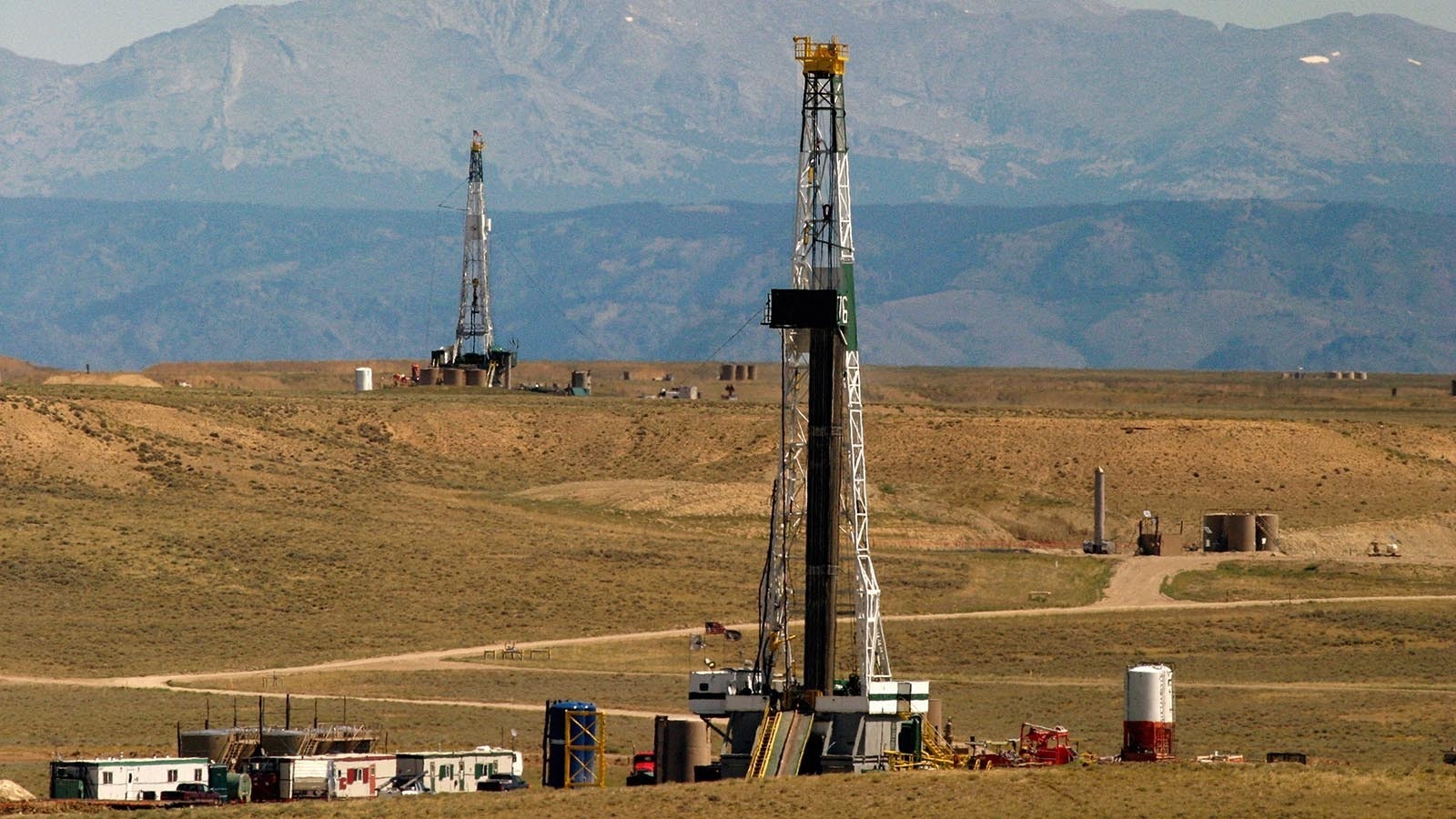
Despite that, however, Wyoming’s Powder River Basin still has 10 rigs running — one less than last year. Those numbers include a couple rigs from Continental, according to Enverus analyst Ryan Hill, who tracks Wyoming’s oil and gas activity in the Powder River Basin, the state’s most active play right now, housing most of the state’s 15 or so drilling rigs.
The picture in Wyoming is mixed, Hill said. Break evens for the Niobrara formation in the Powder River Basin are sitting at $55 per barrel right now, while the Mowry formation is still stuck at $65.
“Operators need to make decisions based on what they would deem as being prices they believe in for the long term,” he said. “Specifically for Wyoming, in particular, a lot of the remaining inventory is controlled by these large, multi-basin operators. So, for the most part, we expect private or public companies to largely keep in line with guidance.”
Changes to guidance won’t happen overnight, Hill added, and that’s so far reflected by rig counts.
“We haven’t seen any kind of a rebound on rigs really, anywhere, and certainly not in the Powder on this kind of short-term news,” he said. “But that is a pretty major outage in the Strait of Hormuz. That is significant. It’s upwards of 20 million barrels a day in a market that’s, worldwide, just over 100 million.”
Private companies, though, do tend to be a little more reactive and nimbler, Hill added. So, it’s possible, in the shorter term, that higher prices might prompt more drilling from them. The major private companies in the Powder being Anschutz Exploration Corp. and Continental.
A Damper On Other Extraction Industries
Higher oil prices, meanwhile, don’t necessarily play well with the rest of Wyoming’s mining and extraction sector.
“Everything thrives on energy, and the price of energy determines everything,” Wyoming Mining Association Director Travis Deti told Cowboy State Daily. “So, when you’re looking at the mining industry, we use a lot of diesel fuel. And when the cost of oil goes up, it drives the cost of diesel up and that drives production costs up. So that’s pretty concerning, and that’s something we’re looking at right now.”
On the flip side, higher natural gas prices mean Wyoming coal becomes more competitive.
“It really is a mixed bag,” he said. “We watch the price of natural gas and when natural gas is up above or around $3, Wyoming coal is very competitive. We’ve been, I think it’s about $3.60 right now, so that’s really good for Wyoming coal.”
Higher oil and gas prices also don’t necessarily play well with the rest of the economy, either, University of Wyoming economist Rod Godby told Cowboy State Daily.
“Over time, were these prices to stay high over the summer — and we haven’t seen the full extent of the price change yet — they will definitely reduce travel,” he said. “Fuel is an essential part of the supply chain. Any goods, manufacturing, and travel.”
It Will Be Inflationary
Godby, who noted he’s still paying a fuel surcharge to the garbage company that comes to pick up his trash every week, expects the current surge in prices to act as an inflation trigger.
“Fuel prices went up in 2022 and came back down,” he said. “But they still haven’t taken that off. So, you’ll see higher prices imposed and companies potentially using this as a way to pass on other price increases, like tariffs and stuff that were initially swallowed by companies.”
Consumers are already seeing the impact of the conflict in Iran, Laramie Economic Developer Brad Enzi told Cowboy State Daily.
“It sure puts a pinch immediately at the pump for a lot of families,” he said. “Then you see it at the grocery store, and you see it trickle through the economy. Oil prices impact every single facet there.”
The instability is actually harmful to both ends of the economic spectrum, Enzi added.
“The big spike hurts at the pump, and the big trough hurts our ability to use the resources in a beneficial way,” he said. “We really need to see some stability generated, so that the companies that are doing the exploration and production work can have the certainty to make the moves. And we need it to be low enough that it’s not killing everybody at the pump, especially as tourist season starts.”
Ripple Effects Still Moving Through Economy
While consumer impact has been immediate at the gas pump, the ripple effects have only just begun to appear, Godby added.
“It’s going to cause inflation, all else equal, to be higher than it would otherwise be,” he said. “It also (affects) some macroeconomic policy, specifically the Federal Reserve’s interest rates.”
The latest jobs report showing a loss of 90,000 jobs in February — 140,000 fewer jobs than expected — which suggests to Godby an already weakening economy, before the conflict in the Middle East actually began. That’s going to put upward pressure on the interest rates set by the Federal Reserve.
“The bottom line is, the economy may already be slowing, or at least weak,” he said. “At the same time, this is going to push up inflation, and there’s just no way around it. Fuel prices have an immediate effect on other prices — manufacturing costs, shipping costs, travel costs, you name it. So, all those will get passed on and, all else being equal, there will be more inflation in the coming months.”
Releases from strategic reserves held by G7 countries and the United States can help take the top off of price spikes in the short-term, but this is of limited duration as the reserves, which are relatively small compared to worldwide demand, run out.
Godby also expects higher gas pump prices will persist beyond the situation in Iran.
“About 60% of the cost of gasoline is crude price, so prices follow that almost immediately,” he said. “When that rises, gasoline prices rise. Once prices go up, and I’ve written about this in my academic papers, we say that prices go up like rockets and come down like feathers. So, once they go up, they will stay higher a lot longer than the oil price does. That’s been the historic pattern.”
Renée Jean can be reached at renee@cowboystatedaily.com.