Andrew Dyl, assistant fire marshal with Cheyenne Fire Rescue, has stared at a whiteboard plenty of times, either recalling a floor plan in the wake of a structure fire or trying to draw it himself to communicate with his team about how a fire rescue went down.
Now new drone technology at his department is making those manual drawings fewer and farther between.
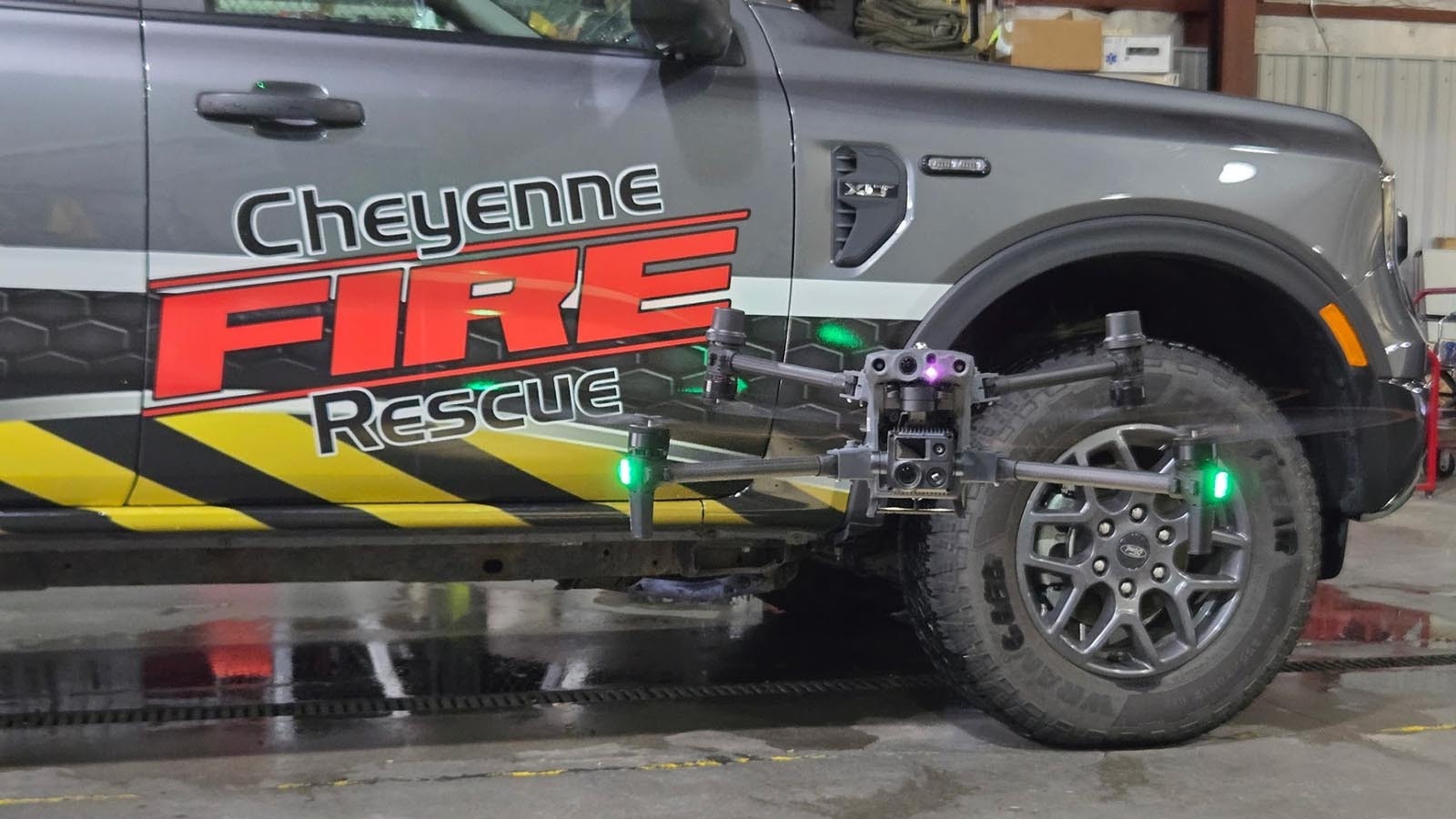
The department’s drones are outfitted with 360-degree cameras — similar to cameras Realtors use to offer virtual home tours.
The cameras can provide virtual tours of structures or land damaged by fire, to aid in fire investigations and show insurance companies what the actual fire damage looks like.
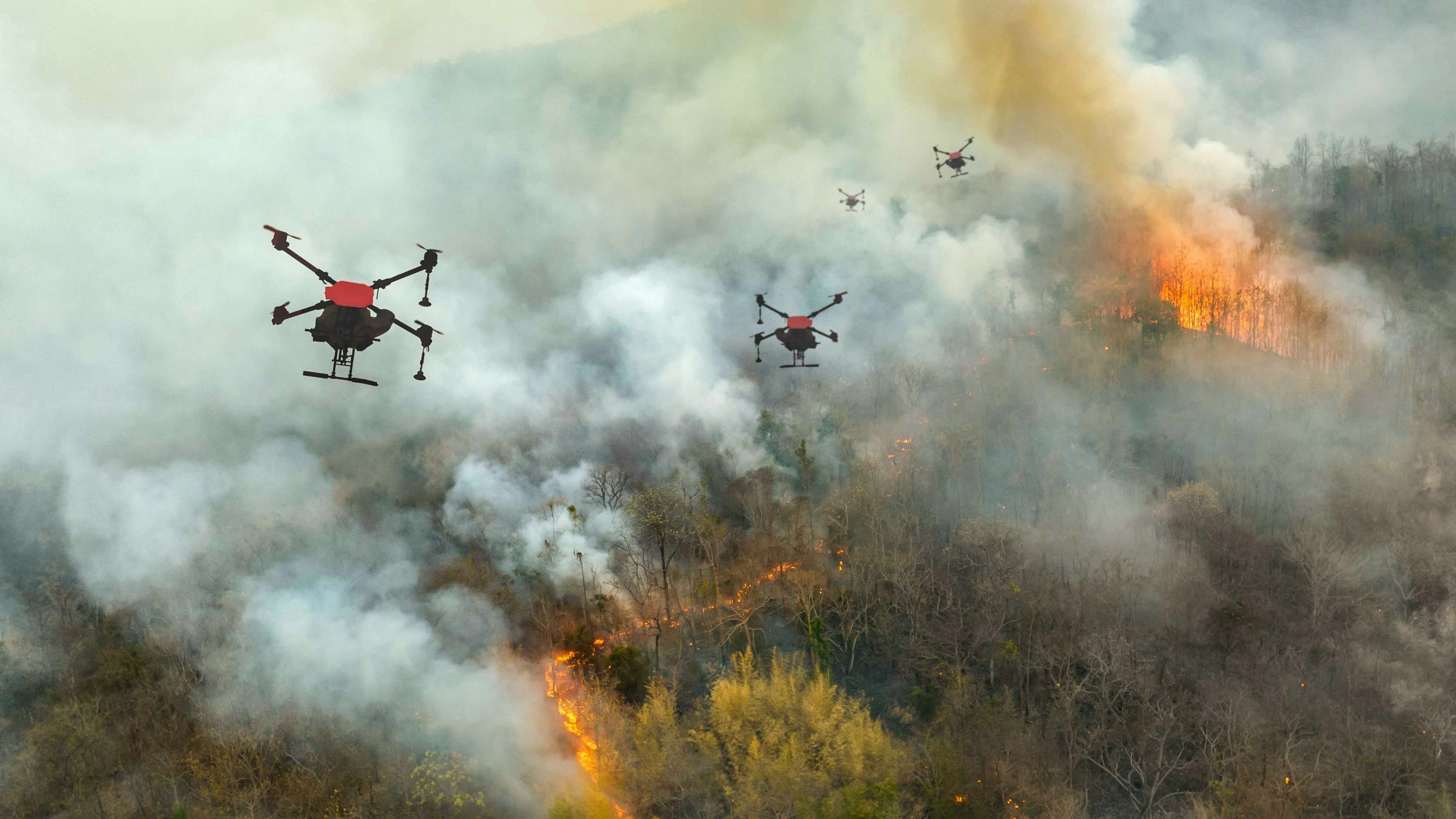
That's only scratching the surface of what firefighting drones are evoloving into. They're being used to remotely spray water, drop fire retardant and recon areas for hot spots with infrared imagery.
Drone technology plays "a big role in everything we’re doing,” said Dyl.
It’s a growing trend — perhaps even a necessity — as fire departments continue to seek ways to respond to emergency situations faster and collect as much accurate information as possible in fire investigations.
Doing that in ways that protect the safety of firefighters is a priority.
Aspen, Colorado, will begin dispatching high-tech drones to fight wildland fires this summer after the city signed a contract with a California start-up company called Seneca, for an undisclosed amount of money.
Wyoming fire departments are well aware of the growing capabilities of drone technology to aid in fire emergencies and are excited at future prospects.
“I’ve been looking into it for our department, for sure,” said George Neeson, division chief of Community Risk Reduction for the Sheridan Fire Rescue. “In the future, (drone technology) will make it safer for our firefighters to respond.”
History
The idea of using drones to assist firefighters was first introduced in 2011, at the Fire Department Instructors Conference (FDIC) International, according to uavcoach.com, a website that educates consumers about drone technology, operation and trends.
“UAV” stands for unmanned aerial vehicles.
According to the site, the number of fire departments using drones doubled in 2020, with fire departments utilizing drones in various ways, such as to monitor wildfires and for search and rescue.
As of 2023, over 500 fire departments across the United States use drones, and this number is expected to grow as technology continues to evolve.
The U.S. Forest Service supports a growing unmanned aircraft system (UAS) program.
Drones played a crucial role in protecting the community of Beulah, Colorado, and firefighters during the Oak Ridge Fire in June 2024, as drones were able to reach areas of the fire that were inaccessible to firefighters.
Aspen Inspiration
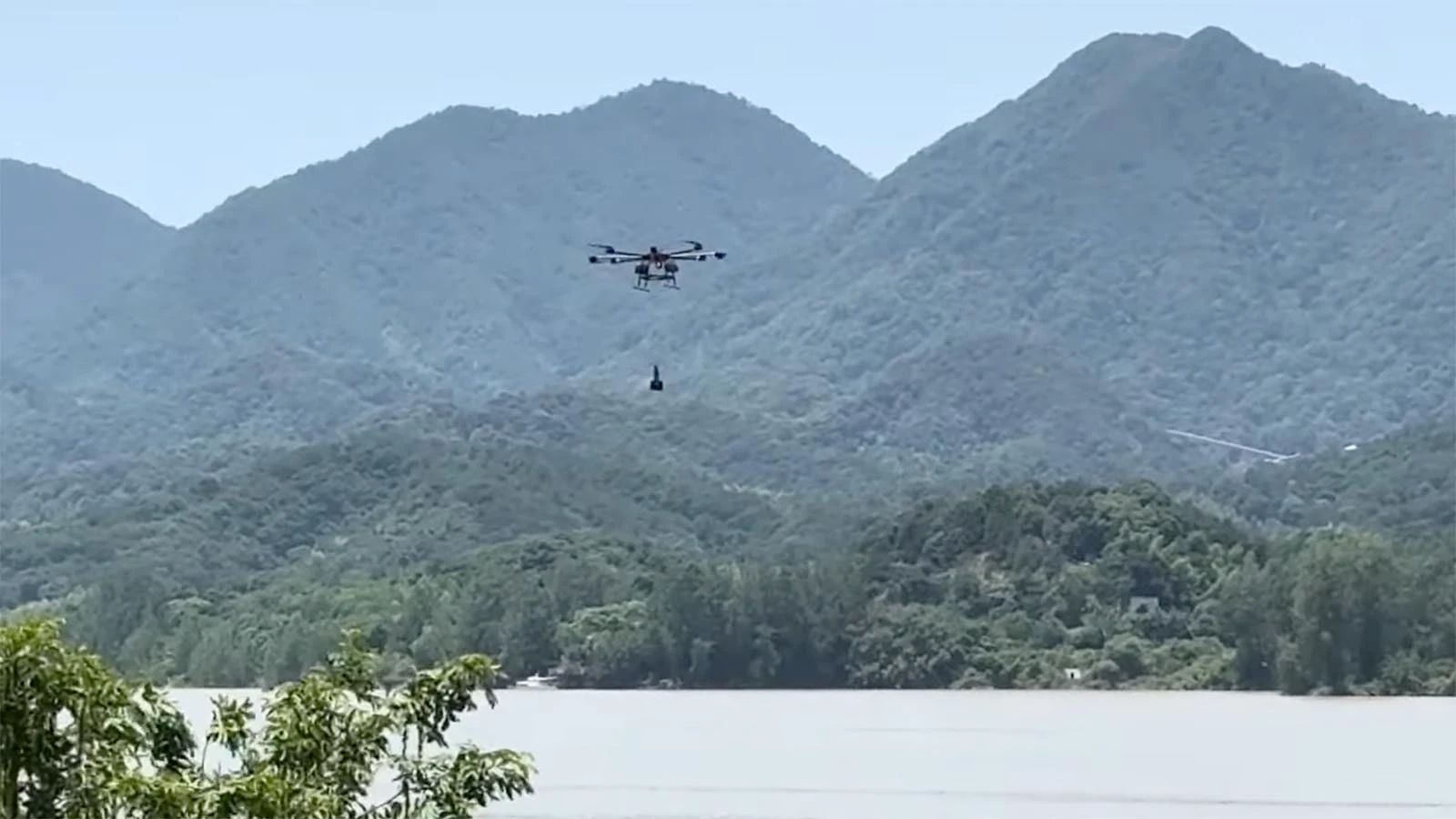
The Aspen Fire Department expects to receive five drones from startup company Seneca this summer, Denver7 news channel reported. Each drone can hold 100 gallons of fire-suppressing foam.
When a fire is reported, the drone receives the coordinates and is launched to the exact location of the reported fire. Because a drone can get to the scene faster than a fire truck or a helicopter, it is a valuable tool in closing the gap between a fire report and response time.
The news outlet reported that the firefighting technology ensures higher safety for everyone involved, from potential victims of a wildland fire to the emergency responders to the city, which could see lower insurance premiums.
Many Uses
Drone technology is helpful to fire departments in multiple ways – some that are already being put to use in Wyoming.
“We have drones,” said Jason Parks, a community risk reduction officer with Casper Fire EMS.” We don’t use them for firefighting purposes. We use them for investigations and search and rescue.”
Parks told Cowboy State Daily he is “curious to see what’s going on in Aspen,” adding, “I’ve been keeping track on some of the technology out there.”
Some drones can respond as soon as an emergency tone sounds, to be deployed to a car accident, wildland fire or structure fire, Neeson said.
Drones can be auto launched to go directly to a scene.
Once on scene, a drone can start a rotation and provide a live feed to emergency responders en route. Such information can help emergency responders know what sort of emergency they are heading toward.
“These drones can help responding crews prioritize what their actions will be once they arrive on scene,” Neeson said. “Usually, they go into it a little bit blind. If we can have information within a couple of minutes of the call going out, that would be awesome.”
Receiving accurate information as quickly as possible helps emergency responders to prepare more accurate response plans.
“If we know there is a potential rescue involved, we change our mode of operation,” he said. “It helps us know the direction we need to go. More information is always the best tool for us.”
Drones can assist with other aspects of emergency response, as well. Neeson said the Sheridan Fire Rescue has considered using drones in building code inspections, surveying areas during pre-planning of building construction and to assist with search and rescue operations.
Drones can also be useful in fire investigations, taking videos outside of a burned building or, in some cases, inside a building when the air quality is still not safe enough for fire investigators to enter, Neeson said.
Cheyenne Fire Rescue has been exploring drone usage around data centers.
“We are pretty new to the drone game,” said Dyl of Cheyenne Fire Rescue.
In Cheyenne, drones are being used to map and clearly identify areas within growing data center sites.
Data centers take up huge swaths of space. Some of the areas are considered live sites, Dyl said, while other areas are still under construction. By clearly distinguishing the construction zones from the live sites, drones can allow a more accurate response if an emergency occurs somewhere on site, he said.
Training Required
But drone technology comes with added responsibilities for emergency personnel. Anyone who flies a drone for work purposes is required to have a federally regulated certification.
Seven of Cheyenne Fire Rescue employees are certified drone pilots. Dyl said the city’s fire chief is giving all staff members an opportunity to pursue a drone pilot certification through the end of March – on the department’s dime. Four employees have taken advantage of the opportunity.
In Casper, Parks said three or four Casper Fire EMS employees have received their drone pilot certification through the Federal Aviation Administration (FAA).
Pilots are trained not only to fly and direct the drones but also to respond remotely if the drone malfunctions.
Cost
Aspen would not disclose what it paid for its five drones. Seneca, the California start-up that makes them said each drone represented 2-3% the cost of a manned helicopter. But the city of Aspen said the cost of the drones is being covered by private donations, not taxpayer dollars.
Neeson said depending on their capabilities, drones themselves can cost anywhere from $500 to $10,000 or more. The unmanned aircraft system utilized in the Oak Ridge Fire near Beulah, Colo., cost around $90,000, according to the USDA.
“My initial concern would be how much do they cost and how well do they hold up in the wind,” Dyl said.
Determining how well specific types of drones hold up in the wind is a big factor — especially in Cheyenne.
“We have a big issue with wind here,” he said.
“With (high tech drones) coming to the area, it would be interesting to see how efficient they are and analyze that cost with the risk benefit,” Dyl said. “Do data centers know enough about it? Would they be willing to back the cost?”
He said Cheyenne Fire Rescue will continue to look at what technology is available and weigh what that technology would cost against how emergency responders would use it.
“The more technology that’s coming about, the more important it is for Wyoming to take advantage of it and think outside the box,” Dyl said.
Neeson added, “It’s very interesting. It’s coming for sure, for everybody.”
Kate Meadows can be reached at kate@cowboystatedaily.com.