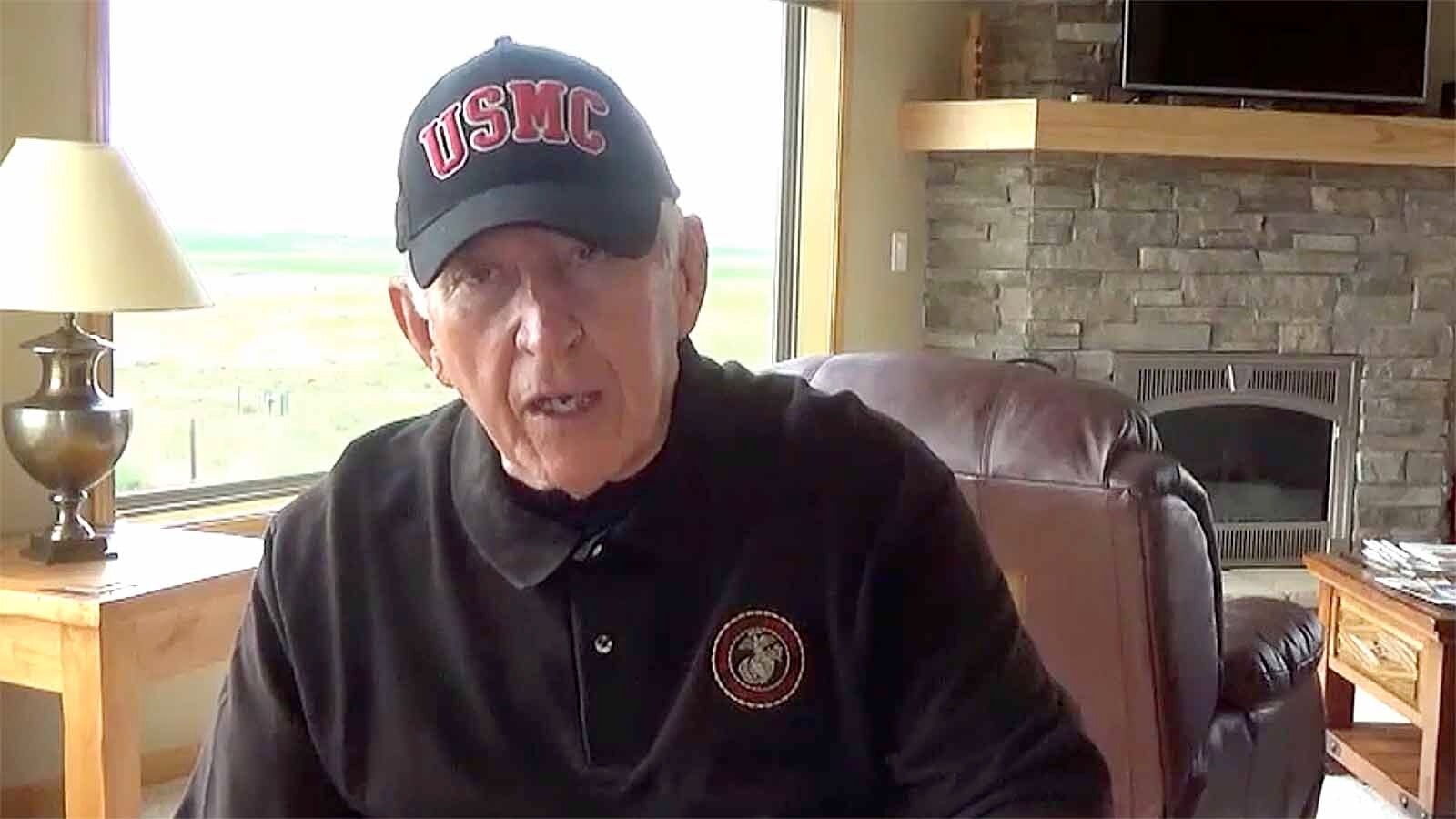
From his small ranch on the eastern Wyoming plains, 83-year-old Doug Chamberlain watches images of the Iran war flicker across the television — smoke over Tehran, missiles streaking through the night, civilians in panic.
The images stir the trauma of a conflict he left half a century ago.
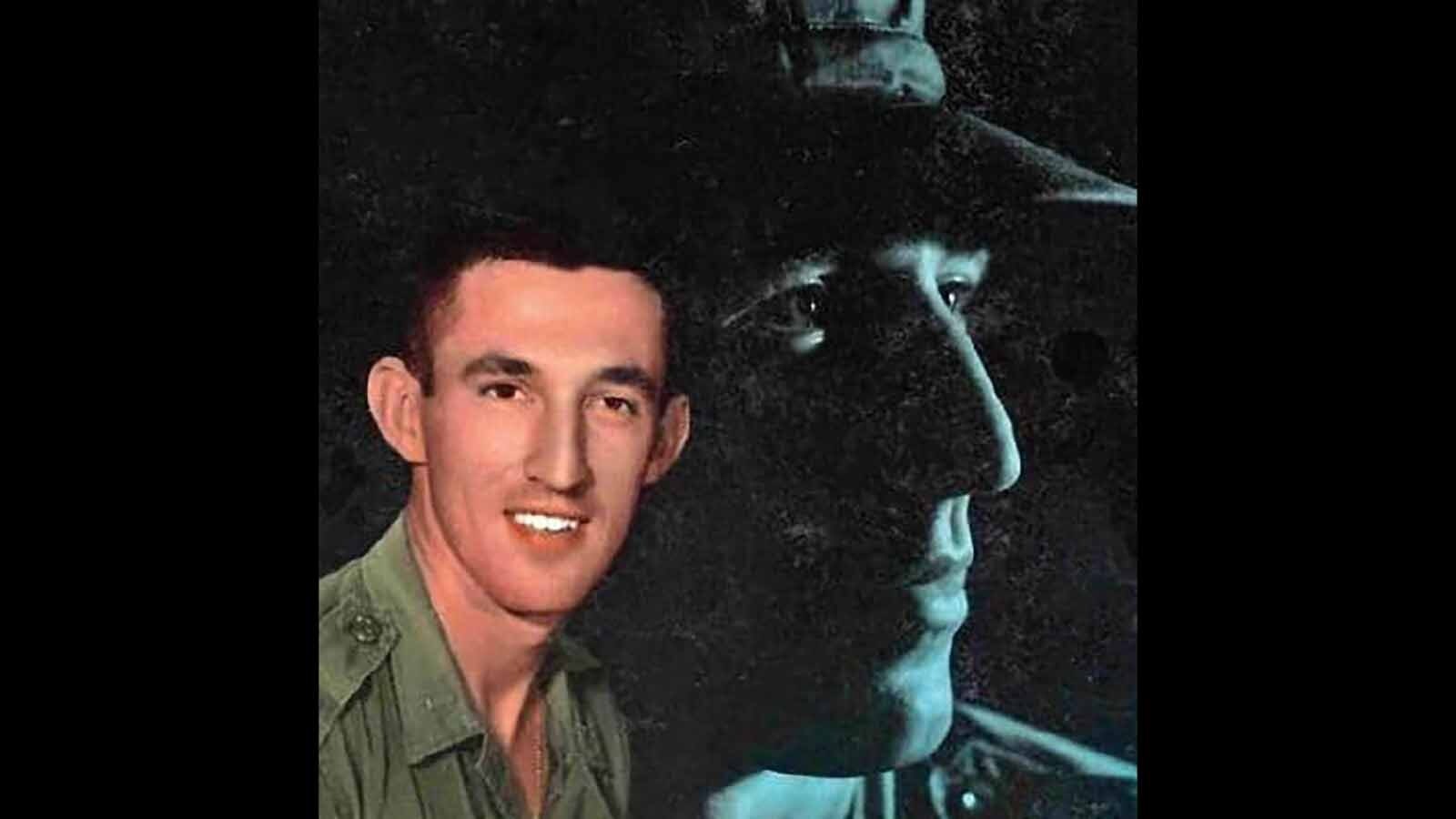
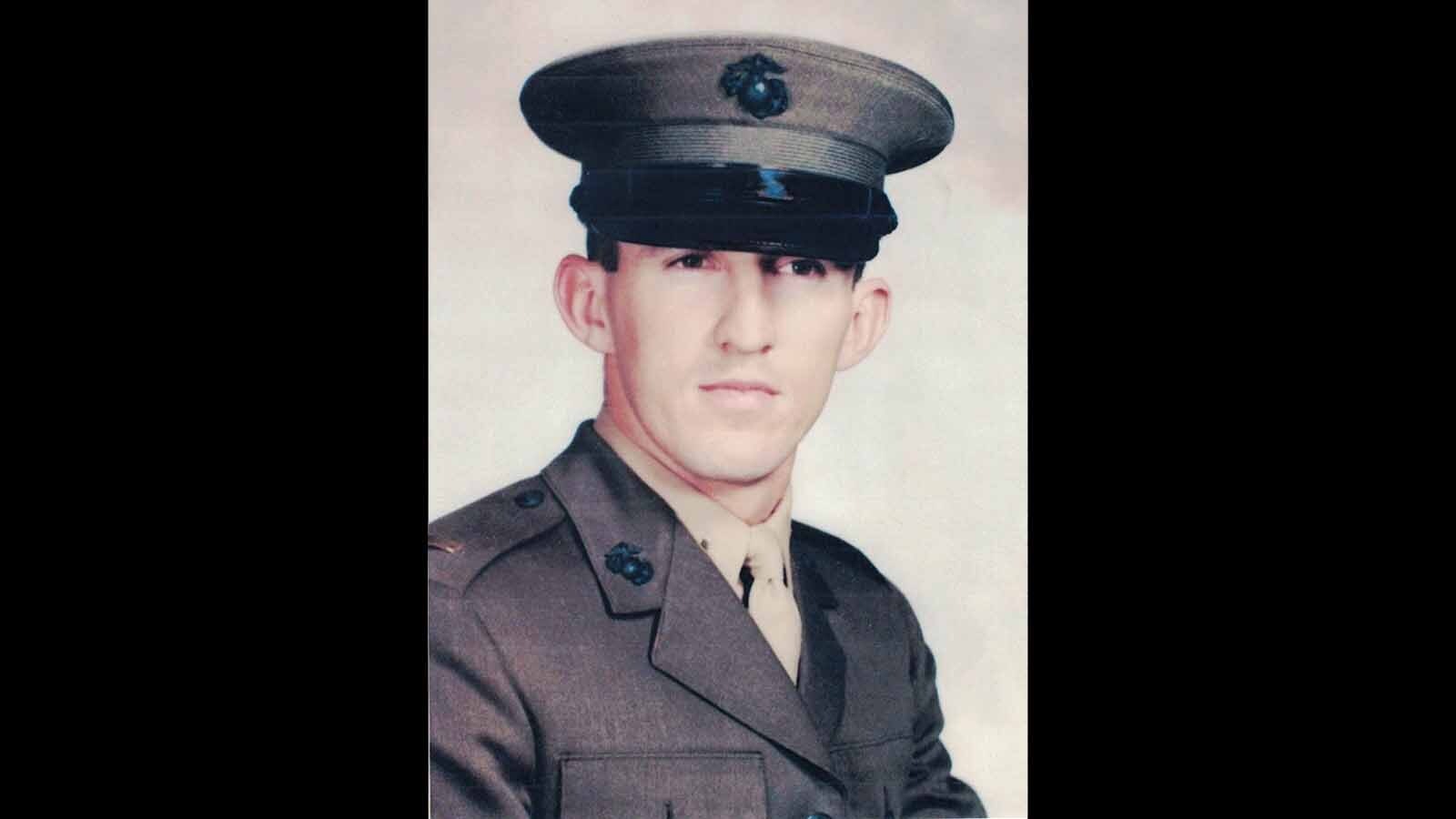
Long before he was a rancher, a rural postman, or speaker of the Wyoming House of Representatives, Chamberlain was a Marine Corps captain in Vietnam.
He survived firefights, landmines, leeches, and cobra snakes. But his deepest wound didn’t come from the enemy. It came from an order up the chain of command: “Bury him.”
Beside a fallen Marine, he radioed for a medevac — leave no man behind — but he was twice denied.
“Don’t rock the boat. This is an order. Bury him,” was the order.
It violated everything he believed about the honor and integrity of the Corps. Still, he complied, and he’s grappled with the psychological weight of that moment ever since.
“It betrayed everything we believed about being sent home to our families,” he told Cowboy State Daily.
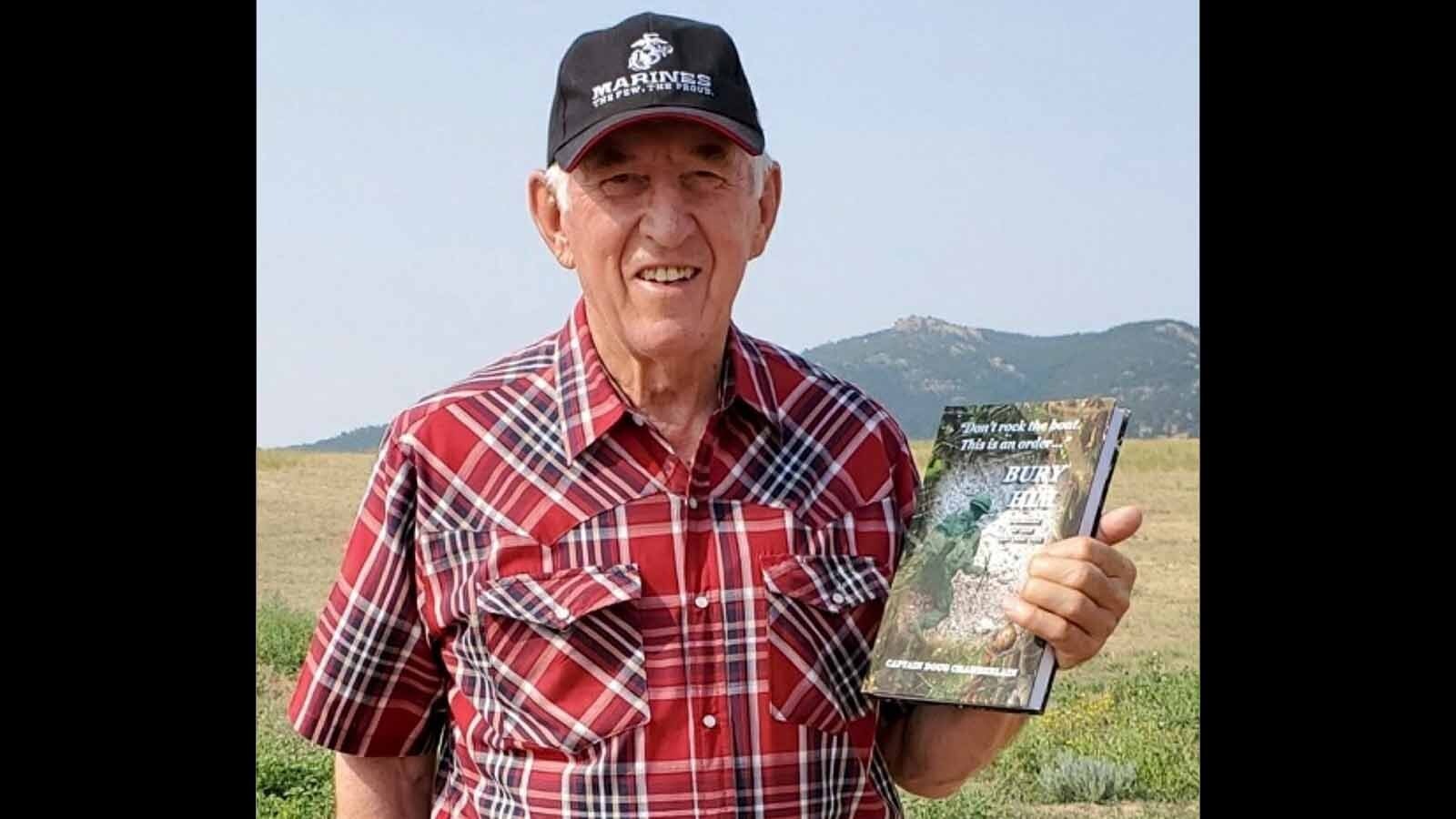
Chamberlain detailed that betrayal as well as the military cover-up that followed in “Bury Him,” a memoir of his war years, which left him with a deep trauma that’s finding reminders in the current military escalations abroad.
As U.S. and Israeli airstrikes pound Iran and retaliatory missiles ripple across the Gulf states, Chamberlain feels a familiar unease watching another generation of Americans face the prospect of a new ground war.
“People who think you can win wars with bombs alone don’t know history. It always had to be done with boots,” he said. “They're never going to wrap up the (Iran war) until they get boots on the ground.
"It may not be American boots, but if it's going to be successful, there’s going to have to be someone’s boots on the ground.”
Whatever happens in Iran, Chamberlain knows that no wars are the same, but says Vietnam was altogether a different kind of hell.
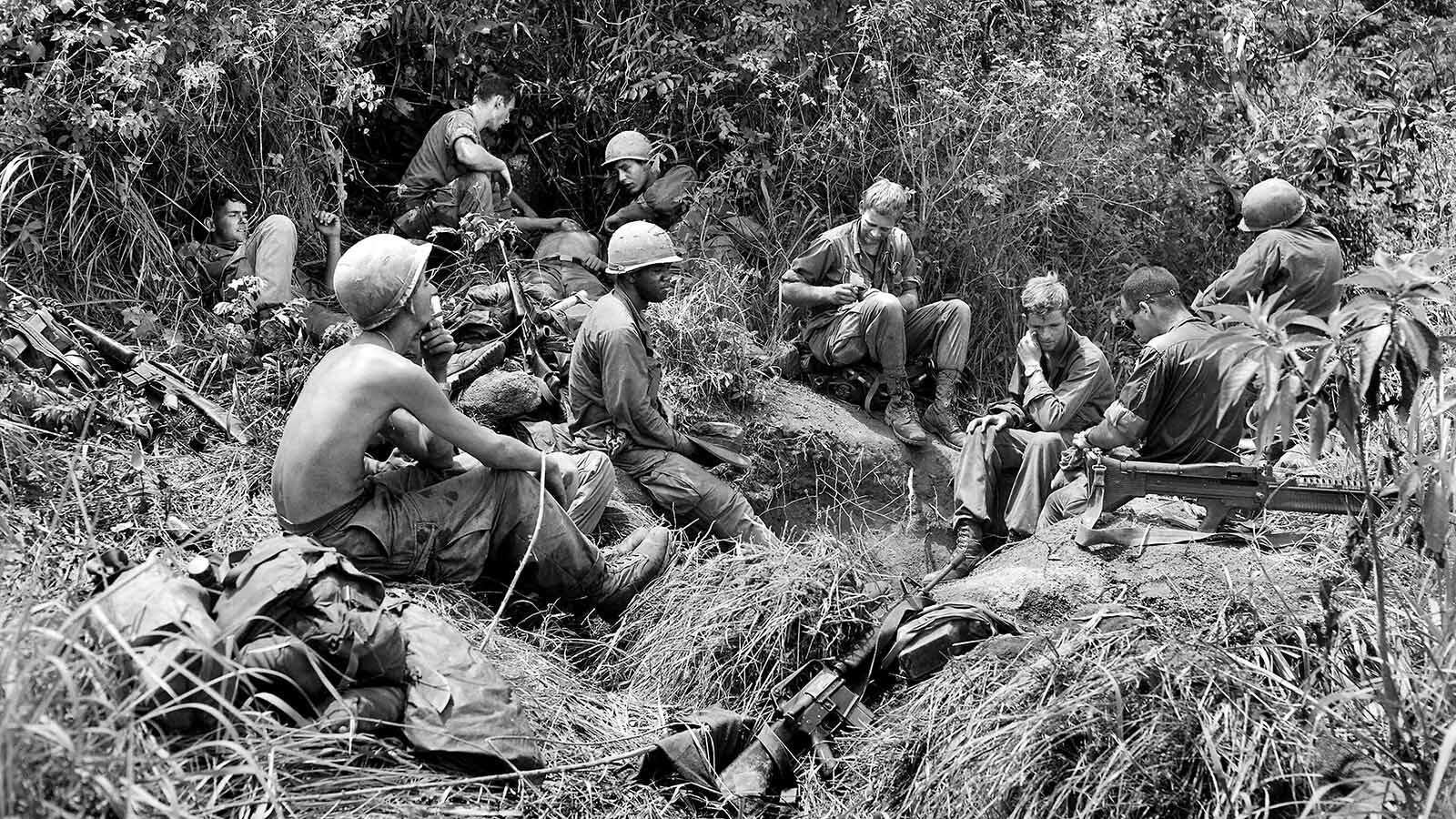
It was a sweltering world of mud and rot where the danger came from every direction — tree snipers overhead, booby traps underfoot, and creatures in the jungle as deadly as the combatants themselves.
All were fought at distances close enough to see the fear in an enemy’s eyes before you pulled the trigger.
“It’s something you could never imagine until you actually go through,” he said.
Pot, Prostitutes, And Profanity
Vietnam was a cultural shock for any of the nearly 3 million U.S. service members who served there.
But for someone like Chamberlain — shaped by the strict, abstinent values of John Brown University, the Methodist institution he’d attended on a basketball scholarship — the jolt was even sharper.
He was stunned by the culture of promiscuity and by how urgently some of his fellow Marines unfastened their uniforms for the local prostitutes.
The sex workers, for their part, gathered around servicemen like seagulls trailing a fishing boat; sometimes they followed them all the way into a combat zone, as Chamberlain discovered his first night in command of the Echo Infantry Company.
Chamberlain and his gunny sergeant were checking guard posts that night when his flashlight caught two Vietnamese women hiding in a culvert, giggling nervously.
“The security risk for my company was unimaginable,” he wrote in his memoir, explaining how they may have been passing information to unsympathetic locals.
He hauled them out of camp and made it clear, in the universal language of gunfire, to never return.
“I fired a few rounds over their heads as they ran down the road to make sure they understood what was going to happen to them if they returned,” he said.
Those rounds weren’t the only thing smoking in camp that night. Marijuana was wafting in the humid air. He suspected it had something to do with what he found next.
At a guard post, two Marines were so deeply asleep they didn’t stir at all when Chamberlain stripped off their weapons and munitions. It took a stiff boot heel to roust them.
He was angry, but not as angry as his gunny, who gave the pair a “not by the book … ass kicking” that left one with a broken tooth, Chamberlain said.
In hindsight, the gunny’s response was too severe. But for context, Chamberlain pointed out that military justice in those years allowed for capital punishment for those who slept on post in a combat zone.
“It was hard to imagine that situation could be so dire,” he said of his company’s undisciplined habits.
'Traitors To Our Country'
Chamberlain took command of Echo Company after only four months in Vietnam, an unprecedentedly rapid promotion that was as much a reflection on him as it was on the state of the war, as officers were dying too quickly for the training pipeline to keep up.
Chamberlain was only 23 when he became a captain in 1968, taking the helm of a critical unit right as the “Ten Thousand Day War” entered its deadliest period.
He would later place much of the blame for those deaths on U.S. leadership, specifically President Lyndon Johnson and Secretary of Defense Robert McNamara, who he’d call “traitors to our country” for what he believes is the deceitful and heedless way they conducted the war.
But the only thing on his mind at that time was surviving the mission at hand. And it wasn’t just the Viet Cong (VC) he had to survive.
Welcome To The Jungle
Chamberlain grew up in rural Goshen County, Wyoming, where the average annual precipitation is less than 13 inches.
In South Vietnam, average annual rainfall is up to 92 inches, and it gives rise to lush, triple-canopy jungles so dense they block out the midday sun.
Echo Company spent many nights in those jungles, and they weren’t alone.
One night, a Marine settling into his foxhole felt something move beside him — a cobra, rising up in the dark.
He hurled two fists of dirt at it and scrambled out, screaming as the snake lifted its head to strike.
The more feared predator was the bright green bamboo viper, known as the “two-step” snake, whose bite paralyzed a man’s nervous system within seconds.
A strike to the hand might be survivable, Chamberlain said, only if a Marine could machete the limb off before the venom reached his heart.
On their next mission they met a bigger snake, a python so thick they mistook it for a fallen log. It had just fed and couldn’t move, and they tripped right over it.
When they cut it open, they found the half‑digested calf weighing roughly 150 pounds.
Then came Leech Valley, which earned its name.
Preoccupied by the field of barbed elephant grass towering over his head, Chamberlain was late to discover a leech was making a lunch of his left testicle.
“I looked down and my entire crotch was soaked in blood,” he wrote. “The spot was bleeding at an alarming rate.”
Still, he had it easy compared to his comrade with a leech lodged in his urethral opening.
“It prevented the individual from being able to urinate, and that was an absolute emergency medevac,” he said.
The same silence that hid venomous snakes also hid the Viet Cong, who could arrive without warning and strike from arm’s length, sometimes from just beneath a mat of leaves from a tiny man hole known as a spider trap.
Enemy Fire
On one search‑and‑destroy trek along a narrow jungle trail, a VC fighter erupted from a spider trap with an AK-47 right at Chamberlain's feet.
“He was so close to me I could feel the muzzle blast on my face,” said Chamberlain, who now nearly 60 years later can’t help but chuckle at his luck.
“If I would have reacted, he’d have got me,” he said. "But I froze up. Had I returned fire, I’d have killed some of our own men” because the VC had sprung up inside the company formation.
The instant felt like an eternity.
The VC disappeared back underground and into a tunnel. Chamberlain lobbed grenades into the tunnel and the company kept moving.
The spider trap showed how death could come at point‑blank range. Land mines showed how Marines could be blown apart before ever seeing the face of an enemy.
Rolling back to camp from a nearby local village they’d helped protect, a chaplain and Marine hit a buried charge that hurled their jeep into the air. The rear axle and engine block crashed back down 200 feet apart.
Passengers were scattered so completely that no one knew who had died until searchers finally found a fragment of the Echo Marine’s body — his right shoulder, neck, and head.
Chamberlain’s brushes with death came every week.
A 50-caliber enemy tracer round once tore through a helicopter he was riding in, entering one door and exiting the other.
Later, a friendly-fire rocket hissed directly between him and a sergeant who were standing 3 feet apart on a hilltop.
Then there was the time he dove out from under the crash landing of a re-supply helicopter that plummeted through the canopy and landed on 14 of his marines.
“The rear of the chopper where the tail rotor is located was so close … I could reach out and touch it,” he said.
He entered the war expecting bullets and bombs.
What he didn’t expect was the war inside himself: The fight with his conscience and the biblical convictions he carried out of John Brown University — especially, “Thou shalt not kill,” he said.
'Thou Shall Not Kill'
That commandment rang in his head the day he came upon a half‑dozen NC eating breakfast behind a jungle hedge.
Chamberlain and his Marines crouched less than 10 feet away, close enough to smell fresh rice and hear the cadence of their talk.
Capturing them felt impossible, so he signaled a semicircle and gave the command with the silent gesture, raising his own rifle.
The choice made sense in the jungle, but it didn’t sit cleanly with the code he’d brought from home.
One VC survived the fire, and several Marines followed his blood trail and found him a distance away, still breathing.
A corpsman got down on his knees and tried to resuscitate the dying combatant, a man they’d just moments before made every effort to kill.
Chamberlain says he remembers that moment as if it were yesterday.
“My spiritual values could only be masked in my mind; the values never changed, and (that ambush) still haunts me to this day,” he said.
The moment that broke him, however, came later in a bomb crater at dawn, when a voice on the radio told him to do the one thing the Marine Corps had taught must never be done.
‘This Is An Order. Bury Him.’
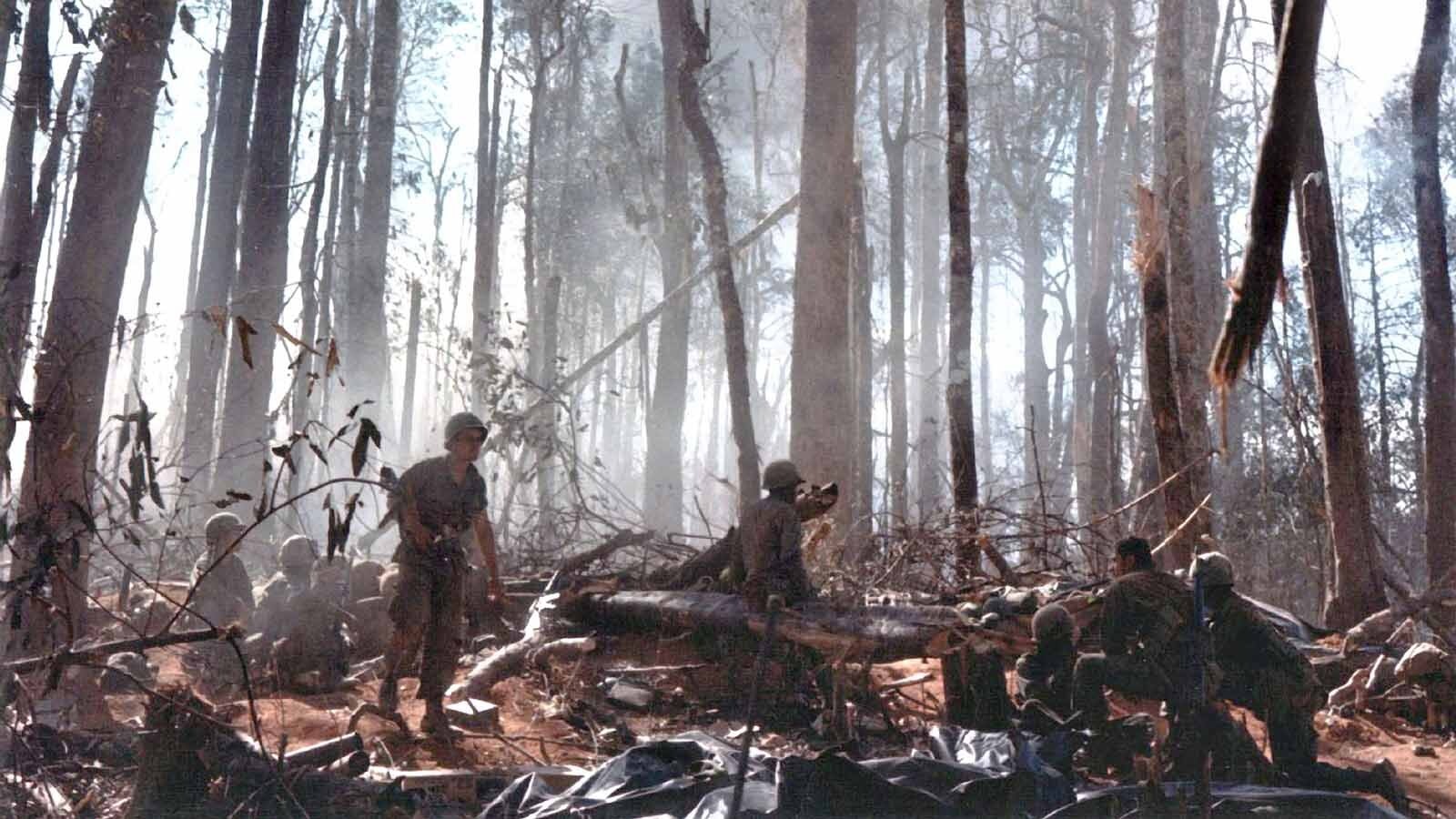
He’d been sent to reinforce a besieged battalion near Da Nang when he found a dead Marine at the bottom of a crater, face up on a poncho, one leg missing, dog tags on his chest, his name stenciled on the flak jacket.
Chamberlain radioed for a medevac to return the body to the morgue and home to the family — "leave no man behind," he told himself.
The reply came back negative. He was told to bury the body where it lay.
Stunned, Chamberlain requested an airlift again.
The voice returned: “Do as you are told. Don’t rock the boat. This is an order. Bury him.”
“As we laid his remains in the shallow grave and began to cover him, my sense of failure and shame was the most powerful negative psychological trauma I have ever known,” he wrote in his memoir. “I was now complicit in an attempt to provide a cover‑up of the truth about a Marine who had been left behind in South Vietnam."
Chamberlain details in his memoir how he’d later return with a volunteer team to disinter that Marine and see that his remains were returned to his family.
Yet in that process, he also discovered how military brass had systematically attempted to derail that outcome while covering up their deliberate choice to abandon the body.
The cover-up cut him even deeper, and the wound bleeds to this day.
PTSD
Post-traumatic stress disorder was not yet understood at the time Chamberlain returned to civilian life, but he was a textbook example of that condition, and it's affected every aspect of his life to this day.
He returned to a world that felt suddenly incomprehensible.
He’d come to feel as much disdain for the architects of the Vietnam War — McNamara and President Johnson — as he did for the anti-war celebrities like Jane Fonda.
His first marriage failed because he was “so messed up from being in Vietnam," he wrote in his memoir, explaining that it ended in a crushing property settlement and instant bankruptcy that nearly led to the loss of his family homestead.
His military experience left him plagued by trust issues, implicating the failure of his second marriage, he speculated in his book. And for similar reasons, he pushed his friends away after the war, struggling to form human connections due to a feeling of unworthiness.
Chamberlain suffered dark thoughts of self-destruction and was only able to keep them at bay by staying physically preoccupied with his property and other endeavors.
After a life of sobriety, he began to self-medicate with alcohol, and he’d find himself at the end of a 20-hour day crapped out in a recliner with a bottle of wine in his lap.
“Probably for over 20 years, I never slept more than four hours a night,” he said.
At last, he found a new sense of worth in civic life when he ran to serve in the Wyoming Legislature, where the Republican served as majority leader before becoming speaker of the House in 1992.
“That was the thing that kept me going — my responsibility to my constituents. I knew I had to be here for them,” he said.
He’s won a battle with prostate cancer, but continues to fight basal cell carcinoma, a condition of recurrent skin lesions from damaged DNA.
He believes both cases are the result of exposure to Agent Orange, a herbicide deployed by U.S. forces in Vietnam to wipe out triple-canopy cover, among other purposes.
‘The Only Thing That doesn’t Change …’
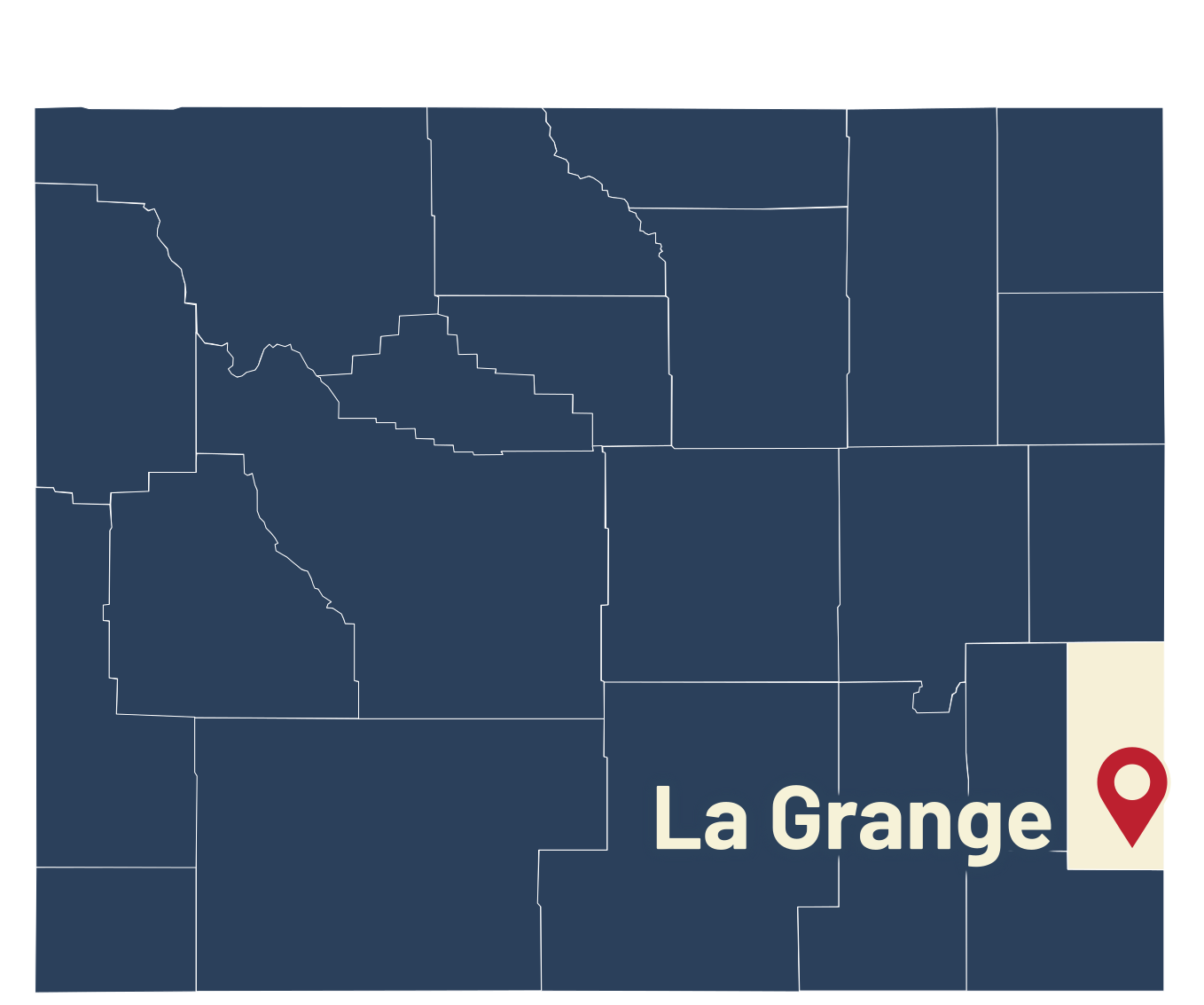
He lives with a dog named Barney on the La Grange property his grandparents homesteaded in 1913.
Now 83, Chamberlain said he still grapples with the psychological fallout of his Vietnam experience, and does so much in the way he always has — by staying busy.
He’s got 6 miles of fence to look after to be able to rent his acreage to a local cattleman. He’s also working six days a week as a rural mail carrier with a 90-mile route.
As for his patriotism, Chamberlain says it's still intact, and he remains a strong supporter of the U.S. military — albeit with a tinge of cynicism.
When asked about the current administration’s decision to go to war with Iran, he offered a two-part response.
“I’m not going to second-guess the U.S. military, and those young people need to follow orders,” he said. “But there’s an old saying: The only thing that doesn’t change is the fact that nothing ever changes. That goes for war and politics.”
Zakary Sonntag can be reached at zakary@cowboystatedaily.com.