Allen Darlington grew up in the northeast Wyoming town of Upton dreaming of being an artist, but his mother had other ideas.
“What I always wanted to be was an artist. My mom wanted me to be a lawyer, and I went to the University of Wyoming and started majoring in political science,” he told Cowboy State Daily.
“I also majored in going to the Buckhorn Bar” and had to leave college for a while, he added.
He returned to UW later to study anthropology and art, and eventually landed an archaeology job with the state.
Everything changed one day when he walked into the Trails West Taxidermy shop in Rawlins, then owned by Tom Entinger.
“I’d never been in a taxidermy shop until that day," he said. "I didn’t realize the art that went into it."
He started learning big game taxidermy from Entinger.
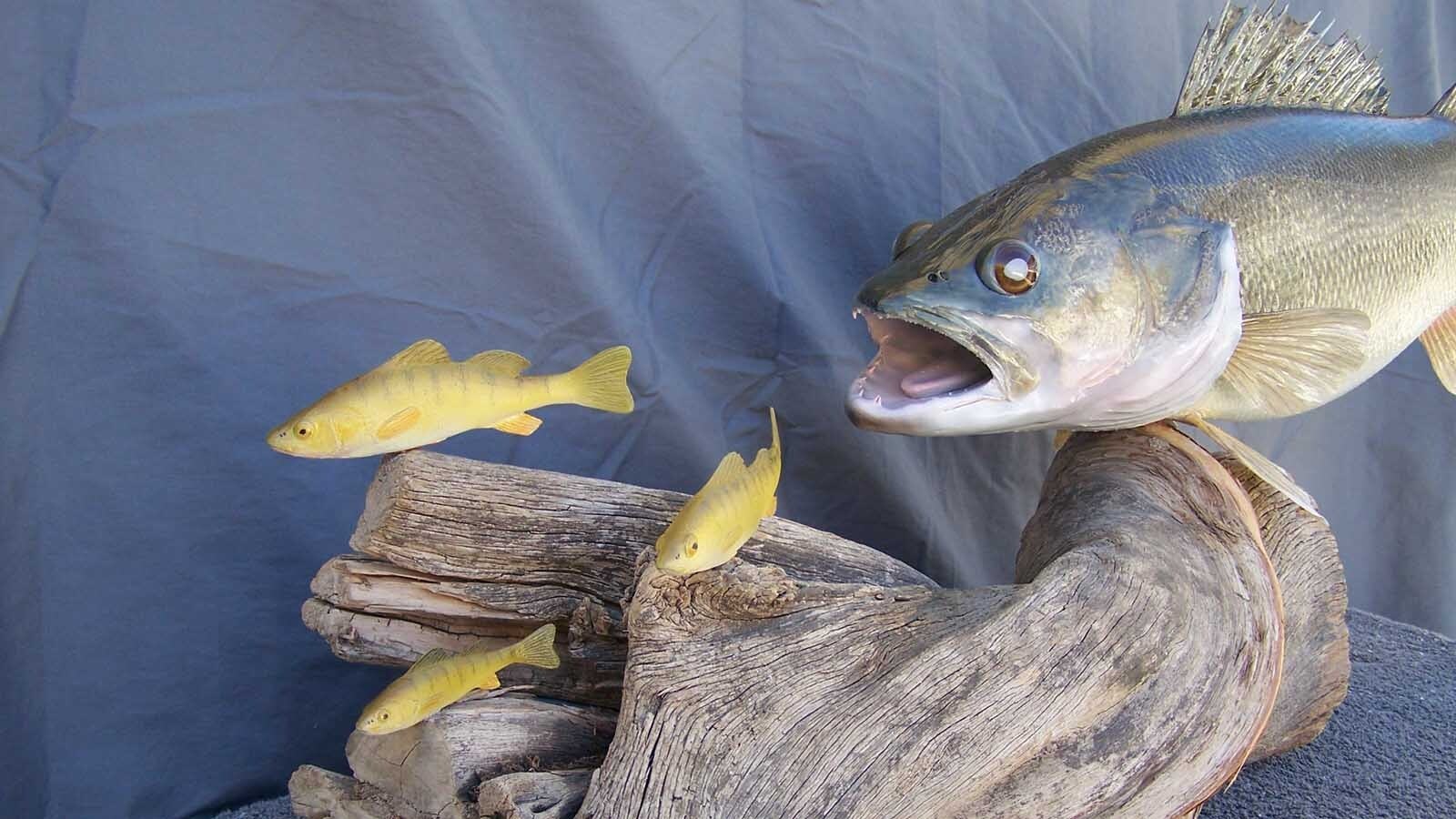
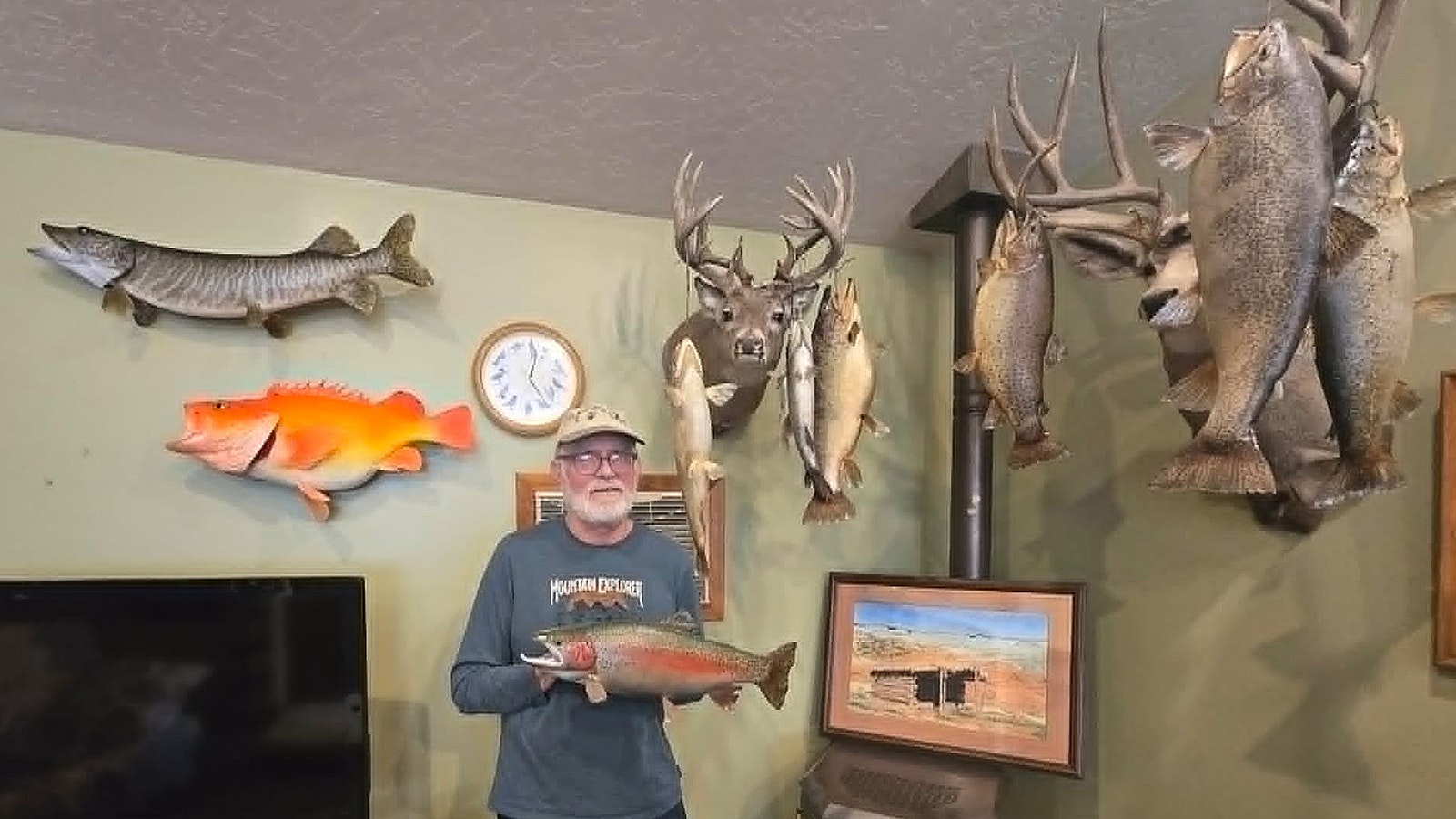
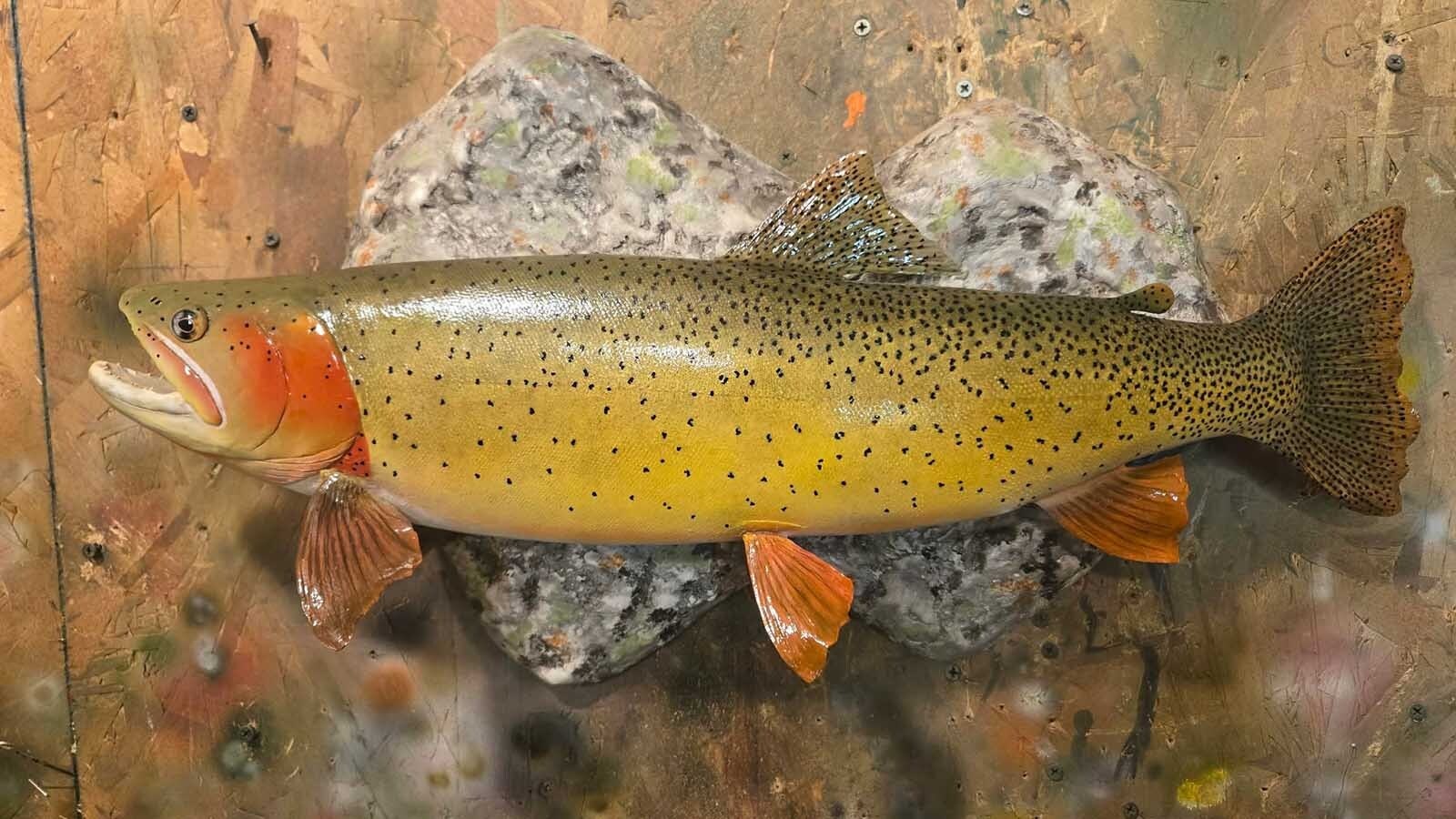
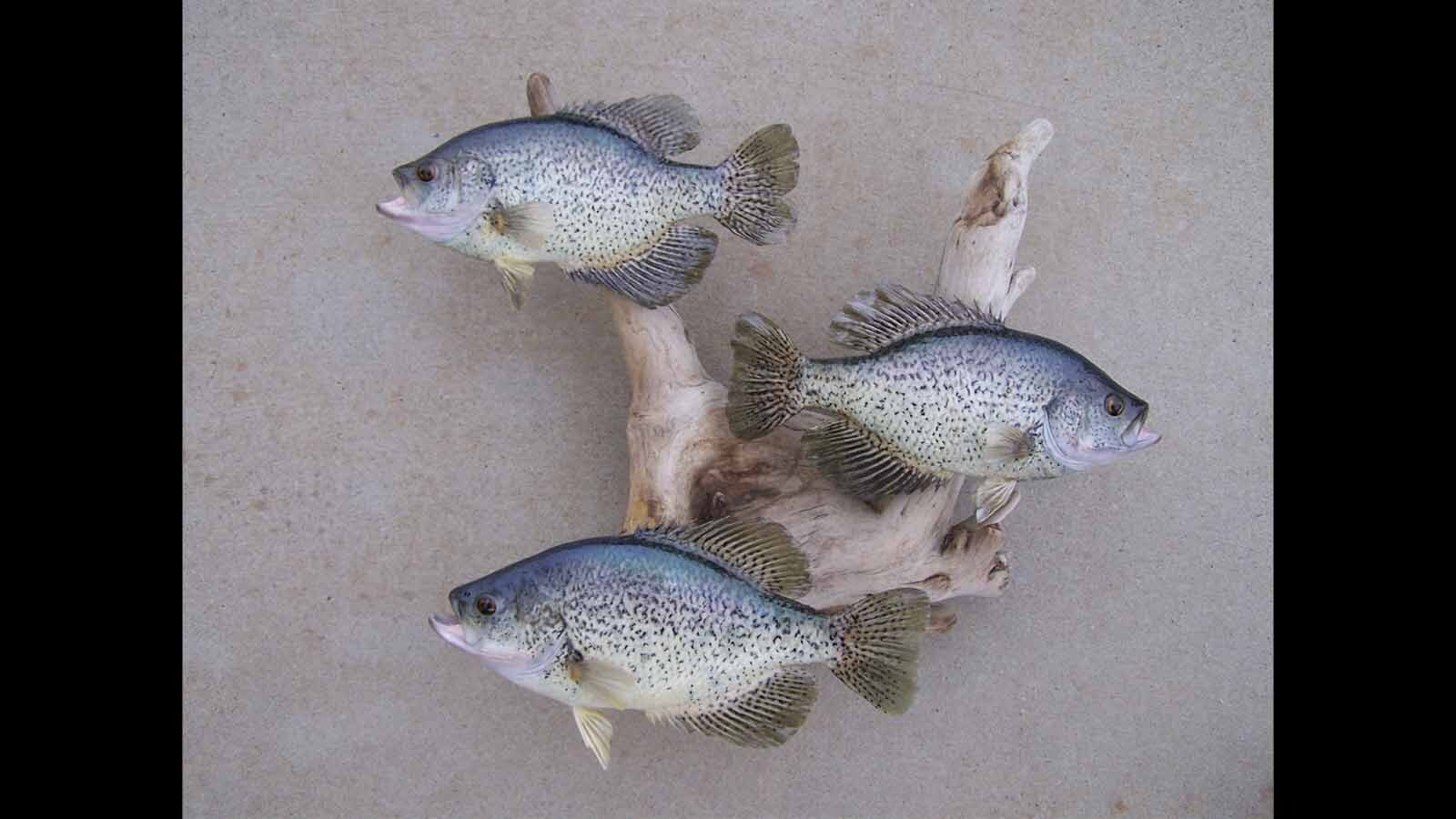
Great fish taxidermy requires methodical skill and a good sense of color balance, said taxidermist Allen Darlington. (Courtesy Allen Darlington, Canyon Fish Taxidermy) 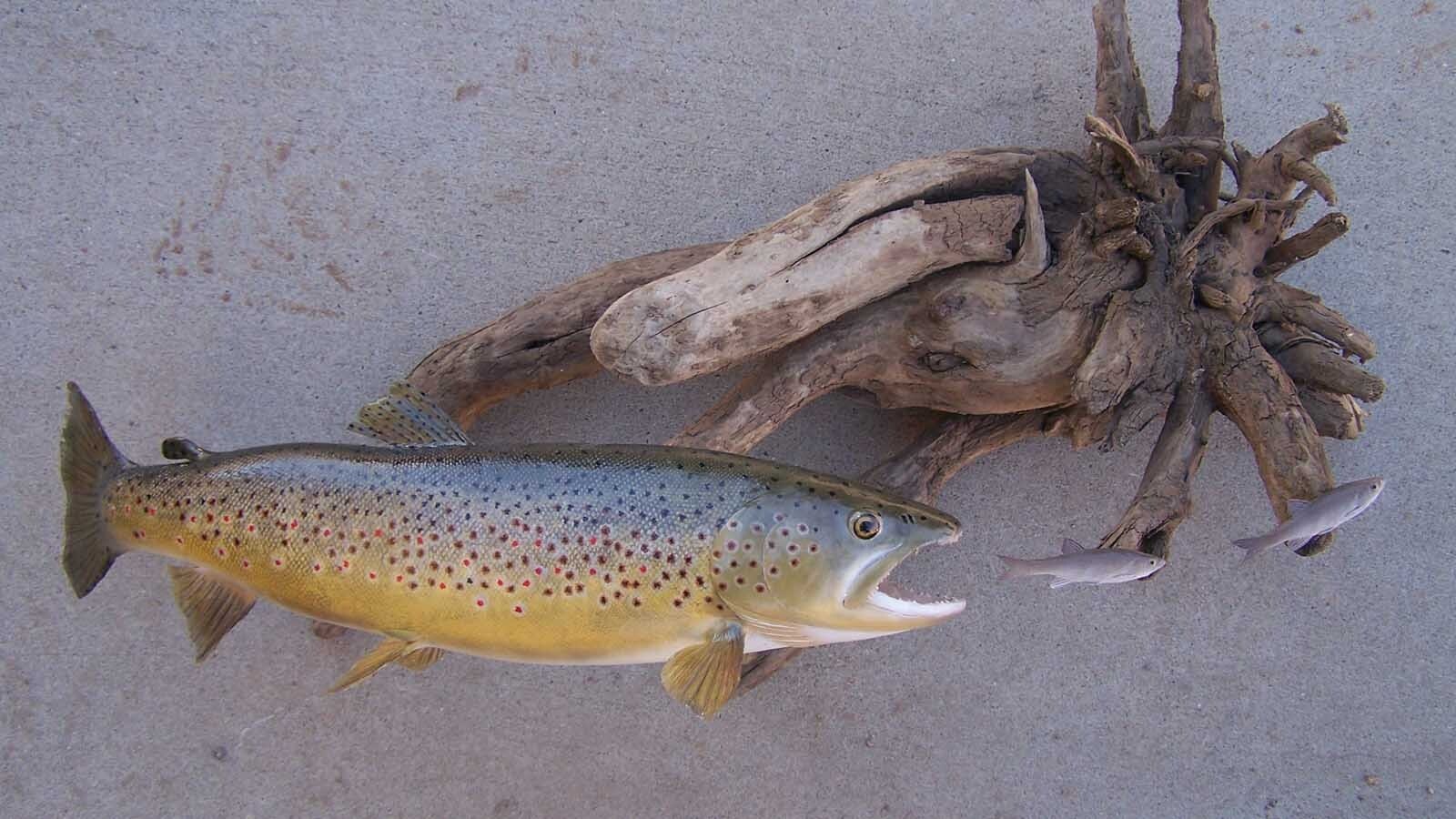
Great fish taxidermy requires methodical skill and a good sense of color balance, said taxidermist Allen Darlington. (Courtesy Allen Darlington, Canyon Fish Taxidermy) 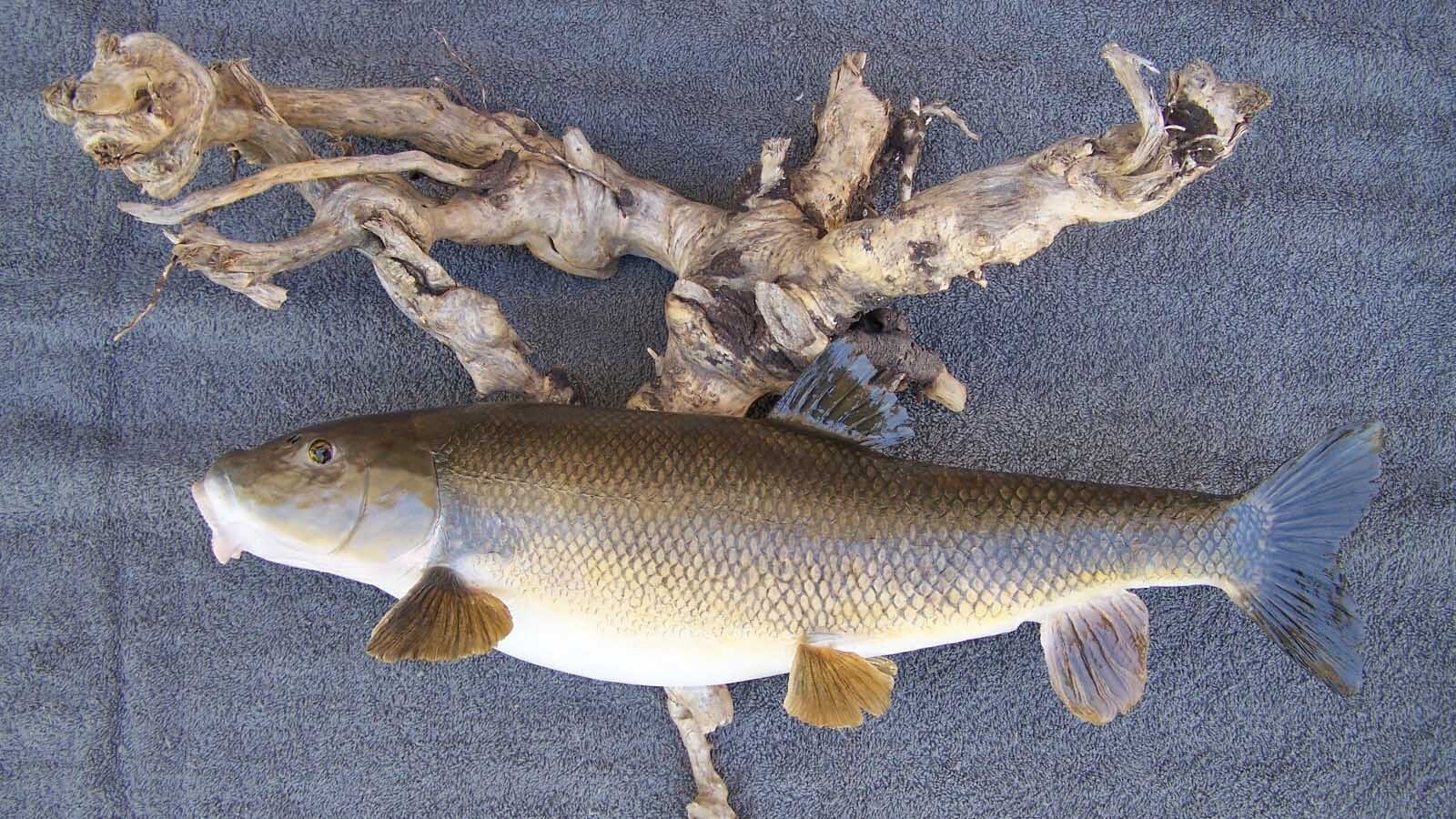
Great fish taxidermy requires methodical skill and a good sense of color balance, said taxidermist Allen Darlington. (Courtesy Allen Darlington, Canyon Fish Taxidermy) 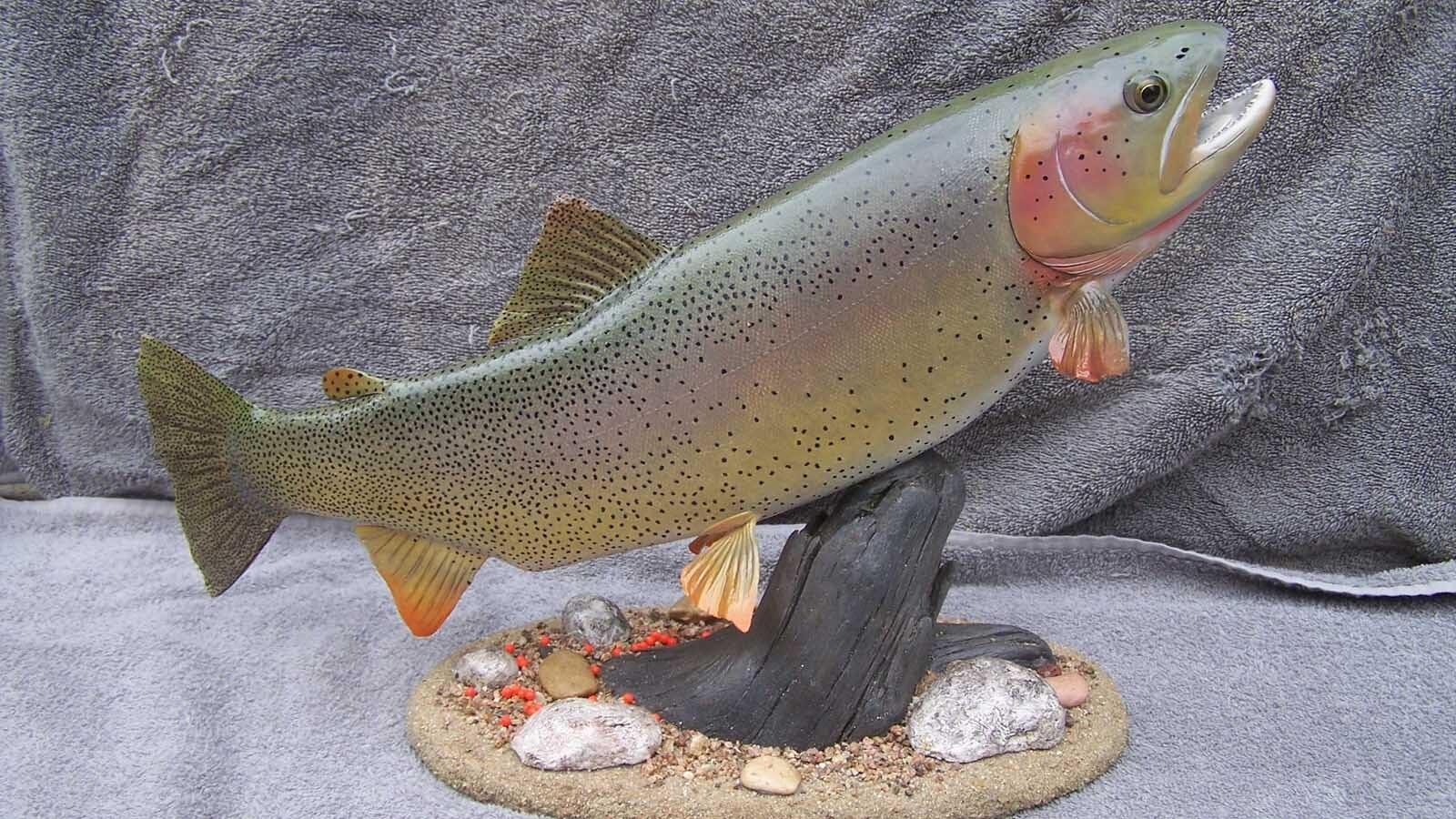
Great fish taxidermy requires methodical skill and a good sense of color balance, said taxidermist Allen Darlington. (Courtesy Allen Darlington, Canyon Fish Taxidermy)
Rawlins Taxidermy Shop
Then everything changed again when the shop’s original owner and master fish taxidermist, Duane Johnson, came in one day.
A fish taxidermist (Johnson) came in one day and said, ‘I’m a fish taxidermist and I want to teach one person before I die, and you’re the one I want to teach because you’re an artist,’” Darlington said.
That was 30 years ago, and Darlington has specialized in fish taxidermy ever since. It enthralls him because it involves both of his greatest strengths as an artist, sculpting and painting.
Every mount starts with an artificial mold of the fish’s body, which Darlington sculpts to exact measurements.
The painting requires meticulous attention to shading.
It's about finding the perfect “contrast between really dark and really light,” he said. "With hand painting, I balance that out. I take the extremes out of it."
An airbrush puts on the finishing touch, making the fish mounts look truly lifelike.
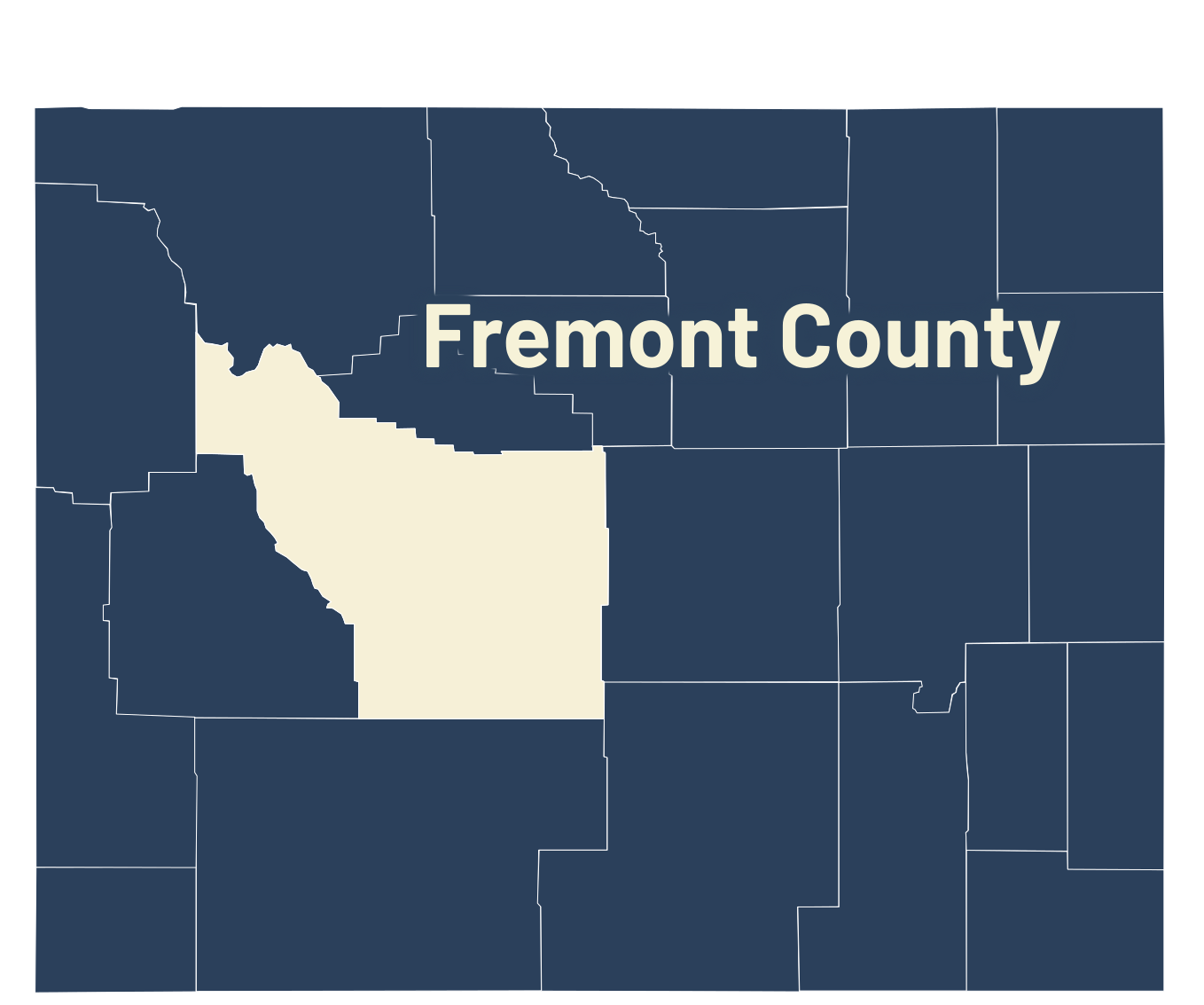
Darlington works from his home in Wind River Canyon and is prolific.
When asked how many fish taxidermy mounts he’s done during his career, he said that he doesn’t have an exact number.
“Well, I never really kept count. In the good old days I was probably pounding out 100 per year, and now I’m down to maybe 50 or 60 a year,” he said.
Great fish taxidermy requires methodical skill and a good sense of color balance, said taxidermist Allen Darlington. (Courtesy Allen Darlington, Canyon Fish Taxidermy) 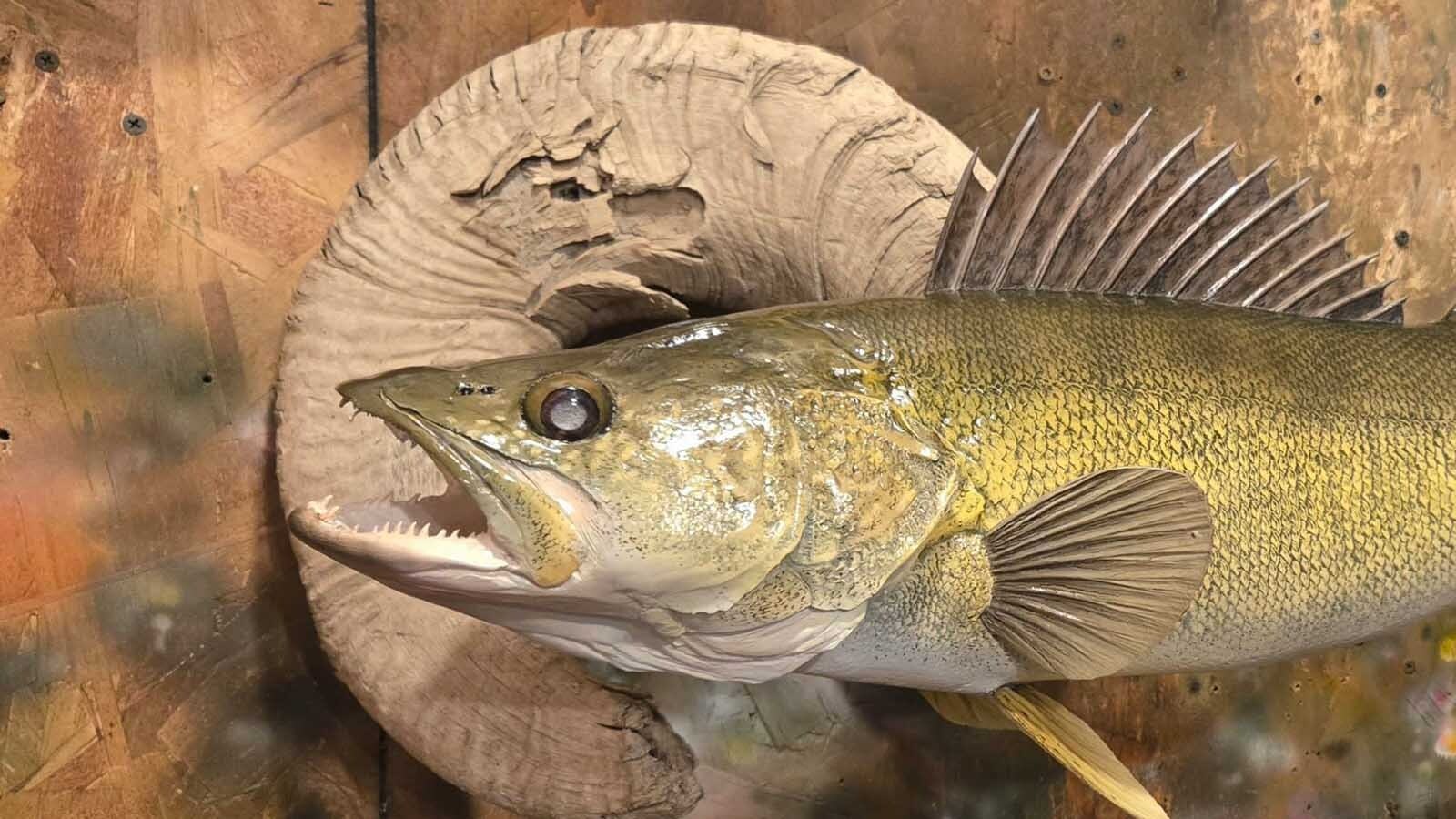
Great fish taxidermy requires methodical skill and a good sense of color balance, said taxidermist Allen Darlington. (Courtesy Allen Darlington, Canyon Fish Taxidermy) 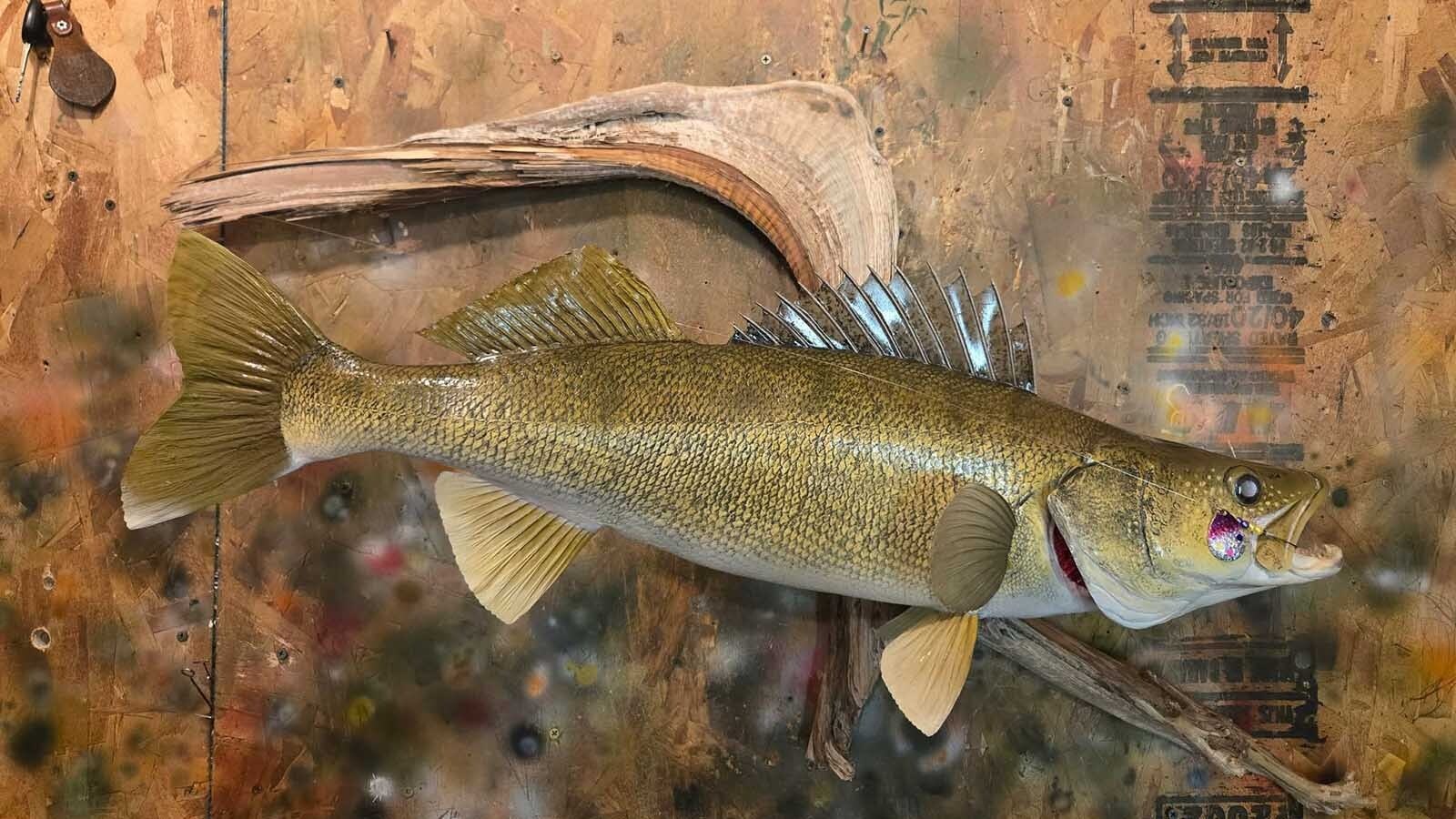
Great fish taxidermy requires methodical skill and a good sense of color balance, said taxidermist Allen Darlington. (Courtesy Allen Darlington, Canyon Fish Taxidermy) 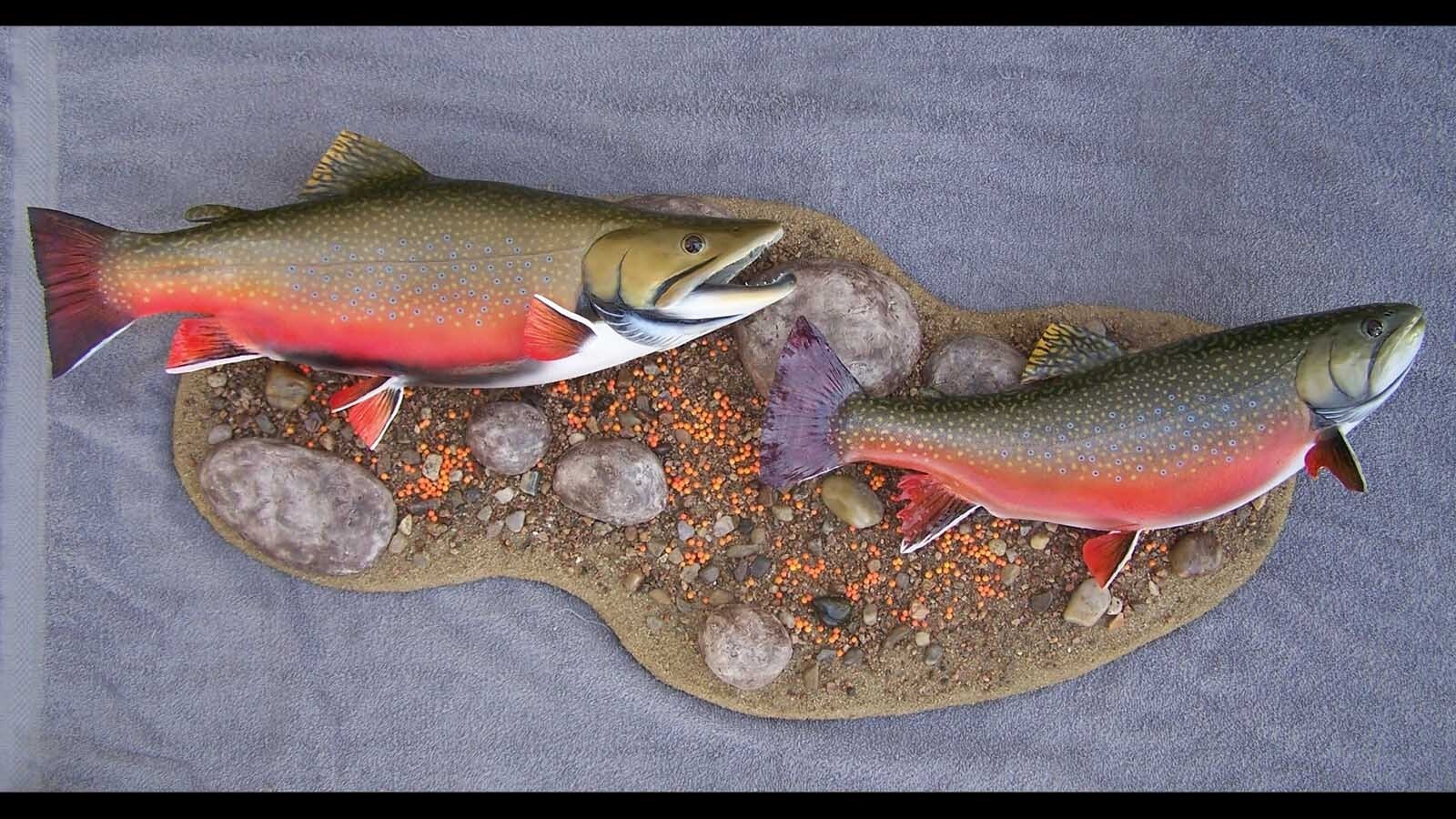
Great fish taxidermy requires methodical skill and a good sense of color balance, said taxidermist Allen Darlington. (Courtesy Allen Darlington, Canyon Fish Taxidermy)
The Artistic Type
His production numbers would have been higher, but Darlington has had to work at least one and sometimes two other jobs to help make ends meet.
That’s because he puts all the time it takes into each of his mounts, always pushing toward perfection.
“There’s two kinds of taxidermists in this world. There’s the money makers and the artists. I’m the artist. I’ll spend 15 minutes just doing one eye on a fish,” he said.
“I’m going to produce the best fish I can every time I make a fish, and if that means I end up making two dollars an hour, then that’s the way it is,” he said.
Darlington has kept a good sense of humor about his work.
“If you want to make money at this, then I’d say, ‘Momma, don’t let your babies grow up to be fish taxidermists,’” he said.
Two Types Of Mounts
There are two types of taxidermy fish mounts. There are replicas, made completely from artificial materials. And then there are mounts made from the fish’s actual skin, stretched over a body mold.
Replicas are popular among “catch and release” anglers, who don’t want to kill fish, he said.
For those, Darlington works from photos. But a single snapshot won’t do.
He needs photos from multiple angles, showing every part of the fish’s body.
He also needs measurements of the fish’s length and girth at the dorsal fin.
To get the proper length, the tail must be “fanned out,” he said.
To get the maximum length for trophy measurements, anglers will “pinch the tail together,” which can add up to an inch, Darlington said.
For skin mounts, Darlington has his clients bring in the entire fish, so he can take detailed measurements.
“I measure down to one-sixteenth of an inch,” to determine the exact dimensions of the sculpted body mold.
Then he skins the fish and prepares the skin.
Fish skin taxidermy mounts are notorious for rotting out or falling apart within a few years, because the skins aren’t properly prepared, he said.
By taking the extra time to prepare the skins, Darlington makes fish skin mounts that will last a lifetime.
Working from the inside, he shaves the skins down.
“The thinner you get a fish’s skin, the less chance that it will crack on you later,” he said.
“There’s an oil layer on the inside of a fish’s skin. If you peel the skin off a cooked fish, you might see that as a white layer on top of the meat. I shave the oil layer off,” he said.
Great fish taxidermy requires methodical skill and a good sense of color balance, said taxidermist Allen Darlington. (Courtesy Allen Darlington, Canyon Fish Taxidermy) 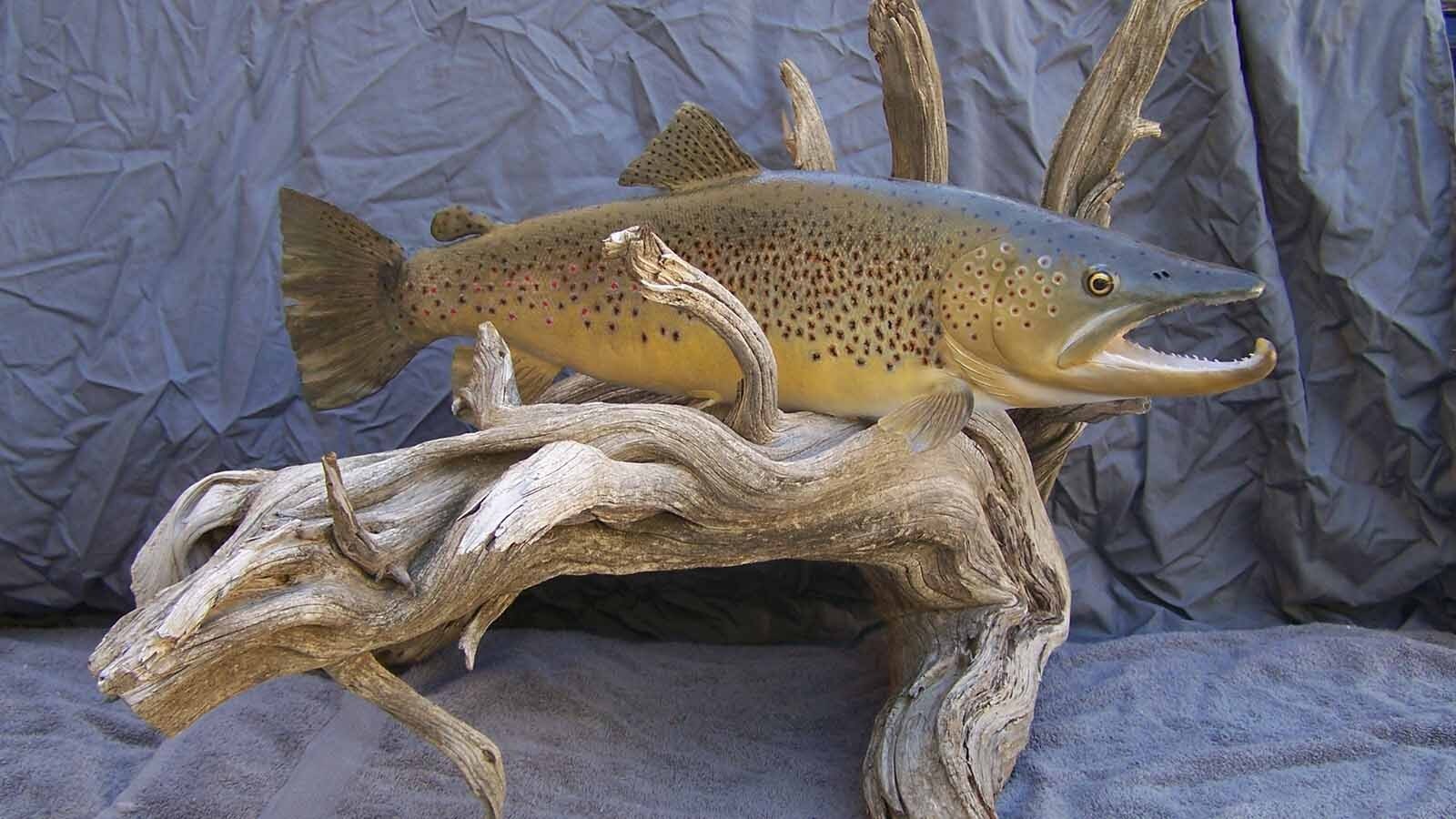
Great fish taxidermy requires methodical skill and a good sense of color balance, said taxidermist Allen Darlington. (Courtesy Allen Darlington, Canyon Fish Taxidermy) 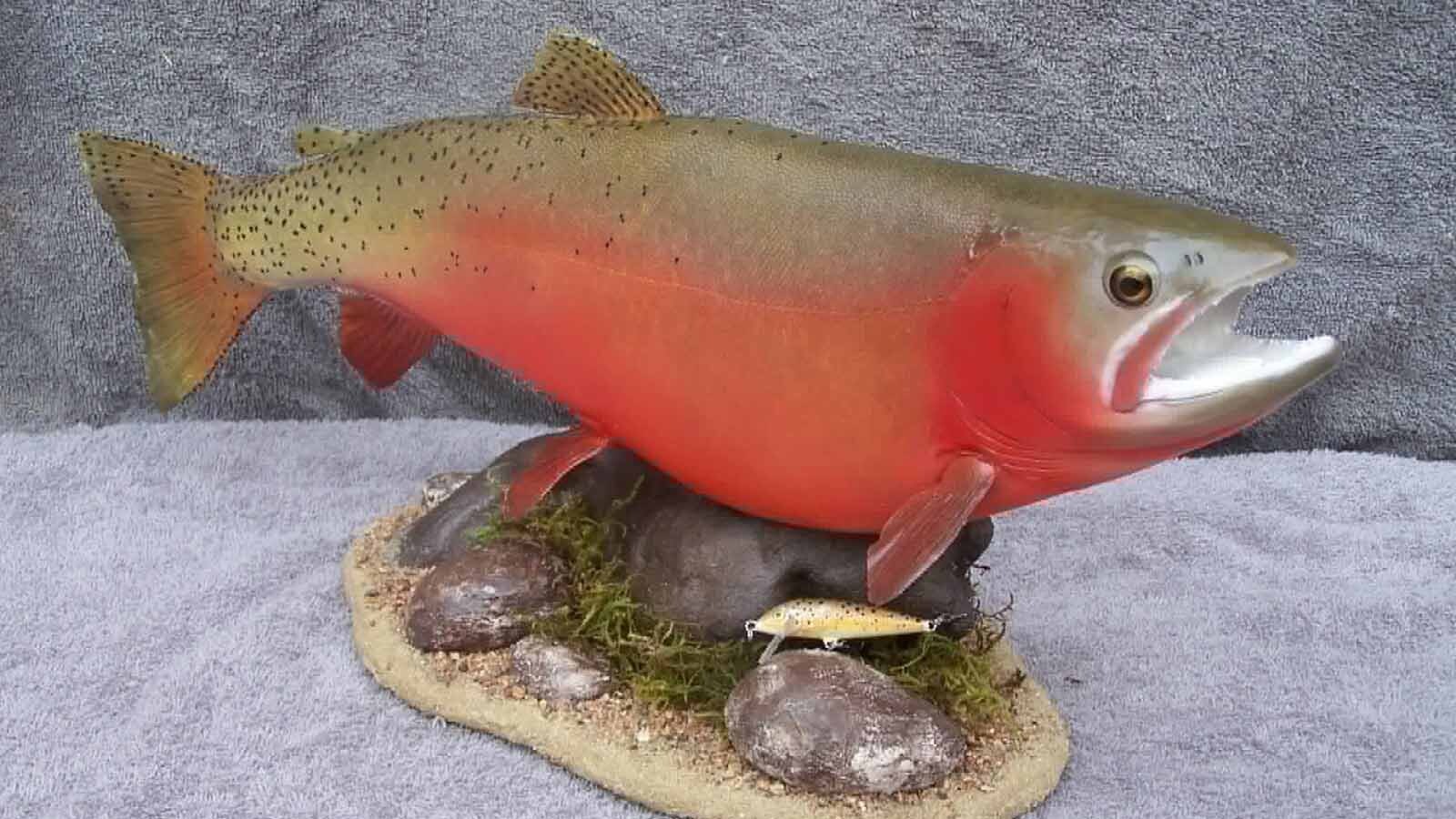
Great fish taxidermy requires methodical skill and a good sense of color balance, said taxidermist Allen Darlington. (Courtesy Allen Darlington, Canyon Fish Taxidermy) 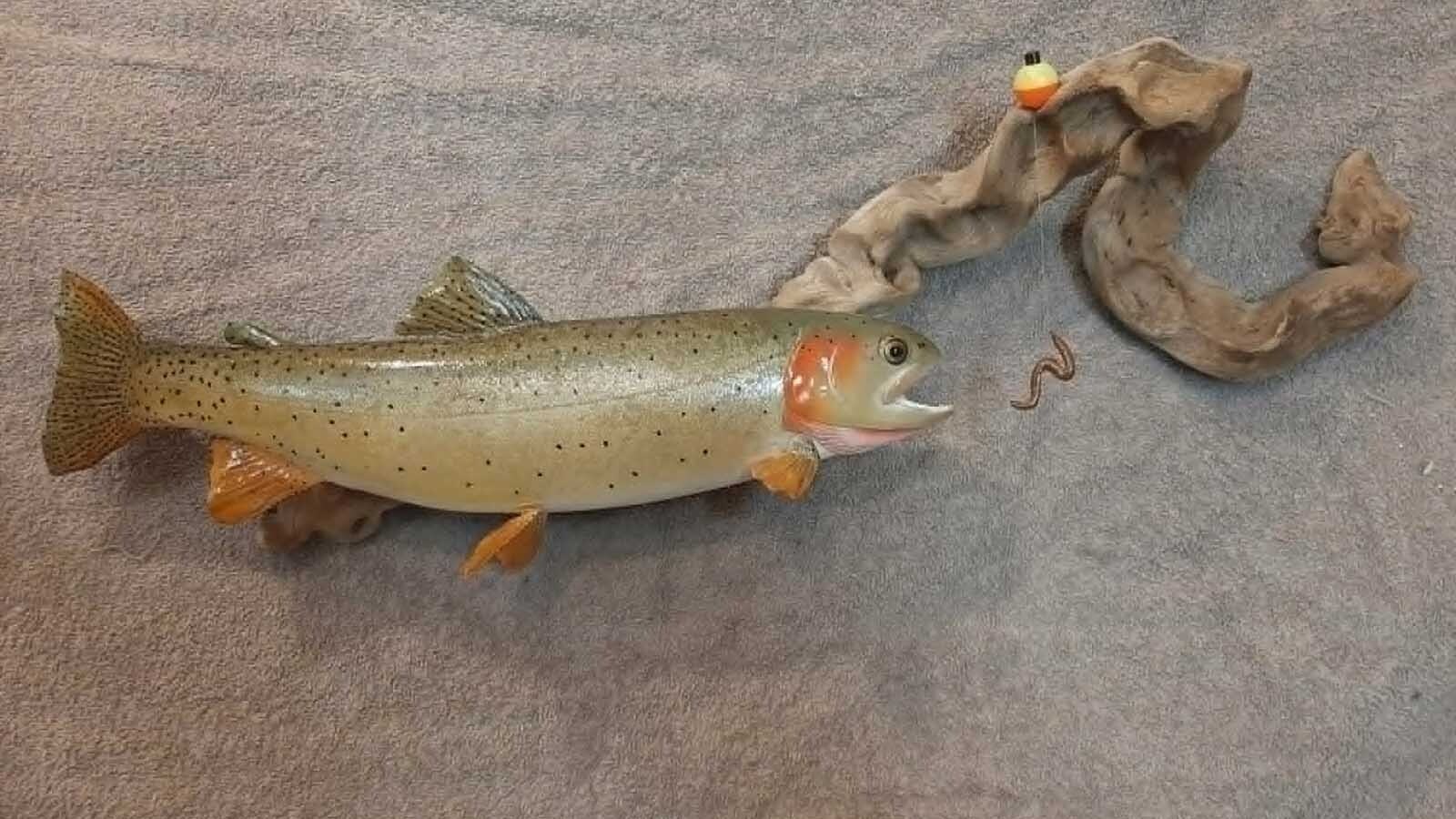
Great fish taxidermy requires methodical skill and a good sense of color balance, said taxidermist Allen Darlington. (Courtesy Allen Darlington, Canyon Fish Taxidermy)
Colors And Teeth
Darlington has made mounts of all sorts of fish from Wyoming and the surrounding region.
Trout are some of his favorites to work with.
“Trout come in some of the most fantastic colors you’ve ever seen, because they spawn. When they’re in spawning mode, the colors really come out,” he said.
Toothy game fish, like pike and muskies, can be challenging to work with.
“Stick your fingers in the mouth of a northern pike and you’ll see what it’s all about. They have rows and rows of teeth and they’re needle-sharp. I’ve scarred my hands up so badly working with pike,” he said.
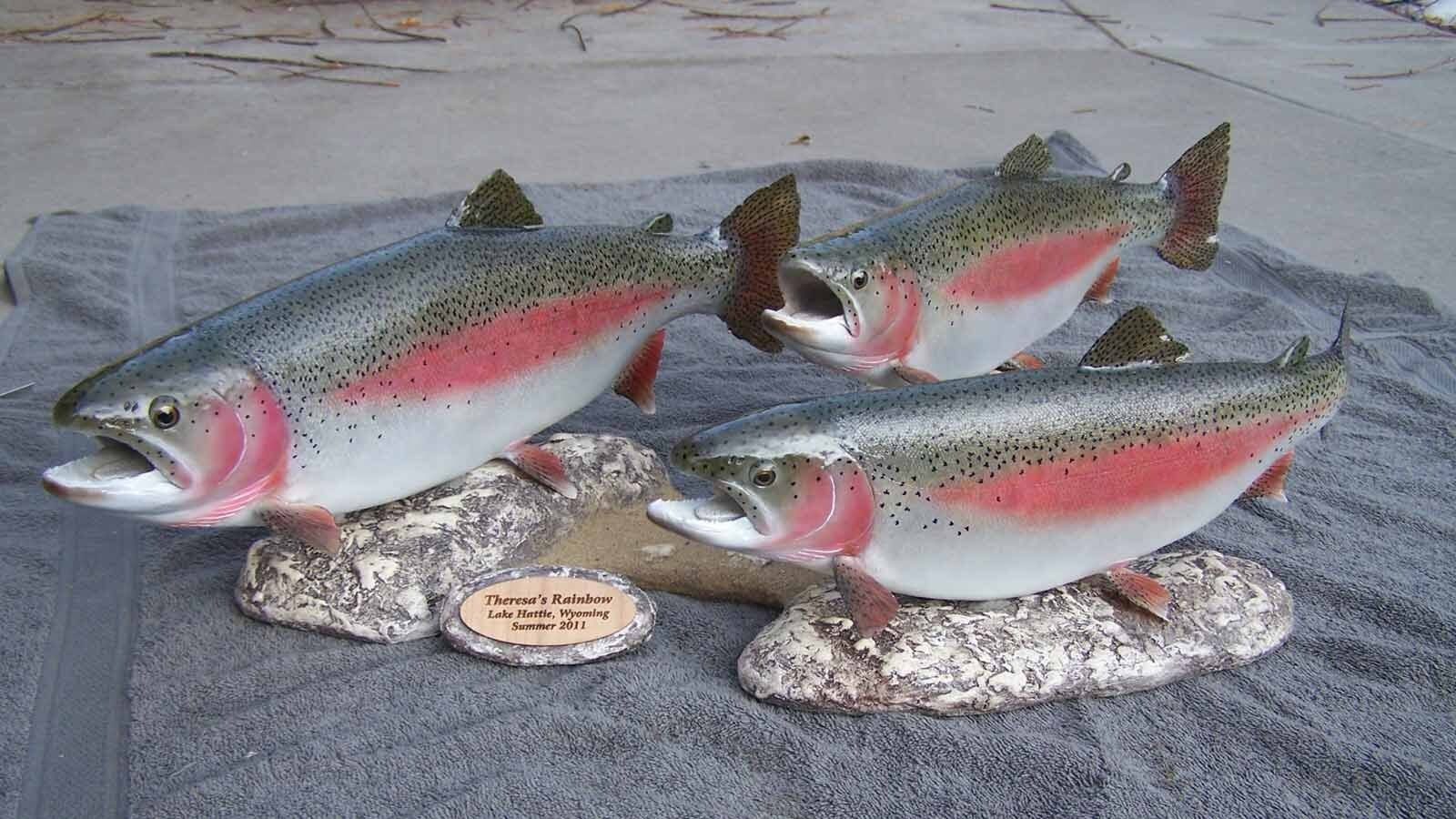
Great fish taxidermy requires methodical skill and a good sense of color balance, said taxidermist Allen Darlington. (Courtesy Allen Darlington, Canyon Fish Taxidermy) 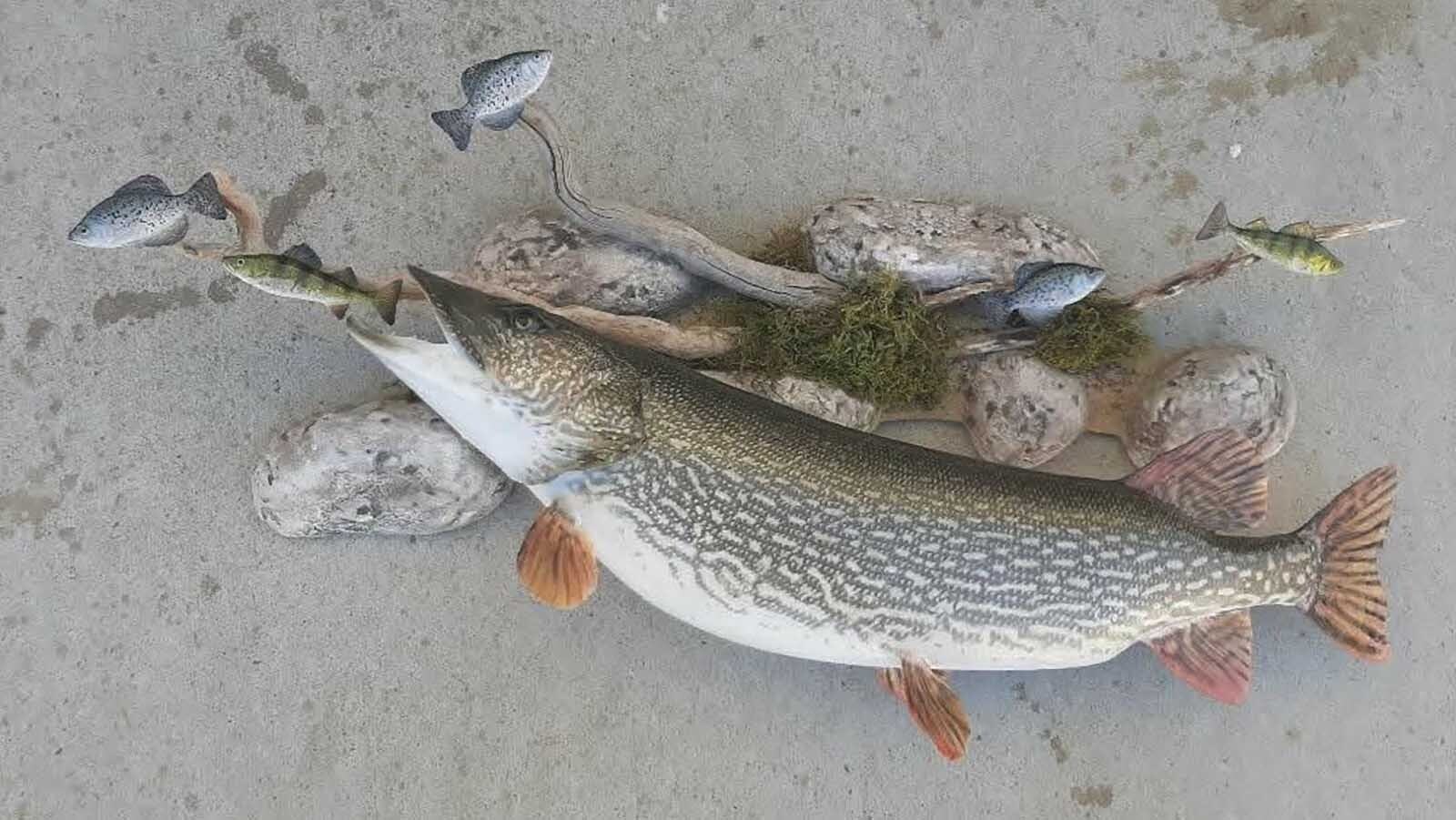
Great fish taxidermy requires methodical skill and a good sense of color balance, said taxidermist Allen Darlington. (Courtesy Allen Darlington, Canyon Fish Taxidermy) 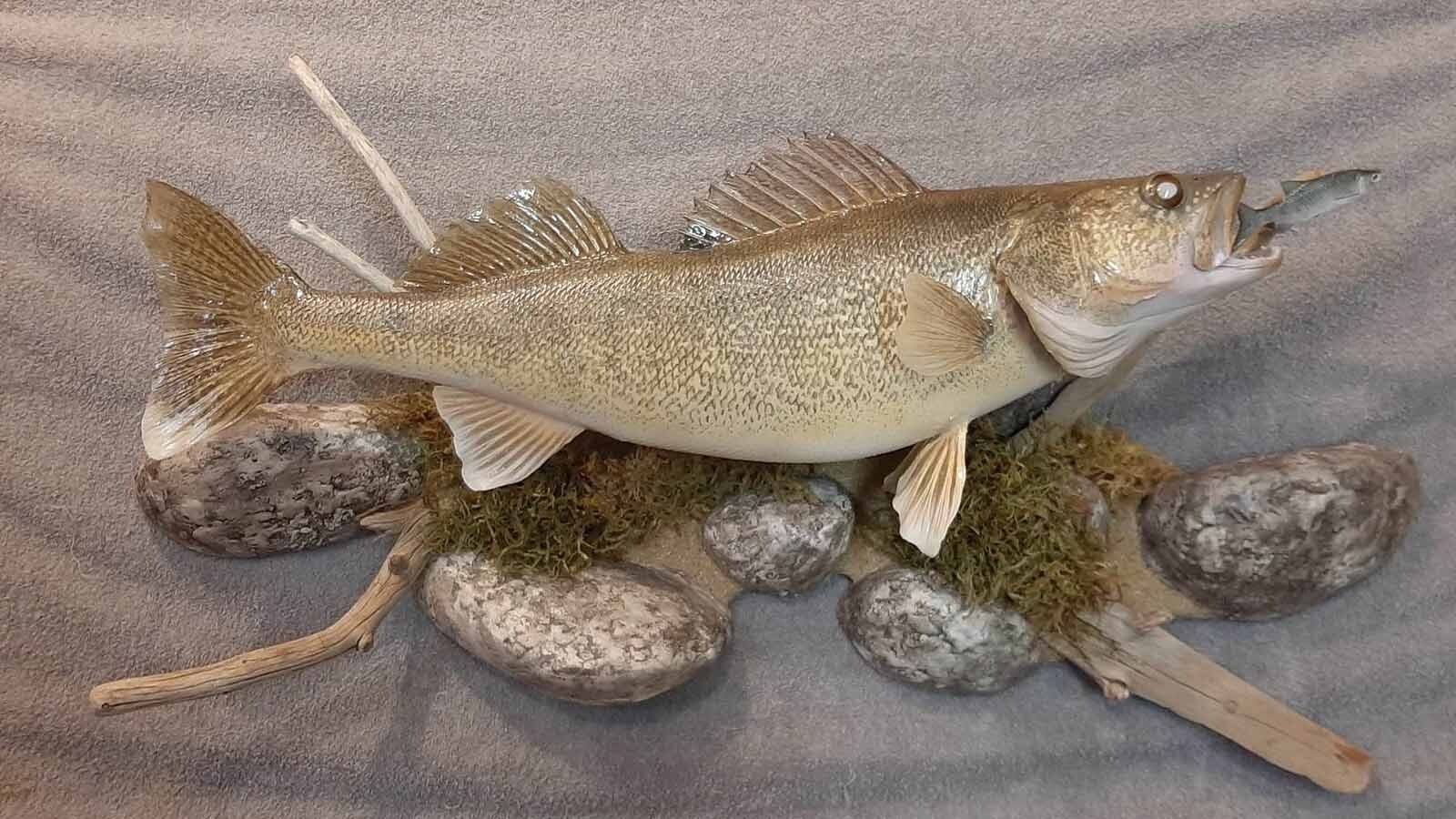
Great fish taxidermy requires methodical skill and a good sense of color balance, said taxidermist Allen Darlington. (Courtesy Allen Darlington, Canyon Fish Taxidermy)
Bringing Joy
Darlington said the best part of his work is how it affects people.
Fish mounts are far more than just trophies for many of his customers.
“What I try to get out of my work – what I want people to get out of their mounts – is joy. I want them to look at that piece and have it trigger a good memory,” he said.
Some memories can be profound.
“The fish might be from the last time they fished with their dad. Or it was the last time they fished with their brother before he went off and died in a war, stuff like that,” Darlington said.
He recalled one elderly woman crying tears of joy when she saw the mount of a walleye he’d made for her, because she’d spent her life wanting to catch a trophy-sized walleye like that one.
There was also the poignant experience of preparing a mount from a terminally ill man’s final fishing trip.
“That is what he wanted to see before he died. He got to enjoy it for a couple of weeks before he passed away,” Darlington said.
And there is the huge reward of seeing children light up when they see mounts of the first fish they ever caught.
“Man, the moment that kid walks in and sees their fish mount on the wall, I almost start crying,” he said.
Darlington hopes to find a protege to pass his art down to, just as Johnson mentored him.
“Fish taxidermy is folk art. Folk art is handed down. It’s something you don’t necessarily get a formal education in. The way folk art works is by handing it down,” he said.
Mark Heinz can be reached at mark@cowboystatedaily.com.