Wyoming is often listed as among the nation’s least buggy states. Ask the experts who stalk the Cowboy State’s wild insects, though, and they will tell you that’s a myth.
The reality is much more nuanced, and depends on the time and the place, as well as the specific insect involved.
The claim does make some sense because Wyoming has an exceptionally dry climate, along with a lot of wind that further dries out bug bodies, University of Wyoming Extension’s entomologist Scott Schell told Cowboy State Daily.
The state also has a terribly short growing season, which is the bane of tomato lovers everywhere. The silver lining is that it also tends to limit the number of birth cycles any given insect species can complete in a single growing season.
All of that does add up to less diversity when it comes to the species of six-legged creatures of the insect world found in the Cowboy State, Schell said, but it doesn’t necessarily mean anyone visiting here would think it’s less buggy.
“If someone wants to say, ‘Oh there’s no bugs here in Wyoming,’ we can take them to some spots where we can change their mind,” he said. “If you’re around say, flood-irrigated hay fields around June 20, you would definitely not think we’re bug free.”
Will Reeves, an entomologist with the U.S. Department of Agriculture who has frequently studied Wyoming bugs and helped identify a species of deadly kissing bugin the Cowboy State, added that Wyoming’s short season means there might actually be higher numbers of bugs during the growing season.
“Your insect activity is compressed,” he said. “So, a lot of species are going to get what they have to do done in a compressed time period.”
That means Wyoming can have a more intense insect population, particularly near any source of water, when the growing season hits its peak.
Fewer Species, But Sneakier
The bugs that do make Wyoming home are all the sneakier, thanks to the challenges they face. They’ve managed to find ways to continue making human lives miserable, whenever they possibly can.
That particularly includes one of the most hated of all pests, the mosquito.
“What’s interesting about insects is they always have multiple strategies,” Schell said. “Like flood water mosquitoes, they spend the majority of their life as eggs, laid by the females of the preceding year in flooded areas.”
Just because it doesn’t flood the same area the next year doesn’t mean those eggs will never hatch.
“Those eggs can withstand desiccation and not be flooded for several years,” Schell said. “Then when we get a flooding event, you will have mosquitoes coming off there.”
The mosquito species that carries West Nile, meanwhile, seeks habitats that are neither too warm, nor too cold.
“If it’s too warm, they use up energy reserves before spring comes,” Schell said. “And if it's too cold, that can exceed their tolerance and kill them.”
Still, one would think that cold Wyoming winters would preclude West Nile mosquitoes, but that’s definitely not the case.
Wyoming has plenty of West Nile mosquitoes, and, as a result, the Wyoming Health Department must annually track West Nile cases.
That interested a graduate student from Utah enough to do a little study, tracking down just how those darn mosquitoes were managing to survive in Wyoming, despite its sometimes harsh winter.
“It was quite a long time ago that he did the study and found them in this one particular area, back in the cracks and crevices of rock piles,” Schell said. “So, they would just sit there for winter, and then when it warmed up enough, they’d fly in the spring to find nectar meals and then blood meals.”
Still, Not As Bad As Some
It’s the female mosquitoes, by the way, who do all the biting.
Turns out laying eggs takes a lot of energy, so the females need a blood meal to do it.
Human blood, cow’s blood, wolf’s blood, bird blood — mosquitoes aren’t choosy about where that blood meal comes from. They subscribe to diversity, equity and inclusion, which puts humans on the menu with all the other mammals.
Still, it is true, Reeves agreed, that there are states that boast of worse mosquito populations than Wyoming.
Take North Dakota, for example — specifically, Williston, North Dakota, where mosquito numbers tend to be counted by the bucketful thanks to the Missouri River’s huge flood plain.
Williston fights mosquitoes every year like there is an actual war going on.
Newspapers there routinely report on how the battle is going and, most years, the United States Air Force Reserve flies over Williston in July, bug-bombing the Missouri River flood plain with a larvicide which officials say is specific to mosquitoes.
It’s a training mission for the Air Force, and a lifesaver for Williston residents who’d like to barbecue a steak outside on the patio every now and then.
Even with spraying, however, residents soon learn that if they’re standing anywhere near water, they need an entire spray can of insect repellent, applied liberally. Even then, they may be quickly surrounded by a cloud of mosquitoes.
Weekly, supplemental spraying often follows the Air Force visit, which is managed by Williston Vector Control. An entire team of people count the number of mosquitoes regularly, looking for West Nile.
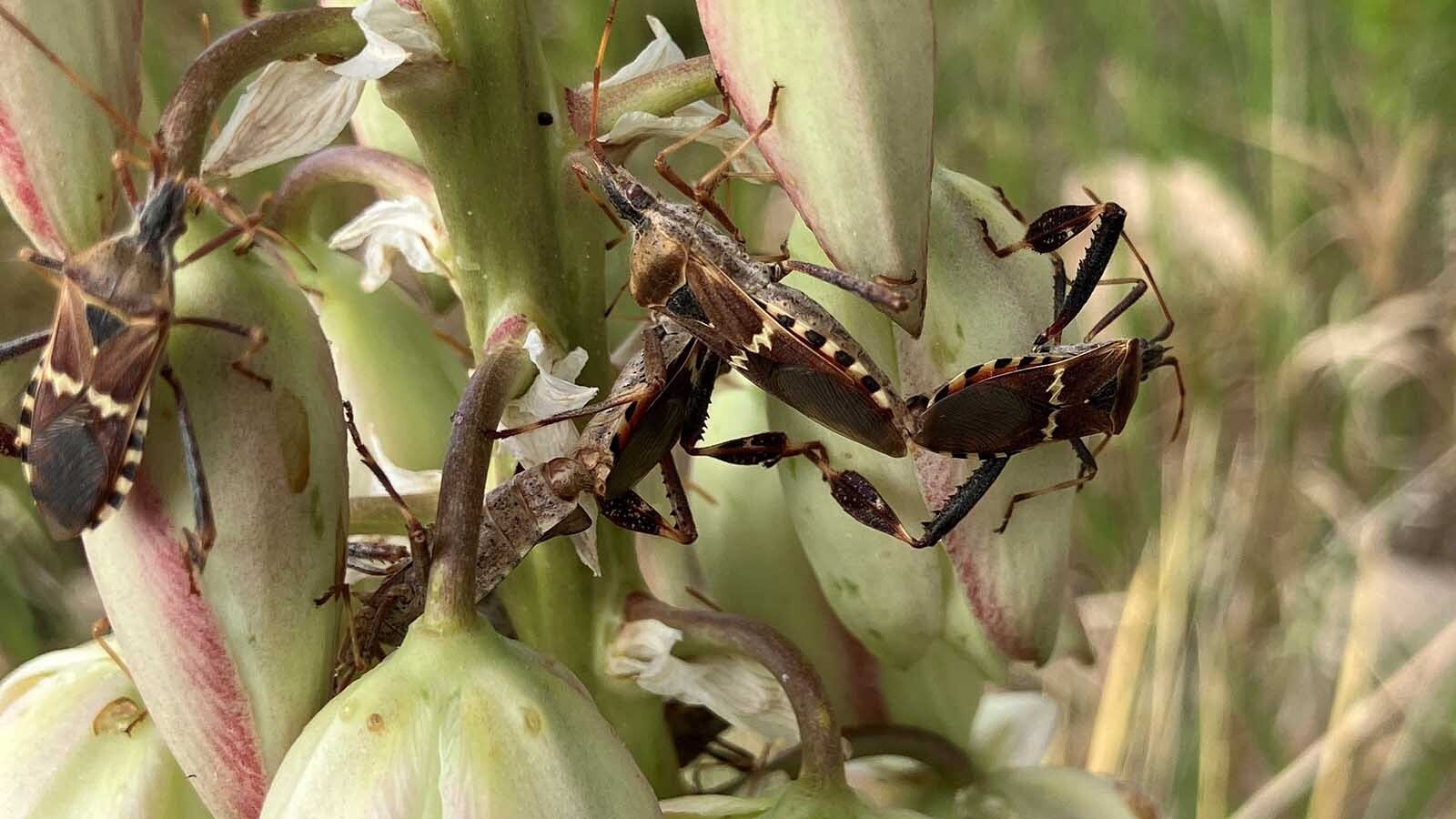
Western leaf-footed bug feeding on some yucca plants. It's another look-alike for the "kissing bug." (Courtesy University of Wyoming Extension Entomologist Scott Schell) 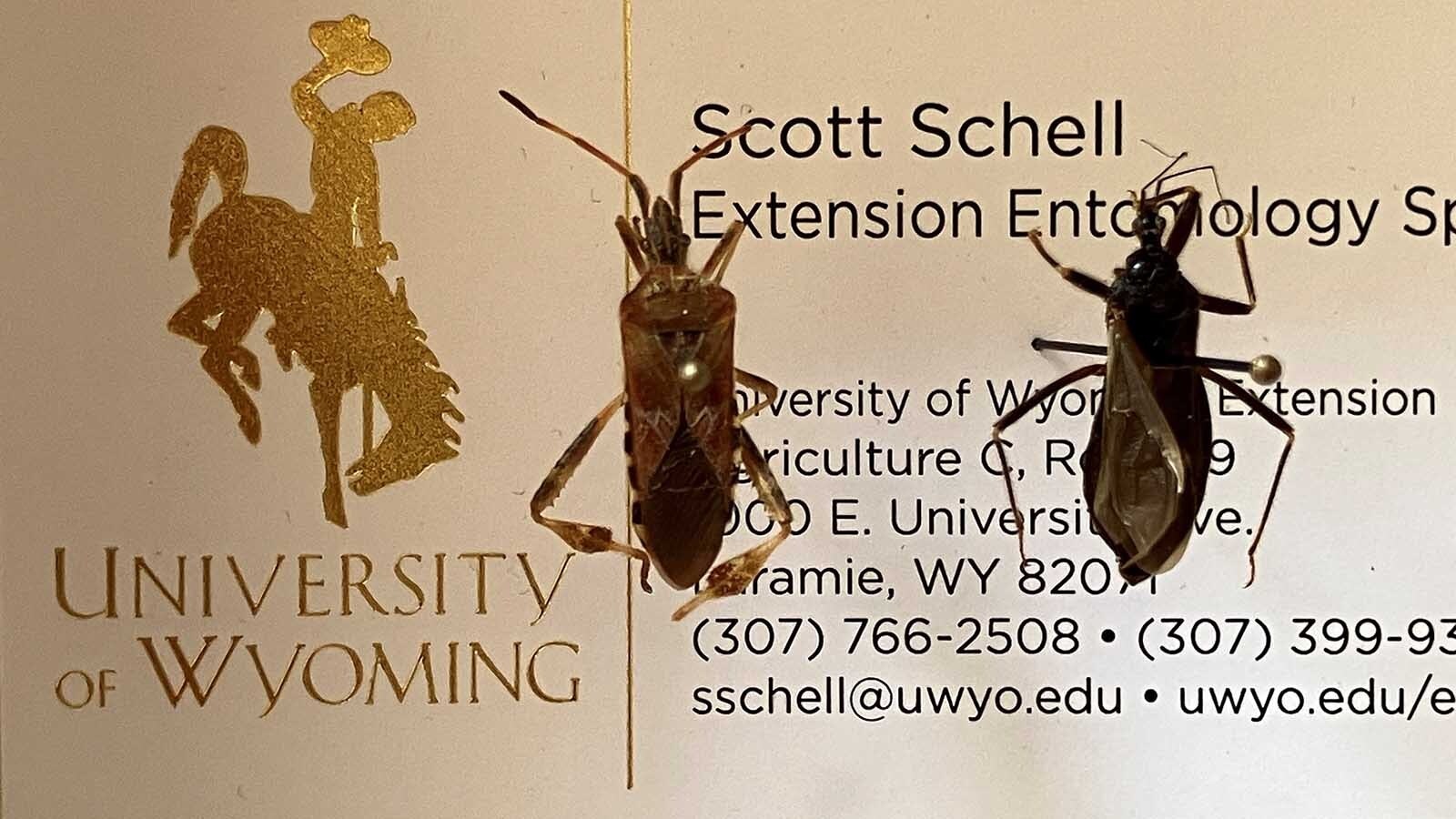
Western conifer seed bug, left, and a masked hunter bug. Both are look-alikes for the "kissing bug." (Courtesy University of Wyoming Extension Entomologist Scott Schell)
No Comparison On Grasshoppers
Wyoming might not have to call in the Air Force and a bucket brigade to handle its mosquito population, but that doesn’t mean it has no insects producing phenomenal, eye-popping numbers.
Wyoming’s insect cowboy, Aaron Clark, who is studying and cataloguing seed bugs in the Wheatland area, told Cowboy State Daily that he believes Wyoming is absolutely unmatched when it comes to its grasshopper populations.
He is originally from Wisconsin where he said mayfly populations are legendary.
“We would produce billions and trillions of mayflies there,” he said. “But the difference is, that’s just one or two species, right? And they just have these massive booms in population. We don’t have that here with mayflies.”
Wyoming’s population explosion of grasshoppers is comparably impressive, the Wheatland-area rancher said.
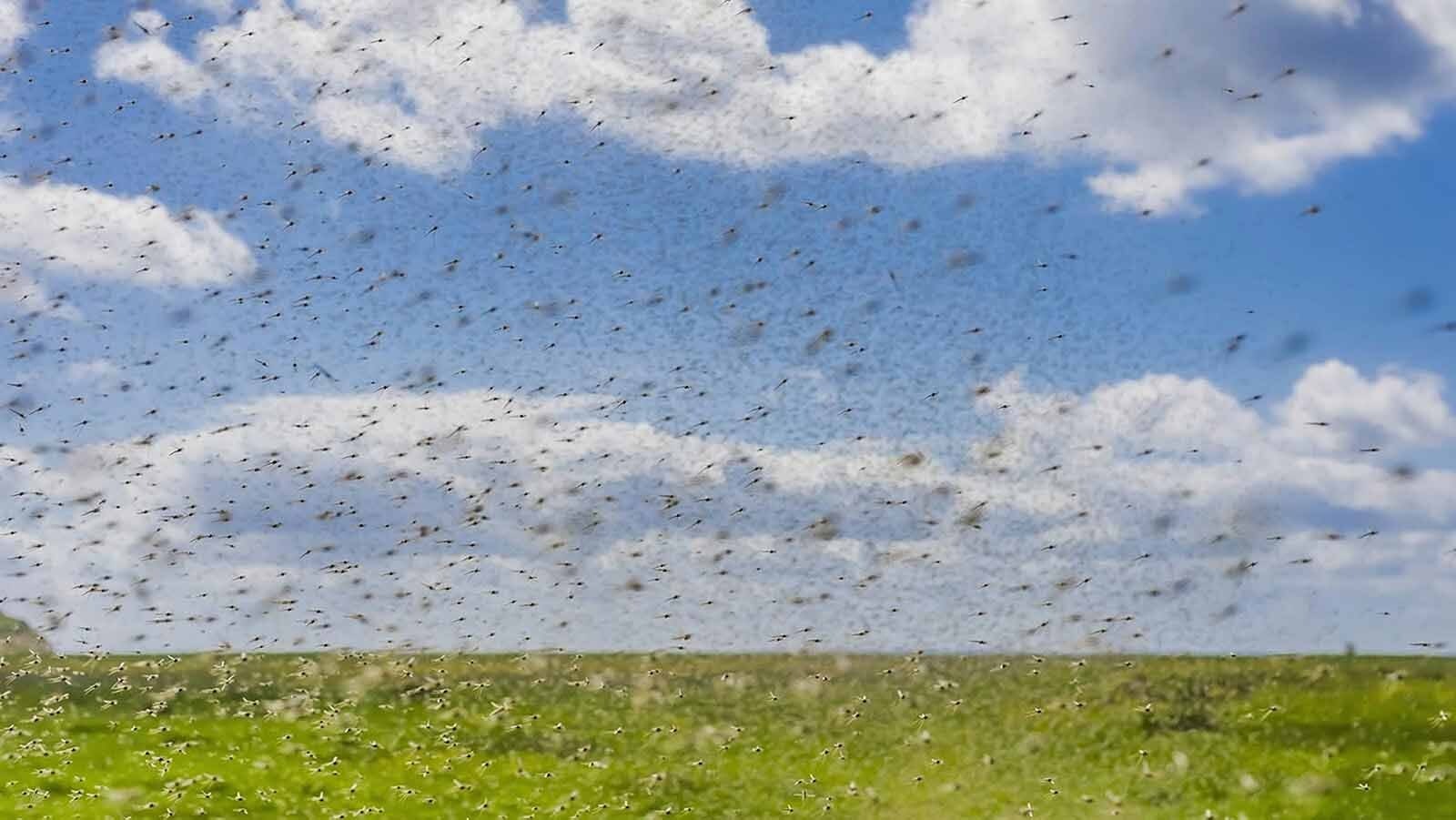
“I would be willing to bet that our grasshopper densities probably exceed just about anywhere else in the United States,” he said. “Wisconsin had grasshoppers, too, but not like we have here. I bet last summer I had 40 or 50 grasshoppers per square foot down in my east pasture.”
Just imagine that many grasshoppers jumping up from your feet with every footstep. Walking through such a field would produce dark clouds of whirring wings, flying every which way.
And, while there may not be huge hordes of mayflies in Wyoming, those traveling riverside in June are going to get “eaten alive and carried away by a deer fly,” Clark added, to underscore his point that whether Wyoming is less “buggy” really depends on the insect and time of year in question.
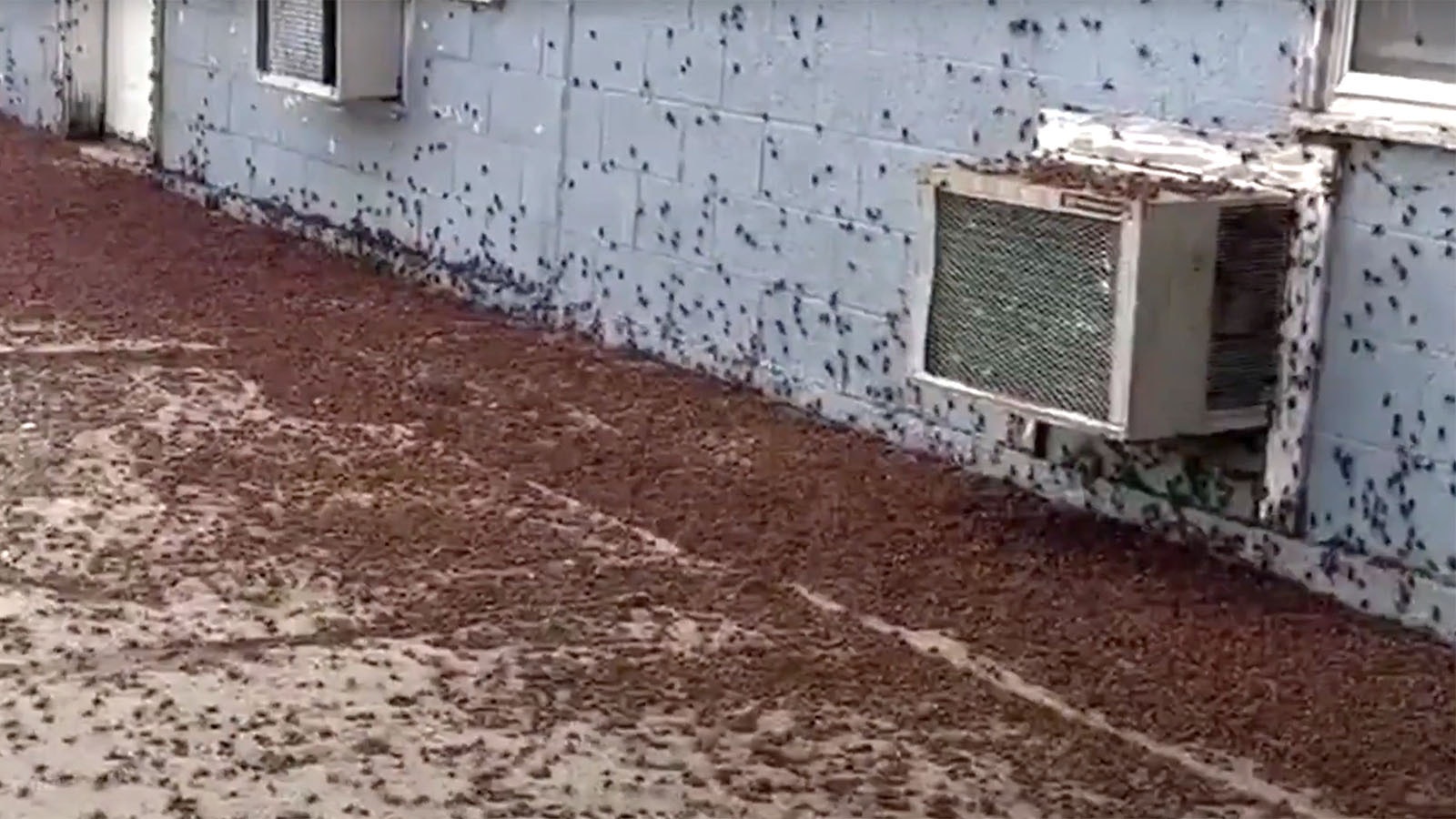
There also have been years that cycle through where parts of the Cowboy State are overrun with Mormon crickets, like in 2023 when there were so many in Edgerton that the streets were slick with them from cars running over swarms of the bugs.
Then there’s the dubious 1877 newspaper account of a Wyoming grasshopper swarm overwhelming a man and his horse, eating both of them.
Wyoming Has Some Weird Bugs All Its Own
One thing that makes it difficult to assess whether Wyoming is really less buggy in general than other states is that no one in the Cowboy State has been particularly interested in systematically cataloguing each and every bug.
Colorado started cataloguing its bugs in the late 1800s, Clark said. At first glance, one might think Wyoming has far fewer bugs than its neighbor to the south, since some of their bugs aren’t listed as official residents of the Cowboy State.
But the chance that those bugs aren’t in Wyoming as well is slim, Clark believes.
“It’s just because we haven’t looked,” he said. “If it’s in Colorado, then 99% of the time it’s here, too, right?”
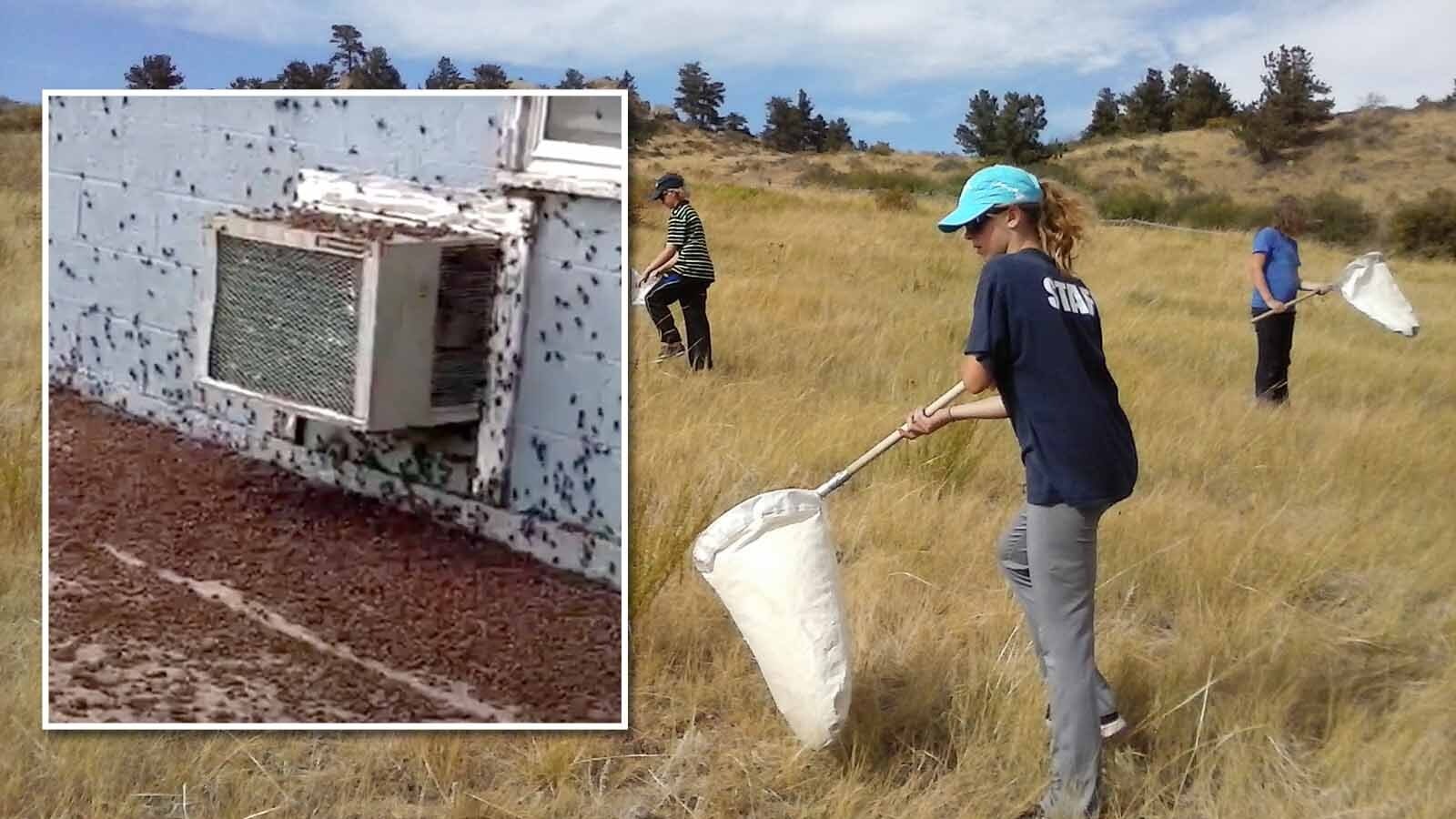
Clark has been doing his part to systematically catalogue the seed bugs of Wyoming on his ranch near Wheatland and has put many of the state’s bugs on record.
He’s even provided specimens of newly discovered Wyoming bugs to the Smithsonian, which has one of the largest bug collections in the world.
Wyoming does have any number of weird bugs that are not all that common elsewhere, Clark added. These include rare bees, stoneflies endemic to Yellowstone, and a wingless bat fly, which superficially resemble spiders.
Spiders, by the way, are not actually insects, nor are ticks. Though many people would certainly think of them as “buggy,” they are arachnids.
Bat flies sit with their heads facing backwards when they’re at rest, and feed on nothing but blood from bats.
The females are particularly unusual when compared to other insects in that their young are born live and are fed from what are called “milk” glands. These are not actually breasts, but glands which deliver a nutrient-dense secretion prior to the birth of their young.
So next time you’re thinking of leaving the insect repellant at home, think twice.
Wyoming might have fewer species of bugs, but it has plenty of mosquitoes, as well as other wild and wacky bugs like bat flies, grasshoppers and crickets are bound to make you jump in the night.
Renée Jean can be reached at renee@cowboystatedaily.com.