A bill banning Wyoming public agencies and schools from collecting union and political advocacy group dues is soon headed to the governor’s desk, after the House of Representatives approved the Senate’s changes to it.
Sponsored by Rep. JD Williams, R-Lusk, House Bill 178 seeks to block nearly all Wyoming public agencies from collecting dues for labor groups, political action committees and organizations, political candidates and committees.
In its original form it also would have required unions containing public employees to publish a report showing how many public employees it represents, how much revenue it receives by category, and how much it spent on supporting political candidates and other political and litigation maneuvers.
The Senate removed that second component.
The version that left the Senate also shields firefighters and public safety agencies from the bill’s ban on collecting dues.
Its opponents say it makes more, not less work for payroll secretaries who will have to parse union dues out from other paycheck deductions; and they call it government overreach.
Its proponents say it removes the government from deductions workers can easily arrange on their own, and may prevent workplace coercion toward supporting a union.
Williams on Friday urged the House to approve the Senate’s version.
“Workers maintain their right to join unions and pay dues and engage in union activities” under the bill, said Williams. “But the state will no longer be involved in these transactions.”
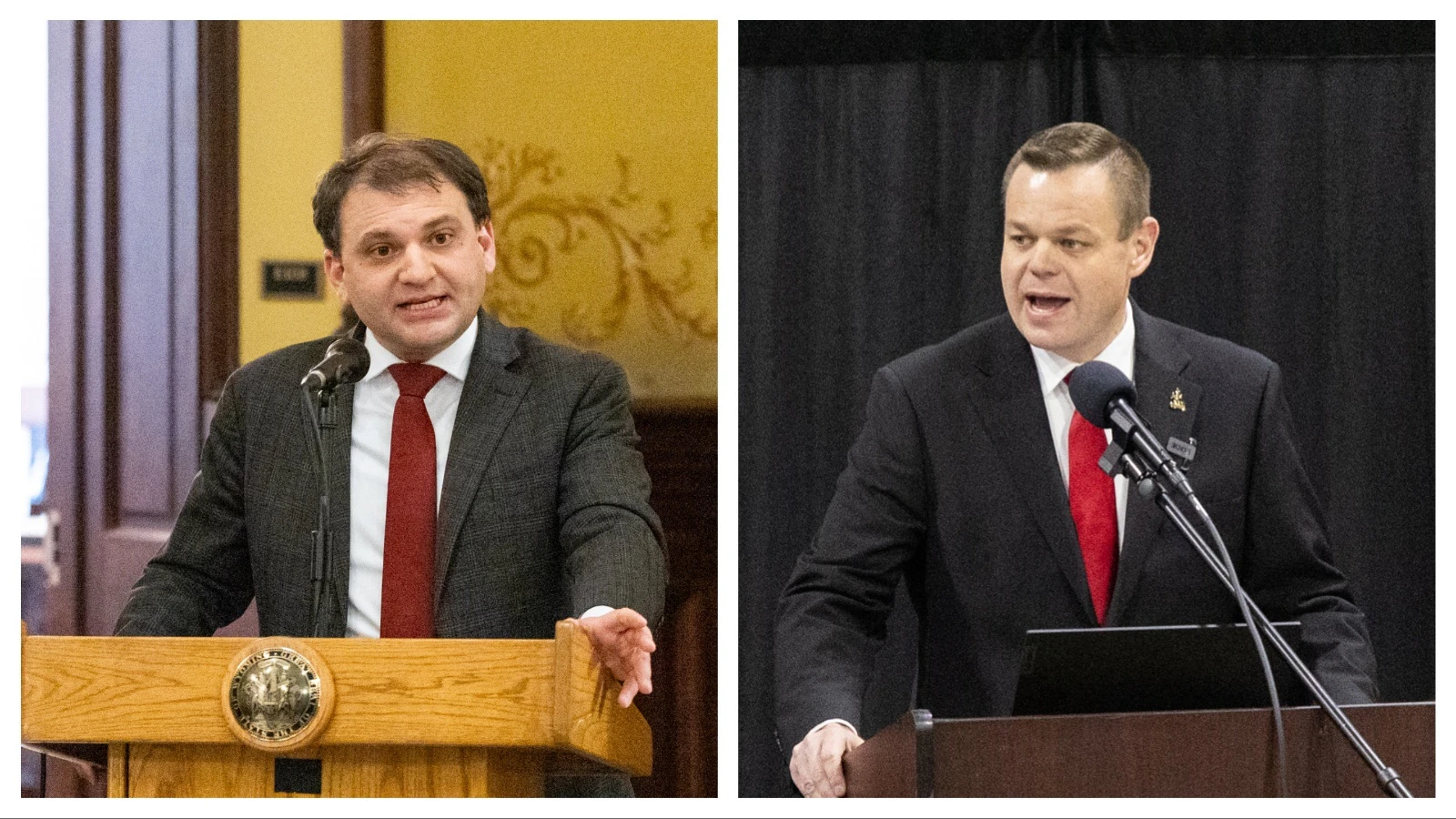
Rep. Landon Brown, R-Cheyenne, said he’d like to give Williams a hug and tell him he “forgot to mention” that the Senate added a misdemeanor criminal penalty to the bill.
Williams countered that the Senate merely clarified what the misdemeanor penalty was, when an earlier version of the bill implied connection to a preexisting misdemeanor in state law.
Still, Brown voiced displeasure toward the bill and called it a “pig.”
“You can only polish a – well we won’t say that,” began Brown. “You can only put lipstick on a pig so many times, and it’s still a pig. This ain’t a good-looking pig either. I say vote no.”
Brown at first asked the House to send the bill to a joint conference committee for more two-chamber haggling. But then he said it would be better to reject that option and “slaughter” the bill.
Minority Floor Leader Mike Yin, D-Jackson, asked who would be culpable under the misdemeanor provision.
“Is the school system committing a misdemeanor?” asked Yin. “Help me understand how that’s going to work.”
Rep. Ocean Andrew, R-Laramie, said the bill maintains people’s freedoms to join any groups they wish, but “removes a lot of the effects, where, someone might feel coerced or compelled to join one of these organizations, thank you.”
In earlier debates on the Senate side, Sen. Charlie Scott, R-Casper, had advanced a similar argument, saying states that have adopted this provision have seen union participation drop due to a potential reduction in workplace coercion.
The House approved the Senate’s changes in a 44-16 vote with two lawmakers marked excused, setting the bill up soon to reach Gov. Mark Gordon’s desk.
Gordon may sign the bill into law as an act of approval, let it become law without his signature as an act of reluctance, or veto it.
The Legislature could only override such a veto with a two-thirds vote in both chambers.
Clair McFarland can be reached at clair@cowboystatedaily.com.