A Wyoming state legislator charged with drunk driving is arguing to the court that he was unlawfully interrogated, and the state’s case is invalid.
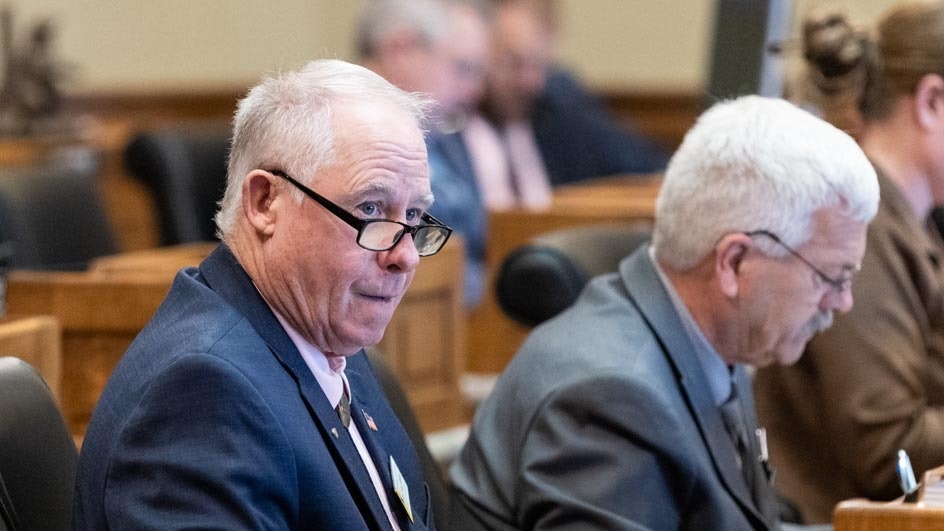
Rep. Bill Allemand, R-Midwest, asked the Buffalo Circuit Court in a Feb. 25 motion to dismiss the DUI case against him. The DUI charge he faces is a misdemeanor punishable by up to six months in jail and $750 in fines.
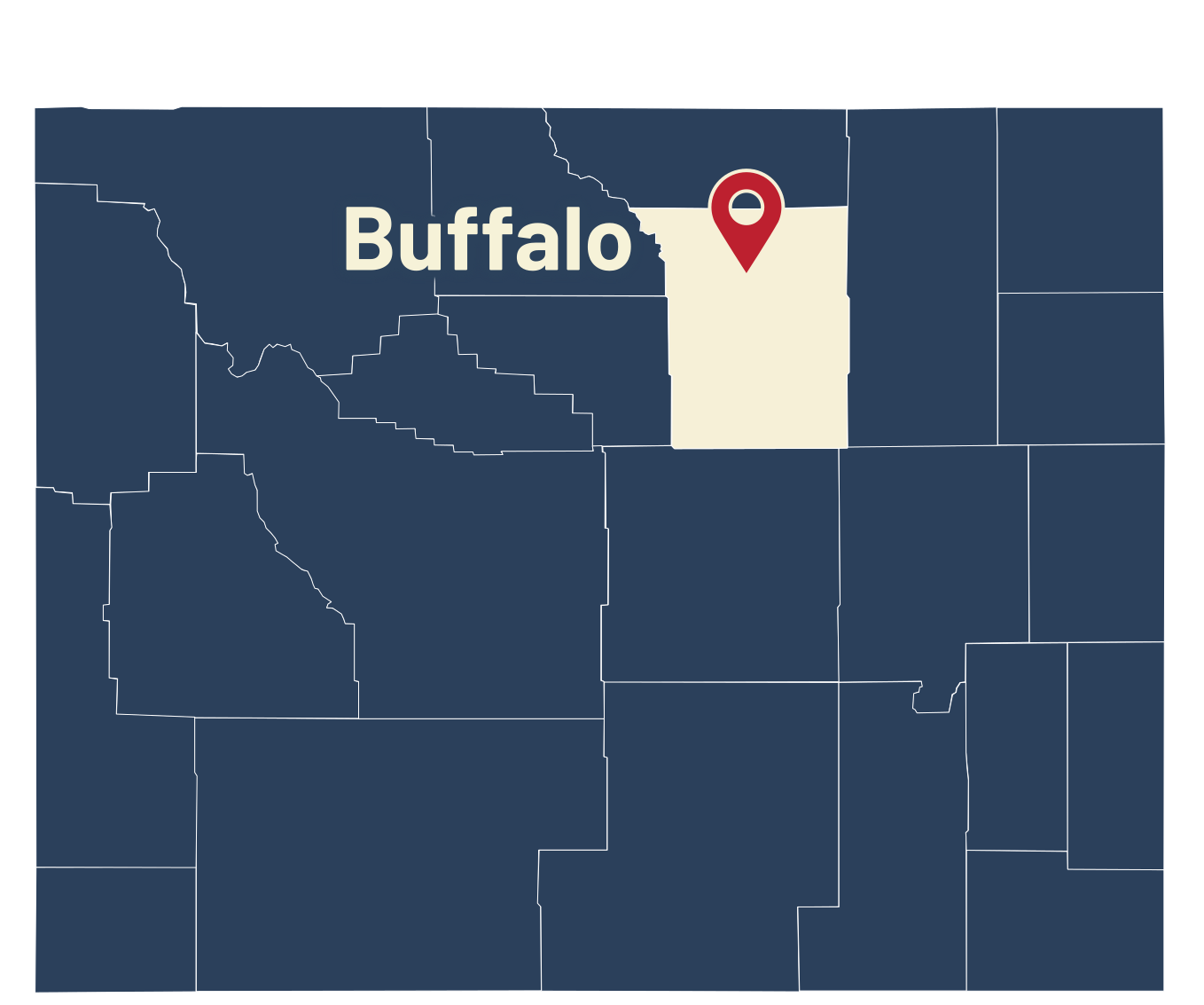
Allemand was arrested Dec. 28 in Buffalo, Wyoming, in what the case affidavit describes as a situation in which Allemand rolled toward an approaching vehicle on U.S. 16, “almost causing an accident but abruptly stopping before it happened” before a deputy stopped him and observed signs of intoxication.
Allemand had admitted to consuming two beers, court documents allege. Johnson County Deputy Attorney Joshua Stensaas told the court Jan. 28 that a blood test an hour and a half after Allemand’s arrest showed a 0.24% blood-alcohol content, three times the legal limit.
On Feb. 25, Allemand’s attorney, experienced DUI attorney Michael Vang, filed a motion to suppress evidence in the Buffalo Circuit Court.
The motion argues that Johnson County Deputy Caleb Campbell, who arrested Allemand, didn’t deliver the latter his Miranda rights before handcuffing him and asking him “incriminating questions” during the traffic stop.
“Deputy Campbell’s decision to handcuff Mr. Allemand turned a routine traffic stop into an illegal arrest that was not supported by probable cause or a specific threat of violence,” wrote Vang. “As a result, all of the subsequent evidence obtained after Mr. Allemand was handcuffed must be suppressed under the Fourth and 14th amendments (to the U.S. Constitution) and Article 1, Section 4 of the Wyoming Constitution.”
To suppress evidence means to make it unavailable for trial in a case. Evidence gotten by methods violating a person’s rights against unreasonable searches and seizures is invalid.
The Buffalo Circuit Court has not yet decided whether the evidence of drunk driving in Allemand’s case is invalid as Allemand asserts.
As of Wednesday, the Johnson County Attorney’s Office had not yet responded to the filing. The office declined to comment, saying its response will be in its countermotion once filed.
Allemand’s suppression hearing is set for March 25.
Deputy’s Account
Campbell’s supplemental affidavit in the case says the deputy approached the driver’s side door of Allemand’s blue Tacoma after watching the man almost cause an accident on the highway, and after a caller had submitted a drunk driving tip regarding a vehicle roughly, but not exactly, matching the description of Allemand’s vehicle.
Allemand exited the vehicle as Campbell approached and appeared “unaware” of Campbell’s presence, and unsteady on his feet, the deputy wrote.
When addressed by the deputy, Allemand’s words were slurred, and his speech was slow and loud. Allemand countered that that’s how he speaks, the affidavit notes.
Allemand said he’d consumed two beers, Campbell wrote, adding that when Allemand reached into the Tacoma for his driver’s license, Campbell spotted a pistol on the front passenger seat.
The deputy told Allemand to step away from the vehicle, handcuffed him, called for backup and unloaded the pistol, says the document.
The affidavit says Campbell removed the handcuffs so that Allemand could perform sobriety tests, which he failed.
Ultimately Campbell took Allemand to the Johnson County Detention Center for booking.
Allemand’s Argument
Though a caller had reported a vehicle roughly matching Allemand’s as swerving on the road, Campbell didn’t observe that event, wrote Vang in the motion to suppress evidence and dismiss the case.
Campbell saw Allemand allegedly fail to come to a complete stop when required, but Allemand “denied that he failed to stop and claimed that he was slowly (moving) forward after stopping to see if it was safe to enter the roadway in this case,” the motion says.
A 1977 federal case allows Campbell to order Allemand out of the vehicle for safety based on the deputy spotting the gun. But, argued Vang, “it did not allow Deputy Campbell to place Mr. Allemand in handcuffs as he asked Mr. Allemand incriminating questions.”
The mere presence of a legally possessed firearm doesn’t justify “converting an alleged traffic stop into a handcuffed detention and arrest” without “specific and articulable facts” showing Allemand as dangerous, Vang wrote.
Allemand had a concealed carry permit, the document adds.
The motion says Campbell exceeded the scope of the initial stop when he handcuffed Allemand “absent a specific threat.”
Here the motion differs from the affidavit.
It says the handcuffs were “never removed until Mr. Allemand was taken to the Johnson County Detention Center.”
The supplemental affidavit, conversely, says Campbell removed the handcuffs so Allemand could attempt field sobriety tests.
Citing two earlier cases, Vang wrote that whether a deputy should have given someone his Miranda rights before questioning him “is simple: would a reasonable person feel free to terminate the interview and leave.”
In other words, a person who is not free to leave should be given his Miranda rights before a deputy asks him potentially incriminating questions.
The motion says Campbell didn’t give Allemand his Miranda rights “prior to asking him incriminating questions” and “went on a fishing expedition” while Allemand was handcuffed.
It’s unclear what Allemand is asserting as incriminating questions.
Campbell in his supplemental affidavit relates just two questions he reportedly asked Allemand while the man was handcuffed: if he had any weapons besides the gun — he had a pocketknife — and if he would attempt field sobriety tests.
Sobriety Tests
The motion also argues that field sobriety tests were invalid in Allemand’s case, as he’s 65 years old “and has numerous medical conditions, including replaced knees and vertigo.”
He was not a valid candidate to perform these tests, wrote Vang.
The motion points to language from the National Highway Traffic Safety Administration (NHTSA) concluding that bloodshot eyes and a flushed face are signals “open to subjective interpretation and could be due to allergies or caused by outdoor work” rather than intoxication.
It also says that the Wyoming Constitution’s version of the Fourth Amendment right against unreasonable searches and seizures is more protective than the federal right.
“Deputy Campbell cannot bootstrap evidence obtained after an unlawful detention to create probable cause for the DUI charge in this case,” wrote Vang. “When law enforcement obtains evidence through unlawful search or seizure, that evidence is inadmissible against the victim of the unlawful action.”
Court In January
Allemand learned at a Jan. 28 court hearing he would still need to do random alcohol breath tests during the legislative budget session, which is concluding soon.
The case prosecutor, Johnson County Deputy Attorney Joshua Stensaas told the judge at the time, "I should be asking for a higher level of testing.”
He also said that the county treats every drunk driving arrest the same “if you’re in the legislature or waiting on tables.”
Vang filed a motion Jan. 21 asking for the court to either remove the alcohol testing condition of the bond entirely or at least suspend it from Feb. 8 through March. 22.
During the hearing, Vang reiterated his written motion arguing that the testing requirement for Allemand was unconstitutional and inappropriate due to Allemand’s lack of criminal history and his presumption of innocence.
If the court continued to make the requirement, Vang asked that the judge order that it be during a time that would not interfere with Allemand’s requirement to be on the House floor during the session.
However, Buffalo Circuit Court Judge Jeremy Kisling noted that in 2019 the Wyoming legislature had allowed the more restrictive testing requirement in the pre-trial phase.
“The legislature makes a lot of laws that aren’t constitutional,” Vang said.
Stensaas argued that the laws cited by Vang from Washington State in his written argument were not applicable in Wyoming and that “nearly every other judge in the state looks at the constitutionality of this different than Mr. Vang.”
He said Vang’s request to either eliminate the testing requirement or just stop the testing between the dates the legislature is in session seemed to be polar opposite arguments if he believed the law was unconstitutional.
‘Safety Issue’
Looking at the Wyoming Rules of Criminal Procedures cited by Vang as well, Stensaas said that the rules emphasized public safety and mentioned it several times.
“Is drunk driving a safety issue? Yes,” he said.
Stensaas said the affidavit from the Johnson County deputy stated that two witnesses on I-25 called Allemand in because his vehicle “was going from rumble strip to rumble strip across the highway.”
He noted that when stopped, Allemand told the deputy that he had anxiety driving down the freeway.
“It will get better for him if he drinks while driving on the interstate,” Stensaas said.
Vang objected to Stensaas' use of the affidavit in the hearing, stating that he did not yet have discovery materials related to the case.
Kisling ruled that he understood Vang’s argument and would give the affidavit the “weight” that it deserved in the hearing and give him an ability to respond.
Stensaas said Allemand refused a drunk driving test and a warrant had to be obtained. He said a blood draw an hour and a half later showed Allemand at 0.24 blood alcohol content, three times the legal limit.
Vang objected and the judge said he was not taking the information as “gospel.”
Same Treatment For Everyone
Stensaas told the court that Allemand’s testing requirement was already at the lowest level.
Vang countered that if his client’s blood alcohol level was that severe “he should be in a coma.”
He restated that the random testing violates Allemand’s constitutional rights and noted that in courts he has practiced, defendants facing first time DUI charges do not have the random testing requirement. Kisling asked Vang if he had any knowledge of any prior criminal history for Allemand. He said there was a past issue in Kansas that was diverted out of the court for domestic battery.
The judge said that he was not going to make the test more difficult for Allemand, but he found testing to be appropriate. He told both Vang and Allemand that there were bond agencies in Casper that had portable breathalyzer machines that he could purchase or there was also a Laramie County program that would allow him to do it around the sessions.
“I fully expect him to be set up with that testing,” Kisling said.
The judge also said that it was “constitutional” to use the arrest affidavit as part of hearing evidence and decision.
Allemand has told Cowboy State Daily that the misdemeanor DUI charge is false and he intends to fight it.
“I am challenging them in court,” said Allemand of the charges shortly after his arrest and release. “Because this was wrong. I got a deputy who did not like me knowing my rights, and he pushed it to where if I would have kept my mouth shut, I would have never been arrested.
“But because I did speak out about my civil rights, I got arrested on a false charge. I will be proving that in court.”
Clair McFarland can be reached at clair@cowboystatedaily.com.