
The Wyoming Legislature passed a $9.99 billion, two-year budget Monday.
That’s after the state Senate voted 28-3 in favor of a compromise draft between its budget negotiators and those from the House of Representatives, while the House voted 59-1 in favor of that same compromise.
The budget falls $143 million under the $10.13 billion draft Gov. Mark Gordon had recommended, says a breakdown sheet the Legislative Service Office produced Monday.
Its passage concludes the Legislature’s chief objective for this year’s lawmaking session.
The budget represents multiple compromises that sealed the $170 million difference between the House and Senate’s proposal. Still, the Senate on Monday celebrated having secured many of its preferences in the final version.
“Let’s give a round of applause for holding the Senate position, folks, they did unbelievably well,” Sen. Ogden Driskill, R-Devils Tower, told the chamber Monday.
Applause followed.
Senate President Bo Biteman, R-Ranchester, thanked the Appropriations Committee and the panel of budget negotiators known as the Joint Conference Committee for their hard work.
In the other chamber, House Speaker Chip Neiman, R-Hulett, voiced finality and surprise.
“By your vote you have chosen to adopt – believe it or not, ladies and gentlemen – the budget,” said Neiman. “Congratulations. Wyoming will be taken care of for the next two years.”
The House had worked upward from a $9.65 billion budget, while the Senate had worked downward from the governor’s recommendation. The House also engaged in intense debates over the proper role of government which Neiman cast, in an interview with Cowboy State Daily, as a tenacious and faithful representation of the people.
That led to at least one debate stretching past 1:30 a.m. and a rare Saturday floor session on the House side.
The Gov Is So Happy
Gordon on Monday released a statement celebrating the passage.
“What a win for Wyoming!” he wrote. “And what a win for the citizens across the state who got involved with their government, after the Freedom Caucus-controlled Joint Appropriations Committee members made sweeping cuts to an already lean budget and came forward letting their voices be heard to their representatives.”
That was a reference to the Joint Appropriations Committee denying many of Gordon’s recommendations while planning some cuts, such as a $40 million cut to the University of Wyoming, after its January budget-planning session.
The moves brought widespread publicity and myriad public responses, including outcry.
Gordon’s budget draft was slated to keep Wyoming in the black and save money for investing.
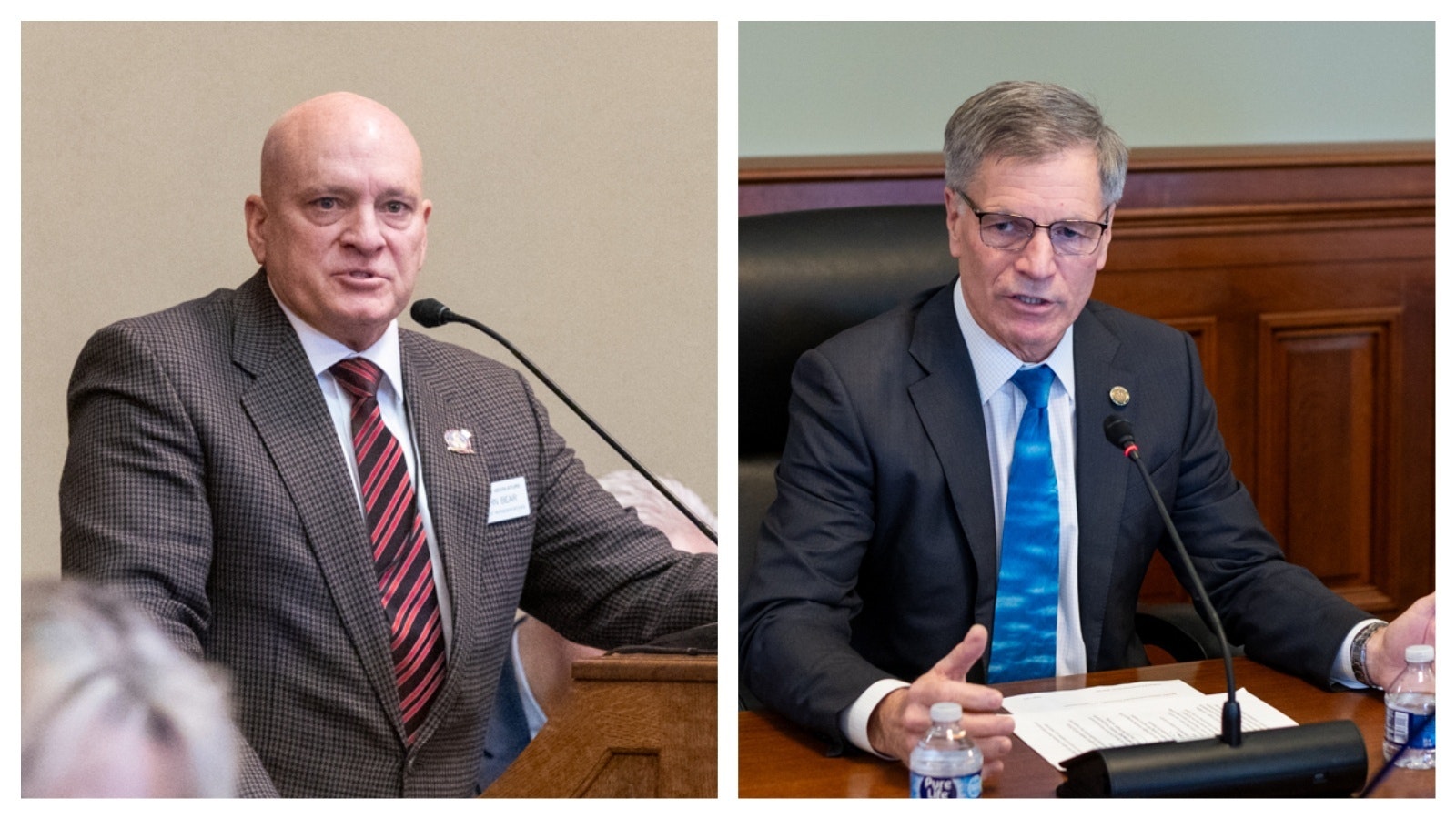
But critics of Gordon’s budget, like House Appropriations Chair John Bear, R-Gillette, warned of dismal revenue forecasts which show the state could be operating in a deficit within four years.
Many House representatives wore red coats on various session days to emphasize that warning.
Others said those revenue forecasts are always bleaker than reality and pointed to Wyoming’s massive investment gains of the past year.
Gordon thanked House members “who courageously opposed the proposed cuts and insisted on asking the tough questions, even late into the night.”
Those questions focused on transparency, Gordon noted correctly. Multiple representatives including Rep. Martha Lawley, R-Worland, questioned why the Joint Appropriations Committee had paused its public feed multiple times during the budget-planning to have off-camera discussions.
Gordon continued:
“I want to also thank the Senate, whose stalwart leadership paved the way to this amazing victory.”
Citing “back-of-the-napkin” calculations, Gordon wrote that the Legislature adopted about 99% of his recommendation.
That was based on a comment by Senate Appropriations Chair Tim Salazar, R-Riverton, who told the Senate the final budget was $53 million under the governor’s recommendation.
Monday’s budget breakdown shows a $143 million difference instead.
Salazar told Cowboy State Daily that $53 million was the figure staffers gave him Monday morning, adding, “if different, my fault.”
Cowboy State Daily has since learned that the final budget is $56.9 million under the governor’s budget with respect to the state’s checking account, which could account for Salazar’s figure. The budget pulls from federal and other fund sources as well, which explains the $143 million figure.
Gordon’s statement continues, saying, “Wyoming's future is indeed bright. We must continue to invest in our potential, grow our industries, preserve our small-town identity, and stand firm against the hysteria of national groups seeking to undermine our state.”
The governor may veto some lines of the budget, and the House and Senate may override his vetoes if they have legislative days remaining afterward.
Slow It Down
Bear responded to Gordon’s statement in a Monday text message to Cowboy State Daily, as the statement had criticized the actions of both the Wyoming Freedom Caucus, which is a group of Republican lawmakers Bear formerly chaired, and the Joint Appropriations Committee majority.
“It is clear that the Wyoming Freedom Caucus did something never seen before,” wrote Bear. “We slowed the big government Republican alliance with Democrats as they rushed for more spending and government growth.”
Bear noted the discrepancy between the $53-million-below figure Gordon had repeated from Salazar’s statement, and the $143 million difference staff provided to him via a chart Monday.
“Rather than pick and choose numbers that fit an agenda, we should use all of the funds the state spends,” wrote Bear. “We started the budget session with the (Joint Appropriations Committee) budget $480M below the governor’s recommended budget.”
The House’s draft was $171 million below it while the Senate’s draft stood $1.4 million below it, added Bear.
“Today both chambers passed a budget $143 million below the governor’s budget,” Bear wrote.
What’s In It
Starting in January, the Joint Appropriations Committee majority had sought to deny around $20 million in exception requests the University of Wyoming made, while imposing a $40 million cut to the university’s block grant.
That’s about 10% of the state’s grant to UW but a lesser proportion of the school’s overall operating budget.
The Senate sought to restore the $60 million.
The Joint Conference Committee the House and Senate sent into a Friday meeting to negotiate those two stances chose to fund UW fully.
But, $10 million of UW’s $40 million block grant won’t reach it until the school charts a “road map” of how it could save $5 million, which it must report to lawmakers by Dec. 1.
Within an earlier draft of the budget sat a footnote blocking money for Wyoming Public Media — a publicly funded media and radio entity funded through UW's budget.
That footnote is gone.
Wyoming Business Council
The Wyoming Business Council is set to receive nearly $14 million, confined to one year, for its internal operations.
That’s to compel the Legislature to revisit the concerns it has with the agency, then return in the 2027 legislative session with a vision for its future.
The Business Ready Communities program is eliminated.
Of the appropriation, $12 million is from the state’s checking account, plus the state is authorizing WBC to use $157,787 in federal funds and nearly $1 million from other sources.
But the JCC opted to fund the Small Business Development Center for two years, along with the Economic Diversification Division for Manufacturing Works, and the Wyoming Women’s Business Center.
The Legislature plans to review the Wyoming Business Council in the interim months before next winter’s lawmaking session.
The Wyoming Business Council’s functions range from less controversial, like helping communities build infrastructure, to more controversial, like awarding tax-funded grants to certain businesses on a competitive application process.
Odds And Ends
Wyoming Public Television, which is not the same as Wyoming Public Media, is slated to receive the $3 million it lost when Congress defunded the Corporation for Public Broadcasting.
It will also receive its usual $3 million from Wyoming.
Gordon in his statement thanked House members who convinced the chamber to advance a raise for state employees that will bring them into 2024 market values for pay. That set the JCC up to haggle only on where that money would come from, not whether it would be released.
The House had sought to spend nothing on an additional request by a natural resource trust fund to combat invasive species – like cheatgrass - along with other lands management. The Senate wanted $14 million for that.
The chambers compromised at $9 million.
Another compromise unfolded when the Senate sought $1.2 million for a trails project, the House wanted $400,000 and the chambers settled at $800,000 — to come from the tourism fund.
A budget footnote remains barring state appropriations for collegiate student-athlete salaries or endorsements.
Another budget footnote bars the Wyoming Department of Health from funding elective abortions, which are legal in Wyoming.
The final budget will transfer $88 million from a reserve account to an operating account for public schools, to account in part for the costs the Legislature is adding to the state’s K-12 operations this year.
A $16 million appropriation for a rare earths project originally crafted as a loan is now a grant.
Clarification- the natural resources request was in addition to the fund’s normal budget.
Clair McFarland can be reached at clair@cowboystatedaily.com.


