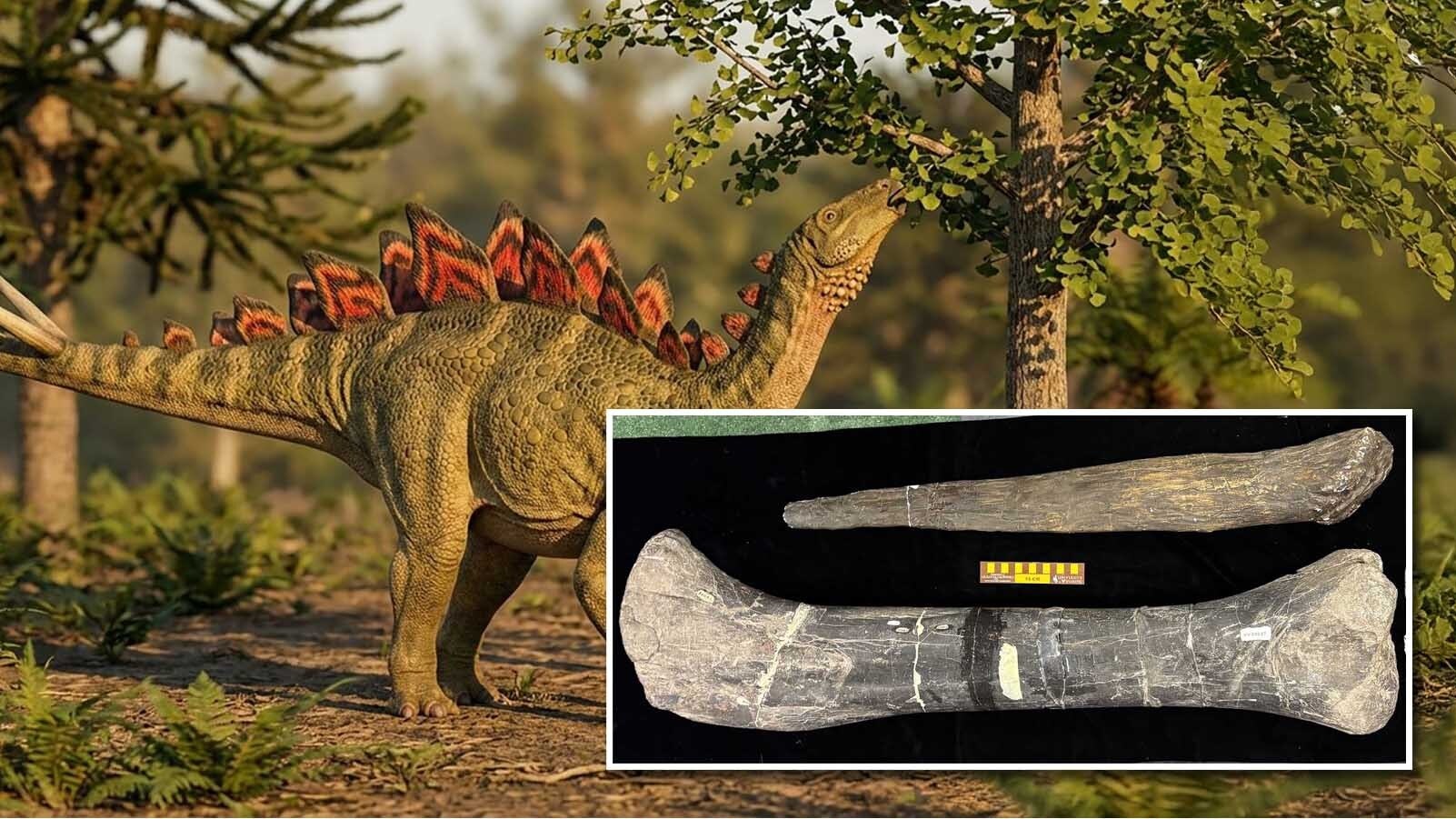
A uniquely spiny stegosaur died in Late Jurassic Wyoming about 146 million years ago. Its corpse was covered with water and sediment, which preserved its partial skeleton.
In the 1920s, the same dinosaur almost died again after a water pipe burst over its backside inside the University of Wyoming Geological Museum in Laramie.
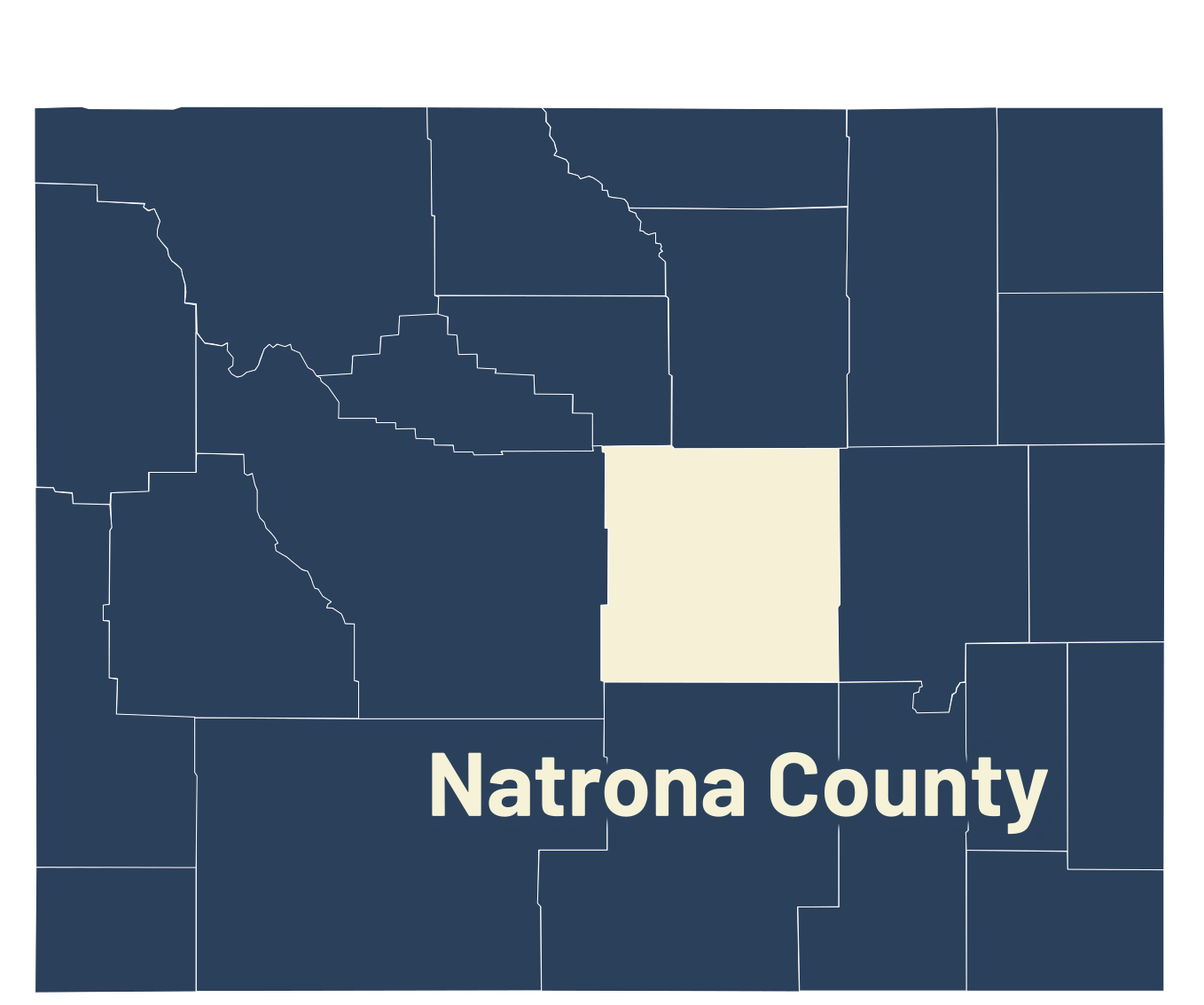
That’s the strange tragedy of Alcovasaurus, a one-of-a-kind Wyoming dinosaur found near the Alcova Reservoir southwest of Casper, to date the only specimen ever found.
It’s a relative of the much-more-famous Stegosaurus, but many paleontologists would consider finding another Alcovasaurus a much more exciting discovery.
There are dozens of well-preserved Stegosaurus specimens in museums around the world, but there’s only one Alcovasaurus, and only one surviving bone of that Alcovasaurus.
Despite more than a century of searching for dinosaurs across the American West, nobody’s found another.
“It was first described as a new species of Stegosaurus, and now it’s a new genus and species of stegosaur,” said Brent Breithaupt, the regional paleontologist for the Bureau of Land Management in Cheyenne. “There aren't other stegosaurs that have tail spines like Alcovasaurus. It's pretty unique.”
Strange Stegosaur
The story of Alcovasaurus starts in July 1908. The first and only specimen, UW-20503, was found by William Harlow Reed, a famous Wyoming fossil hunter, and A.C. Dart, who were both collecting fossils for the University of Wyoming.
“They went looking for mammal fossils at Hell’s Half Acre that summer, but there were too many rattlesnakes,” Breithaupt said. “They decided to look for new sites in the Alcova area, and that’s when they came across the partial skeleton of a stegosaur.”
Reed and Dart spent the summer excavating the specimen. They even invited several schoolteachers from Laramie, in dresses and parasols, to visit the active quarry.
“They definitely weren’t wearing traditional field gear,” Breithaupt said.
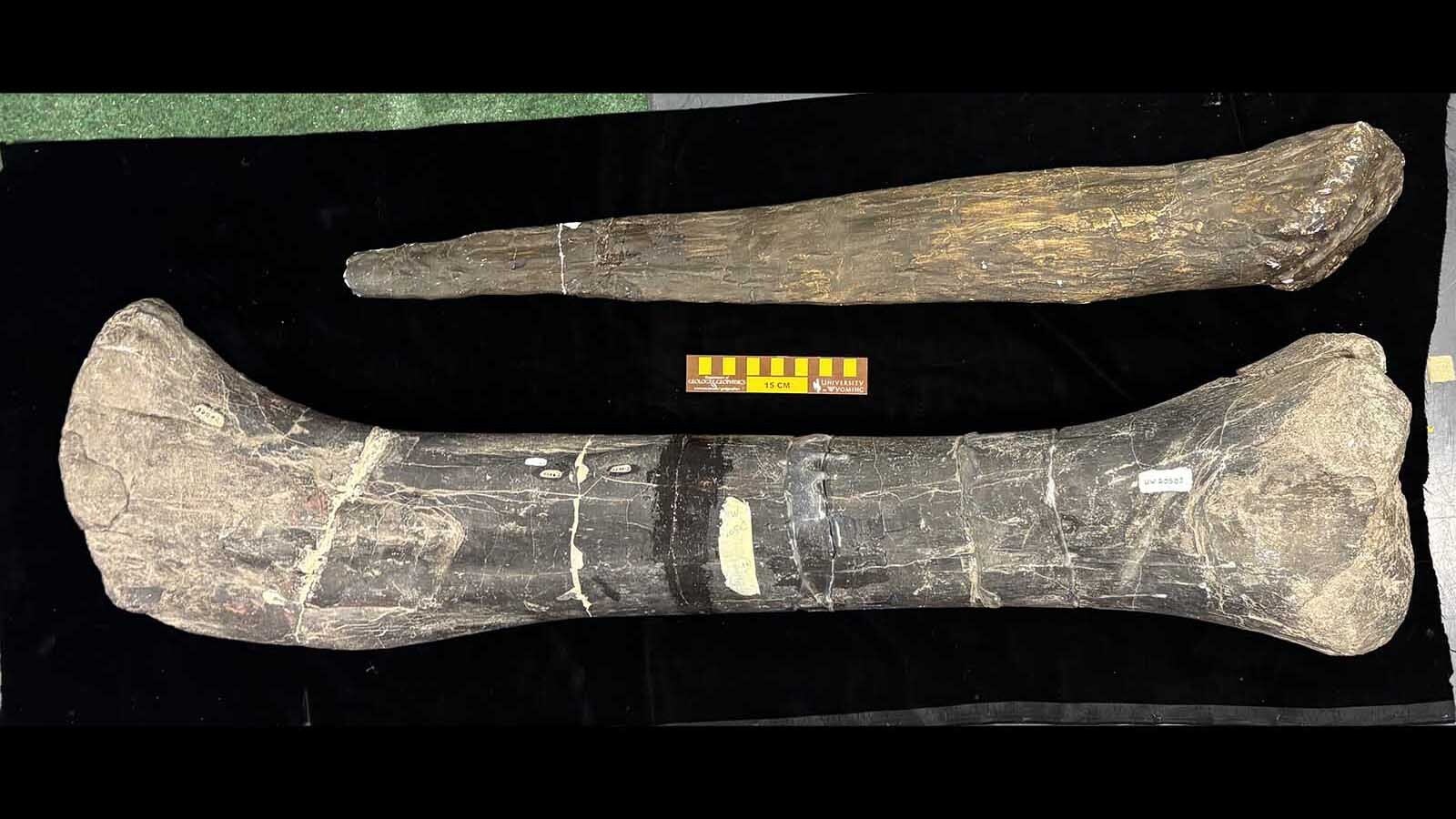
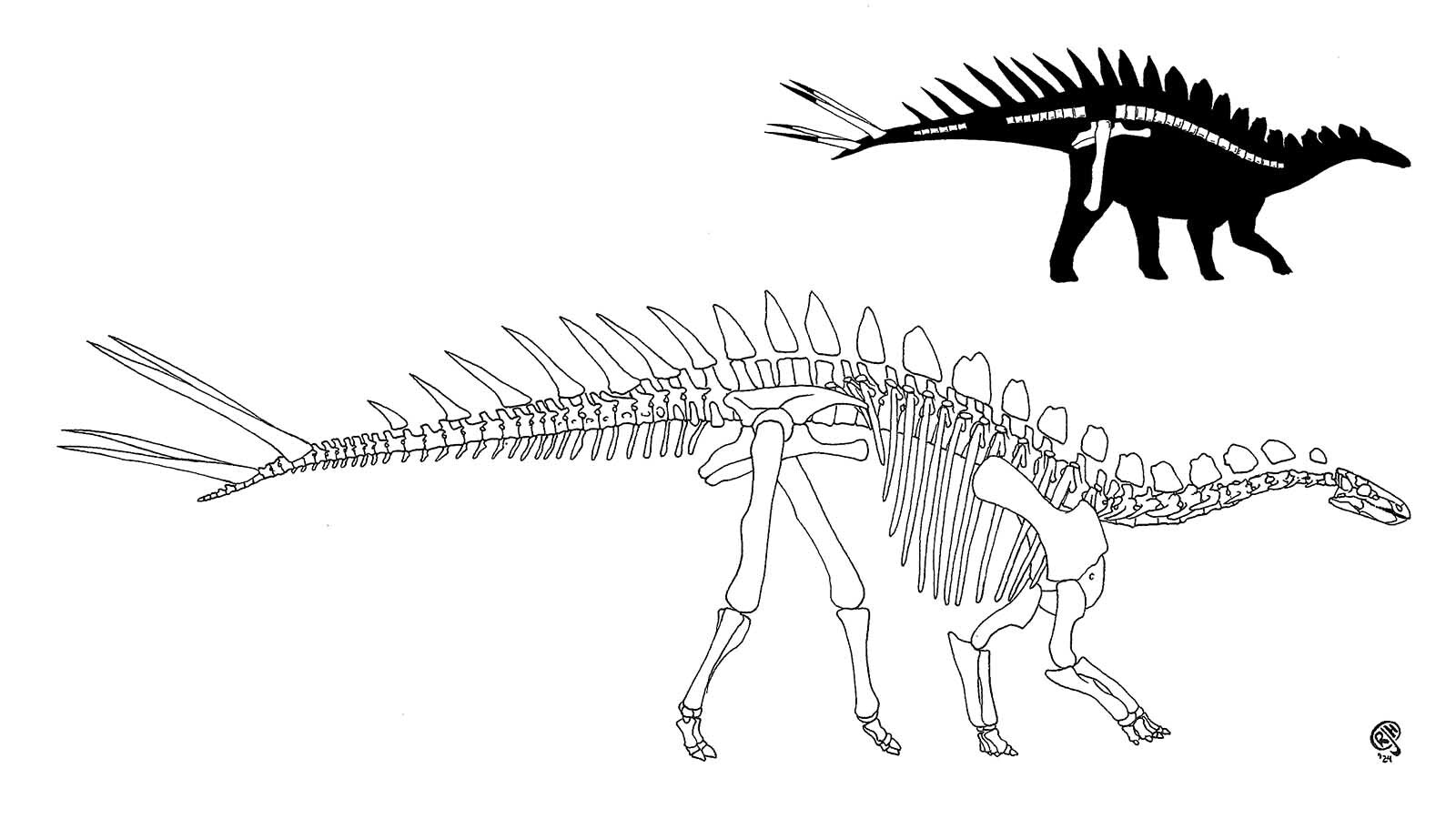
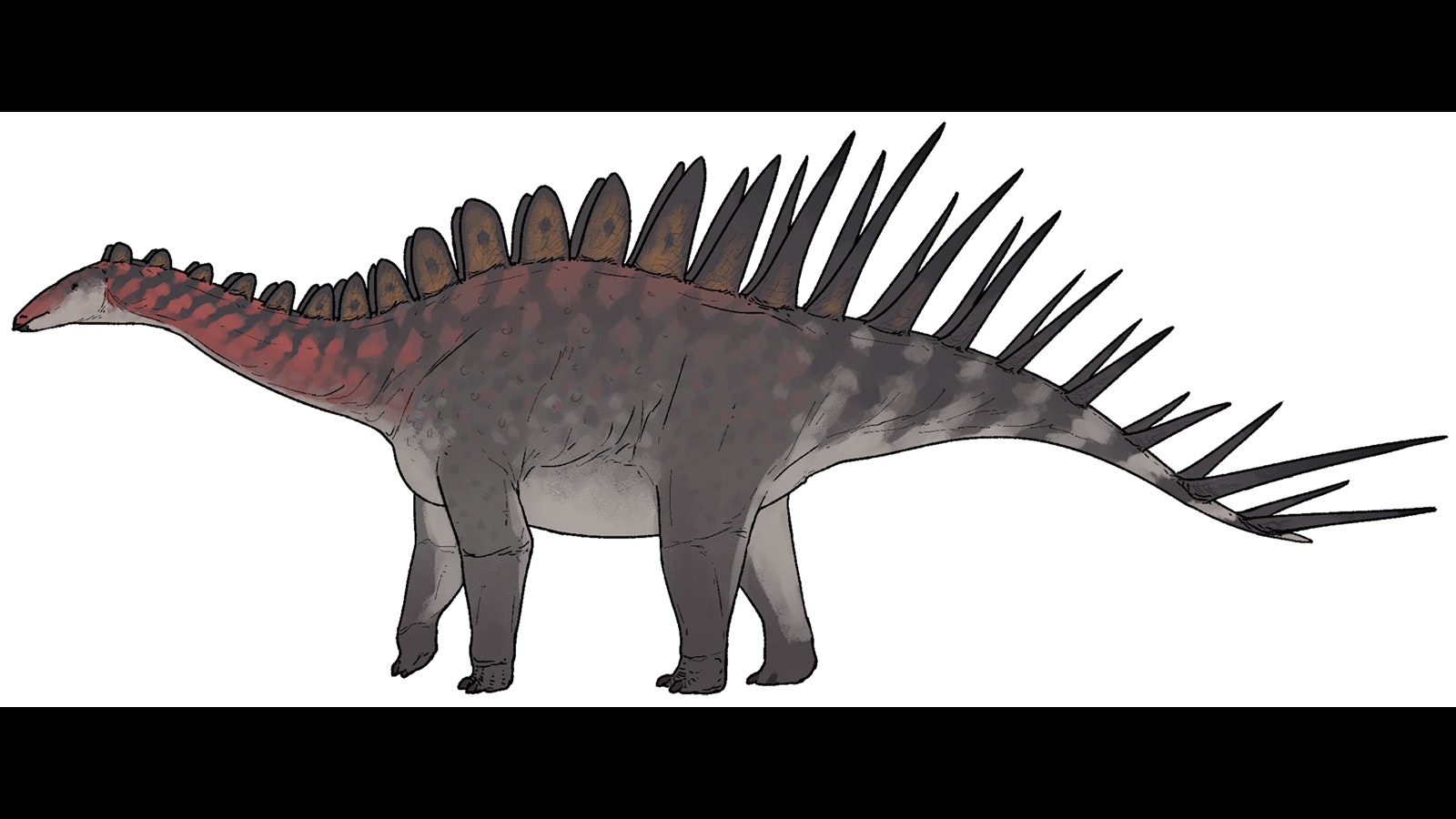
The partial skeleton consisted of 42 vertebrae, several ribs, a mostly complete pelvis, the right femur, and four long tail spines.
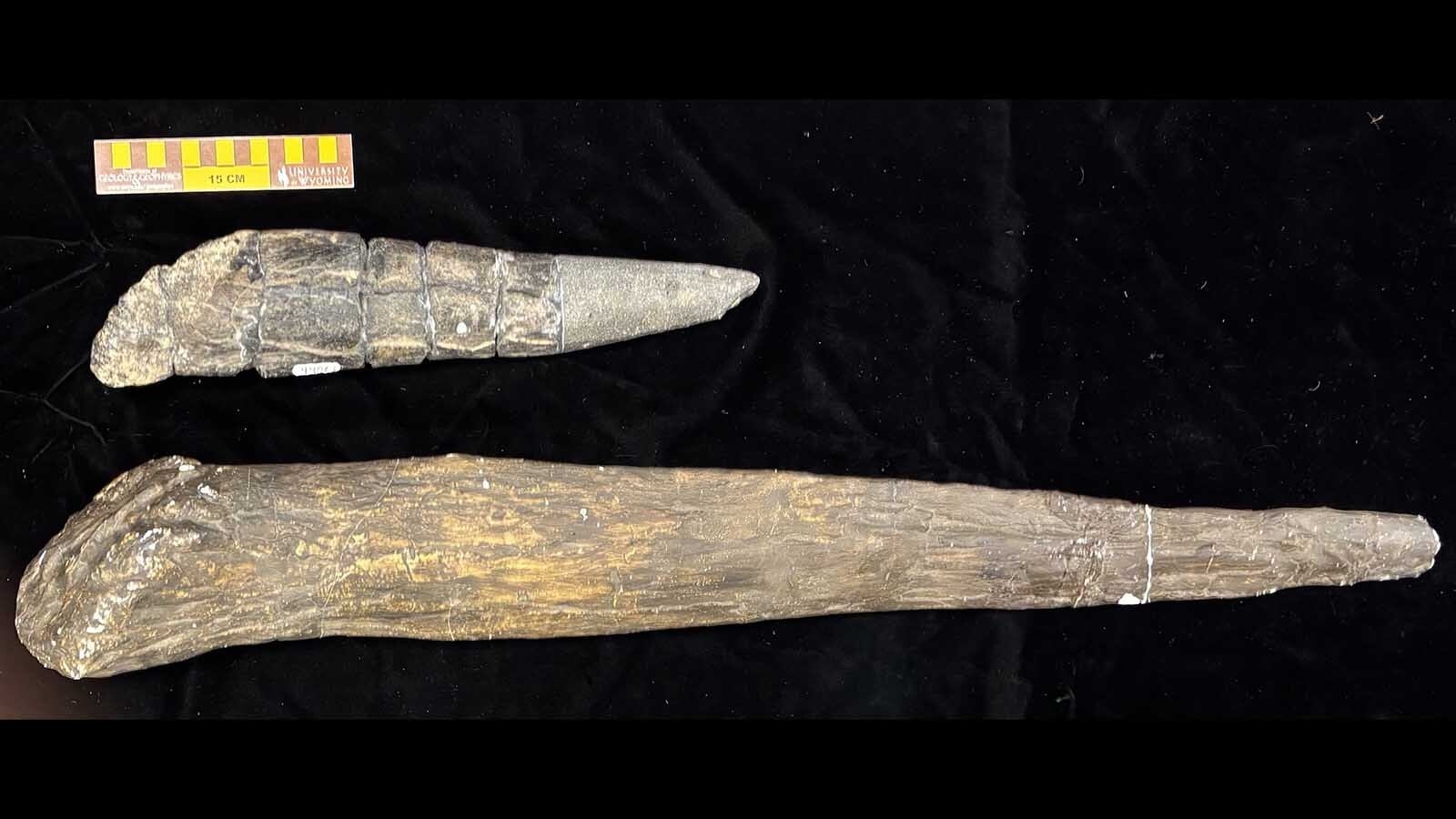
The length of the tail spines, over 3 feet long and much longer than any known Stegosaurus spike, was immediately intriguing. That prompted Reed to make plaster casts of the spines and send them to Charles Gilmore, a paleontologist working at the Smithsonian Institution.
“Gilmore was a UW alum who worked on the big Apatosaurus we have in the UW Geological Museum today,” said Julian Hernandez Diepenbrock, a graduate student at UW’s Department of Geology and Geophysics. “Funnily enough, there were a lot of UW people involved with the Alcovasaurus specimen.”
Gilmore included “Reed’s Stegosaurus” in a comprehensive study of Stegosaurus that he published in 1914. His analysis was that the specimen belonged to a new species of Stegosaurus, rather than an altogether new type of dinosaur.
The new dinosaur was named Stegosaurus longispinus, “The long-spined roof lizard.” After the publication, a portion of its specimen was put on display in the UW Geological Museum.
Reed and Gilmore took several photographs of the fossils from excavation to exhibition. And it’s a good thing they did, because they would be the only evidence that those fossils ever existed.
Tragic Accident
“Stegosaurus longispinus” was displayed with several other significant specimens in the museum for at least 10 years.
The other displays included fossils of dinosaurs, mammals, and marine reptiles collected by Reed and Wilbur C. Knight, UW’s founding professor of geology.
“It was a pretty nice natural history museum,” Breithaupt said. “At that point in time, the UW museum there had the second largest collection of American Jurassic fossils anywhere in the world. It was a huge collection.”
Then, disaster struck.
Sometime in the late 1920s, an overhead water pipe in the museum burst open. Several fossils, including UW-20503, were doused with moisture that seeped into them, reducing them to rubble.
Water was essential for preserving dinosaur bones millions of years ago, but even a small amount can utterly destroy their fossils today.
“The pipe flooded the exhibit hall with water and steam, and it appears to have pretty much decimated the exhibits,” Breithaupt said.
Nearly every bone of UW- 20503 was destroyed by the burst pipe.
Breithaupt spent years researching the history of the UW Geological Museum, and he still hasn’t found the exact date of the flood, nor a complete accounting of what was lost.
“A lot of material is gone, and there was probably a lot of material that was in need of the scientific description that never got a chance to be described,” he said.
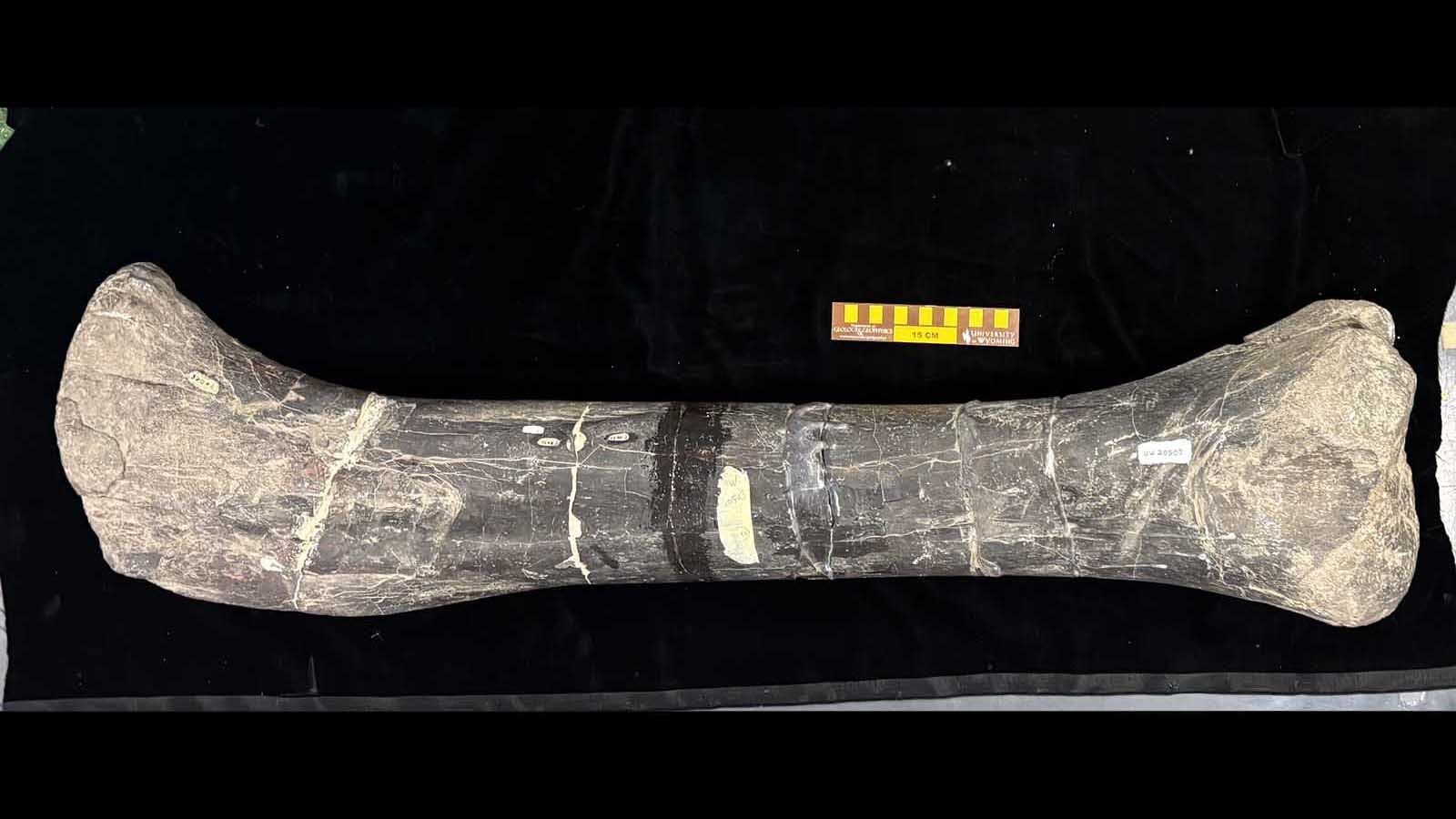
The biggest loss was UW-20503, as nearly the entire skeleton was destroyed. The only fossil that survived intact was the femur.
“It was pretty tragic,” Diepenbrock said. “The femur and two casts of the tail spines are all we have in the collections today.”
Variations On A Theme
As the years progressed, paleontologists kept revisiting UW to study what remained of UW- 20503.
There wasn’t much to work with, but the dinosaur was unique enough to be included in many studies about Stegosaurus, the Morrison Formation, and the world of the Late Jurassic Period.
In the century-plus since its discovery, UW-20503 has been identified as many different dinosaurs. Each paleontologist who examined the specimen reached different conclusion.
“It stayed Stegosaurus for a long time,” Diepenbrock said. “Then, in the 1990s, people realized it was a very taxonomically interesting specimen.”
In 1993, amateur paleontologist Roman Ulansky determined that the specimen was unique enough to be a distinct genus. He attempted to call it "Natronasaurus,” but since his work was self-published, the name never stuck.
“There was another paper that referred it to Kentrosaurus, a stegosaur from Africa, although that was, to my understanding, a little bit tentative,” Diepenbrock said.
In 2016, paleontologists Kenneth Carpenter and Peter Malcolm Galton published their own paper recognizing UW- 20503 as a distinct genus.
This is the most comprehensive study of the UW- 20503, according to Breithaupt, because every piece of evidence was used.
Carpenter and Galton examined the fossil femur, the plaster tail spikes, and every photo taken by Reed, Gilmore, and others to fully assess the specimen.
“They ascertained everything they could from original descriptions, illustrations, and field photos,” he said. “That’s how they decided it had enough differences to be a separate genus from Stegosaurus.”
The paleontologists named it Alcovasaurus longispinus in reference to its discovery near Alcova.
Then, in 2019, a team of Portuguese paleontologists determined that Alcovasaurus was extremely similar to Miragaia, a stegosaur species discovered in the Late Jurassic Lourinhã Formation in western Portugal.
They believed the two dinosaurs were one in the same, just from different sides of the Atlantic Ocean.
Thus, Alcovasaurus longispinus became Miragaia longispinus.
This isn’t uncommon in vertebrate paleontology. Taxonomy, the study of determining and categorizing species, is an ever-changing field that can be hard enough with living animals, let alone long-extinct dinosaurs.
Back Again (For Now)
In 2025, a European team of paleontologists published a thorough review of the taxonomic distinctions of European stegosaurs.
Not only did the study eliminate Miragaia as a distinct dinosaur, but it also resurrected its North American counterpart.
“Alcovasaurus longispinus and Kentrosaurus aethiopicus are recovered as dacentrurines,” the paper reads.
That means, among other things, that Alcovasaurus is a distinct, uniquely Wyoming dinosaur once again.
For dinosaur geeks, dacentrurines are a subgroup within the Stegosauria clade. Their defining anatomical characteristics are longer spines and smaller plates than those of the iconic Stegosaurus, and they were more widespread in Europe and Africa.
This is all subject to change, however. Another team of paleontologists could look at the same fossil and reach an entirely different conclusion.
“It’s been a very roundabout journey and, honestly, a lot more eventful than most of the other dinosaur specimens go on, both taxonomically and historically,” Diepenbrock said.
In Life
While Alcovasaurus has been renamed and redescribed several times, the lack of fossils makes it difficult to determine much about its life in the Late Jurassic.
One thing we do know, according to Diepenbrock, is that Alcovasaurus lived alongside “the classic Morrison suite” of dinosaurs like Stegosaurus, Allosaurus, Diplodocus, and Camarasaurus.
“We know that the Morrison Formation in the Alcova area is stratigraphically high, and that generally correlates with it being stratigraphically high with other Morrison localities,” he said.
“Stratigraphically high” means the fossils were found in the youngest deposits in the Morrison Formation. That means Alcovasaurus lived at the very end of the Late Jurassic Period, right before the world transitioned into the Cretaceous Period.
Stegosaurs and many types of Jurassic dinosaurs didn’t survive the transition. Given the spot of its discovery, Diepenbrock believes Alcovasaurus would have co-existed with its spike-tailed cousin at the tail end of the Jurassic.
“It’s pretty darn likely that it coexisted with Stegosaurus,” he said.
Rediscovering Reed’s Stegosaurus
More questions about the life and times of Alcovasaurus could be answered by examining the quarry where Reed and Dart found the original specimen.
They might even find additional fossils they missed, which early paleontologists were known to do.
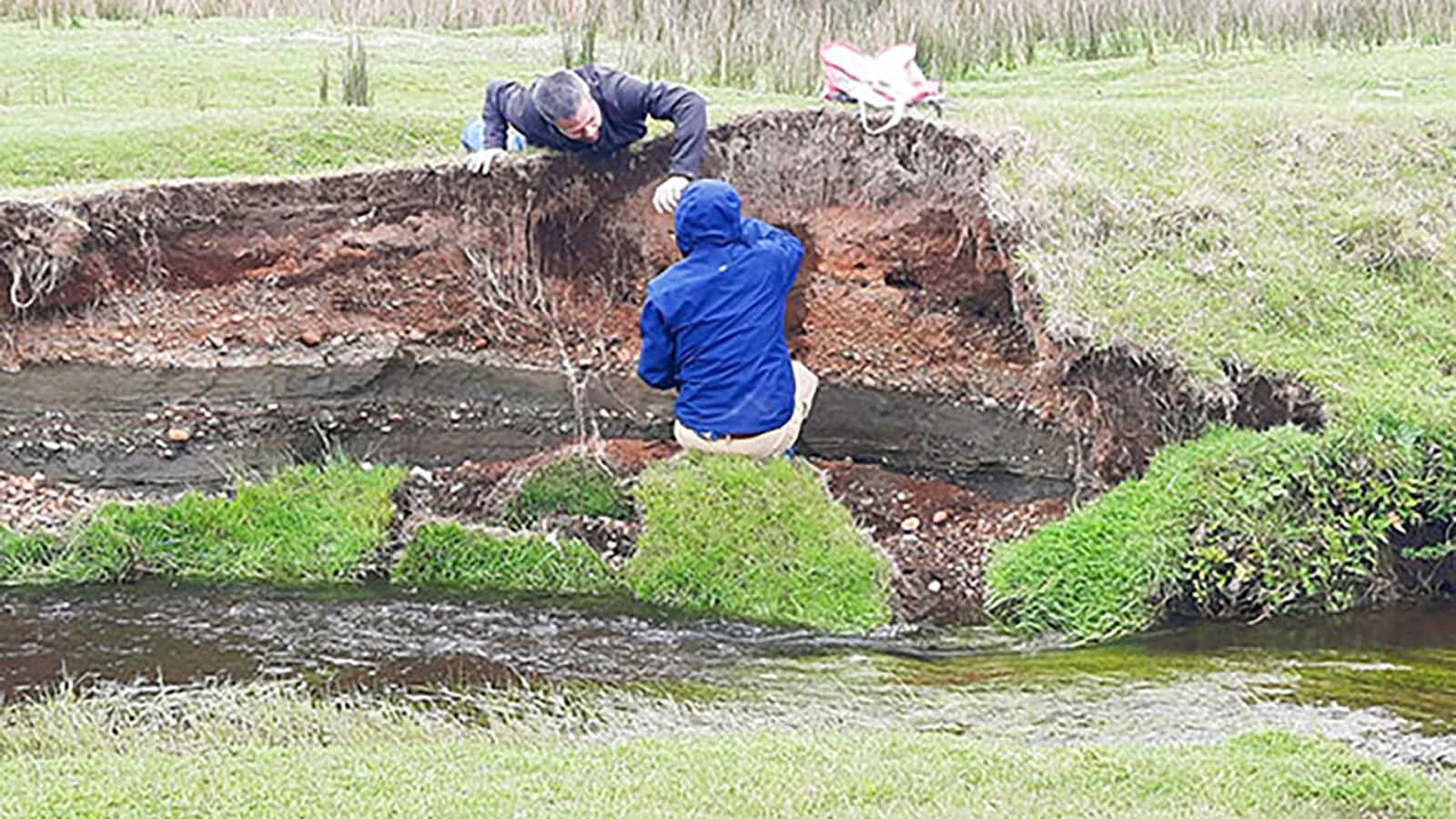
Unfortunately, nobody knows where that quarry is. The location was never well-marked and there’s a lot of ground to cover in the area.
Breithaupt said rediscovering historic paleontology quarries in Wyoming is “one of his grails.”
Using photographs, field notes, and other historical records, he attempts to find the spots where some of the most important dinosaur discoveries in history were made more than a century ago.
“I have found a number of historic sites from the 1800s in the Como Bluff area, and there are sites from the late 1800s and early 1900s I want to find in the Lance Formation,” he said. “One of my projects is to find these old quarries and get them on the map.”
After amassing data over several years, Breithaupt believes he’s found a trail that will lead him to Reed’s Stegosaurus quarry. The hard part is finding time to get up to Alcova.
When the quarry is rediscovered, could more fossils of Alcovasaurus be found as well?
“I don't necessarily think we're going to find too much more of it, but one never knows,” Breithaupt said. “It's more a matter of getting that location so we can say this is where this unique specimen came from.”
One Of A Kind
The Morrison Formation is one of the most excavated and researched fossil formations in the world.
Wyoming is particularly prolific, as its Late Jurassic fossils have filled the exhibit halls and collections of dozens of museums worldwide.
Despite this frenzy of paleontological discovery, nobody’s found another Alcovasaurus. In the nearly 120 years since Reed found the partial skeleton, only one other fossil that might have belonged to Alcovasaurus had been identified.
“An institution in Utah collected fragments of a huge spine near Como Bluff in the 1990s,” Breithaupt said.
Breithaupt, Diepenbrock, and many other paleontologists would be eager to examine that spine. If it ever turns up again, they’ll be sure to do so.
“Unfortunately, that one is also lost,” he said. “We don't know where that one is, and there was no account of where it was found.”
Why is Alcovasaurus so elusive? According to Diepenbrock, there probably isn’t any one reason why it’s been so hard to find.
“Maybe this wasn't a common animal,” he said. “Maybe it preferred dense, forested habitats that don't fossilize as well as floodplains or fluvial areas.
"It could be just dumb luck that we haven't found others, or that we're not exactly sure what we should be looking for because we don’t know a lot about where the only definitive specimen was found.”
It’s certainly not for lack of trying.
Every inch of exposed Morrison Formation is being scoured for dinosaurs, so Breithaupt believes it’s possible someone might have already found an Alcovasaurus fossil without recognizing it.
“It is very possible that other parts have been found but have been identified as one of the other stegosaurs that were more common at the time,” he said.
Many paleontologists say it’s a miracle that anything fossilizes, given the specific conditions required to preserve an animal’s body for millions of years.
Still, Breithaupt believes it’s only a matter of time before another lucky paleontologist finds another Alcovasaurus — and this one won’t be lost to a water pipe.
“It's not too surprising we haven't found another one, but maybe we haven't looked in the right places,” he said. “Wyoming is a hotbed for dinosaur fossils. It has been since the 1800s, and nobody will say we’ve found all the fossils. There are lots of places to look, and new discoveries all the time.”
Andrew Rossi can be reached at arossi@cowboystatedaily.com.