Wyoming's plumber shortage is about to get real. For about the last 15 years, the Cowboy State has been short on plumbers and pipefitters, creating delays for residential homeowners and commercial businesses.
Now a huge wave of mega projects is about to sweep into the state, demanding thousands more plumbers and pipefitters.
Take Cheyenne, for example.
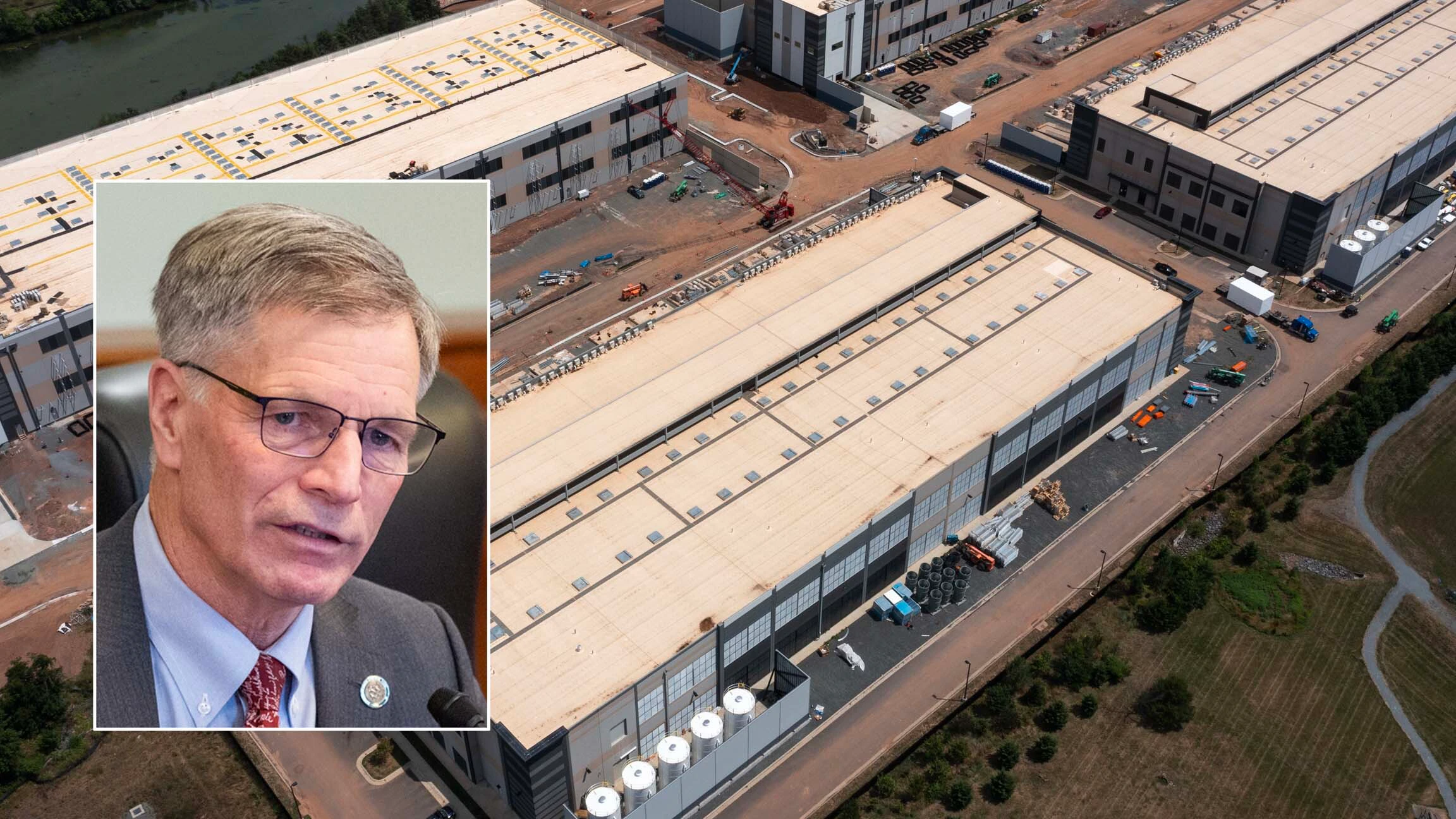
If every single high school graduate in Laramie County now all suddenly decided to become plumbers, it would still take a dozen years just to meet the demand created by recently announced data centers.
The statistic comes from Mechanical Systems Incorporated’s VP and COO Larry Fodor.
MSI is a local utility contractor headquartered in Cheyenne and Fodor took a look at graduation rates and data center projects to get a handle on the disparity between jobs and labor force.
“The demand just does not match the supply,” he told Cowboy State Daily. “And that need is not going to drop off any time soon. The large commercial jobs that are coming in is just going to drive that need even higher. But we still have our local folks, our residential units, that we still need to take care of. So yeah, hundreds and hundreds (of jobs) is no fibbing.”
More Than Just Data Centers
Fodor’s back-of-the-envelope math didn’t account for any of the demand coming from other things besides data centers in Cheyenne. The nuclear plant in Kemmerer, for example, the data centers announced in Evanston and Casper, the missile upgrade for the F.E. Warren Air Force Base.
These projects alone mean a couple thousand additional plumbers are needed, according to UA Local 192 Training Director Daniel Meyer.
“We’re building the Meta data center right now, and we’re working with the contractors that work with Microsoft, building on their different campuses,” he told Cowboy State Daily. “We’ve held our water right now, but all these other projects are coming in one to four months. They’re all ramping up.”
That’s going to mean a huge spike in jobs for plumbers and pipefitters.
“So, like right now, the next data center that’s coming up is looking at about 1,000 plumbers (and) pipefitters, and then the power plant that goes with it is going to need 200 to 300. The Kemmerer power plant that’s starting in the next few months is going to need 300 to 400 journeymen, mainly pipefitters and welders, but some plumbers also, and that’s a four- to five-year project.”
That total is more than 1,700 jobs, Meyer said, and doesn’t include the plumber and pipefitter jobs that the Sentinel missile upgrade at F.E. Warren Air Force Base is also going to need.
These are also just jobs that UA Local 192 has been asked to fill.
There are many projects that UA Local 192 isn’t involved in across Wyoming, and there’s also normal, everyday demand for residential plumbers who are either building systems for new houses, or fixing systems in old houses.
Salaries Are Already Going Sky High
For recent high school graduate Rhett Carson, of Utah, the situation looks less like a problem and more like a golden ticket.
Carson landed a job as a plumber right out of high school, after his brother happened to marry his boss’ daughter. He had been a little on the fence about whether he would become an electrician or a plumber out of high school.
“So, I reached out to him and was like, ‘Hey, I’ve been interested in becoming a plumber, so I was just wondering how I could get a job.’”
Carson didn’t need to say another word. His job interview was over, just like that. His boss needed more plumbers yesterday, so he signed Carson up on the spot.
“Easy-peasy,” he said, chuckling a little bit.
Carson has only been on the job for one and a half years now and is still working on his certifications. But he’s getting to do this training through an earn-while-you-learn program. Thanks to that, he'll finish his training with zero debt.
Non-union jobs are paying around $110,000 a year, he told Cowboy State Daily, while union positions are closer to $150,000.
“My job I have right now is not union,” he said. “So, when I journey out and get my card, I’ll probably try to make that more money.”
Earning While You Learn
Wyoming’s plumber pipeline also includes many earn-while-you-learn opportunities, just like the one Carson is taking advantage of in Utah.
UA Local 192, for example, offers its new hires classes three nights a week at $200 per semester. During the daytime, the students apply what they’re learning on the job, helping them earn their certification hours under supervision of other journeymen plumbers.
Their salary starts at $24.71 per hour for the first six months of the program, after which raises start to kick in as these new plumbers advance their skills.
“There are other apprenticeship programs out there,” Meyer said. “And they’re normally specific to the employer, whether they’re registered with the Department of Labor or with us.”
LCCC is another entity offering apprenticeship-style training programs for plumbers.
“For a short period of time, we had a credit program for plumbing, but we just couldn’t get any traction with it,” Laramie County Community College Director of Career and Technical Workforce David Curry told Cowboy State Daily. “So we started to really focus on our apprenticeship training.”
LCCC offers two different options, which are both trending at some of the highest enrollment numbers Curry has ever seen. Part of that is an aggressive push to get out and market the program to future students.
“We’re trying to get out, start at a younger age, talking to people about the trades,” Curry said. “Laramie County School District has been incredible, letting us get in and work with them and talk with their students, so I think that’s helping us with that uptick.”
Future Heartburn
The sky-high salaries, though, are causing a bit of heartburn for local contractors, like Fodor, who sees a boom-bust cycle that he believes will hurt communities in the long run.
“The big struggle is, these aren’t local contractors,” he said. “So this big, big demand for additional plumbers and things like that are coming from out-of-state contractors and potentially, artificially inflated wages, that is trying to draw from our local workforce and our local businesses to feed these large-scale out-of-town projects.”
Eventually, though, all that demand from data centers will cool, and that has the potential to leave local companies at a competitive disadvantage over the long term.
“Once we pay those wages to match these jobs that have come to town and will leave town, those wages are forever, right?" Fodor said. “And so for local companies, then you’re in a competitive disadvantage when you’re bidding work … because you have to bid the wages that you had to increase, to compete with those projects that will come and go.”
Fodor also believes that data centers might suck up local workers, who want to retain their high-paying jobs, taking them away from Wyoming.
“That’s a tough thing for any community,” he said.
Silver Tsunami Still To Come
One trend, though, that may keep demand higher for longer, is the so-called retirement cliff, which refers to a massive wave of expected Baby Boomer retirements.
Boomers started turning 65 in 2001, but the trend intensified significantly during the COVID-19 pandemic. An estimated 3.2 million Baby Boomers left the workforce then, according to data compiled by the Federal Reserve Bank of St. Louis.
That’s not the peak of the “silver tsunami,” however. That’s still to come, between 2024 and 2027, when more than 4.1 million Americans will turn 65.
While some of those individuals may well decide to continue working until age 70, a significant portion will undoubtedly decide it's their time to travel and enjoy life while still relatively healthy.
That trend is matched by another that will exacerbate workforce shortages, namely, decades of lower birth rates.
High school enrollments for the years between 2034 and 2038 will be the first wave of graduates from those decreased birth rate years, Curry said.
“So your pool, your available pool of new people is really going to start dropping off as well,” he said. “We’re talking here about just one trade, but this is across all trades.”
Not Your Grandpa’s Plumber Anymore
Wyoming isn’t alone in the trends it’s facing. These are national trends that Wyoming shares with states across America, which means competition in the future is likely to remain fierce.
That has companies looking at the negative images trade professions like plumbers have had in the past and updating them for a new generation.
“We’re exploring a lot of job shadow opportunities and things like that to really show this next generation that it’s no longer dark, dirty and dangerous,” Fodor said. “Our guys are wearing polo shirts to work, with an iPad strapped to their chest, and that’s where all their plans are.”
Devices like iPads have replaced the bulky, old-fashioned, hardcopy blueprints of yesterday.
“All the plans are on your iPad,” Fodor said. “And so, you just pull that off your chest, scroll through what you need, and go to work. All the details are on your iPad. All of your product submittals for all the different pieces of equipment, for example. You could pull up all of those right on your iPad, instead of rifling through six different binders that have hard copies of cut sheets.”
Many projects, too, are being designed in advance of construction with 3D models, which ensures everything fits before anyone even arrives at the job site.
“You can fly through those models on your iPad, right on your chest, and you know exactly where you need to run, exact dimensions. All of the guesswork is being taken out of the construction industry.”
That’s helping to speed up timelines, Fodor added, so that time on site is more focused on actual construction, instead of tedious, time-consuming setup.
“When you had to lay out your hangers and your pipe runs, you would pull a tape measure and it would take multiple guys several days to lay out an area to be able to put in hangars for your pipe runs based on the 3D model,” Fodor said. “Now we can take points out of that 3D model, and we put them into what we call the robot, and it sits on a tripod, and it shoots lasers every place in that building where you need to put a hangar.”
That’s helping take out errors, while speeding up the process, so the workers the industry does have can complete projects more swiftly.
Renée Jean can be reached at renee@cowboystatedaily.com.