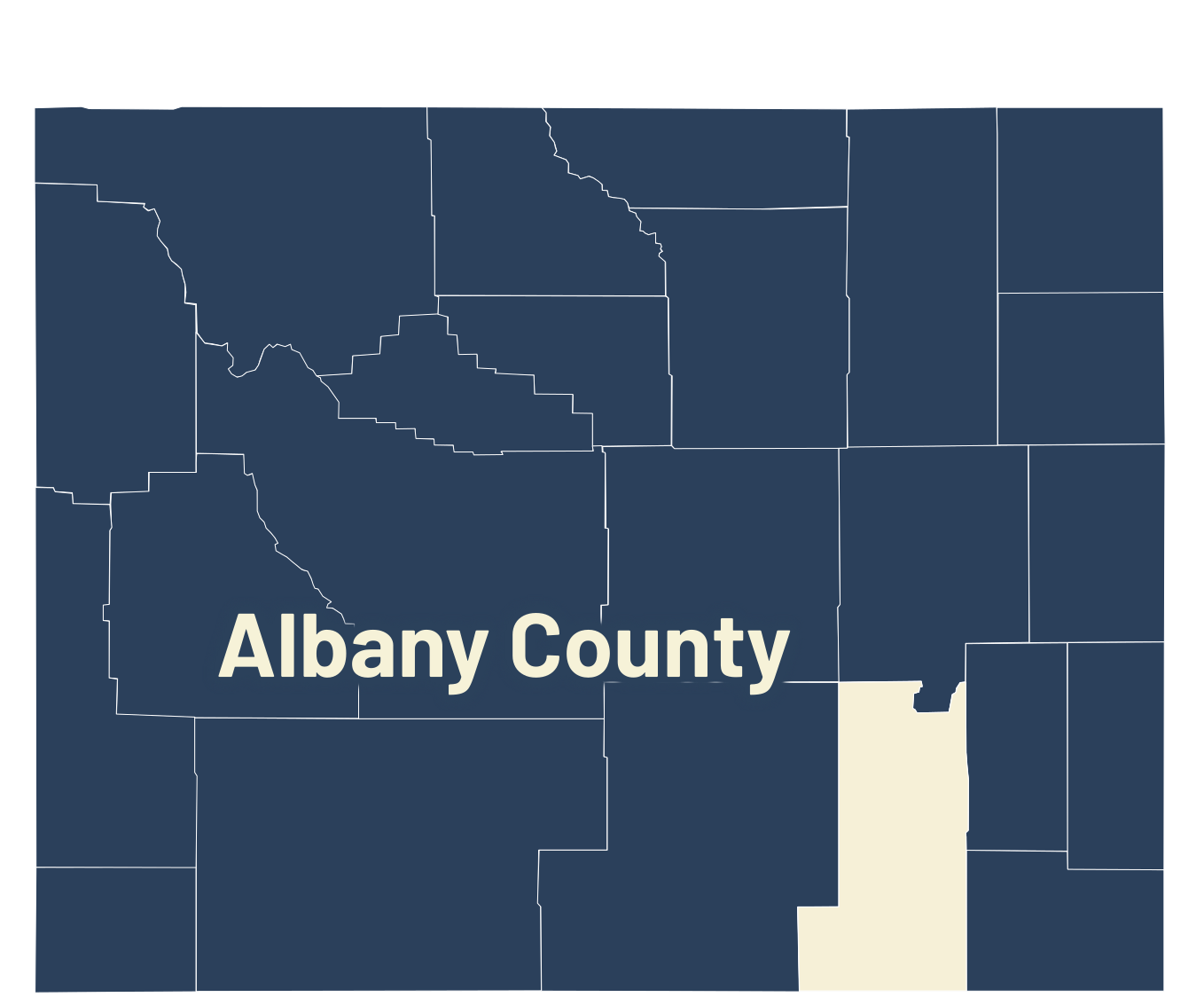
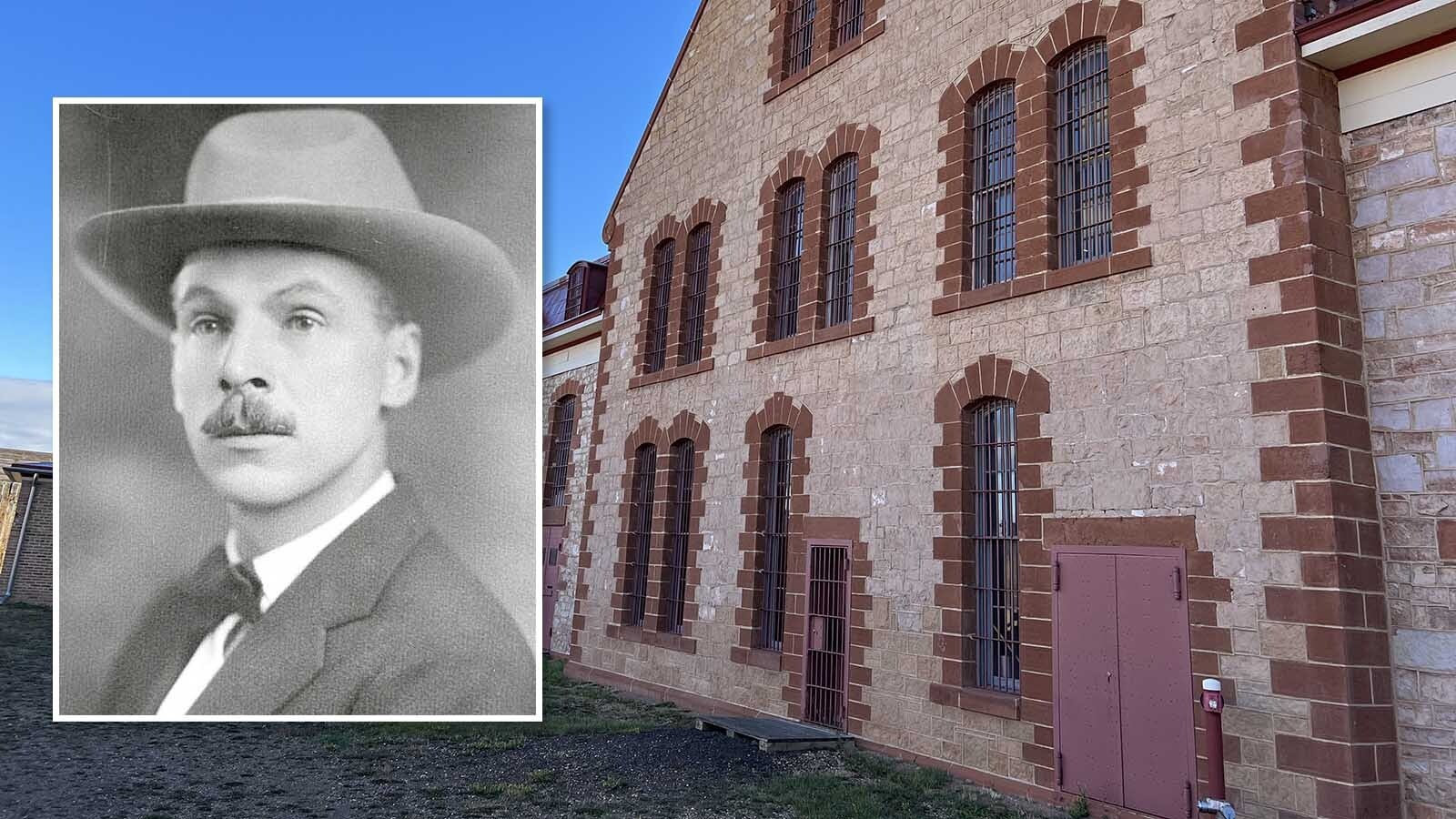
Charles Cosby approached a man in a ravine 3 miles east of Laramie on Thursday, April 21, 1927.
He was four months into his new job as Albany County sheriff.
A University of Wyoming student named David R. Scott had told Cosby about a “man in the hills with two automobiles.”
The man, after a friendly conversation with Scott, stuck something in the middle of his back, told him to throw up his hands and get out.
The student did not see a pistol, but he thought it felt like one, he told Cosby.
As a seasoned newspaper reporter-turned-cop, Cosby knew a good tip when he heard one.
But now he wore a badge as the sheriff of Albany County and suspected something underhanded was happening on those spring sands outside Laramie.
He and Deputy Robert Welliever found car tracks that led them to a man, who later identified himself as Frank Bray, standing in a gulch with a Studebaker partly dismantled, another nearby, and an engine block sitting on the ground 30 yards away.
Bray told the sheriff a story that he could not find any room in the city’s garages to work on his cars.
Cosby told the man he was under arrest, suspecting the cars were stolen.
The man protested that the cars were not stolen.
Cosby sent Welliever to investigate the engine and get the number off it.
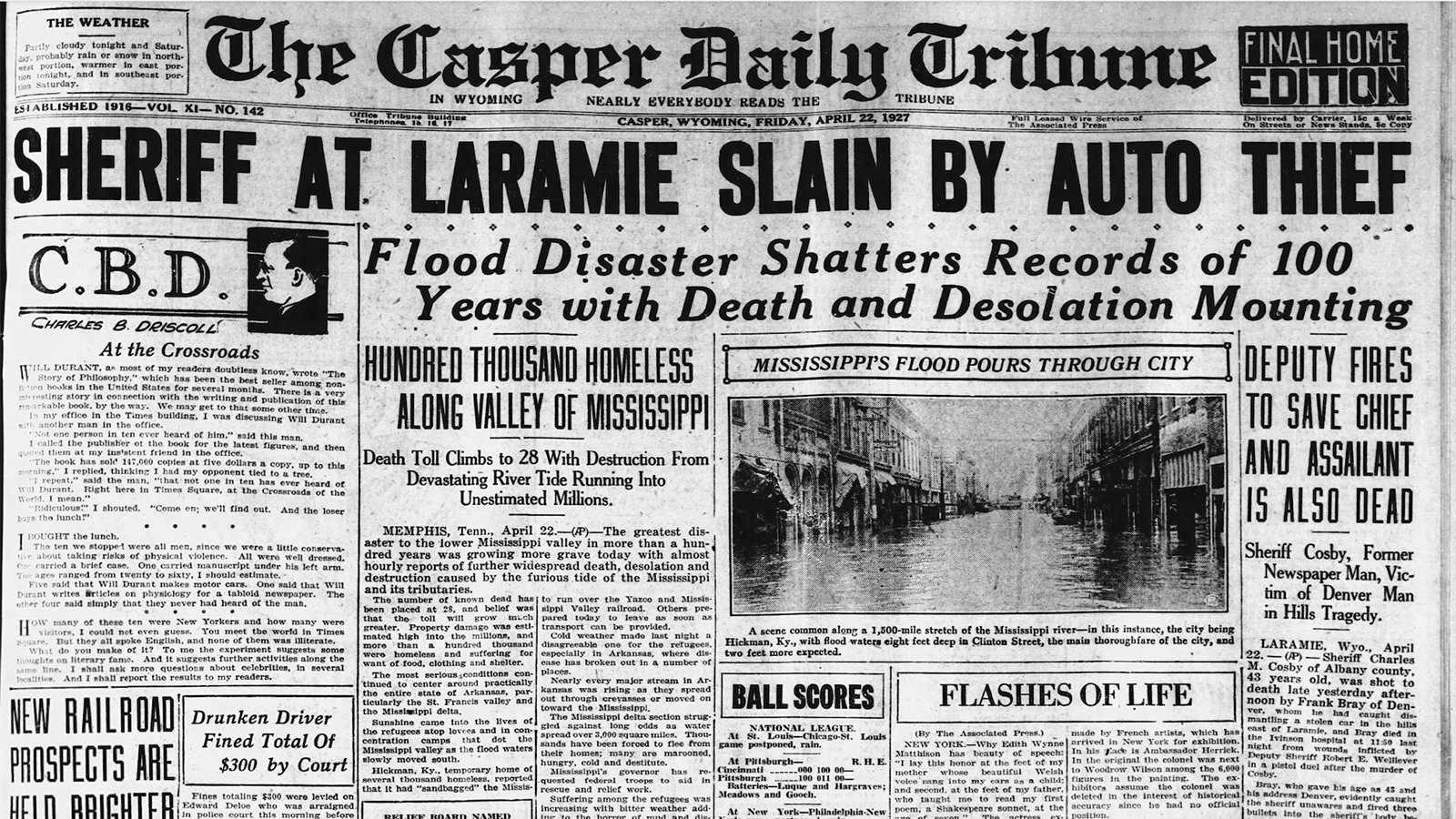
“As he reached the other car, the deputy heard a shot and turning away, he saw Cosby and the thief scuffling,” the Wyoming Eagle reported on April 22, 1927. “Noticing that (the suspect) had his revolver, a .38 Smith and Wesson, against the sheriff’s body, Welliever hurried to the scene.
"But before he reached them, Bray twice again shot the sheriff, the latter falling to the ground mortally wounded.”
The deputy would later report that Bray then fired at him, and he fired his weapon, hitting Bray in the knee and abdomen twice.
The deputy then turned to check on his sheriff who lay dying.
“Yes, he got me,” Cosby reportedly said.
Then he died.
Welliever brought the sheriff’s body and Bray into town. Bray, who reportedly told Welliever and others that the cars were bought legally, was operated on but died at 11:30 p.m.
The Eagle reported that if he hadn’t died, there would have been a lynching party because Charles Cosby was known and respected by many.
Virginia Born
The 43-year-old sheriff who left his wife, Frances, and two children behind was not your typical Western lawman.
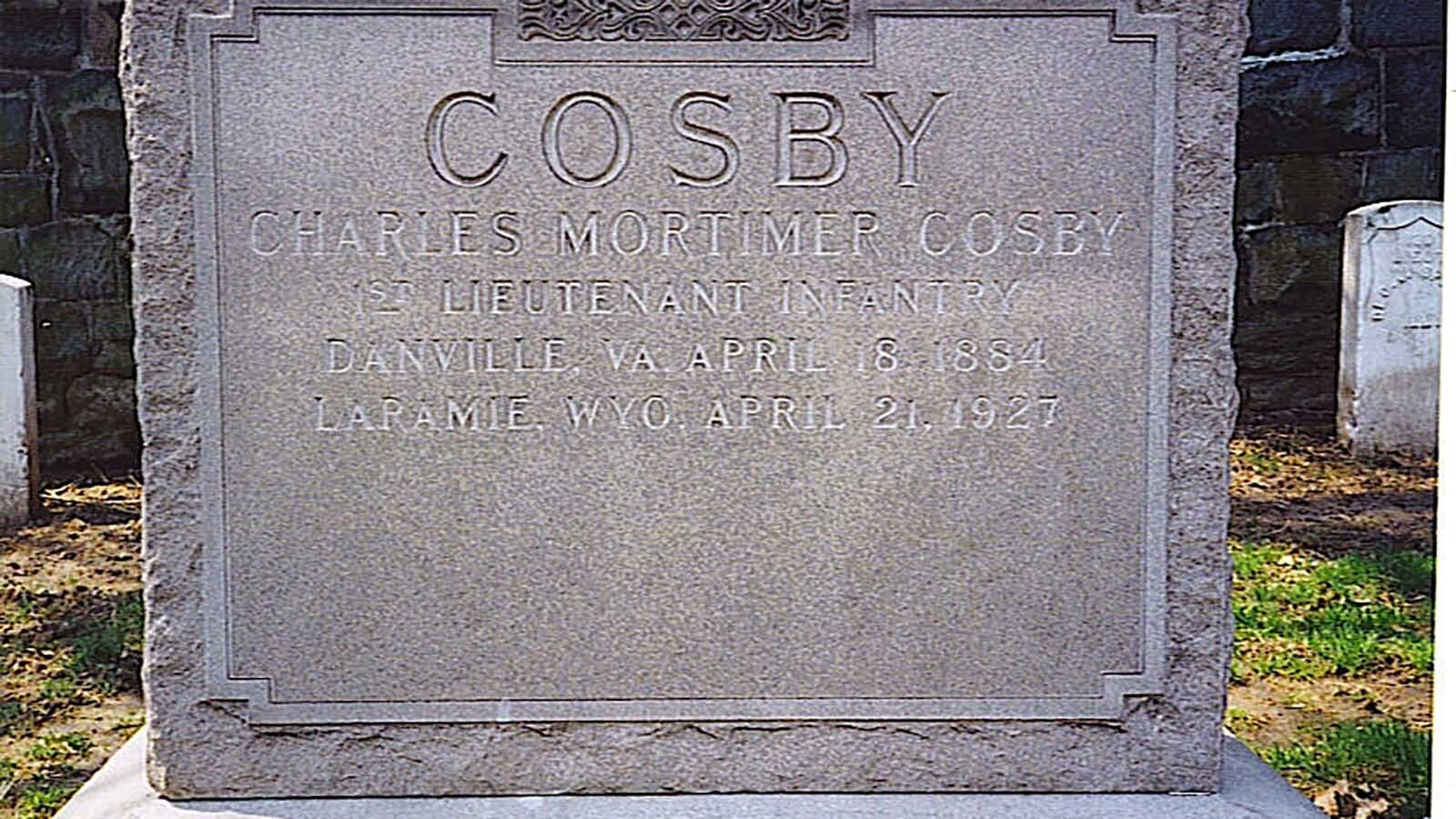
Born on April 18, 1884, in Danville, Virginia, Charles Mortimer Cosby Jr. was the oldest child of Charles Mortimer Cosby, who died on June 24, 1894.
The local paper described his father as a “prominent tobacconist.”
According to an article in the Brooklyn Daily Times in Brooklyn, New York, published after the sheriff’s death, Cosby attended the Danville Military Institute and at 18 enlisted in the U.S. Army, serving in the Philippines during the Spanish American War.
After his Army stint, he moved to Brooklyn with his mother and other family members. There, he joined the staff of the Brooklyn Daily Times and then the New York Sun.
“He became so thoroughly familiar with the life of the then City of Brooklyn that he was soon able to manage the Brooklyn news gathering of the old New York Sun’s local staff,” the Brooklyn Daily Times reported on April 23, 1927.
In 1916, the year of his marriage to Frances, Cosby was among the young men who attended the Plattsburg “Business Man’s Camp” that offered military training.
It was designed to help prepare an officer corps for the nation’s potential entry into World War I. After the camp, he became a lieutenant in the Army Reserve.
When America entered the war, Cosby was assigned to Fort Oglethorpe, Georgia, but then health issues prevented his ability to go overseas.
That’s when he moved to Denver as a way to better his health and worked for The Denver Times.
Cosby also lived in Cheyenne and worked for the Wyoming State Tribune-Leader from 1921-22.
He was characterized as “one of the ablest newspaper men that ever worked in the city and one of the most popular,” in an article in the same newspaper on April 22, 1927.
To D.C. And Back
From 1922-24, he worked in Washington, D.C., on the staff of Congressman Frank Mondell, the U.S. House majority leader.
He returned to the state in 1924 to work for the Laramie Republican-Boomerang.
An article in the University of Wyoming’s Branding Iron student newspaper recounted Cosby’s presentation to the the newspaper staff and journalism students. He told them not to expect to go into journalism and make a lot of money.
The article stated that Cosby had worked 10 years in the Brooklyn office of the New York Sun and served as a feature writer at the Denver News, as well as the author of several articles and short stories.
“Mr. Cosby stressed the 'fact that a newspaper man or woman who is to become anything more than a hack should have more sound common sense, good judgment, and keen discrimination than is found in any other calling,'” the newspaper reported on Feb. 9, 1926. “The ability to recognize a story, to appraise it for what is is worth and to catalogue its values with a sure eye are the essentials for a successful newspaper writer.”
Making An Arrest
In 1926, Cosby ran for Albany County sheriff and, according to the Wyoming Eagle, won by a large margin.
As a sheriff, Cosby proved he had courage and mettle to do the job — even though he only did the job for four months.
The Casper Daily Tribune reported on Jan. 11, 1927, that a H.C. Hughes had barricaded himself in his Rock River house and defied Marshal Scott Hushman, who was trying to arrest him on charges of selling liquor and permitting gambling in his store.
“Sheriff Cosby slipped into the house and arrested Hughes when (Hughes) opened the door to speak to an acquaintance,” the newspaper reported. “Hughes made no further resistance.”
Following Bray’s shooting of the sheriff, a coroner’s jury found that Bray had shot Cosby without provocation and that Welliever shot Bray in the line of duty.
Authorities then investigated the identity of Bray, with some thoughts that he may have been tied to a Littleton, Colorado, bank robbery.
Police in Denver reported that the two vehicles had been bought by a man name Frank Dill in Denver.
One was bought on April 8 for $100 and the second car was purchased on April 11 at another Denver dealership. Again, the purchaser used the name Frank Dill.
Dealers reported that the man acted strangely.
Bray had $594 on him when he died, mostly in $20 bills. The serial numbers were sent to Denver for any match to the Littleton robbery.
Denver police reported he had been registered at a hotel in the city and checked out the day of the robbery. Two bandits made off with $50,000 and escaped in a stolen automobile driven by a third man, the Cheyenne Leader reported on April 24.
Meanwhile, memorial services were held in Laramie for the sheriff at the Episcopal church on April 24 with full military honors that included members of the American Legion, Spanish War Veterans, Wyoming National Guard, and ROTC.
After the service, his body was put on a train to be sent to Brooklyn, New York, for burial.
The Cheyenne Leader reported the funeral in Laramie was expected to be the largest ever held there.
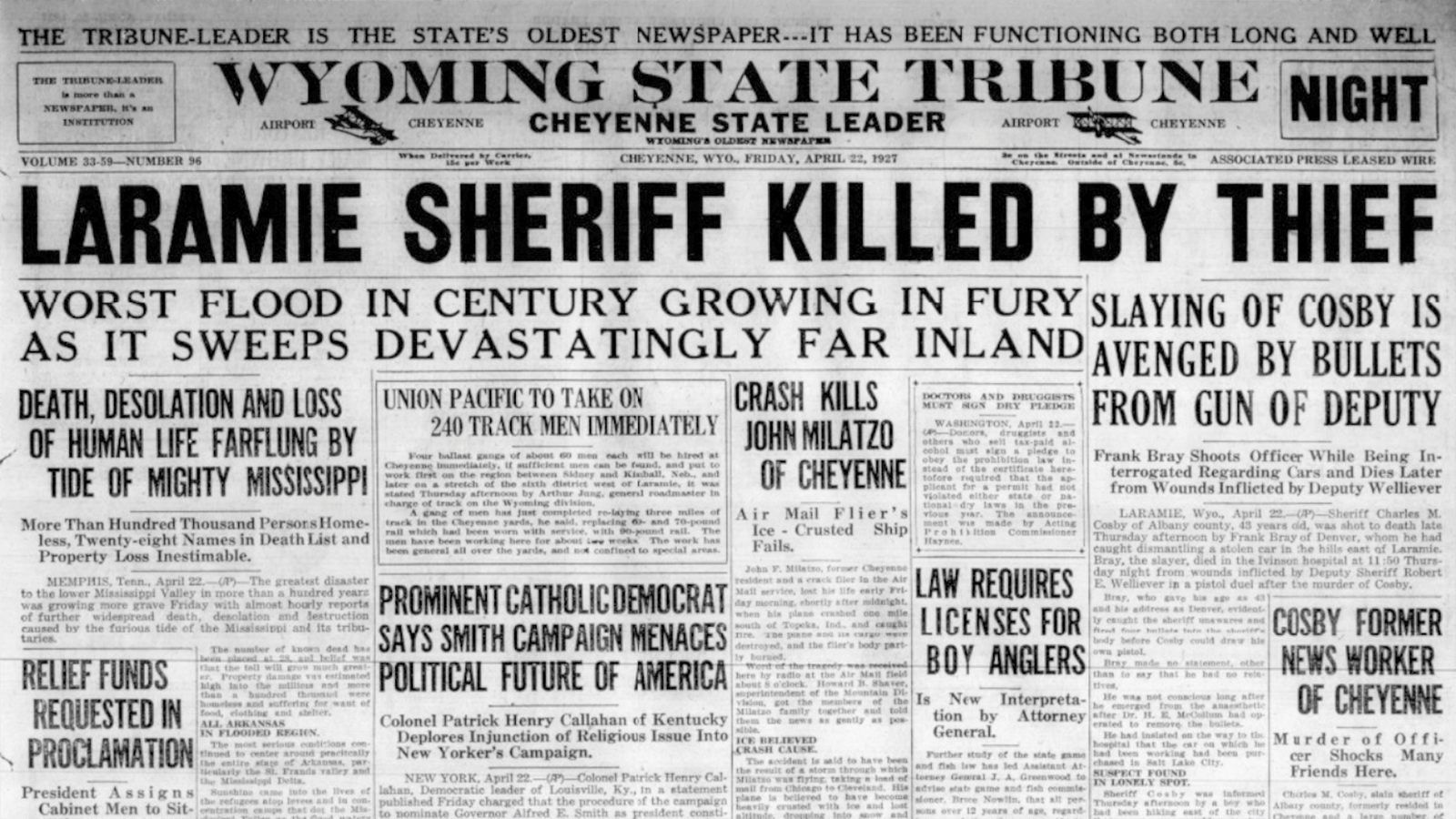
The Wyoming State Tribune reported on Charles Cosby’s death as well as his reputation and friendships as a newsman in the city. (Courtesy Wyomingnewspapers.com) 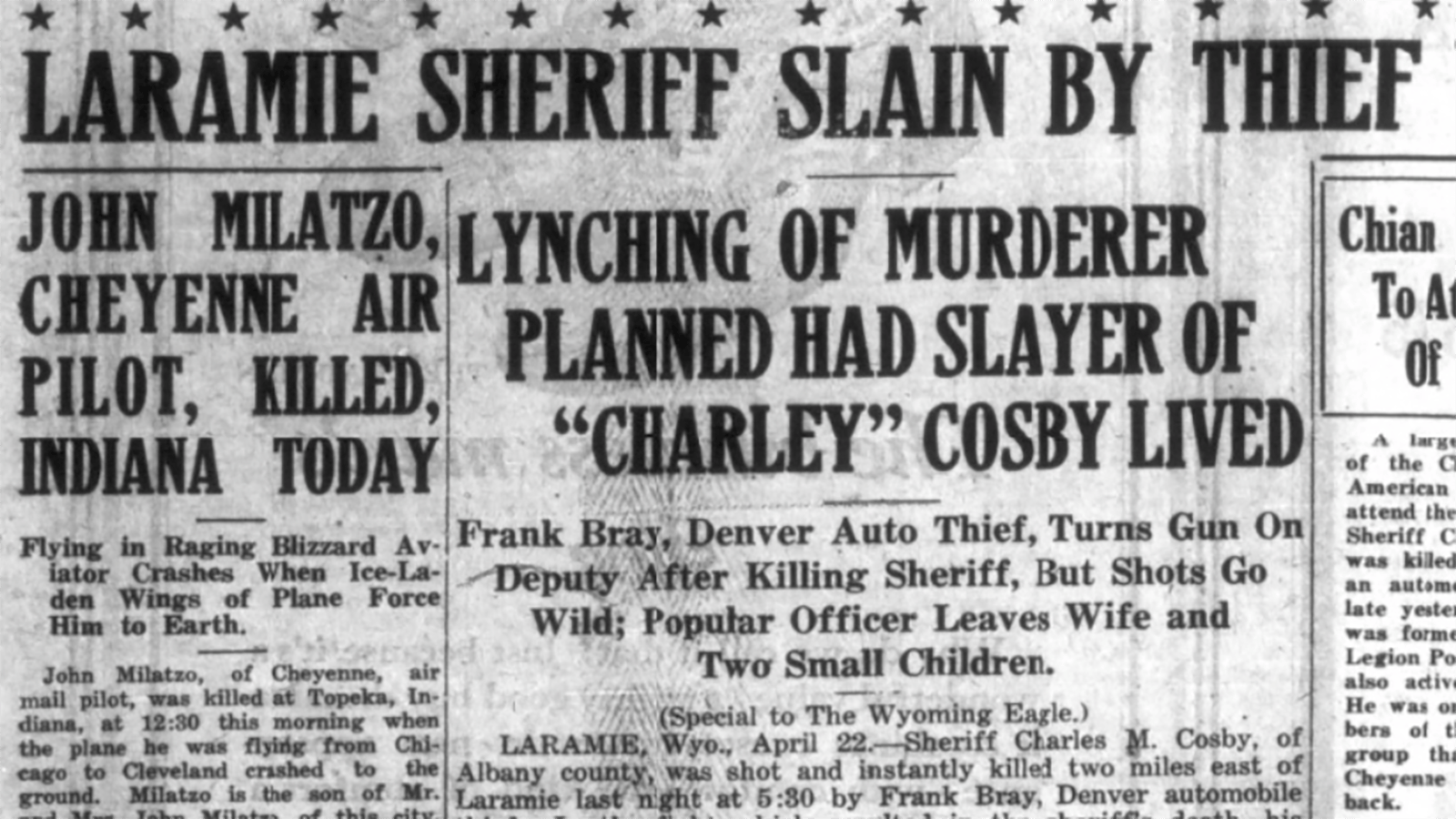
The Wyoming Eagle reported that if the gunman who killed Charles Cosby had not died, there would have been a lynching party. (Courtesy Wyomingnewspapers.com) 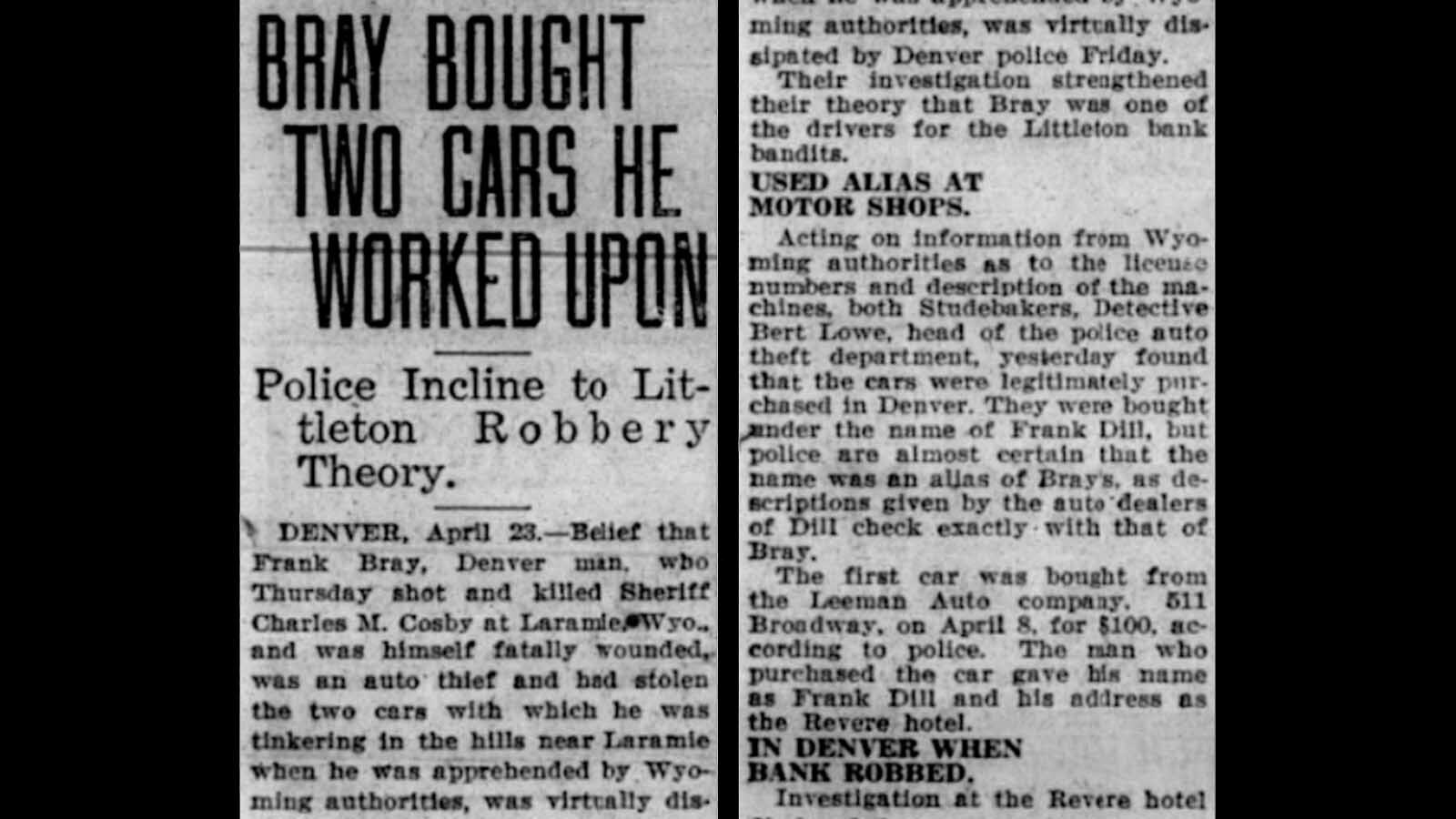
The Wyoming State Tribune reported on April 24, 1927, that the vehicles the gunman had in the ravine outside Laramie were purchases legally. (Courtesy Wyomingnewspapers.com)
Brooklyn Service
Once in Brooklyn, there was another funeral service for the city’s former newspaperman at the Boyerton Chapel.
The body was escorted to the National Cemetery at Cypress Hills for burial by the Kings County American Legion members, The Brooklyn Daily Times reported on April 28, 1927.
Cosby’s wife and children, Katherine and Charles Jr., were all awarded support from a Wyoming peace officer’s fund that supplied Frances Cosby with $2,000 and both children $10 a month until Katherine, then 8, turned 18, and Charles Jr., 2, hit his 16th birthday.
The true identity of the shooter, Frank Bray, became an issue for Sheriff Edward Bailey, who succeeded Cosby.
A man named Dill visited the Denver location of one of the auto companies where Bray bought one Studebaker under the name of Frank Dill and claimed the gunman was his long-lost brother.
He asked the auto company to show him Frank Bray’s signature and claimed it was, without a doubt, “my brother,” according to an article in the Fort Collins Coloradoan on April 25, 1927.
The man, who declined to give his first name or address to the auto company representative, told him he would go to police headquarters.
“However, he did not appear there Saturday night and efforts to locate him were fruitless,” the newspaper reported.
Two days later, the Coloradoan reported that Bray had been positively identified by a foreman at the Union Pacific Railroad in Rock Springs as a mechanic who worked for him in 1925.
The man had used the name “Frank Bragg.”
The Wyoming Eagle reported on April 27 that Bragg had allegedly arrived in Rock Springs from Casper in 1922 and had few friends.
And though a good worker, he was fired due to his “anti-social attitude.”
He reportedly was born in Des Moines, Iowa, in 1885 and after being fired headed to Denver from his Rock Springs job.
Another newspaper report had Bray telling people before he died that he was born in Chicago.
Seeking Husband
A woman by the name of Mrs. Frank Fields of Walsenburg, Colorado, contacted Bailey and was reported to have gone to Laramie to identify Bray as a man she believes was her husband who ran out on her and two children.
The result of that visit is unknown.
Bailey over the next several days also had letters with photos of persons from Colorado, Wyoming, and Michigan who sought to identify Bray, Wyoming newspapers reported.
In the end, the Riverton Review on May 5, 1927, reported that the body of Bray that was buried in the Laramie cemetery was dug up and given to the University of Wyoming “for the purpose of dissection.”
That story was not verified by other reports.
Before he died at Ivinson Memorial Hospital in Laramie, Bray — who allegedly was told by his physicians that he was dying — was asked if there was anything he wanted to say to them.
“Yes, bury me deep,” The Riverton Review reported he responded.
Dale Killingbeck can be reached at dale@cowboystatedaily.com.