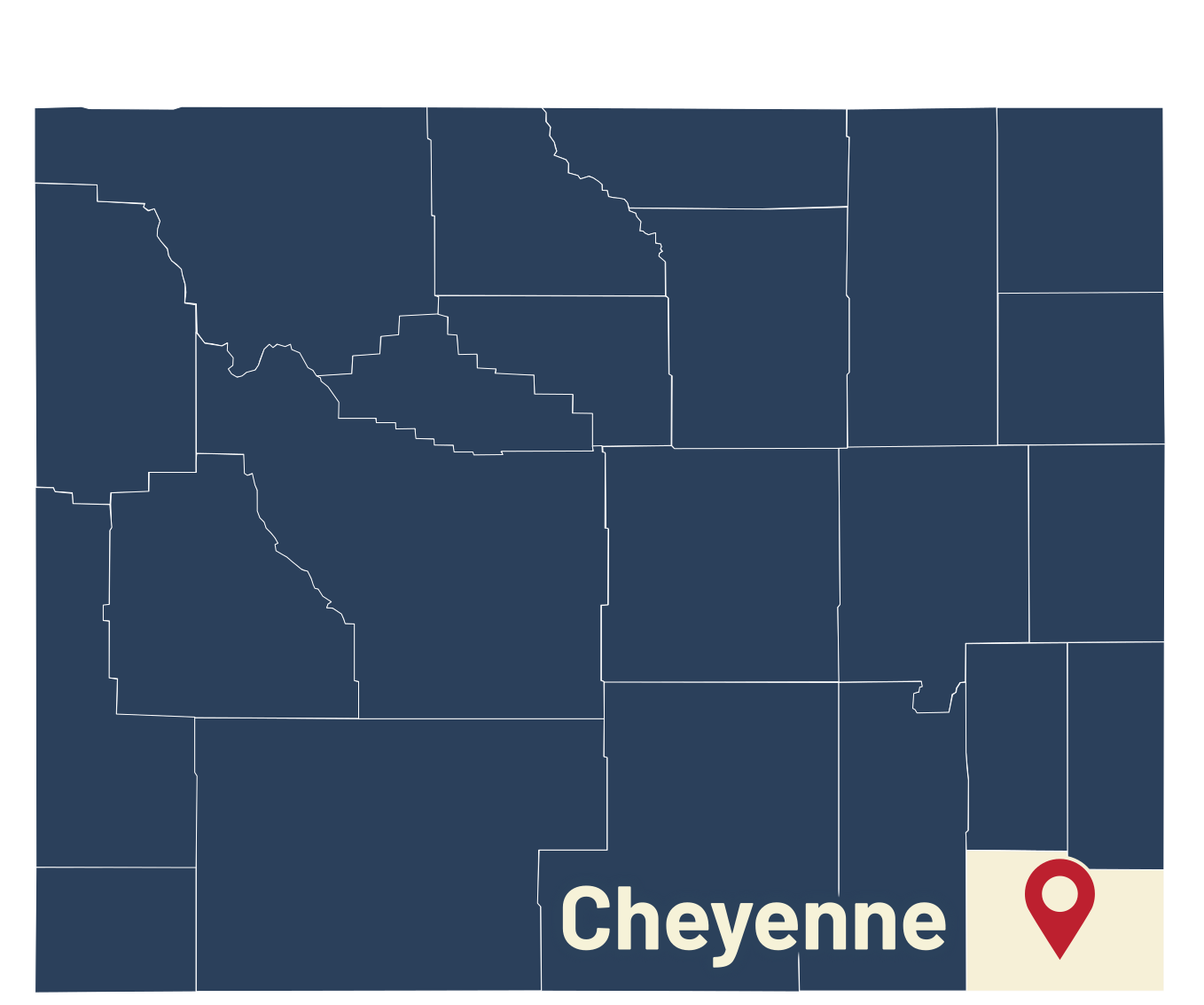
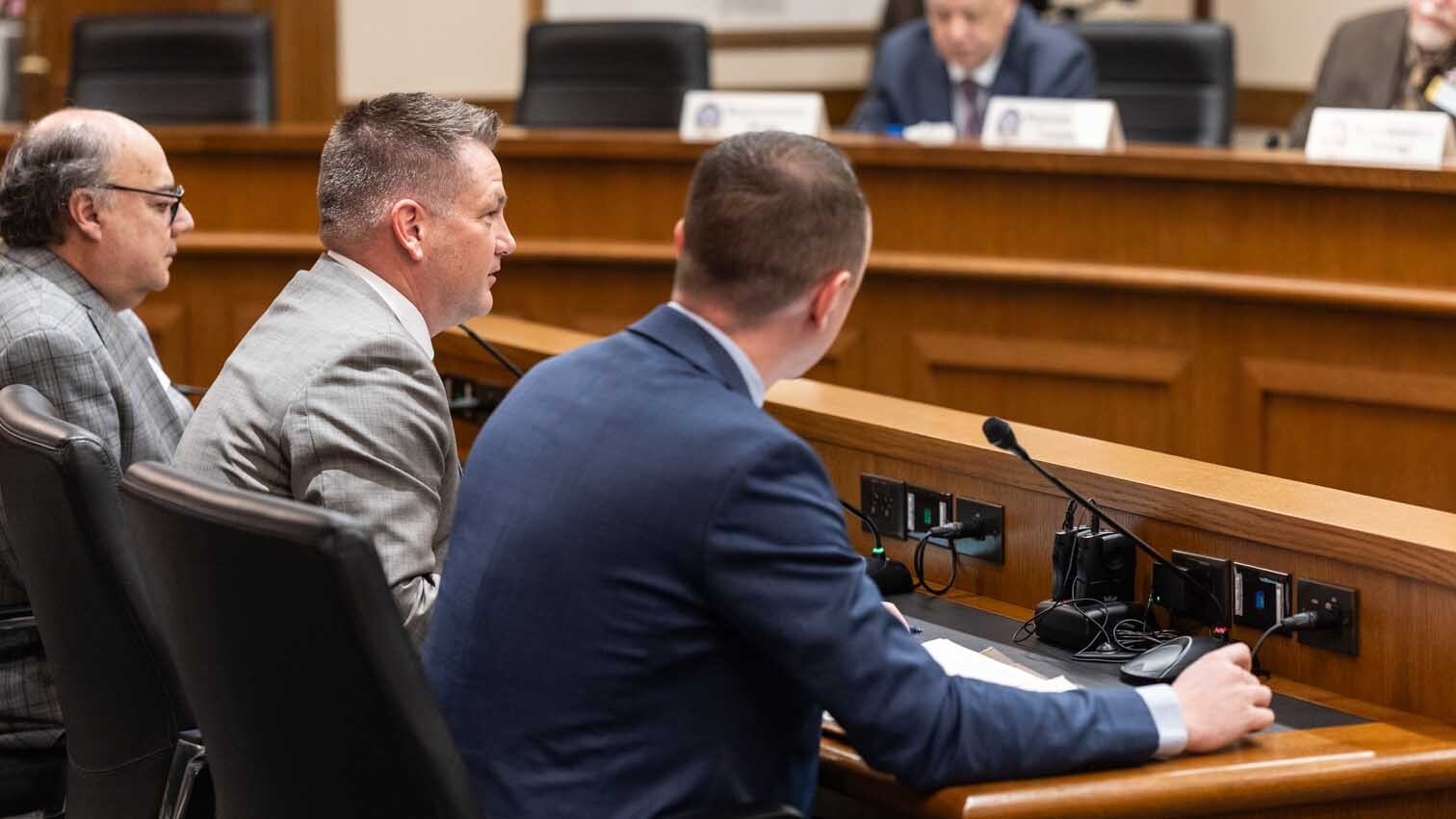
CHEYENNE — A hearing Friday in the Capitol felt less like a policy debate and more like a pep rally for the state's energy and mineral industries, as lawmakers on the House Minerals, Business and Economic Development Committee unanimously advanced two bills designed to position Wyoming at the center of America's energy future.
No one spoke in opposition to either measure.
The two bills — Senate File 102, an energy transmission study, and Senate File 123, the Wyoming Energy Dominance Fund — represent the latest pieces of what supporters describe as a growing strategy to make Wyoming the nation's undisputed energy state. Both passed 9-0.
Three powerful forces are converging to make that possible: an aggressive push by the Trump administration to achieve energy dominance, a bipartisan eagerness among Wyoming lawmakers to capitalize on the moment, and the arrival of significant private capital looking for a home.
Channeling that momentum is the Wyoming Energy Authority, which spoke in support of both bills and has been building a broader strategic framework that includes a recently released deep-dive coal study identifying future demand, supply constraints and export potential for Wyoming coal.
"Wyoming, we stand apart from any other state because we have all these resources," said WEA Executive Director Rob Creager in a follow-up interview. "We don't just have coal. We don't just have oil. We don't just have uranium."
In Creager's view, the bills and the coal study all work in concert. The transmission study examines where the pinch points are in Wyoming's electricity infrastructure. The coal study identifies demand and supply constraints. And the Energy Dominance Fund provides the financial tools to get projects across the finish line.
"So we do these things and we figure out these pinch points — how can the state, using industry dollars, maybe provide a kicker to make sure those projects happen in Wyoming?" Creager said. "I think they all work together very well to make sure we have the most information we can possibly have, and also some investment tools to make sure we reinvest the industry's tax dollars to help benefit the state."
Iron Is Hot
A sense of urgency was unmistakable throughout the hearing.
Senate File 123, introduced by Senate President Bo Biteman, R-Ranchester, would intercept 1% of Wyoming's severance tax for two years to create an approximately $105 million fund dedicated to energy and mineral development projects.
The fund would support grants with a required one-to-one private match, as well as loans for projects in coal, oil, natural gas, uranium, rare earths, pipeline infrastructure and energy exports.
The bill explicitly excludes wind and solar energy projects.
After visiting the White House three or four times this year to meet with officials at the Department of Interior, Department of Energy and the newly formed Energy Dominance Council, Biteman told the committee that the administration's message was clear.
"You tell us what you need, and we'll do it," Biteman said, describing the administration's posture. "And if you have any issues or bottlenecks, we need to know, and we'll get rid of those in 24 hours' notice."
House Speaker Chip Neiman, R-Hulett, who co-signed the bill, drove the urgency home with a rancher's metaphor.
"We need to strike when the iron is hot," Neiman told the committee. "If you've got a horseshoe laying on an anvil, you better be hitting it right now, because if you're going to shape it, now is the time."
As much as 80% of Wyoming's oil is still in the ground and could be recovered through enhanced oil recovery, Neiman declared, adding that the state would be "negligent" not to capitalize on a friendly administration while it lasts.
"Nobody here knows what the next administration is going to look like," Neiman said. "And when we have a friend in the White House, we would be negligent if we didn't take advantage of that."
'We Need Power'
Agreeing with the urgency, Rep. Kevin Campbell, R-Glenrock, told the committee that Wyoming has always been a national energy leader, but warned that the state isn't getting ahead by staying the course.
"Continuing to do what we have done is going to get us the exact same results that we've gotten," Campbell said. "The next thing with opportunity is timing. And the time is now."
The coal study released by the WEA identified continued domestic and international demand for Wyoming coal, along with supply constraints and significant export potential — particularly from the Green River Basin.
"There is demand still for coal and future demand. We should meet that," Creager said, describing the study's findings. "Do we have any supply constraints? Yes, we do. How can we fix that? Do we have export potential? For Green River Basin coal? Absolutely, we do."
During testimony on the fund, Travis Deti, executive director of the Wyoming Mining Association, pointed to the study as a roadmap.
"The Energy Authority came out with their deep-dive coal study just recently, identifying some of the best opportunities," Deti told the committee. He noted that the administration is "very serious on getting Wyoming coal out of the country to service our allies in the Pacific so they don't have to rely on Chinese coal."
The State of Utah has set aside more than $50 million for port projects to export coal, and Wyoming has been in conversations to partner on those efforts, Deti said.
Capital Is Coming
Beyond government dollars, significant private capital is lining up.
Renny MacKay, CEO of the Wyoming Business Alliance, told the committee that other states are already investing hundreds of millions into their energy sectors, and Wyoming can't afford to stand still.
"Right now, there are a lot of other states competing with us for opportunities to grow their energy sector," MacKay said. "Louisiana and Texas are putting dozens of millions of dollars, if not hundreds of millions of dollars, into energy projects."
At an event just two months ago, MacKay said, Senate President Biteman, Speaker Neiman and business leaders met with investment firm J.P. Morgan, which announced in October that it is investing $1.5 trillion into U.S. security and resilience.
"When they left Wyoming with their $1.5 trillion checkbook, the excitement was really palpable," MacKay told the committee. "This is a moment to not take our foot off the gas."
The Petroleum Association of Wyoming was among the first to back the fund concept. Its president, Pete Obermueller, told the committee that mineral revenue reinvested into the industry returns "two, three, five, tenfold to the state than anything you could put into it."
Asked whether the fund could respond nimbly to fast-moving opportunities, Obermueller confirmed the Energy Authority already has the expertise to operate a grant program and could move quickly when projects are ready.
Upton Vs China
An impassioned bit of testimony came from Jeff Daugherty, a lobbyist for Rare Element Resources, which is developing a rare earth project near Upton in the Bear Lodge Mountains.
The company's demonstration plant is set to come online in March, and just the promise of it has already triggered economic ripple effects — a new hotel providing 20 to 40 jobs has sprung up in the area. The plant itself provides 20 jobs at $60,000 to $90,000 each, and if it converts to a permanent processing and separation facility, that number jumps to 120 permanent jobs.
"This is a great chance to stop our kids from being our greatest exports," Daugherty told the committee. "It really is."
When it comes to rare earth processing and separation, Daugherty said the stakes are global.
"It is literally Upton versus China," Daugherty said, noting that there are currently only three places in the world that can process and separate rare earths — China, a facility in California, and one in Texas.
ROI, Not Black Holes
Several committee members expressed strong opinions about how the fund should be directed. In particular, Rep. Chris Knapp, R-Gillette, made clear he doesn't want to see the money disappear into what he characterized as speculative technology.
"I don't want to see a lot of carbon capture technology that throws money into a black hole," Knapp said. "I'd like to see things that we can actually present to the treasurer and look at some of those private equity opportunities and really utilize this money for return on investment."
Creager pointed to a track record that supports the ROI approach. An enhanced oil recovery pilot project in Gillette that received just shy of $9 million from the WEA has already generated $40 million in revenue for Campbell County — just from the pilot production alone.
Guardrails And Debate
The only real point of contention arose when Chairman Scott Heiner, R-Green River, proposed an amendment to put guardrails on how the Energy Dominance Fund could be spent.
His amendment struck the phrase "but not limited to" from the list of eligible project categories, tightening the fund's scope to only those industries explicitly named in the bill.
"It does us no good at that point because it can be used for anything, and we've seen that in the past,” he said.
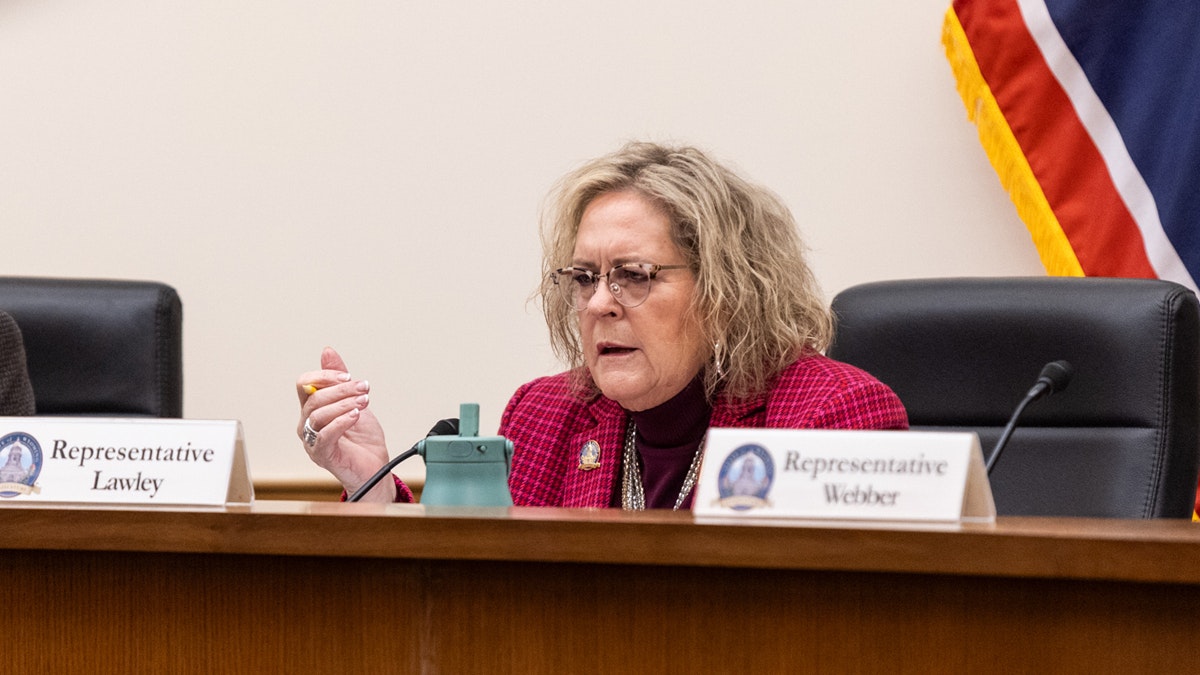
Not everyone agreed with the tighter language. Rep. Martha Lawley, R-Worland, argued that the fast-moving energy landscape requires flexibility.
"Part of the situation we're in is very fast-moving and we need the ability through this process to be nimble and to adjust," Lawley said. "We are stating our priorities, but we're recognizing the possibility that we may have missed something on the list."
Rep. J.T. Larson, R-Rock Springs, echoed the concern: "I don't want to tie our hands."
The amendment passed over their objections, with four "no" votes recorded. The bill itself then passed unanimously, 9-0.
Transmission Talk
The first bill of the day, Senate File 102, lays the groundwork for the broader strategy by requiring the WEA to complete a two-phase transmission planning study.
Introduced by Sen. Brian Boner, R-Douglas, the study would first model Wyoming's transmission needs under three load-growth scenarios — low, moderate and high — to identify bottlenecks and congestion points. The second phase would examine whether Wyoming should participate in regional transmission organizations (RTO) like the Southwest Power Pool, rather than continuing to rely on bilateral agreements between utilities.
The concern, Boner told the committee, is that California's independent system operator is expanding westward — and Wyoming needs to understand its options.
"We're not going to necessarily assume that we're going to go down this path," Boner said. "But we need to gather information because Nevada, for example, has required that all their utilities join an RTO by 2030."
The study requires no new appropriation — the WEA can fund it from existing resources — and carries deadlines of November 2027 for phase one and September 2028 for phase two.
Speaking in support, Lawley called the bill essential.
"Things are moving quickly in this space and we don't have all the facts we need as a legislature," Lawley said. "I think even the executive branch needs to know more in order to effectively develop policy that will help us navigate what's coming."
The bill passed 9-0 and was assigned to Lawley to carry on the House floor.
By the time Friday's hearing wrapped up, lawmakers had made one thing clear: They want Wyoming to be poised to lead a national energy renaissance.
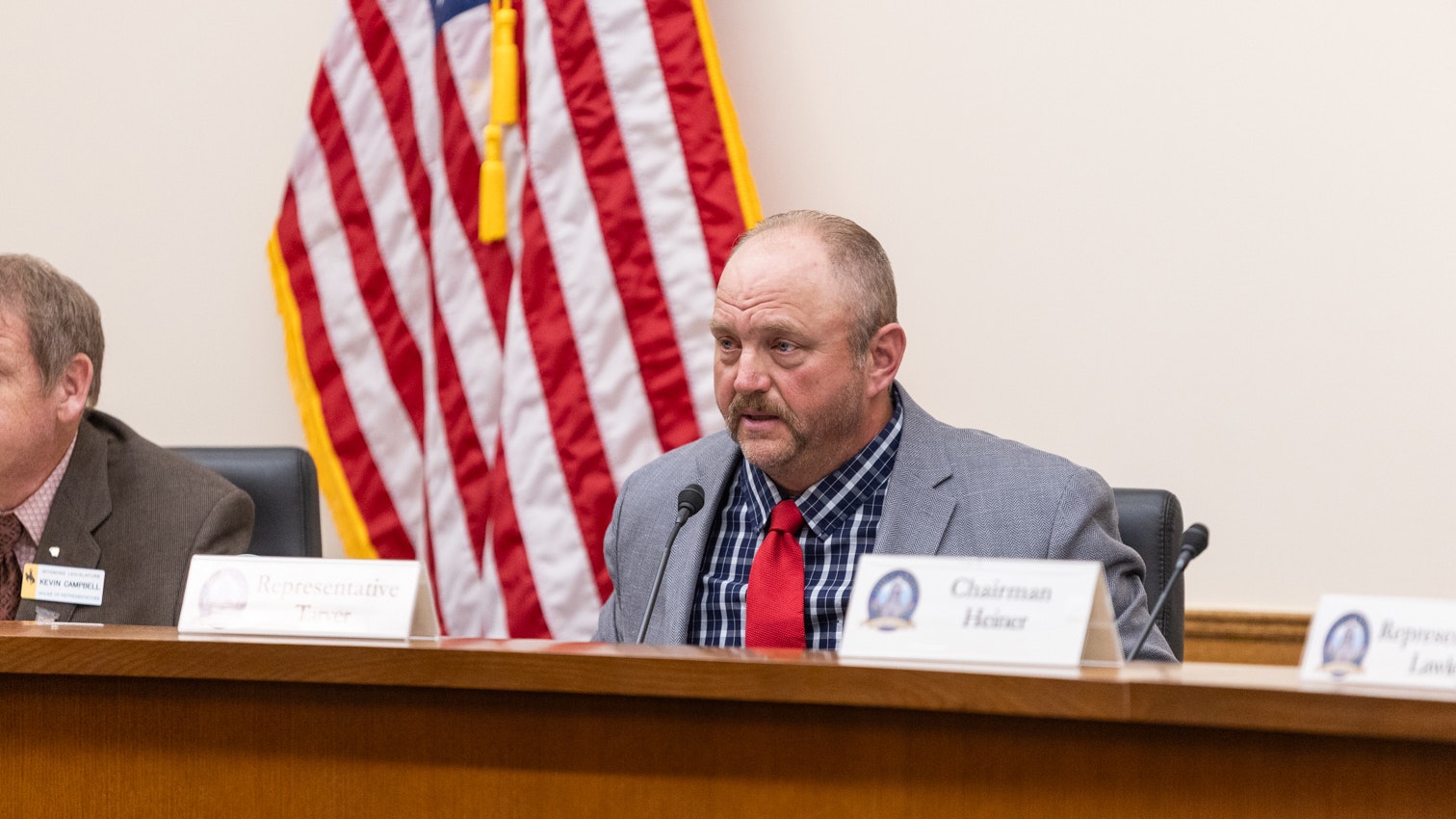
As Vice Chairman Rep. Reuben Tarver, R-Gillette, put it at the end of the hearing: "We are sitting on a gold mine, aren't we?"
David Madison can be reached at david@cowboystatedaily.com.