CHEYENNE — Rep. Kevin Campbell told a California assemblyman that turquoise hydrogen — made through a process that's virtually CO2-free — was the answer to the state’s clean energy goals.
The assemblyman agreed with him. Then told him to get lost.
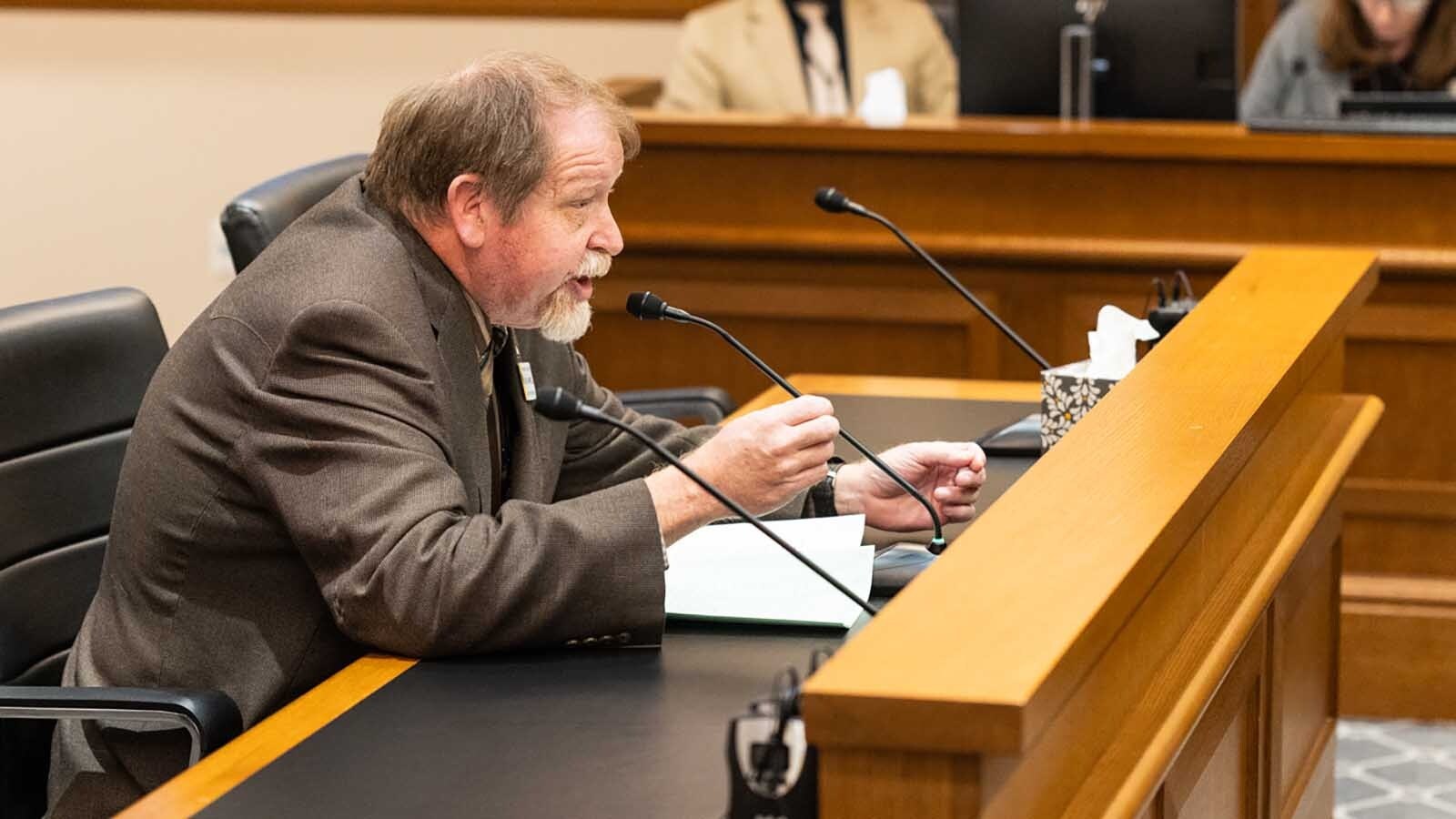
“I had explained to them the benefits of turquoise hydrogen, and the state of California agreed with me,” Campbell, R-Glenrock, told the Senate Minerals, Business and Economic Development Committee on Friday as he presented House Bill 120. “He said, ‘Yes, this is a wonderful thing, but it’s still fossil fuels and we don’t like fossil fuels.’”
That rejection launched the former oil field services worker on a two-year effort to write legislation that would let Wyoming go around California entirely — and sell Wyoming natural gas to the world as something California can’t stop at its border.
Hydrogen is in demand globally as countries seek a carbon-free fuel that can replace fossil fuels in applications that are difficult to electrify, including heavy industry, long-haul shipping and power generation, plus hydrogen fuel cell vehicles.
“While the states on the West Coast can block our raw gas as a feedstock with their state regulations, under the Commerce Clause, they cannot block a manufactured product,” Campbell told the committee. “So when we turn our raw gas into this ammonia and this hydrogen, it’s no longer a raw feedstock. Now, it’s manufactured product and we can launder that through the West Coast.”
The result — the Energy Product Reclassification and Sovereignty Act — cleared the committee 3-0 Friday and now heads to Senate Appropriations before Monday’s deadline.
Sovereign Zones
The bill would create “industrial sovereign zones” across Wyoming where companies could convert raw natural gas into three globally traded manufactured commodities: turquoise hydrogen, ammonia and carbon black.
The sovereign zones would be carved from within existing county-designated industrial zones — areas that have already cleared regulatory hurdles. County commissioners would nominate the zones, and the Wyoming Energy Authority would formally establish them.
The bill specifically directs the Energy Authority to first consider establishing a zone at the Opal natural gas hub in southwest Wyoming if prices there are suppressed compared to other markets.
Turquoise hydrogen is produced through methane pyrolysis, a process that splits natural gas into hydrogen and solid carbon without producing CO2 emissions. The solid carbon — carbon black — can be used in tires, batteries and road construction. The ammonia serves as a carrier to transport hydrogen to overseas markets.
Because the carbon is removed to create its own commodity, Campbell sees that as making the turquoise hydrogen “carbon free.”
The bill defines these as “value-added manufactured products” — natural gas that undergoes “substantial molecular transformation” in Wyoming to produce a new product. That legal distinction is the heart of Campbell’s strategy: once the molecules are rearranged, it’s no longer a fossil fuel feedstock. It’s a manufactured good, and other states can’t block it.
California Rebuff
Campbell said his effort started with a practical pitch to California.
“I told California that if they wanted to have a hydrogen hub that was going to be efficient for them, what they needed to do was use their existing natural gas pathways that go through every city in California,” Campbell said in a follow-up interview. “And they can build a turquoise hydrogen facility as close to the point of consumption, because then that bypasses all that high-dollar piping and the transportation issues.”
He said California lawmakers considered the idea and acknowledged the logic.
Then along came California’s Assembly Bill 35, authored by Assemblymember David Alvarez of San Diego. The bill provides streamlined environmental review for “clean hydrogen transportation projects” — but only if the hydrogen “does not use fossil fuel as the feedstock or energy source for its production.”
That effectively shuts out turquoise hydrogen and anything else derived from natural gas from California’s fast-track permitting pathway.
Campbell told the committee that he spoke directly with Alvarez about the merits of turquoise hydrogen.
“To me, this is the very epitome of true green energy,” Campbell said, “because with turquoise hydrogen, we are actually taking a hydrocarbon and we’re sequestering the carbon component of that.”
Asian Markets
Campbell said the real money isn’t in California. It’s in Asia.
Japan, South Korea and other nations are signing 20-year contracts for clean ammonia and hydrogen to meet their decarbonization targets. Campbell told the committee the contracts being signed now cover 2030 to 2050, and that Asian markets need 300 million tons of ammonia annually.
“The one thing that we need — a 20-year contract supplies stability, long-term stability,” Campbell told the committee.
Rob Creager, executive director of the Wyoming Energy Authority, confirmed that interest firsthand. He told the committee he has traveled to Japan with Gov. Mark Gordon.
“I’ve been fortunate enough to go with our chief executive over to Japan a couple times now to talk about some of the interests that we have that we share with them, and this does fit that,” Creager said. “A lot of interest in our gas and some of the products that could maybe come from that.”
Creager described the bill as “creating a sandbox-like deal” for companies to innovate, though he noted no project is shovel-ready yet.
Fast Track
The Department of Environmental Quality would fast-track all required permits for facilities in the sovereign zones, moving applicants to the front of the line.
Campbell told the committee the fast-track permitting is Wyoming’s competitive weapon against states with deeper pockets. He noted that Chevron is building a $4 billion hydrogen facility in Texas and another company is building a $4 billion facility in Louisiana.
“Texas gave Chevron $100 million to build their facility there. Louisiana gave $50 million to have that facility,” Campbell said in the follow-up interview. “Wyoming doesn’t have the Treasury to do that. So by fast-tracking, all we’re doing is taking the regulatory handcuffs off and letting the private sector do this.”
He told the committee every year a major project is delayed costs a company $200 million to $300 million.
Todd Parfitt, director of the Department of Environmental Quality, told the committee his agency is comfortable with the expedited process.
“It establishes that the DEQ will develop a process to issue all permits and licenses required for these designated industrial zones,” Parfitt said. “It prioritizes ahead of all other permits and applications these entities — without adverse impacts to primacy.”
Competing States
Campbell told the committee that Wyoming’s gas producers already operate at a disadvantage, receiving $1.50 to $2.50 less per unit than the Henry Hub benchmark because the state’s production is landlocked.
He said Wyoming’s competitors for the Asian hydrogen and ammonia market include Texas, Louisiana, Australia, Qatar and Russia. But Wyoming has a geographic edge.
Texas and Louisiana have coastal export access, but their shipments must transit the Gulf of Mexico and the Panama Canal to reach Asia. Campbell said if Wyoming can access West Coast export routes through Mexico, its product could arrive two weeks faster.
David Madison can be reached at david@cowboystatedaily.com.