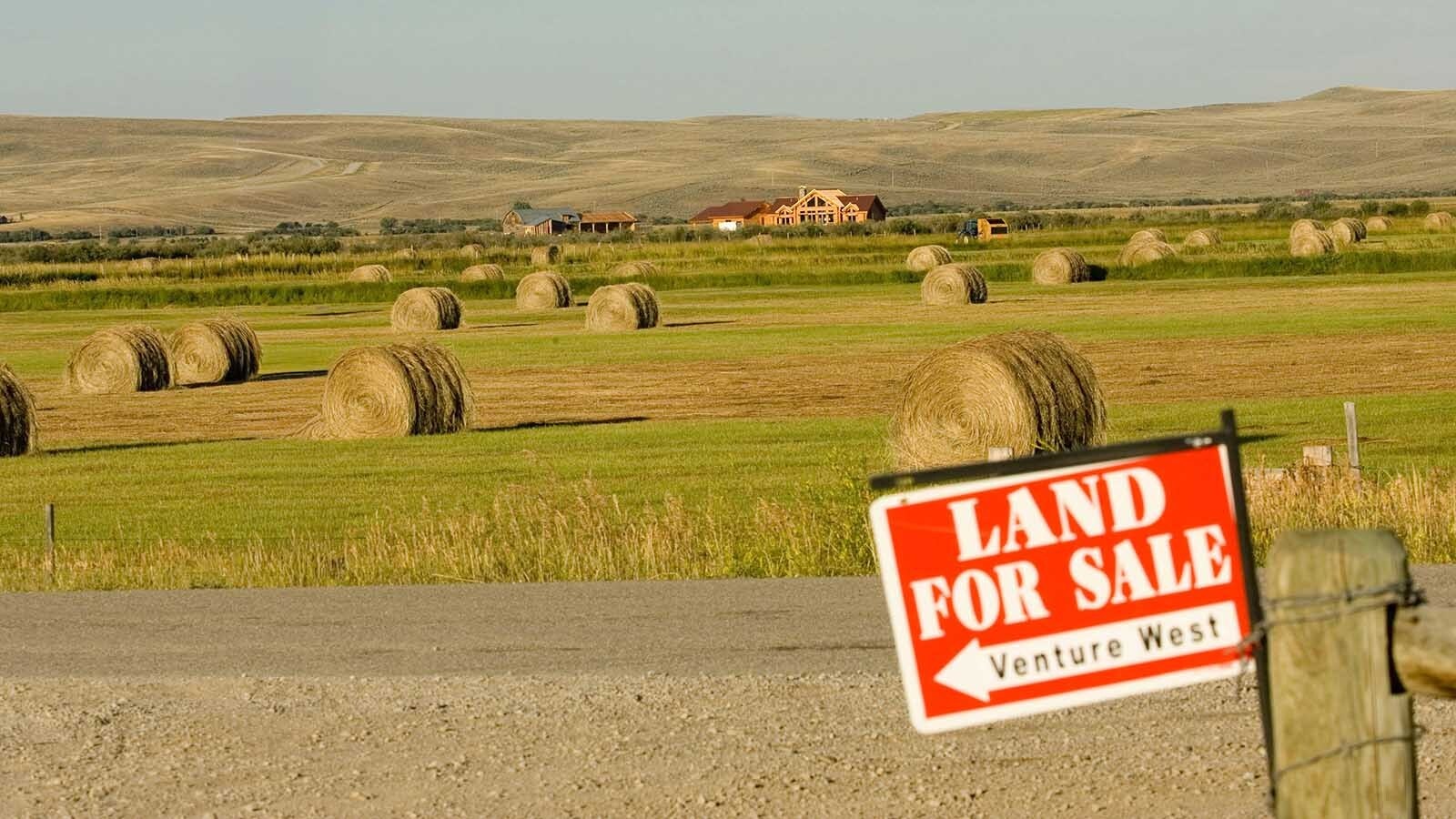
Small farms are the backbone of the United States’ agricultural industry, but they continued to close and consolidate in 2025.
According to statistics compiled by the United States Department of Agriculture (USDA), the nation lost 15,000 small farms and ranches in 2025. Texas lost the most, with 2,000 farms gone before the end of the year.
That brought the number of existing farms to around 1.9 million, an 8% decline from 2 million in 2018.
Total farmland also declined, to around 874 million acres, a 0.3% decrease from 2024.
Many of these small farms were consolidated into larger operations, which earn over $1 million annually in sales.
This continued a growing trend of fewer, higher-earning operations, owning a larger percentage of land and industry. These large farms make up less than 10% of all the farms in the United States, but control over half of the nation's farmland.
Wyoming hasn’t been immune to farm consolidation. It might be more insulated from larger trends in the agricultural industry, but the loss of small farms, often owned and operated as family businesses, is something everyone's keeping an wary eye on.
“Consolidation is pretty natural at this point,” said Todd Fornstrom, president of the Wyoming Farm Bureau Federation (WFBF). “I don’t think we need to be alarmed, but cognizant of what’s actually happening.”
A Double-Edged Sword
The latest numbers from the USDA weren’t surprising to Fornstrom. He said the loss and consolidation of small farms is an inevitable outcome that’s been “ongoing for decades.”
“When the owners of small farms are heading toward retirement age, it’s natural for neighbors who are bigger and more efficient to take over,” he said. “Most businesses and industries have slowly done the same thing.”
Of the 15,000 farms lost in 2025, 8,000 were small farms, making between $1,000 and $9,999 annually. Large farming operations were the only category that increased, with 50 new operations.
The good news is that most of the land from these small farms is still farmed, keeping it viable for future agriculture. Still, Fornstrom sees the ongoing trend as “a double-edged sword.”
“It's good that these operations that are still in existence, and that they’re big enough to be efficient and stay viable,” he said. “But when you get rid of so many small farms, you’re taking rural people out of rural America.”
Numbers Vs Reality
Brett Moline, the WFBF’s policy advocacy director, agreed that there’s been a gradual decline and consolidation of small farms in the United States. However, he said the USDA statistics usually aren’t as they appear.
“One of the things we have to be careful of with USDA numbers is that there are a lot of reasons you could lose a farm,” he said. “A lot of people are farming and ranching part-time while working other jobs. They might sell $1,500 of goods in a year. That’s enough to be considered a farm, but not enough to make a living.”
Moline believes it’s possible that some small farms that were “lost” in 2025 might have been individuals and families selling produce from roadside stands or vegetable gardens. They might have been a small farm in 2024, but they didn’t sell enough to cross the $1,000 threshold to be categorized as a small farm in 2025.
Many farms of all sizes operate in the red, relying on subsidies or taking on debt to survive, as costs increase and profits aren’t enough to offset them. That’s why small farms have been consistently consolidating into larger operations.
“Farms and ranches have definitely got bigger because the (profit) margin is so small,” Moline said. “If you're going to do it professionally, as your main source of income, you've got to be pretty big because the margin is so small.”
Bankruptcy Barometer
In addition to losing more small farms, more farms filed for Chapter 12 bankruptcy in 2025.
Statistics compiled by the American Farm Bureau Federation (AFBF) showed that 315 farms filed for Chapter 12 bankruptcy last year, which is a 46% increase from 2024. They described it as “a last resort” for farmers who took on significant debt to keep their operations going.
Wyoming was insulated from this national decline. No farms or ranches in the Cowboy State filed for Chapter 12 bankruptcy, for a second consecutive year.
Meanwhile, Arkansas had 33 farm bankruptcies in 2025. That was the most in the nation, followed by Georgia with 27.
“Increases in Chapter 12 bankruptcies once again highlight the continued pressures American farmers and ranchers face,” the AFBF reported. “A fourth consecutive year of expected declines in farm income will continue to strain agriculture, placing further reliance on credit options that are growing thin.”
Where Wyoming’s Different
As the agricultural industry ebbs and flows, Wyoming occupies its own place in it. While farming and ranching have always been important industries in Wyoming, the livestock and crops have been more resilient to problems plaguing other states.
“Wyoming doesn’t produce crops like peanuts or cotton, and we don’t have as much vegetable farming,” Moline said. “Those are the farms that tend to struggle.”
Moline said Wyoming’s agricultural industry is dominated by alfalfa, corn, and wheat, “the big crops,” and livestock. When assessing the status of farming in Wyoming, this short list of staple agricultural products is still profitable enough to keep farms going.
“The cattle guys are doing fantastic,” he said. “Prices for cattle are at all-time record highs. It's the farming guys that are struggling to show a profit, and we don’t have as many of them in Wyoming.”
Urbanization Elsewhere
A growing concern about the nation’s farmland is the loss of the land itself. Many people are concerned that agricultural land will eventually be rezoned and absorbed into nearby towns and cities, aiding urban sprawl.
While that’s a prescient concern in several states, Fornstrom wasn’t concerned about that trend in Wyoming.
“There's always some land lost to urban sprawl, usually, and land that’s close to a city,” he said. “That’s not as evident in Wyoming as it is elsewhere.”
Moline agreed that urbanization of Wyoming’s agricultural land isn’t as much of a concern, given that there just aren’t many cities looking to urgently expand. If anything, a uniquely Wyoming problem is the inability for farms to expand.
“Wyoming’s property values jumped terribly high during the COVID-19 pandemic,” he said. “I’d say they’re selling for terribly inflated prices. Out-of-state buyers can afford to pay 10 times what a property’s worth, but our farmers and ranchers can’t afford that.”
According to Moline, many out-of-state buyers are still interested in keeping Wyoming ranches as operating agricultural operations, mainly because “they don’t want neighbors.” Renting their vast properties to local ranchers keeps the land free of people and development while still earning money.
Many ranchers and farmers are apt to enter these arrangements, but it does preclude them from expanding their own operations.
Small Farms Not A Big Concern
Wyoming’s small farms might be more resilient than national trends, and the USDA’s statistics would suggest, but that doesn’t mean they’re immune to the challenges of the agricultural industry.
The loss of small farms is a sign that many multi-generational businesses are struggling, and it’s important to recognize and address these issues.
“Agriculture has never been a get-rich business,” Moline said. “Overhead is so high, land is expensive, and prices fluctuate. Losing small farms in Wyoming is a concern, but it’s not a big concern. It’s something we always keep an eye on, but it hasn’t been an issue yet.”
Andrew Rossi can be reached at arossi@cowboystatedaily.com.