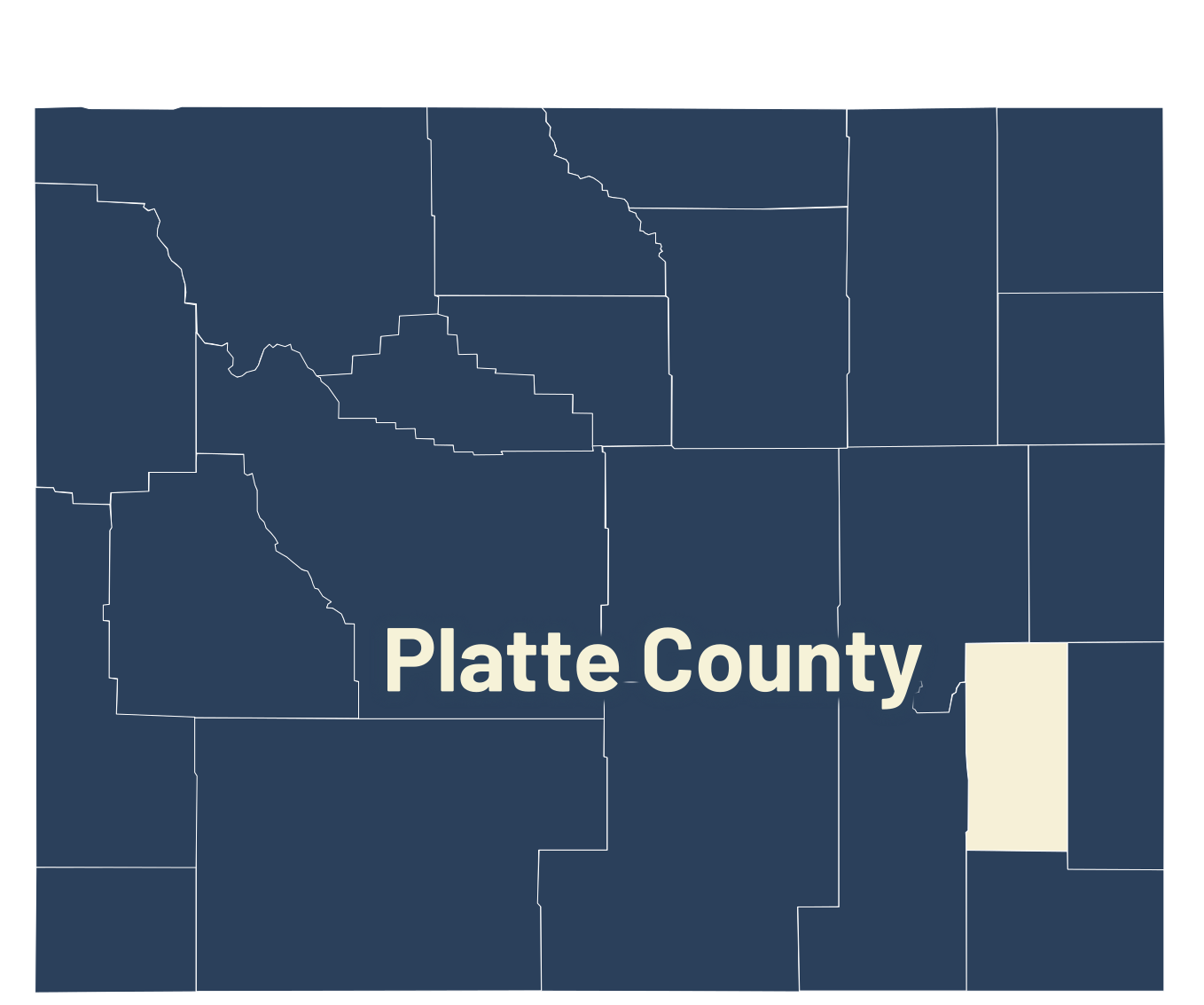
Wyoming’s governor will not be waging a civil case to remove all three Platte County Commissioners from office, despite some citizens’ complaint against them, the governor announced Wednesday.
Wyoming doesn’t have a recall election system for county officials: it has a mechanism for a governor’s investigation.
Qualified electors or county commissioners of a given county can ask the governor to investigate county officials for misconduct, malfeasance, or violation of oath or bond.
If the governor believes the complaint shows those violations, he asks his attorney general to pursue a civil case for removal in the district court of that county.
The Wyoming Attorney General’s Office filed such a case last week, against Weston County Clerk Becky Hadlock.
But the separate, 53-page “sprawling” complaint Platte County electors sent to Gov. Mark Gordon in December doesn’t rise to that level, Gordon said in a Wednesday decision letter.
Cowboy State Daily found in December that at least some of the complaint’s claims are false.
Nearly two dozen people signed the 64-page complaint, addressed Dec. 1 to Gov. Mark Gordon, asking the governor to investigate and remove every member of the three-man Platte County Commission.
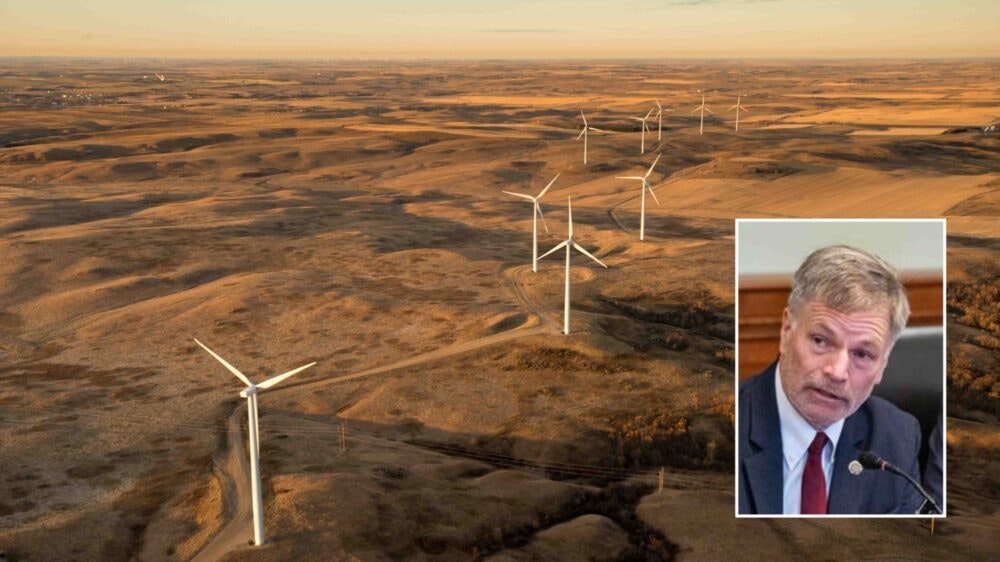
The controversy driving the complaint’s claims is a wind and renewable-energy project by NextEra Energy Resources.
Its allegations cast the three county commissioners, Steve Shockley, Ian Jolovich, and Jeb Baker, as committing a number of wrongs to favor NextEra and disadvantage the project’s opponents.
It accused different commissioners of different wrongs, including holding illegal private meetings, releasing confidential documents, “never” filing their campaign finance reports, retaliating against NextEra critics, showing bias toward NextEra, and showing behavior that “raises substantial concerns” of conflicts of interest.
Lends Less Credence
Gordon noted in his decision letter that part of the complaint falsely accuses two commissioners of “never” filing their campaign finance reports, when in fact they had. The governor characterized other parts of the complaint as dubious.
“The actual claims of wrongdoing and factual information are interspersed amongst conclusory statements as to how actions by the Commissioners violated a multitude of laws, with conclusory statements outpacing factual claims and information by at least two to one,” wrote Gordon.
Also, the governor added, “the verified complaint appears to have been generated with Artificial Intelligence (AI).”
It is very repetitive, gives exhaustive lists of laws allegedly broken, and uses symbols AI tools typically use, Gordon wrote.
“Unfortunately,” he added, “the generation of the complaint by an undisclosed AI tool lends less credence to the statements asserted and information provided therein.”
As Gordon broke it down, the complaint contains seven allegations: that commissioners violated the Wyoming Public Meetings Act and suppressed public comment; that they violated “FOIA,” which is a federal version of the public records act; that they violated election law; misapplied Platte County’s land-use regulations; bore conflicts of interest; misused the county attorney and obstructed the Platte County ordinance revision process.
Gordon ticked through these one-by-one.
Fire Suppression Meeting
NextEra hosted a July 15 event in Platte County on firefighter safety and training; and the press and public were excluded from the meeting.
Controversy followed.
Senior Project Manager Anthony Bianchini’s June 24 email invitation to Jeb Baker called the gathering the “Chugwater Energy Project Battery Energy Storage Safety Lunch and Learn event" with "lunch at the event for all!”
It was an effort to coordinate with “local public safety professionals,” wrote Bianchini, adding that people from the Wyoming Department of Environmental Quality and at least two Goshen County commissioners were planning to attend — the latter “due to their affiliation with Fire.”
Battery Energy Storage Systems’ (BESS) capacity to ignite toxic, hard-to-fight fires is a recurring theme in the applications renewable energy companies submit to Wyoming authorities.
Two attorneys familiar with the public meetings act who spoke to Cowboy State Daily in December disagreed on whether the two commissioners who attended the event, Shockley and Baker, were at a “meeting” and therefore violating Wyoming’s law that public meetings be open to the public.
“Assuming for purposes of this analysis that Commissioners Shockley and Baker did attend meetings, which ought to have been public and publicly noticed under the Wyoming Meetings Act, the remedy for such an offence (sic) is outlined in statute,” wrote Gordon.
The act says that actions taken at such meetings are null and void.
While complainants called the incident an improper use of office, Gordon noted they didn’t point to any law or rule that could activate that claim.
“It is unlikely that Commissioners Shockley and Baker’s attendance at the July 15, 2025 meeting” or at another, November event of which the citizens complained “rises to the level of misconduct, malfeasance, neglect of duty, or violation of oath and bond,” the governor wrote.
Public Meetings Request, Campaign Finance
While the complaint laments Shockley and Baker’s handling of a “FOIA” request, that is a federal law that doesn’t apply to Wyoming officeholders. Rather, the Wyoming Public Records Act applies.
Gordon equated the two for purposes of evaluating the complaint, however, which alleged that a commissioner forwarded a records request to a NextEra representative.
That action doesn’t violate the Public Records Act, and the act “does not prohibit a custodian of public records (from sharing) a public records request with a third party or (taking) public records outside of public buildings.”
The request for a public record is also a public record, Gordon noted.
The governor’s third listed evaluation was on the claim that commissioners didn’t file their campaign finance reports.
“We learned, however, that the campaign-finance reports were filed by the Commissioners and do exist,” wrote Gordon, adding that these are public records as well.
Land Use, Attorney Use
Citizens alleged that the commissioners adopted an arbitrary standard for expert opinions, didn’t properly consider land-use purposes and didn’t give equal consideration to the wind project’s opponents.
“These types of claims require extensive legal analysis and specific facts - as opposed to a conclusory statement,” wrote Gordon. He said these things would play out more properly in court than in a governor’s misconduct investigation, and he won’t “usurp” the court’s authority over them.
The citizens also claimed, citing “reliable sources,” that commissioners expect future benefits from the NextEra project.
Gordon called that “mere speculation” devoid of specific facts, leaving his office “unable to make a determination” that would clear the high bar of a governor’s investigation.
The complaint alleges that Baker asked Platte County Attorney Rex Johnson to find “dirt” on residents who were critical of the wind project.
It claims citizens recorded a private meeting at which Commissioner Shockley “acknowledged that the county's hired attorney, Rex Johnson, had negotiated payment from NextEra to represent Platte County—an admission that directly contradicts the attorney's claimed neutrality and confirms a conflict-of-interest concern previously raised by petitioners.”
Gordon wrote, “it is unlikely that a single instruction by Commissioner Baker would rise to the level of misconduct, malfeasance, neglect of duty, or violation of oath and bond.”
Meeting Issues
The complaint says commissioners cancelled scheduled meetings without explanation, changed meeting locations without notice and misrepresented whom the commissioner had contacted for legal guidance.
That alleged conduct doesn’t violate Wyoming law, wrote Gordon.
His decision letter concludes that the complaint doesn’t provide compelling enough facts to merit further investigation.
“In many instances, even if the conclusory statements were verifiable, they most likely would not rise to the level of misconduct or malfeasance necessary for removal from office,” Gordon wrote. And the alleged violations the complaint lists don’t appear to indicate a malicious intent, he added.
Lastly, as he has in other decision letters on governor’s investigations, Gordon emphasized the importance of the local community’s control over its own fate.
“Voters will have the opportunity to exercise their right to vote this coming summer,” Gordon wrote.
Wyoming’s primary election is Aug. 18.
Clair McFarland can be reached at clair@cowboystatedaily.com.