It’s commonly argued that wolves are worth millions to the economies of Wyoming, Montana and Idaho, because they’re such tourist magnets.
However, others think that wolves ultimately drain more from the states’ economies than they bring in, because of losses to big game herds and livestock industry, as well as the massive legal fees that states incur fighting lawsuits from wolf advocate groups.
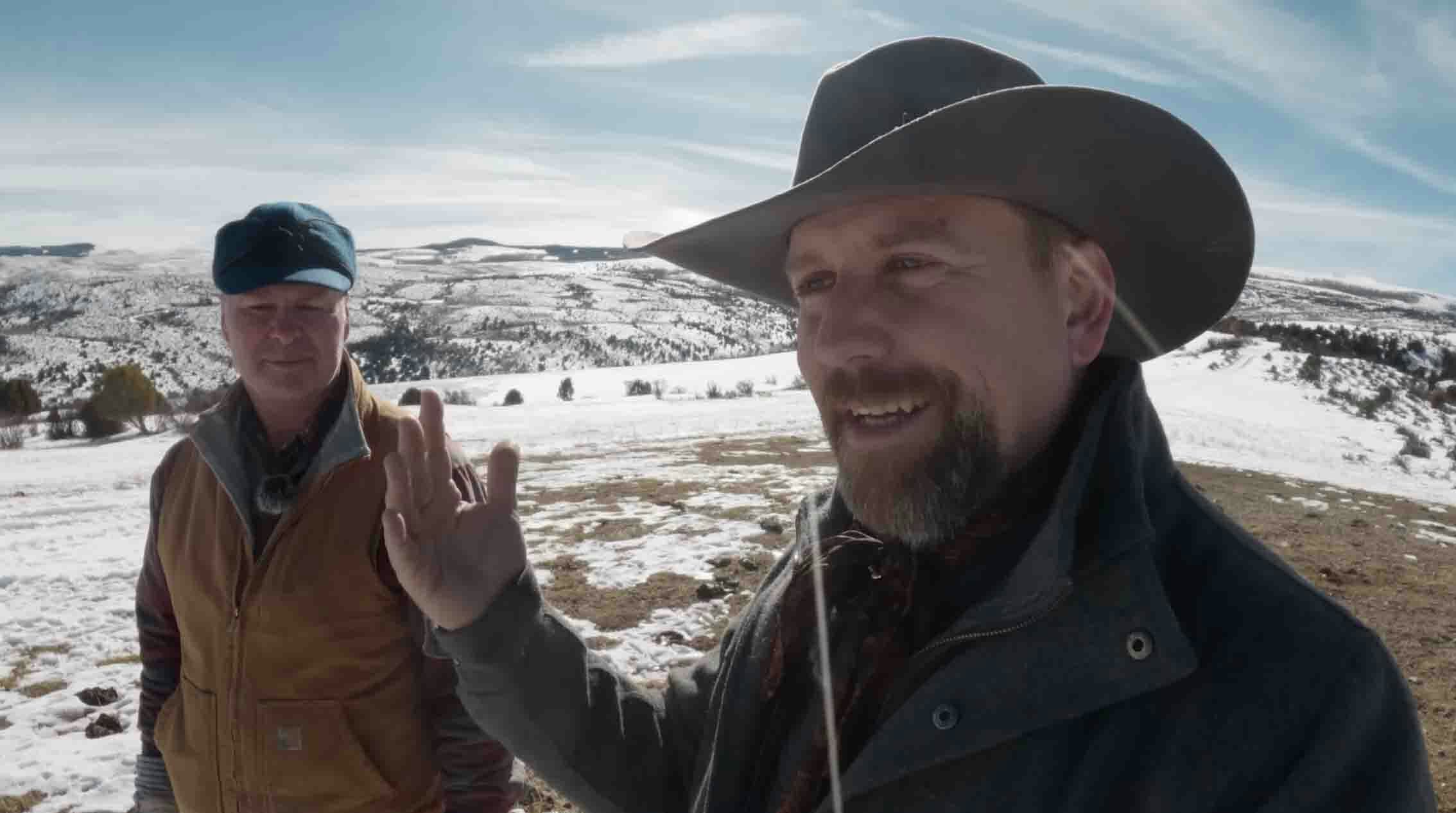
Trinity Vandenacre of Townsend, Montana is among those who think that wolves cost more than they bring in.
The outdoorsman, who has more than one million followers on his YouTube channel Life in the West and other social media platforms, told Cowboy State Daily that he’s learned much by traveling across the West and talking to ranchers, hunters and others directly affected by wolves.
He says his interviews and storytelling help give a voice to those who’ve been overlooked.
Among the biggest hidden costs of wolves are the legal fees that states rack up, fighting lawsuits filed by animal welfare groups and others wanting to maintain or expand Endangered Species Act protection for wolves and grizzly bears, he said.
“What about the costs to the taxpayers that we spend to fight these things, in our agencies? Then we’re talking hundreds of millions of dollars,” he said.
Rob Edward, Rocky Mountain Wolf Project co-founder and president, told Cowboy State Daily that he questions the idea that wolves are an economic drain.
Even when wolves cost people money, such as by killing livestock, wolf advocates, state residents and others are willing to make up the difference, he said.
He pointed to Colorado’s “Born To Be Wild” license plate campaign, which raised $600,000 its first year and roughly $1 million the second year, to help ranchers make up the cost of livestock killed by wolves, Edward said.
It’s evident “how much people are willing to shell out for the simple knowledge that wolves are on the ground, and the ability to go see them,” Edward said.
Is The Benefit All Local?
Vandenacre said wolf advocates often point out that wolves bring in “$82 million” per year to Yellowstone National Park’s gateway communities, such as Gardiner, Montana.
That figure is based in research. It’s according to a 2021 study conducted by the Institute for Tourism and Recreation Research at the University of Montana.
Vandenacre doesn’t question its validity in terms of the $82 million figure, but he argues that it falls short of telling the whole story.
“That is in, what, three towns on the edge of Yellowstone National Park,” he said.
Meanwhile, wolves’ effect on hunting, has far-reaching effects across the region, he said. And there doesn’t seem to be an interest in nailing down just how much that is costing in terms of lost hunting opportunities, fewer hunting tags sold, hunting outfitters losing business and the like.
Moreover, the cost to ranchers can’t be calculated only in terms of just the cattle that wolves kill, he said.
The wider effects must be taken into consideration, he argued, such as the overall weight loss to an entire cattle herd if the animals are stressed by wolves’ presence.
Every pound lost on a cow is dollars lost to the rancher, Vandenacre said.
“What we’re doing to our food supply and our recreation and our industries across these states is incalculable,” he said.
The Debate Over Hunting Effects
Edward said he’s not aware of any studies done to calculate the costs of wolves to hunting in Western states.
But he still questions the idea that wolves hurt hunting.
He pointed out that Wyoming, Montana and Idaho all have more elk now than they did when wolves were reintroduced to Yellowstone and remote areas in Idaho in the mid-1990s.
And while hunters might hold a dim view of wolves, the predators might give hunters an advantage in some cases, he said.
“Wolves are helping hunters, because they’re pushing elk to move around more,” Edward said.
Also, by weeding out sick and injured animals from elk herds, wolves leave bigger, healthier animals for hunters to take, Edward said.
Vandenacre said just looking at the sheer number of elk doesn’t tell the entire story.
There are specific areas where wolves have severely slashed the number of elk, he said.
As an example, he cited the South Fork herd in Montana’s Bob Marshal Wilderness. It once numbered in the thousands but is now only about 300, he said.
Wolves knocking back a particular herd, where other areas across the West are teeming with elk, might not seem like a big deal at first glance.
However, Vandenacre said the herds that have been hit the hardest by wolves also tend to be in hunt units with the most public land.
“Now, where do all those hunters go?” he said.
In many instances, wolves killing elk in some hunt areas pushes more hunters into areas that are mostly private land.
Particularly in eastern Wyoming and Montana, and in Idaho’s lowlands, that’s left hunters stuck in situations where huge elk herds are holed up on private property, where hunters can’t get to them, he said.
And if the wolves kill too many elk in one area, they aren’t going to stay there, he added.
“What are the wolves going to do? They’re either going to starve to death, or they're going to move,” he said.
He also argues that “we spent a ton of money restoring elk and moose herds.”
So when wolves kill those animals, how is the cost-to-benefit ratio calculated, he said.
Managing By Numbers?
Vandenacre said that as he sees it, state wildlife agencies are beholden to manage big game animals and wolves according to numbers.
The “objective numbers” for elk herds might be based on how many elk ranchers will tolerate, before they think there are too many elk raiding their haystacks, or gobbling up forage before cattle can get to it.
Likewise, wolves may be hunted in Wyoming, Montana and Idaho. But if too many wolves are killed, and certain thresholds are crossed, federal protection for wolves will kick back in, and hunting will be stopped, he said.
He’d like to see wolves, grizzlies and other predators managed according to a “predator to prey ratio” that takes into consideration the long-term effects on hunting.
Edward said that “hunter success rates” in elk hunt areas across the West have remained steady since wolves were reintroduced.
He doesn’t think Colorado’s ongoing wolf reintroduction plan is a threat to the state’s treasured elk herds.
And programs such as the “Born To Be Wild” license plate campaign can help bridge the gap in opinions about wolves between rural and urban Coloradans, he said.
Vandenacre traveled to Colorado to interview ranchers in the wolf reintroduction zones there.
He thinks it’s naïve to assume having wolves will work in a state that’s changed so much since wolves and grizzlies thrived there in the 1800s.
“Hunters can manage the elk herds there (in Colorado),” he said, so there was no biological need to bring wolves back in.
Mark Heinz can be reached at mark@cowboystatedaily.com.