CHEYENNE — What started Monday as a straightforward hearing on letting Wyoming run the federal mineral leasing program turned into a debate over something far bigger — whether the state should formally acknowledge that the federal government owns the land beneath its feet.
Senate Joint Resolution 1 asks the U.S. Congress to amend the Mineral Leasing Act of 1920 to let Wyoming assume administrative primacy — state control of federal programs or policies — for mineral leasing on Department of Interior lands within the state.
The House Minerals Committee passed it 7-0 with two members excused, but not before stripping language that would have committed Wyoming to “preserve federal ownership of the lands and the underlying mineral estate.”
That provision, added by the Senate Minerals Committee, was the flashpoint of Monday’s hearing.
Sen. Bob Ide, R-Casper, who introduced the resolution, told the committee the ownership language was the “biggest burr under the saddle” and urged lawmakers to remove it.
“We don’t need to say that,” Ide said. “We should have the right to come in on equal footing. That means we own the surface and the minerals within our borders if we want to fight for that in the future.”
Ide argued that by affirming federal ownership in a resolution, Wyoming could hamper its ability to pursue a future legal claim under the equal footing doctrine and the property clause of the U.S. Constitution.
“It’s almost like we’re forfeiting something that we may be entitled to with a lawsuit at the Supreme Court, you know, 20 years from now,” Ide said. “That’s a discussion to have another day.”
Rep. Robert Wharff, R-Evanston, who co-chairs the Select Federal Natural Resource Management Committee with Ide, echoed the concern. He told the committee that the federal government treats Western states “almost like we’re still a territory.”
“I think Wyoming has demonstrated that we can crawl, we can walk, and we’re ready to run,” Wharff said.
Primacy Language
Not everyone agreed the ownership language should go.
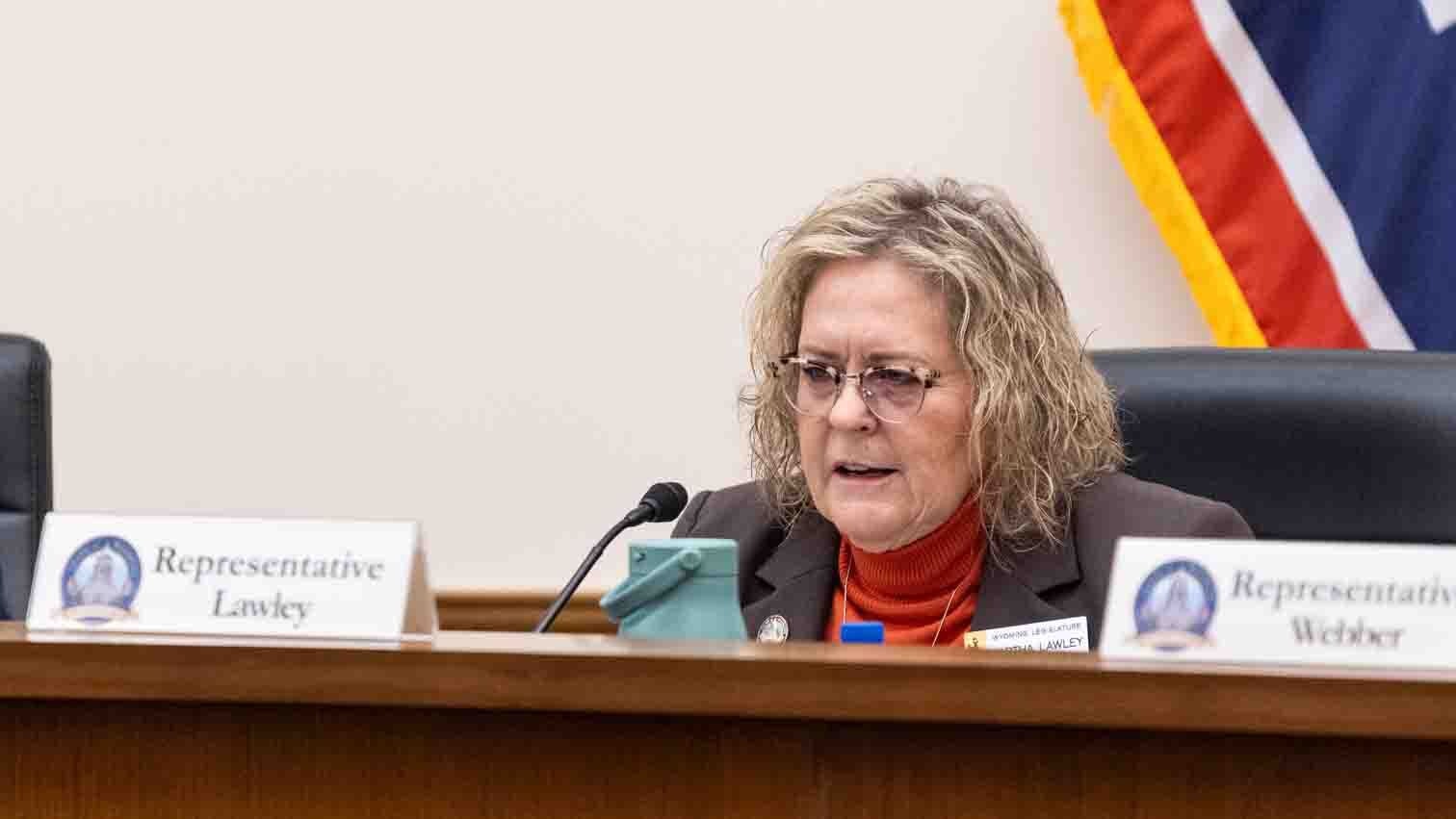
Rep. Martha Lawley, R-Worland, argued that some of the provisions added by the Senate Minerals Committee — including the ownership acknowledgment — were standard primacy language that Wyoming would need to secure federal cooperation.
“To say we’re asking for primacy but not make some statements consistent with how we understand primacy works” would undercut the resolution, Lawley said. She pointed to Wyoming’s existing primacy programs in nuclear regulation and Class VI CO₂ sequestration wells as examples where the state made similar concessions.
“We are asking for something very specific that has sort of around it certain things you’re agreeing to,” Lawley said. She acknowledged “the heartburn on number two” — the ownership provision — but cautioned against wholesale removal of the conditions.
The Senate Minerals Committee had added five subsections laying out a cooperative framework: applying only to mutually designated Interior Department lands, preserving federal ownership, requiring consistency with federal law, allowing either party to terminate agreements, and capturing the 2% federal administrative cost deduction currently retained by Washington.
Rep. J.R. Riggins, R-Casper, first moved to strike three of those subsections along with the word “specified” from the description of federal lands. That failed on a voice vote. Vice Chairman Reuben Tarver, R-Gillette, then moved to strike four subsections, which also failed with Chairman Scott Heiner, R-Green River, casting the deciding vote against.
Riggins then narrowed his amendment to target only the federal ownership language. That passed. After the hearing, Riggins told Cowboy State Daily the move was “aspirational” — keeping Wyoming’s options open.
“Maybe 20 years down the road, maybe, when if there ever is some kind of agreement about restoring some federal land to state ownership,” Riggins said. “This is a big, long shot. This is a big ask.”
Leasing Control
Beyond the ownership fight, the resolution’s core purpose is to wrest administrative control of mineral leasing on Interior Department lands from the Bureau of Land Management, which Ide said has been “inconsistent, unpredictable and subject to political delays” over the past decade.
“We want authority to control our own destiny with mineral leasing on federal lands,” Ide said. “We kind of have the wind at our back a little bit right now with this administration. But you never know what’s going to happen in the future.”
Wharff added, “The concern is that the government continues to shut down because it is so dysfunctional.”
Industry Support
Three industry groups testified in favor of SJ 1.
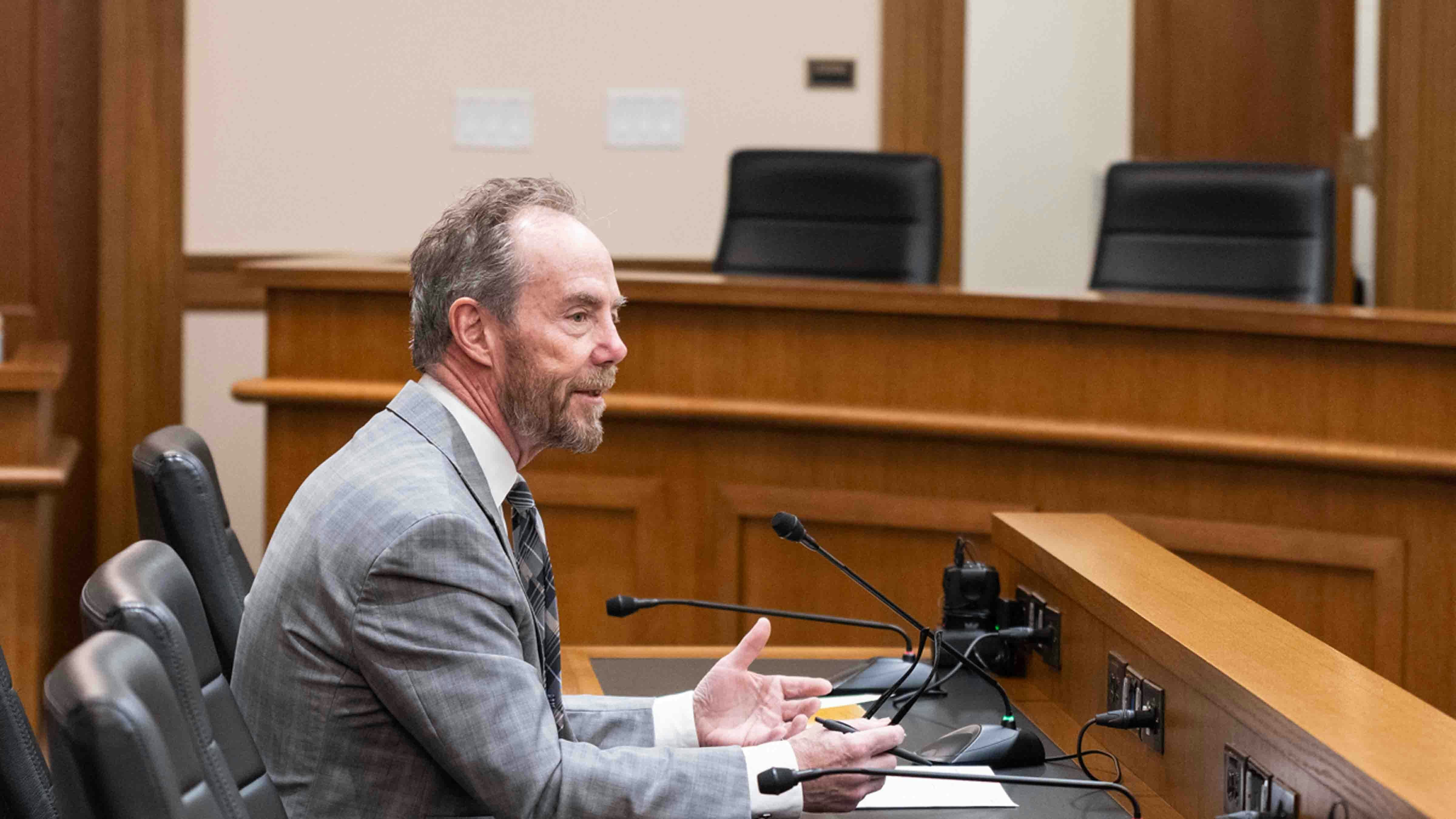
Travis Deti, executive director of the Wyoming Mining Association, said the current royalty split shortchanges Wyoming.
“It’s a 50-50 split, but because of that administrative fee, we actually get 48%. The feds get 52%,” Deti said.
He noted the “Big, Beautiful Bill” in Congress lowered the federal coal royalty rate, costing Wyoming roughly $30 million.
“Do you even need the administrative fee?” Deti asked. “Right now, it’s just basically an electronic fund transfer.”
Pete Obermueller, president of the Petroleum Association of Wyoming, said the fee can reach “upwards of $40 million a year that they take from us.”
He cautioned that primacy means running a federal program, not rewriting it — restrictions on drilling in wilderness areas and national parks would remain.
Obermueller also acknowledged the political sensitivity surrounding the transfer of federal land to state ownership, citing an example during the congressional reconciliation debate last year when a Nevada congressman offered an amendment to transfer a few hundred thousand acres to state ownership: “And you would have thought the world was spinning off its axis. It is a third rail.”
Brett Moline, director of public and governmental affairs at the Wyoming Farm Bureau Federation, said state management would produce better decisions.
“Closer to home, better decisions, given the uniqueness of Wyoming compared to other states,” Moline said.
Conservation Concerns
Aaron Bannon, executive director of the Wyoming Wilderness Association, testified remotely against the resolution, arguing the federal leasing system works well under President Trump’s executive order restoring quarterly lease sales.
He said “only 20% of the leases that had been promoted were bid upon” at a recent additional auction — suggesting demand, not access, is the limiting factor.
“Is the juice worth the squeeze?” Bannon asked, noting Wyoming could recover the 2% fee through the companion House Joint Resolution 2 “without having to stand up an entire new program.”
Rep. J.T. Larson, R-Rock Springs, challenged Bannon: “How can we have good faith with the Bureau of Land Management given that they tried shutting down lands in Sweetwater County in the last administration?”
Congressional Response
Rep. Harriet Hageman told Cowboy State Daily, “This resolution is a prime example of Wyoming being innovative in its relationship with the federal government. I am monitoring the progress as this works through the legislature.”
Sen. John Barrasso told Cowboy State Daily, “Wyoming deserves to have a say in how our resources across the state are managed. I look forward to seeing what the legislature passes.”
Amy Edmonds, spokesperson for Gov. Mark Gordon, told Cowboy State Daily the state already has a track record of successful primacy.
“At the Department of Environmental Quality, we have worked to get primacy. We have mirrored our regulations, essentially, with the feds,” Edmonds said. “If you’re in extraction, you don’t have to go to D.C. to get your permit, you come here.”
She added: “We are the energy powerhouse of the nation. This gives us another tool to make that happen.”
SJ 1 already passed the full Wyoming Senate and now moves to the House floor. A companion measure, HJ 2, seeks to shift the federal mineral royalty split so Wyoming receives 87.5% and the federal government receives 12.5%.
David Madison can be reached at david@cowboystatedaily.com.