The Wyoming House of Representatives on Monday handed the Senate a two-year budget draft totaling $9.96 billion, while the Senate sent the House a $10.13 billion draft budget of its own; a difference of $170 million.
Now attention in the Capitol shifts to the two men tasked with appointing 10 negotiators to haggle over the differences: House Speaker Chip Neiman, R-Hulett, and Senate President Bo Biteman, R-Ranchester.
Each is tasked with appointing five lawmakers from his own chamber, to serve on the budget joint conference committee this week.
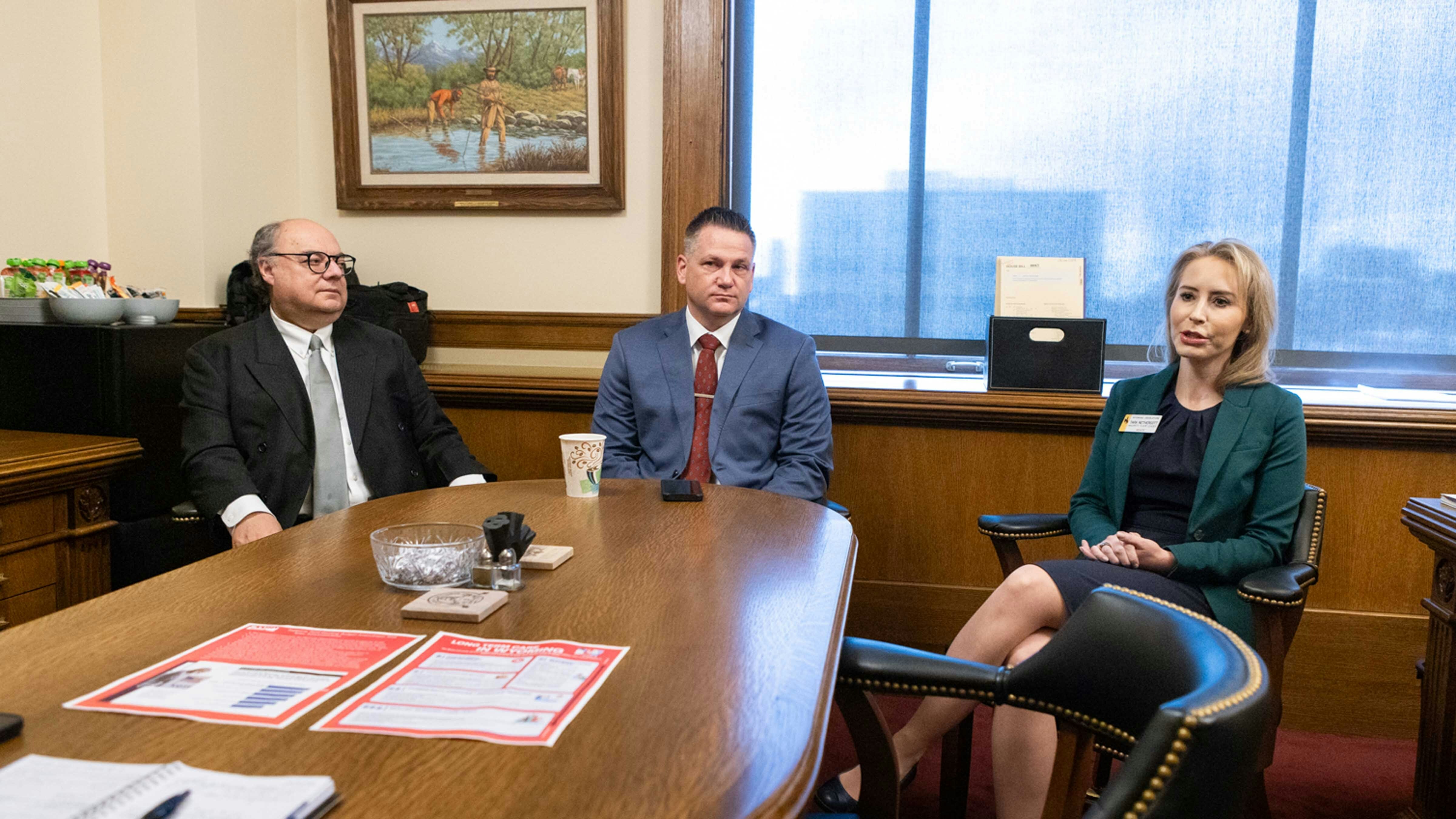
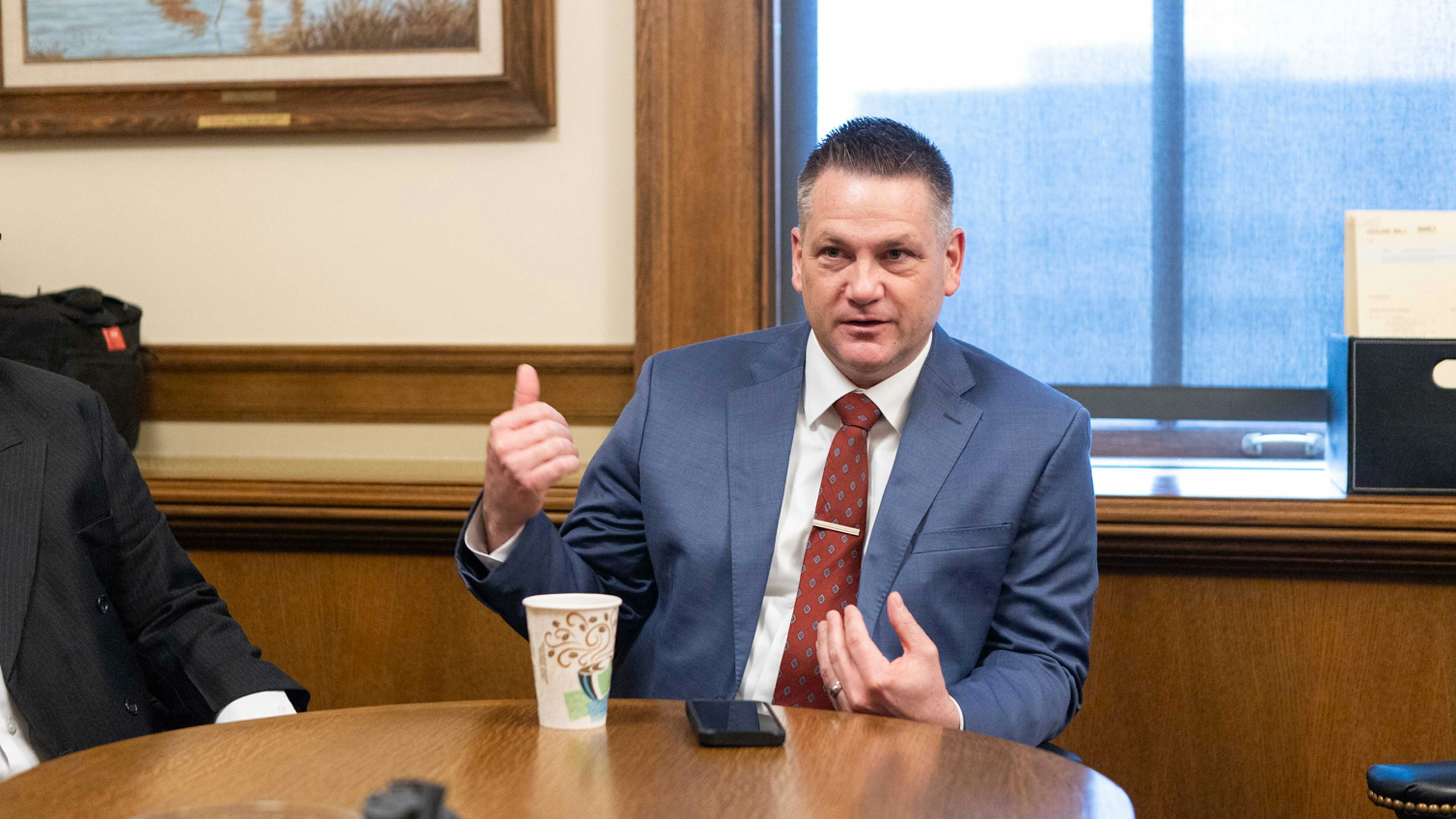
Biteman told Cowboy State Daily on Monday morning that he hadn’t chosen all five negotiators yet, though Senate leadership will comprise three: Biteman, Senate Majority Floor Leader Tara Nethercott, R-Cheyenne; and Senate Appropriations Chair Tim Salazar, R-Riverton.
In considering the remaining two, said Biteman, he wants “people who are going to be team players with us. People who have the right temperament.”
“We have too many to choose from, honestly, and that’s what makes it difficult,” Biteman said, adding that he may announce the committee Tuesday or Wednesday.
Neiman told Cowboy State Daily in a text message that he’s “working on that” as far as the joint conference committee goes.
“We have a plan and are moving ahead,” Neiman added.
Buckle In, We Got Numbers
Gov. Mark Gordon in November proposed a $11.13 billion two-year budget for Wyoming, a figure that includes state as well as federal and other sources.
Lawmakers spun three of Gordon’s objectives - state and school capital construction, and a federal rural health care grant package - into their own, standalone bills.
That left Gordon’s request at $10.13 billion: $3.5 billion from the state’s checking account, $2.2 billion from federal coffers and $4.48 flowing from other sources, but authorized to pass through state entities.
In a budget-planning marathon that garnered publicity for noteworthy cuts, the Joint Appropriations Committee in January trimmed Gordon’s budget recommendation down to $9.65 billion in its own draft.
After the legislative session convened Feb. 9, the House and Senate did very different things with the committee’s draft.
The Senate majority decided that Gordon’s draft was a better starting point, and reverted back to it, later cutting and adding other amounts.
The House decided to work from the committee’s draft, and debate many of the governor’s recommendations one-by-one. That led to multiple late nights for House members and an unusual Saturday session - but also copious debate on the proper function of government.
House members proposed 247 amendments to the budget - though dozens of those were withdrawn.
Senators proposed 72 changes.
Both chambers passed the same number of budget amendments each: 37.
In the end, the House’s budget came in $171.4 million under Gordon’s recommendation, while the Senate came in $1.4 million under.
That difference between the two chambers is “certainly a lot of money,” said Legislative Service Office fiscal administrator Don Richards while briefing the Senate Appropriations Committee on Monday, “but a relatively small percentage of a $10 billion budget.”
Neither of the drafts is slated to go into the negative.
“We’re not deficit spending, correct?” asked Sen. Mike Gierau, D-Jackson.
Richards confirmed that the state’s revenues could cover the Senate’s budget.
The Haggle Highlights
Some key points over which the two chambers may haggle are these:
The House ended with a $20 million - or 5% cut - to the state’s operating grant to the University of Wyoming, plus hinged another $20 million on UW finding $5 million in savings. The Senate voted to fund UW fully and grant other exception requests.
The Senate voted to fund the Wyoming Business Council for $54 million, while the House worked upward from a Joint Appropriations Committee plan to defund the agency. On Saturday the House adopted an amendment by Rep. Rob Geringer, R-Cheyenne, giving the Business Council $9.8 million to use for one year, while eliminating its controversial Business Ready Communities program.
Both chambers voted to fund state employee raises for $111 million, to bring state employees to 2024 market standards. But the Senate opted to channel that money from Wyoming’s checking account, whereas the House plans to pull it from severance taxes - which conflicts with a standalone bill on the Senate side, Richards told the Senate Appropriations Committee on Monday.
Over In The Senate
Biteman’s office bustled Monday morning as the Senate’s chief clerk lugged in an armload of bills from the House.
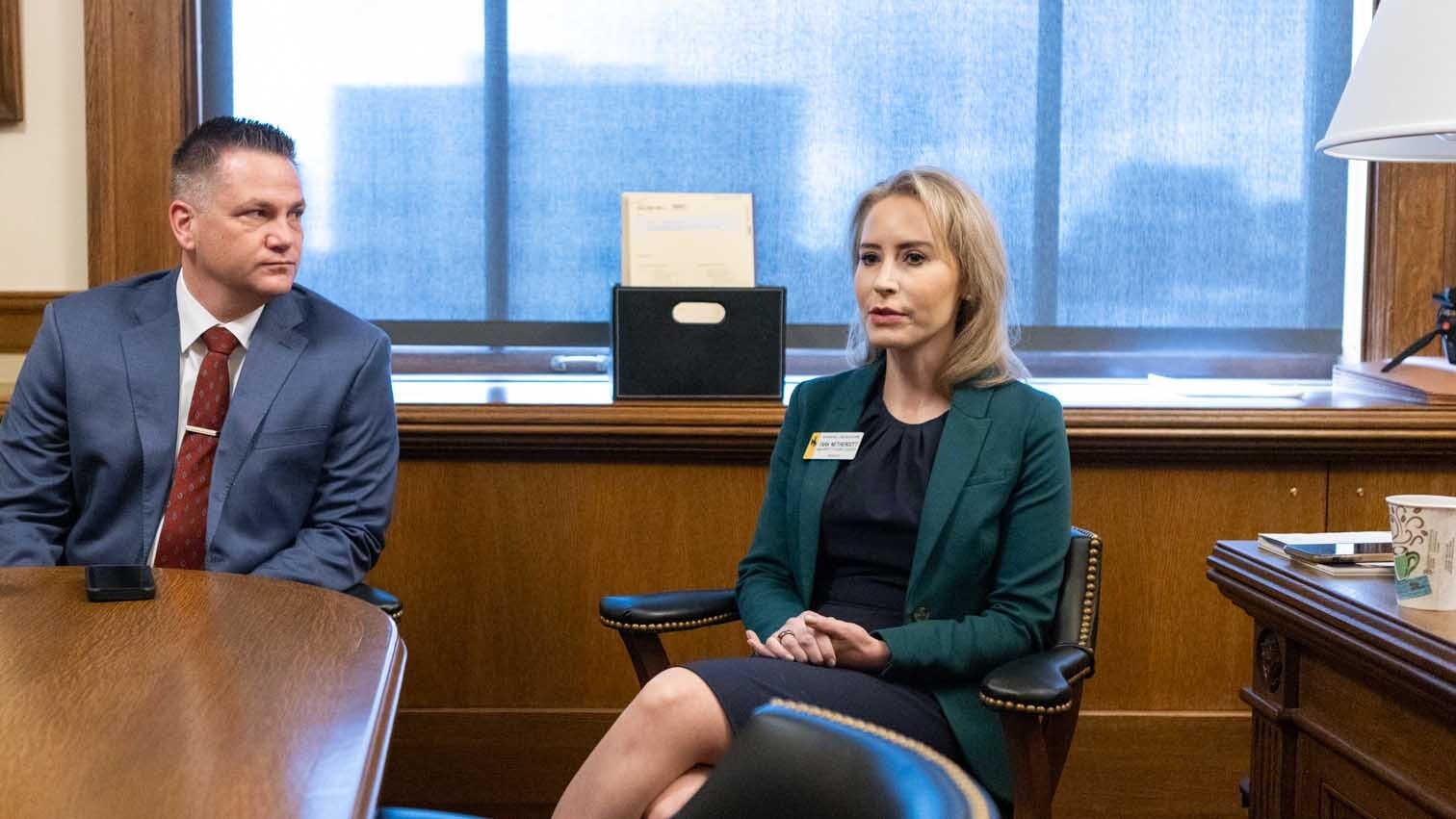
Salazar and Nethercott joined Biteman for a round-table-style in-person interview.
The Senate’s most noteworthy departure from Gordon’s budget draft was a half-state-funded, half-federally-funded addition for the developmental disability waiver program the Wyoming Department of Health administers, said Salazar.
“That was incredibly important,” said Salazar. Federal COVID-era relief money had fed the program during the pandemic.
Top Two Challenges
Nethercott ranked the “CheckGate” controversy among top challenges this session, “certainly.”
It was already a rushed budget session with a looming requirement to “recalibrate” or reconfigure what Wyoming should pay for K-12 education.
On Feb. 9 after adjournment, Rep. Karlee Provenza, D-Laramie, noticed a conservative activist handing out checks to lawmakers on the floor of the state House of Representatives.
Provenza shot a photograph of that, which she gave to the press, later saying she did not trust the House to handle it without the public accountability, and that the public should be involved because in her view, the act was such an "egregious" offense to the people's house.
Controversy followed, as some decried the “optics” of the gesture, and both the House and law enforcement launched bribery investigations.
The Senate condemned the act and drafted a rule banning campaign contributions in the areas it controls, and during session - with some carveouts for Senators who receive donations in spite of not soliciting them, like in the mail.
Gov. Mark Gordon and the House both followed the Senate's lead and drafted rules of their own.
Nethercott said Senate leadership and Biteman “have been able to eclipse” this and other challenges.
A top challenge Biteman listed was grappling with the recalibration bill.
That bill was supposed to go through the House first then hit the Senate, but the sponsors filed a mirror version in the Senate just in case the House version failed, he said.
The House rejected its recalibration bill twice.
The court order requiring Wyoming to recalibrate is stayed currently while the Wyoming Supreme Court considers it. But some lawmakers have voiced a desire to built a court record - to show the high court lawmakers are working in good faith even while they’re not under the court order.
“We were able to take up that (mirror) bill unanimously and get it on the floor,” said Biteman.
Salazar credited Biteman with “how calm and productive the Senate is in its business over the last two weeks.”
House Side
Speaking to the harrowing budget debates on the House side, Neiman said that was the mark of sincere policymaking.
“We’re not here to keep the status quo,” said Neiman. “We’re here to do the work of the people. And I think we’ve done a good job so far.”
Neiman said the House’s frequent disputes about the proper role of government were a necessary part of the chamber’s work.
“That is always a reason for discussion,” said Neiman. “When you’ve got members asking, ‘Is this something we should be worried about funding; is this something that is the proper role of government?’ absolutely you’re going to have those debates.”
Choosing to adopt the appropriations committee’s draft rather than the governor’s as a starting point was a House decision, which led to what Neiman called hard and worthwhile work.
Update - This story has been updated to include a post-publication interview by House Speaker Chip Neiman
Clair McFarland can be reached at clair@cowboystatedaily.com.