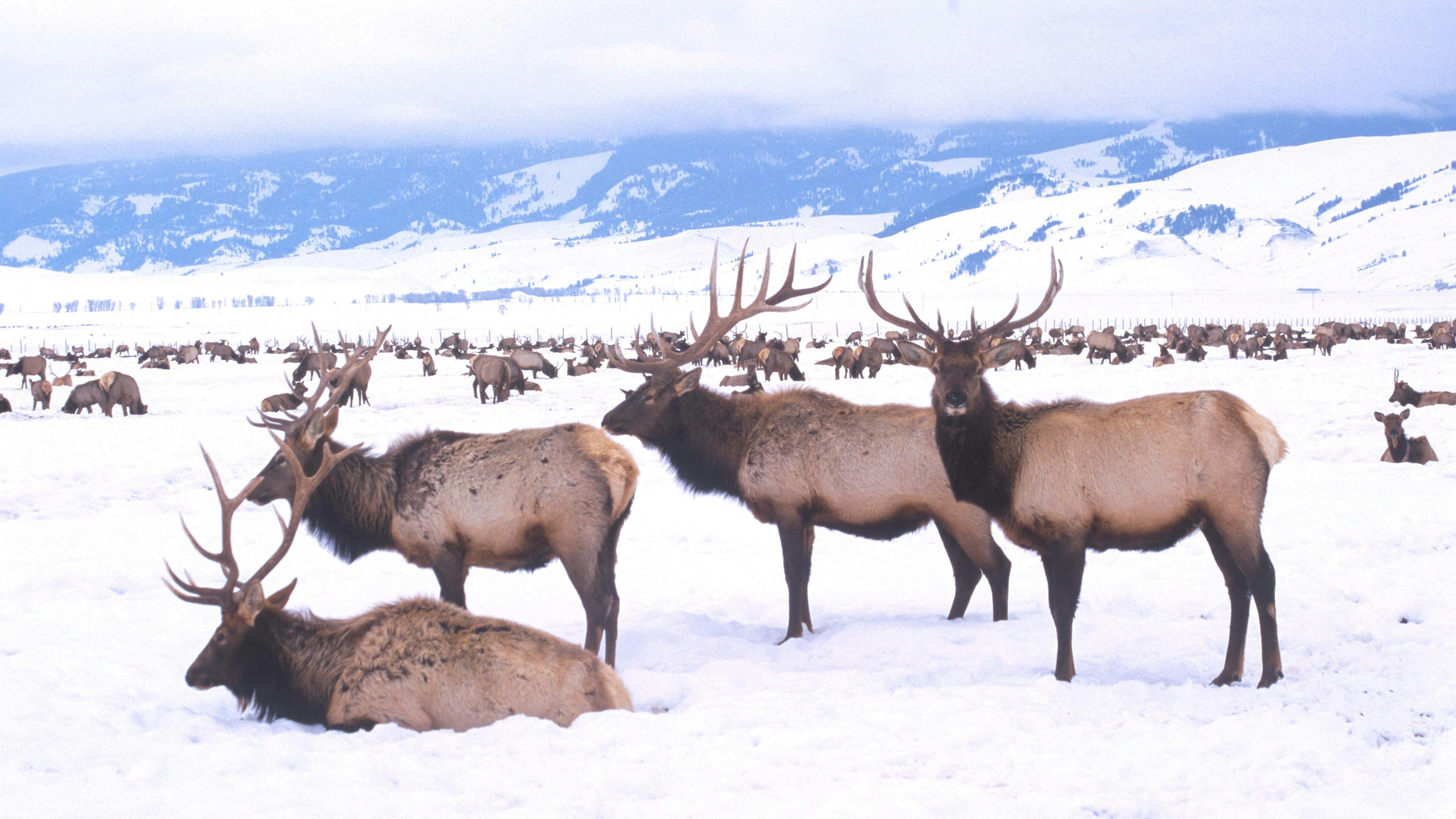
Elk are known for eating prairie grass or, much to ranchers’ chagrin, raiding haystacks – but they hardly stop there. They’ll also gnaw on bones, and in one instance, an elk devoured a hapless baby goose.
The latter would be extremely rare, but not unheard of, John Winnie Jr., an associate teaching professor in the Department of Ecology at Montana State University, told Cowboy State Daily.
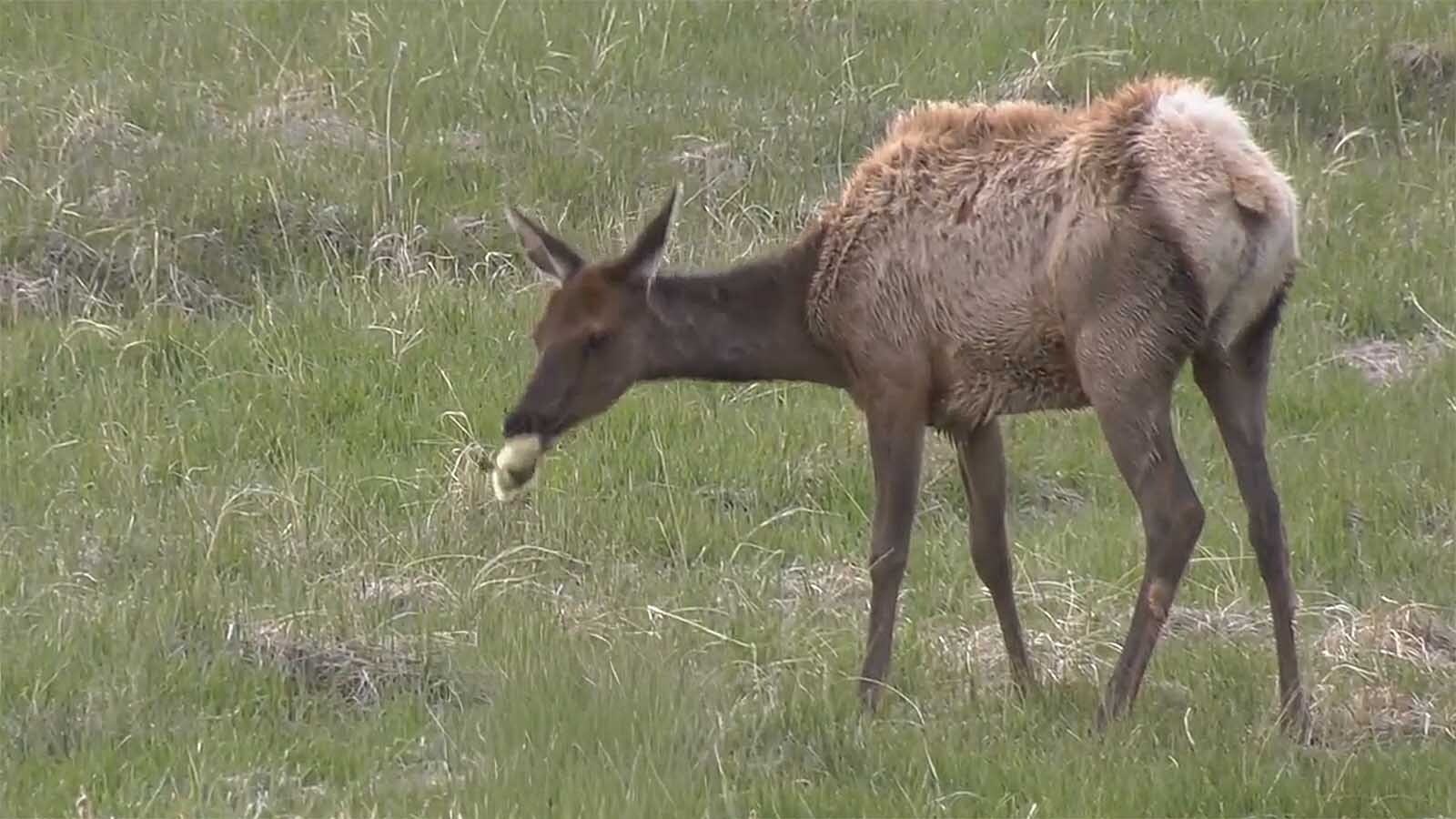
Wildlife watcher Loren Schrag of Estes Park, Colorado, took video of a cow elk chasing baby Canada geese, or goslings one recent spring.
Despite the parent geese putting up a valiant fight, the elk finally caught and ate one of the goslings, said Schrag, who along with his wife, Ally, runs the Good Bull Outdoors wildlife media site.
“The cow elk appeared to go after the gosling’s feet and the brain. That makes sense. The brain has a lot of complex nutrients that aren’t found elsewhere in nature,” he said.
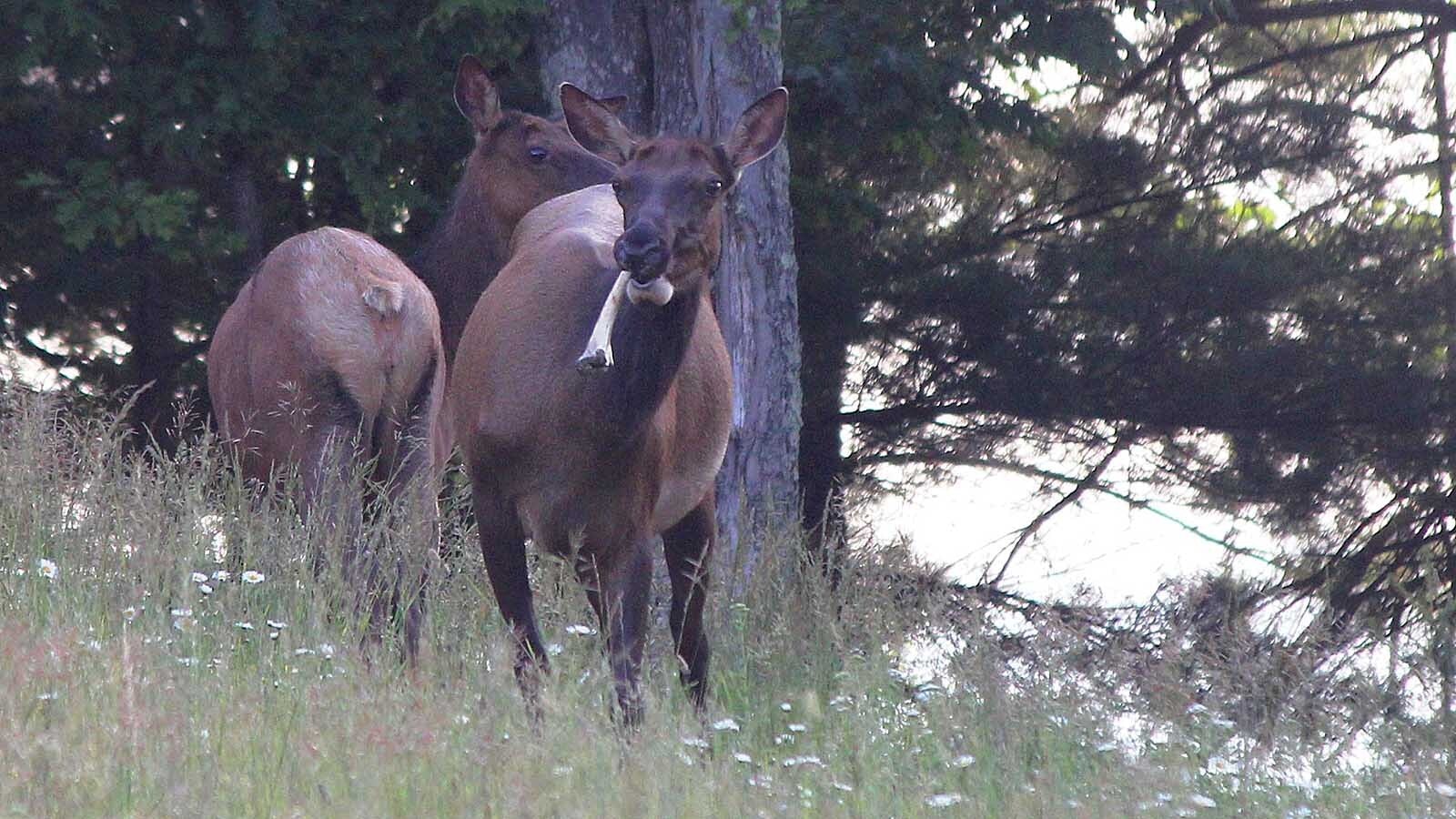
Elk eat each other’s shed antlers and bones for nutrients such as calcium, said Winnie and Brian Wakeling, Game Management bureau chief for Montana Fish, Wildlife and Parks.
Egg Shells And Bird Droppings
Elk, along with deer and moose, need supplemental nutrients, such as salt, so they’ve got to be opportunists, Wakeling said.
To get those dietary supplements, they’ll do some things that might seem strange or even revolting from a human point of view.
That might include gobbling down eggshells from old bird’s nests or licking bird droppings up off the ground, he said.
And after cow elk give birth, they’ll eat their own placenta, or afterbirth, Wakeling said.
However, that might be more about protecting themselves and their calves from predators than it is about nutrients, he said.
“It’s an adaptation, to eliminate something that might attract predators if it was left there,” he said.
He said that an elk eating a gosling would be extremely rare.
“Their digestive system isn’t designed to process animal protein,” he said.
Gulping Down Bones
When elk eat shed antlers or bones, even those of other elk, it’s about getting calcium, Winnie said.
When pickings for usual foods get slim during the winter, elk are “operating at a caloric deficit,” he said.
“They aren’t getting many micro-nutrients, such as calcium, and their bone density plummets during the winter,” he added.
That can make their bones dangerously brittle. So, the solution is to eat others’ bones.
Calcium isn’t just good for bones. It’s also vital for nervous system function, Winnie said.
For example, calcium keeps the neurons that control elks’ heart rate functioning properly.
“It’s required for the heart muscles to contract, so it’s vitally important,” he said.
‘A Fermentation Vat’
As to why an elk would eat a gosling, Winnie said it might not have been to directly provide nutrients to the elk.
Instead there might have been some nutritional need for the “flora” or array of bacteria in the elk’s digestive system.
Elk might be regarded as walking septic tanks, insofar as the range of bacteria and other flora in their guts allows them to process all sorts of things that other animals, such as deer, might not be able to handle.
Elk have a multi-stomach digestive system, and the first stomach is “essentially a fermentation vat,” Wakeling said.
When it comes to plants, “elk will eat anything,” Winnie said.
“They’ll eat sagebrush, rabbit brush, wild rye, and evergreens,” he said.
Winnie said he’s seen instances of Douglas fir trees that looked as if they had been “trimmed” by elk nipping at the lower branches.
Wild Goose Chase
Schrag said when he first spotted the gosling-gobbling elk, he was driving by and saw it “running around a pond. So, he stopped to take video.
At first, the cow elk appeared to be chasing and trying to catch starlings but failed.
Then it spotted a pair of Canada geese with goslings and went for them instead.
“They (the adult geese) kept coming up to it and attacking it, hitting it in the face with their wings,” he said.
The geese got all their goslings except one safely into the water, and that last one fell prey to the elk, Schrag said.
It's the only instance he recalls seeing an elk eat a bird.
Over the years that he and Ally have watched elk in Estes Park, Yellowstone National Park and elsewhere, they’ve seen them eating bones on numerous occasions, he said.
Mark Heinz can be reached at mark@cowboystatedaily.com.