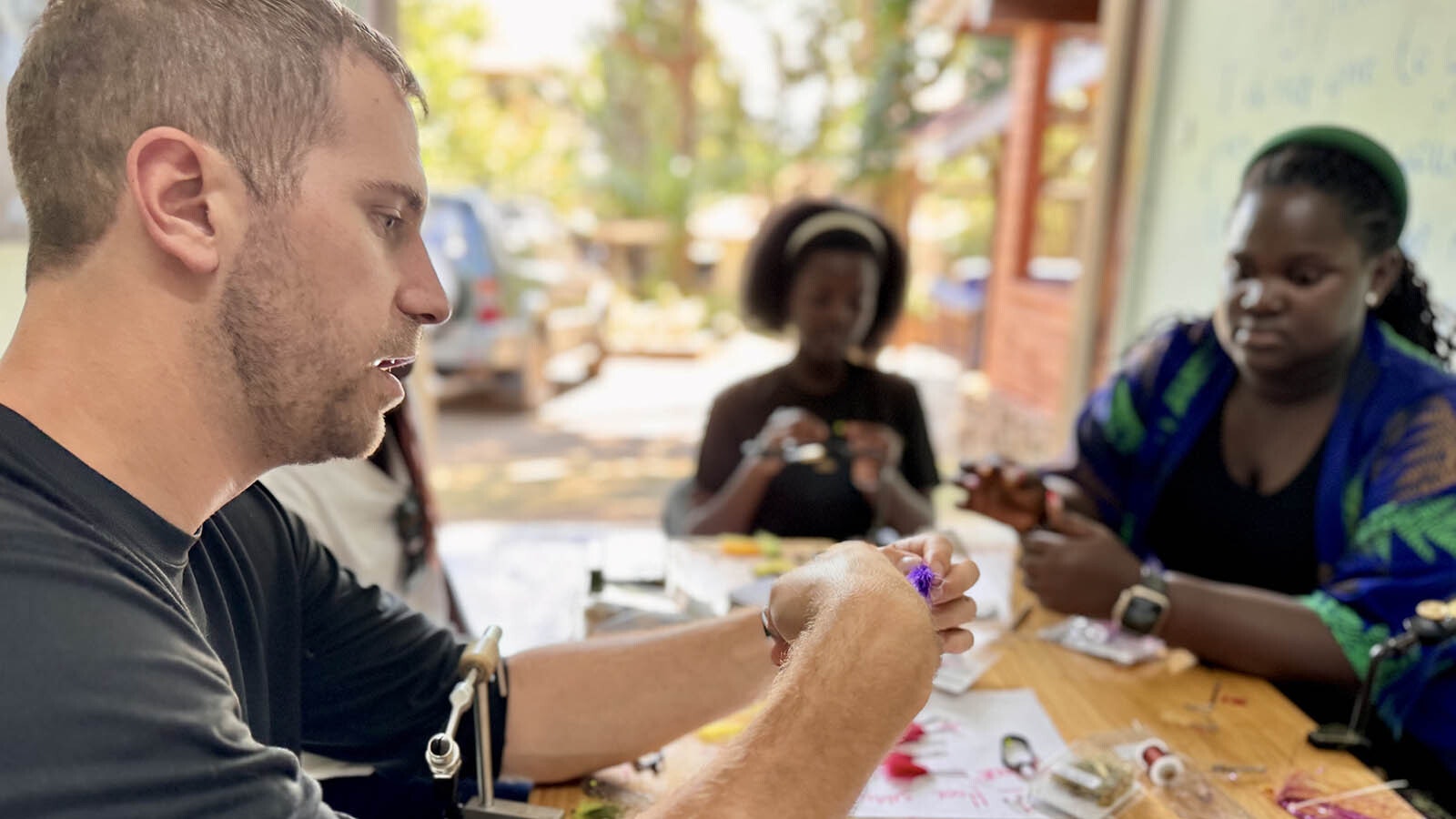
Halfway around the world, something as simple as tying fishing flies is helping a Casper man and his wife rescue Ugandan women from lives of sexual abuse.
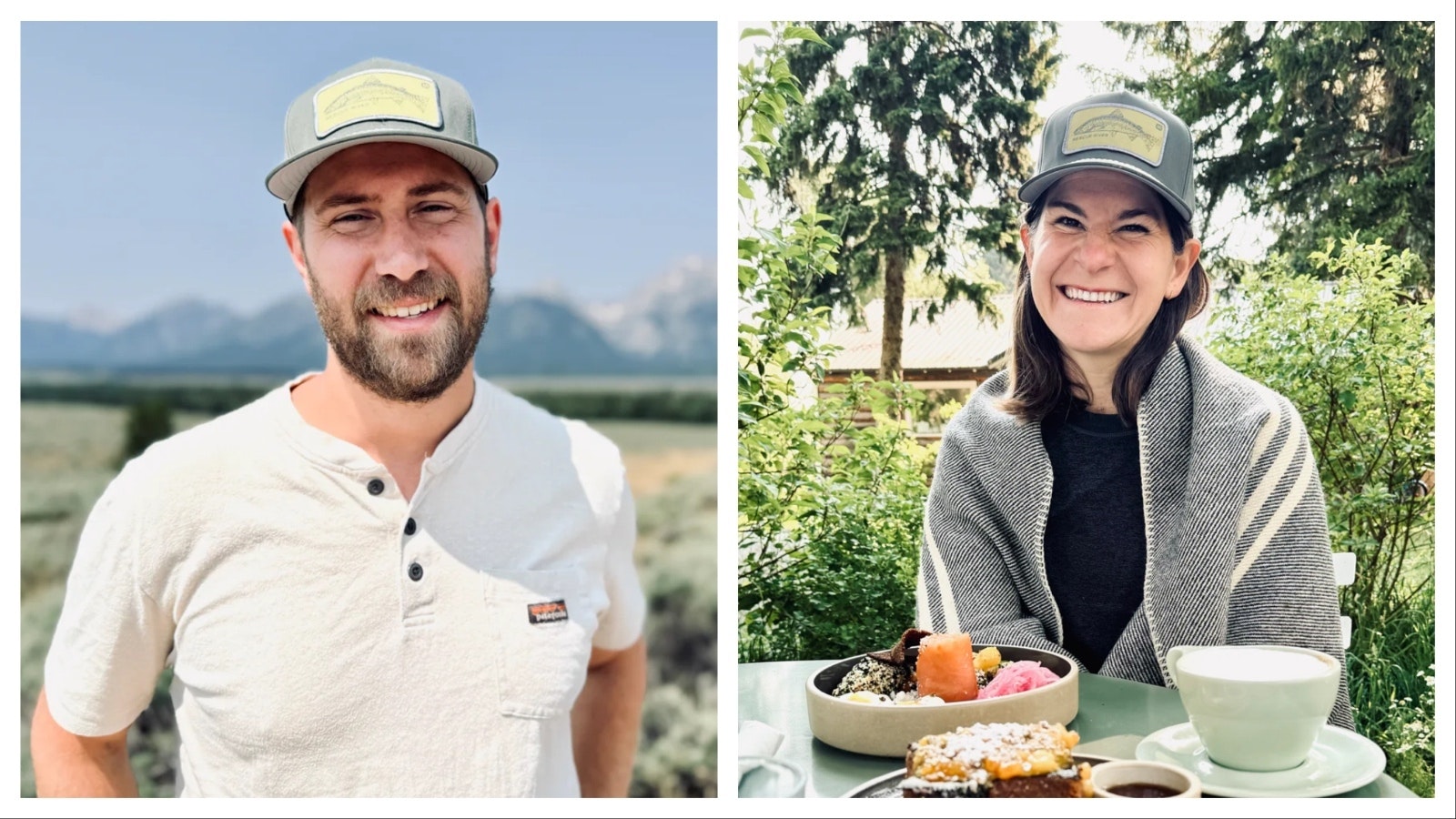
Lucas and Hannah Rowley met through a student-oriented ministry at Stanford University, then later realized their faith was drawing them to something much different than mainstream jobs.
That transformation began on an anniversary getaway a few years ago to Asheville, North Carolina, from Austin, Texas, where they lived.
They were walking across a bridge and talking about their blessings.
“(We) were both working, doing pretty well at our jobs,” Lucas Rowley said. “We bought a house, kind of living the American dream, so to speak — two kids, a couple of cars, white picket fence.
"And I looked at Hannah and we were both like, ‘We certainly have grown fond of the things of this world.’”
That led to more prayer, talking with others, hearing from God, and then taking their three young children and following what they believe is a higher calling to Kampala, Uganda.
There they are helping once-broken women rescued from sex trafficking to stand on new foundations of life and instill them with business savvy and skills.
Their unconventional idea?
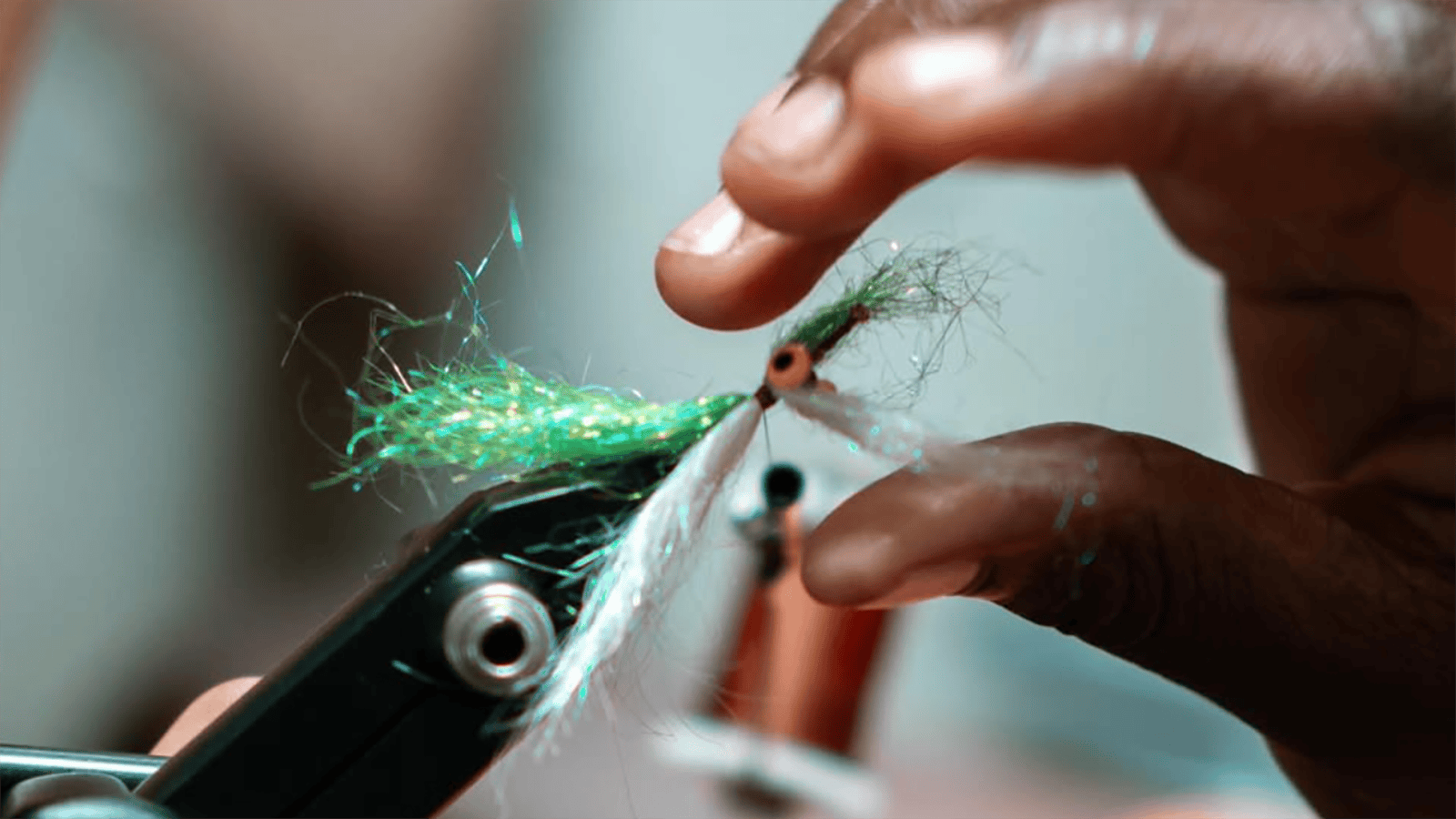
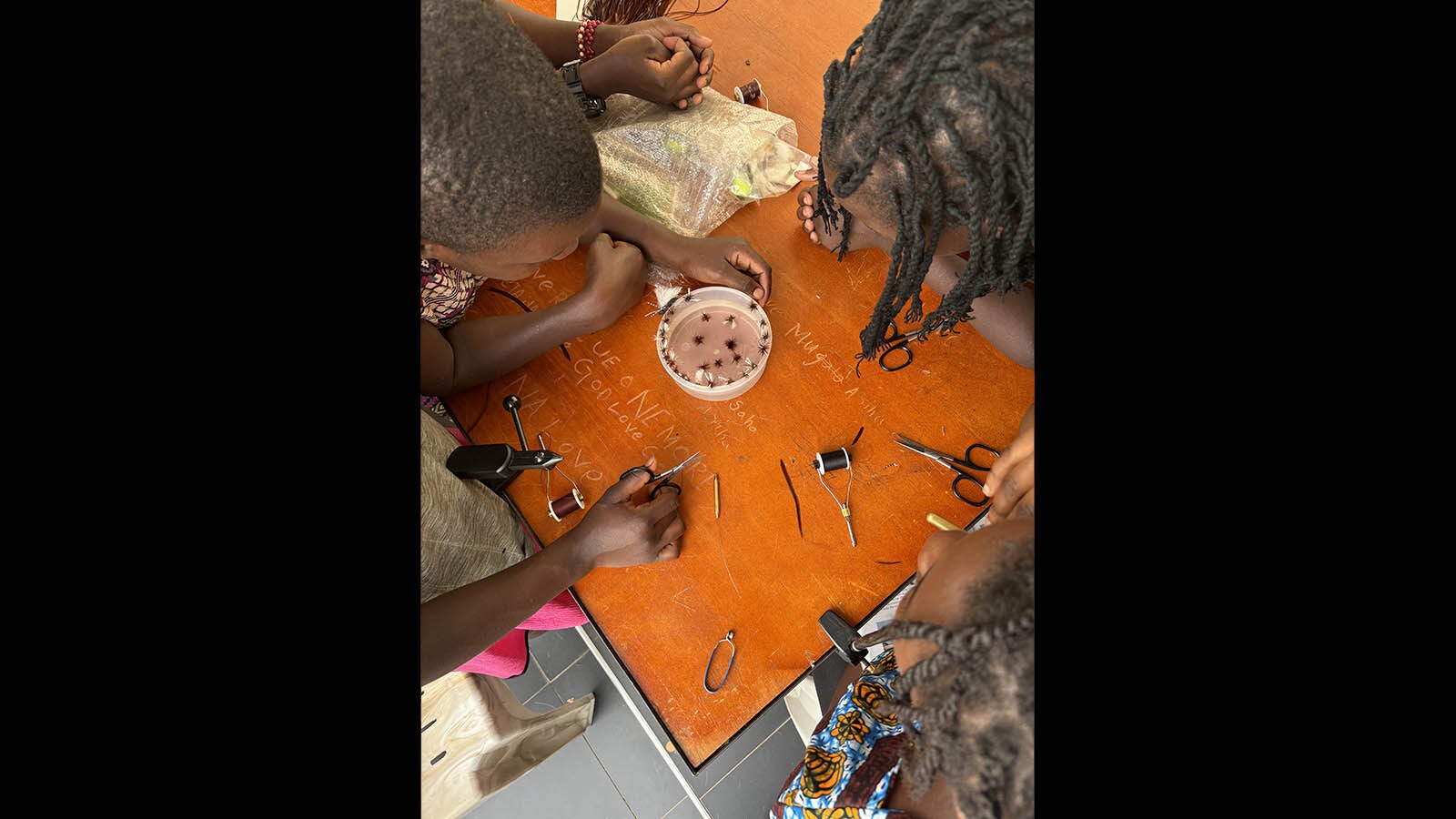
Teach them to tie high-quality fishing flies.
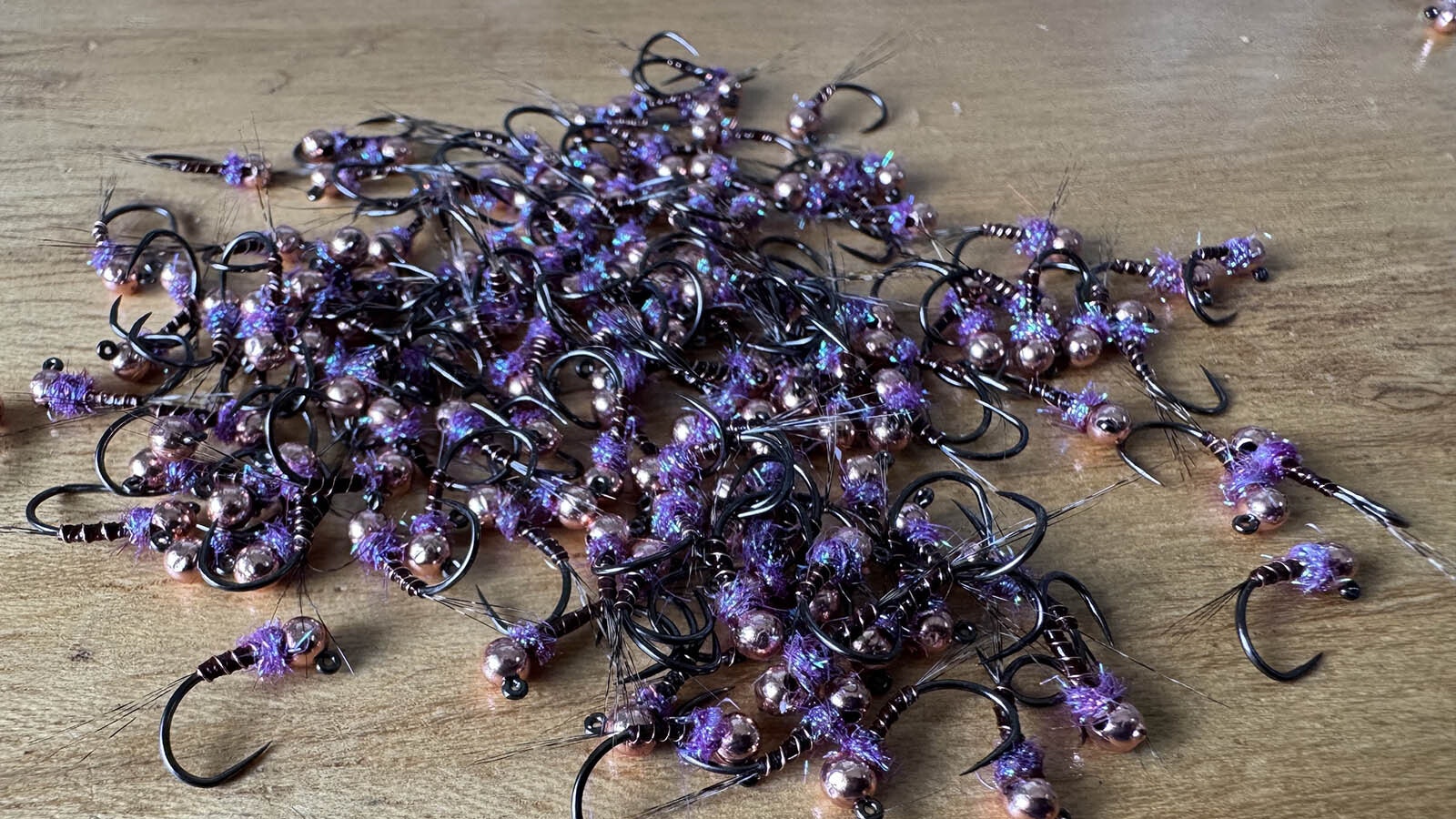
Now they’re also making lures with names like “Black Poacher,” “Elevated Chubby Chernobyl” and “Hare’s Ear Blowtorch” attractive and available to fly fishermen across the Rocky Mountain West.
Their for-profit business, Rescue River, took some time to launch after arriving in Uganda in August 2024.
They’ve entered 2026 with some initial successes, a website offering product and belief that this year will bring them closer to a self-sustaining operation.
Raised In Casper
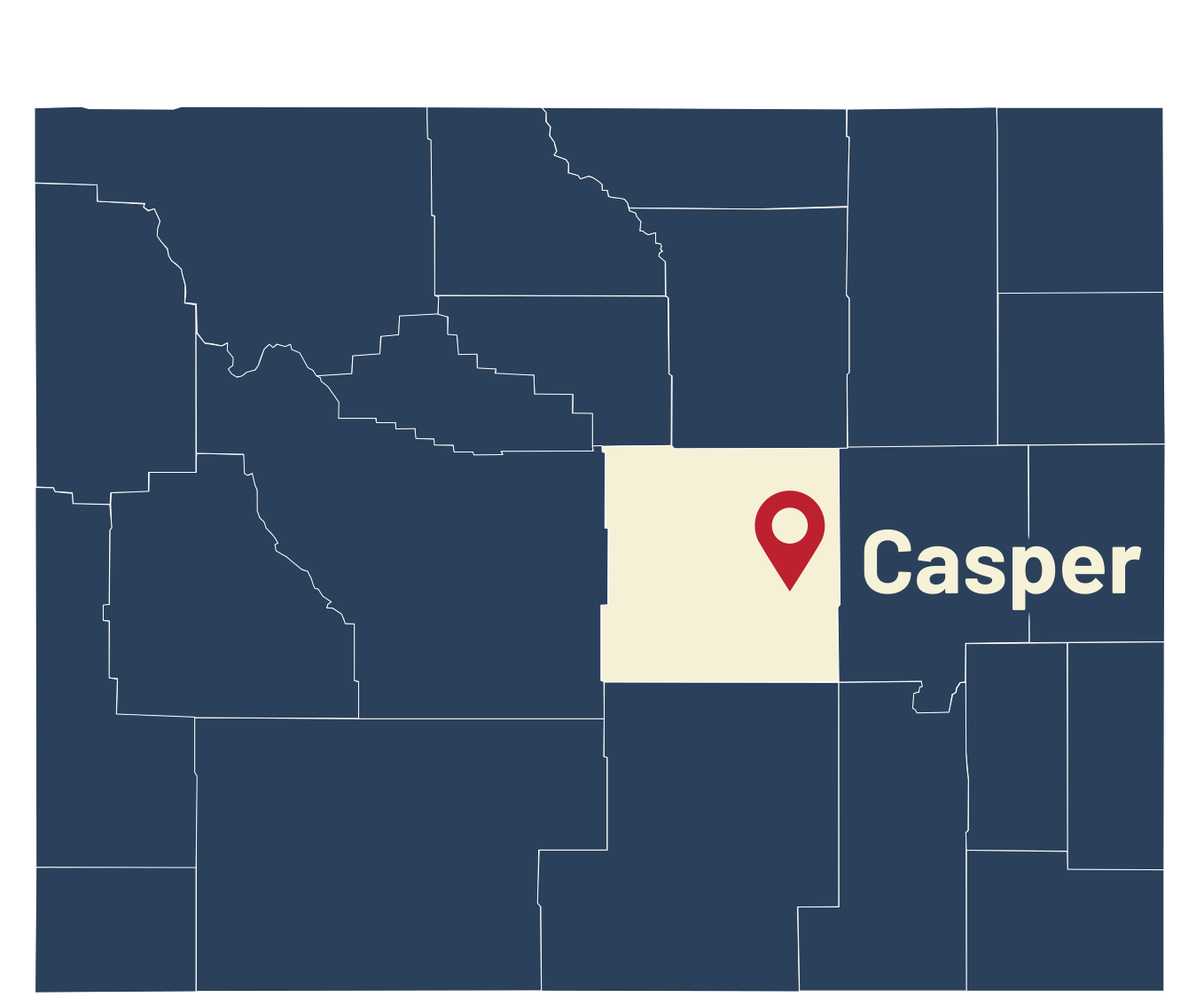
Lucas Rowley was born in Cody and raised in Casper.
At Natrona County High School, his father served as the track coach where Rowley threw the discus and tossed the shot put.
When he graduated in 2011, he had several scholarship offers, including one for Stanford University’s track and field program.
At Stanford, his specialties were the hammer throw and discus. It was also where he met Hannah, and they both joined a campus ministry called Cardinal Life.
“We had a campus ministry group there that was really instrumental in our lives,” Rowley said. “You could be real, ask the hard questions and I feel like we saw people who genuinely encountered Jesus and were genuinely living their life in pursuit of a mission.”
Following their graduations, Lucas with an engineering degree and Hannah with a degree in international relations, they both found good jobs at California tech companies.
He was building software, and they both had mentors and experiences that provided important learning for what was to come.
After 10 years in California, the couple moved to Austin just as the pandemic struck.
Again, their tech company positions were satisfying with challenges and opportunities that seemed to fill and fit their skillsets.
Then Rowley said he learned about a conference in Colorado involving the author of the book “Wild at Heart.” He had read the book, and got a green light from Hannah to attend, as well as hunt and fish with her Colorado family.
During that time, he said he was questioning who he was in terms of “identity” and pondering how he liked to work with his hands, and how programming “scratched that itch.”
“The 20-plus-hour drive on both ends definitely helped (me) to kind of think and process,” Rowley said. “The main question was really kind of asking God, ‘What did you call me when you made me? Who do you say I am?'”
‘Go Rescue My Daughters’
He said he didn't honestly know if he wanted to hear the answer, because he enjoyed the role that he was serving in the tech world.
As he continued to pray, he believes he heard God tell him his identity was a “rescuer” and he was to “go rescue my daughters.”
“So, it took weeks even to just say that out loud,” Rowley said.
He eventually sought advice in the church fellowship their family attended and met a man named Scott Lambie, who started a ministry in Uganda called Rescue One More.
Lambie and another man advised Rowley to start saying “yes” to things.
Doors of invitation opened for him to take short mission trips to Mexico, Morocco, Jordan and Turkey. He saw orphanages, people starting prayer ministries overseas, and people doing businesses as mission work.
Then Lambie invited him to check out what was happening in Uganda with a ministry he started rescuing girls from sexual abuse and trafficking.
It involves working with local authorities to hold perpetrators accountable and also provides safe shelters, medical care, counseling and more for the girls.
Statistics show one in three girls and one in six boys in Uganda are sexually abused as they grow up.
Rowley said he started to learn about the problems older teens and young women who were abused have trying to provide for themselves because many missed out on educations or have been isolated and shunned in communities.
Lambie then told Rowley that he had a friend who suggested teaching the women how to tie fishing flies.
Rowley said he questioned the idea, but Lambie noted that flies are small, could be put in a box and there would be relatively higher margins of profit selling them in the U.S.
“He also said that,’We have a connection with a guy in Wyoming to donate and put up a sizable amount of materials to get started,’” Rowley said. “And he also said, ‘Oh, by the way, there is a guy in Austin, Texas, who, with his daughter, started an organization called Fly Girl Global teaching girls and women on six of the seven continents how to tie flies over Zoom.’”
Lambie told him they needed somebody to “quarterback it down the field.”
‘Not Me’
Rowley said his initial response was “not me.”
But months later at a fly fishing tournament in Pinedale, Lambie was there and got on a rock telling others about the idea for the women in Rescue One More to make a living and lives for themselves by making fishing flies and selling them
All the while he was looking at Rowley.
Rowley said he then started praying about the idea, and over the next 14 months or so was led to put together a business plan.
He started visiting fly shops in Austin to learn more about tying flies and took some online classes on the art.
Other questions arose about whether he and Hannah should move their family to Africa.
He tried to work through whether it should be a nonprofit or for-profit business.
Each question and issue was prayed over, he said. It became clear to the couple that God wanted them overseas.
“I was working at a company I quite enjoyed and had come to love my coworkers, and it’s hard to say, ‘I’m leaving,’” he said. "And the inevitable question (comes) of: ‘Where are you going and what’s next?’
"Well, I’m moving my whole family to Africa.”
Rowley said he remembered being in a church service in Casper and hearing a visiting missionary tell his testimony about how he informed God he was willing to go anywhere “but Africa.”
“And, lo and behold, he is in Africa,” he said.
After moving their family to Uganda with help and support from their Austin church, they have experienced the benefits and struggles of being U.S. citizens in a poor nation.
Trips to immigration to renew visas and getting needed approval from local authorities for the business sometimes include the hint that a gift or money will help speed things along.
A mixup in paperwork involving their children — a 7-year-old daughter, and boys ages 5 and 3 — meant action was needed by immigration officials.
“My wife just made this amazing connection with some of the ladies in the office,” Rowley said. “It sounds kind of crazy, but if you just stop and get to know someone, ask them a bit about their life and their story with no secret agenda, … it really lowers the barriers.”
Progress
Initial work to teach some of the women from the Rescue One More ministry to put a hook in a vice and tie thread has blossomed to a staff of five — four survivors and a workshop manager — as well as a part-time Ugandan accountant.
Rowley said his goals are practical and spiritual to train the women and give them skills while building on a foundation of faith.
The training they received in the tech world has helped the couple with the business decisions.
They envision a place paying more than minimum wage. They want the effort to also help their employees develop practical financial skills, have a health care fund, and build some income as a buffer against the rainy days.
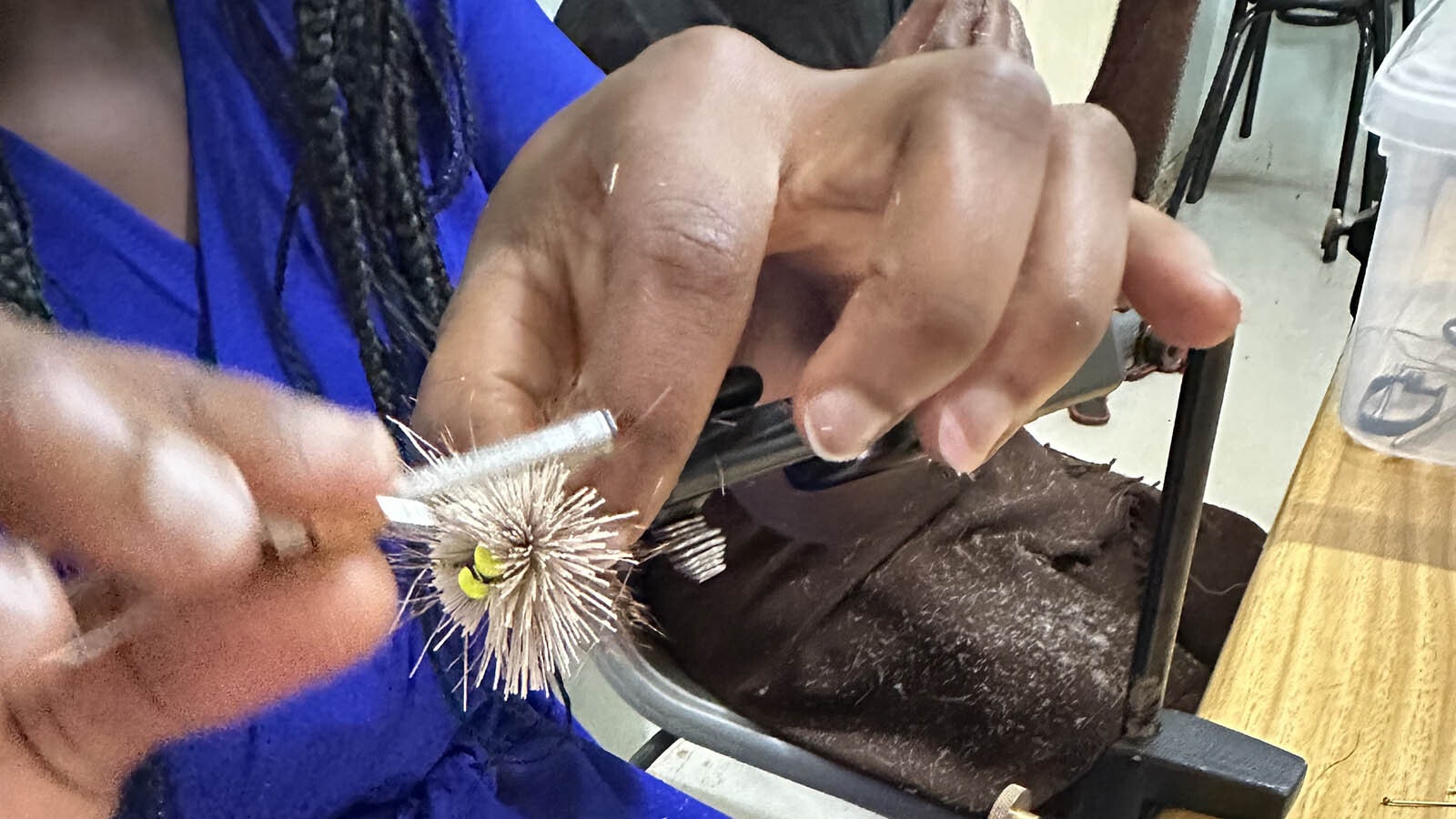
“My wife and I (want) this to truly be like its own self-sustaining business where the cost of materials, the rent, the website, hosting everything like that is covered by the sales of the flies,” he said. “In order to do that we have to make really good flies.”
He decided to focus on trout flies and the Rocky Mountain region because he has connections to Wyoming and other areas.
They keep working on leads and relationships that will bring more opportunities.
The flies are sold on online at rescueriver.com.
Rowley considers himself “a big point of failure,” and is working to train the women in other aspects of the business besides making the product.
He said he is trying to figure out ways to “empower and grow the Ugandans” in things such as managing suppliers, doing customs paperwork, shipping, and the financial side of operations.
He has already trained a trainer and is waiting to see the next phase of growth in the effort.
Three-Year Goal
The family raised support to help with their living expenses, and the best way to do that is to buy some flies, Rowley said.
He said the goal is to see the business become profitable within three years. They are halfway to the goal.
For now, his children are adapting to life in a country with a lot of red clay and the opportunity to go barefoot for much of the year. His 7-year-old daughter at a school career day told him that she “wants to run Rescue River with you someday.”
He sees a benefit for them to be outside of America and understand the poverty in other parts of the world, as well as giving oneself for others.
“They get to see our obedience into what the Lord has called us to do, and they see us in the highs and lows,” he said. “One of our daughter’s prayers over my wife and I is that God would help our stress, that he would make a way for our Rescue River to sell flies.
"And so, it’s been sweet.”
Dale Killingbeck can be reached at dale@cowboystatedaily.com.