CHEYENNE — Down one street in southwest Wyoming, authorities discovered five or six operations running buy-in card games that violated state gambling statutes. Inside one bar, the pot had swelled to six figures.
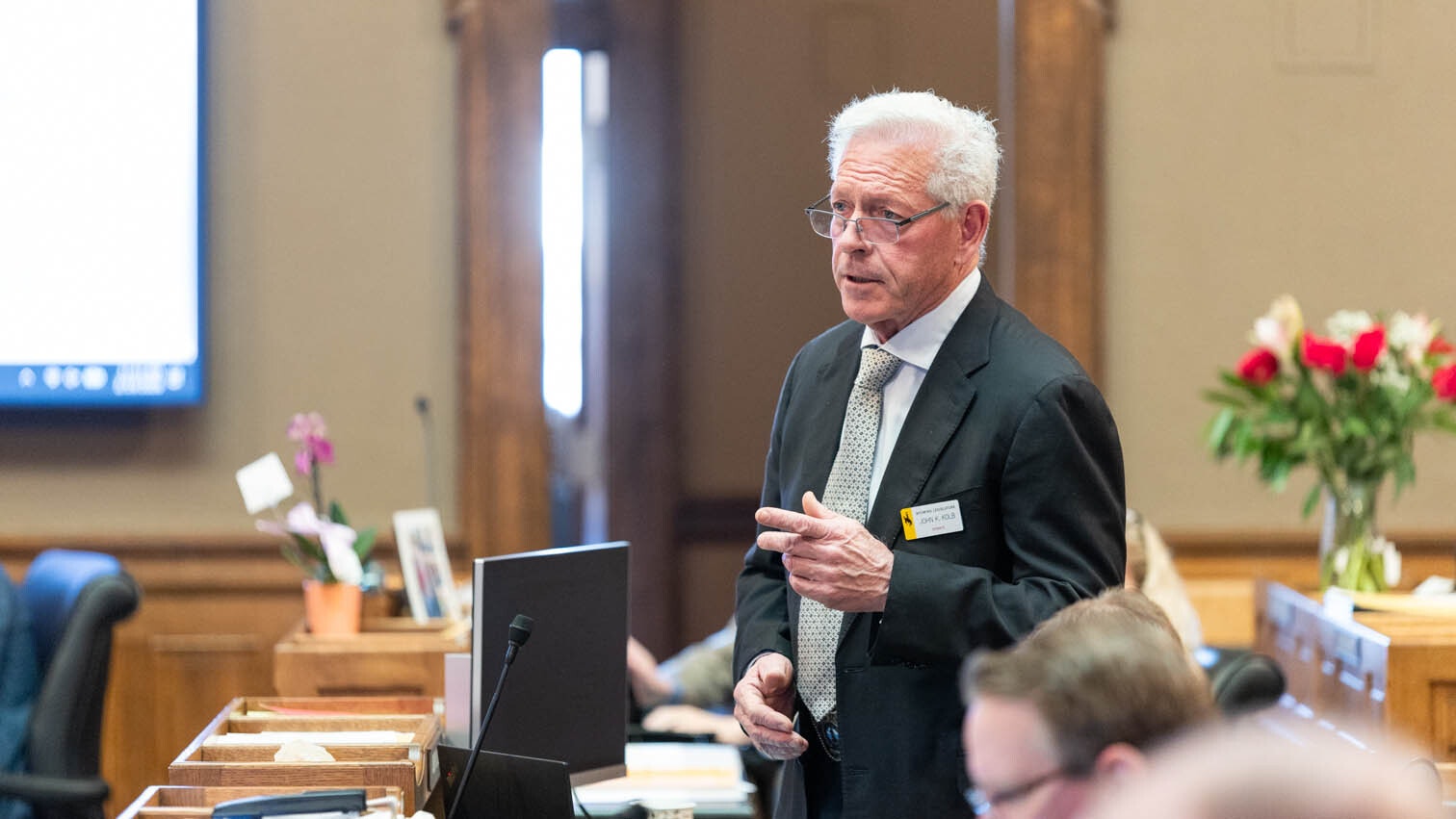
"Our prosecutors have found that $140,000 pot in fact in Sweetwater County, in fact one of the bars in town, and in fact it was told to them what was going on by another person who basically said, 'Hey, but they're doing it,'" Sen. John Kolb, R-Rock Springs, told the Senate Revenue Committee on Feb. 13. "So we have a huge education problem."
That eye-popping sum, combined with lawmakers complaining about gaming machines popping up beside grocery store checkout stands and their claims that children have been caught playing them, has made the second-term Republican the Legislature’s loudest voice on gambling this session.
Four bills bearing his fingerprints are alive in the Legislature, and on Thursday — Kolb’s Senate File 111, creating a permanent select committee on gaming — sailed through Appropriations with no opposition.
"Gaming within the state of Wyoming has exploded into a multibillion-dollar business," Kolb said in an interview after Thursday's committee vote, "and this is an attempt to get a committee up that will deal specifically with that."
Closing Loopholes
The first prong of the crackdown is Senate File 44, which tightens definitions around illegal gambling operations masquerading as friendly card games.
"The out-of-control situation in the state of Wyoming with gaming when it came to these type of buy-in card games" prompted the bill, Kolb told the Revenue Committee on Feb. 13. County prosecutors "weren't willing to prosecute because it had an element in there of being friends."
Under current law, professional operators exploit a loophole allowing games among acquaintances. Bars take a cut of the pot, players pay buy-ins, and when authorities investigate, everyone claims to be pals.
"We had poker parlors opening across the state who used a club excuse as their reason for opening," Mike Moser, executive director of the Wyoming State Liquor Association, told the Revenue Committee. "Their sole purpose was a club that played poker, and that was the problem."
The bill creates a new definition of "bona fide social relationship" requiring "established knowledge of the other" that "shall not include a social relationship which has arisen for the purpose of gambling." A legal private game must be "incidental" to that relationship, involve "natural persons only," not be advertised, and no participant can receive "any remuneration" beyond "the direct realization of winnings."
Asked whether home poker games would be affected, Kolb quipped: "You could play for bananas."
The Revenue Committee passed SF 44 unanimously, 5-0, and on Thursday the full Senate advanced it to third reading without debate.
Grocery Games
The second bill, Senate File 46, targets skill-based amusement games that migrated from bars to grocery store checkout aisles — a move Kolb says was never intended when the Legislature expanded where alcohol could be served.
"They put in skill-based games in the grocery store right in front of the checkout stands. We had children playing the games," Kolb told the Revenue Committee on Feb. 13.
"The folks in Wyoming aren't the issue," added Kolb. "The issue is anyone else who has a smart attorney who found out a loophole."
A loophole in liquor licensing allowed operators to argue that a grocery store's entire footprint qualified as a licensed liquor establishment, meaning machines could go anywhere in the building.
The bill narrows that definition to locations "licensed or permitted to sell alcoholic liquor or malt beverages for consumption on the licensed or permitted premises."
On the Senate floor Thursday, debate questioned whether children should be shielded from even seeing the machines. An amendment by Sen. Barlow stripped "or view" language from the bill, drawing a pushback from Kolb.
"There is a vast difference between a gambling product and a cigarette product," Kolb argued on the floor. "It is something that attracts children. In this day and age with the graphics popping up and the flashy lights, children have not developed a mind to make a decision about a habit that in fact is going to be a long-term habit potentially."
His warning carried a harder edge: "What I've found out is when it can happen, it will happen. And that's how they got into grocery stores."
Different Takes
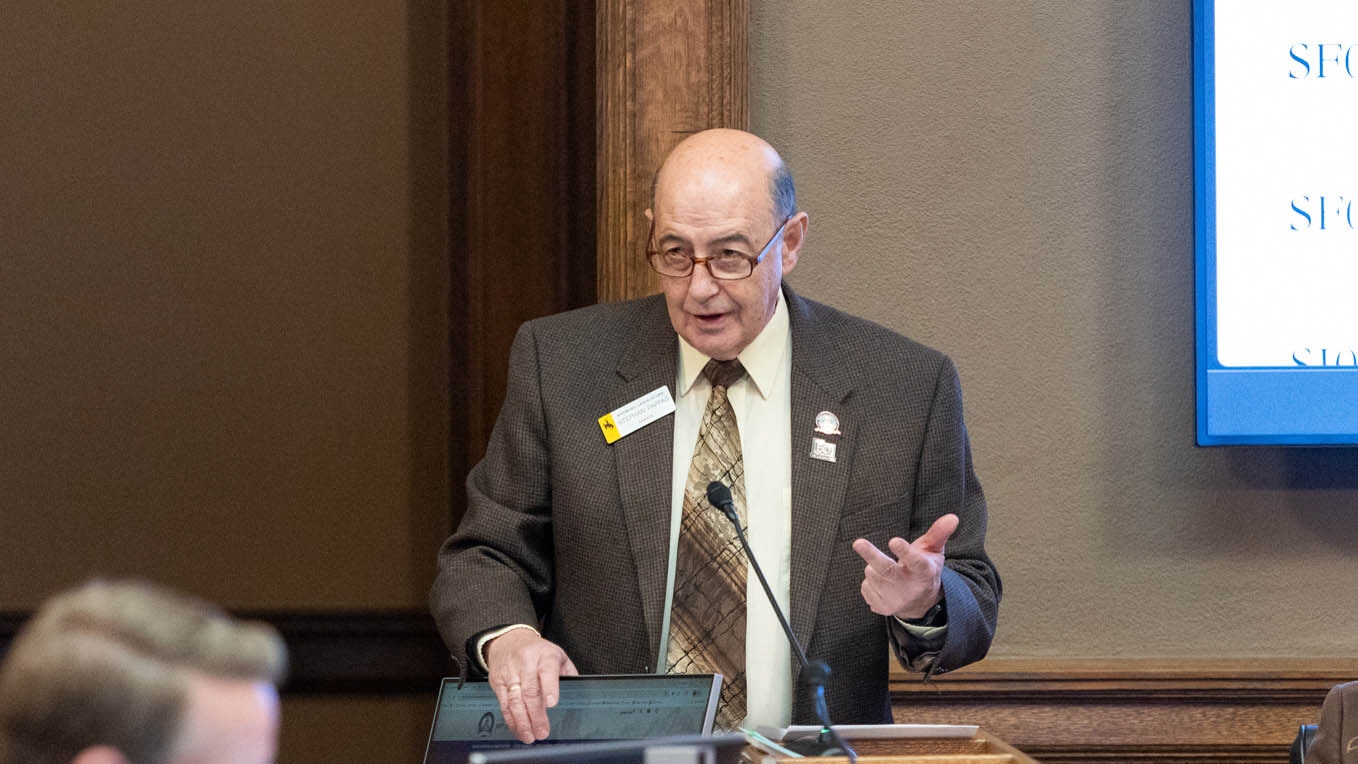
Not everyone shares Kolb's urgency. On the Senate floor Thursday, Sen. Stephan Pappas, R-Cheyenne, drew a line.
"Let's not bring gambling into this thing," Pappas said, arguing that existing law already bars anyone under 21 from playing the machines. "Adults have a perfect right to go in and use it."
The cost to operators concerned Pappas as well.
"We're unduly saddling operators who have these games now in their facility with an onerous cost of having to put up, you know, construct walls," he said.
"This is just more regulation on a business," Sen. Bob Ide added.
Whether the problem belonged in statute at all — rather than Gaming Commission rules — divided witnesses during the Feb. 13 committee hearing.
Lobbyist Jonathan Downing, representing a skills-game operator, urged restraint: "We believe that a mechanism already is in place for the gaming commission through the rules and the law."
But Kolb rejected that argument.
"The gaming commission cannot go in there and change liquor law licensing," he told the Revenue Committee. "If there was an argument to say they could do it, they should have done it. They didn't."
The Barlow amendment stripping "or view" was adopted by voice vote Thursday, and SF 46 advanced to third reading.
Standing Committee
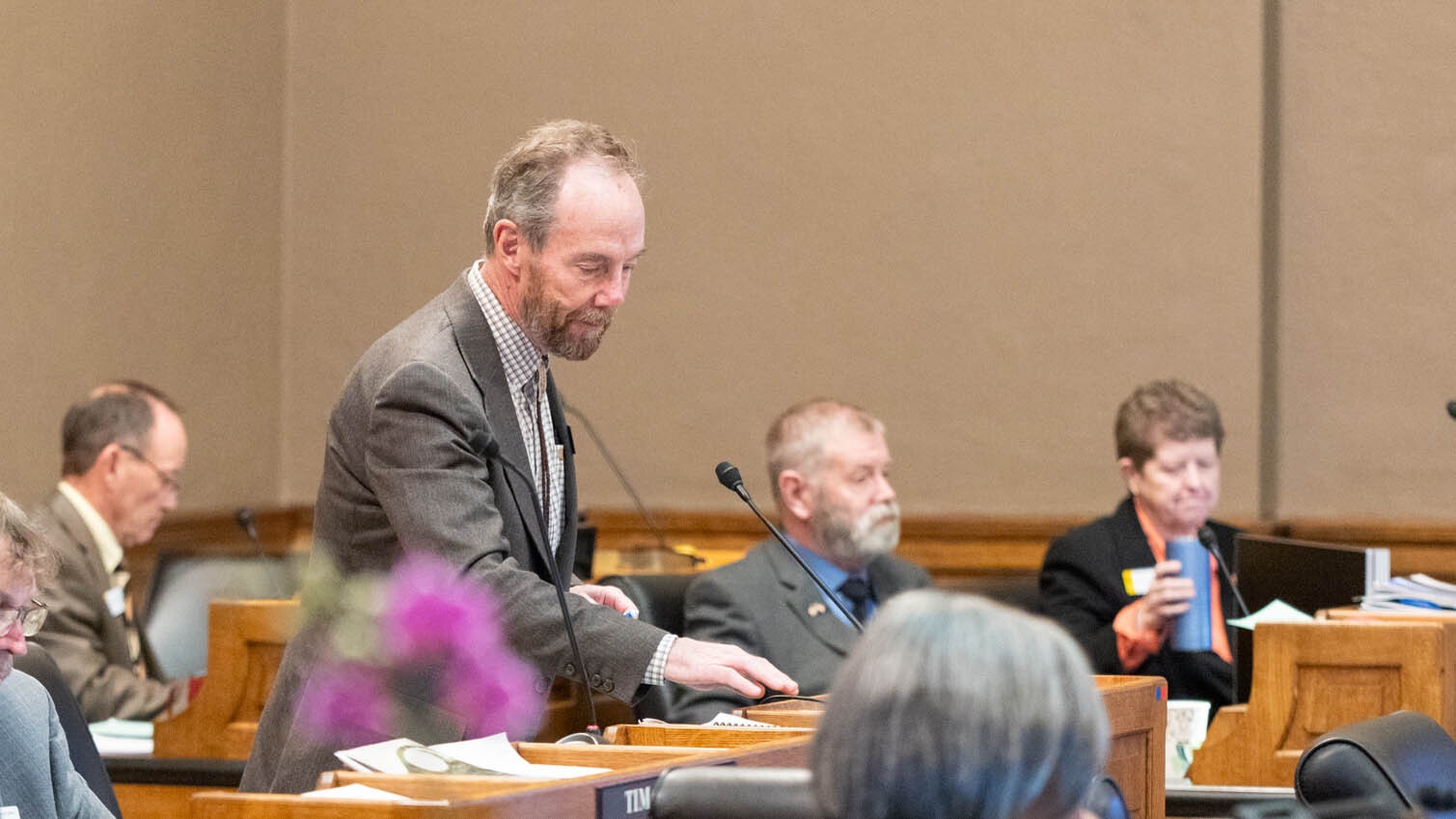
The stack of gaming bills feed into Kolb's broader case that Wyoming's gambling landscape has grown too complex for any existing committee to handle. That argument drove Senate File 111, which would create a six-member, bipartisan select committee on gaming — three senators appointed by the Senate president, three House members appointed by the speaker.
Under the bill text, the committee would "develop knowledge and expertise regarding gaming activities authorized or proposed under Wyoming law," engage with local governments on "social and community impacts, including responsible gaming and problem gambling," review "taxes, fees, revenue distribution and applicable auditing and reporting requirements," and "prepare and submit recommendations to the legislature, including sponsoring legislation as necessary."
On Thursday, the Senate Appropriations Committee cleared SF 111 without opposition. The bill carries a $34,000 appropriation from the general fund through June 2028.
"This is an attempt at giving this topic a permanent home," Kolb told Cowboy State Daily after the vote.
Bigger Picture
Two additional gambling bills round out the session's push.
Senate File 24 allows debit card lottery purchases — aimed at reducing the amount of cash flying around small stores when jackpots swell — and passed the Senate 22-9. Senate File 45, addressing local control over simulcasting horseracing passed 28-3 and was re-referred to Judiciary.
In the interview Thursday, Kolb connected the dots. The current gaming bills emerged from an interim task force, covering everything from local control over gaming permits to the loopholes addressed in SF 44 and SF 46, he said. A separate money-laundering bill is moving through the House.
Throughout two weeks of testimony and floor debate, the Rock Springs senator has framed the fight in terms that go beyond statute books and licensing fees.
"Gambling in the state of Wyoming, unless there's an exception, is constitutionally illegal," Kolb reminded colleagues from the Senate floor Thursday. "This is not prohibition — this is just a question that the body answered yesterday."
And the stakes, he said, are ultimately about more than money.
"It's an addictive habit and it's an issue that the legislature has the authority to say what we think is right," Kolb said. "However, there's a consequence to this, and it's, in my mind, a moral consequence — that do we want this or not?"
David Madison can be reached at david@cowboystatedaily.com.