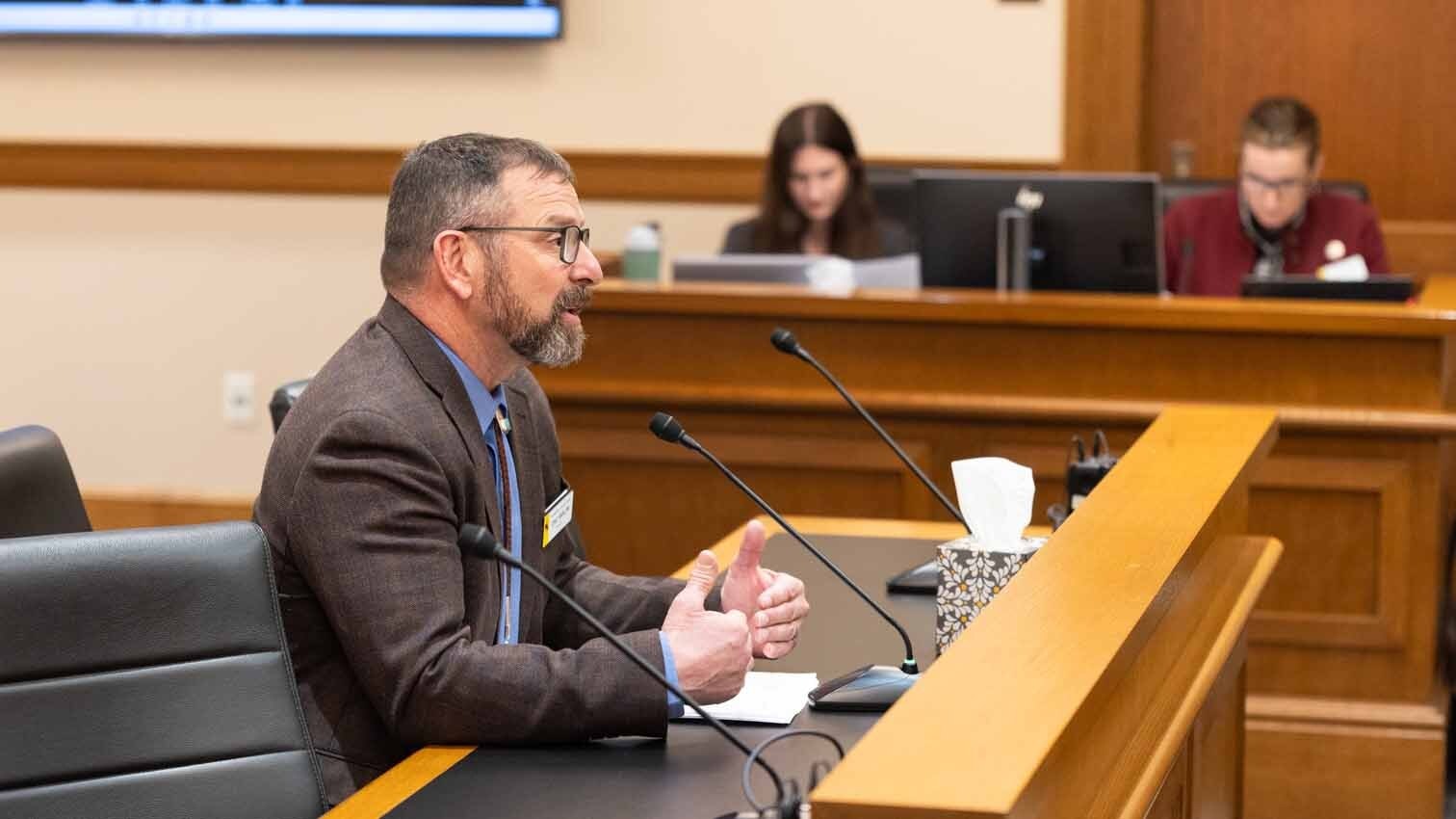
CHEYENNE — For 17 years, Jordan Seitz has been taking his junior high students at Encampment Public School out onto the public lands that surround their small Carbon County town.
They’ve found stromatolite fossils on top of the Snowy Range — some of the oldest fossils in the world.
They’ve explored copper mine sites to learn about elements and local history, collected petrified wood in Shirley Basin, and hiked to the wreckage of Flight 409 at the base of Medicine Bow Peak, where his students wrote stories about the crash.
“Our mountains and rivers have been great places to learn about erosion and plate tectonics and land restoration,” Seitz told the Agriculture, State and Public Lands & Water Resources Committee on Tuesday in online testimony. “We take snowshoeing and skiing trips every year, and we incorporate lessons on winter safety and survival.”
After the Platte River wilderness burned, Seitz said his students helped replant sagebrush, bitterbrush and serviceberry. They’ve helped Wyoming Game and Fish put GPS collars on bighorn sheep ewes.
They’ve done grueling hikes through rough country to observe sheep using optics and trail cameras.
“My students’ favorite memories over the years in my class are always related to the adventures we go on,” Seitz said. “We build relationships that go beyond our school walls, and our adventures on public lands allow students to see wild places, do hard things, overcome fears, and challenge themselves physically and mentally.”
Seitz offered just one example of the impassioned testimony Tuesday about the value of public lands — as outdoor classrooms, as places that inspire healthy lifestyles, and as a core part of what it means to live in Wyoming. Witness after witness — from high school students to trona miners, outfitters to wildlife biologists, mayors to firearms industry representatives — lined up to urge the committee to advance Senate Joint Resolution 9.
Jason West, a physical therapist who testified online, put it simply. “No one comes to physical therapy so they can get back to their couch,” West said. “People want to hike, bike, fish, backpack, climb, ride horses, camp, ATV, run — all of that on our public lands. And so from another perspective, public lands are medicine, and they’re some of the best medicine that I’ve found.”
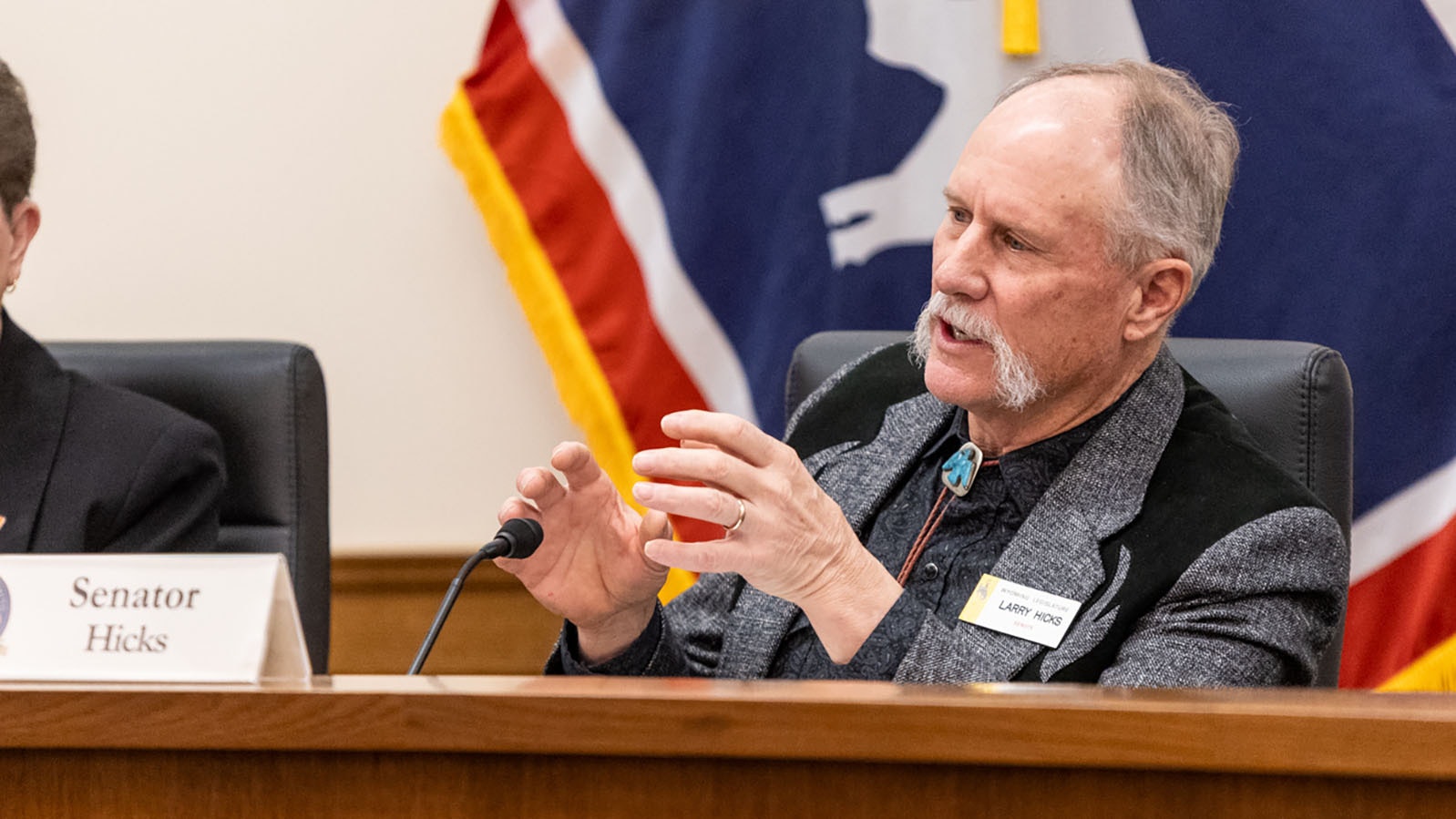
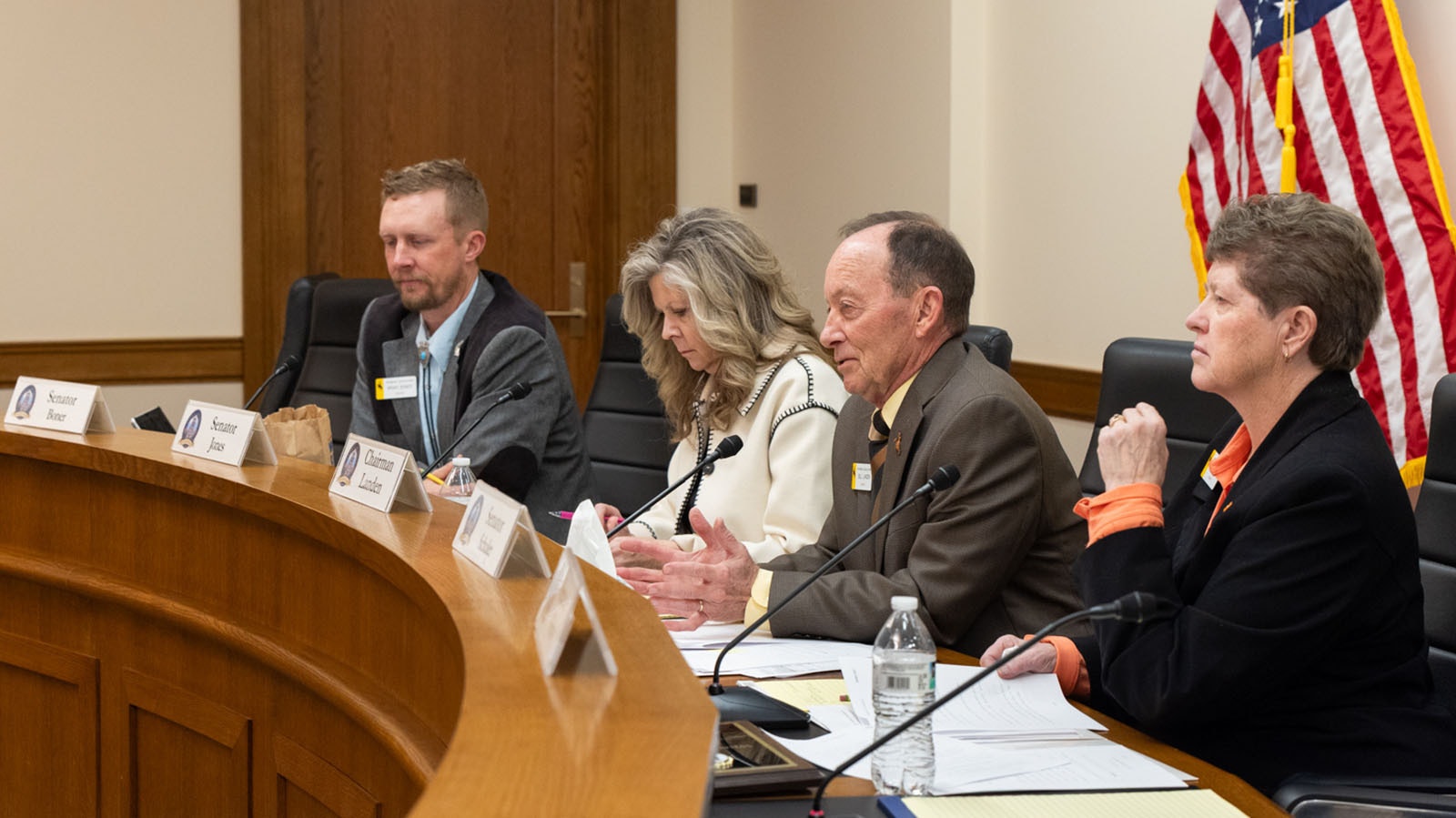
The committee obliged, voting 5-0 to send the resolution to the full Senate floor.
Barlow’s Case
SJR 9, titled “Keeping public lands protected and decisions local,” was introduced by Sen. Eric Barlow, R-Gillette, with 38 co-sponsors — a bipartisan coalition that includes a total of 17 senators and 22 representatives.
“We know how much public lands are part of our state,” Barlow told the committee. “What this is urging is that Congress, those that are responsible for the management of lands, understand how important they are to our communities, to our economy, and to our way of life.”
Barlow said he had traveled across Wyoming for six months as part of his campaign for governor, and public lands came up in every corner of the state. “Public lands are both our heritage and for many people, that’s their posterity,” Barlow said. “It’s what they want to pass on to another generation.”
The resolution notes that “recent proposals and public discussions have raised concern regarding broad, quota-driven or large-scale sales of federal public lands as a policy or revenue mechanism, without sufficient local input or analysis.”
The resolution warns that “widespread disposal of public lands without clear criteria shifts significant long-term costs for access, wildfire response, infrastructure and law enforcement onto state and local governments without dedicated funding.”
In its operative language, SJR 9 declares that “the Wyoming Legislature opposes any state or federal legislation or policy that promotes the broad or indiscriminate sale or exchange of public lands.”
It demands Congress and federal agencies “respect existing land management frameworks, county land-use plans and the voices of local communities most directly affected by federal land decisions.”
Barlow was careful to note the resolution doesn’t oppose all exchanges or sales — existing law already provides mechanisms for those, and his own family completed a significant land exchange 25 years ago.
“There are ways to actually accomplish things in a meaningful way with public input,” Barlow said. “So we don’t need to have top-down mandates coming at us.”
On The Record
In a follow-up interview, Barlow said the resolution was driven by what he heard from Wyoming residents while crisscrossing the state.
“Unanimously, this comes up everywhere I go,” Barlow said. “You get spontaneous applause when you say, ‘I believe in public lands, and I want to help protect them, just like you do.’”
If passed, the resolution will become a formal declaration from Wyoming sent to the president, the U.S. Senate and the U.S. House of Representatives.
“Its ultimate power is unifying different interests in Wyoming to recognize the value of public lands, and the value of working together to protect, promote, and steward those important resources for all of our uses — now and for future generations,” Barlow told Cowboy State Daily.
He agreed it could make it clear that while leaders in Utah and other western states might support the sale of public land, Wyoming takes a different view. Barlow also said the resolution serves as a way to put Wyoming’s political leaders on the record about where they stand on public lands.
“The citizens of Wyoming are on the record every day when they recreate, when they ranch, when they mine or explore for minerals,” Barlow said. “We’re on the record every day, because we’re actually using them. And appreciating them, stewarding them.”
Inbox Overflowing
The resolution clearly resonated with legislators on the committee.
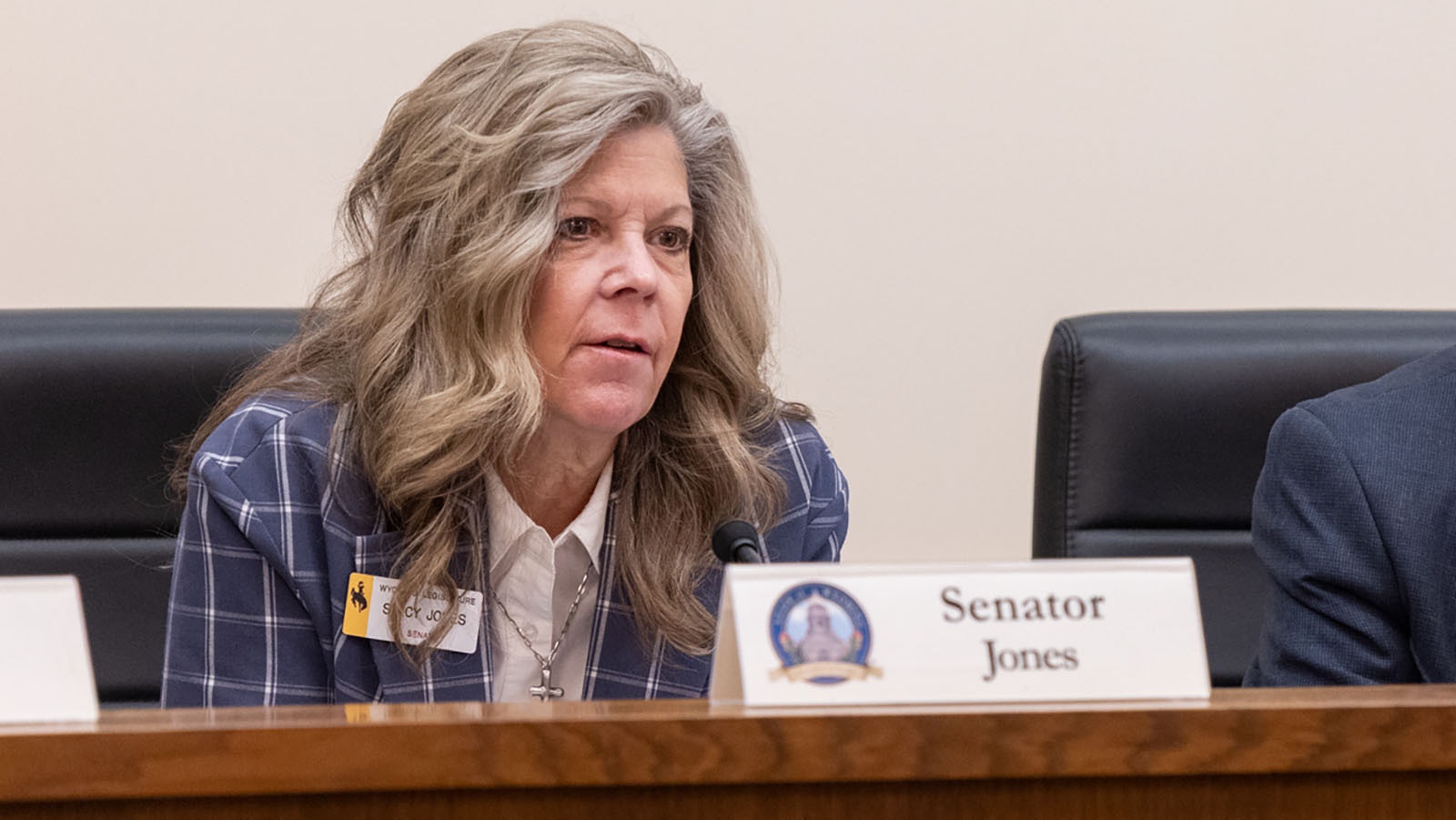
Sen. Stacy Jones, R-Rock Springs, said the response from constituents was overwhelming.
“This bill has filled my email inbox,” Jones said. “And overwhelmingly, I don’t think I’ve got one single email that was against this resolution.”
One of Jones’ constituents, Marshall Cummings, president of USW Local 13214 representing over 600 trona miners at WE Soda, testified online from southwest Wyoming.
Cummings also serves as president of the Southwest Labor Council, representing more than 1,500 workers.
“My roots run deep in Wyoming soil,” Cummings said. “My grandfather on my mom’s side was a rancher. My grandfather on my dad’s side was a Forest Service agent, and now I’m a third-generation miner. The outdoors shaped me second only to my faith.”
Cummings said workers in the energy sector have proven that responsible development and protecting public lands can coexist.
“What this resolution wisely pushes back against is broad, quota-driven, large-scale disposal of public lands without meaningful local input,” Cummings said. “This resolution protects our lands, our economy, our heritage and our voice. It allows us to keep our priorities in check, where we serve the Almighty instead of fall slave to the almighty dollar.”
Young Voices
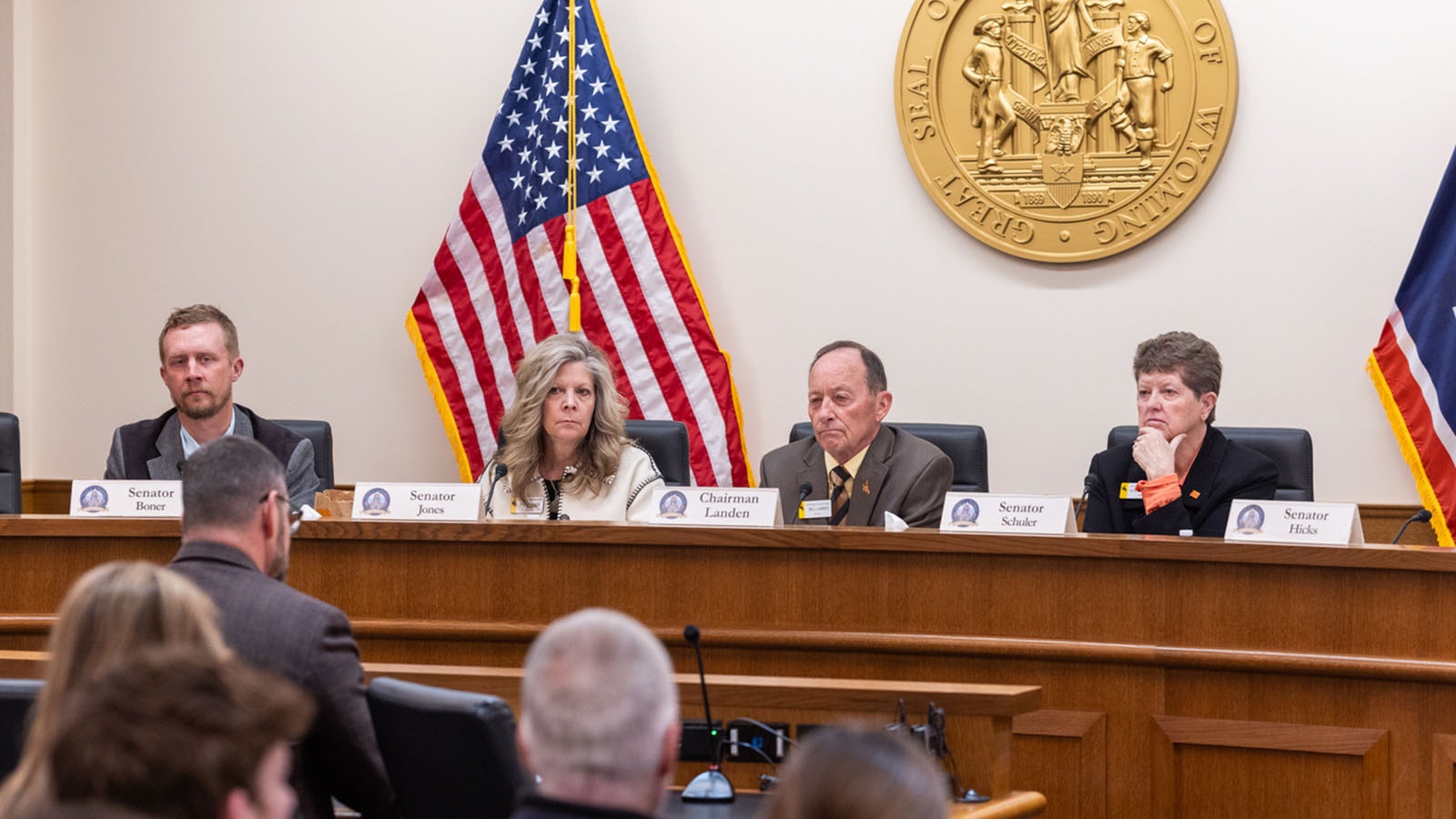
Some of the most compelling testimony came from young people, including Sunday Schuh, a senior at Cody High School who spoke about public lands from both a personal and economic perspective.
“I recreate in the Shoshone National Forest and in Yellowstone. I’ve grown up there my entire life,” Schuh said. “And not only that, but I work at Sunlight Sports in downtown Cody. And as you well are aware of how important it is for our economy in Cody — I mean, tourism is everything. People come to Cody to go to Yellowstone, to go to the Shoshone National Forest.”
Schuh said tourists come through Sunlight Sports to buy gear so they can recreate on those public lands. “It’s a huge part of our economy, as it is for many other communities in Wyoming.”
Wildlife Habitat
Wyoming Game and Fish Director Angi Bruce told the committee that public lands are critical for both recreation and wildlife.
“Our hunters, anglers, wildlife enthusiasts greatly appreciate what public lands offer in this state,” Bruce said. “But secondly, the value of maintaining healthy wildlife populations, and the critical habitat that we see on public lands.”
Bruce offered some striking numbers: 55% of sage-grouse core area is located on federal public lands, as is 55% of big game crucial winter range.
“What I really like to see in this is the emphasis that has been placed on local input and consultation with the states,” Bruce said, noting that Game and Fish currently reviews all land exchanges and sales to assess effects on wildlife and wildlife habitat.
Growing Outcry
The Wyoming resolution comes amid intensifying opposition across the West to proposed federal public land sales. Utah Sen. Mike Lee has attempted to fold a provision into the federal budget reconciliation bill that could put over 100 million acres of national public land at risk of being sold, according to the Center for Western Priorities.
Idaho Sens. Jim Risch and Mike Crapo have come out against the provision, joining a growing list of GOP lawmakers who oppose public land sales — including Montana Rep. Ryan Zinke, who led an effort to strike public lands sales from the House version of the reconciliation bill. Polling data underscores how broadly unpopular such proposals are.
A report from the Conservation in the West Poll, conducted by New Bridge Strategy, Colorado College’s State of the Rockies Project and FM3 Research, found that majorities of Western voters approve of the way federal agencies manage public land in their states, with approval on par or higher than eight years ago.
The National Park Service received the highest approval at 86%, followed by the U.S. Forest Service at 79% and the U.S. Fish and Wildlife Service at 75%.
Three-quarters of Western voters oppose reducing funding to agencies like the Forest Service and Fish and Wildlife Service for repairs, firefighting, visitor services and public land oversight. By more than a nine-to-one margin, voters prefer career professionals make decisions about natural resource management over new officials. And 65% of voters in the West oppose giving state government control over national public lands — opposition that has grown by nine points since 2017.
Wyoming’s Message
After testimony wound down Tuesday, Barlow brought it back to why he introduced the resolution in the first place. “I didn’t focus on what was happening in Washington,” Barlow said. “I was focused on what Wyoming people value, and they value their voices being heard. So that’s what this message is about — Congress, yes, you have that responsibility. Part of that responsibility is to be attentive to your communities, which you represent.”
The resolution, if approved by the full Legislature, will be transmitted to the president of the United States, the president of the Senate and the speaker of the House of Representatives.
David Madison can be reached at david@cowboystatedaily.com.