CHEYENNE — A psychiatrist who spent decades in practice lost his position and endured years of litigation for raising concerns about performing gender procedures on minors. A licensed counselor in Colorado was forbidden from practicing in certain areas unless she agreed with the state's particular viewpoints on those issues.\
These are cautionary tales, insisted Greg Chafuen, senior legal counsel with Alliance Defending Freedom — a conservative legal nonprofit. Chafuen brought them before Wyoming's House Labor, Health and Social Services Committee on Wednesday morning to illustrate what he called a growing national problem.
"Those stories just raise the growing problem of healthcare professionals being forced to hide their sincerely held religious or ethical beliefs or risk losing their jobs altogether," Chafuen told the committee. "Now, that's not only a disservice to them, but it's also a disservice to their patients and to their own communities."
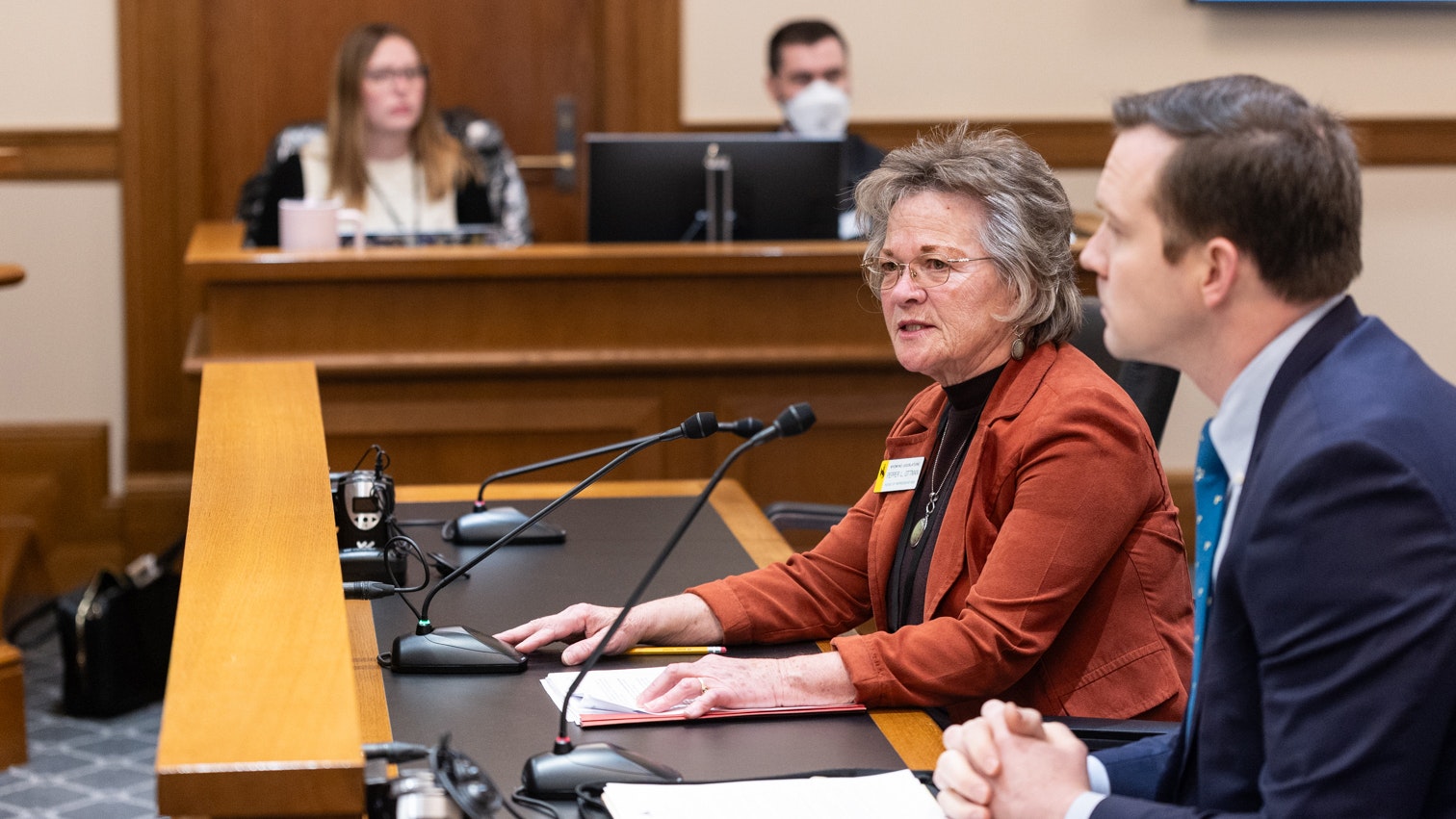
The cases Chafuen described — Dr. Allan Josephson and Kaley Chiles — were the backdrop for House Bill 143, the Free Speech for Healthcare Providers Act, which the committee advanced on an 8-1 vote after a hearing that began at 8 a.m., roughly six hours after the full House had adjourned at 2 a.m.
Opponents of the bill wondered if HB 143 was necessary at all, while supporters came ready with case studies.
Consider These
Josephson, a child psychiatrist at the University of Louisville, was demoted and fired after questioning gender-transition procedures for minors during a 2017 Heritage Foundation panel.
The university settled his First Amendment lawsuit for nearly $1.6 million in April 2025.
Kaley Chiles, a licensed counselor in Colorado Springs, is challenging a state law barring counselors from conversations with minors aimed at resolving gender dysphoria, arguing it censors her faith-informed talk therapy. Her case, Chiles v. Salazar, was argued before the U.S. Supreme Court in October 2025 and awaits a ruling.
Both involve state action against healthcare professionals over speech rather than conduct — the kind of overreach HB 143's sponsors say the bill would prevent in Wyoming.
Rep. Pepper Ottman, R-Riverton, the bill's sponsor, told the committee the legislation arises from what she called "a simple and important principle."
"The state should not interfere with free speech rights of healthcare professionals," Ottman said. "This preserves their freedom to speak with patients according to their oath to do no harm without fear or discrimination."
Under HB 143, no state agency, department, board or commission may discriminate against a healthcare provider for engaging in legally protected speech or expression. The bill defines discrimination to include adverse licensing actions, reprimands, loss of privileges or termination related to protected speech. It does not apply to speech that clearly and directly causes physical or mental harm to a patient within the preceding three years.
The bill also creates a private cause of action allowing professionals to seek legal remedy if their rights are violated.
"This bill does not limit the state or medical board's ability to protect patients from harmful conduct," Ottman said. "Rather, it ensures that the protected speech of Wyoming's medical professionals is respected and not subject to arbitrary or unconstitutional discipline."
Chafuen told the committee that five other states — including Florida, Tennessee, Idaho and Montana — already have similar protections in place. He emphasized the bill draws a line between speech and medical conduct.
"It enforces already existing constitutional protections," Chafuen said. "It applies to state action, not private employers, and it preserves the state's authority to regulate the practice of medicine. That's medical conduct, which is different from the free speech."
Problem Questioned
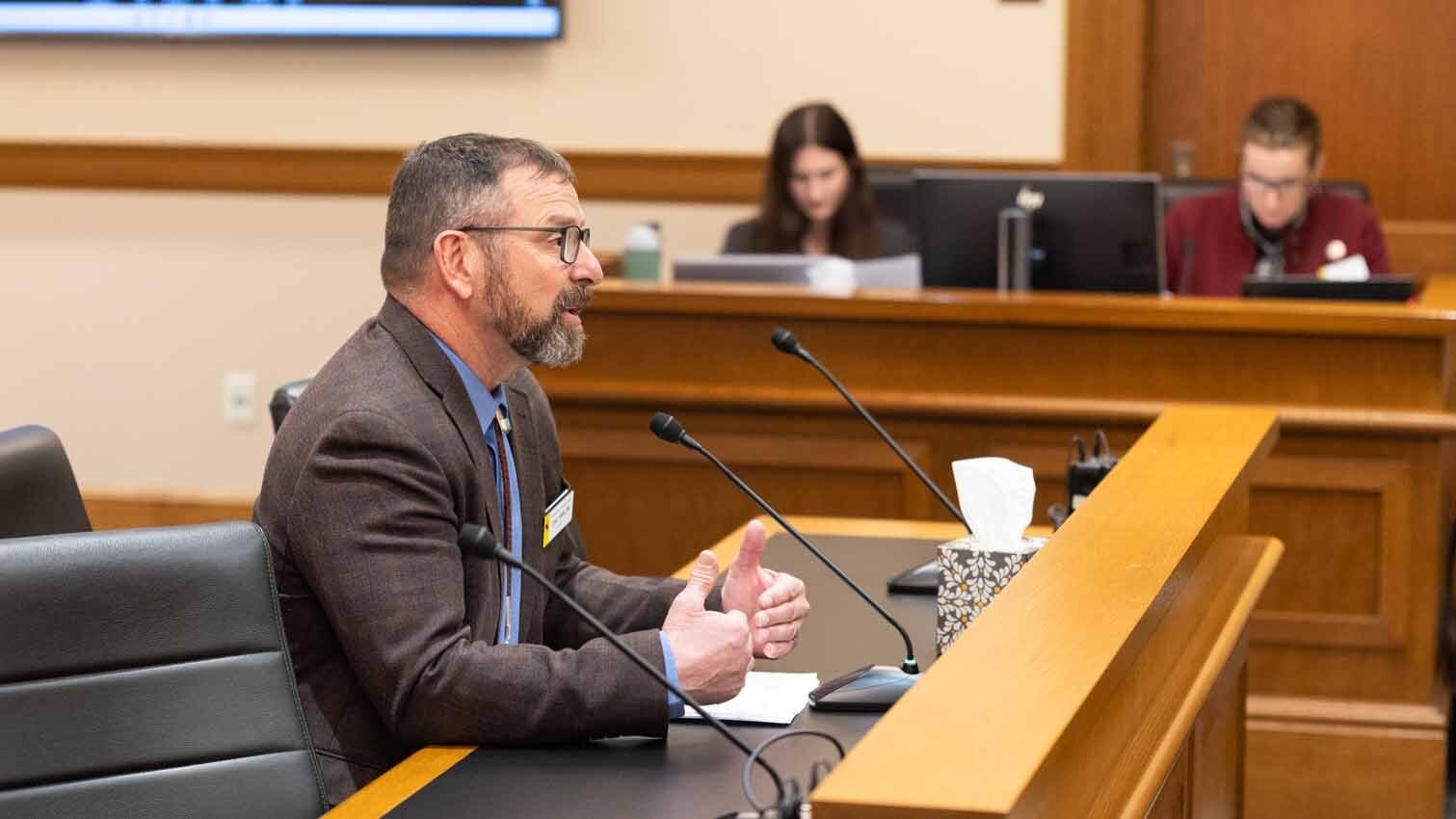
The state's top medical licensing official told the committee he wasn't sure the bill was needed in Wyoming.
Kevin Bohnenblust, executive director of the Wyoming Board of Medicine, said his board has never punished a provider for exercising free speech — not during the COVID-19 pandemic, not when a licensee made an offensive joke about the "Auschwitz diet" online, and not when out-of-state critics demanded action against a licensee who happens to be sitting U.S. Sen. John Barrasso.
"I think that in some ways, this is a solution sort of in search of a problem here in Wyoming," Bohnenblust told the committee. "The Board of Medicine has repeatedly declined to crack down on somebody's free speech rights, no matter how much somebody complained about it."
Bohnenblust raised concerns about gray areas in the bill, particularly where speech overlaps with treatment decisions. He posed a hypothetical in which a physician tells a cancer patient to forgo chemotherapy in favor of pineapple smoothies — and the patient dies.
"What's the proximate cause of death? Wasn't the pineapple smoothies. It was cancer," Bohnenblust said. "So now can the board say, 'Hey, wait a minute, you told this guy to just drink pineapple smoothies and he'd be fine.' Now, that's a gray area."
"You'll note that all the examples cited were from other states," Bohnenblust said. "There's not an example from Wyoming."
Rachael Fillbrandt, executive director of the Wyoming Board of Nursing, echoed Bohnenblust's assessment, telling the committee her board receives complaints about providers' speech — including social media posts — on a near-daily basis and routinely declines to open investigations.
"I'll just mimic what Mr. Bohnenblust said," Fillbrandt told the committee.
Fillbrandt said her board, like the Board of Medicine, has consistently protected licensees' speech rights without the need for additional legislation.
Chilling Effect
Testifying online from Fort Washakie, where she was in the middle of seeing patients, family nurse practitioner Sarah Penn — a former legislator — argued the bill was needed even if Wyoming's boards hadn't taken formal action. She read from a letter sent to Wyoming physicians by the American Board of Family Medicine, Internal Medicine and Pediatrics during the pandemic.
"What it says is providing misinformation about the COVID-19 vaccine contradicts physicians' ethical and professional responsibilities and therefore may be subject to physician disciplinary actions, including suspension or revocation of their medical license," Penn told the committee.
Penn acknowledged Bohnenblust was correct when he stated no Wyoming board had taken action. But she argued the threat itself had a chilling effect.
"I think there's definitely a heavy hand in those types of things where our way is the highway and your way, because we don't understand it or haven't investigated it thoroughly, is wrong and therefore could be seen as unethical or something like that," Penn said. "We absolutely need this bill in place."
After Wednesday's hearing, Bohnenblust told Cowboy State Daily the letter Penn cited from the American Board of Family Medicine carried no enforcement authority over Wyoming's licensing decisions.
"They can threaten license action all day long. But it doesn't mean that it's going to happen, because they have no authority over that," Bohnenblust said. "So they can say that, but that doesn't mean that our board's going to do that. Our board's still going to apply Wyoming law."
He said the same applied to positions taken by the Federation of State Medical Boards during the pandemic.
"We said, you may think that, but you're not a board. You are not voting on this," Bohnenblust said. "No, we're not going to just say, automatically you're going to jerk a license."
Bohnenblust said his core position remained that the First Amendment already provides the protections the bill seeks, and that Wyoming's board — made up of physicians, a physician assistant and two lay members confirmed by the state Senate — has consistently upheld free speech.
"It's not Kevin Bohnenblust, the executive director, that decides," he said. "It's board members. It's physicians. It's a PA. It's two lay members. Who are Wyoming people."
Asked whether the bill could produce unintended consequences, Bohnenblust said the broad language left him uncertain.
"I don't think it's going make a huge change," he said. "But I think the law of unintended consequences has been rearing its ugly head a lot lately. It's not really clear what's going to happen here."
The Cubin Case
Wyoming does have its own recent example of a contentious medical free speech debate.
Gov. Mark Gordon asked Dr. Eric Cubin to resign from the Wyoming Board of Medicine in April 2024 after Cubin publicly clashed with the Wyoming Medical Society and pediatrician Dr. Michael Sanderson over Senate File 99, which bans child sex-change procedures.
Cubin had emailed House members saying the Medical Society "has essentially been hijacked by the far left." Gordon said Cubin had compromised his neutrality as a board member expected to handle disciplinary hearings without bias.
Cubin sued Gordon, alleging his free-speech rights were violated, and asked a federal judge to restore him to the board. U.S. District Court Judge Scott Skavdahl denied that request in November 2024, ruling that Cubin's comments "went beyond his support for (the bill) and into his disputes with WMS and specific doctors" who could appear before the board with their licenses at stake.
In April 2025, Skavdahl dismissed most of Cubin's remaining claims, ruling that Wyoming's interests in board impartiality outweighed his speech rights.
The Liberty Justice Center appealed the decision to the Tenth Circuit.
Personal Motivation
In a follow-up interview, Ottman said this was her third attempt at a bill addressing medical speech protections, but that she had simplified her approach this session to focus squarely on the First Amendment rather than broader medical ethics.
"Medical providers should be allowed to say, 'I have the freedom to talk with my patients about whatever they may want for their healthcare protocol,'" Ottman said. "If it's homeopathy, if it's natural products, if it's treatment by chemo, if it's treatment in a hospital, treatment at home, whatever it is, I should have that."
She also drew from personal experience, describing her mother's battle with lymphoma and her willingness to participate in experimental drug treatment.
"Researchers that have come out and said there are protocols that you can use, or I'm looking at this, or I've looked at this for 30 years, and they're blackballed, and their research never gets out," Ottman said. "They should have the right to put it in Cowboy State Daily, or whatever, and not have repercussions."
The bill now advances to the full House.
Roll Call Vote for HB 143
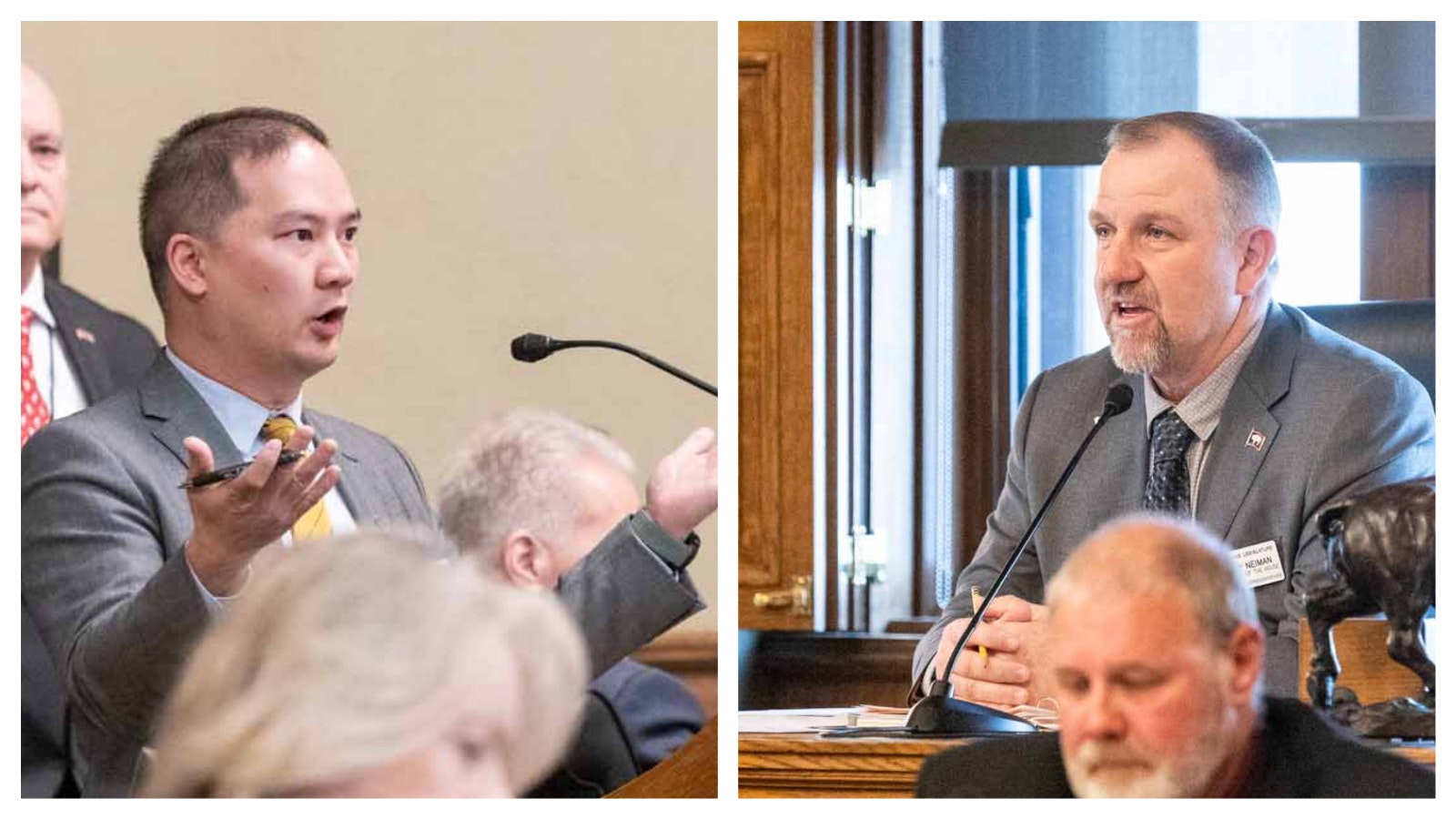
Ayes: Rodriguez-Williams, Clouston, Guggenmos, Hoeft, McCann, Ottman, Thayer, Wasserburger,
Nay: Yin