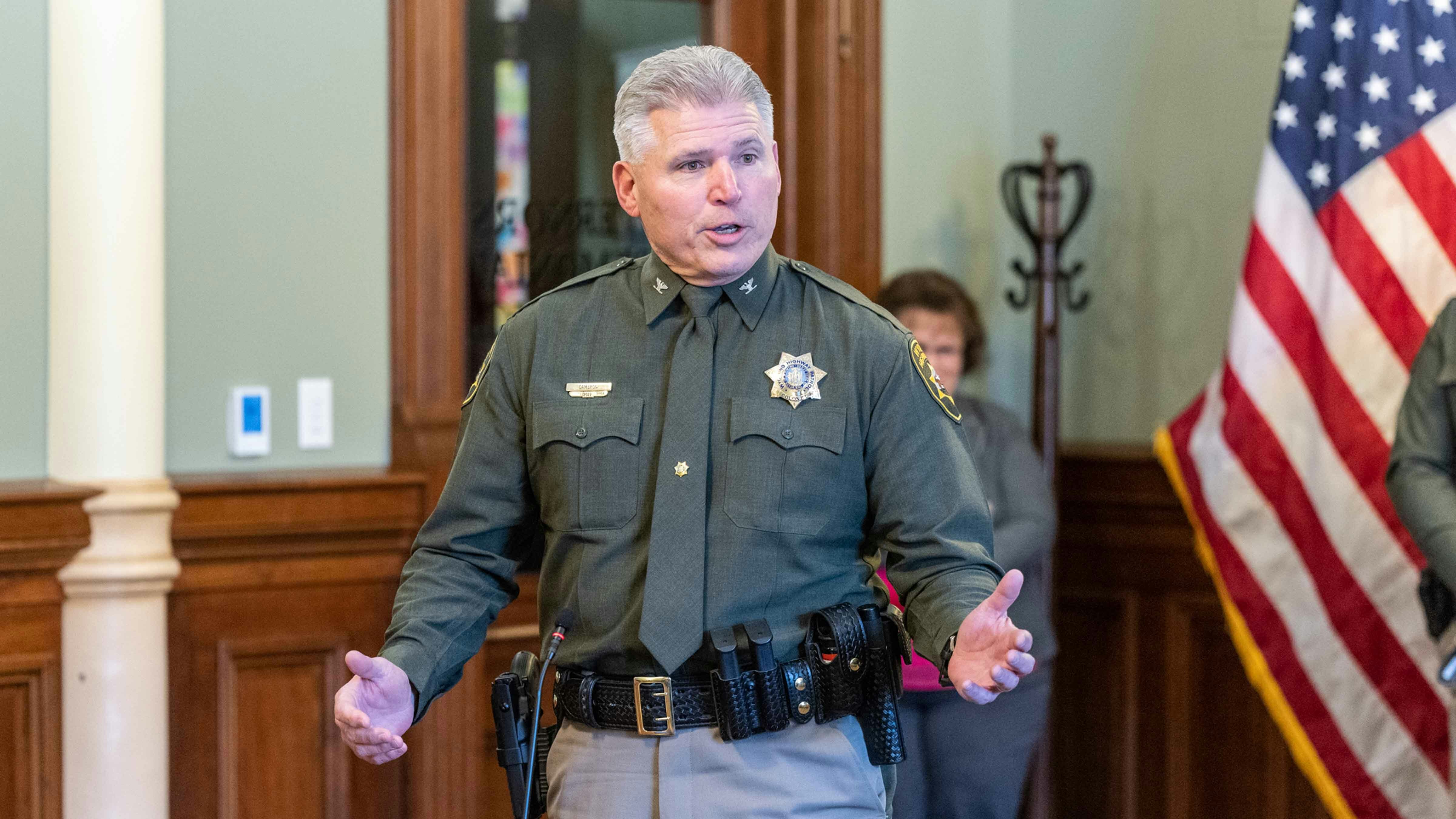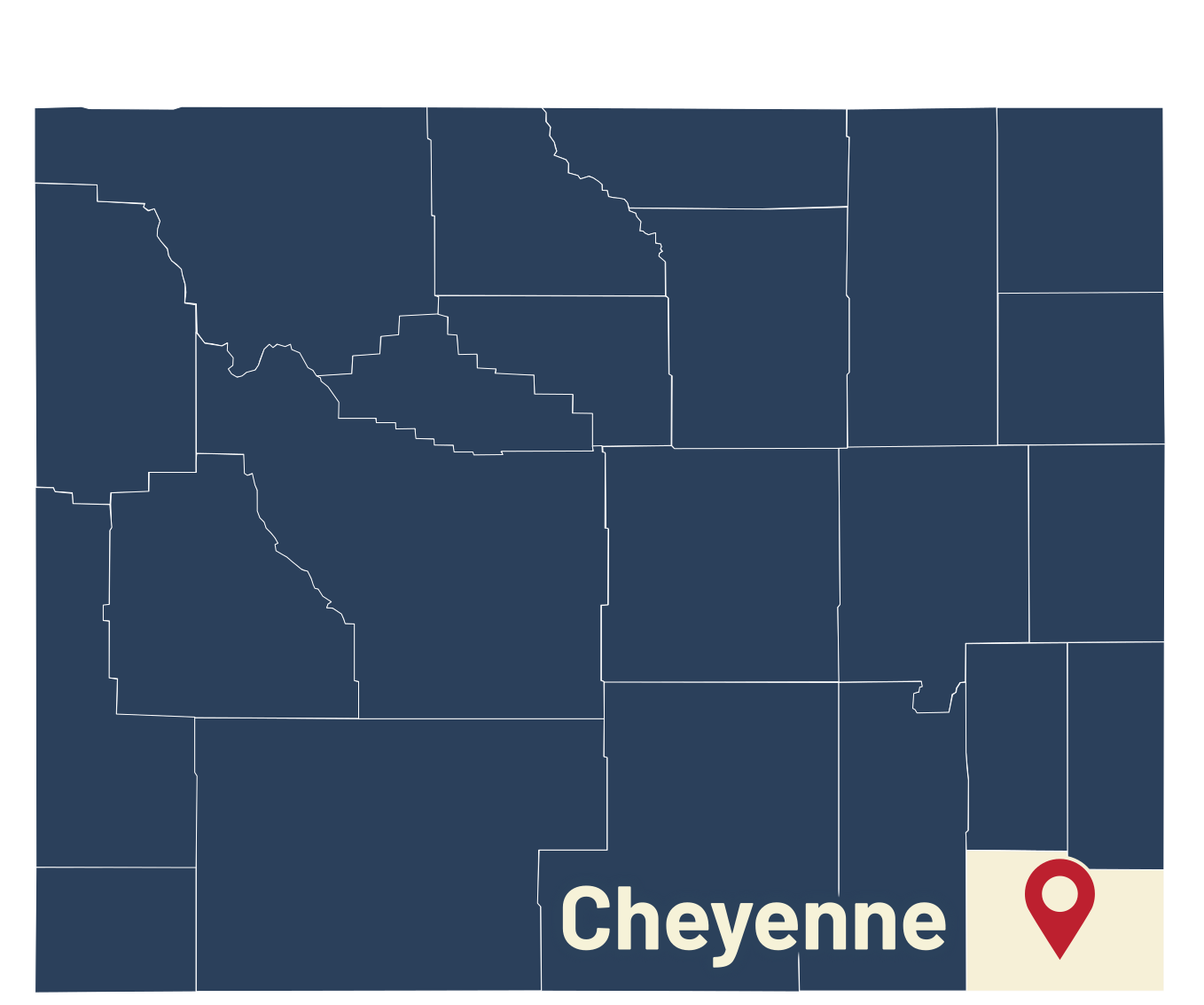
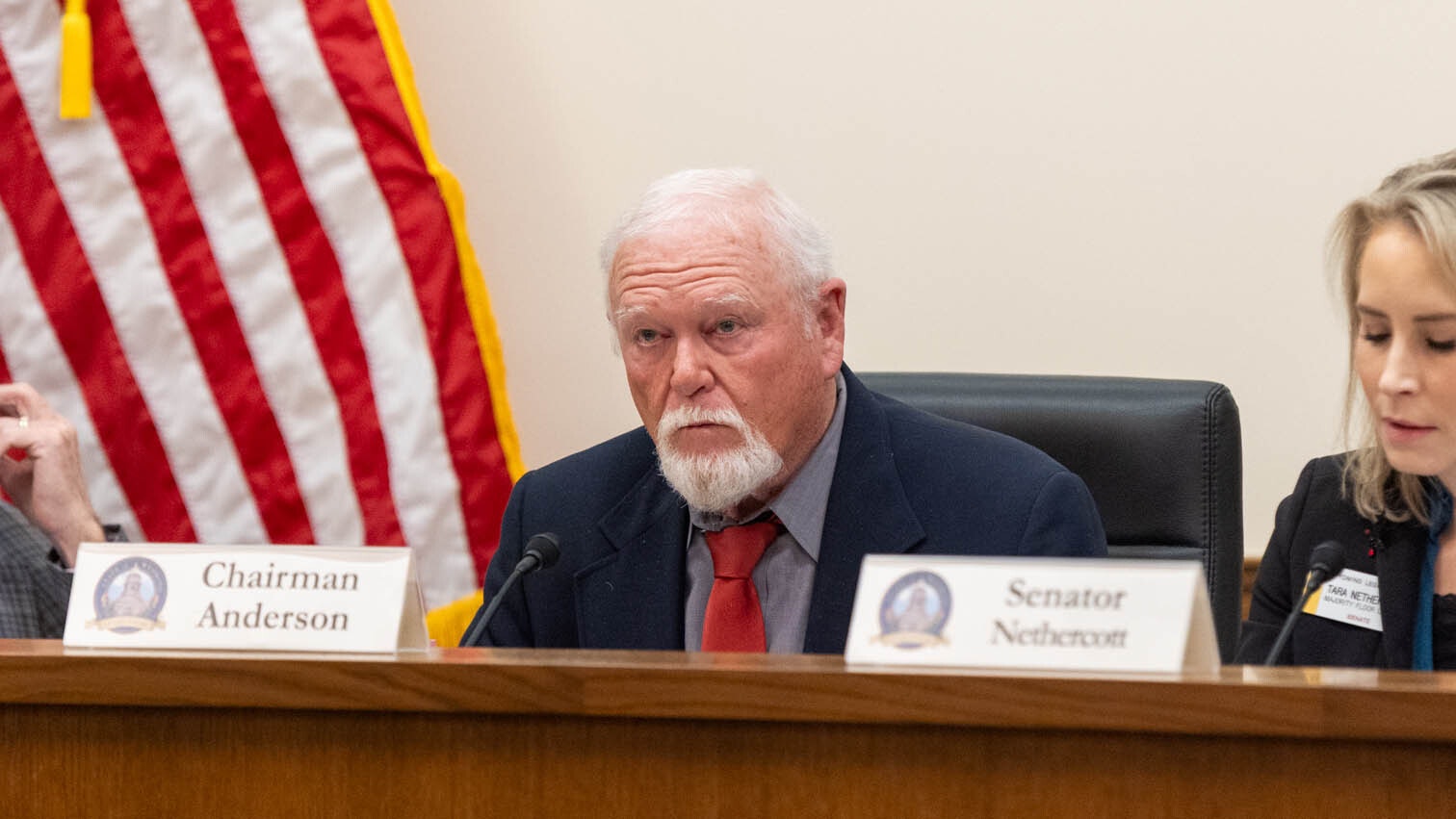
CHEYENNE — When Aaron Bannon of the Wyoming Wilderness Association finished testifying against Senate Joint Resolution 1 last week, Senate Minerals Committee Chairman Jim Anderson had a question for him.
"How do you feel about us leasing Yellowstone Park for drilling?" Anderson asked. "You OK with that?"
“I don’t feel great about that,” said Bannon.
It was a joke.
Anderson's point was that the resolution's original language was so broad it technically covered "mineral leasing on federal lands located in Wyoming," which would include Yellowstone National Park, Grand Teton National Park and every other acre of federal ground in the state.
The resolution passed the committee on a 5-0 vote and was sent to the Senate floor, where it passed its second reading Monday.
Big Ambition
The ambition behind SJ 1 is as grand as the Tetons, with Wyoming asking Congress to do something it has never done for any state — hand over administrative control of the federal mineral leasing program.
"I've been doing this for 20 years, and I've never heard of this happening," said Matt Fry, director of the Center for Energy Regulation and Policy Analysis at the University of Wyoming's School of Energy Resources.
The resolution, which originated from the Select Federal Natural Resource Management Committee, asks Wyoming's congressional delegation to introduce legislation amending the federal Mineral Leasing Act of 1920 to let the state administer mineral leasing on federal lands.
The driving concern is a decade of what the resolution calls "inconsistent, unpredictable" federal management "subject to political delays that negatively impact Wyoming's economy, energy industry and citizens."
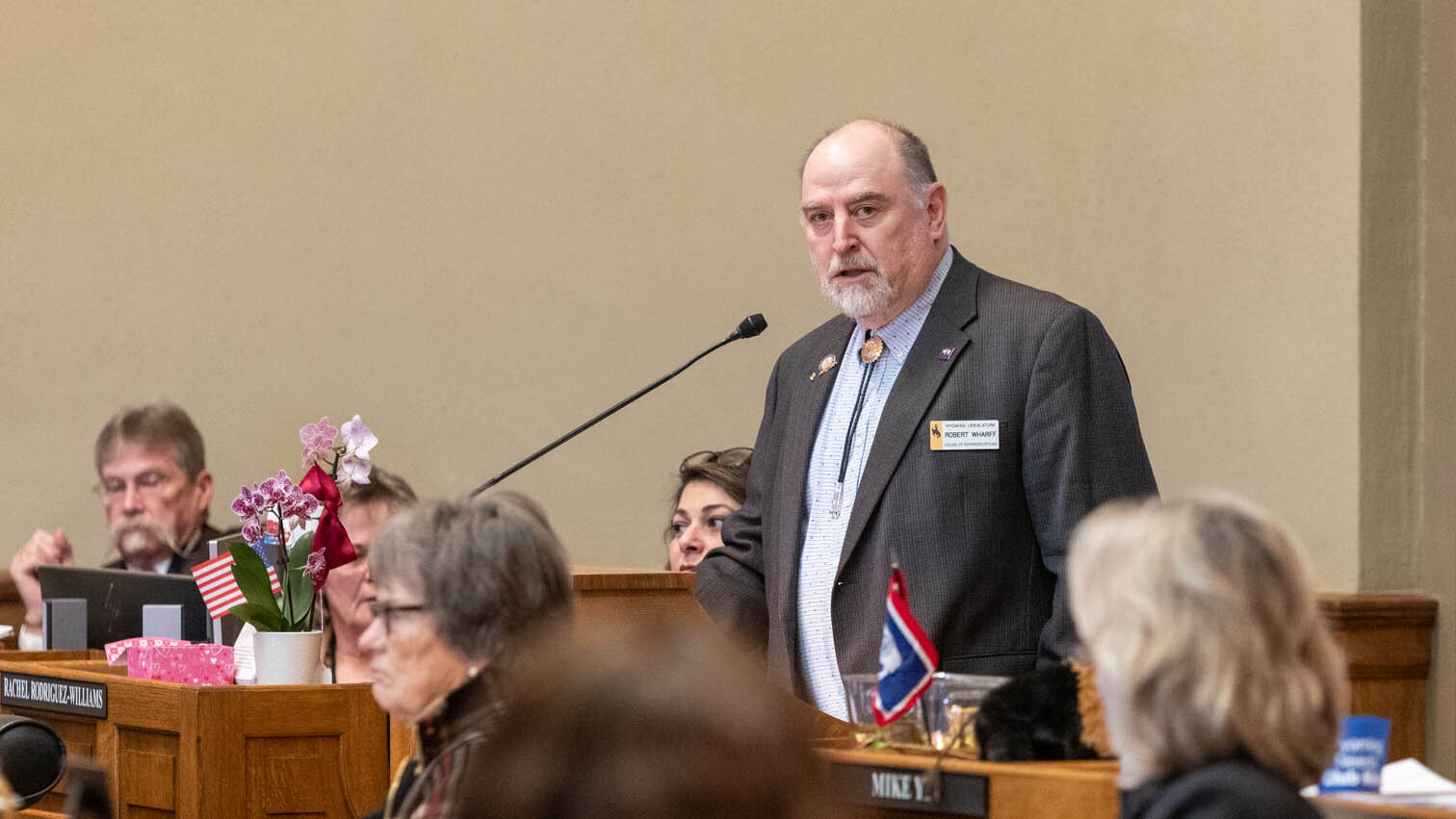
Rep. Robert Wharff, R-Evanston, who co-chairs the select committee with Sen. Bob Ide, R-Casper, told the Senate Minerals Committee that the genesis of the resolution was fear of government shutdowns paralyzing mineral development.
"If we've got the ability to do our own leasing, the state could continue to move forward with getting leases put out for bid and leases approved and basically allow the state of Wyoming to still function even if our federal government shuts down," Wharff said.
Wilderness Concerns
Not everyone sees the need for state control.
Bannon told the committee that existing federal processes are working adequately under President Trump's executive order restoring quarterly lease sales.
"The lease sales are carefully considered, and any lease sales that don't move through are reconsidered at the end of the year," Bannon testified. "It does seem that energy companies have the opportunity to put forward the leases that they want, to bid on the leases that they want, that our mineral resource is being adequately considered and moved forward by the federal government.”
He also pointed to House Joint Resolution 2, which seeks to shift the 2% federal administrative fee back to Wyoming without requiring the state to take on the burden of managing federal leases.
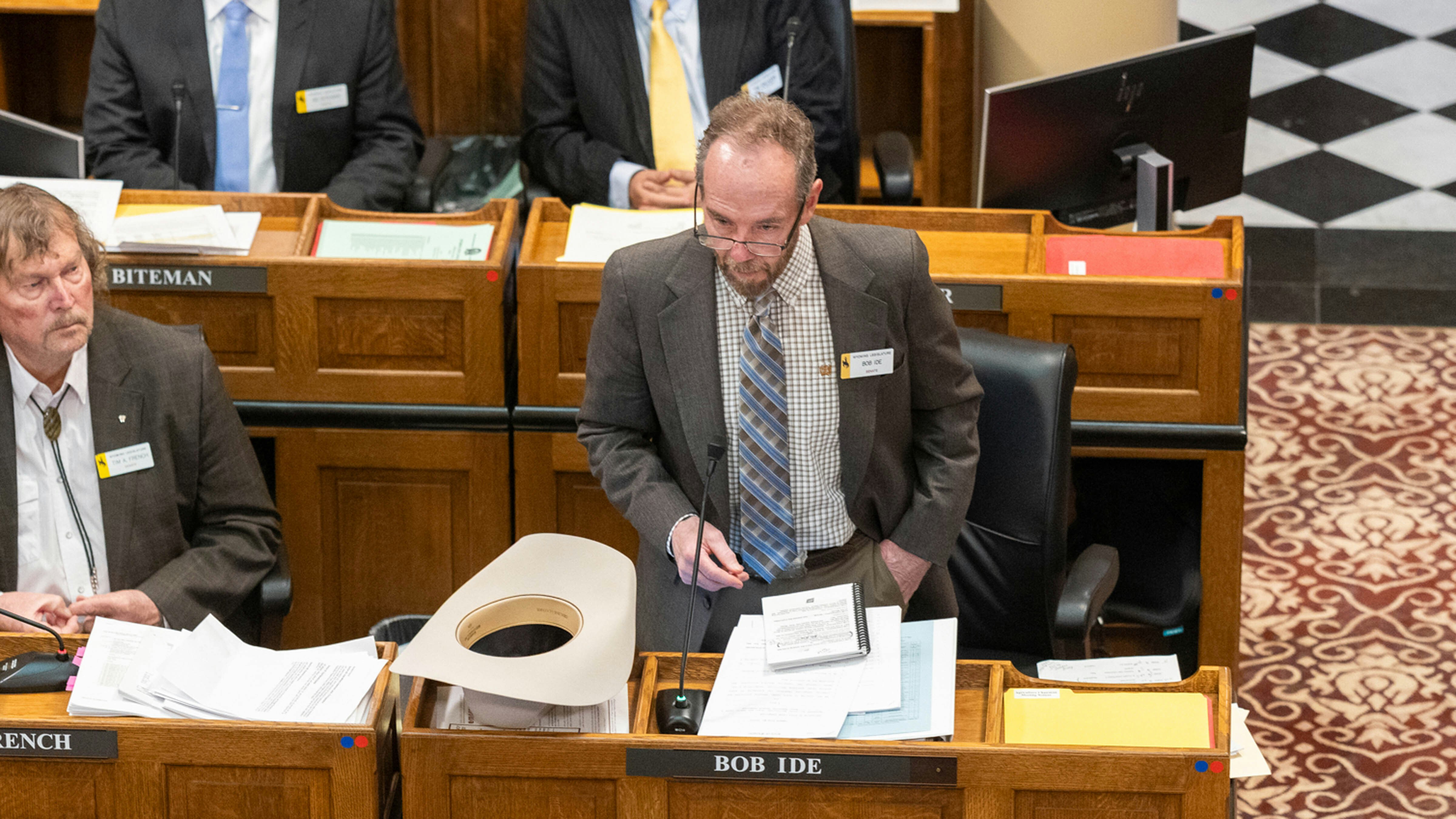
Senator Bob Ide (Matt Idler for Cowboy State Daily)
Rothfuss Rewrites
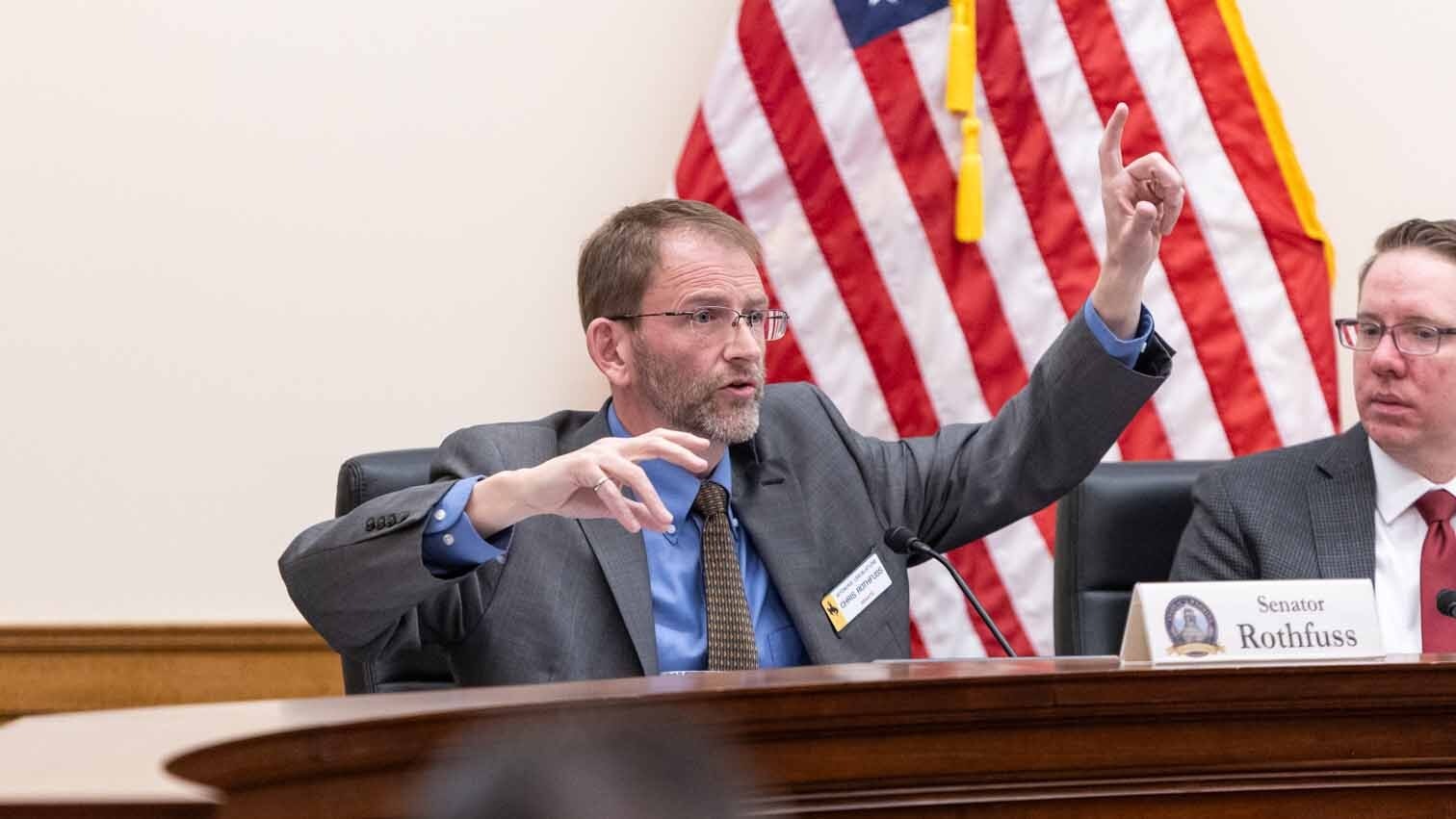
It was Sen. Chris Rothfuss, D-Laramie, the committee's ranking minority member, who shaped SJ 1 into something its supporters believe Congress might actually consider.
Rothfuss moved two amendments during last week’s hearing. The first stripped out pages of historical whereases, trimming the resolution from a lengthy recitation of leasing moratoriums and 10th Amendment theory down to the essential argument.
"That's just a lot of history," Rothfuss said of the deleted passages, adding that the 10th Amendment language "I don't think is actually applying to the ask here because we're asking for primacy under the leasing act."
His second amendment rewrote the resolution's operative section.
Where the original broadly requested authority over all federal mineral leasing, Rothfuss narrowed it to a cooperative framework modeled on how Wyoming's Department of Environmental Quality already administers federal air quality programs.
The rewritten Section 1 requests that Congress "authorize the Secretary of the Interior to enter into cooperative agreements with the State of Wyoming under which the state may, at its election and subject to federal approval, assume administrative primacy for mineral leasing on specified federal lands located within Wyoming."
The amendment requires that cooperative agreements apply only to federal lands "mutually designated by the state and the secretary," preserve federal ownership, require consistency with federal law, and allow either party to modify or terminate the agreement.
Critically, it also includes a provision for Wyoming to capture the 2% administrative cost deduction — money currently retained by the federal government.
"I really like that you threw that 2% in there because I think that's important that we say we want that 2%," Chairman Anderson said.
Committee Vote
The committee passed SJ 1 unanimously on Feb. 11, 5-0.
Then on Monday, the full Wyoming Senate took up SJ 1 on second reading.
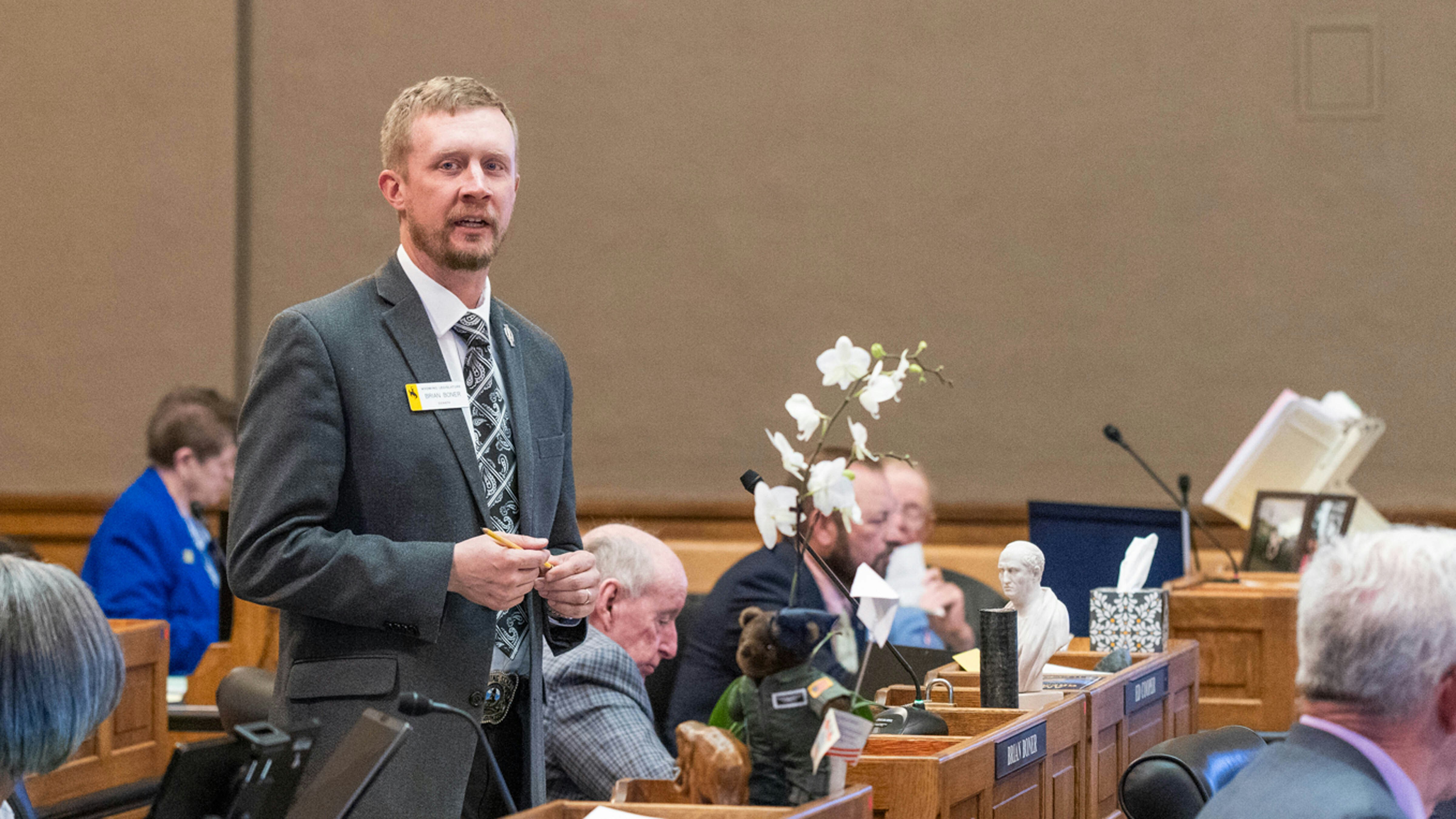
Sen. Brian Boner, R-Douglas, offered one amendment, removing the word "existing" from the revenue distribution language to avoid conflict with HJ 2's push for a more than 50% state share of federal mineral royalties.
To his fellow senators Monday, Boner said, "We don't want to get wrapped around the axle of saying, ‘No, it shall always be 50%,’ which could be the interpretation if we keep the word 'existing' in that paragraph (of SJ 1)," Boner said, explaining his amendment “de-conflicts” SJ 1 and HJ 2.
Rothfuss endorsed it: "Good amendment. Vote aye."
The amendment passed on a voice vote with no opposition, and SJ 1 advanced to third reading without objection.
Industry Support
The Petroleum Association of Wyoming supports the resolution, comparing it to regulatory authority the state already exercises.
"Allowing Wyoming to manage the federal leasing program, as it does with both air and water quality, would allow for better management of Wyoming's federal mineral estate while also returning tens of millions to the state that Washington keeps to 'administer' the program," the association said in a statement.
Steve Degenfelder, a landman for Kirkwood Oil and Gas in Casper, said state management would bring stability to an unpredictable system.
"I think having the state manage the federal lease sales would create a more predictable environment for companies wanting to invest in the state," Degenfelder said. "On federal lands — which make up 65% of the mineral estate in the state — we have to get a drilling permit approved by both the BLM and the OGCC (Wyoming Oil and Gas Conservation Commission).”
Degenfelder said he hopes the effort could eventually extend beyond drilling permits.
"At the very least, Congress should consider giving states management authority for lease sales and approval of drilling permits and sundry notices in the event of another government shutdown, which stops everything," he said.
Long Odds
Fry, at the University of Wyoming, said even with a favorable administration in Washington, the political math for SJ 1 going forward remains daunting.
"Getting it through Congress would be very challenging because of the various priorities right now," Fry said, adding that depending on how the 2026 midterms turn out, the process could become even more challenging.
David Madison can be reached at david@cowboystatedaily.com.