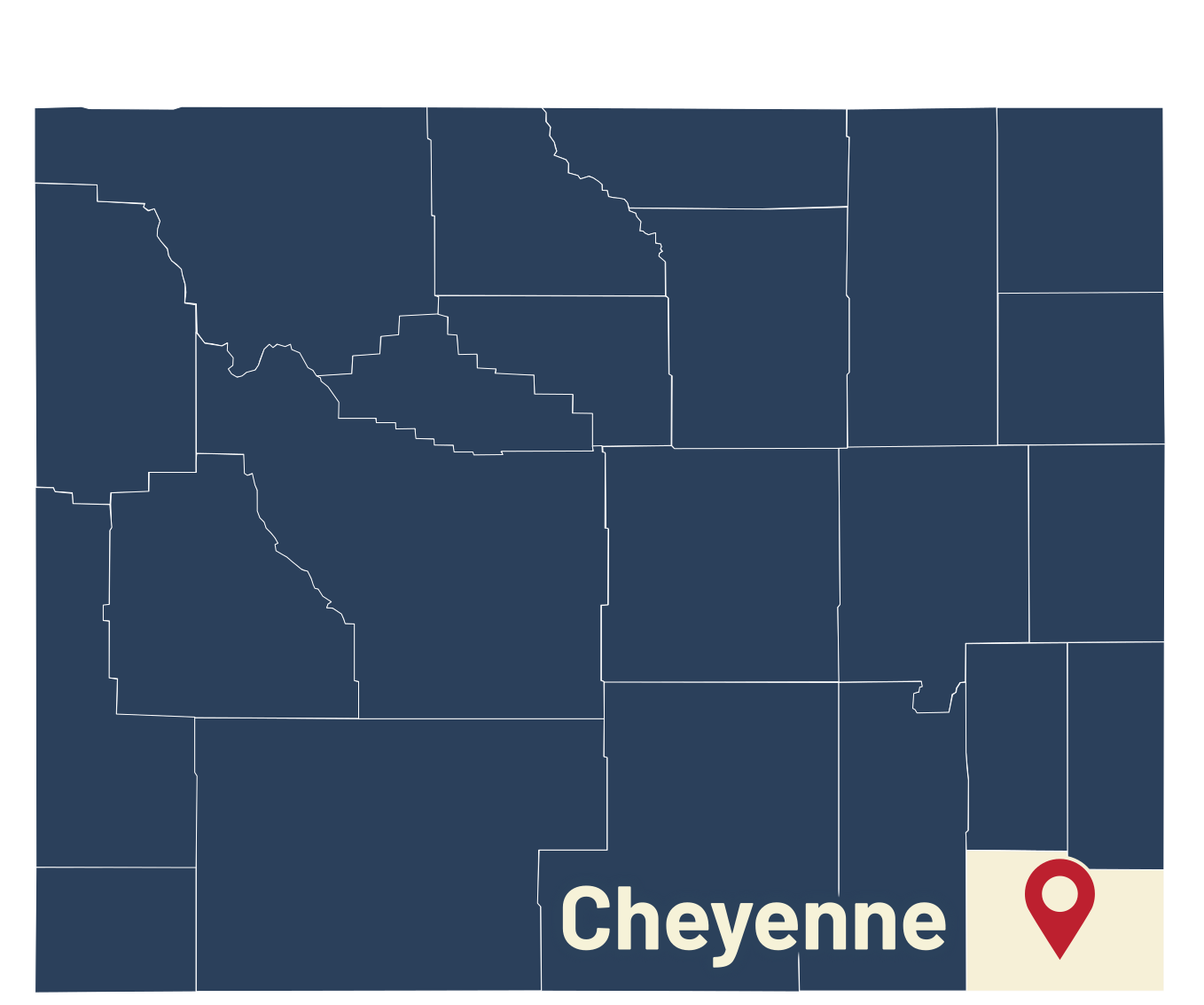
CHEYENNE — In February 2021, Russell Kennedy was driving a truck in the oil fields near Wright when he felt dizzy. He got out of his truck and collapsed into a snowbank.
It was the kind of place where you can go a long time without seeing another soul. But luck was on Russell’s side that day — a truck full of oil field workers happened by at just the right moment, pulled him from the snow and rushed him toward medical help in Gillette. An ambulance met them on the way.
Russell had suffered a stroke. He was 46 years old. He’d just switched jobs, maybe 30 days in, and was still in the waiting period before his insurance kicked in. He was life-flighted to Denver.
His wife, Heidi Kennedy, got the call no spouse ever wants to get. Her mother-in-law drove her through the winter night to Denver because she was too shaken to drive herself.
By the time all the bills arrived — from the hospital in Gillette, the hospital in Denver, the neurologist, the MRIs, the life flight — the Kennedy family was staring at roughly $300,000 in medical debt. The life flight alone was $150,000.
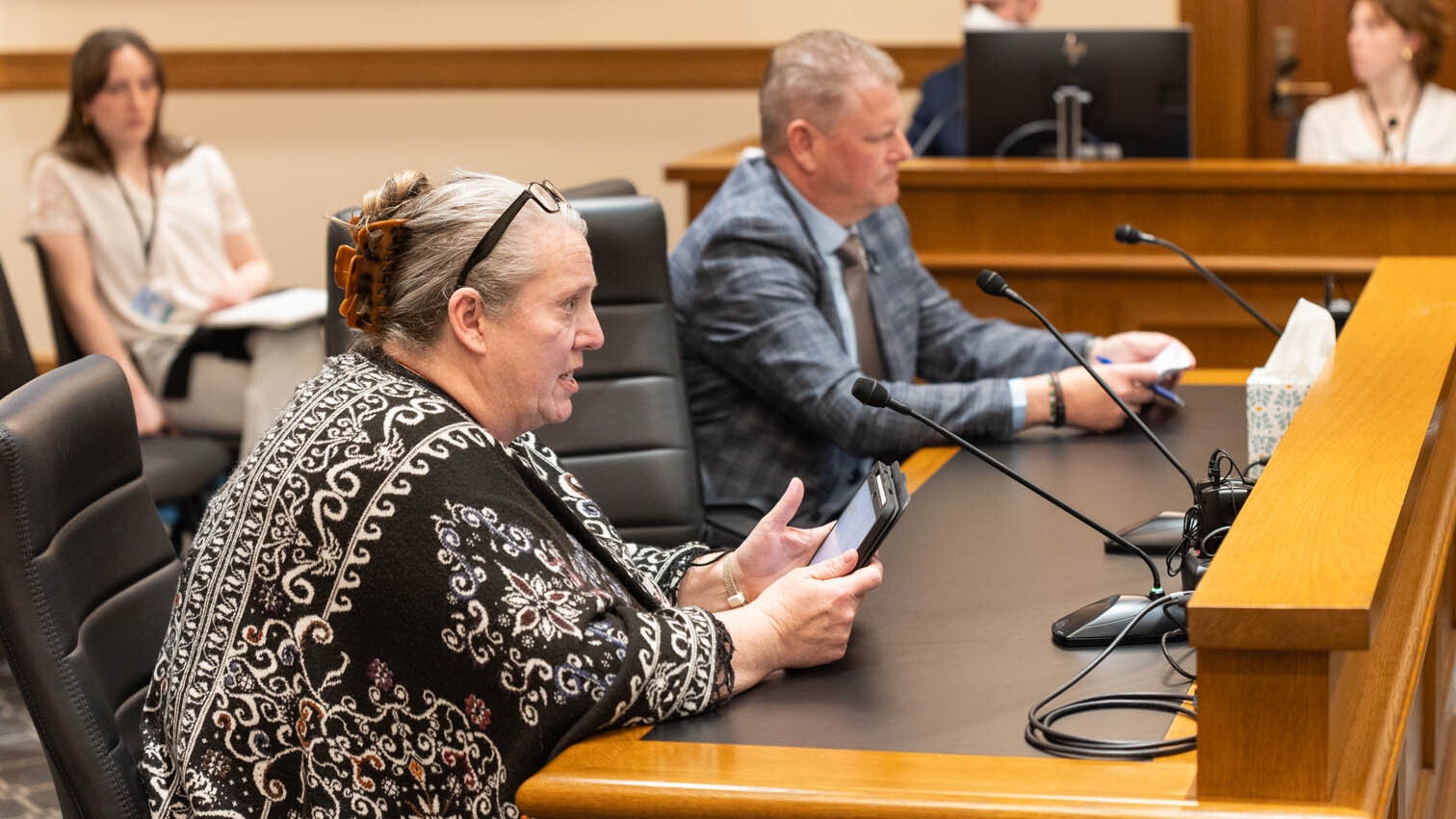
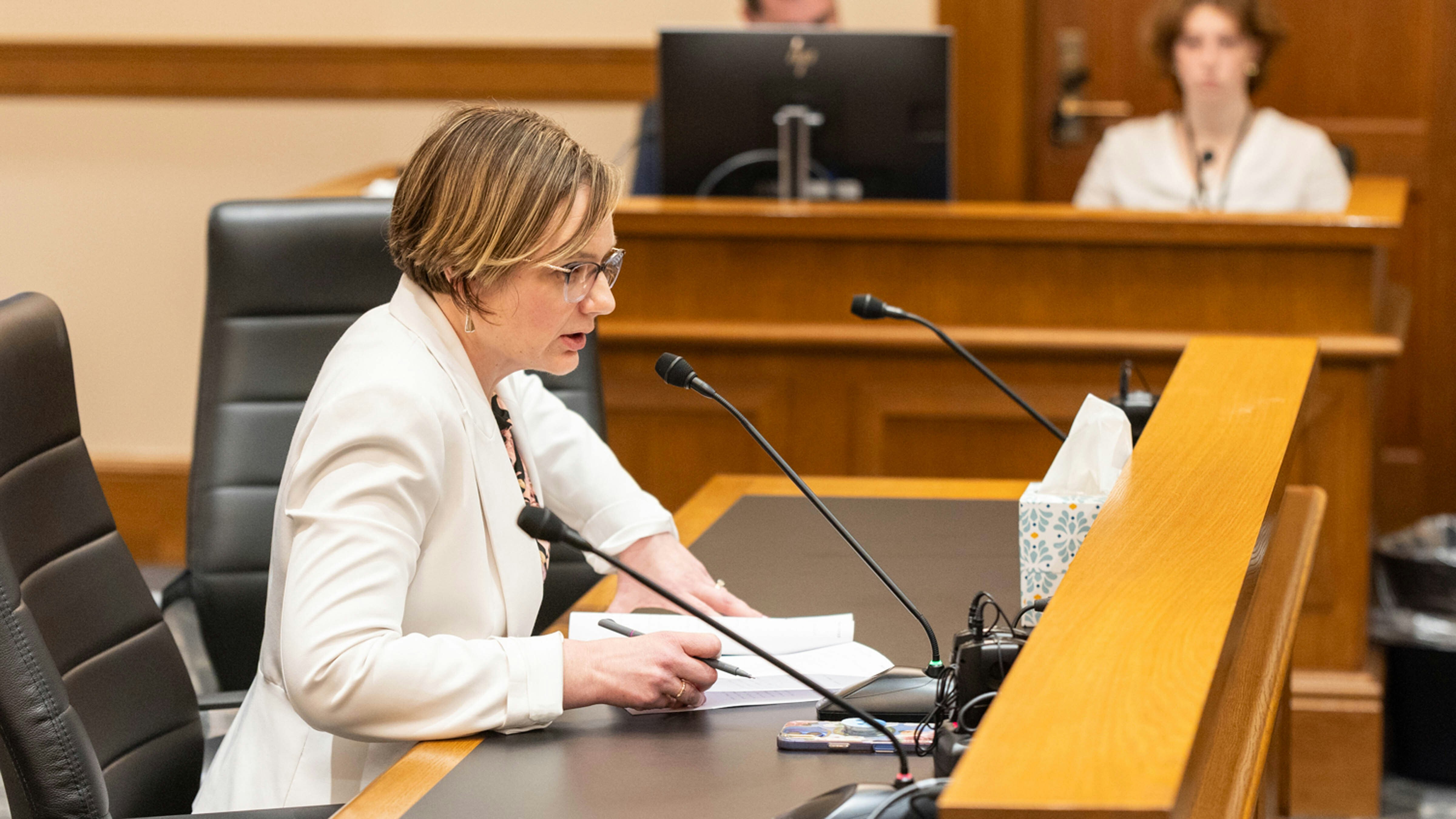
On Monday, Heidi happened to be in Cheyenne with a friend and spotted Senate File 57 — the Hospital Price Transparency Act — on the morning’s agenda. It hit close to home.
“I love this bill,” Kennedy told the committee. “I think anytime there’s transparency and the operation of any entity, it’s better for all parties involved.”
Kennedy acknowledged that in an emergency like her husband’s stroke, there’s no time to shop around. You don’t get to choose which hospital the helicopter takes you to.
But in the aftermath, as Russell needed physical therapy, speech therapy, occupational therapy and follow-up visits with a neurologist to recover, the family did have choices to make — and prices mattered.
“When there’s elective or things you have time to think about — a mammogram, a hip replacement, something like that — sometimes that’s a consideration,” Kennedy told Cowboy State Daily. She described a family member weighing whether to pay out of pocket for a procedure, saying: “She’s gonna look around for what hospital might have a better price. And you take all of those things into consideration.”
Kennedy told the committee she had tried to find pricing information on her local hospital’s website and couldn’t locate it.
“It’s not in a prominent location,” she said. “If it’s there at all, I don’t know.”
She also suggested an addition to the bill: that hospitals archive past versions of their price lists, so patients who receive a bill months after a service can verify what the pricing was at the time of their care. The committee did not take up that suggestion as a formal amendment.
Shopping Services
Senate File 57, sponsored by committee Chairman Sen. Evie Brennan, R-Cheyenne, would require every licensed hospital in Wyoming to publicly post pricing information for medical services in a searchable, machine-readable format on their websites — free of charge, without requiring a login, password, or personal information.
Each hospital would have to list standard charges for all items and services, including a separate list covering at least 300 “shoppable services” that patients can schedule in advance.
The lists would include gross charges, negotiated rates with insurers, minimum and maximum negotiated charges, and cash prices, and would have to be updated at least once a year.
The Wyoming Department of Health would monitor compliance, and hospitals found in violation would be required to submit corrective action plans. Penalties would escalate from $100 per day for a first offense at critical access hospitals to $1,000 per day for repeat violations or for hospitals with prospective payment systems. In the most serious cases, a hospital’s license could be placed in jeopardy.
Brennan told the committee the bill follows similar federal requirements from the Centers for Medicare & Medicaid Services, or CMS, and is a reworked version of a bill that came through the Legislature the previous year but drew opposition from hospitals over its penalty structure.
“Having a bill that we didn’t expect the number to be what the number was,” Brennan said, explaining her motivation for sponsoring SF 57. “So that’s why we have this bill.”
She noted the penalties in the new version are significantly lower than in last year’s bill. The previous version also would have prohibited a hospital from collecting payment from anyone if found out of compliance — a provision that has been removed.
“The penalties were much higher in the last bill,” Brennan said. “This one imposes penalties on the hospitals, but not quite so onerous.”
Franz Fuchs, deputy director of the Wyoming Department of Health, told the committee simply: “We’re happy to execute the law as written.”
Loud Pop
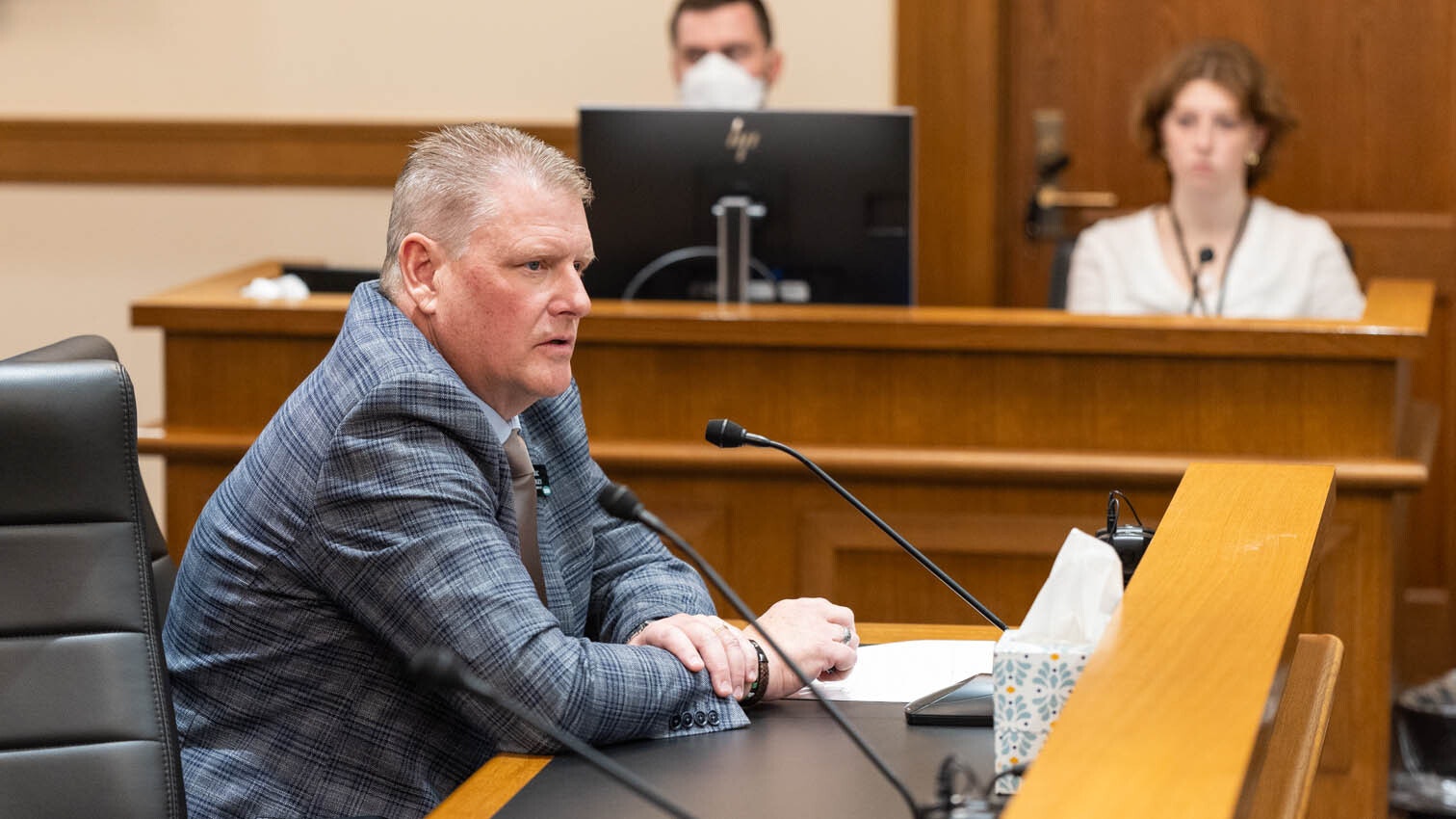
Eric Boley, president of the Wyoming Hospital Association, knows firsthand that medical care doesn’t always go according to plan — or according to estimate.
When he and his wife were first married, Boley was playing basketball when he heard a loud pop in his knee. A doctor told him he had meniscus tears, and surgery was scheduled. Then things escalated from there.
“They knocked me out. And four hours later than I was supposed to wake up, I woke up and freaked out,” Boley told the committee. “My wife was trying to hold me in the bed because I knew something had gone wrong.”
It turned out the damage was worse than expected. Not only had he torn his meniscus, but he’d also ruptured his ACL. Surgeons replaced it while he was still under.
“I didn’t have the ability to be brought out of anesthesia at that point and to look at pricing and decide whether or not I wanted to go to another doctor,” Boley said. “That’s a simple example, but when we get in and start looking at hearts and other things, I just think that we need to be realistic. So this does provide consumers the ability to shop services but realize it’s just an estimate.”
Despite that caveat, Boley said the Wyoming Hospital Association supports SF 57 in its current form — a reversal from last year, when the association opposed the bill.
“Yes, last year we did oppose the bill for several reasons, and I think some of those have kind of settled,” Boley said. He explained that last year’s debate coincided with the beginning of the Trump administration, when federal rules on the same topic were changing in real time.
“That was one of our concerns — if we create a state statute that is different than the federal rule, which of the two masters do we follow?” he wondered.
Boley said the good news is that SF 57 was drafted to align with the most recent CMS guidance.
“The way that we have to report the information is exactly what we are responsible for with the feds right now,” he said.
Boley also told the committee that the bill addresses only one side of the equation.
“We’re not dealing with the insurance companies and how they pay — all of the acrobatics that we have to jump through when it comes to prior authorizations, denials, and all of those things,” he said.
He noted that actual consumer use of existing pricing transparency tools has been minimal. One critical access hospital told him its pricing website had been accessed just seven times in five years — and five of those visits were by the hospital’s own compliance staff.
Meanwhile, he said, insurance companies have been mining the data to gain leverage in rate negotiations.
“The consumer isn’t using this nearly as much as others,” Boley said. “But we still want to be good partners. We serve an important role in our communities. We want to provide this information to the consumer.”
He acknowledged the costs of compliance fall entirely on hospitals.
“All of this is unfunded,” Boley said. “We’ve got software companies that are making a lot of money off of this particular process.” Boley pointed to a national push, particularly from the Trump administration, for states to codify hospital price transparency into state law rather than relying solely on federal executive orders that could change with any new administration.
“There’s an attempt and a push to pass state law in every single state on this,” Boley said. “And so we wanted to be a part of the solution as opposed to taking what we got.”
Sticker Shock
The Kennedy family’s $300,000 ordeal is far from the only case of staggering medical bills hitting Wyoming families. The state’s rural geography and limited hospital options have long made it fertile ground for surprise billing — the kind that arise in an emergency when bargain hunting isn’t an option.
Still, SF 57 offers to shed some light on what can become a black box process, with patients receiving care and then crossing their fingers as they await an invoice for medical services.
The bill’s text states its purpose plainly: “to require hospitals to disclose prices for certain items and services and to provide civil penalties.”
Each hospital must maintain a list of standard charges that includes gross charges, payor-specific negotiated charges, de-identified minimum and maximum negotiated charges, and the discounted cash price — all posted in machine-readable, digitally searchable formats, accessible without a login or personal information.
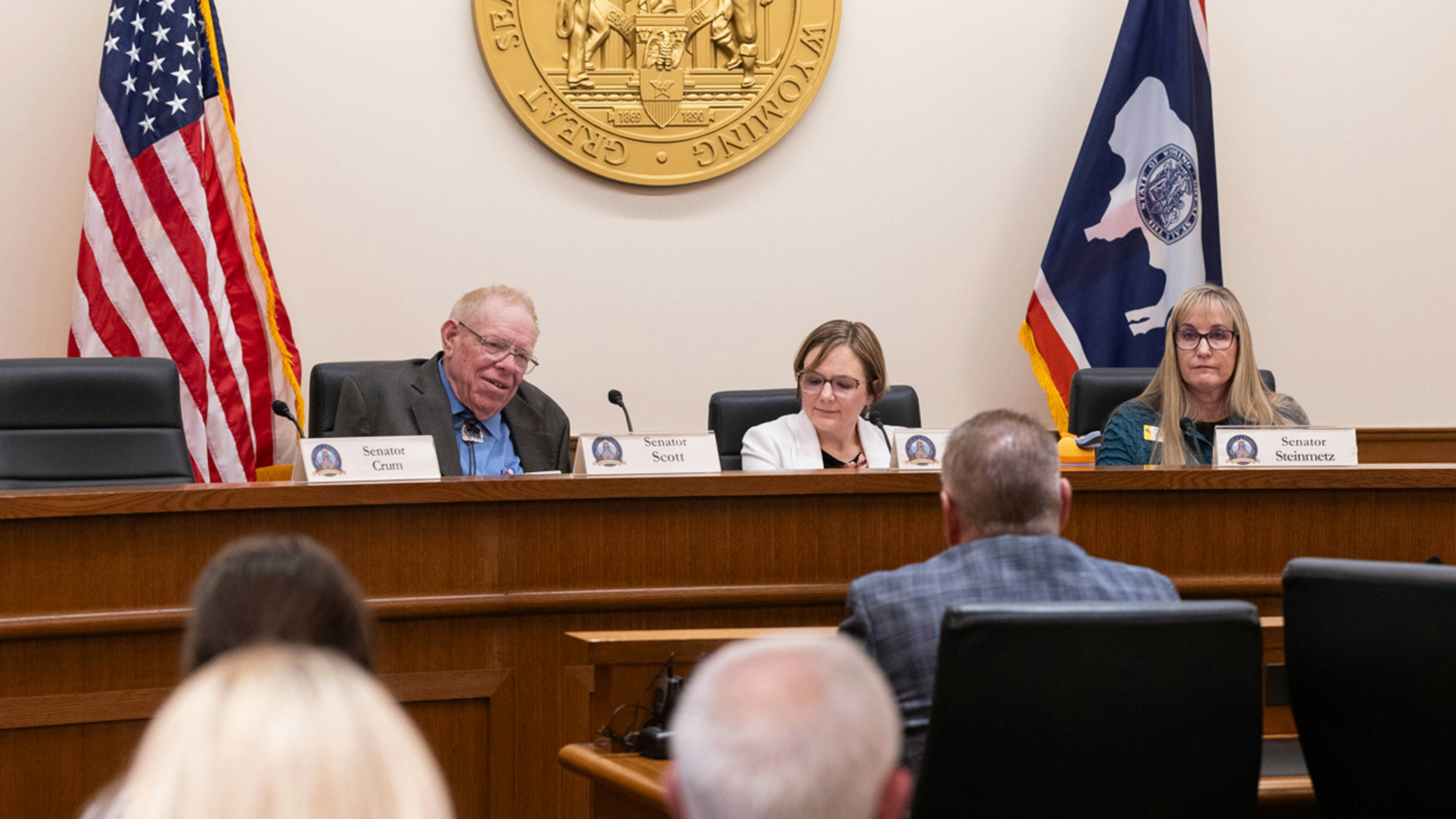
Sen. Charlie Scott, R-Casper, acknowledged the inherent difficulty before voting in favor.
“This is a very complicated area, and we’re going to improve what we can do over time and it’s going to change,” Scott said. He pointed to Boley’s basketball story as an apt illustration: “The personal example is exactly the kind of thing that happens that means that your final bill turned out a good deal different from what you thought it was going to be. And I don’t think there’s any getting away from that.”
Scott proposed a sunset amendment that would repeal the act effective July 1, 2029 — the second general session year after enactment — so the Legislature could revisit whether the state law still conformed with evolving federal regulations. The amendment passed unanimously.
The full bill, as amended, then passed committee on a roll call vote of 4-0, with Sen. Gary Crum, R-Laramie, absent and leaving a vote of conflict. Voting in favor were Sen. Lynn Hutchings, R-Cheyenne; Sen. Scott; Sen. Cheri Steinmetz, R-Torrington; and Chairman Brennan.
Jeff Daugherty of Cicero Action — a nonprofit promoting transparency — also testified in support.
He suggested that low participation rates in checking hospital pricing websites may be partly because “it’s historically been very hard to do” and the public doesn’t yet know the information is available. He called the bill “not a silver bullet for fixing healthcare, but it’s certainly a step in the right direction.”
Or as Brennan summed up the need for SF 57: “We all have a story.”
David Madison can be reached at david@cowboystatedaily.com.