A bill to create a new mechanism for how Wyoming funds its K-12 public schools could soon head to the state Senate floor with at least a proposed $126 million increase over the $157 million two-year increase it already offers to the state’s $3.6 billion two-year school funding model.
That’s after weeks of educators telling lawmakers that the bill doesn’t do enough to maintain their local control, stabilize their grants and provide for their students and teachers.
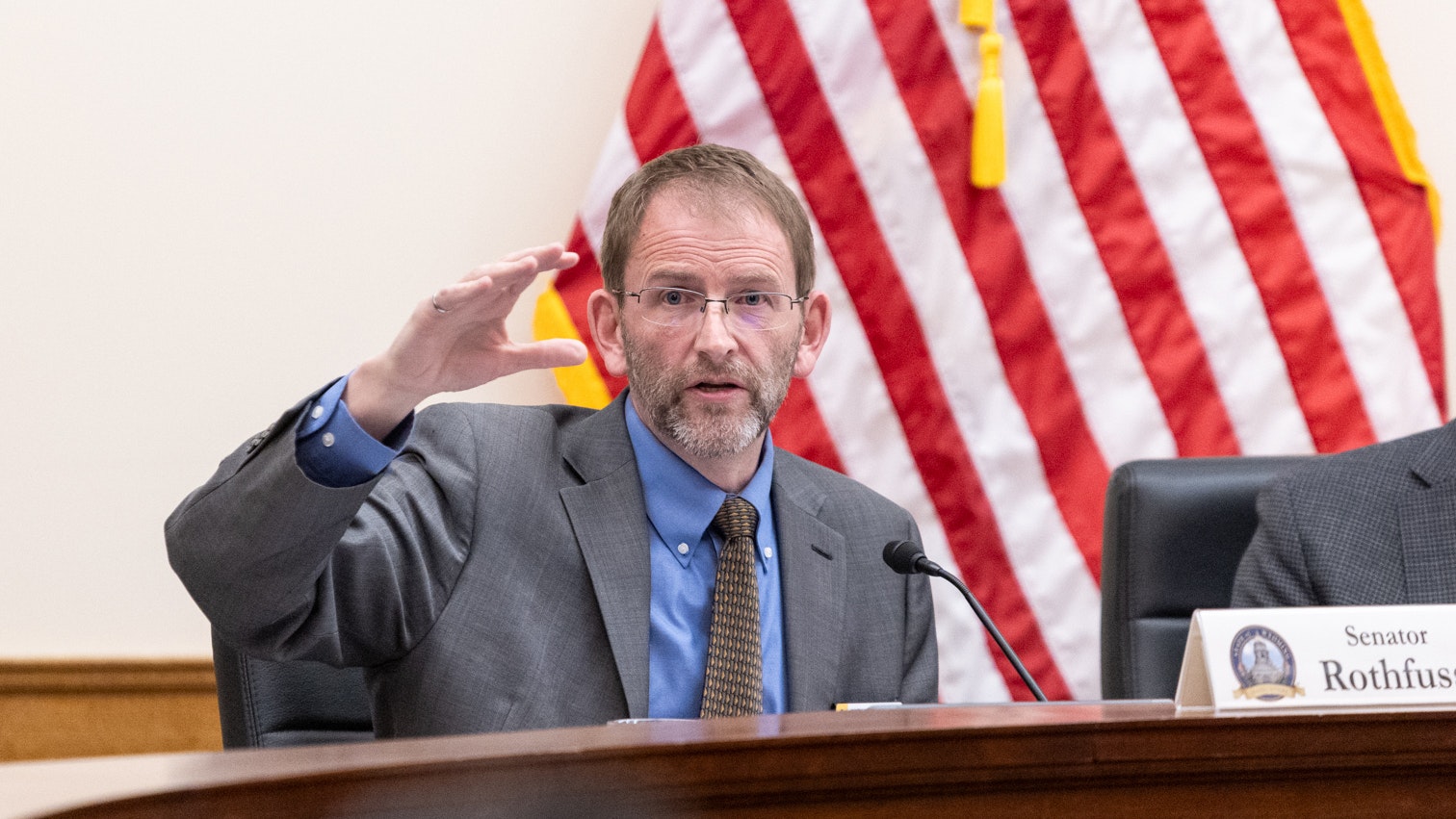
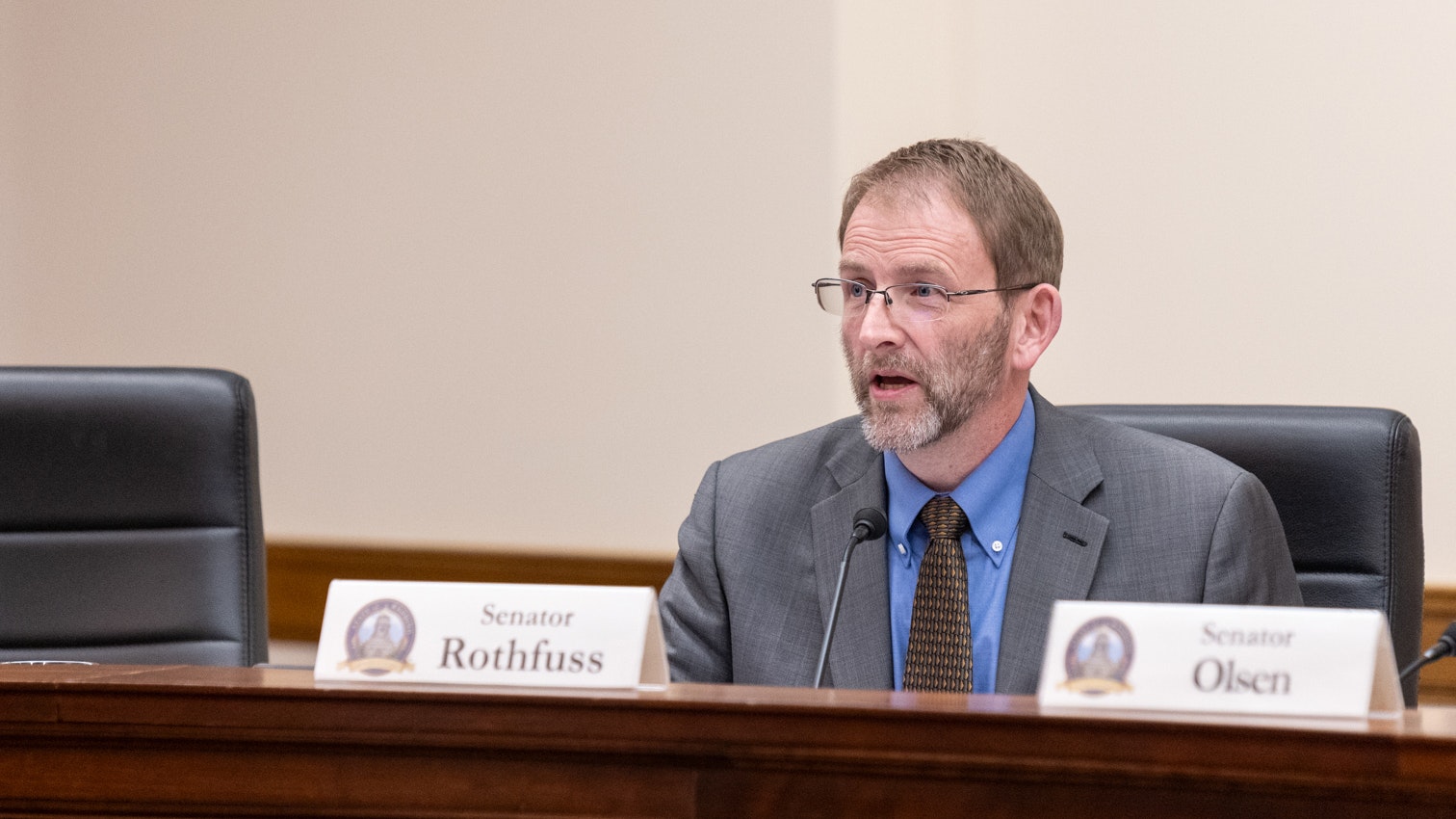
Sen. Chris Rothfuss, D-Laramie, successfully advanced multiple amendments Monday to the “recalibration” bill, most of them compromises in response to weeks of educators' complaints - and one of them a guardrail to thwart a bidding war between districts that could soon have millions of dollars to attract new teachers.
“We’ve been listening. Hopefully that will come as no surprise,” said Rothfuss during a Monday meeting of the Senate Education Committee. In an expression of understatement that made Committee Chair Wendy Schuler, R-Evanston, laugh, Rothfuss added, “We’ve seen a few emails, for example.”
The recalibration bill proposes to isolate teacher and paraprofessional pay, so that districts can’t pull from that category to fund other categories, like administration and equipment.
Rothfuss left that “silo” alone. But he offered an amendment to do the following:
Evaluate the appropriate wages for teachers at 85% of comparable positions in the market. That’s a compromise between the analysts who told the committee teachers work about 79.1% of the year, and the Wyoming Education Association, which says they work about 88% of the year.
Hinge the payout for schools upon the average attendance figure of the past two years. That’s a compromise between the old model’s three-year rolling average – which makes for gradual adjustments in reimbursement – and the new draft’s one-year average, which would make for harsher fluctuations but more accurately reflect current attendance figures from year to year.
Adjust school funding for inflation every year instead of every two years.
Require every school district to have a minimum of 17 teachers. That’s a concession for tiny school districts, which may lose a diversity of offerings if their teacher-to-student ratio is as strictly proportionate as that of larger schools.
Return the proportion of elective and specialist teachers in middle school from the draft model’s 20% of the core-teacher quantity to slightly more than the current proportion of 33%.
Provide one full-time employee for every 100 at-risk students – a pivot from the draft figure of one per 120.
Bring funding for more elementary school nurses and counselors into this year, rather than delaying that to 2027 as the bill proposed prior.
Delay the bill’s mandate that districts join the state’s insurance pool by another year, to 2028 rather than 2027, while committing $150,000 for a study on what that shift would cost.
Limit the districts’ reimbursements for insurance to those employees who actually used it — “rather than paying for the teachers that are not employed,” said Rothfuss. He called rooting those reimbursements in actual versus potential covered employees is a cost savings.
Pay each school district for health insurance via reimbursement rather than via loan.
Keep debating this year how best to provide counselors, nurses and mental health experts.
Allocate $10 million so all school districts could provide “unlimited access” to high school classes that double as college credits.
Let’s Unpack This One More
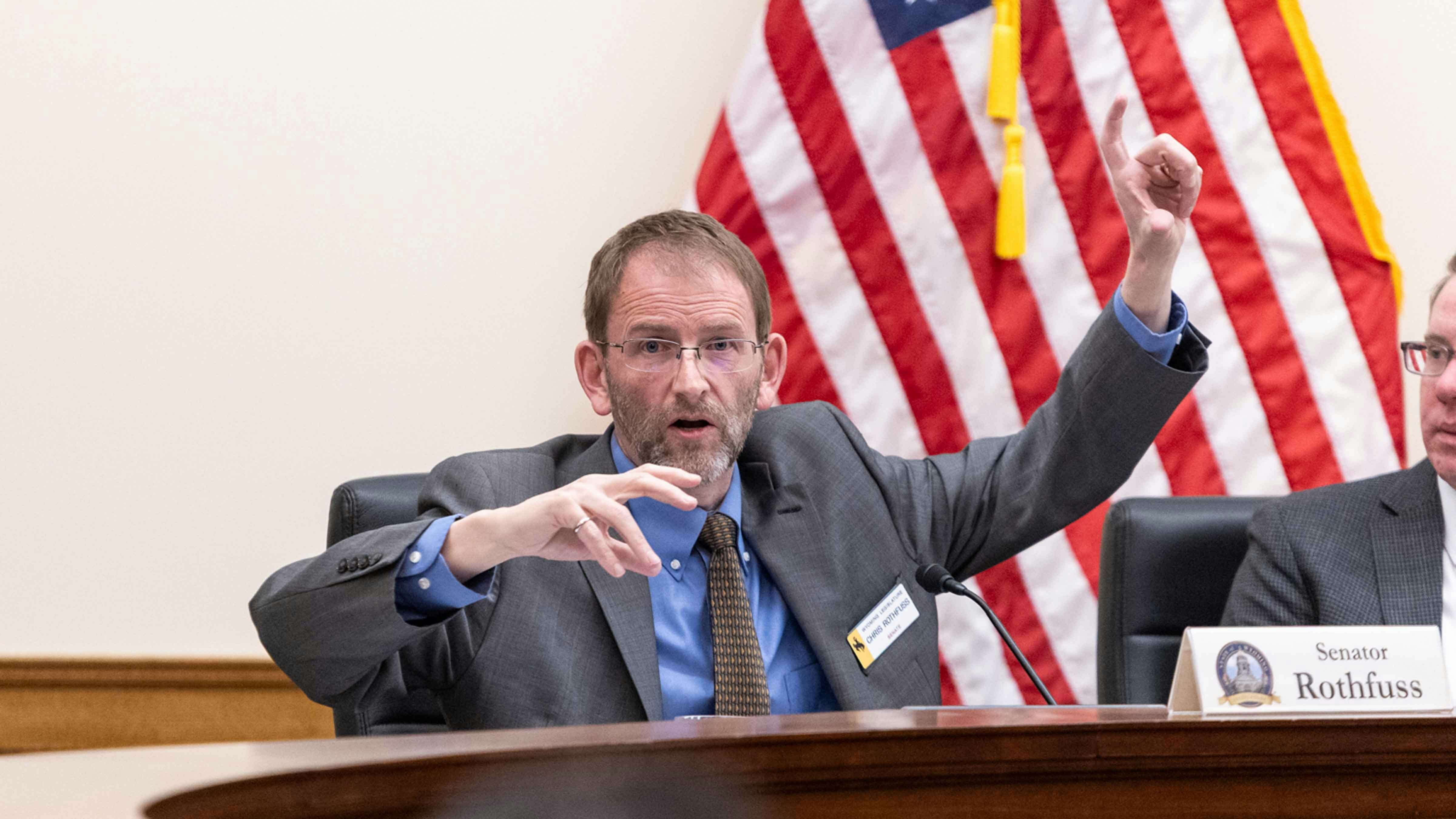
After advancing those amendments, Rothfuss unpacked a more complicated one, which he called a counterbalance to a flush of money for new teachers and better teacher pay, so that the districts didn’t upend themselves in a sudden hiring frenzy.
The draft bill would pump $113 million “new dollars into the education silo,” or the grant lawmakers envision as being just for teacher and paraprofessionals’ compensation.
“There’s 1,400 unhired teachers in that education silo,” said Rothfuss, adding, if his 85% pay boost clears the Legislature, the districts would have the money to hire all 1,400 of those.
“The idea that anyone would be letting go a teacher, would be pretty irrational,” he said. “In fact, it will be a ridiculous struggle to acquire 1,400 new teachers, to fill all the positions that this model would fund.”
His concern with “opening the floodgates,” said Rothfuss, was that districts would compete with each other in a bidding war, driving up salary offerings, and not hire all the teachers they need as a result.
He cited a similar event in 2005.
“I mean, it’s $113 million of additional (money) injected into a current budget of $458 million,” said Rothfuss. “That is an awful lot of additional revenue available… and we need to make sure we don’t break the system.”
His final amendment, if it clears the Legislature, would confine districts to the new average teacher salary with that 85% pay figure, or 1.05 times the prior year average teacher salary for each district. Excess funds from year to year would go into a special savings account associated with educator pay and would “be available to districts to help stabilize declining enrollments or facilitate hiring.”
Schuler called it a smart and measured proposition.
The committee majority approved all of Rothfuss’ amendments, sending them to the Senate Appropriations Committee, then to the Senate for approval.
To become law, that bill will need to survive the Senate, the House, and the governor’s desk.
The Loudest…
On Monday, detractors lamented the proposed shift to the state’s insurance pool more than any other issue.
“Wyoming already has the lowest insurance competition in the nation,” Cheryl Hageman, director of Wyoming Educators Benefit Trust, told the committee. Moving districts to one state-run plan, she said, “will threaten local businesses that have served Wyoming communities for decades, as well as each and every Wyoming citizen.”
Patricia Bach, director of the Wyoming’s Administration and Information Division said her agency is neutral on the bill but has concerns about how to accommodate that shift – with uncertainties about what it will cost and no appropriation for it so far.
“That makes me extremely nervous,” she said. The agency would need 10 more employees to absorb what would be a doubling of its current program, Bach added.
Rep. Scott Heiner, R-Green River, who co-chairs the Select Committee on School Finance Recalibration, told the Senate Education Committee on Monday that the idea hatched when “we heard a lot from part-time workers” who wanted to get medical insurance, but were under the 30-hour-per-week threshold to do so.
Heiner listed bus drivers and custodians, for example.
“They’ve strongly desired that,” and moving them to the state’s plan would impose an easier, 20-hour-per-week threshold, said Heiner.
Sen. Charlie Scott, R-Casper, indicated that embedding incentives into the current system could be a better approach.
The recalibration bill has been embattled. The House of Representatives rejected its own version twice last week, in what Heiner called a "dereliction" of the Wyoming Constitution's requirement to fund education.
Answering the House's rejections, the Senate on Friday voted unanimously to introduce its mirror version of the bill.
The whole Legislature is under pressure from the judicial branch to reassess how it funds education and in some cases, pay for more and better provisions in schools.
Clair McFarland can be reached at clair@cowboystatedaily.com.