Of the two bills seeking to rescue the Wyoming Business Council by rebuilding the agency, a Senate committee on Monday advanced the bill with a longer pause of its work.
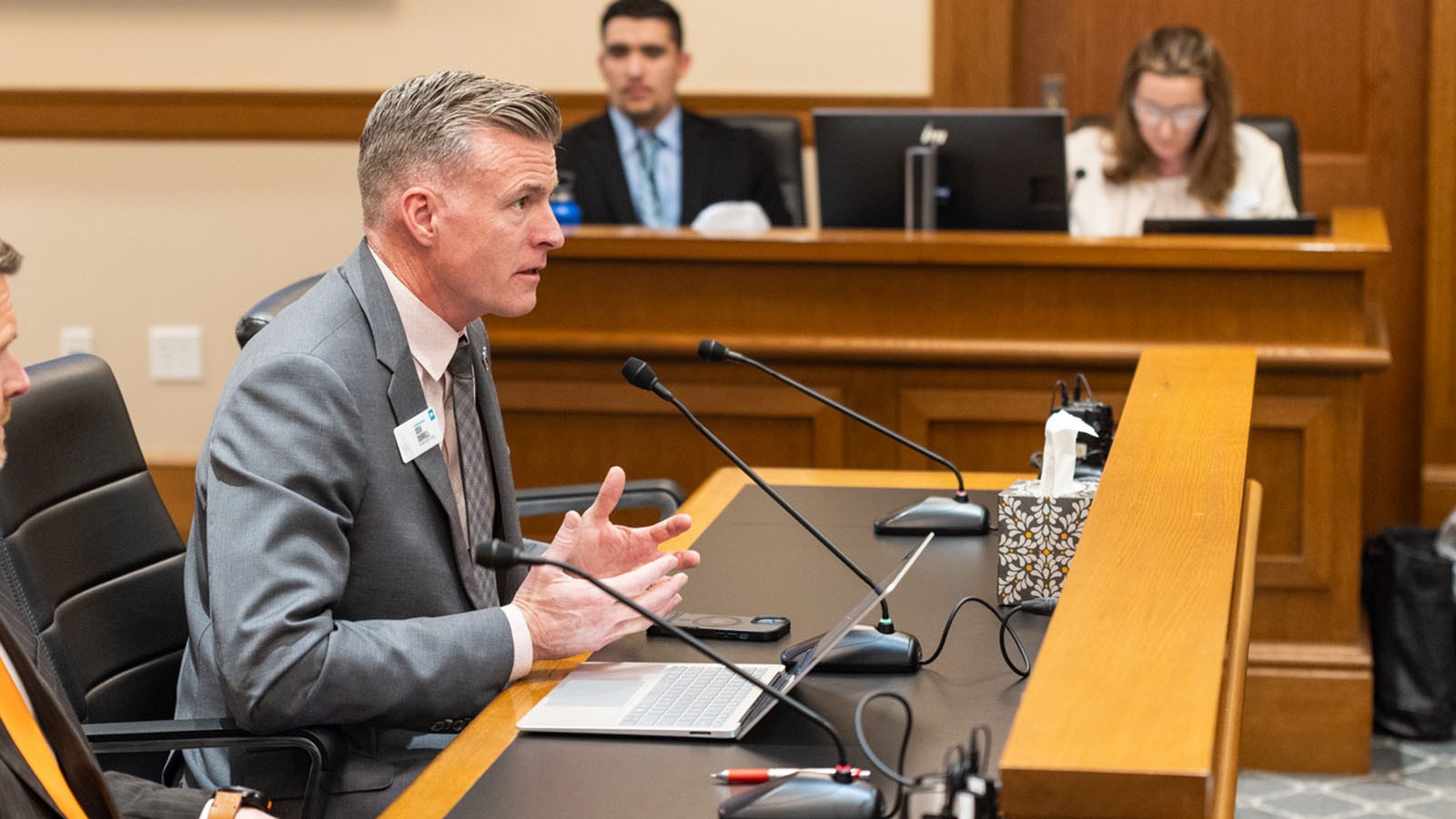
Gov. Mark Gordon’s chief of staff Drew Perkins said Senate File 125 creates a “hard freeze” on the agency’s activities, whereas Senate File 100 — which he said the governor preferred — would have instead created “soft stops” while lawmakers and others reevaluate the agency.
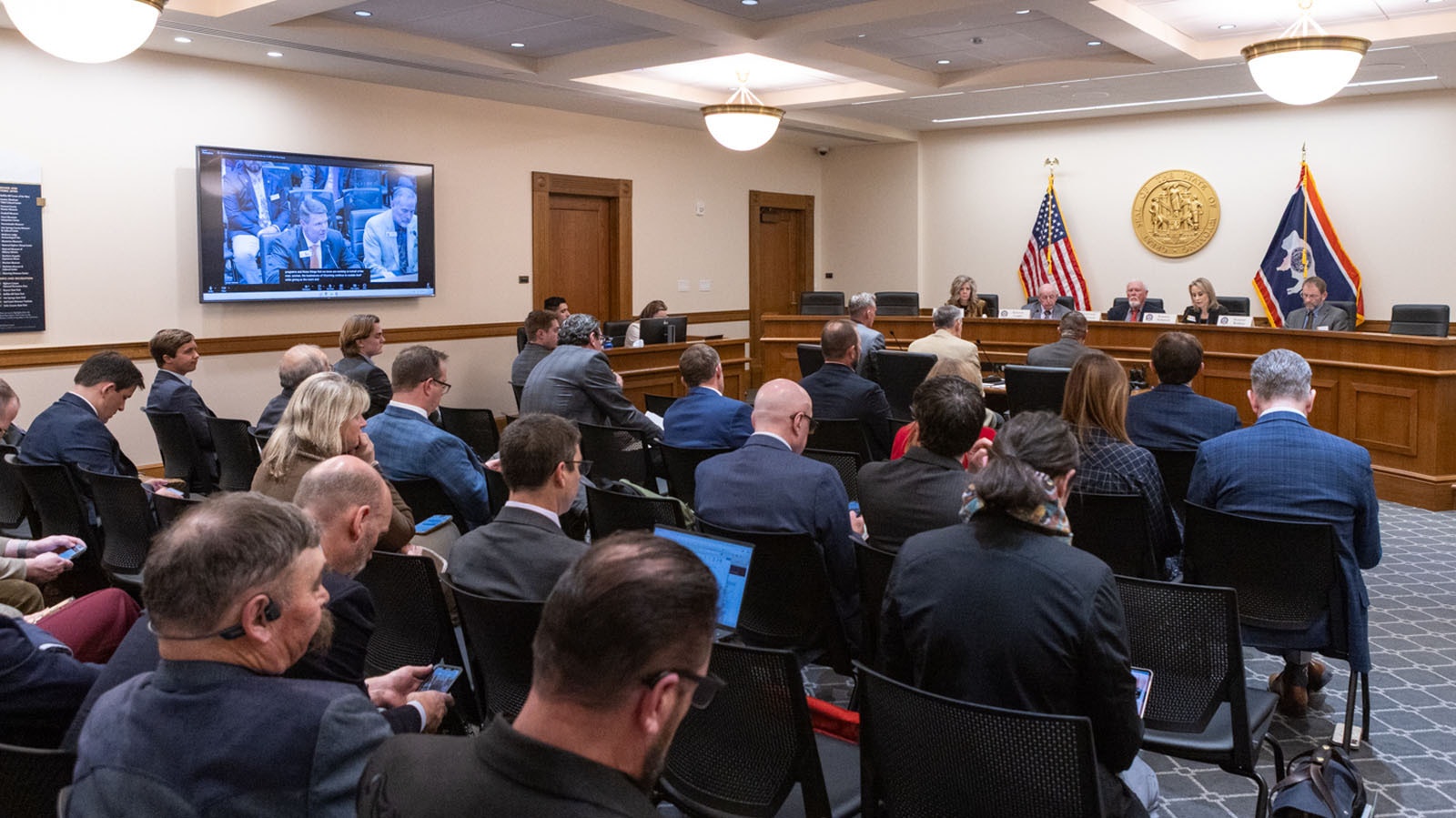
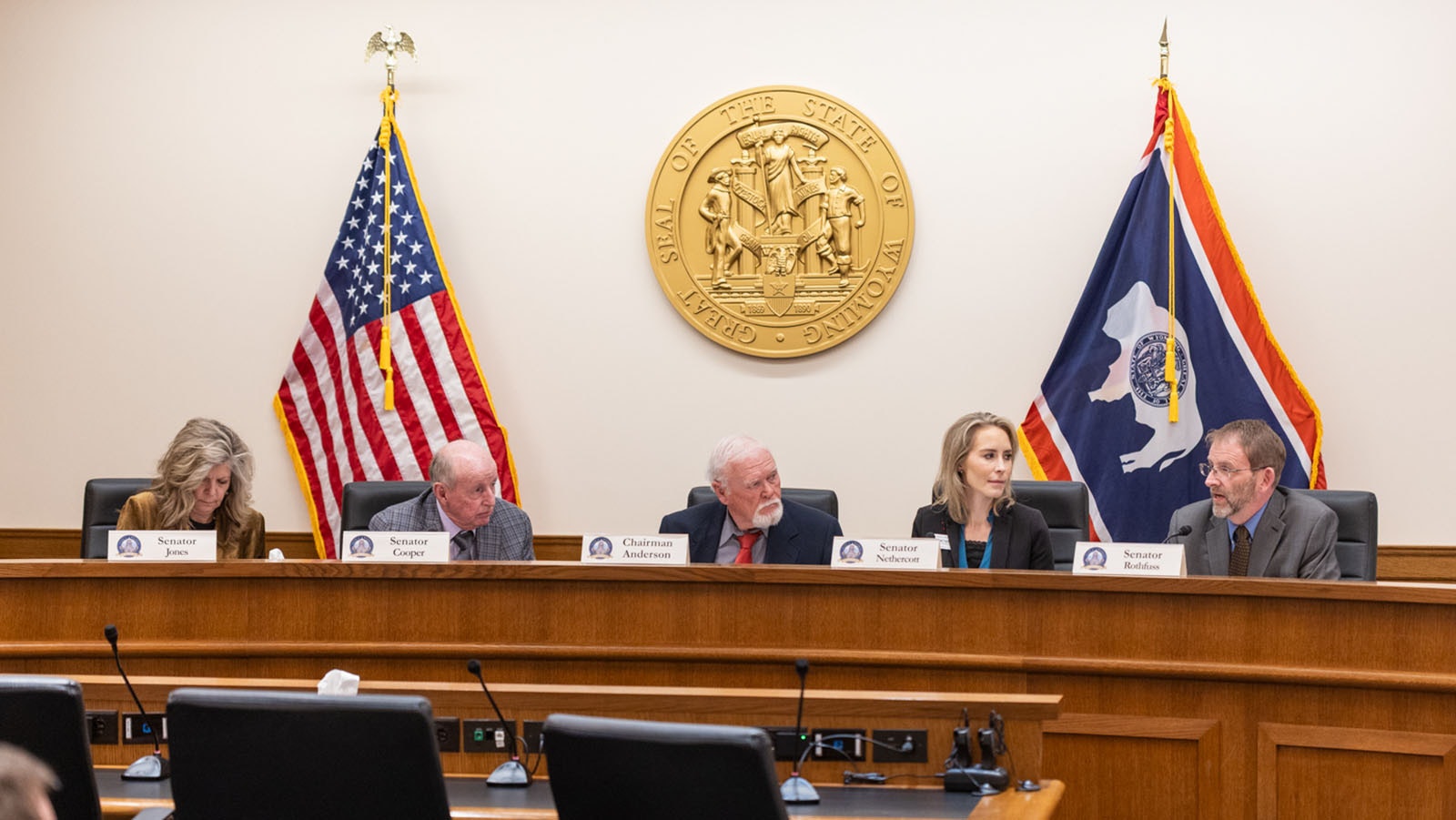
At the end of the Senate Minerals, Business and Economic Development Committee’s Monday meeting in the state Capitol, the committee advanced SF 125 by a 4-1 vote, and declined to act on SF 100.
Perkins had conceded that multiple Wyoming Business Council programs, like the Business Ready Communities program, are controversial.
“On the other hand,” said Perkins, “there are a number of functions inside the Business Council that work very, very well.”
He asked the committee to protect the Small Business Innovation Research and Wyoming Main Streets program from SF 125’s hard stop on council activities while the agency is reevaluated and, potentially, rebuilt.
These urgings follow what Sen. Chris Rothfuss, D-Laramie, called a “Hulk smash” maneuver by the Joint Appropriations Committee last month: a budget amendment to defund the council, and a standalone bill to purge it from state law.
The budget amendment remained viable as of Monday afternoon, though both the House and Senate engaged fiery debates on it Friday.
The standalone dismantling bill failed its introductory vote Feb. 9 in the Senate.
In an effort to save the agency, three lawmakers and a handful of their co-sponsors have offered bills that would stop or slow the agency’s work while task forces reevaluate it.
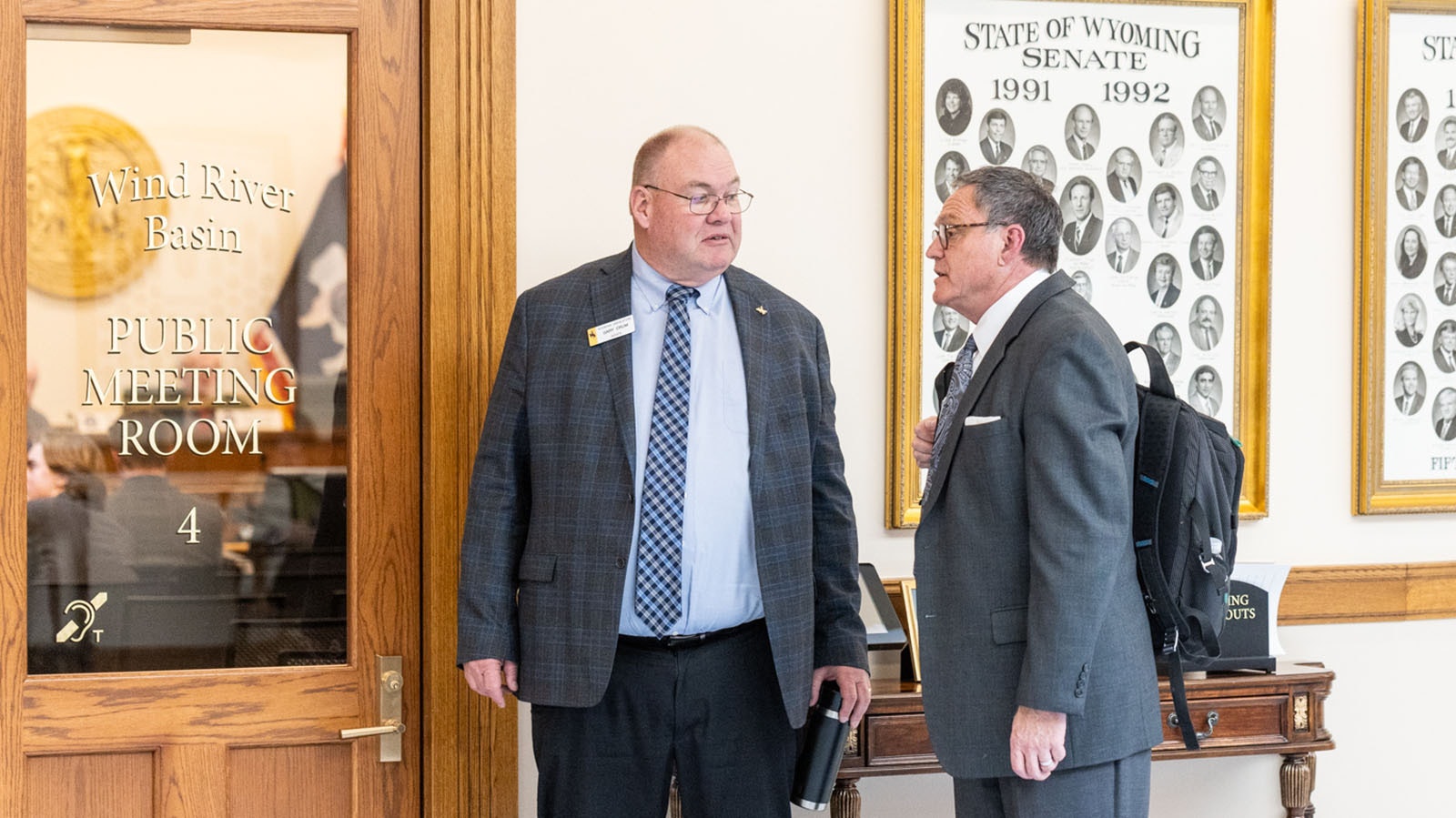
Sen. Gary Crum, R-Laramie, sponsored SF 125. It is a one-of-a-kind legislation this session.
Sen. Taft Love, R-Cheyenne, sponsored SF 100. It has a mirror bill, Cheyenne-based Republican Rep. Rob Geringer’s House Bill 150.
Though its twin stalled out on the Senate side, HB 150 is slated for a House Appropriations Committee hearing Tuesday.
The full Senate could soon hear SF 125. Rothfuss was the only Senate Minerals member to vote against it.
Just Happy To Be Alive Over Here
Wyoming Business Council CEO Josh Dorrell voiced optimism Monday.
“In general, we’re pretty darn excited about the intention, the effort and the interest into diving deep into what the Business Council does,” Dorrell told the Senate Minerals Committee.
He declined to tell the committee which of the two bills he would prefer, but said SF 100 would do “a good job of allowing us to show (our productivity) but also learn from it and improve upon what we’re doing.”
Numerous mayors and local government leaders praised the agency and its mission.
“They have several things working well,” said Justin Farley, CEO of economic development entity Advance Casper. “We can’t afford to blow up all of that just for lack of understanding of it.”
Brad Enzi, CEO of the Laramie Chamber Business Alliance, urged lawmakers to protect statewide economic development to stay competitive with other states, but also to uncover “what the metrics are.”
“How are we going to know if we’re winning the game if we don’t even know how the score is being kept?” asked Enzi.
Nope, We’ll Do It
Rothfuss successfully advanced an amendment to SF 125, which the full Senate may review and approve or reject.
Rothfuss amendment did not remove the hard freeze on most of the agency’s work.
The freeze says that From July 1 of this year until June 30, 2027, WBC could not expand anything it does or take on any new tasks or programs unless otherwise required by law if this bill passes.
Rothfuss’ amendment would, however, gut the part of the bill forming a task force.
That’s because the Senate and House Minerals Committee can handle reworking the agency on their own, Rothfuss theorized. That committee is already tasked with overseeing the WBC.
“So, from a legislative standpoint we can do this,” he said. “This is actually our charge.”
Rothfuss said having a stakeholder subcommittee work under the Minerals Committee could have “potential value,” but the committee could just ask the governor to assemble stakeholders without commanding him to do so in law.
Gordon has voiced interest in forming an interim task force to change, and ultimately rescue, the Business Council.
If Rothfuss’ amendment doesn’t survive, the bill would form a task force comprising one person representing the governor, two state representatives chosen by the House speaker, two state senators chosen by the Senate president, and eight business-sector people chosen by the governor from across specific industries: Minerals, manufacturing, construction, power generation, economic development, tourism, retail, and agriculture.
But Why This?
The Wyoming Business Council is a state agency that gives grants and loans to businesses and communities in the name of economic development.
It has received nearly $1 billion in state money, plus more in federal and other funds, since its formation in 1997.
Controversy follows it in part because it offers competitive grants to businesses in the private sector, which some conservative lawmakers call “picking winners and losers.”
It also generated controversy in the courts this year, as a $6 million building project it backed in Cody has now sparked a $14 million lawsuit. The business meant to inhabit the building claims it’s poorly made, and the builders failed to involve the business sufficiently in its planning.
The WBC requested about $111 million for the next two-year budget cycle.
Gordon recommended it receive half that, at $55 million.
And the Joint Appropriations Committee recommended it receive $2 million — just enough to finish its ongoing obligations and die.
Then Came Friday
The state Senate unleashed a verbal debate on the agency’s mission Friday afternoon.
Senate Appropriations Chair Tim Salazar, R-Riverton, told the body the agency’s vital work could be done in “other avenues” with more oversight.
“My personal opinion is that I don’t have confidence in the leadership of the Wyoming Business Council right now, and I’ve heard that from other legislators,” said Salazar, later adding that that’s not a poor reflection on the agency’s employees.
Sen. Bob Ide, R-Casper, said the Wyoming Business Council falls outside the proper role of government.
“Economic development is low taxes and low regulation. And I think that’s our role here,” said Ide. “Our role isn’t to be a venture capitalist here to private entities. ... It’s really not our job to decide who gets money here.”
Sen. Ogden Driskill, R-Devils Tower, called it “borderline criminal” to defund an agency without more deliberation, and called the defunding and dismantling effort a “knee-jerk move.”
Sen. Tara Nethercott, R-Cheyenne, rebutted that.
“The Business Council has been under scrutiny by the Legislature for as long as I’ve been in it — with severe criticism and concern,” she said. “Anyone who’s served in here longer than five days is aware of that long history of criticism to the Business Council.”
She cited communications failures.
“To say that this is a complete surprise is also disingenuous,” she said.
Nethercott is cosponsoring SF 125.
The WBC “didn’t do itself any favors” when called to defend its mission to the Joint Appropriations Committee, Driskill conceded.
Salazar had asked Dorrell at a JAC meeting in January how much money WBC needed to fulfil its mission.
Dorrell’s answer at the time was more than $1 billion.
“Thank you for the courtesy of the truth,” came Salazar’s retort in that meeting.
The House Friday
Meanwhile, in the Wyoming House on Friday, Rep. Mike Schmid, R-La Barge, cast doubt on whether entrepreneurs need a statewide economic development arm.
Schmid told his fellow representatives that he built and sold companies his whole life, starting with $1,500 and a father-in-law who believed in him.
He said he sees value in the state's economic development agency, just not the way it's been run.
"Entrepreneurs do better when they have to make it work,” said Schmid, adding he didn’t like to see the WBC "jingle sacks of cash" to attract businesses to Wyoming.
Rep. Ken Pendergraft, R-Sheridan, said the WBC’s CEO told lawmakers that "the free market is dead.”
Dorrell’s point at the time was that all U.S. states have enlisted their governments to help recruit businesses.
"The programs were improper, were not the proper role of government, and the people who were doing it had a bent and a worldview that we did not accept," Pendergraft said.
Speaker Pro Tempore Jeremy Haroldson, R-Wheatland, said he told Dorrell before the current session to come back with a restructuring plan.
Instead, he said, the agency came back asking for more money and suggesting the Legislature didn't understand.
The WBC found some support among the House members as the debate continued, with Rep. Landon Brown, R-Cheyenne, asking to know if there had been any effort to use "a scalpel as opposed to a bludgeon."
He said the Small Business Development Centers — offices across the state that walk entrepreneurs through starting businesses — would be wiped out.
"We eliminate this, those offices go away across the state in every single one of your communities," Brown said.
Rep. Lee Filer, R-Cheyenne, built on a football metaphor that surfaced during the back and forth.
He said it’s fine to fire coaches, but then you hire new ones, "because if you don't, you're not in the game anymore."
Filer argued Wyoming is losing a generational talent war to Colorado, estimating 65% or more of young people who leave head to the Front Range.
"Wyoming is competing against 50 other states right now in the United States,” added Filer. “We're competing for industry, jobs, technology, education — you name it."
Former House Speaker Steve Harshman, R-Casper, pointed to the firearms industry Wyoming recruited through the WBC and a 260-job expansion in Evansville.
"This is about people,” said Harshman, as criticisms of the WBC continued, with Rep. Steve Johnson, R-Cheyenne, calling the agency "welfare for the well-connected."
Rep. Paul Hoeft, R-Powell, said constituents watched the agency subsidize competitors who moved in against locally-grown businesses built over decades.
Debate on whether to restore WBC’s budget is ongoing.
Clair McFarland can be reached at clair@cowboystatedaily.com and David Madison can be reached at david@cowboystatedaily.com.