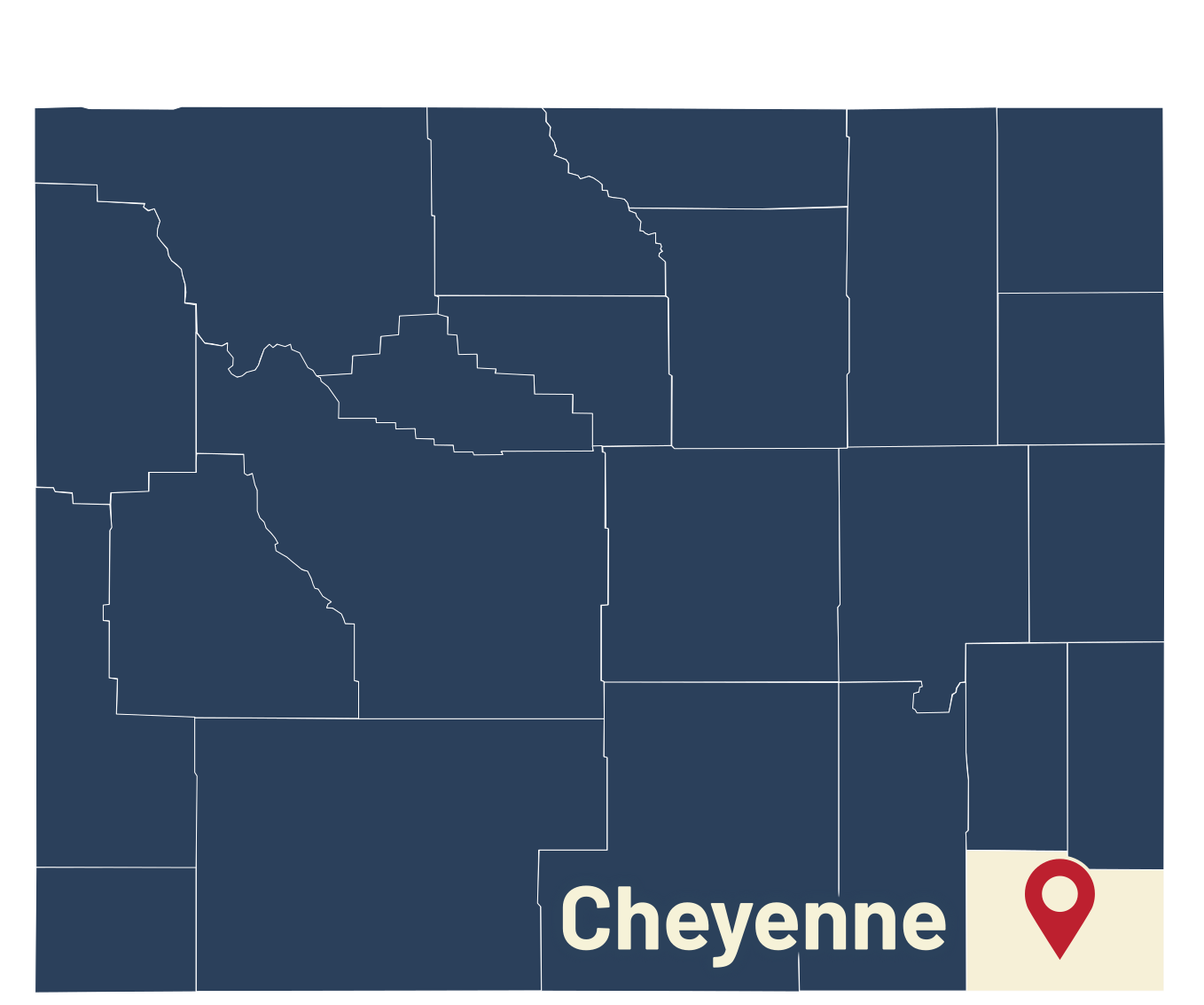
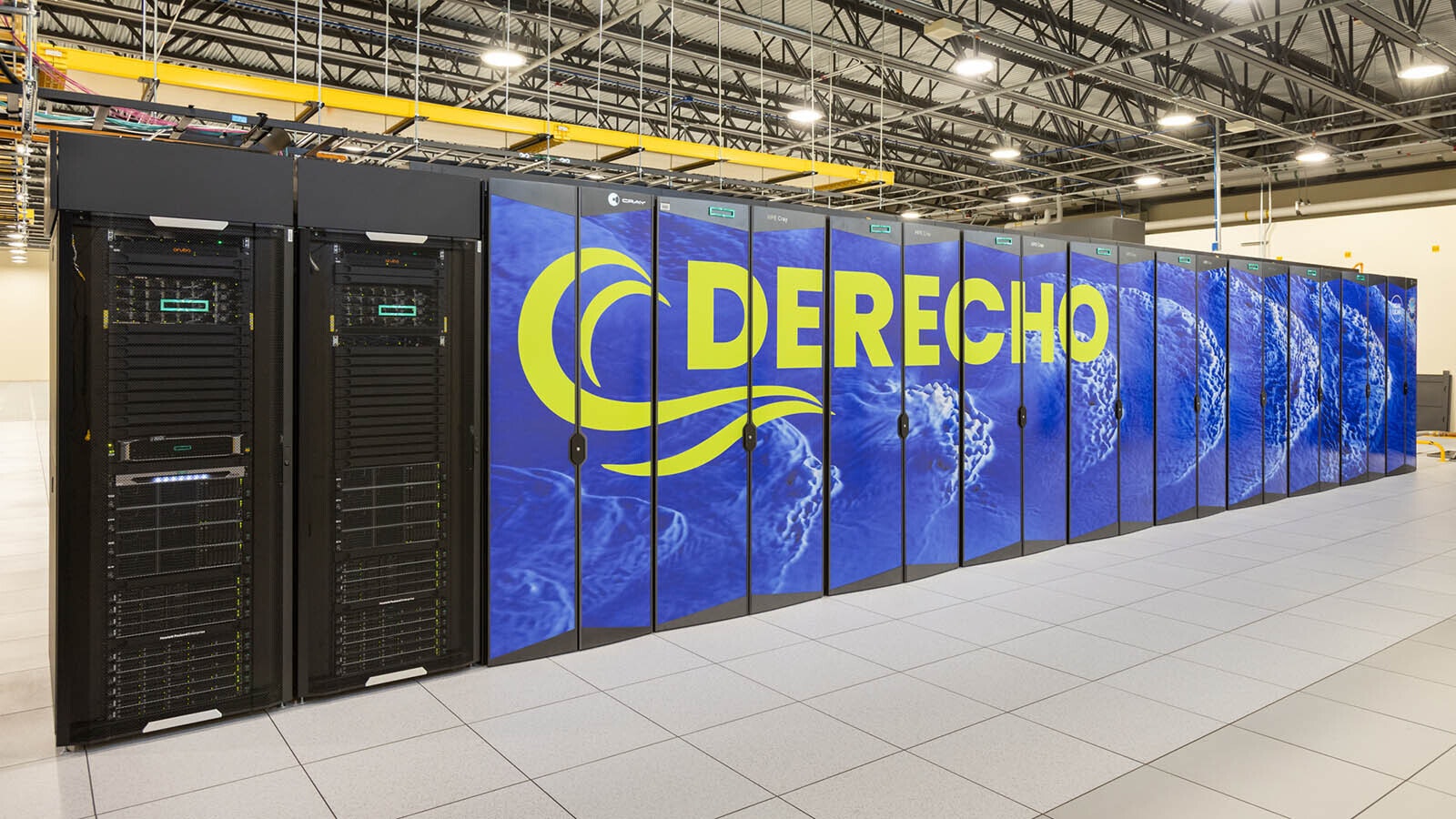
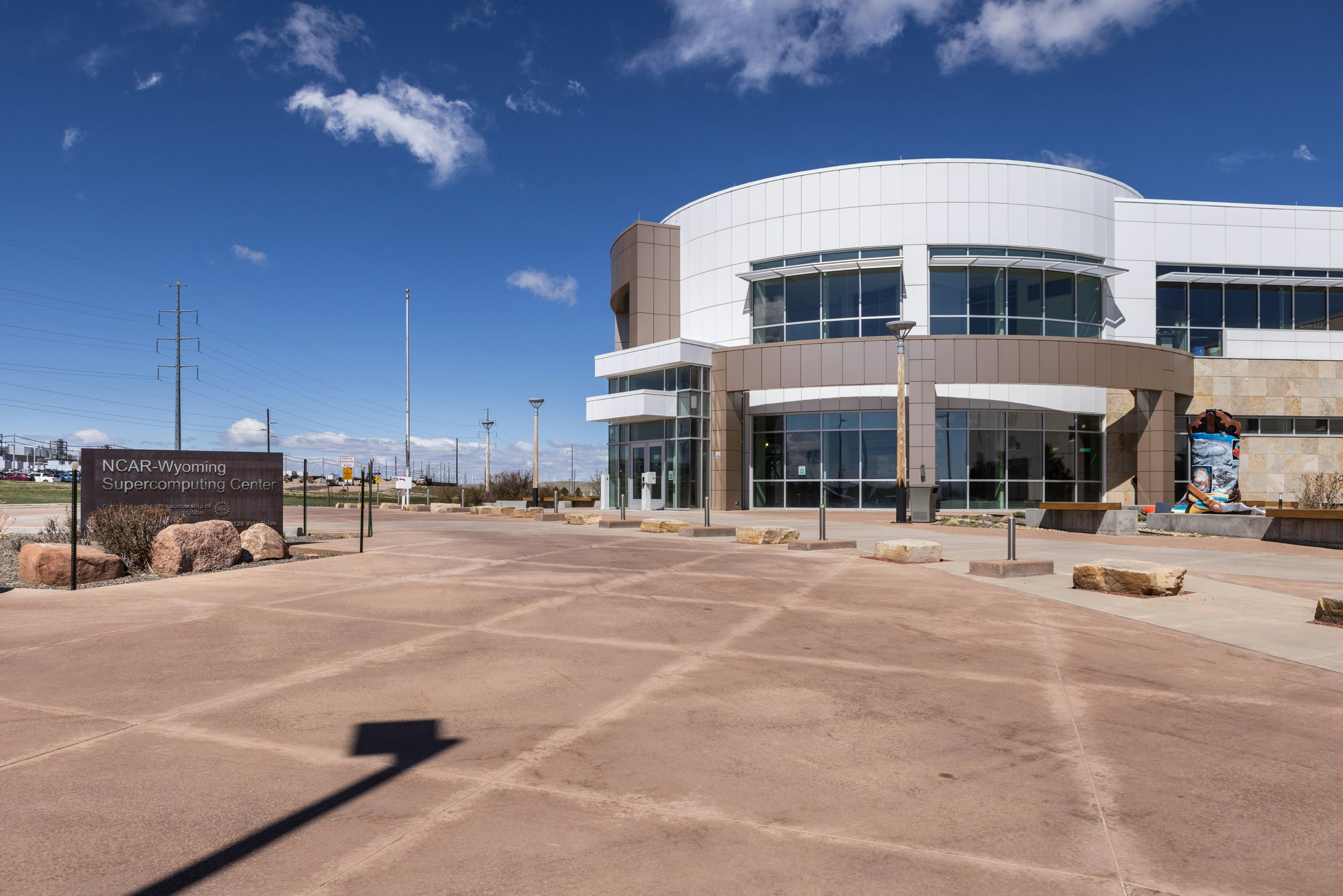
The fate of NCAR’s supercomputer Derecho in Cheyenne is uncertain, after the National Science Foundation announced it will transfer management of the state-of-the-art system housed at the NCAR-Wyoming Supercomputing Center to a third-party.
The NSF’s announcement had few specifics about how and when the transition will take place, or who would be taking over.
The move is part of the Trump administration’s effort to dismantle the National Center for Atmospheric Research in Boulder, with Director of the Office of Management and Budget Russell Vought saying late last year that it’s “one of the largest sources of climate alarmism in the country.”
“The U.S. National Science Foundation has informed the NSF National Center for Atmospheric Research (NCAR) that management and operations of the NCAR-Wyoming Supercomputer Center are expected to transition to a third-party operator consistent with the terms of NSF’s cooperative agreement with the University Corporation for Atmospheric Research,” the statement said. “NSF is working with all parties to continue continuity of operations, and additional information will be shared as it becomes available.”
Cheyenne Mayor Patrick Collins told Cowboy State Daily he is aware of ongoing discussion about the fate of the supercomputer, though he’s not directly involved in them.
“The goal for me is to make sure that NCAR in Wyoming survives,” he told Cowboy State Daily. “It’s so important for allowing people to understand what’s happening with the weather, from our military to our communities, studying weather patterns as they change … I’m hopeful that whoever takes over understands the mission.”
Derecho does a lot more than just investigate climate change, Collins added, making it an important asset for not just the state, but the entire nation.
Among its many accomplishments, NCAR was instrumental in solving unexplained weather events that caused airplane crashes in the 1980s. It’s also modeled wildfire-generated weather to help determine the safest locations for firefighters.
NCAR is also an important asset for University of Wyoming, Collins said.
“(There are) opportunities for our college, our university, over there to be able to use this as an asset for their students and for their professors in their research,” he said. “So, to me, it’s really an important thing we have to keep here in Cheyenne. I just hope they’ll be able to find that third party, if, in fact, they do make this change, so that can continue to happen.”
UW Has 20% Share Of Derecho Capacity
Chad Baldwin, a spokesman for the University of Wyoming, told Cowboy State Daily that UW retains 20% of Derecho’s computing capacity, an agreement in place since the NCAR center opened in 2012.
“That’s still in place,” Baldwin said. “And we use it. Right now, it’s primarily being used for atmospheric research. We have a pretty world-renowned Department of Atmospheric Research.”
That department also has an aircraft dedicated to atmospheric research, partially funded by the federal government.
While most of UW’s NCAR research is atmospheric right now, past projects have ranged from geophysics and magnetosphere physics to geomorphology and land-use dynamics. Several oil and gas professors have also had projects with NCAR-Wyoming in the past, and there was even a project that looked at the movement of drugs across the U.S. border.
“The supercomputing center and (the) Derecho NSF-supported computing facility within (it) are great assets for the university and state, and UW is a heavy user of the computer,” UW President Ed Seidel told Cowboy State Daily in an emailed statement. “We are closely following the process laid out by the NSF for next steps and have conveyed our interest in playing an appropriate role to support it in the future.”
Computing At Hurricane Speed
Installed in late 2023 at a cost of $34 million, the Derecho supercomputer 3.5 times faster than its predecessor, the Cheyenne supercomputer, which was in service for seven years.
Derecho can do 19.87 quadrillion calculations every second — the computing power of just over 500,000 laptops all working together at the same time.
A “derecho,” pronounced De-Ray-Cho, is a Spanish word for fast-moving, straight-line windstorms, common in the Midwest. The storms can pack hurricane-force winds and are often also accompanied by heavy rain and flooding.
The name was chosen by Riverton middle-school student Cael Arbogast, who said he felt the speed of a derecho was a good symbol for the supercomputer’s advanced capabilities.
“This new supercomputer has to move at fast speed for everybody to use all across the country,” he said. “I thought this name would be a good fit provided that lots of scientists and others will be using this computer all across the country and for weather all throughout the world.”
NCAR-Wyoming Result Of Bipartisan Effort
Since opening its doors in 2012, NCAR-Wyoming has served more than 4,000 users from more than 575 universities and other institutions across the nation, as well as overseas.
NCAR took a bipartisan effort to bring to Wyoming, which was a late entrant to the competition, and was initially told it was “mission impossible.”
But by bringing together a broad coalition, Wyoming was able to overcome a stigma that the state is too small and too rural to do big tech things like supercomputers. Since then, numerous other data centers have located in Cheyenne.
“We put a lot of money into that park to get it ready to be able to serve NCAR,” Collins said. "Now Microsoft is there, Walmart is there, so that effort has really paid dividends for Cheyenne and Laramie County and for the state of Wyoming.”
Hoping Key Weather Functions Remain
Meteorologist Don Day said he’s waiting to hear more about how the transition of Derecho will be handled, but he’s optimistic that key functions related to improving future weather forecasts will be retained.
“If it’s going to be transferred to a third party, I’m assuming that doesn’t mean it’s closing or shutting down,” he said. “It looks like it’s going to be under some other arm of the National Weather Service, NOAA, or another agency. Or maybe it’s going to go to a private agency, I just don’t know.”
Day said those who have ongoing research through NCAR are “certainly trying to figure out what’s going to happen.”
But, he added, it’s important to understand that Derecho isn’t directly involved in making weather forecasts.
“It’s research,” Day said. “We’re not getting weather forecast information out of that facility here.”
The research does, however, play a role in improving future forecasts, Cowboy State Daily was told in previous interviews by NCAR Director of High-Performance Computing Division Irfan Elahi.
“The research that comes out of this ends up in weather prediction,” he said in a 2024 interview. “Whatever new discoveries we make in better predicting the weather, better predicting the events, the better the newscasters and the meteorologists and the people who provide day-to-day and weekly and monthly forecasting, they’ll be able to do their jobs better.”
Day said he sees the NSF announcement as largely good news for what it didn’t say.
“They’re not saying they’re closing, so I would consider that as good news,” he said. “However, everything else is yet to be determined.”
Renée Jean can be reached at renee@cowboystatedaily.com.