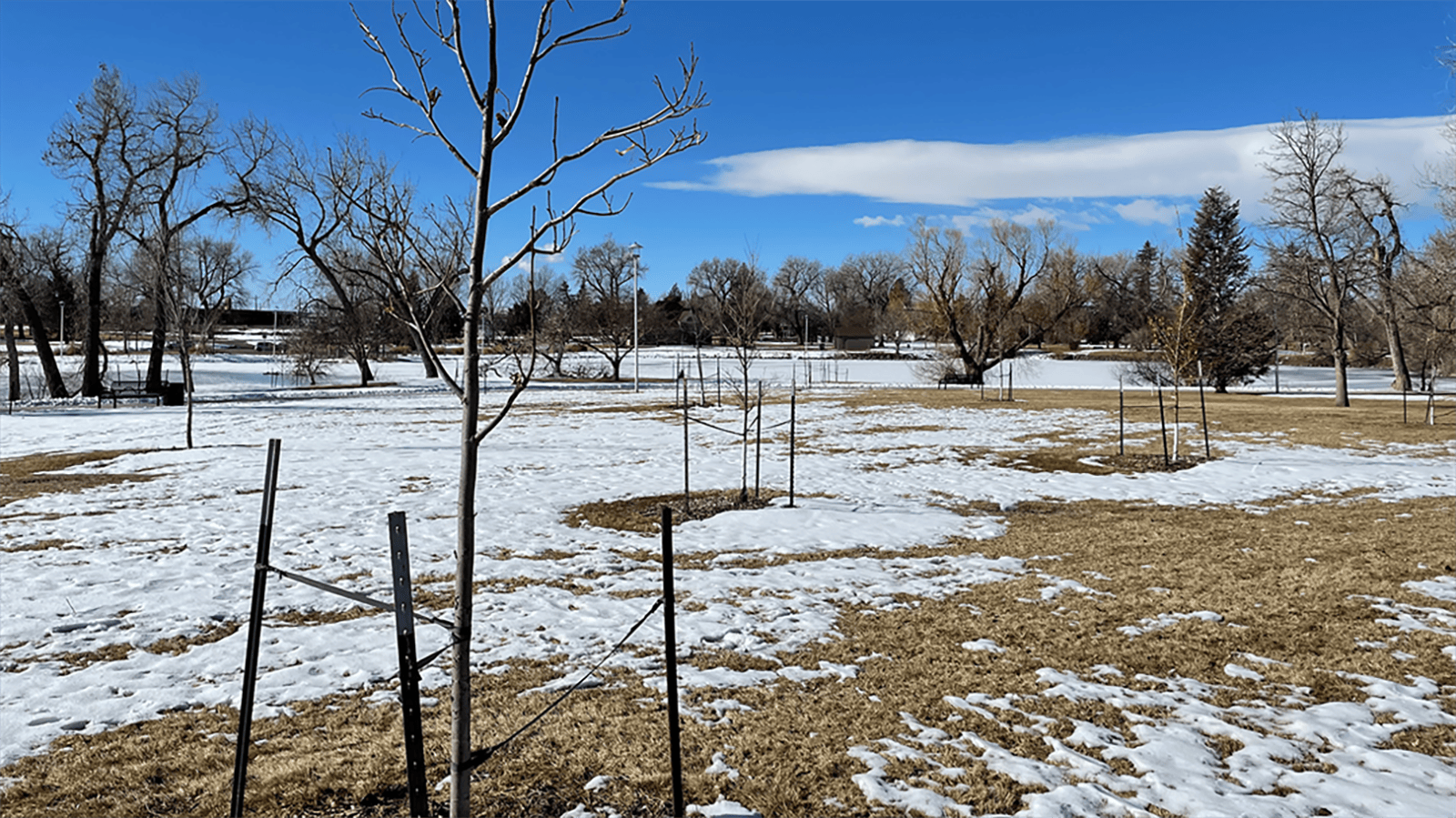
As unseasonable warm temperatures continue around Wyoming, some farmers are taking advantage of the above freezing temperatures to irrigate their fields.
Although it may seem odd, watering in the winter months is highly recommended in the Cowboy State but especially this year as dry winds and a lack of snow dry up the soil even more than usual.
Winter watering is encouraged by experts who say that it is vital in our arid climate to add moisture back to the ground even during the cold months.
Unfortunately, winter watering is often not done by those that would benefit the most from it.
This year, it is especially important to water in February when there has been little to no snow in most regions across Wyoming.
“When we go two or three weeks without snow cover, it’s a warning sign that you need to water if you want to keep your plants healthy or alive,” horticulturist Shane Smith told Cowboy State Daily.
Smith said that some of his colleagues recommend watering every winter holiday — New Year’s, MLK Day, Valentine’s Day, and Presidents’ Day.
Soil scientist Dr. Caitlyn Youngquist of Dirt Works in Worland agreed with Smith that winter watering is vital in Wyoming’s climate to protect the health of both the soil and the plants.
“Even our lawns are going to be impacted from being bare and dry all winter,” Youngquist said. “They won’t green up this spring as fast since they haven’t been covered in snow.”
Youngquist recommends watering as temperatures warm up above 40 degrees in order to give your grass, plants and trees a better chance of survival. Areas with high winds, such as Casper and Cheyenne, will especially see the impact of a snowless winter.
“This winter has been unusually warm and dry,” Smith said. “I’ve seen things I’ve never seen before—lettuce sprouting in January, lilacs leafing out early and freezing back.”
The Danger
When the winter months are dry without much snow and plenty of wind, the ground dries up and soil temperatures fluctuate according to Youngquist. This puts many trees and perennials in danger.
“Water regulates temperature better than air,” Youngquist said. “When there’s some moisture in the soil it helps reduce the extreme cold also in the soil.”
Youngquist said that dry soil will get colder than soil that has moisture.
“Our lawns, landscapes and perennials can all benefit from winter watering in our cold, dry, windy winters,” Youngquist said.
Arborist Eva Balding of Branch said that pine and spruce trees are especially impacted by the lack of snow and need extra water during dry winters.
“Pines and spruce trees typically rely on snowpack for water through the winter, and when there’s no snow on the ground, those trees especially are in a state of drought,” Balding said.
Smith said that evergreens deserve special attention because their needles are exposed to wind and they lose moisture through tiny pores. Fortunately, the bigger and older the trees and plants, the less water they will need because their roots are well established.
Another concern this winter are the high winds according to Smith.
“Quite often the snow doesn’t melt — it sublimates,” Smith said. “It goes straight from a solid to a gas so we get cheated out of moisture even though we may see snow on the ground.”
Saving Your Trees
The natural habitat for evergreens is in the mountains so that is why they need special attention with winter watering in the flat lands of Wyoming.
“They really aren’t adapted to the flat lands where we get less moisture,” Youngquist said. “They’re adapted to the mountains and the foothills where there’s more snow cover.”
Smith said that if you cannot water everything on your property then he said to prioritize your newly planted trees and plants since they do not have fully developed root systems.
“That being said, everything needs water,” Smith said. “Every woody plant, including evergreens, needs some winter watering in most parts of Wyoming.”
When watering larger trees, Smith said not to water right at the trunk since the feeder roots are farther out, about halfway to the outer edge of the canopy.
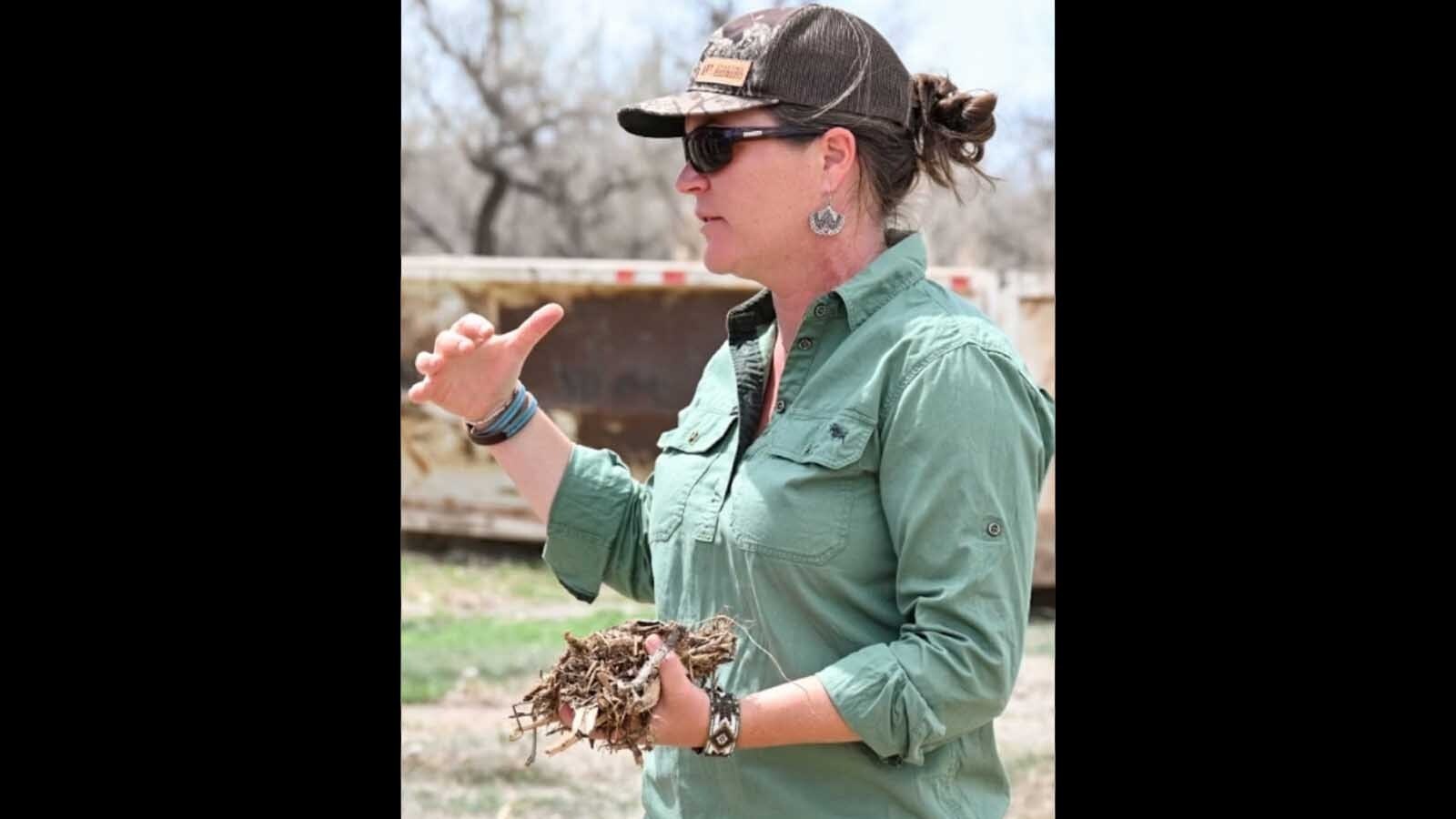
“Another option to save your trees is to mulch,” arborist Balding said. “Mulch absorbs any melting snow or any rain that we do get.”
The mulch absorbs the water and as the ground dries out, the mulch slowly releases the water into the soil as a backup water supply. Balding said that the mulch also insulates the tree roots which is usually the job of snow.
“If there’s no snow on the ground and it’s ten degrees below zero, the tree roots are affected by the cold,” Balding said. “So it’s highly recommended to mulch trees to help offset when dry and the conditions are like they are this year.”
The Science
Balding explained that the trees, especially the evergreens, have tubes in them that are like giant straws sucking up water from the ground.
“When there’s drought, air bubbles form and the cells are damaged in a process called embolism,” Balding said. “It’s like if there was an air bubble in a straw, the straw would cavitate, so it actually damages the trees when it’s a drought condition like this.”
Soil scientist Youngquist said that as long as the ground is not frozen to consider watering to build up a soil reservoir before the planting season. She explained that when the soil does start to warm up, it will support plant growth if there’s already moisture in the soil.
“The soil and plant health is tied to microbial activity in the soil, and that is going to be more active when there’s some moisture than when it’s really dry,” Youngquist said. “Even though in the winter the soil will be somewhat dormant because of the cold temperatures, having some moisture in there will still help support microbial activity.”
Smith said that the worst-case scenario of not winter watering is that your tree dies or become stressed and vulnerable to insects and disease.
“If you don’t winter water, one of the first symptoms you’ll see—usually in summer—is dieback at the top of the tree,” Smith said. “That’s the tree telling you it had to shut down part of itself.”
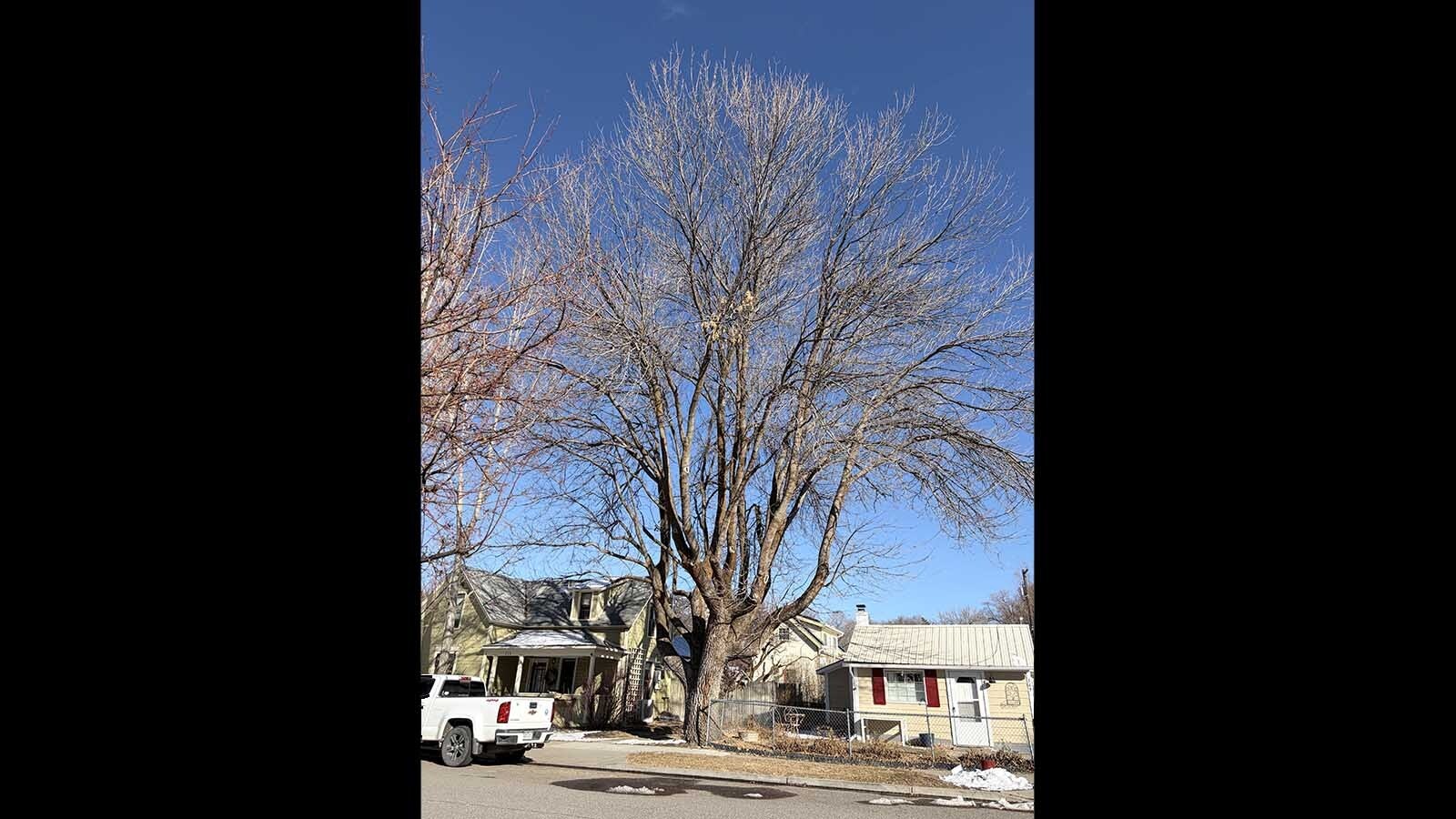
Winter Techniques
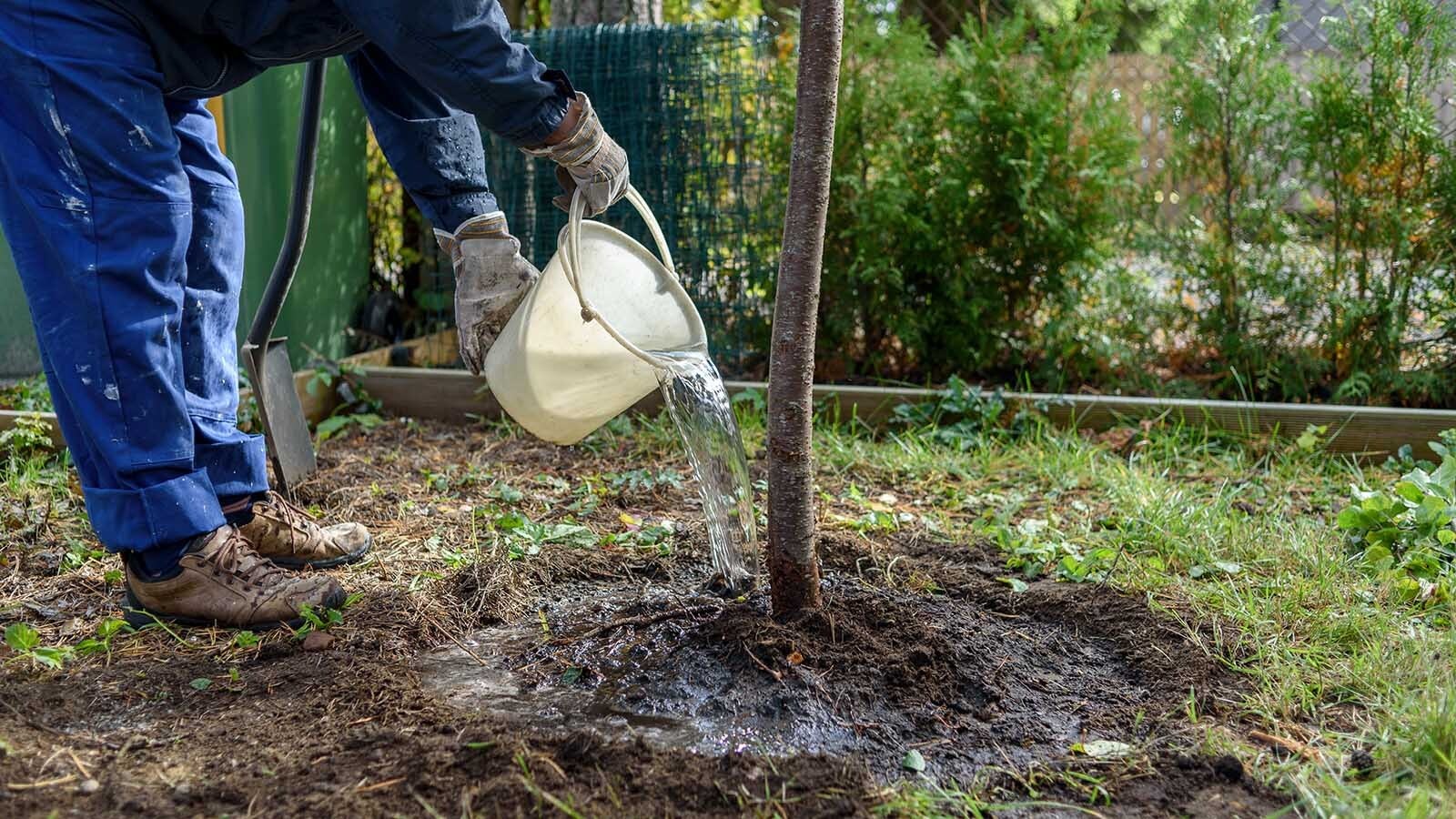
Youngquist said she recommends deep watering a few times this winter to promote soil health and to do so when the temperatures are above freezing. Even watering once deeply will help the trees and plants come spring.
“If your ground’s frozen and the water is running off, that’s not going to help,” Youngquist said. “It needs to be able to percolate into the soil.”
Smith said that when watering, a good rule of thumb is that once water starts to puddle, you need to move to another tree, and then come back to the first tree after the water is soaked in. He suggests repeating the process two or three times to get a deep watering into the ground.
For those who want to avoid using hoses during the winter and risk freezing them, Smith said to drill holes into a five-gallon bucket and fill the bucket up as a makeshift drip system.
“Its hard work being a tree in Wyoming, especially in windy towns,” Smith said. “People have worked hard to plant and maintain trees here and winter watering should always be a part of protecting our trees for future generations.”
Jackie Dorothy can be reached at jackie@cowboystatedaily.com.