It’s been a minute since the phrase “a penny for your thoughts” had any weight to it. Let’s face it, a penny’s worth had been declining long before President Donald Trump issued his executive order to stop minting the copper coins a year ago.
According to the Department of Government Efficiency in January 2025, the penny cost over 3 cents to make and cost US taxpayers over $179 million in FY2023, which was the determining factor in phasing out the coin that was first minted in 1793.
But what to do with the pennies that are still bouncing around our commerce system?
That’s the question Wyoming businesses and governments are weighing. Round up to the nearest nickel? Round down? Make the decision based on the individual transaction?
Businesses Weigh In
At Zapata’s Mexican Restaurant in Cody, owner Vi Tryon said they have already phased out the penny.
“I started rounding to the nickel over a year ago,” she said.
Other businesses in the Bighorn Basin, including Murdoch’s Ranch Supply and the Habitat For Humanity thrift store in Powell and the Red Apple supermarket in Lovell, are also rounding to the nickel, as are many other businesses throughout the Cowboy State.
Tracy Lock, manager of the Boot Barn in Cody, said they haven’t had to go that route yet, but their corporate office has directed them to round down in most cases.
“Unless it's 7 cents, then we round up,” she said. “I'm guessing there will be a bunch of price changes to fix it in the long run, or it will get loaded into our registers.”
Lock also pointed out that most people don’t have pennies on them when paying with cash.
“But they do want those pennies back,” she said.
Rounding Down
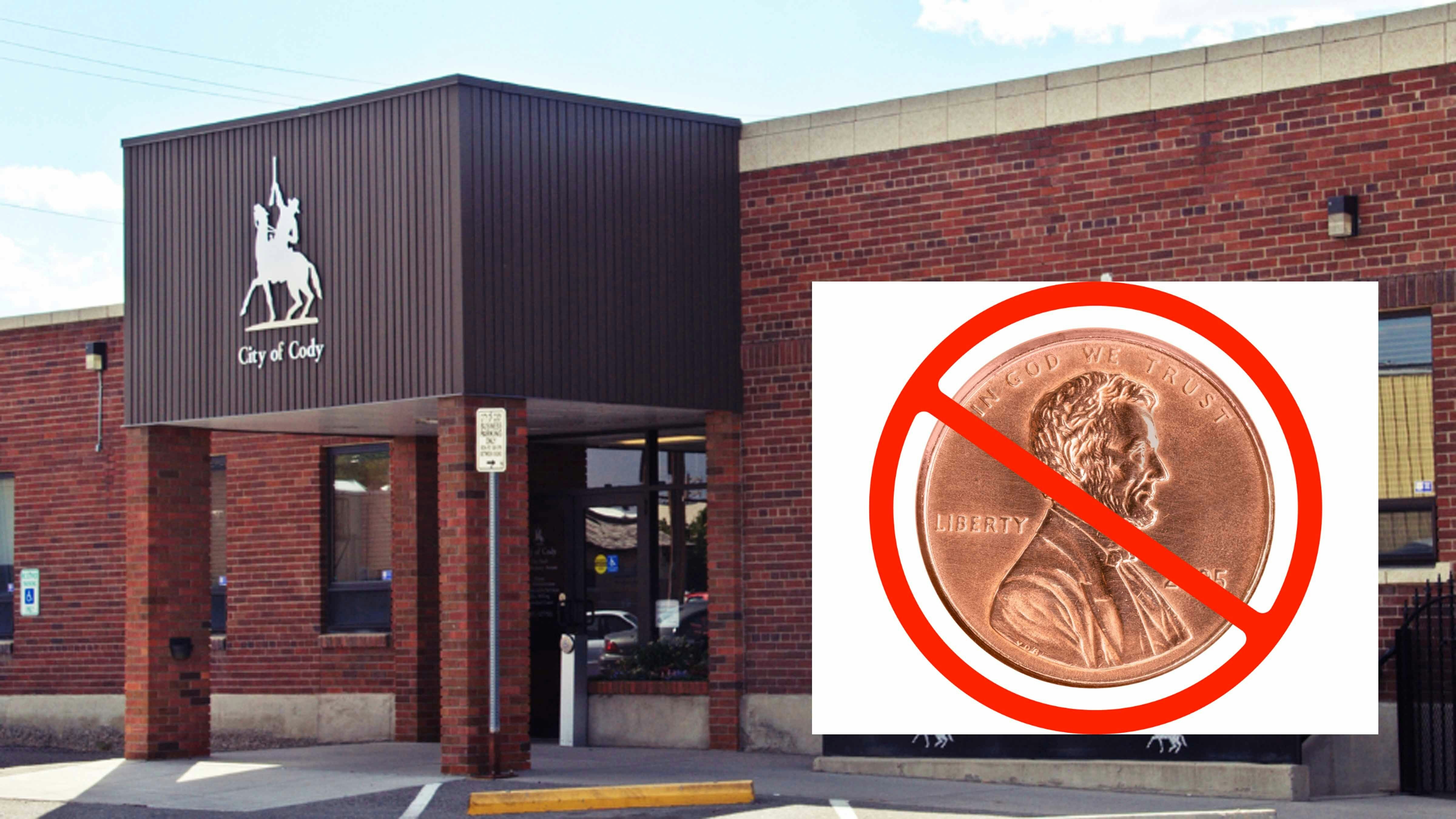
At the City of Cody, Finance Officer Leslie Brumage explained that, despite confirmation from their financial institution that it would continue to accept and provide pennies as long as they could get them, the City Council decided to be proactive.
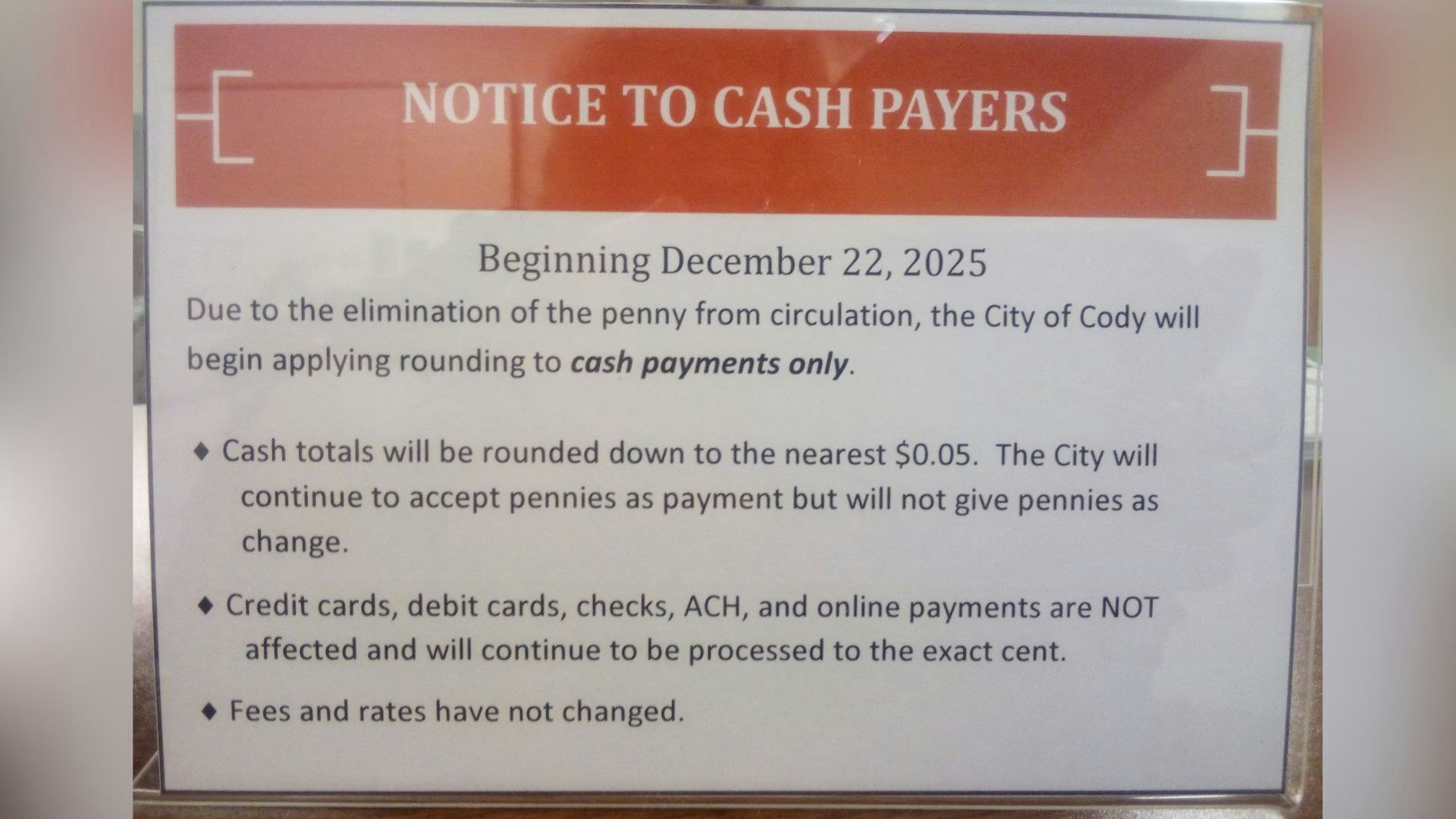
“We put a policy in place for dealing with pennies, and I made the recommendation to council that we round down to the nearest five cents,” Brumage told Cowboy State Daily.
She said she was concerned that if their bill was rounded up, customers might feel they were being overcharged, even if it was only a few cents.
“We didn't want to create that concern for our customers, so the council approved the policy,” she said. “So we are rounding down to the nearest five cents, and that's only on cash payments. Checks and electronic payments still settle to the penny.”
Rounding down even just a few pennies per transaction could accumulate to a financial loss over time. But Brumage said the council considered those losses to be acceptable.
“I looked at the last couple years of history of change that we've given - we don't get a lot of cash payments anymore,” she said. “They're mostly either checks that come in the mail or they're electronic. So I would say, around $100 a year.”
But not every city government has done away with the penny. Mira Miller, community relations coordinator for the city of Rawlins, says their staff still gives out pennies as change when people pay their utility bills with cash.
“We have not encountered any issues with penny supply,” she said. “If a time comes where pennies are not available, our initial reaction would be to credit accounts with the amount that we could not give in change. That way any overpayment, which would be up to $.04, would be reduced off the next month’s bill.”
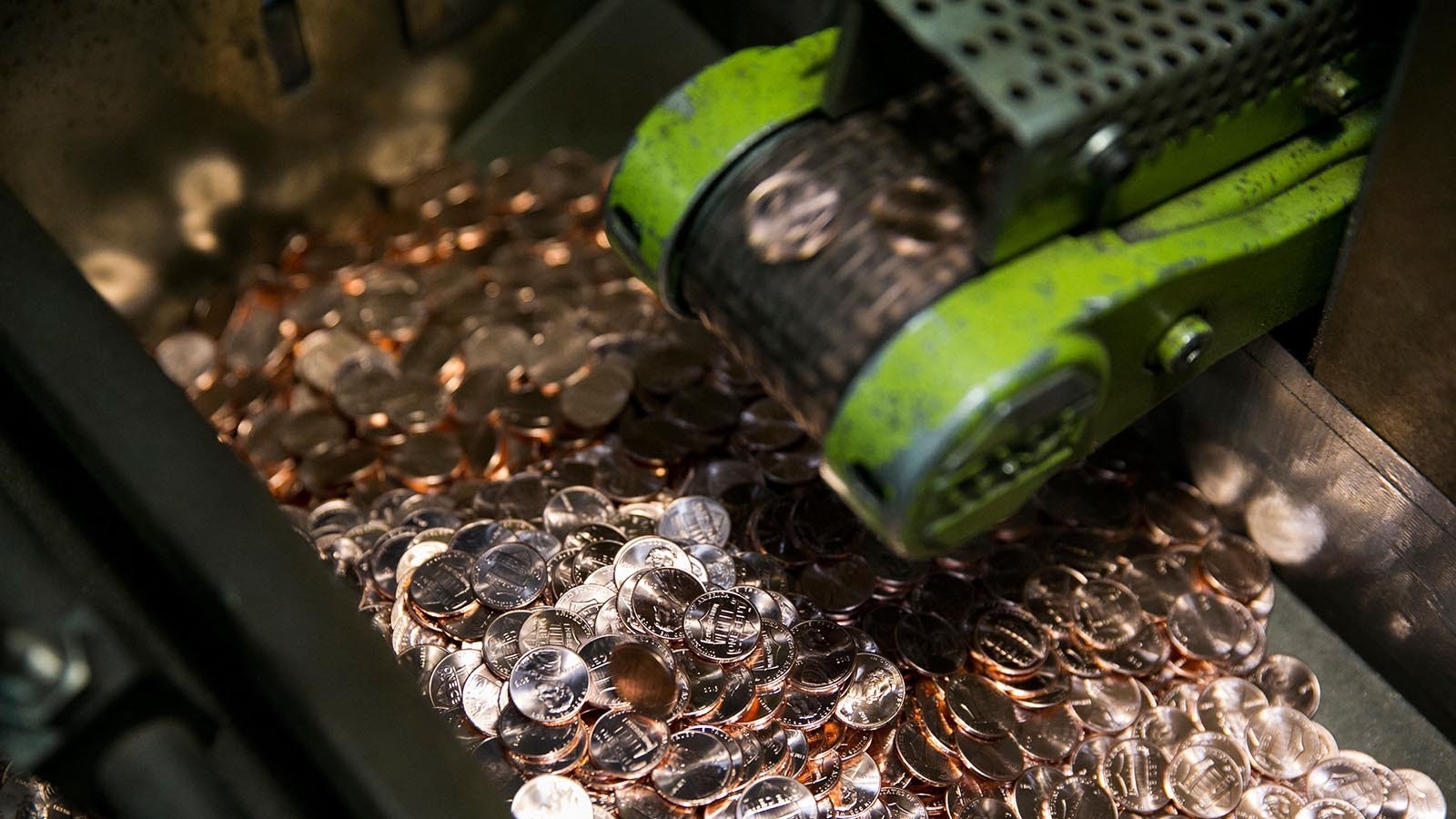
Making pennies at the U.S. Mint in Philadelphia before they were discontinued. (Kristoffer Tripplaar via Alamy) 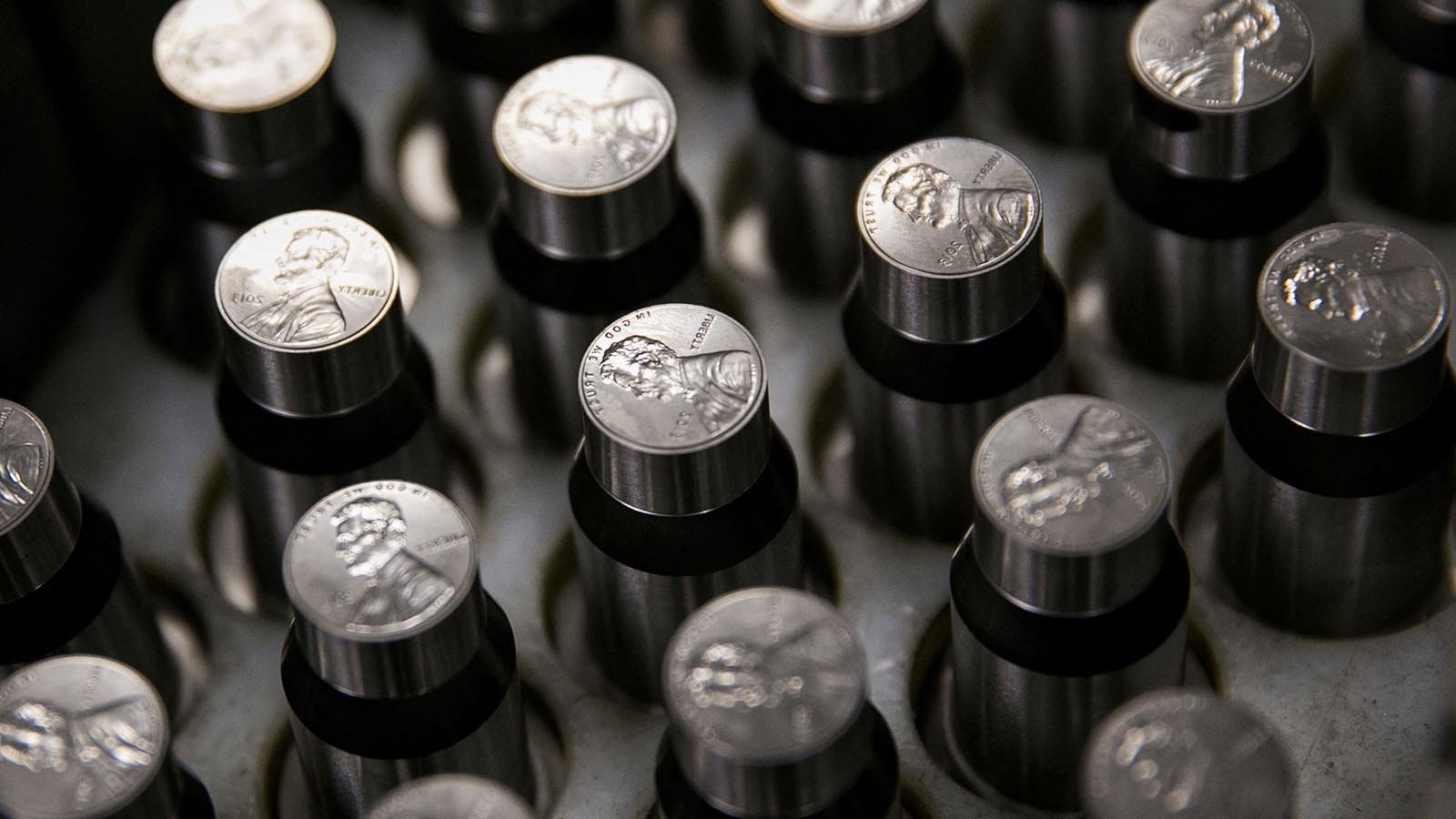
Penny coin dies at the U.S. Mint in Philadelphia before pennies were discontinued. (Kristoffer Tripplaar via Alamy)
Old News In Other Countries
The U.S. is actually late to the party when it comes to phasing out their lowest-denomination one-cent coins.
Like the United States, countries like Canada, Australia, New Zealand and the United Kingdom found that high production costs and low utility made minting the coins economically impractical. New Zealand ceased production of their pennies in 1990, Australia in 1992, and Canada in 2012, although the coins remain legal tender.
Nations like Finland, Ireland, Belgium, and the Netherlands do not use or produce pennies either, instead rounding up or down.
Pernille Rodriguez grew up in the Netherlands, moving to Cody in 2001 to work in the tourism industry. She said that throughout her childhood, pennies were already obsolete.
“We had the guilder, and they had one cent coins, and I think their last one was minted in 1980, and I was born in ‘78,” she said. “You could technically still use it, but when I grew up, you just didn't know any better than rounding up or rounding down.”
Rodriguez said their family owned a small campground, so making change was part of her duties as a child.
“My parents had a campground, a bungalow park in Holland,” she said. “And when they taught me how to exchange money and give money back to people, we just learned when to round up and when to round down. And in the end, everybody came out even.”
No Shortage Yet
Brumage said that right now, the City of Cody isn’t experiencing any shortage of pennies.
“We're still getting some from customers,” she said. “We're not requesting pennies from the bank for change, but so far, I haven't heard that pennies are completely run out yet. I suppose when that happens, we might see a little bit more change, when people don't actually have pennies.”
Wendy Corr can be reached at wendy@cowboystatedaily.com.