In 2009, while working for the town of Casper, 34-year-old Jason Wynia started to feel run down.
Short of breath, unable to walk short distances without rest, his wife Misty finally took him to the emergency room in Casper.
But what started out as a diagnosis of pneumonia soon took a much more serious turn.
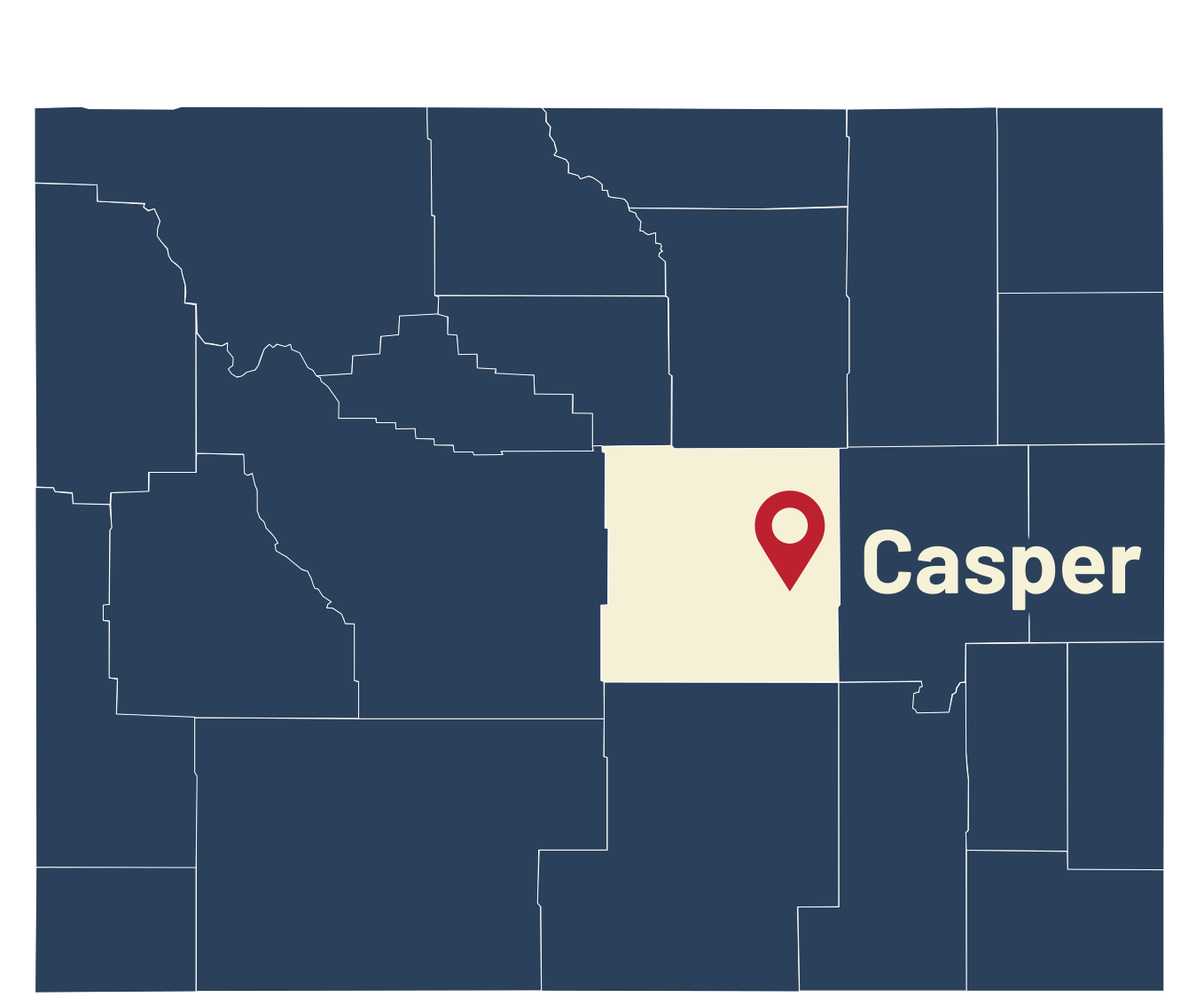
The two had relocated to the Casper area from California just the year before. Jason had helped a relative move to Wyoming in 2007, and in the few short days he was in the Cowboy State, he received four job offers.
“I went back to California, loaded up my truck, put the house on the market, and came out and was working a week later,” he said.
So it was unsettling when the strong, healthy Jason started feeling ill.
“Shortness of breath, no appetite, really thirsty, bloated all the time, and just walking from the living room to the kitchen or to the bedroom, I'd have to take a break just to catch my breath,” he said. “And so that was the first indicator.”
Although Jason was initially diagnosed with pneumonia, several weeks went by without any improvement.
“I kept trying to go back to work, but the boss basically finally said one day, ‘Stay home. I don't care if you don't have a doctor's note, figure out what's wrong,’” said Jason. “(The doctors) finally sent me to a cardiologist, and he said, ‘You need to be in the hospital, like, three days ago. Your heart's working at 10% — you're in heart failure.’”
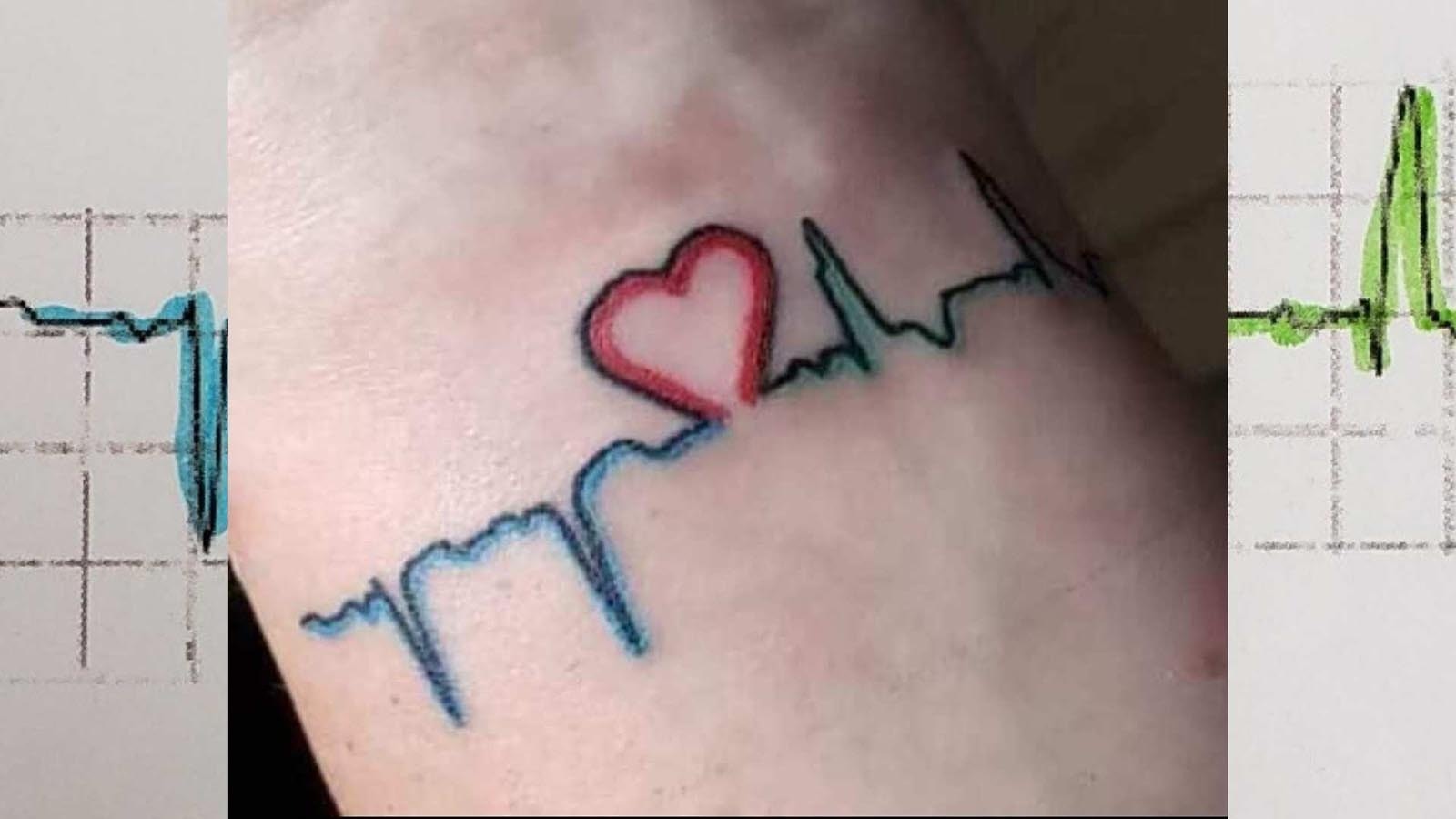
The Countdown Begins
For the next week, Jason’s medical team concentrated on getting him stable enough to put him on a heart pump, which would take the load off of his damaged organ and allow him to go back to work. But a week after he was admitted, a new doctor took a look at his case, and Jason’s care took a drastic turn.
“He didn't introduce himself, no bedside manner, just straight, matter of fact, ‘Your heart's very bad, you need a heart transplant,’ and walked back out,” said Jason. “That was a real shocker.”
A week later, Jason found himself on a flight to Salt Lake City’s Intermountain Medical Center, renowned for its work with heart transplants.
“We got there, got a bunch of the tests done, Misty finally got there, and we started getting the results back,” said Jason. “They said the heart was working at less than 10%. I was definitely a heart transplant candidate.
“We started that whole procedure, going through the physical questionnaires, the psychological, plus all the actual chemistry of finding out what blood type I am, what kind of antibodies I have, getting everything ready for matching a donor heart.”
Jason explained that a patient’s placement on a donor list depends on the severity of that person’s condition.
“They listed me as what was called 1A status, which is the highest priority,” he said. “They said, ‘You can be on this list for up to 30 days, but you are declining rapidly, and we may have to do the heart pump as a bridge to transplant if you get any worse.’”
Five days after his arrival in Salt Lake City, Jason was told that he would be getting that heart pump sooner rather than later.
“They basically came in that night and said, ‘You're going in for surgery tomorrow morningto get the heart pump,” he said. “So within six days of being in Salt Lake, I went from, ‘Yeah, you're pretty bad,’ to ‘We have to put a pump in or you're not going to make it.’”
For the first couple of months after that surgery, Jason was confined to either a hospital bed or to a room at the nearby “Masterson’s House,” where patients and families can stay during long-term treatments.
“It was kind of claustrophobic, but it's better than being dead,” he said.
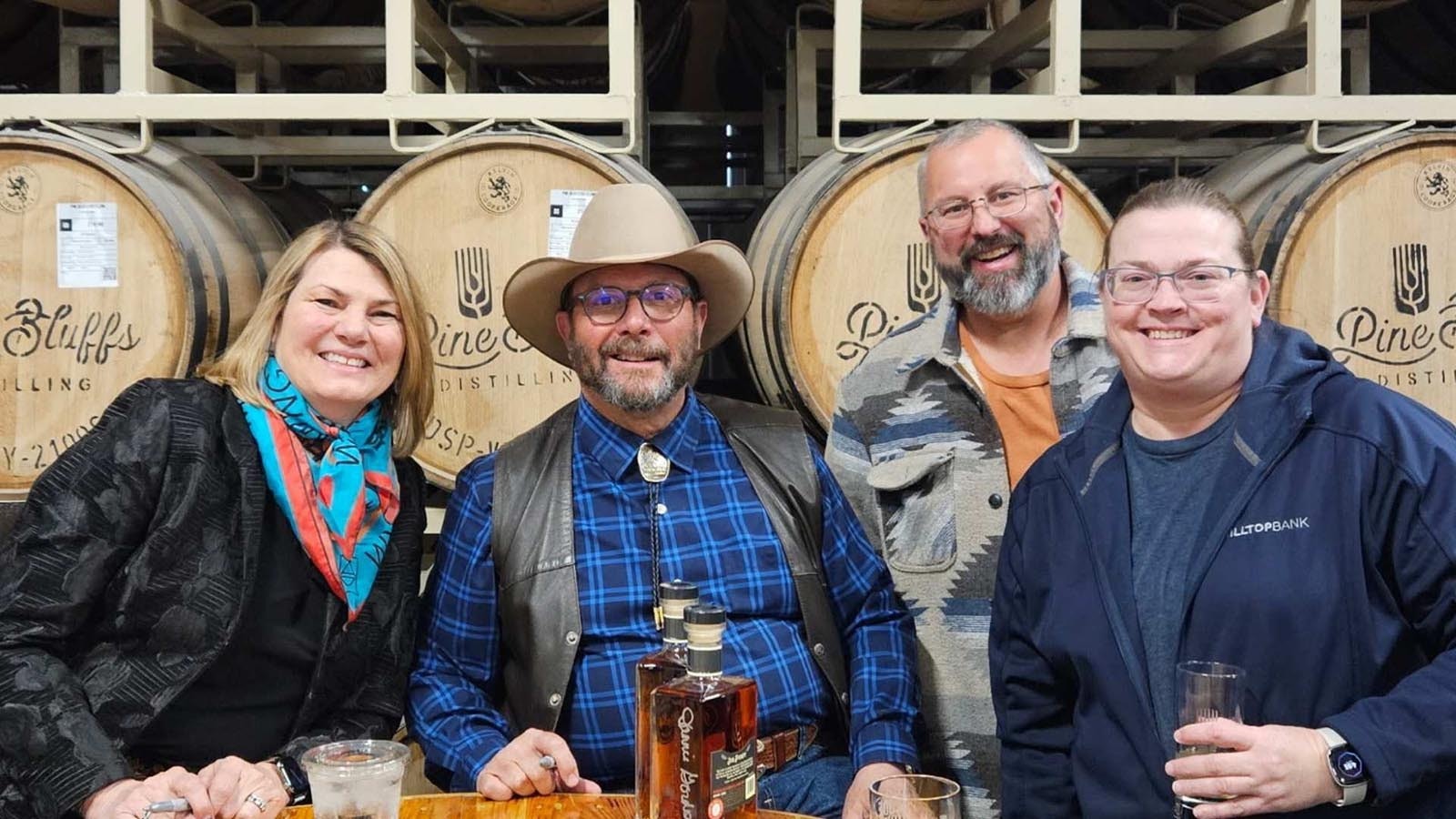
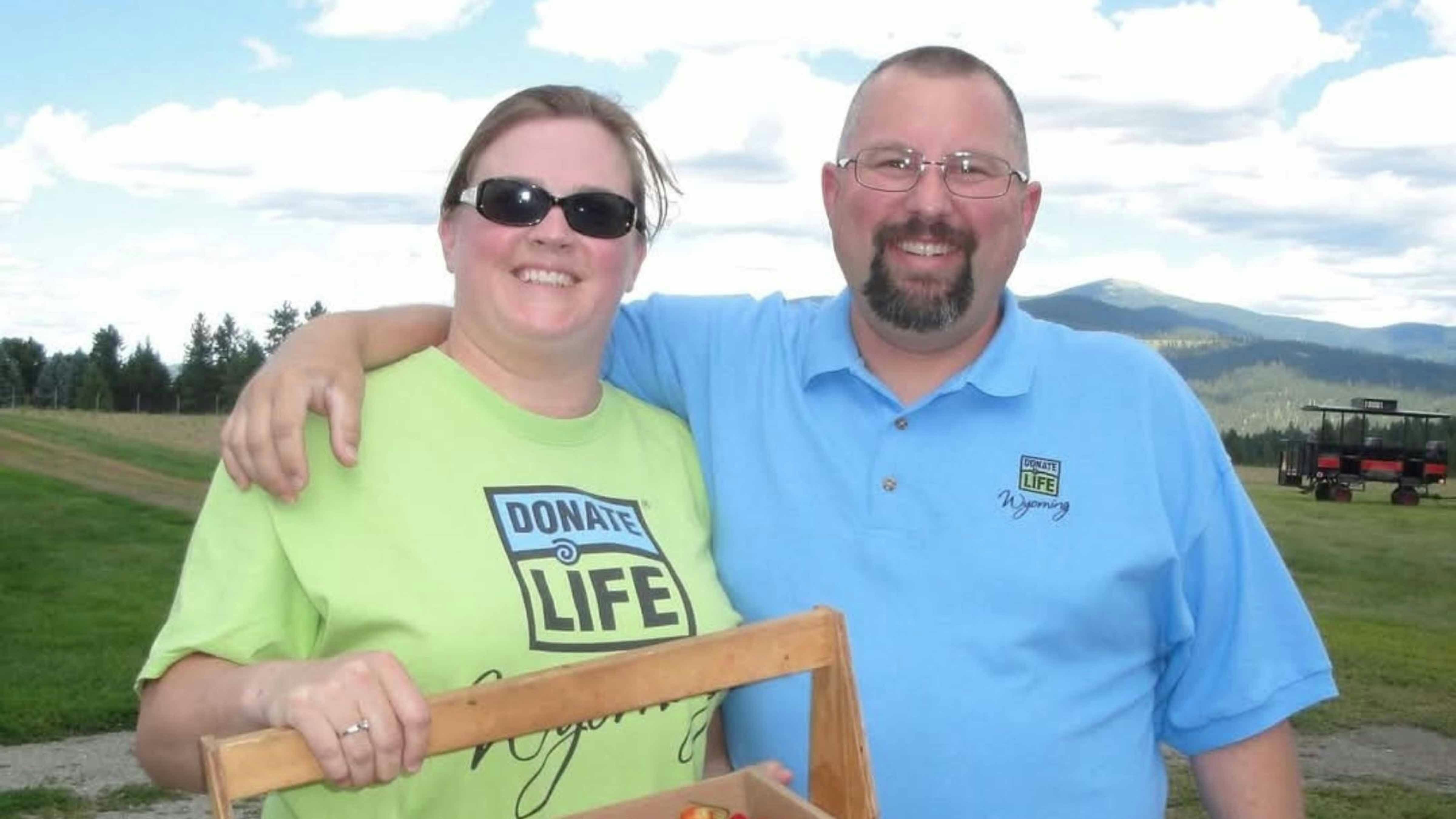
Casper couple Jason and Misty Wynia are grateful to mark another Valentine’s Day together. They are celebrating 16 years they would have missed had Jason not received a new heart in February 2010. Here Misty and Jason pose with Wyoming first lady Jennie Gordon and author CJ Box. (Courtesy Jason and Misty Wynia) 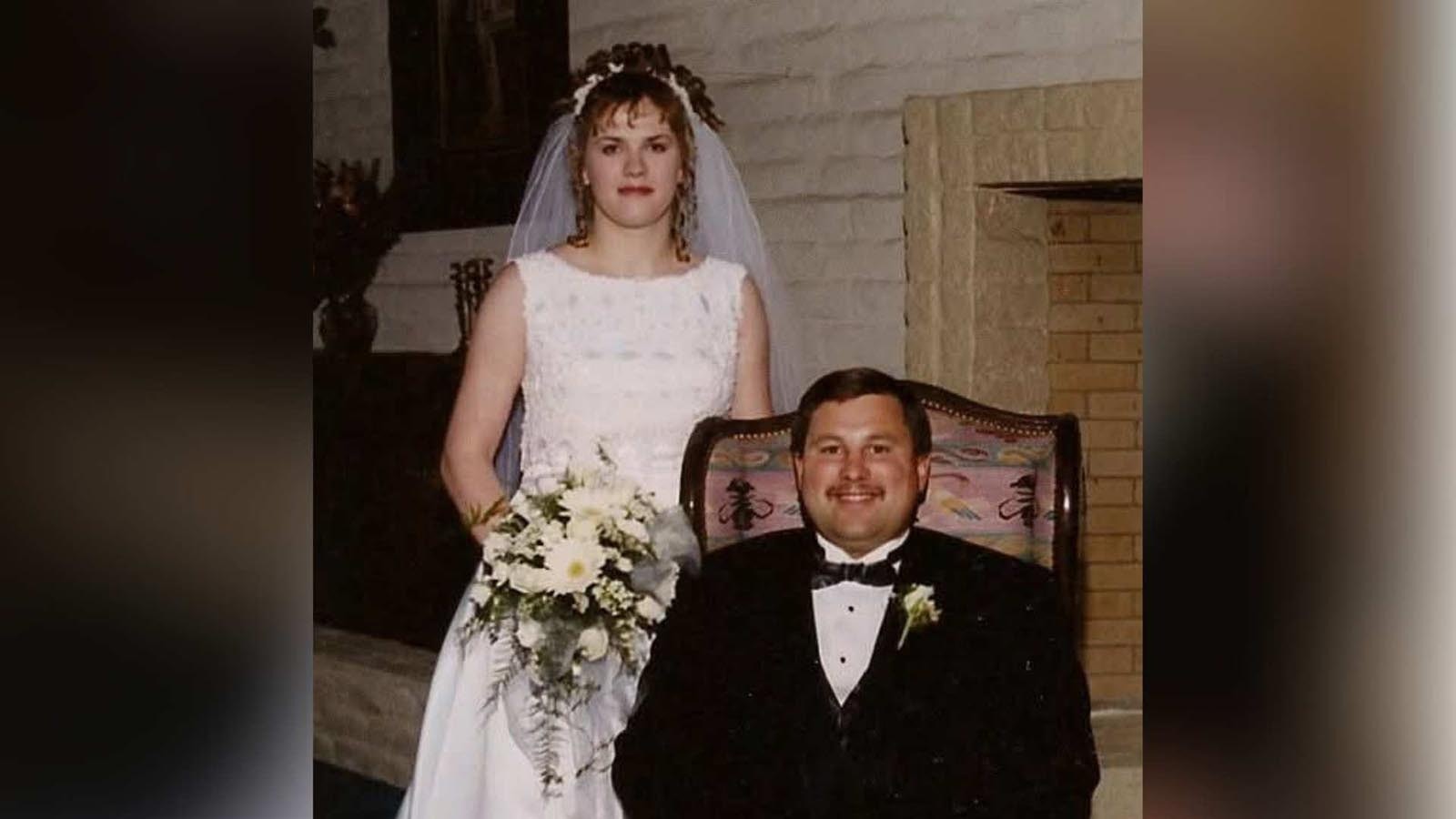
Casper couple Jason and Misty Wynia are grateful to mark another Valentine’s Day together. They are celebrating 16 years they would have missed had Jason not received a new heart in February 2010. Misty and Jason at their April 1999 wedding. (Courtesy Jason and Misty Wynia)
The Caregiver
Misty had worked in the medical field on the administrative side for several years, and was working in the human resources department at the hospital in Casper when Jason’s ordeal began.
“While he was in the hospital, I could go up and visit and check in on him, and arrange everything,” she said. “And then finding out that we were going to have to pick up and leave, and there was no real set timeframe to go by, I just took leave from work.”
Misty said while her focus was completely on Jason and his battle, it was on her shoulders to keep the logistics of their lives on track.
“Just a few days after he was released from the LVAD (Left Ventricular Assist Device) surgery, I had to return to Wyoming to put our house on the market, pack up our belongings, put most everything in storage, and move what I could to our new smaller apartment,” she said. “Luckily we had family and friends that pitched in and helped when and wherever needed.”
While Misty said they were concerned about their finances and the mounting medical bills, they had to put those worries aside to concentrate on Jason’s health.
“Jason was young, and had lots of life left to live, I wasn’t going to give up on him,” she said. “I knew we would do whatever it took, together, to get him better and back to living a full life again.”
Because of her work experience, Misty was able to do something that most spouses in this situation would not be able to: find work at the hospital where Jason was being treated.
“I think it was a month that I took off to be his 24-hour caregiver after he had the heart pump installed,” she said. “I learned how to do his bi-weekly dressing changes and dispense his medications on a schedule. When the doctors released him from 24-hour caregiving, I looked for a job at his treating hospital. I took a job in the radiology department, working four 10-hour shifts a week and took Wednesdays off for doctor’s appointments.”
A February Miracle
With the heart pump, Jason was eventually able to go to the grocery store or to the movies - but there was always the underlying knowledge that sometime in the near future, the call would come that a donor heart would become available.
The first time they were notified that a heart was available was just before Thanksgiving, 2009. However, as the hours ticked closer to surgery, it was discovered that the organ was not a perfect match, and he went back on the waiting list. But not for long.
“The call came February 27th, something like that,” said Jason. “We were out grocery shopping or heading to a movie or something, and we pretty much stopped what we were doing, headed to the apartment, and three or four hours later, we finally got the call that said, ‘Yep, you need to come in to the hospital, and we'll meet you in the ER.’”
At 6:30 the next morning, Jason was wheeled into the surgery center to prepare him for what would end up being a nine-hour procedure. After a 10-day stay in the intensive care unit, he was able to go back to the apartment, but it would be another three months before he was able to resume anything resembling a “normal” life.
“It was a little over a year post-transplant when they finally said I could go back to work,” said Jason. “I got rehired at my old job at the Rec Center for the city of Casper in August 2011.”
16 Years Later
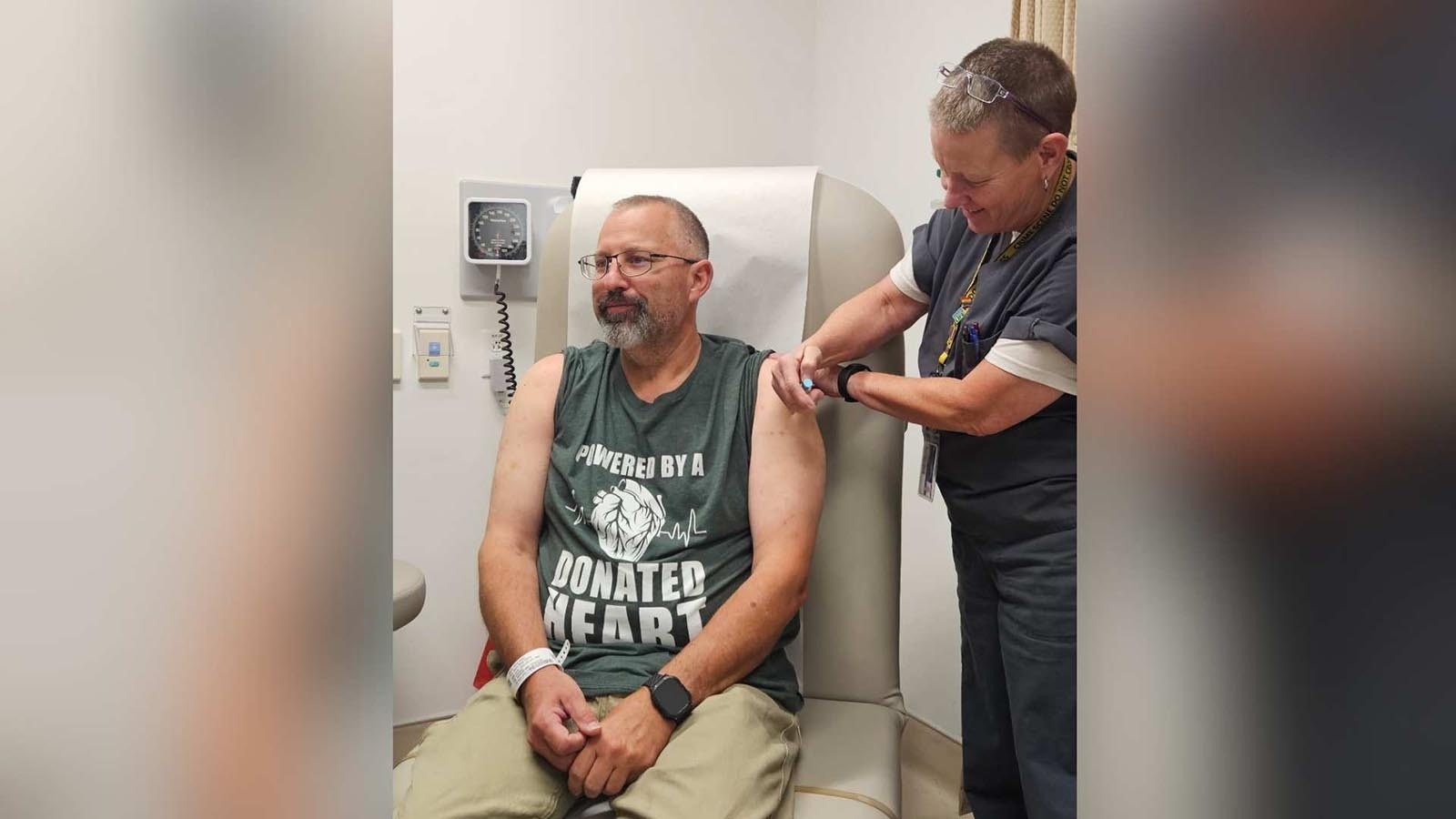
It’s been 16 years since that February miracle, and the direction of Jason and Misty’s lives have forever been changed.
“Jason's always been a workaholic, and for quite a few years, he worked at least two jobs,” said Misty. “He is now down to one, and I see that he's much more relaxed, and we're able to go and do things. He's been able to watch his nieces and nephews grow up, and we've been able to make a difference in some young men and women's lives by hosting them for hockey and baseball.”
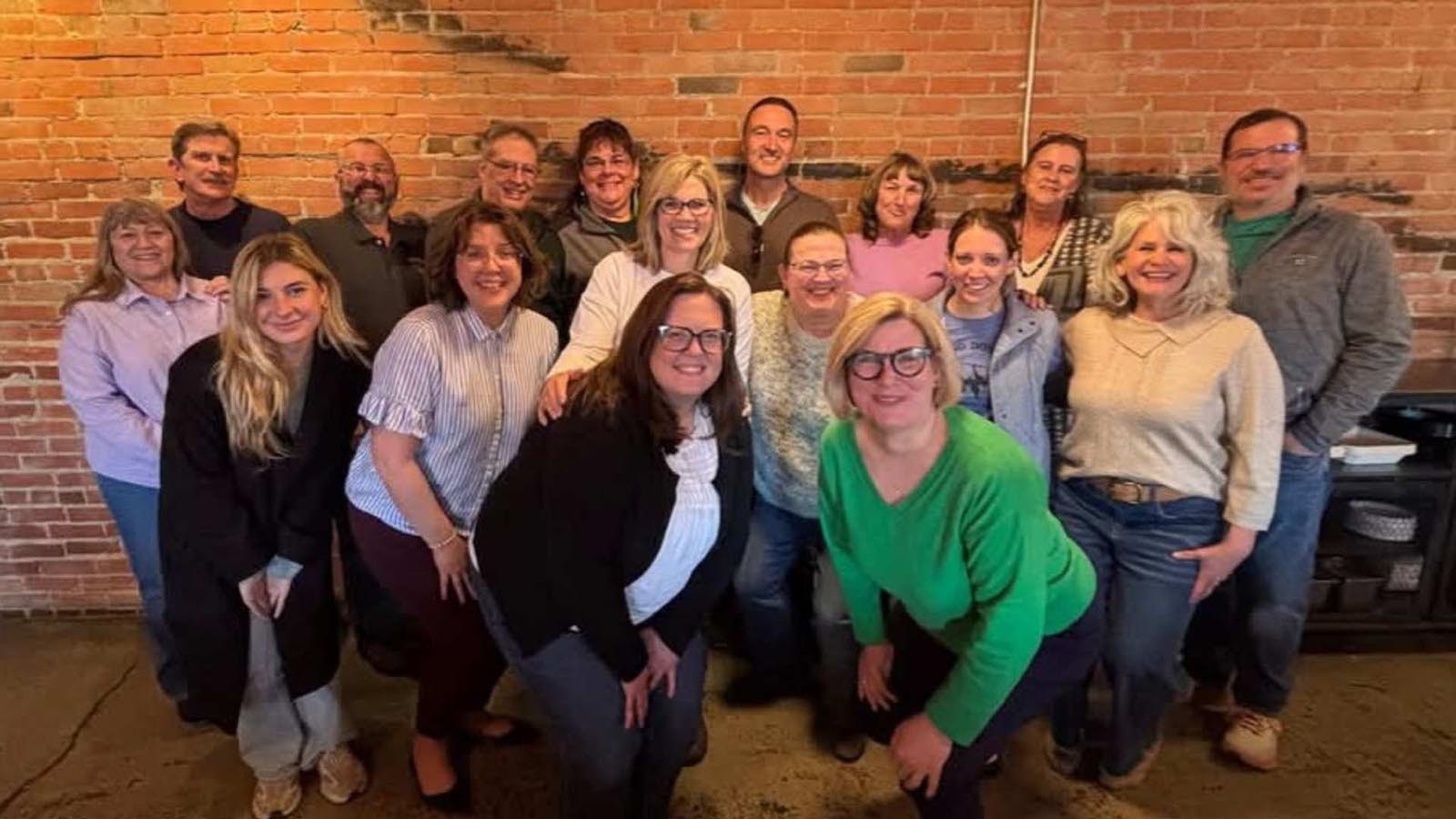
In addition, the couple have become vocal advocates for organ donation. Mary Schroer is the Community Engagement Coordinator in Wyoming for Donor Alliance, an organization that facilitates the process of organ and tissue donation for transplantation throughout Colorado and most of Wyoming.
“I've seen Jason talking to people (about organ donation) and they say, ‘Oh, I'm not too sure about that,’” said Schroer. “He says, ‘Well, I wouldn't be standing here today without it.’ And you can see the change in them, like, ‘Oh my gosh. This is in my community. This is my neighbors, the people that I know, and it's allowing them to live, breathe, laugh, continue making these memories.’”
Schroer said she does significant work with advocates like Jason and Misty, who volunteer to educate members of the community about what it means to register to be an organ and tissue donor. She pointed out that if the donor for Jason’s heart hadn’t checked “yes” on their driver’s license application, Jason might still be on the waiting list.
“The answer that you're giving when you say ‘yes’ is, ‘Yes, I would like to save and heal as many lives as possible,’” said Schroer. “‘Yes, I would like to give an anatomical gift, to save as many people as I can, to heal as many people as I can.’”
According to Donor Alliance, in the Colorado/Wyoming service area in 2025, there were 314 donors, and they saved 1,036 lives.
“Within our service area, there are just under 1,500 people on the wait list, and that's strictly for organs,” said Schroer. “So those are people waiting on that call that Jason got, that, ‘Hey, we have a heart for you. We have a kidney for you.’ And oftentimes their lives are severely impacted by those health issues beforehand.”
Still Vigilant
Although Jason’s body has accepted the donor heart, his condition is not without complications.
“The first 2 1/2 years we had a few complications and hiccups, then I had 10 good years of really no problems,” he said. “The last year and a half, two years, we're starting to get a few little hiccups again. We're changing meds and just looking at blood work and seeing what we can do diet-wise, exercise, medication-wise, to keep it going as long as possible.”
Jason and Misty are forever grateful for the gift they have received — 16 years that they may not have had without the thoughtfulness and foresight of one person, who checked “yes” on their driver’s license application to become an organ donor.
“You appreciate the gift, and then you do whatever you can to honor that gift as much as possible,” said Jason.
Wendy Corr can be reached at wendy@cowboystatedaily.com.