The Senate Labor, Health and Social Services Committee on Friday voted unanimously to advance the “Stem Cell Freedom Act,” a proposal that would allow Wyoming physicians to provide certain stem cell treatments not yet approved by the U.S. Food and Drug Administration.
The bill, SF 42, would create medical guidelines and provide a legal shield against state licensing discipline for doctors using “autologous mesenchymal stem cells,” which are stem cells derived from a person’s fat, bone marrow or connective tissue, and then re-injected to different target areas of the body.
The effort could help patients address intractable health problems by providing a framework for a promising medical technology that’s outpacing federal regulators, said bill sponsor, Sen. Eric Barlow, R-Gillette.
“We’ve got to press on the federal government because they’re not approving things fast enough. The science is outpacing the regular regulatory system,” Barlow said.
The move contravenes current FDA standards, which disallow such stem cell treatments prior to federal approval.
But federal officials have done little to check the rapid growth of what are technically illegal stem cell clinics across the country, which number in the thousands, according to Leigh Turner of the University California Irvine Stem Cell Research Center.
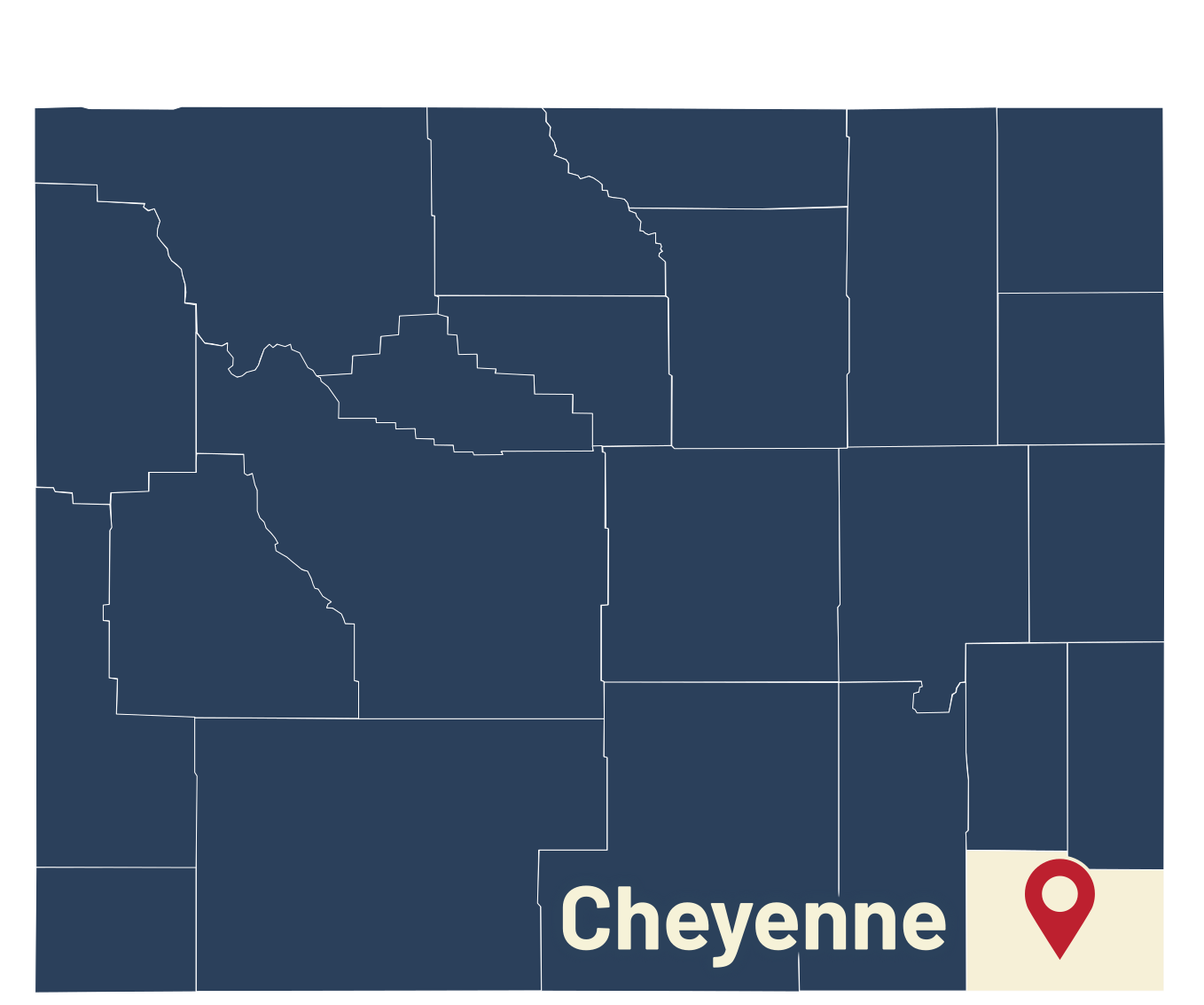
Barlow’s bill flouts the FDA, but also creates guardrails and brings increased accountability to a legally gray area of medicine, which could help the larger stem cell treatment sector steer toward safer outcomes, said committee chair Sen. Evie Brennan, R-Cheyenne.
“I think that this is the next wave in medicine, and I think this puts Wyoming at the forefront of…the things to come,” Brennan said. “Not just in the health care for our citizens…but the rest of the United States will be looking to us for what to do in the future.”
'Only Your Cells'
The bill is tailored narrowly to allow only the use of stems drawn from a patient’s own body.
This stands in contrast to the approach of states like Utah, Florida and Texas, which have passed bills allowing the use of allogeneic stem cells, or “birth‑tissue” cells derived from umbilical cords. Outside the U.S., some countries allow treatments using animal-derived stem cells.
“This is only your cells for your body,” Barlow said, believing the narrowed application could protect against potential FDA scrutiny by skirting its definition of a drug. “The premise of using this (autologous) term…is that it is a very solid legal starting point. It is my view that a cell from your body is not a drug used in your body. That’s the basis. It’s not a foreign substance.”
Barlow is a Doctor of Veterinary Medicine.
It’s based on the “right to try” legal framework that gave terminally ill patients access to experimental drugs and treatments not yet approved by the FDA, including Wyoming’s 2015 Right To Try Act.
Under the proposal, only licensed physicians would be allowed to administer the treatment, and only in the context of an established doctor-patient relationship. It would require a contract of informed patient consent to be vetted by an institutional review board (IRB).
“We are talking about something that’s novel, and I think…there has to be a physician patient relationship so that we’re not getting these folks that drive in, do something, drive out the next day, the physician actually has to have responsibility to building a relationship and understanding the patient and their needs,” he said.
It would also protect doctors from performing treatments at their discretion, a provision endorsed by executive director of the Wyoming Board of Medicine, Kevin Bohnenblust.
“You’d be surprised how often we hear from a patient that says, doctorso and so wouldn’t do this for me,” Bohnenblust said, explaining that patients will sometimes self-diagnose using “Dr. Google” and then file complaints after their medical providers go against what they had found on the web. “I think that (provision) serves an important purpose.”
While limiting the application in some ways, the bill would allow providers to cultivate and expand stem-cells in order to store multiple treatments for use in the future, which sets it apart from treatment practices elsewhere, Barlow said.
“This is different from stem cell therapy as we’re seeing it right now. This is stem cell therapy in the United States 2.0, maybe even 3.0 as you get to further steps,” he said.

When Traditional Care Doesn’t Work
For Wyoming residents like Beth Blackwell, the bill cannot come soon enough.
Blackwell lives with multiple chronic illnesses and believes autologous stem cell treatments offer promise in her battle for health.
“Next month will be 20 years that I’ve lived with this (multiple sclerosis) disease. I have several other autoimmune diseases that require me to get an infusion every third Friday, which is other people’s antibodies, to create an immune system for me,” she told committee members Friday.
“Traditional MS medication does not work for me… and I’m going to have to find something outside the box to help me live a quality life,” she said, adding that her research has given her a high degree of confidence that the treatments allowed under Barlow’s bill will help.
“Just providing this option to patients could be life changing, and it allows the patient to make their own decisions about their health. So I truly implore you to support this bill and to get it through.”
Reasons For Caution
Even as the field of stem cell technology has shown promise, there are reasons to be cautious, Dr. Krishanu Saha, professor of biomedical engineering at the University of Wisconsin-Madison, told Cowboy State Daily.
Saha worries about the potential for stem cell mutations, which can exacerbate or even catalyze cancer.
“Creating cancer is the primary risk and kind of adverse event that stem cell biologists have been thinking about for a long time, because stem cells can grow so prolifically you’d want to be able to control that in the body, otherwise you get cancer,” he said, adding that multi-phase FDA regulations would provide stronger safeguards against those outcomes.
He said FDA regulatory processes would also create a greater understanding of efficacy, meaning patients would have more confidence they’re getting what they pay for.
“Another big concern is that you actually have efficacy. The risk‑benefit calculation needs to be argued, so you know this is actually benefiting, not just trying to sell a product that’s safe,” he said.
In the minds of folks like Blackwell, the benefits are proven out elsewhere.
“I have researched stem cell therapy drastically, more than I care to admit, and it would be a great option for me. It would allow me to take more control of my health as my medications stop working,” she said.
Zakary Sonntag can be reached at zakary@cowboystatedaily.com.