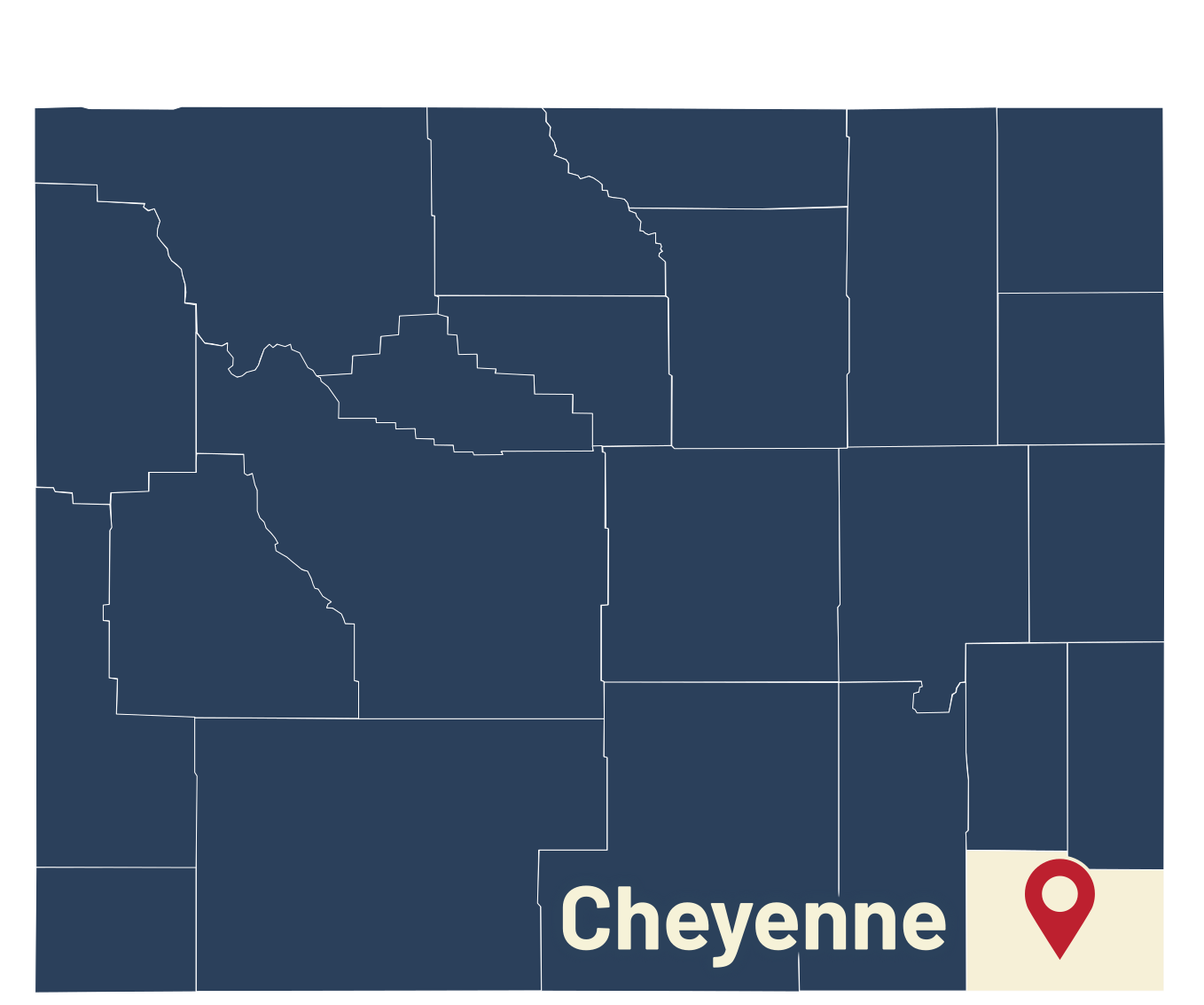
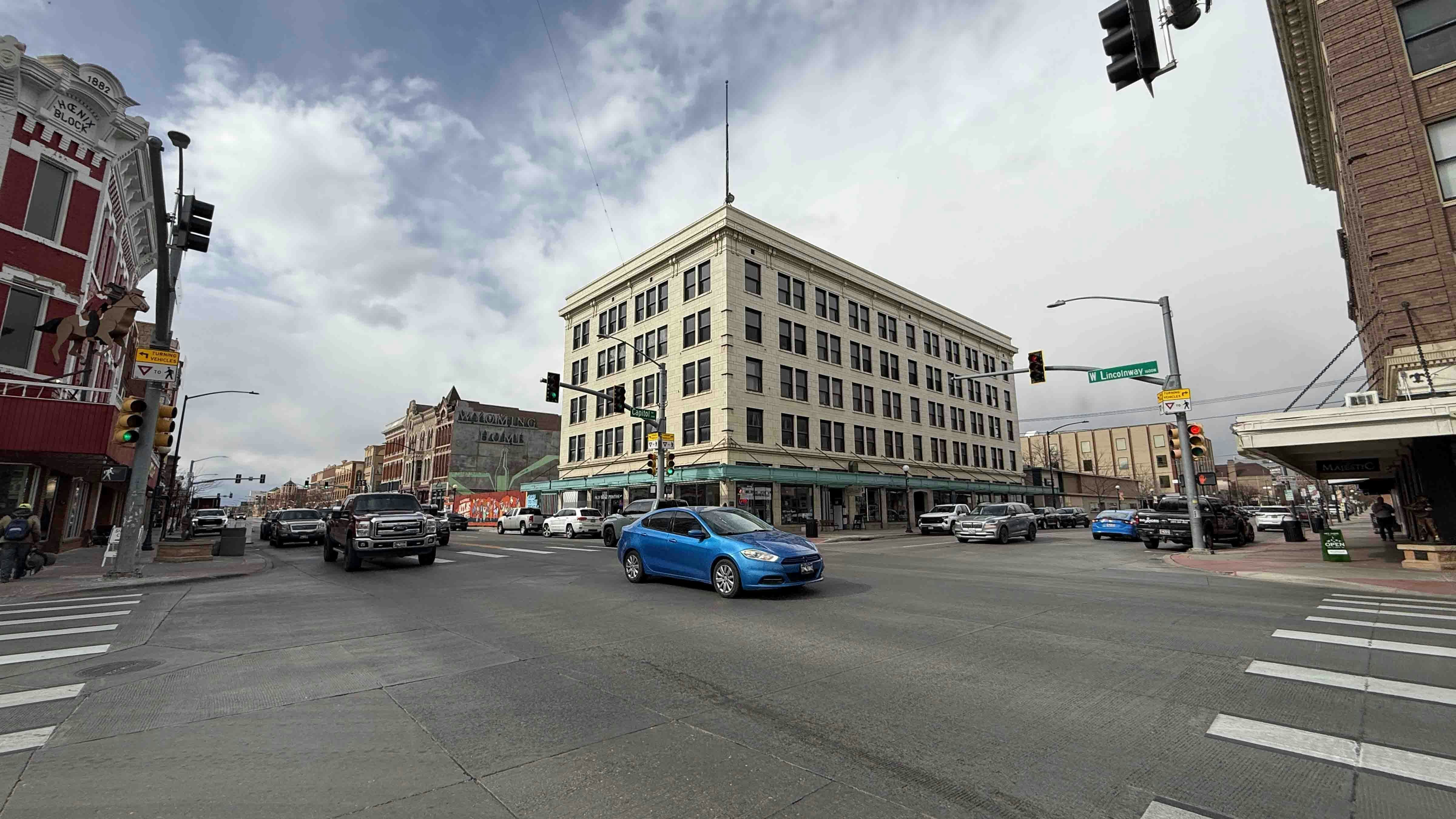
Betsy Hale landed in Cheyenne during the COVID-19 Pandemic, completely unaware that her route to work as CEO of Cheyenne LEADS took her right by the city’s infamous Hole every day.
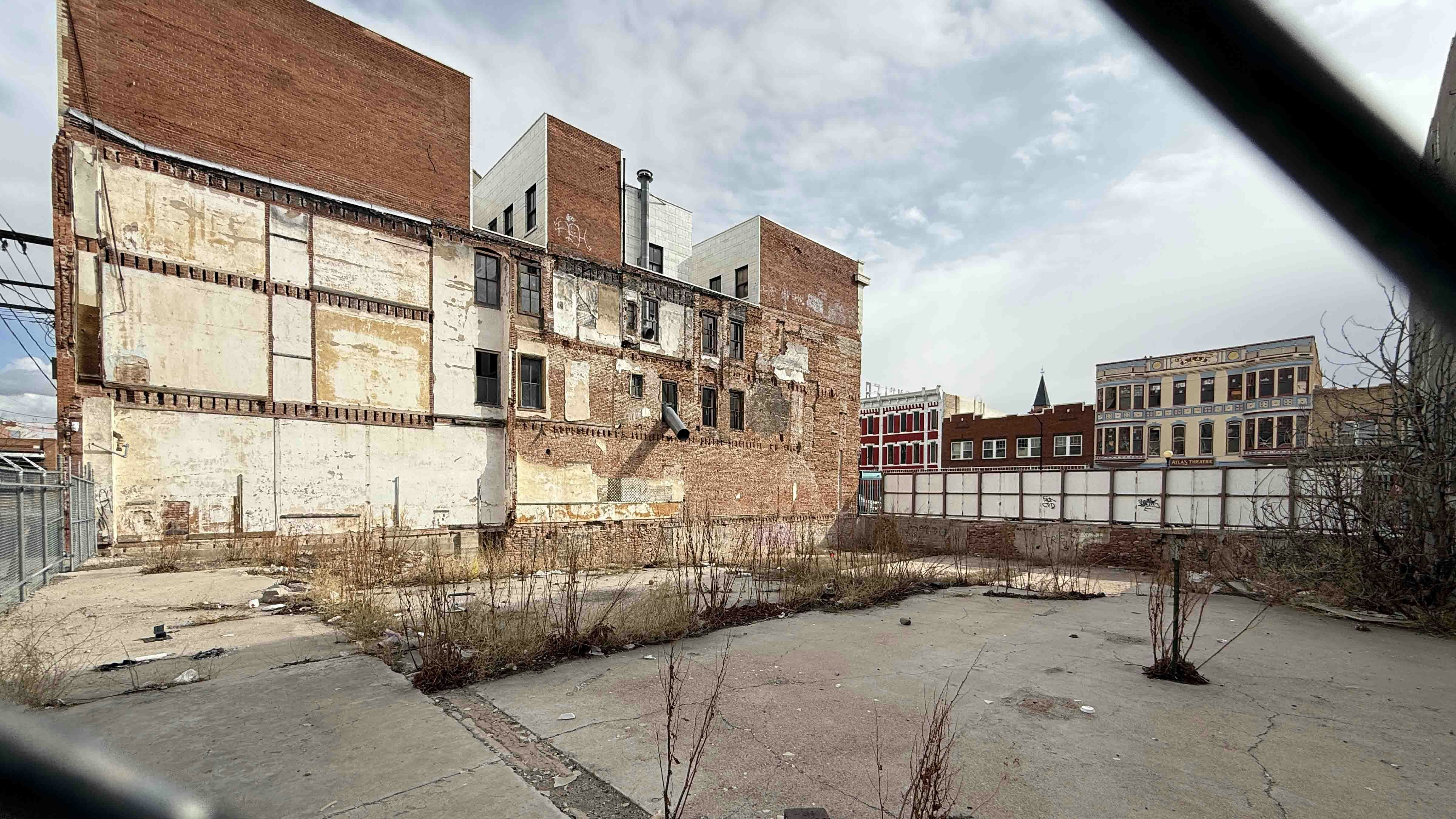
Carved out by a fire that destroyed Mary’s Bake Shoppe in 2004, the gaping Hynds Hole, as it’s often called, has become a symbolic void right in the middle of Cheyenne’s downtown.
Many developers have come along over the last 40 years or so that the Hynds has been vacant, with ideas to both save the historic building and rehabilitate the Hole.
But the Hynds has withstood all comers and has remained mostly as it was when it became vacant in the mid 1980s.
Hale was blissfully unaware of all that when she first arrived. In fact, for a time she didn’t even realize she was walking right by a problem that Cheyenne LEADS owned.
She soon became aware, however, when a social media campaign to fix "The Hole" spontaneously tagged itself to an announcement that she’d been selected as CEO for LEADS, a nonprofit economic development organization.
“People were saying, ‘Well maybe she’ll fix The Hole,’” Hale recalled. “And my daughter called me and she said, ‘Mom, what’s The Hole?’”
Fixing The Hole and the Hynds Building became one of Hale’s more difficult missions, even if it’s not technically part of Cheyenne LEADS normal territory.
It’s taken some time, and there’s been a few of what she described as “false starts and sputters," but Hale believes she has finally stitched together a solution.
“I call this the stone soup of economic development,” Hale said, referring to a children’s story about how there was no food for supper, but with each neighbor bringing something to toss in the soup pot, the community was ultimately able to make a nourishing meal after all, despite starting with nothing but water and a stone.
Hale has tied together a number of funding options, a la Stone Soup style, including $1 million from Cheyenne LEADS itself, to turn the Hynds and The Hole into 69 units of downtown workforce housing.
“I think by everyone bringing something, you know we’re probably going to have a great project,” she said. “I want to caution your readers, too, that these projects do take time. So, there’s an environmental review process … and it takes time for all the planning."
Financing For Project Already In Place
LEADS bought The Hole a few years before Hale arrived, to help the Children’s Museum locate elsewhere.
From there, the organization ran into many of the same problems developers before had run into. The cost of developing the building into anything useful just didn’t pencil out. That was true whether the project was a renovation, or a demolition to start over from scratch.
Ultimately, Hale decided the solution had to involve returning the properties to the private sector, but with an important caveat.
“We committed to the new owners that we would help them through a planning process, because we felt it was really important to see what it would take to redevelop the Hynds and The Hole together,” she said. “The properties have to be a little bit married because they share walls, and they need to share elevator space. They need to share ADA compliance and fire exits and stairwells and all of those things.”
That married nature of the two properties has been another of the contributing factors that makes them hard to rehabilitate, Hale said. But the partnerships are in place this time, she believes, to make the project a reality.
Financing for the project is already in place, Overland Property Group’s director of development Austin Kack told Cowboy State Daily.
“It really is just planning and permitting at this point,” he said. “There are federal requirements for historic preservation with the National Park Service that we have to follow and those do take some time. But I think we can say with pretty certain confidence that this development is moving forward. These buildings are going to be constructed and rehabilitated.”
A Titanic Building
LEADS’ study of the Hynds Hole did include simply knocking the Hynds Building down, as so many people over the last six years have suggested to Hale.
“I hate to tell your readers that we did look at that,” Hale said. “And with what people would pay to buy the Hynds and then what it would cost to knock it down … the rents would just have to be so high to recoup your investment.”
There’s an unusual reason it’s so expensive to knock down the Hynds building, and it’s a reason that’s unique to Cheyenne’s history, and unusual across the American landscape for the time period.
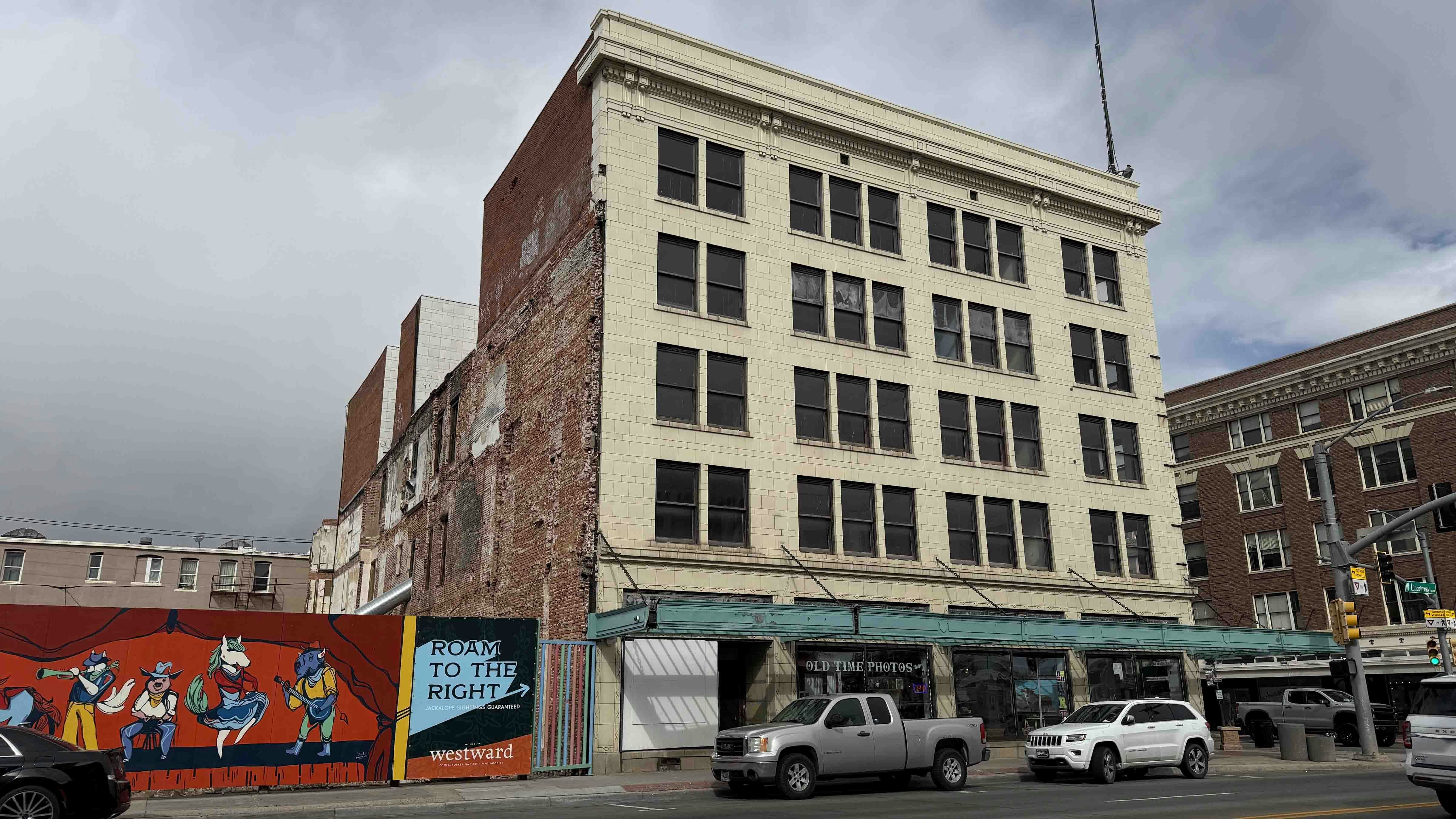
Harry P. Hynds built the Hynds Office Building 1919 over the burned bones of what had been the famous Inter Ocean Hotel, built by former slave turned businessman Barney Ford.
Ford’s luxury hotel had been a 19th century marvel, with early electricity — unusual itself out in the American wild west of yore. The hotel was part of a mystique that led people to call Cheyenne the Magic City on the Plains.
Ford’s Inter Ocean Hotel attracted wealthy patrons of all stripes. Politicians, famous writers and celebrities — they all came to stay in her rooms and enjoy whiskey and cocktails in the popular saloon. But the hotel was one of a string of buildings whose owners would lose everything to fire.
Hynds, who had made a fortune in the oil and gas industry, could afford an unusual solution to that problem. His building, he decided, was not going to have wood or anything flammable at all. Its walls would be made of steel and its floors of marble and concrete. That would leave nothing for fire to destroy.
Hynds did, however, employ artists to expertly paint wooden trim everywhere one might have expected it.
This was so well done, it had visitors gushing about the Hynds Building’s beautiful wood and gorgeous tiled floors, never realizing there wasn’t a single molecule of wood anywhere in the building.
Few Minor Scorch Marks
Hynds' strategy ultimately did work as far as fire is concerned. He not only fooled the eye with his wood-painted metal, but he foiled fires as well.
In 2004, a fire began in the basement of the next door, Mary’s Bake Shoppe, causing an 11-hour conflagration that destroyed not only the bakery, but the nearby western furniture store, Wyoming Home.
The fire ravaged the 200 block of West 16th Street, damaging the Painted Pony Gallery, the Crown Bar, and the old First National Bank. It threatened the Pioneer Hotel, the Idleman Hotel, and many of the other 19th century business buildings.
But not the Hynds Building.
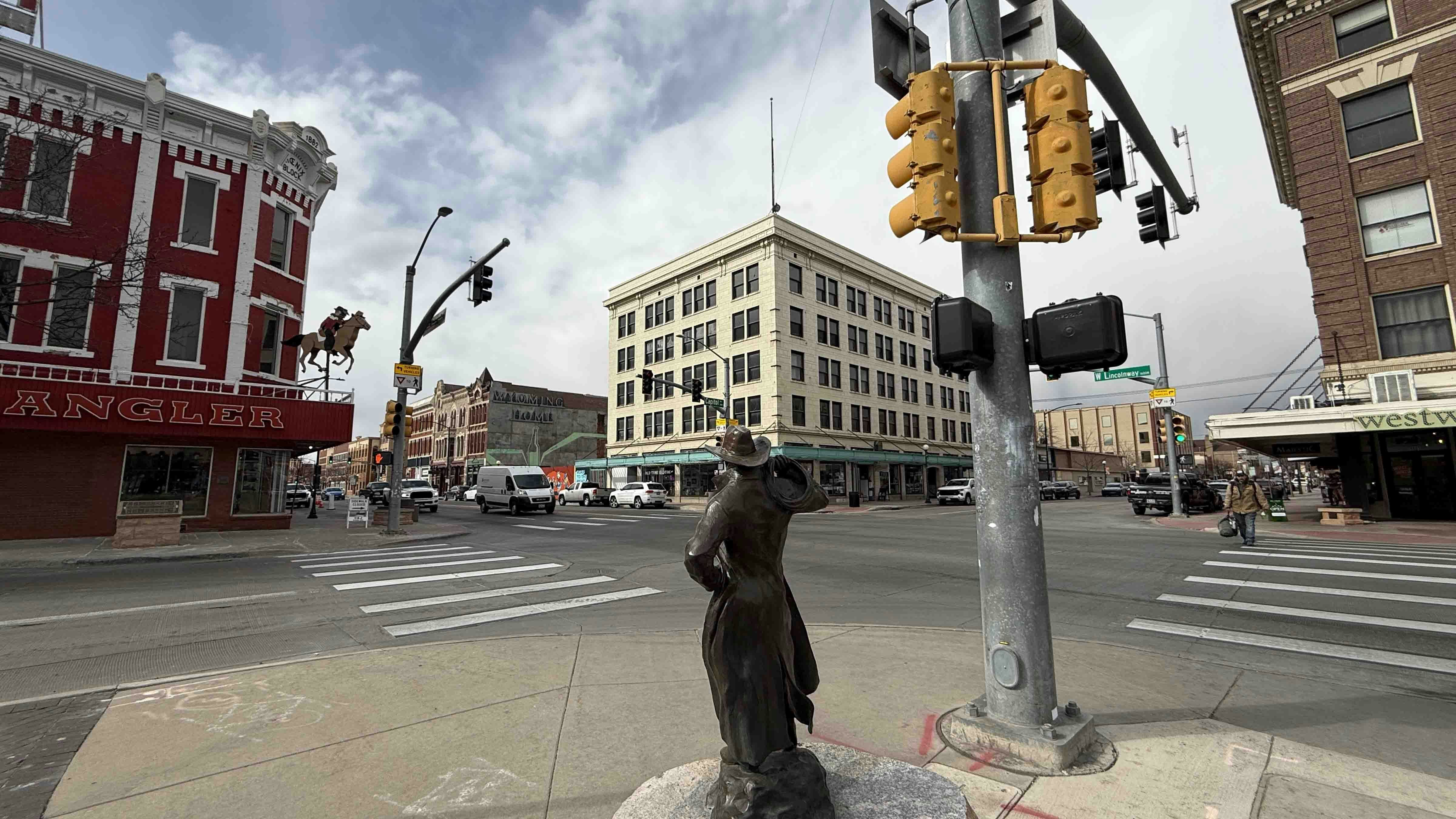
When the smoke had cleared, Hynds’ 1919 building had suffered only a few minor scorch marks. It was, just as its maker had intended, impervious to fire, a Titanic of a building.
“He built it to the highest standards of the time,” Councilman Pete Laybourn told Cowboy State Daily. “That’s why it’s lasted so long and is still in such excellent condition, with such great bones.”
The Hynds Building’s power against flame, though, is also its modern-day problem, and ultimately what has been sinking efforts to save it.
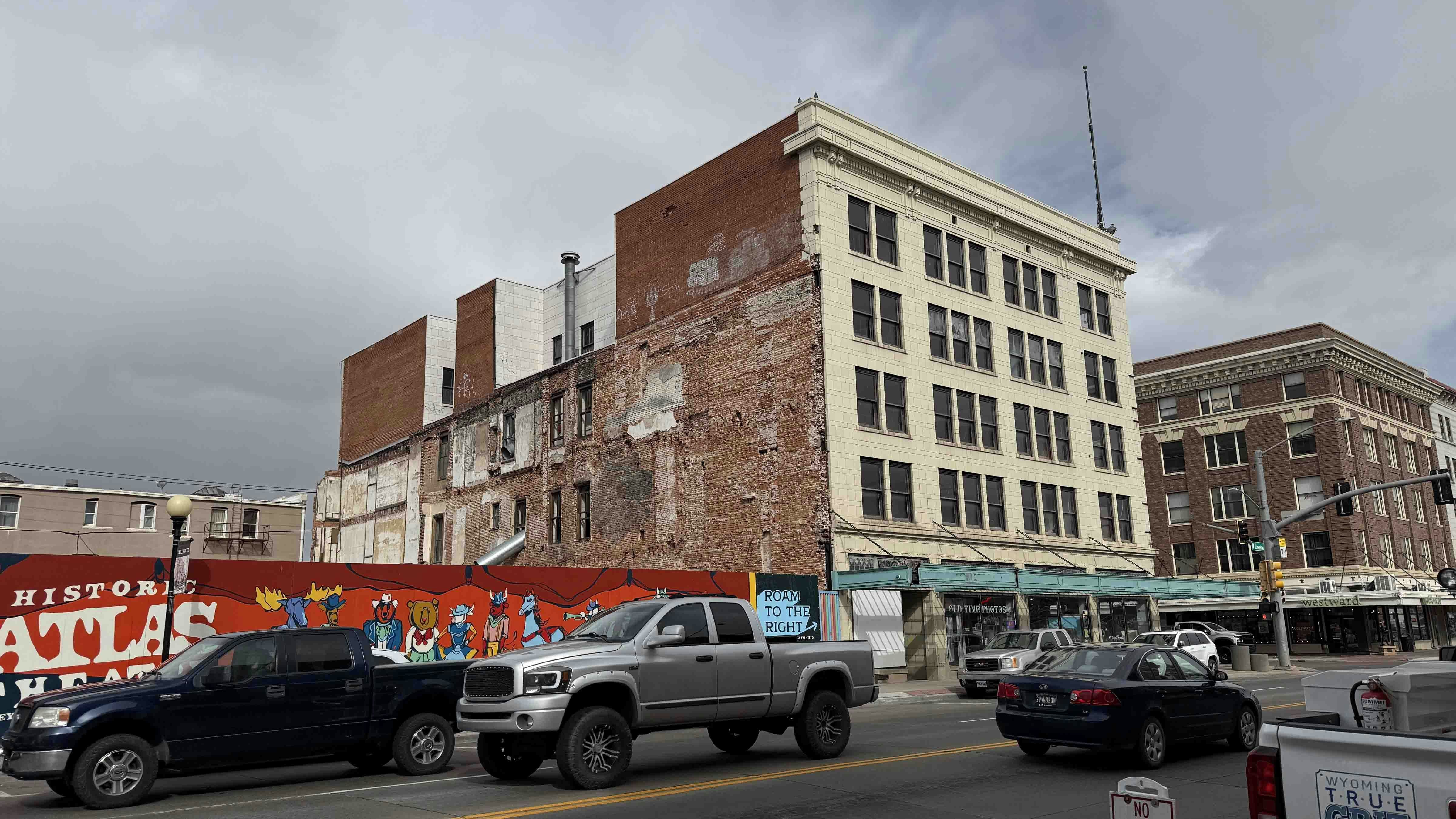
Those metal walls and concrete floors mean renovating it is Expensive with a capital “E.” That’s stymied efforts to save it, going all the way back to the 1980s, when many businesses moved out of the downtown area to Dell Range Boulevard, instead, where the Frontier Mall was opening its doors in 1981.
Top Goal For Decades
At least a dozen different developers have come along over the last 40 years, hopeful that they had an economically feasible idea to save the building, Mayor Patrick Collins told Cowboy State Daily.
Both the Hynds Building and the adjacent Hole have been privately owned properties through most of their lifespans, Collins added. But the city still tried to connect owners with developers who could make a difference for a location that’s in a vital area of its downtown.
“We’ve had, I would say, a dozen really promising leads where companies were coming to look at doing different kinds of developments,” Collins said. “And when all was said and done in the end, they came up a few million dollars short of being able to make it work.”
The expense of rehabilitating an old building is already often much more expensive than simply building from scratch. But multiply that by a force factor of 10 when that old building has steel walls and concrete floors meant to be impervious to any and all hazards.
Demolishing such a building is also quite expensive, which made knocking it down and starting over unattractive as well.
“It is hard to modify,” Laybourn said. “The ceilings in the upper floors are going to be pretty tight to run the plumbing and electricity in there. It was built to the highest architectural standards at the time, and I think we’re really going to have to imitate that. It’s not an easy building to completely rewire, replumb, and all the things that go into that.”
Seeing light at the end of the tunnel for the building is exciting, Councilman Jeff White told Cowboy State Daily.
“This has been the top goal that every Ward 1 councilman and probably every other councilman and mayor has had for such a long time,” he said. “It’s one of the things I still get asked about the most. It’s one of the most complex issues I think we’ve ever faced, and just the fact that there is a realistic project that’s committed to getting this done. I think we should all be overjoyed about it.”
Workforce Housing With Market Amenities
All of the units planned by Overland Property Development will be income-restricted — from 30% to 60% of Adjusted Median Income. That’s based on participation in different federal housing programs, which are designed to encourage development of housing for low- to moderate-income workers.
For their participation in those programs, Wyoming Community Development Authority is giving the company $6 million in funding, which is part of the overall financial package that’s making this redevelopment work.
“The rents themselves are not subsidized,” Kack said. “So, this isn’t a Section 8 development. It’s a completely separate program. But all of the apartment homes will be occupied by individuals who have specific incomes that fall within a band that the federal government dictates.”
Even though it’s income-restricted housing, though, that doesn’t mean these apartments are going to lack the amenities one might expect in market-rate apartments.
“We’re held to higher standards than a lot of market-rate developments are,” Kack said. “For example, the building that’s going in the former Mary’s Bake Shoppe site, that whole building will be constructed to a higher energy standard than the city of Cheyenne requires, because WCDA has requirements and then the federal government also has requirements for construction.”
There’s also the fact that the Hynds Building itself had very high standards of construction when it was built in 1919, down to the tiled floors and the green marble wainscoting, which are elements Overland plans to keep.
“On top of that, we will use the same types of materials that we use in market rate developments,” Kack said. “So stone veneer on the exteriors. A lot of times we’re using granite quartz countertops, and we have LVT (luxury vinyl tile) flooring throughout.”
Something Old, Something New
There will be two buildings in the completed development, the rehabilitated Hynds Building and a brand-new building called The Reserves.
“(The Reserves) will be kind of a template commercial/retail space, and then it will also house the community amenities for the apartment homes,” Kack said. “So, we’ll have a leasing office, a fitness center and a clubhouse.”
There will also be storage units in the basement of The Reserves, as well as laundry facilities.
The Historic Hynds Lofts, meanwhile, will have a mixture of studio, one-bedroom and two-bedroom apartments, which will allow pets. The commercial area of that building will be updated but continue to operate much as it is now, Kack added.
Parking will be in public parking facilities in the nearby area, including the Spicer Garage. While there had been some discussion in the past of underground parking on site, Kack said that’s not the way the company currently plans to go.
The timeline right now calls for a groundbreaking at either the end of this year or early next year. After that, the project will take 15 to 18 months to complete, and then the apartments will become available to lease.
Renée Jean can be reached at renee@cowboystatedaily.com.