
CHEYENNE — House Bill 52 cleared the House Corporations, Elections and Political Subdivisions Committee on Wednesday with broad support, overhauling Wyoming's recount process to allow hand counting of ballots in close races.
The county clerks who would have to carry it out, however, say the bill is a recipe for failure.
The measure, a product of the Joint Corporations Committee's 2025 interim work, redefines a "recount" in Wyoming law. Currently, the statute defines a recount as "the processing of ballots through the tabulation system for an additional time or times" — essentially running ballots back through the same machine.
HB 52 changes that definition to include "the counting of ballots by hand."
Secretary of State Chuck Gray told the committee he was in "complete support" of the bill, calling it "probably one of the most vetted election bills in this session."
"It's just really important we get this into the code because right now, a recount… is just running the ballots back through the machine, which really isn't achieving the true purpose of a recount," Gray said.
The County Clerks Association of Wyoming sees it differently.
Their proposed amendments — which would have proposed scheduling the primary election earlier and pushing back canvassing deadlines — were voted down by the committee.
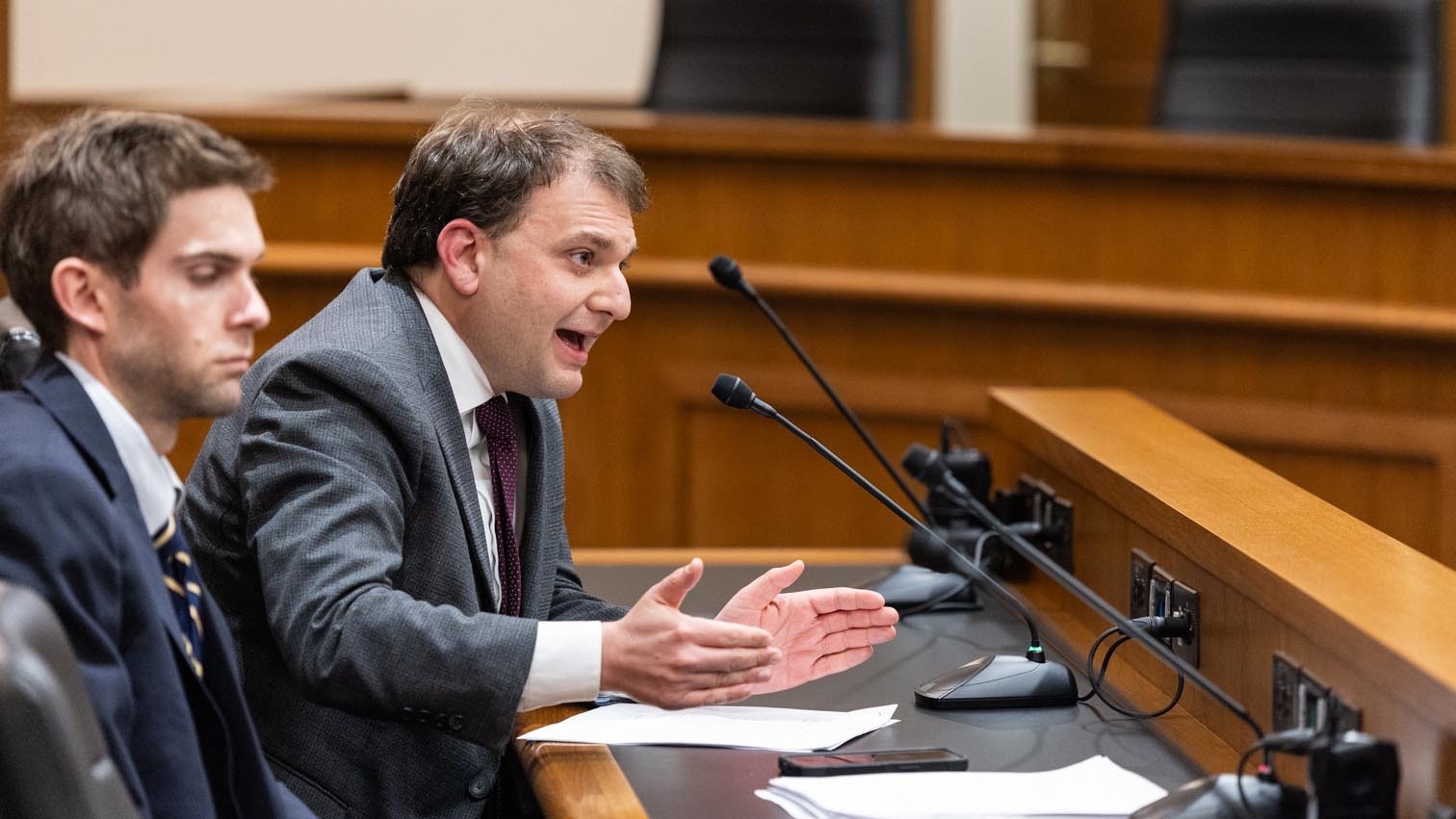
Leading the association's testimony, Platte County Clerk Malcolm Ervin laid out the math: only 72 hours separate polls closing on a Tuesday evening and the Friday deadline for county canvassing boards to convene.
"In those 72 hours, polling places must reconcile, pack and return all their materials to the county clerk," Ervin told the committee. "Clerks must compile results, remit those to the Secretary of State's office. Then we are required to examine poll books, tally sheets, precinct certifications, oaths of election officials, summarize the number of votes cast in each precinct for every candidate appearing on the ballot, count write-in votes for candidates, cure any provisional ballots, conduct required recounts, and perform a ballot audit."
He added: "Oh, and we have to sleep and eat during that 72-hour period, you might note."
Implementation Fears
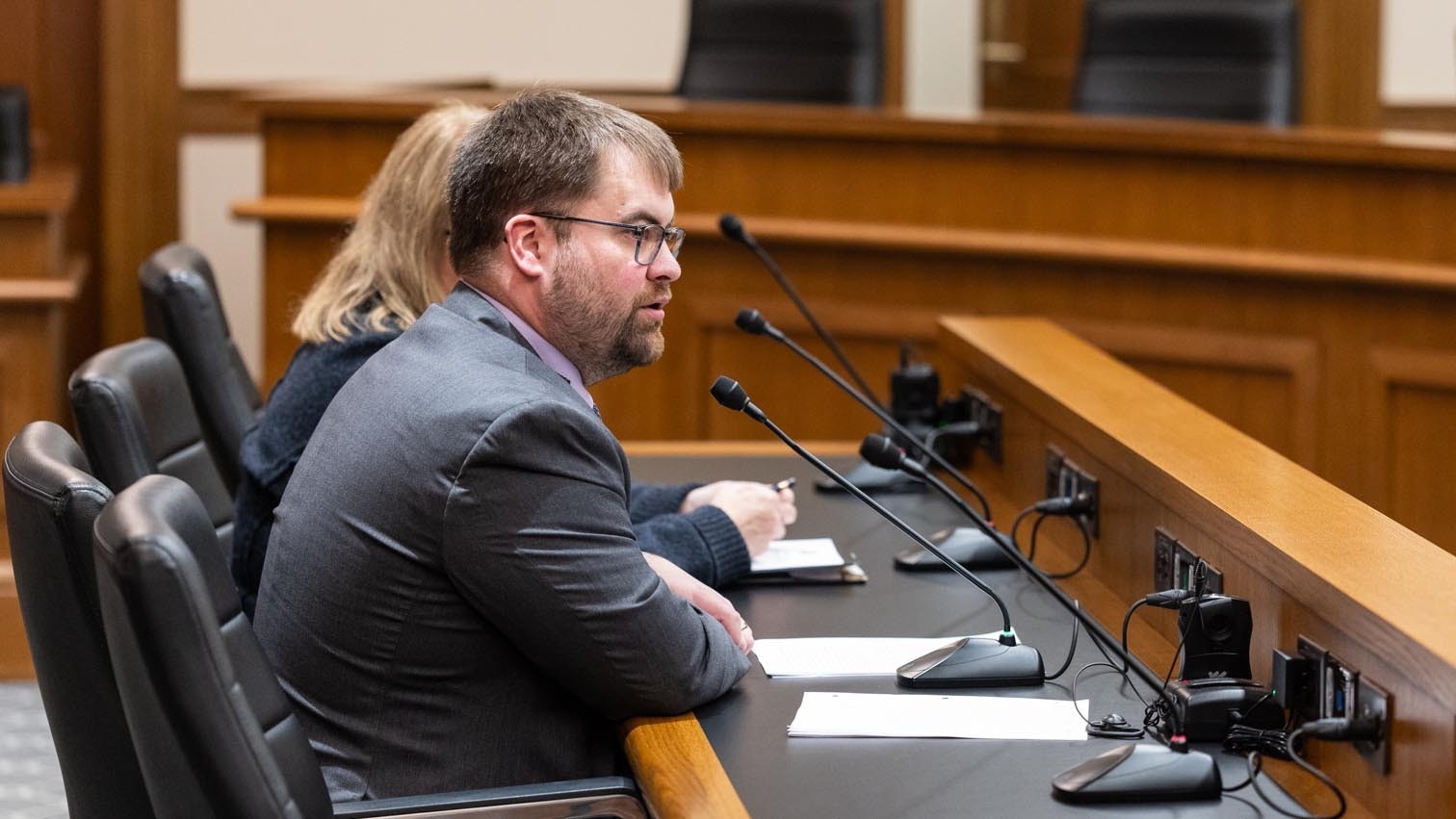
In a follow-up interview after the hearing, Ervin said he wasn’t surprised by the committee's refusal to address the clerks' concerns.
"Our only piece was to let the public know that if it passes as is, it will fail, implementation," Ervin said. "And they need to remember why that is, and that's the Legislature. That's not the administrators of the election."
Ervin added, "Here we are trying to change the rules of the game while we're in the first quarter of it. I think it's dangerous. I think it's irresponsible, and unfortunately, the committee didn't listen."
He said the clerks would make the same plea on the Senate side, and ultimately to the governor's office if necessary: "If you want policy that can be implemented, this isn't it."
Dueling Bills
The clerks are pinning their hopes on Senate File 113, filed Wednesday, which takes a fundamentally different approach. Rather than requiring full hand-count recounts that could change election results, SF 113 establishes a hand-count audit of approximately 5% of ballots cast on election day, comparing the hand tally against machine results.
Under SF 113, county clerks would have nine days after the county canvass to complete the audit — a more generous timeline than the 72-hour window under HB 52. The bill also gives clerks flexibility to appoint audit boards without the June 30 deadline that applies to regular election judges.
"Senate File 113 is a hand audit of the '26 primary and general, and what's different about it is the sponsors took the time to listen to the clerks about what the implementation is," Ervin said.
The distinction matters: an audit confirms whether results are accurate, while a recount can actually change them, he said.
As Ervin explained, "The audit doesn't change results, it just confirms whether the system works correctly or not."
Fatal Flaw?
Testifying for the League of Women Voters of Wyoming, Marguerite Herman went further, calling the hand-count approach "fatally flawed."
Herman cited testing conducted by the Campbell County clerk that found stark differences between machine and hand-count accuracy.
"Machine tabulation error rate is well below one half of one percent," Herman told the committee.
The Campbell County tests painted a grim picture of what clerks would face, she said, flagging concerns about the number of people required, the cost and the risk of producing an inaccurate count.
Herman cited a 25% error rate on the first day of hand counting in Nye County, Nevada — "one out of four, an error rate that I don't think is tolerable."
Committee Support
Gray's lead policy staffer, Joe Rubino, walked the committee through the bill's mechanics and acknowledged the clerks' concerns were not new.
"I think a lot of these amendments we had already discussed at length during the 2025 interim," Rubino told the committee.
Gray himself conceded the timeline challenges, telling the committee he believed "it's a little too late to change the election date for 2026" but that he wanted the bill to move forward regardless.
"I would like all of it to go into effect in 2026, but the county clerks have said there is no way to implement this," Gray said. He described a phased approach where some provisions take effect for 2026 and the full bill kicks in afterward.
The lone dissenting vote came from Minority Leader Yin, who warned the committee: "It's a struggle that we aren't adopting the amendments of the people that actually have to implement this on the ground.”
HB 52 was referred to Appropriations with its $200,000 election recount account funding. It could be on a collision course with SF 113 in the Senate, which might force the hand-count debate into a conference committee — giving the clerks at least one more chance to be heard.
The Roll Call Vote on HB 52:
Ayes: Hoeft, Knapp, Locke, Lucas, Johnson, Brown, Webb, Webber
Nays: Yin
David Madison can be reached at david@cowboystatedaily.com.


