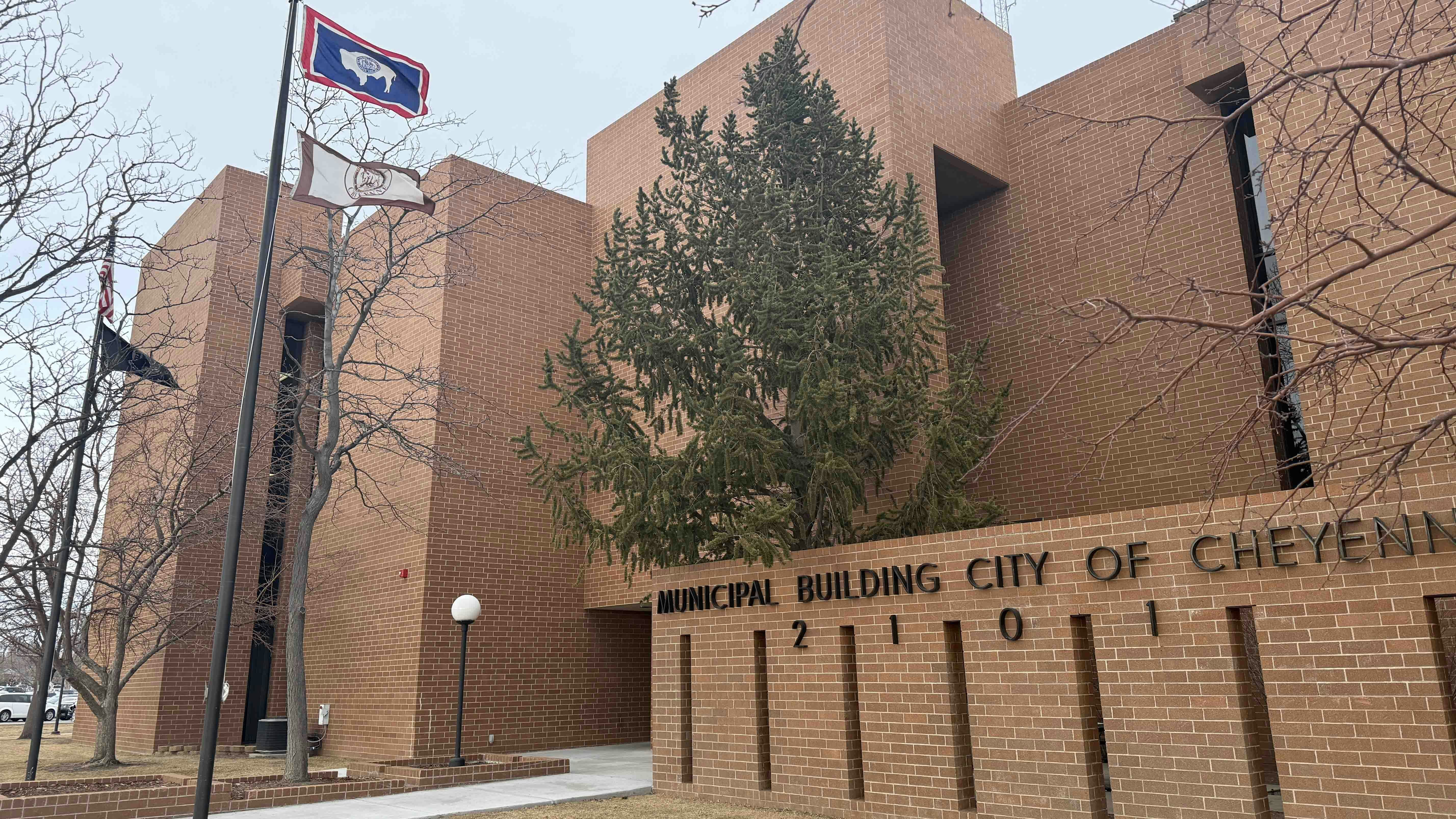
Three city officials now have the authority to request administrative warrants to enter businesses without permission after the Cheyenne City Council this week passed a controversial ordinance on third reading.
The ordinance that was passed underwent substantial changes and narrowed in scope, dropping homes from the initial proposal and further clarifying the probable cause, after dozens of city residents pushed back against the draft’s broad language, fearing it would encroach on their fourth amendment rights.
The fourth amendment protects individuals against unreasonable searches and seizures by the government, requiring that warrants be issued only upon probable cause.
Original Intent
Originally, the proposed ordinance was meant to provide a mechanism for Cheyenne Fire Rescue personnel to enter properties legally for post-fire investigations and safety code inspections, said Chief Andrew Dykshorn.
The initial proposal, if passed, would have allowed the municipality’s fire department and chief building officer to seek court-approved administrative warrants when property owners deny access or cannot be found to grant access to homes and businesses.
“When we are doing a fire investigation post-incident and have left the scene, in some instances we have to come back,” Dykshorn told the Cheyenne City Council in January. “As soon as we leave, we have to gain consent from property owners to return.”
In most cases, firefighters have no problems getting permission to reenter properties.
However, there have been instances where owners of abandoned fire-damaged buildings could not be located, making it impossible to get consent, Dykshorn said.
Public Pushback
Dozens of people spoke out against the initial proposal during multiple public hearings over the past couple of months. Council members unanimously voted at the Jan. 26 regular council meeting to postpone a third reading of the ordinance to Feb. 9, after residents continued to express concern over the document’s lack of specific language.
Among the concerns were that the initial ordinance would have applied to people’s homes and businesses, which many thought was overly broad. Others questioned what would happen if officials gained entry into a home to address a specific concern but then see something else.
Resident Exie Brown called the ordinance’s initial proposal “textbook government overreach.”
Critics also said the initial ordinance lacked specific language around probable cause.
“When government can enter your home simply because it wants to check on you, you don’t really own that home,” Cheyenne Resident Gary Pugh said at a January council meeting.
State Rep. Ann Lucas, R-Laramie County, suggested the original ordinance fell short of creating specific boundaries for circumstances that would make issuing an administrative warrant reasonable – such as situations that could put lives at risk.
“I don’t think this ordinance is limited to emergent situations,” Lucas said. “I also believe laws should be enacted because they must be enacted, not because we can enact them.”
In January, Councilwoman Dr. Michelle Aldrich said the ordinance was crafted with “good intentions,” but she also acknowledged that it needed to be more specific to alleviate fears that officials will misuse the warrants to conduct illegal searches of people’s homes.
More Specifics, More Pushback
City residents continued to push against the ordinance this week, when the city council met to consider a revised, tighter ordinance under a third reading. Under the substitute ordinance, only three people — a fire chief, fire marshal or chief building official — can request an administrative warrant under four specific circumstances, with probable cause.
The narrowed-down ordinance now applies to commercial properties but not homes.
Resident Patricia McCoy on Monday addressed what she called a “specific dangerous loophole” to the revised ordinance, calling into question the words “determine” and “discover.”
The ordinance states that probable cause shall be deemed to exist if “an inspection is reasonably necessary to determine, discover or verify the condition of the property or structures.”
McCoy called the two words a nonstarter, saying, “In Wyoming, a warrant is a tool to verify a specific pre-existing condition of a violation that has been documented under oath.
“It is not a license for the government to enter a private home or business to discover whether a violation exists in legal terms,” she said. “That is an unconstitutional fishing expedition.”
Councilman Mark Moody brought forward an amendment to define the word “area” in the ordinance.
Cheyenne resident Charles Miller strongly supported Moody’s definition of area, saying that without it, the word “area” is a “blank check.”
“Ambiguity is the best friend of government overreach,” he said.
Councilwoman Dr. Kathy Emmons took issue with the definition, saying every word in a document does not need to be defined.
What the Ordinance Allows
A motion to amend the ordinance to define the term “area” failed, with all but Moody and Aldrich voting no.
Another amendment brought by Aldrich to strike the words “determine” and “discover” from the ordinance narrowly passed, with councilmembers Emmons, Tom Segrave, Lawrence Wolfe and Pete Laybourn voting no.
Mayor Patrick Collins repeatedly emphasized the more specific language of the revised ordinance, saying, “There are only four reasons we can ask for this. There are only three people that can do it.”
As passed, a fire chief, fire marshal or chief building official can request an administrative warrant:
- for a fire investigation if the owner of a burned structure cannot be located;
- for routine safety inspections of commercial properties, as required by fire code;
- for inspection of abandoned buildings when no owner can be located; and
- for a building permit pulled by a property owner that allows the chief building official to inspect the work to make sure it is up to code and causes no safety issues
According to the ordinance, “Warrants would be issued only upon probable cause, supported by an affidavit describing the applicant’s authority and status in applying for the warrant, the legal authority requiring or authorizing the inspection, the property to be inspected and the purpose for the inspection, including the basis for which probable cause to inspect exists.”
The revised ordinance as amended passed 7-3 on the third reading. Councilmembers Moody, Ken Esquibel and Dr. Mark Rinne voted no.
Kate Meadows can be reached at kate@cowboystatedaily.com.