CHEYENNE — A sweeping new bill requiring informed consent and authorizing lawsuits over abortion procedures received strong support in the Wyoming House of Representatives on Tuesday, marking the Legislature's first major move on abortion since the Wyoming Supreme Court declared the state's abortion bans unconstitutional last month.
House Bill 117, titled "Stop harm-empower women with informed notices," was introduced on a 53-8 vote with one member excused. The bill was assigned to the Labor Committee.
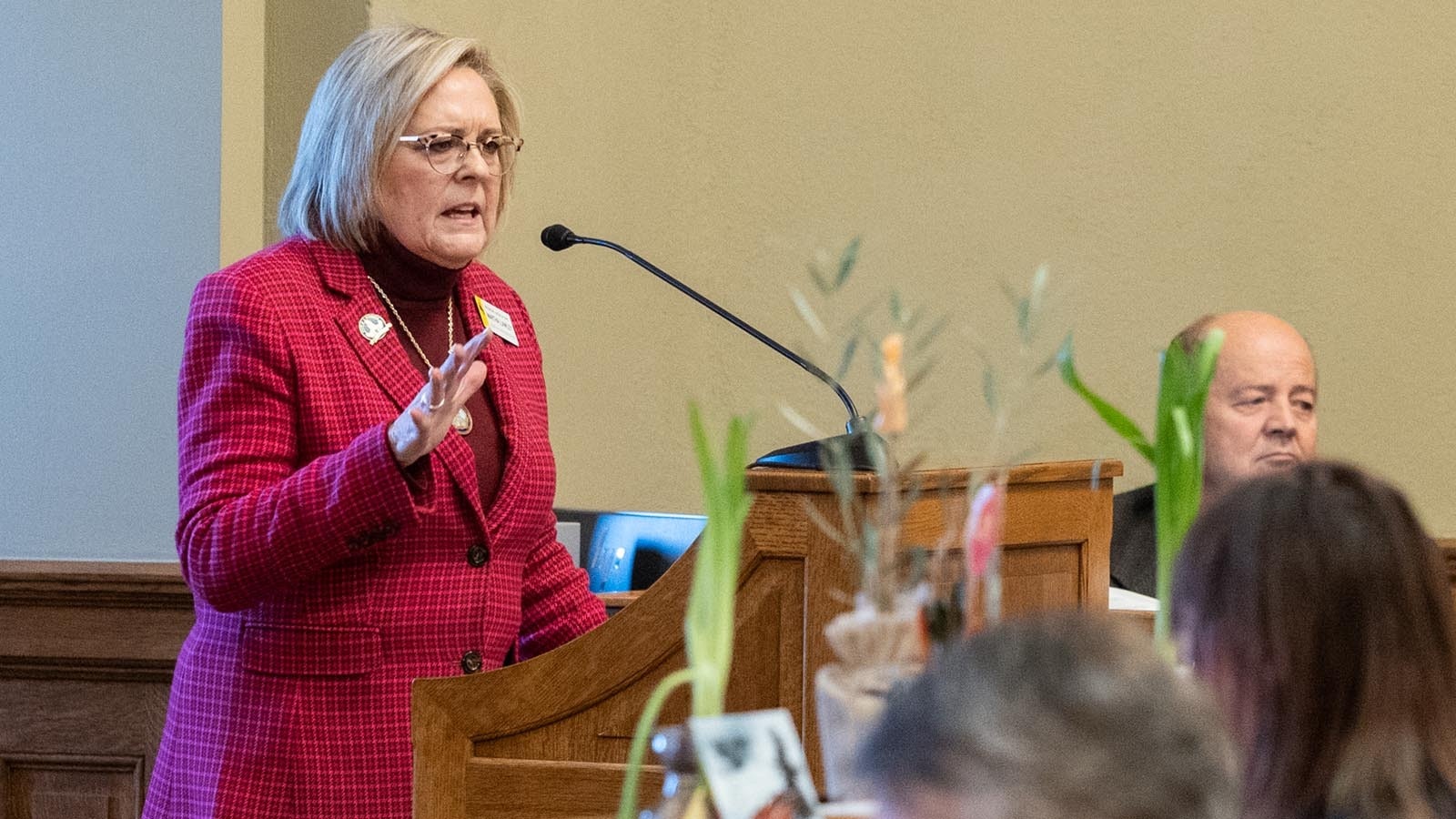
Rep. Martha Lawley, R-Worland, the bill's lead sponsor, framed the measure as empowering women rather than restricting abortion.
"This bill seeks to protect women considering an abortion in two important ways," Lawley told the House. "It ensures that the woman is provided the type of important and relevant information about abortion that she is considering, so that she can give a truly informed consent."
She added: "It also provides private rights of action to protect pregnant women from being coerced into an abortion."
Informed Consent
Under the bill, a woman seeking an abortion must receive detailed written information at least 24 hours before the procedure, including:
• The name of the physician who will perform the abortion.
• “Medically accurate information that a reasonable patient would consider material to the decision of whether to undergo the elective abortion.”
• The unborn child's probable gestational age.
• “The unborn child's probable anatomical and physiological characteristics at the time the abortion is to be performed."
The bill also requires the woman to receive a written explanation that "it is against the law for anyone, regardless of that person's relationship to the pregnant woman, to force or coerce the pregnant woman to have an elective abortion."
Civil Liability
Under the bill, an interested party may bring a civil action against any person who performs an abortion where informed consent was not given, the woman was coerced, or the woman "was harmed as a result of negligent, reckless or intentional conduct associated with the provision or induction of the elective abortion."
The bill sets statutory damages of "not less than $25,000 for each claim," plus compensatory damages and attorney fees.
Among the defenses the bill explicitly prohibits: "A defendant's belief that the requirements of this article are unconstitutional or were unconstitutional."
Coercion Protections
The bill defines coercion broadly, covering physical harm, threats, employment retaliation, revoking scholarships, denying social assistance and "denying, removing or threatening to deny or remove financial support or housing from the pregnant woman or a dependent of the pregnant woman."
The legislative findings cite a 2023 study reporting that more than 60% of women who had abortions "reported experiencing high levels of pressure to abort from one or more sources," and a 2017 study finding that 73.8% of women surveyed "disagreed that their decision to abort was entirely free from even subtle pressure from others to abort."
"This bill will empower women, not the state, to enforce their own rights, and to be fully informed and free from coercion," Lawley told colleagues, noting the bill takes into account medical emergencies.
Democratic Opposition
Not everyone was persuaded.
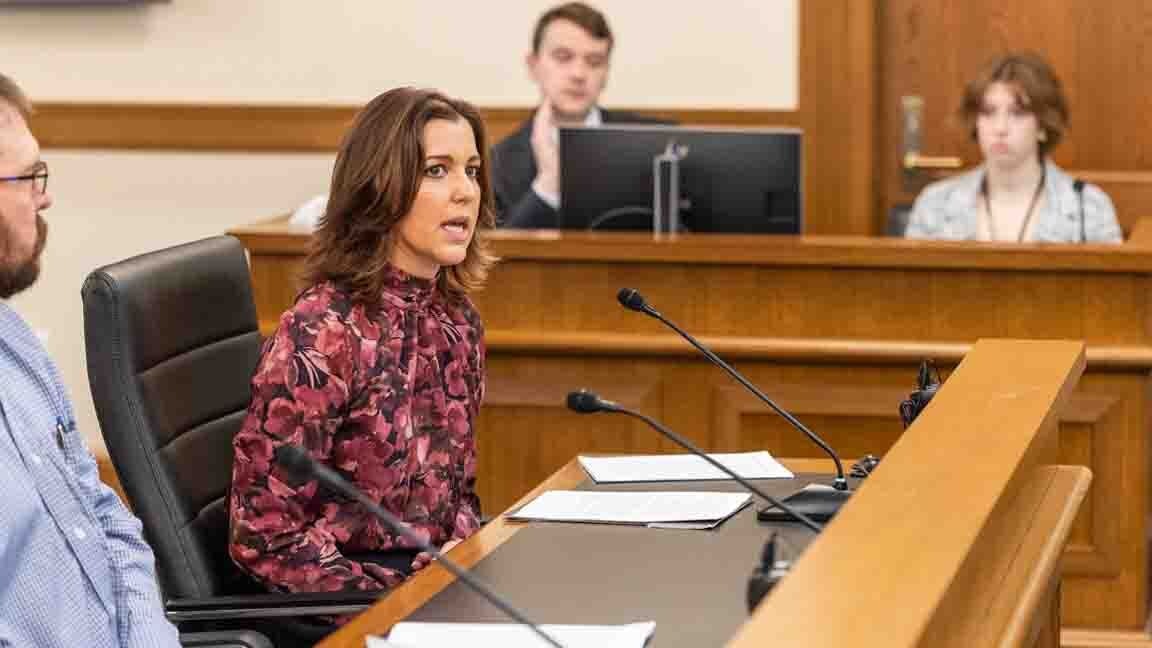
Rep. Ken Chestek, D-Laramie, called the bill unnecessary and said it intrudes on the doctor-patient relationship.
"Informed consent is already a well-established medical practice, and they have standards that we are going to try and interfere with," Chestek said. "I think it's time to respect the decision of the Supreme Court" and allow "women to have their relationship with their doctor, that's not being controlled by this body."
Rep. Mike Yin, D-Jackson, raised constitutional concerns.
"This actually forces a specific type of speech from the doctors," Yin said.
Lawley pushed back, telling the chamber that the bill "was specifically drafted to avoid" First Amendment concerns and that "the court speaks, but we have the right to continue as a Legislature, to pass the laws that we feel are necessary."
Ongoing Battle
Tuesday's vote is the latest chapter in Lawley's sustained legislative campaign around abortion.
Her Regulation of Surgical Abortions bill, which would have required abortion clinics in Wyoming to be licensed as ambulatory surgical centers, passed both chambers before Gov. Mark Gordon vetoed it last year.
Gordon described Lawley's original bill before it was amended as a "simple and elegant solution," but said complicating amendments made it vulnerable to legal challenges.
As Cowboy State Daily previously reported, Lawley has argued that "ensuring that abortion services are safe and regulated is crucial to protecting the safety and well-being of women."
Yin has disputed that framing, saying of earlier Lawley legislation: "It's not really being honest about what it's trying to do. It's not trying to help women, it's trying to prevent women from accessing abortions."
Court Backdrop
The bill arrives in the wake of the Wyoming Supreme Court's landmark Jan. 6 ruling striking down the state's abortion bans in a 4-1 decision.
The court found that under Article 1, Section 38 of the Wyoming Constitution — a 2012 amendment originally designed to combat federal health care mandates — abortion qualifies as a woman's own health care decision.
As Cowboy State Daily reported, Chief Justice Lynne Boomgaarden wrote the majority opinion, and all five justices agreed that the health care autonomy provision includes abortion.
The majority applied the strict scrutiny standard and found the state failed to show its bans were crafted in the least restrictive way to achieve a compelling interest.
Gordon called the ruling "profoundly unfortunate" and urged the Legislature to put a constitutional amendment before voters, saying: "Every year that we delay the proper resolution of this issue results in more deaths of unborn children."
For its part, the Wyoming Supreme Court found in January, “The State did not present any evidence to justify the Abortion Laws' restrictions on the fundamental right to make health care decisions. It, instead, focused its efforts on arguing abortion is not health care.”
The roll call vote on HB 117:
Ayes: Allemand, Andrew, Angelos, Banks, Bear, Brady, Bratten, Brown, L, Brown, G, Campbell, K, Clouston, Davis, Connolly, Filer, Erickson, Fornstrom, Guggenmos, Geringer, Haroldson, Harshman, Heiner, Hoeft, Johnson, Jarvis, Knapp, Larsen, L, Larson, JT, Lawley, Lien, Locke, Lucas, McCann, Ottman, Pendergraft, Posey, Riggins, Rodriguez-Williams, Schmid, Singh, Smith, Styvar, Strock, Tarver, Thayer, Washut, Wasserburger, Webb, Webber, Wharff, Winter, Williams, Wylie, Neiman.
Nays: Byron, Campbell, E, Chestek, Nicholas, Provenza, Sherwood, Storer, Yin.
David Madison can be reached at david@cowboystatedaily.com.