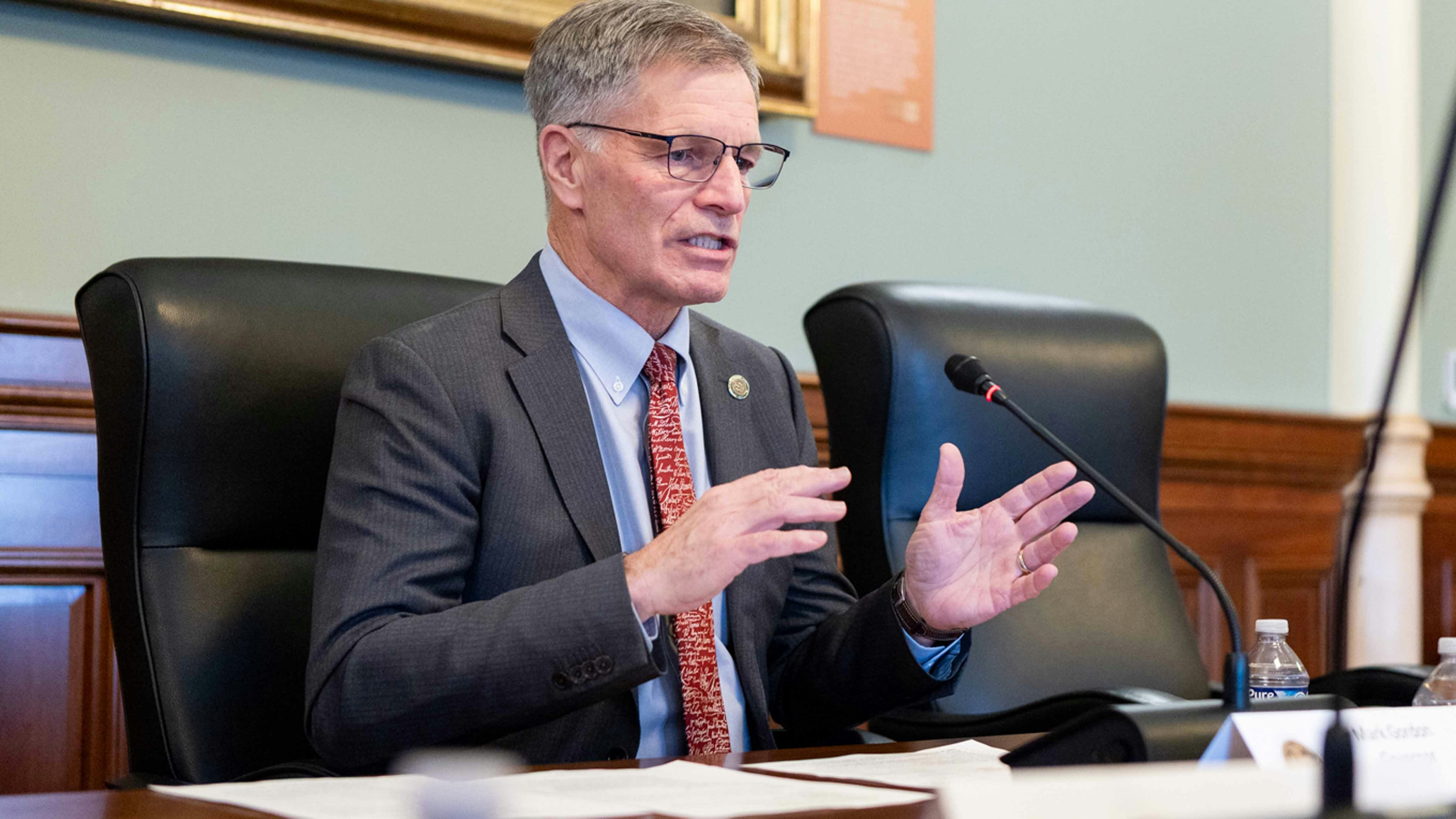
When numerous election reform and property tax reform bills failed to survive introductory votes in the Wyoming Legislature this week, Gov. Mark Gordon saw it as a sign that lawmakers are respecting their higher priority of passing a two-year state budget - and doing so within about 20 days.
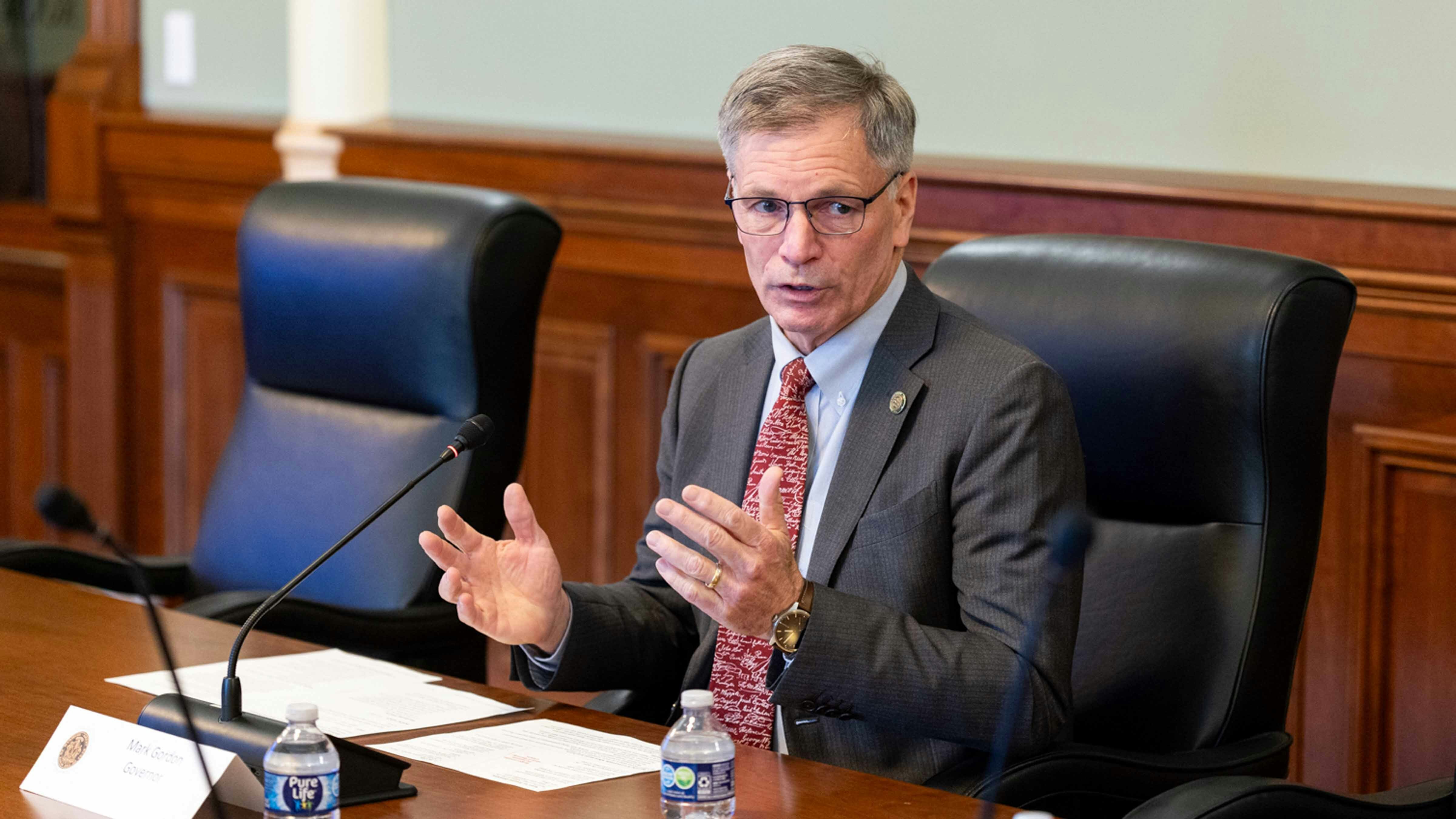
Gordon delivered these remarks during a round-table style press conference he hosted with reporters in the state Capitol Tuesday.
The Wyoming Constitution outlines a 20-day legislative budget session for even-numbered years, and a 40-day general session for odd-numbered years.
While the state Legislature has an unspoken tradition of deference toward bills that interim, or between-session, committees have spent months developing, the House of Representatives denied introduction to six of the Corporations Committee’s election reform bills Monday. The Senate killed a seventh.
Meanwhile, the House killed two pieces of legislation from the Revenue Committee that would have revamped property taxes - including one proposition to eliminate residential property taxes. The Senate killed three.
“I think a lot of these things may be discussed again in the future,” said Gordon. He added, “This is a budget session, and I have to tell you, I’m actually pretty thrilled we’re still respecting what we believe our constitution (says).”
“And to me,” Gordon continued, “focusing on the budget is the main business of this session. That’s a little bit refreshing.”
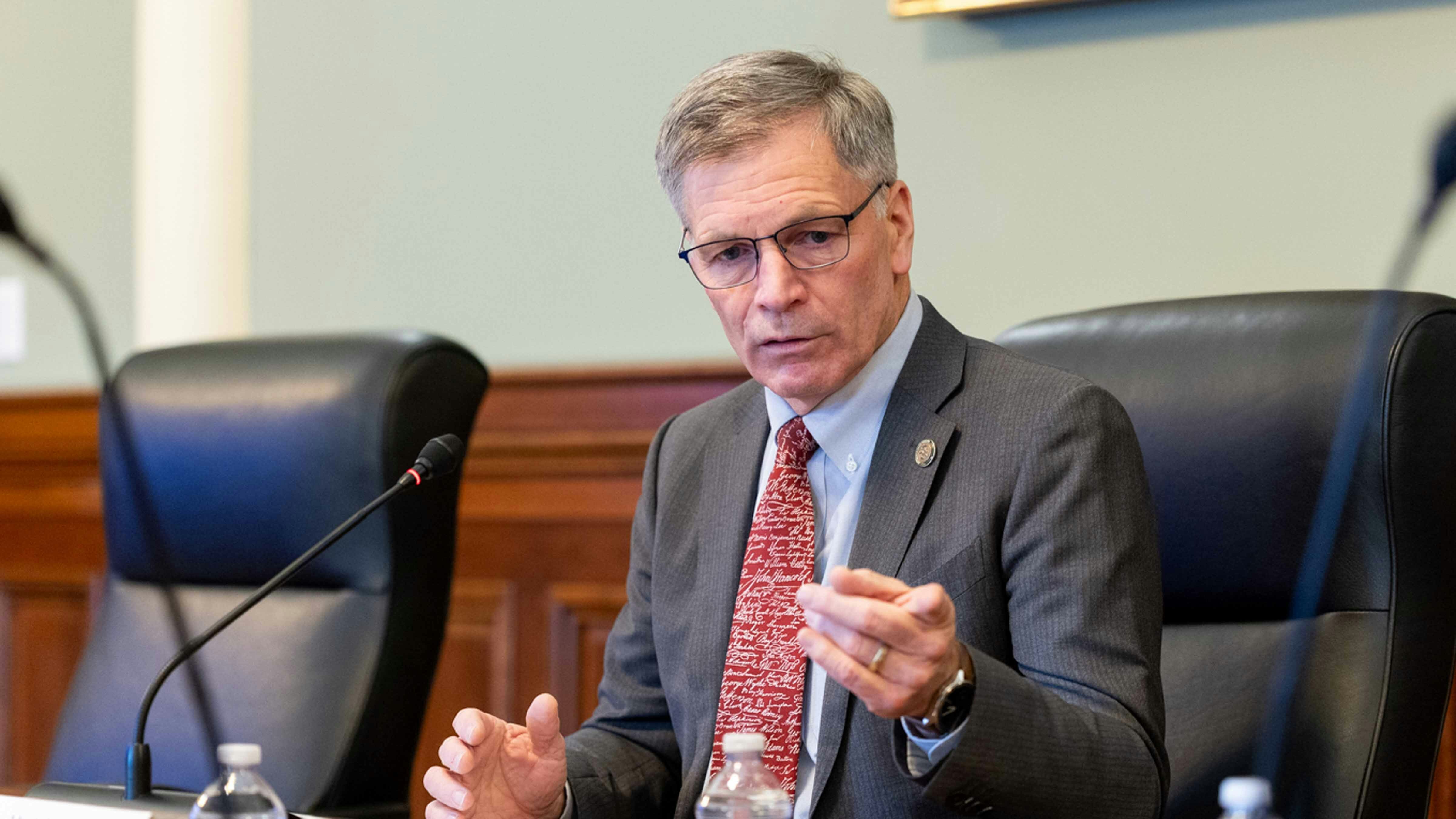
Gordon in his State of the State address Monday urged lawmakers to restore his $11.13 billion two-year budget recommendation, after the Joint Appropriations Committee advanced significant cuts and denials in its second draft of the budget last month.
On Tuesday, he unpacked more nuance, indicating that a cut is not necessarily a fiscally conservative move.
For example, said the governor, Wyoming has “been blessed with a tremendous wealth” from minerals industry revenues.
When that money spills from permanent investment interest into a grant structure the state’s five elected executive-branch officials oversee, they then can direct that money into needed infrastructural projects in local communities.
Investing money rather than placing it in the realm of “temptation” to spend can reduce the long-term tax burden on Wyomingites, Gordon said.
“So I really think if you’re worried about what we can do to lower the burden on our taxpayers, let’s look across the system and the wealth we have - and our ability to be able to allow it to be deployed in ways that actually reduce the cost to our taxpayers,” he added.
Why Are You Doing This
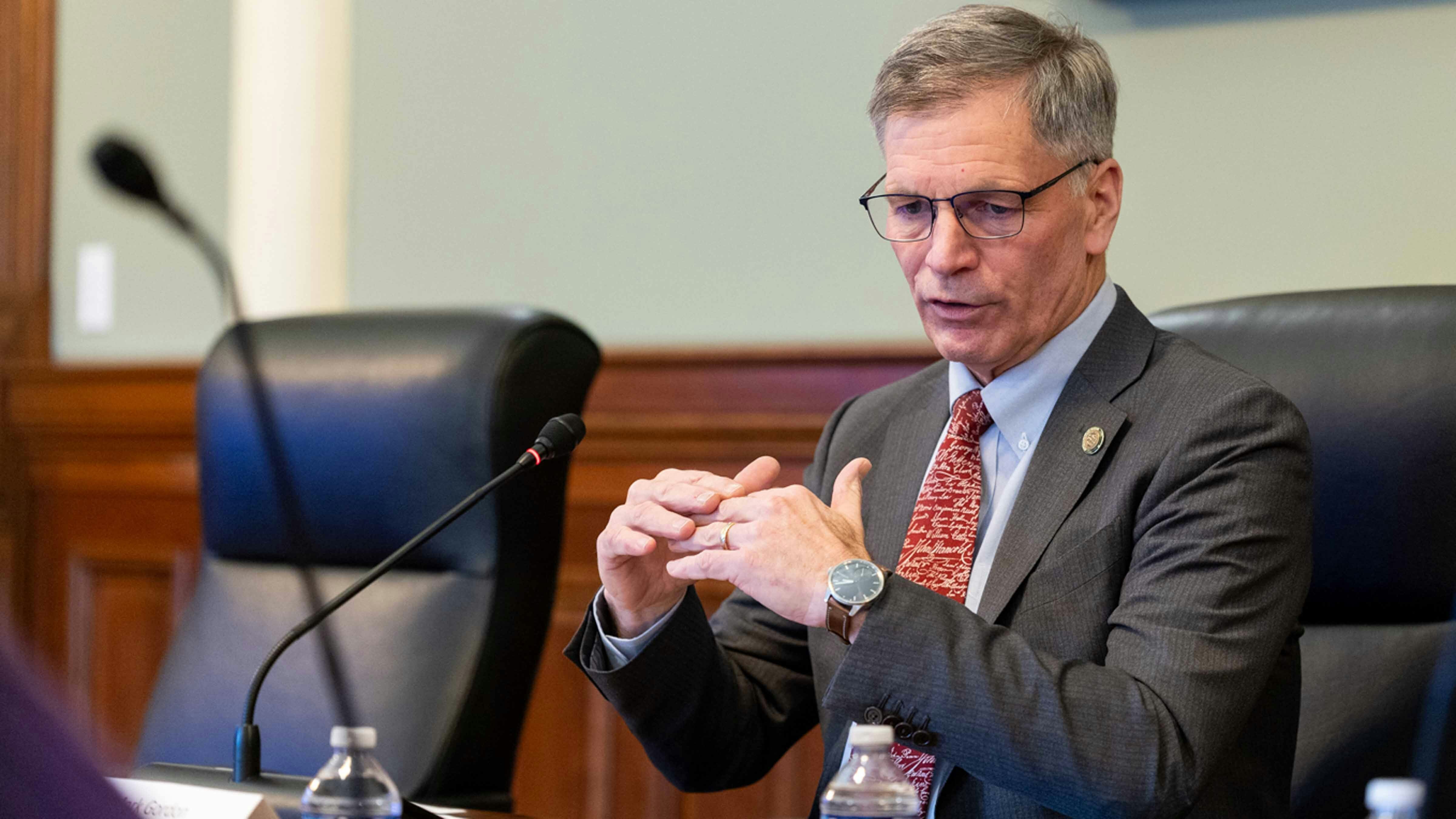
One reporter, Noah Zahn of Wyoming Tribune Eagle, asked Gordon why he was having the intimate round-table.
Gordon’s answer, given in measured terms, was that the Legislature has derailed in certain ways.
“For the very longest time,” answered Gordon, “I’ve had a tremendous amount of respect for the Legislature and believed very strongly, the Legislature should do the work required to - you know - really massage these issues and so on.”
In the past, lawmakers “have always been very transparent and we’ve always been able to work with them,” Gordon added.
“It’s a different feel now,” he said. “So I think it’s important we be as available to the press as we possibly can.”
Gordon said misinformation has surfaced this session. He cited a Monday claim that community college students would stay in Wyoming while university students would migrate to the coast.
Wyoming has been working on longitudinal assessments for “probably a decade” to determine where graduates go.
“I don’t know where those data (floated Monday) are coming from,” he said.
Nukes And Education
Gordon reiterated that he believes nuclear energy development is an important, and inevitable pillar of Wyoming’s future. He said the state can manage the resource responsibly.
“We can do it better. And we should be able to do it better,” he said, also pointing to Wyoming’s high uranium reserves, and lack of manufacturing capacity for those.
On Monday, an effective one-third minority of the state House of Representatives blocked introduction of the bill that would recalibrate the way Wyoming funds education.
Lawmakers are under some pressure to recalibrate the state’s K-12 education system.
The Wyoming Supreme Court is evaluating a lower court’s decision - temporarily paused - declaring that the Legislature does not fund the system thoughtfully enough, and should recalibrate it.
The Senate version of that bill is still viable.
“I think the Legislature was very anxious to have something,” said Gordon, adding that lawmakers have made a good-faith effort to reevaluate education funding, and they understand the issue - though the expansion of charter school authorizations in Wyoming in recent years has complicated it.
The bill has problems still, he said.
Educators have protested its moves toward enlarged class sizes, a more drastic analysis of daily attendance figures that would also make the budget’s fluctuations more drastic, and limits on how districts can spend the money the state gives them.
“I do think schools, rightfully so, are anxious about their future,” said Gordon, calling the issues “pronounced.”
He said there are other tools in the toolbox for fixing the education system should the Senate recalibration bill fail.
Amy Edmonds, Gordon’s spokeswoman, told Cowboy State Daily in a later interview that one of those tools in the toolbox is to introduce recalibration measures into the budget bill.
Changes to that bill can happen throughout the session, whereas standalone bills are governed by various deadlines.
Clair McFarland can be reached at clair@cowboystatedaily.com.