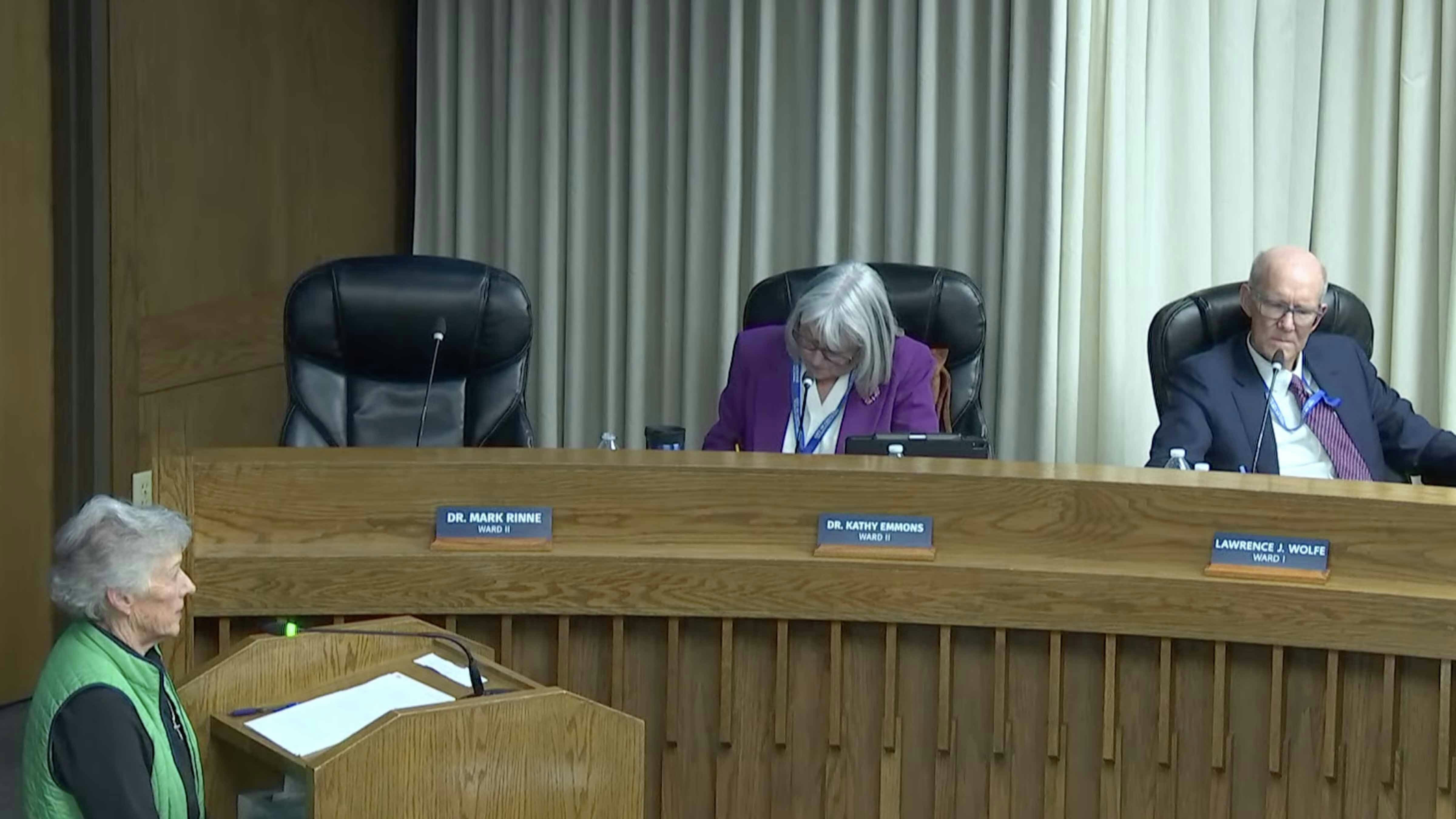
Dozens of community members showed up at Monday’s Cheyenne City Council meeting dressed in green shirts to express support protecting an urban farm, WY fresh, from being swallowed into Cheyenne city limits with forced annexation.
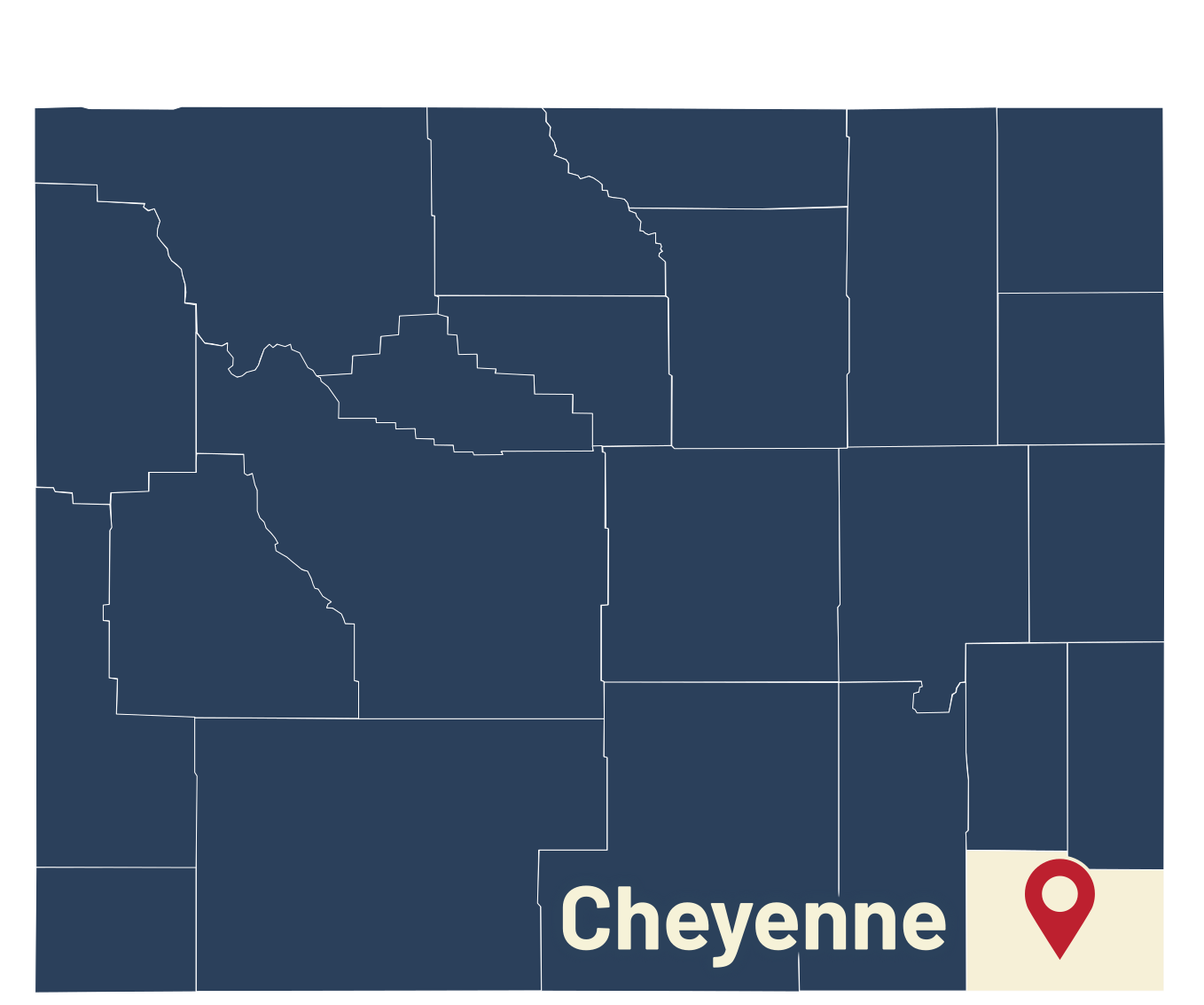
The city council convened a public hearing to consider the annexation of 16 parcels totaling roughly 49.4 acres generally situated in southwest Cheyenne. The acreage is one of the last remaining pockets to be annexed by the city. Annexing these pockets into the city would lay out clearer boundaries for city and county services, the mayor said, and would eliminate confusion over jurisdiction.
“State law says that if a property is 100% surrounded by the city, the city council can just bring them into the city limits,” Collins said.
Multiple people urged the council to postpone a decision to annex, citing more time to understand the ramifications, seeking a definition of urban agriculture and pleading for WY fresh to be able to continue operating as it has for the past 20 years. The farm is owned by David and Tommie Kniseley.
Councilman Jeff White expressed mild surprise at the multiple requests to postpone a decision, as no decision regarding the annexation was on the agenda for Monday’s meeting.
“I did not think we could postpone out of a public hearing,” he said.
Collins stressed that the issue would be referred to the Public Services Committee, where action could be taken next Tuesday, Feb. 17.
“We’re just here to listen today,” Collins said.
Farm Supporters
Advocates for the farm spoke about the importance of supporting small local business, of knowing where their food comes from and of allowing the farm to continue to operate as it has for the past 20 years.
“Everybody is against this,” said Cheyenne resident Tamara Trujillo, who briefly served in the Wyoming House of Representatives in 2023.
The Kniseleys' 13-year-old son, Richard, addressed the city council, along with both his parents, David and Tommie.
“A Babylonian king once built a seven-layered palace, and it was a big green space, just to impress his wife,” Richard Kniseley said. “I am here to say that do not think of urban farms or my farm as an undeveloped green spotted giant, which it is, but think of it as a marriage gift to Cheyenne.
“We have an ability here to make an example of Cheyenne to bring agriculture to the cities. And we bring the cities to agriculture,” he said.
Donn Edmunds blamed the annexation controversy on the city government, saying to the council, “You annex property willy-nilly. You create county pockets.”
Edmunds, who has lived on the east side of town since 1956, said, “we are so terrified.”
Annexation is costly to the people who are annexed, Edmunds argued.
“I was way out in the county,” he said. “Now the city’s right next door to me.”
Cheyenne resident Charles Miller defended the farm owners, telling the mayor, “They are afraid of being pushed into something your own staff cannot fully explain yet.”
After the ninth public comment, Cheyenne Mayor Patrick Collins interjected: “There is no one on this governing body that wants to put (WY fresh) out of business,” he said.
Taxes And Fees
The mayor said the city has worked since 2022 to reduce the impact to landowners as much as possible and mitigate potential problems that could come with annexing.
When a city initiates an annexation, landowners are protected, he said, as long the land use is continuous.
Landowners whose property has been annexed can hook up to city water and sewer or continue to use their own facilities. Annexed residents would have to switch to city garbage pickup, Collins said, and there would be a small increase in property taxes.
The Kniseleys, he said, would pay an additional $90 per year in property taxes once their property has been annexed.
But he emphasized, the farm could still be a farm.
Local resident and farm customer Kim Stevens asked the council what the advantage of annexing would be. The mayor responded that he was elected to the city council in 2000.
“It was maybe my vision at the time that county pockets would eventually be assimilated into the city … We just took a long-term approach to that,” he said.
Annexing would solve jurisdictional challenges, he said, primarily with the fire department, in which someone would call 911 and there was confusion as to who was supposed to respond. At one time there were 160 county pockets surrounded by city land, Collins said.
Councilwoman Dr. Michelle Aldrich asked if it was possible to remove one parcel from the proposed annexation and continue to move forward.
City attorney John Brodie said on the fly, he didn’t see anything problematic with that. But more than one property owner has expressed interest in being removed from an annexation parcel, he said, adding, “I guess I would just leave that to the council.”
“I’ve never run up against this situation before,” said Councilman Pete Laybourn. “It’s unique.”
Laybourn said he had never been to the farm, causing multiple people in the audience to interject, “You should go!”
Following Monday’s initial public hearing, the discussion about annexing will go to the Public Services Committee. That meeting takes place at noon on Feb. 17.
“I’m looking forward to being a customer of yours,” Collins said at the conclusion of the hearing.
Kate Meadows can be reached at kate@cowboystatedaily.com.