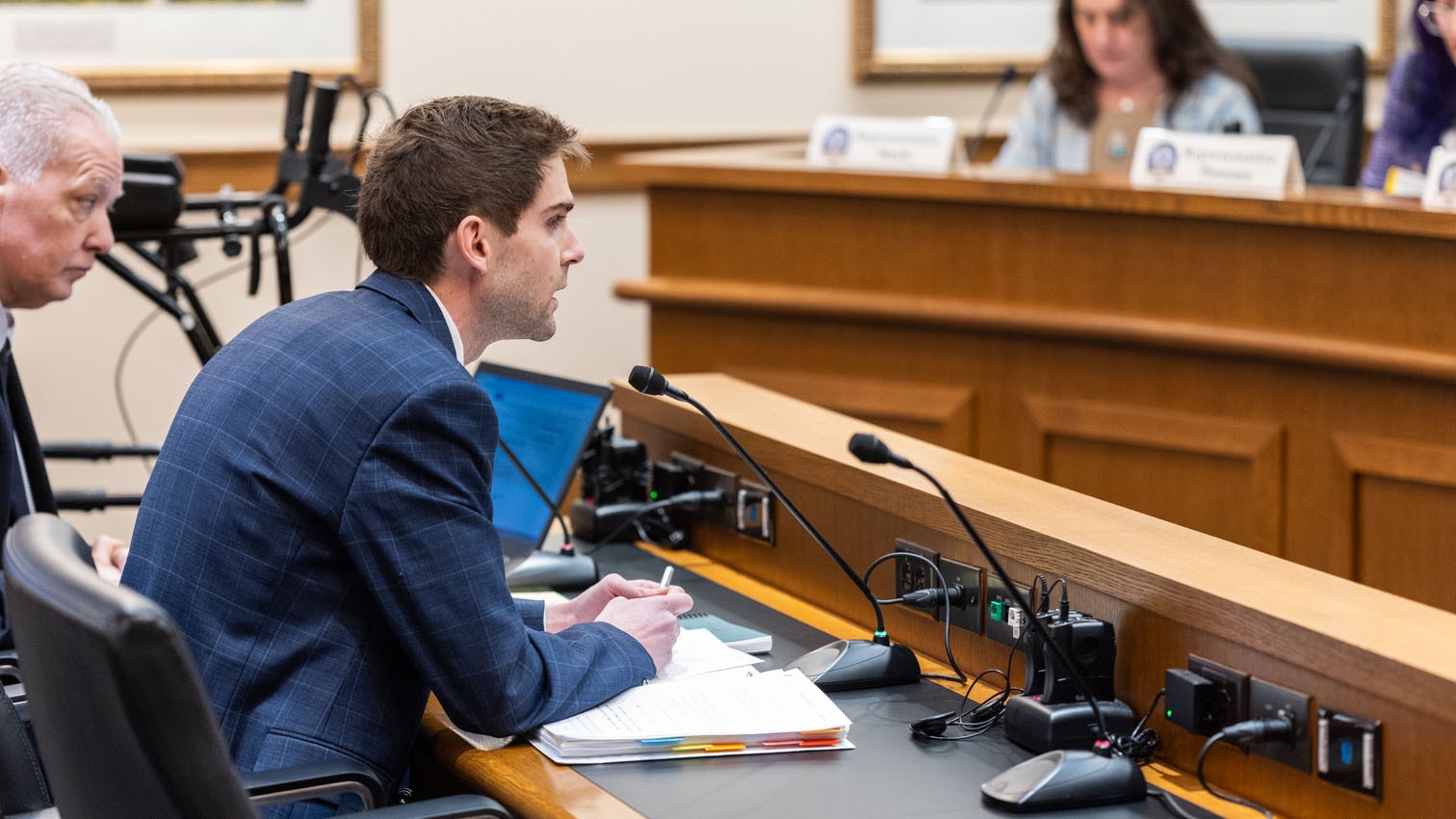
CHEYENNE — Two election reform bills inspired by the troubled 2024 general election in Weston County cleared the Joint Agriculture, State and Public Lands and Water Resources Committee on Tuesday, sending both to the full Legislature for consideration during the budget session.
House Bill 85, which would require minutes to be taken during post-election ballot audits and opens the process to observation by political party representatives and independent candidates, passed unanimously, 9-0.
House Bill 86, which would allow the Secretary of State to file a formal complaint with the governor against a county clerk for violations of the Wyoming election law, advanced 6-3.
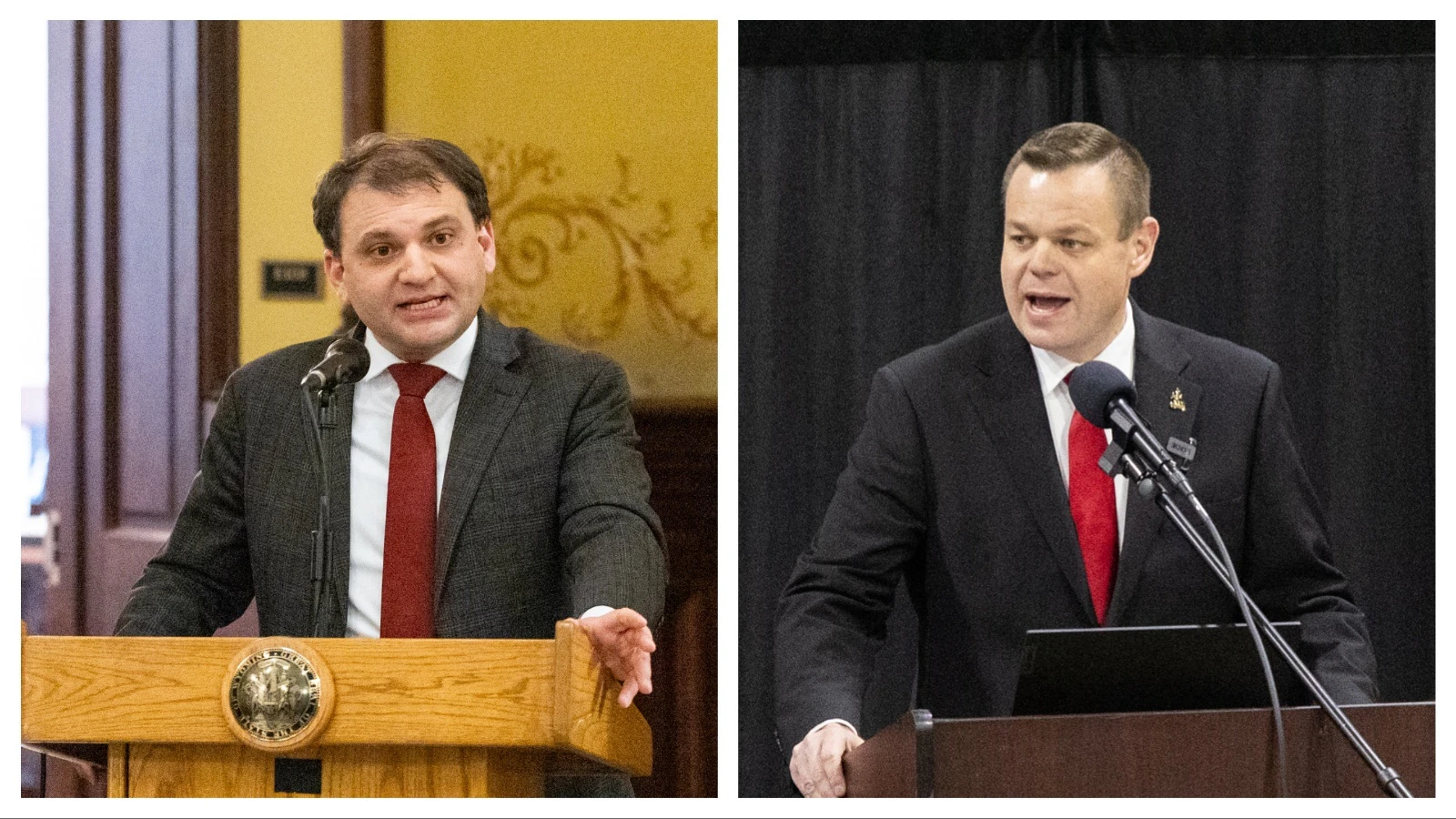
Both bills were sponsored by the Management Audit Committee and presented to the panel by that committee's chairman, Rep. Christopher Knapp, R-Gillette. Secretary of State Chuck Gray was not present at the hearing. His policy director and general counsel, Joe Rubino, represented the office.
Rubino spoke in favor of the measures, which trace to events in Weston County following the 2024 general election, when faulty ballots surfaced and skewed votes in two uncontested races.
Weston County Clerk Becky Hadlock took responsibility for the ballot errors at the time, and Secretary Gray caught the anomalies on election night and arranged their correction within days.
But Gray told lawmakers repeatedly throughout the 2025 interim that the larger problem was that Hadlock subsequently filed a post-election audit report that did not reflect the errors — what Gray has called a sign the audit was fraudulent or was never actually conducted.
The Management Audit Committee formed a subcommittee in July 2025 to investigate. Hadlock did not appear for a subpoena calling her to testify before the subcommittee in September. She now faces a misdemeanor charge for failure to appear for a legislative subpoena, to which she has pleaded not guilty.
Her attorney, Ryan Semerad, has argued legislators exceeded their authority in issuing the subpoena. That case has been paused pending an appeal to Natrona County District Court.
A group of qualified electors in Weston County also filed a verified complaint with Gov. Mark Gordon seeking Hadlock's removal from office. Gordon investigated but declined to remove her, citing a lack of malicious conduct and a reluctance to override the local electorate's will. After a second round of filings, Gordon has recommended her for removal. The Wyoming Attorney General’s office now is reviewing that recommendation.
Audit Transparency
On HB 85, Knapp told the committee the bill details how a post-election audit should look, specifying that political party chairmen and independent candidates would be notified, that at least two electors from different political parties must be present to observe, and that minutes would be taken and submitted to the Secretary of State's office.
Rubino told the committee that the bill would increase transparency and uniformity across post-election audits, and noted that several county clerks' offices already have participation in the process similar to what the bill would require.
Mary Lankford, representing county clerks statewide, told the committee that clerks' suggestions had been incorporated into the bill during the interim. She said clerks could administer the new requirements without difficulty.
"We're already doing this procedure," Lankford told the committee when asked whether implementation by July was feasible. "Basically, this puts into statute some of the requirements where it states that we’ll have these representatives there."
She did note concerns about security in smaller offices where space is limited and the clerk must secure equipment, ballots and audit results.
Gail Symons, with the nonpartisan nonprofit Civics 307, testified against the bill. She said she supports post-election audits but warned that the bill's formal objections track would invite disruption.
"House Bill 85 turns the clerk into a referee and a writer of formal responses during the most time-sensitive part of the canvas calendar," Symons told the committee. "Supporters will say this builds trust. There is a real risk of the opposite reaction or an opposite outcome."
Complaint Authority
HB 86 proved more contentious. The bill would add the Secretary of State as a third party — alongside qualified electors and county commissioners — who may submit a verified complaint to the governor against a county clerk for election code violations.
Knapp told the committee the bill came directly from the experience in Weston County, where Gray's office identified what it believed to be a fraudulent post-election audit but lacked standing to file a complaint with the governor. Under existing law, only qualified electors and the board of county commissioners can start that process.
Rubino provided detailed background on how the process unfolded after the 2024 election. He told the committee that a group of qualified electors filed a verified complaint with the governor's office "alleging, among other things, misconduct in the 2024 general election."
The governor's office conducted a review that included taking statements and interviewing witnesses, and Gray "compiled a large report of findings and a recommendation concerning violation of the election code."
But the governor's office did not act on Gray's report. Rubino told the committee that "we did take issue that our report, which got a little bit more specific into the false post-election audit that was submitted to our office, was somehow not incorporated within the generalized statement of the qualified electors when they submitted their petition."
The committee's response, Rubino said, was to "create a third prong where if it's dealing with an alleged violation of the election code, the secretary of state could also submit a verified petition."
Qualified electors eventually filed a second petition that "specifically called out two things," Rubino said — "the post-election ballot audit" and "the failure of the Weston County clerk to appear before the subcommittee and the defiance of a subpoena."
But the episode exposed what supporters of the bill described as a gap: the Secretary of State's office, which receives post-election audits and may have insights unavailable to local electors, had no independent path to trigger the complaint process.
Vocal Opposition
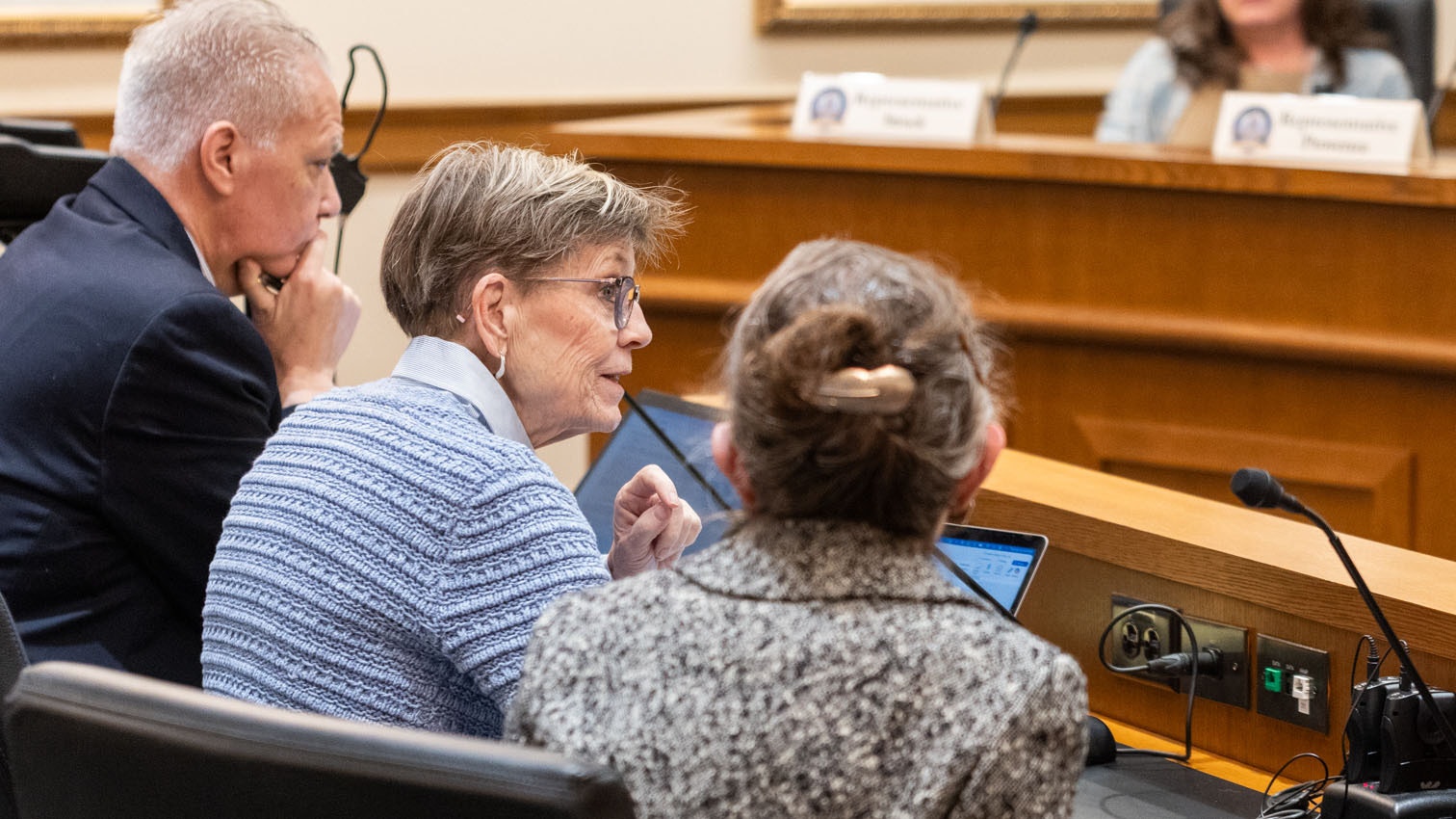
Symons testified against HB 86 as well, arguing the bill expands the Secretary of State's reach in a way the public should view cautiously.
"It does not change the removal process after a complaint. It does not add new standards. It does not add screening. It does not add clearer definitions. It only expands who can trigger a removal case," Symons told the committee. "House Bill 86 adds political leverage, not improved governance."
She said the existing tools already reach the governor and that the attorney general already prosecutes if the governor directs. She argued that the tools did not fail in Weston County.
Marguerite Herman, testifying for the League of Women Voters, echoed the concern.
She told the committee the bill "just injects a layer of — potentially — politics" and that it "doesn't illuminate anything. It just kind of adds to the process and doesn't really help it along. The current process is working."
Committee Debate
Several committee members expressed reservations before the vote.
Rep. Karlee Provenza, D-Laramie, said she did not understand why the committee needed to expand the powers of the Secretary of State and raised concerns about how the provision might look under different political circumstances.
"I don't know why we need to expand the powers of the secretary of state," Provenza said. "I'm a little concerned that we hear this bill at a different political juncture. It'll be expanding the powers to somebody else."
Davis said he believed the Secretary of State should maintain impartiality in the process, receiving complaints and evaluating them rather than originating them. "
The Secretary of State, in my opinion, should have impartiality in this view," Davis said, adding that the bill "clouds that vision."
Rep. Justin Fornstrom, R-Pine Bluffs, asked why the bill did not instead direct the Secretary of State to alert local officials when issues are discovered, leaving the existing complaint process intact.
Knapp, in closing, emphasized the seriousness of the situation that gave rise to the bill. He noted that three different ballots were used in Weston County, that the post-election audit was allegedly fraudulent, and that a local elector would not have known that information.
"It's key that it can come from both an elector, the county commissioners, and the secretary of state's office who that audit goes to to confirm," Knapp told the committee.
The bill passed 6-3, with Rep. Dalton Banks, R-Cowley, Rep. Steve Johnson, R-Cheyenne, Rep. Pepper Ottman, R-Riverton, Rep. Mike Schmid, R-La Barge, Rep. Tomi Strock, R-Douglas, and Chairman John Winter, R-Thermopolis, voting aye, and Rep. Bob Davis, R-Baggs, Fornstrom, and Provenza voting no.
Clear Split
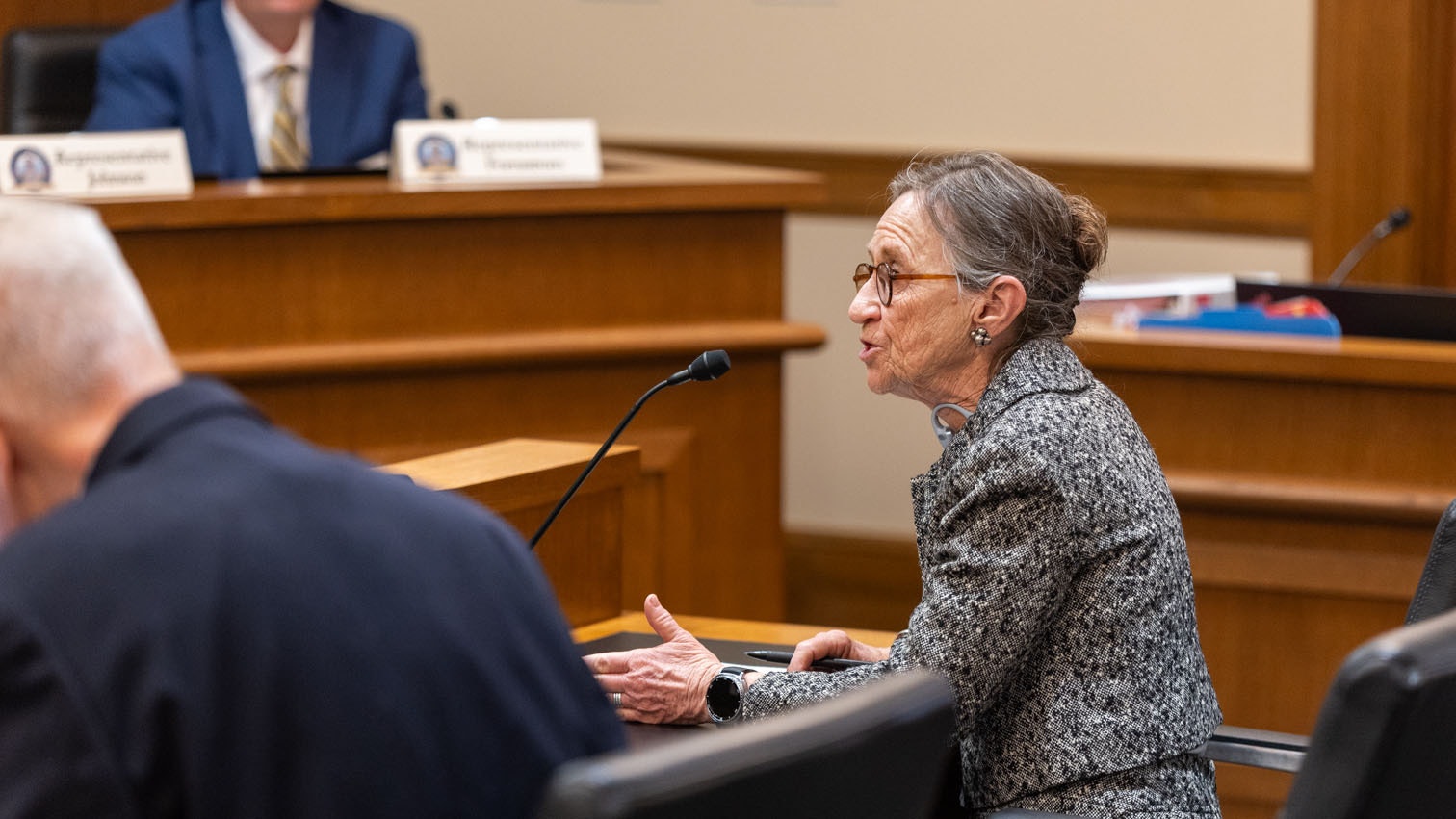
After the vote, Symons told Cowboy State Daily the bill creates no guardrails that would prevent the Secretary of State from filing a complaint without consulting local officials.
"There literally could be the Secretary of State, for whatever reason, decides that it doesn't matter what the county thinks," Symons said. "They just put it in themselves."
Rubino, responding to the committee's vote on both bills, said: "Well, anything that increases transparency and accountability and uniformity will certainly — Secretary Gray is very supportive of these bills."
The two bills that advanced Tuesday are part of a broader package of election-related legislation moving through the Wyoming Legislature this session.
Other bills from the Management Audit Committee include HB 84, which would specify that submitting a false post-election ballot audit to the Secretary of State constitutes falsifying election documents, and HB 94, which would require all ballots in Wyoming to be counted by hand and prohibit the use of voting machines.
During Tuesday’s floor session of the Wyoming House, HB 94 failed to advance with a two-thirds vote, falling with 32 ayes, but 30 opposing votes.
Separately, Monday saw the defeat of several election reform bills that had been championed by Gray and sponsored by the Joint Corporations Committee. Those bills failed to achieve the two-thirds majority vote required for introduction during the budget session.
Gray responded with a sharp statement, calling the defeated measures "common-sense election integrity bills, many of which were part of implementing President Trump's Executive Order on election integrity."
"To see insiders team up with the Democrats to stop these conservative bills is deeply troubling and revealing," Gray said. "I will continue working to advance these bills that have widespread support from Wyomingites."
The defeated measures included proposals to require pen-and-paper ballots, ban ballot harvesting and ballot drop boxes, and strengthen Wyoming's voter ID statute.
Meanwhile, at the federal level, Gray traveled to Washington Tuesday advocating for the Make Elections Great Again Act, telling the U.S. House Administration Committee that Wyoming has already successfully implemented many of the bill's provisions — including voter ID, documentary proof of citizenship for voter registration, and Election Day ballot receipt deadlines — at minimal cost and with no evidence of voter disenfranchisement.
He pushed back against Democratic critics who argued the reforms would be burdensome or suppressive, citing Wyoming's experience defeating a federal lawsuit challenging its proof-of-citizenship law and pointing to clean elections run under the new requirements. He urged Congress to establish these measures as baseline national standards for all 50 states.
"Let me be clear,” Gray testified. “The MEGA Act standards are implementable, common sense, and essential to restoring the integrity and security of elections across the United States.”
Additional state-level election reform legislation still under consideration in Cheyenne this session includes SF 28, which would clarify procedures for testing voting machines and make those tests open to the public, and SF 30, which would clarify the definition of "qualified elector" and make conforming changes to voter registration statutes.
Here’s the roll call vote for HB 94:
Ayes: Allemand, Angelos, Bear, Brady, Bratten, Brown, G, Campbell, K, Guggenmos, Haroldson, Heiner, Hoeft, Johnson, Kelly, Knapp, Lien, Locke, Lucas, McCann, Ottman, Pendergraft, Rodriguez-Williams, Schmid, Singh, Smith, Strock, Styvar, Wasserburger, Webber, Webb, Wharff, Winter, Neiman.
Nays: Andrew, Banks, Brown, L, Byron, Campbell, E, Chestek, Clouston, Connolly, Davis, Erickson, Filer, Fornstrom, Geringer, Harshman, Jarvis, Larsen, L, Larson, JT, Lawley, Nicholas, Posey, Provenza, Riggins, Storer, Sherwood, Tarver, Thayer, Washut, Williams, Wylie, Yin.